Skip to content

Posts from the ‘Jazz’ Category

Maxwell Davis: LA confidential

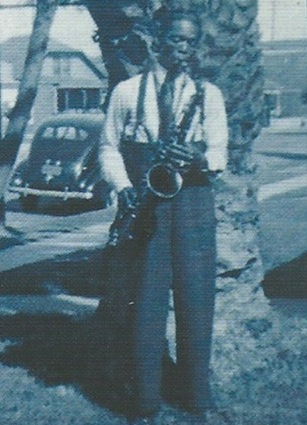
Maxwell DavisWandering amid the ruins of HMV’s Oxford Street store this week, browsing the half-empty CD racks in a jazz and blues section now relegated to the rear of the basement, I came across genuine treasure: a three-disc set on the Fantastic Voyage label titled Wailin’ Daddy: The Best of Maxwell Davis 1945-59. It had one of those big blue Xs on the cover to alert customers that here was an item marked down in what amounts to the chain’s fire sale: so for a tenner, I got myself 89 tracks of music from that era when jazz and R&B were almost indistinguishable from each other, and when Los Angeles’ Central Avenue must have seemed like heaven.

Maxwell Davis isn’t one of the better known musicians of his era, but he was a key figure. Born in Kansas in 1916, he arrived in LA as a 20-year-old saxophonist with eyes to make a name for himself on the local scene. Having switched from alto to tenor, he secured a job playing with and arranging for the Fletcher Henderson orchestra — until Henderson relocated to New York, where he became Benny Goodman’s arranger, and the band was no more.

It was after World War Two that Davis established his key credentials as a talent scout and organiser of recording sessions. His ability as an A&R man became highly valued by the heads of such local R&B-slanted labels as Aladdin, Modern, RPM and Specialty, not least because he was capable of hiring session musicians, providing them with head arrangements, and taking the tenor solos that were then almost obligatory, whether in raucous, bar-walking mode on an up-tempo number or in more subdued fashion on a ballad or a slow blues.

Dave Penny, the compiler and annotator of this exemplary collection (which was released a couple of years ago, and from which the photograph above is taken), points out that no less an authority than the lyricist and R&B fan Jerry Leiber once estimated that, between Davis’s arrival in LA and his death from a heart attack in 1970, he must have been responsible for a hundred hit records. Those we know about include such classics as Percy Mayfield’s “Please Send Me Someone to Love”, Joe Liggins’ “Pink Champagne” and Amos Milburn’s “Chicken Shack Boogie”, none of which appears on this anthology, presumably being too familiar to qualify for inclusion. Instead, much of the pleasure of Wailin’ Daddy resides in the chance to discover such comparative obscurities as La Melle Prince’s “Get High”, Crown Prince Waterford’s “Love Awhile” and Cordella De Milo’s “I Ain’t Gonna Hush”, although there are also tracks by Big Joe Turner, Louis Jordan, Jimmy Witherspoon, Helen Humes, B.B. King and T-Bone Walker.

Davis made his career as a high-class back-room boy, but he certainly possessed the instrumental chops to have survived in straight-ahead jazz, had he so wished: tracks here with the young Charles Mingus, the boogie pianist Pete Johnson and others leave no doubt about that. On the first disc, which is devoted to singles released under his own name, there are two tracks on which he trades choruses with Marshall Royal, later to become famous as Count Basie’s stalwart lead altoist, and he suffers not at all by comparison.

But my favourites are four instrumental tracks recorded for Modern in 1949 with a hot little eight-piece band featuring Jake Porter (trumpet), Jack McVea (alto), Davis (tenor), Maurice Simon (baritone), one “A McCoy” (piano), Chuck Norris (guitar), Red Callender (bass) and Lee Young (drums): the highlights are the rolling “Boogie Cocktails”, a forerunner of James Brown’s “Night Train”, and “Belmont Special” and “Bristol Drive”, the greasiest of shuffles. There aren’t many places I’d rather be transported back to than a Central Avenue club on a hot night in the summer of ’49, listening to that lot holding forth for the assembled hipsters, flipsters and finger-poppin’ daddies.

One night in Berlin

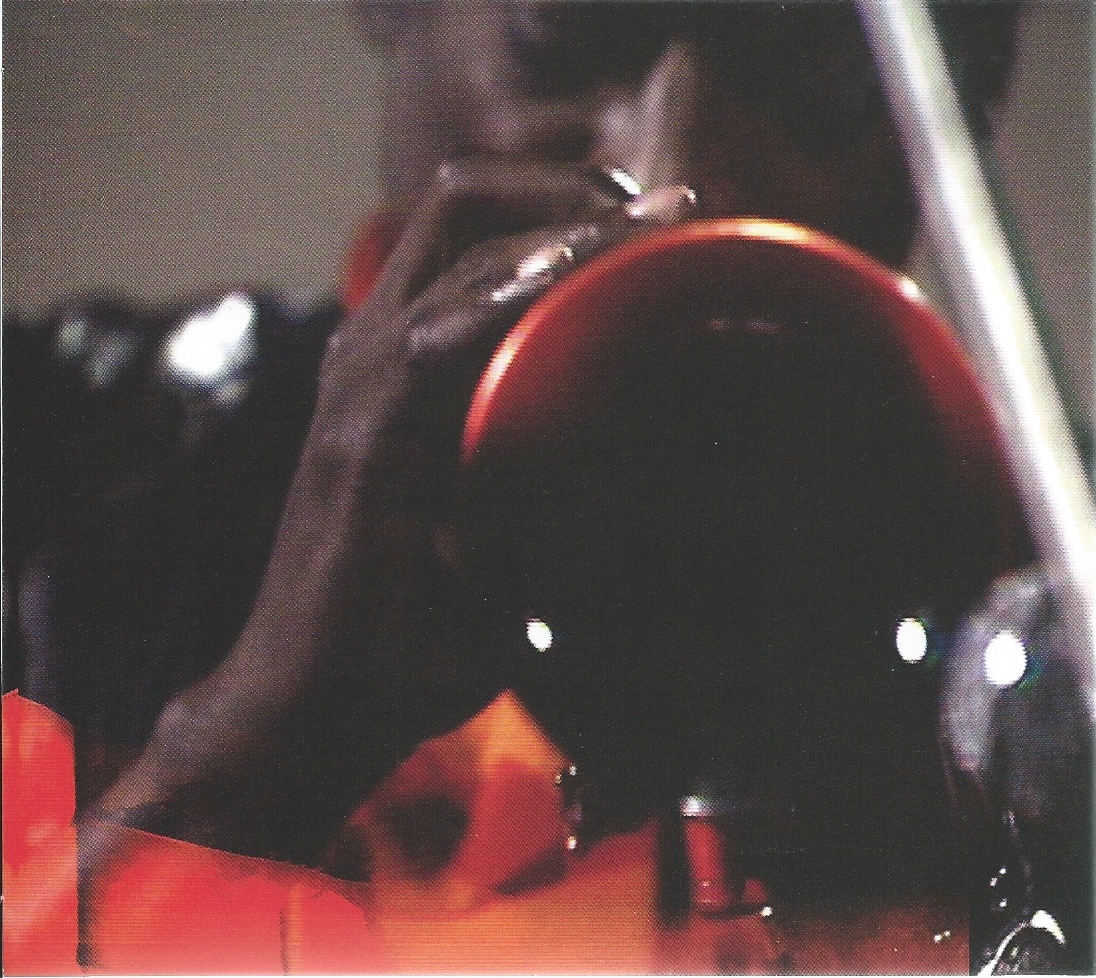
Miles in BerlinAt the start of the film of the Berlin concert which forms a bonus DVD to three audio CDs of the recently released Miles Davis Quintet Live in Europe 1969 set, you can’t help being struck by the impassive demeanour of the musicians as they are announced, one by one, to the audience. Jack DeJohnette doesn’t even look up as he fiddles with the placement of a microphone boom over one of his cymbals. Dave Holland, the young Englishman, is expressionless as he adjusts his double bass. Chick Corea reaches out his left hand to twist a knob above the keyboard of his Fender-Rhodes piano. Wayne Shorter licks his mouthpiece and stares into the middle distance. Meanwhile Miles has already prowled on to the stage, clearly not caring that the spontaneous wave of applause for his arrival has disrupted the MC’s scene-setting introductions. From none of the musicians comes even the tiniest acknowledgement of the audience’s welcome. This is how far the influence of Miles’s own super-cool on-stage deportment had spread, to men a generation younger than him (and, in the case of Corea and Holland, with naturally outgoing temperaments); he, in turn, is taking his wardrobe cues from them.

None of that stops it being a great concert, of course — or half a concert, in fact, since Miles’s group were sharing the bill at that night’s concert with Stan Kenton. You might think it an unlikely combination, even by the eclectic standards of the Berliner Jazztage, and that was how the 2,400-strong audience saw it, too. I remember half of them vociferously expressing their dissatisfaction with Kenton’s set, while those who acclaimed Kenton were clearly disconcerted by what Miles was up to (although their presence can be detected in the film only in the shot of some listeners frowning and shaking their heads as the camera scans the audience while the band leaves the stage). This intolerance was typical of Berlin audiences of the time and seemed particularly impolite since the whole festival, including that evening’s performances, had been dedicated in advance to Duke Ellington, who was due to appear at the same venue the following night in a concert scheduled in celebration of his 70th birthday.

It was my first exposure to Miles in person, and I certainly wasn’t disappointed. Urged on by sidemen who were leading him to the frontier of free jazz, he was spellbinding. Less than a year later, as he veered away from freedom towards an engagement with funk, he would be wanting his musicians to anchor the beat in a much more explicit way. But this was enthralling, a  freewheeling post-In a Silent Way, pre-Bitches Brew journey into abstraction, with a gorgeously oblique version of “I Fall in Love Too Easily” to seduce even those scandalised by the black shirt, trousers and leather waistcoat and the orange and gold scarf in which he took the stage, an outfit to match his black and orange trumpet.

Poor Kenton suffered far worse from the hecklers. He was booed even before he started, and later confessed that the experience had given him a sleepless night. Conducting the specially assembled Berlin Dream Band, a 19-strong multinational emsemble which included the trumpeter Carmell Jones, the trombonists Ake Persson and Jiggs Whigham and the alto saxophonist Leo Wright, he ran through a series of his best known pieces: “Artistry in Rhythm”, “Intermission Riff”, “The Peanut Vendor” and so on. Towards the end, however, he gestured the band to stand down as he performed his personal homage to Ellington, a five-minute variation on “Take the ‘A’ Train” delivered with such sincerity of emotion that the dissenters were temporarily silenced.

From the point of view of the audience’s divided reaction, it was one of the most bizarre concerts I’ve ever attended. The festival’s director, the late Jo Berendt, a man of broad vision and catholic taste, was intensely embarrassed. The following night, however, Ellington took the stage at the head of a band including Cootie Williams, Lawrence Brown, Johnny Hodges, Paul Gonsalves and Harry Carney, and harmony was restored.

The lost summer of Bill Evans

IntermissionIn How My Heart Sings, his fine biography of the great pianist Bill Evans, published in 1998, Peter Pettinger devotes only a handful of sentences to the months in the summer of 1961 following the death in a car accident of Scott LaFaro, the prodigiously gifted 25-year-old bassist in Evans’s trio. The fatal crash occurred late at night on a country road in upstate New York 10 days after the group had finished a lengthy and historic season at the Village Vanguard. So devasted was Evans that he did not play again for several months: a period in which he came second (behind Thelonious Monk) in the Down Beat critics’ poll, and third in the same magazine’s readers’ poll, which was won by Oscar Peterson. “I didn’t realise how it affected me straight away,” he told the critic Martin Williams. “Musically everything seemed to stop. I didn’t even play at home.”

In fact he retreated into the haven provided first by his brother, Harry Jr, in New York, and then by his father, Harry Sr, and mother, Mary, in Florida. There, his senses deadened by the tragedy and the sense of loss, he seems to have done little except play the odd game of golf with his father (a golf-course owner/manager)  as he waited for the anguish to recede. And it is this period that forms the subject of Intermission, a short novel by the young Welsh writer Owen Martell, just published in the UK by William Heinemann.

In probably the most daring fictionalisation/reimagining of a jazz musician’s life since Geoff Dyer’s But Beautiful, Martell views Evans’s period of withdrawal through the eyes of Harry Jr, Mary, and Harry Sr, interleaving memories of the pianist’s childhood in New Jersey with his relatives’ anxious, half-comprehending attempts to cushion the grief of a man whose distance from their world was exacerbated by the heroin addiction that began three years earlier during his time with the Miles Davis Sextet (a period during which he made a pivotal contribution to Kind of Blue) and would remain with him, on and off, until his death in 1980 at the age of 51. Evans slips in and out of the narrative like a ghost through unlit rooms: even to his family he is a fugitive figure, forever glimpsed sidelong and in shadow.

Martell, whose two previous novels were in the Welsh language, may have come to his subject through their common ethnicity: the pianist’s paternal ancestors were from Wales (his mother was born to immigrants from Ukraine). Occasionally the prose strains too hard for poetic effect but mostly it is suitably limpid and measured, while the author’s approach is consistently respectful of the self-appointed task of inventing the thoughts of real people. Sometimes the cadences recall those of Cormac McCarthy — particularly in the habit of concluding a paragraph with a verbless sentence — but with, of course, a far gentler attack.

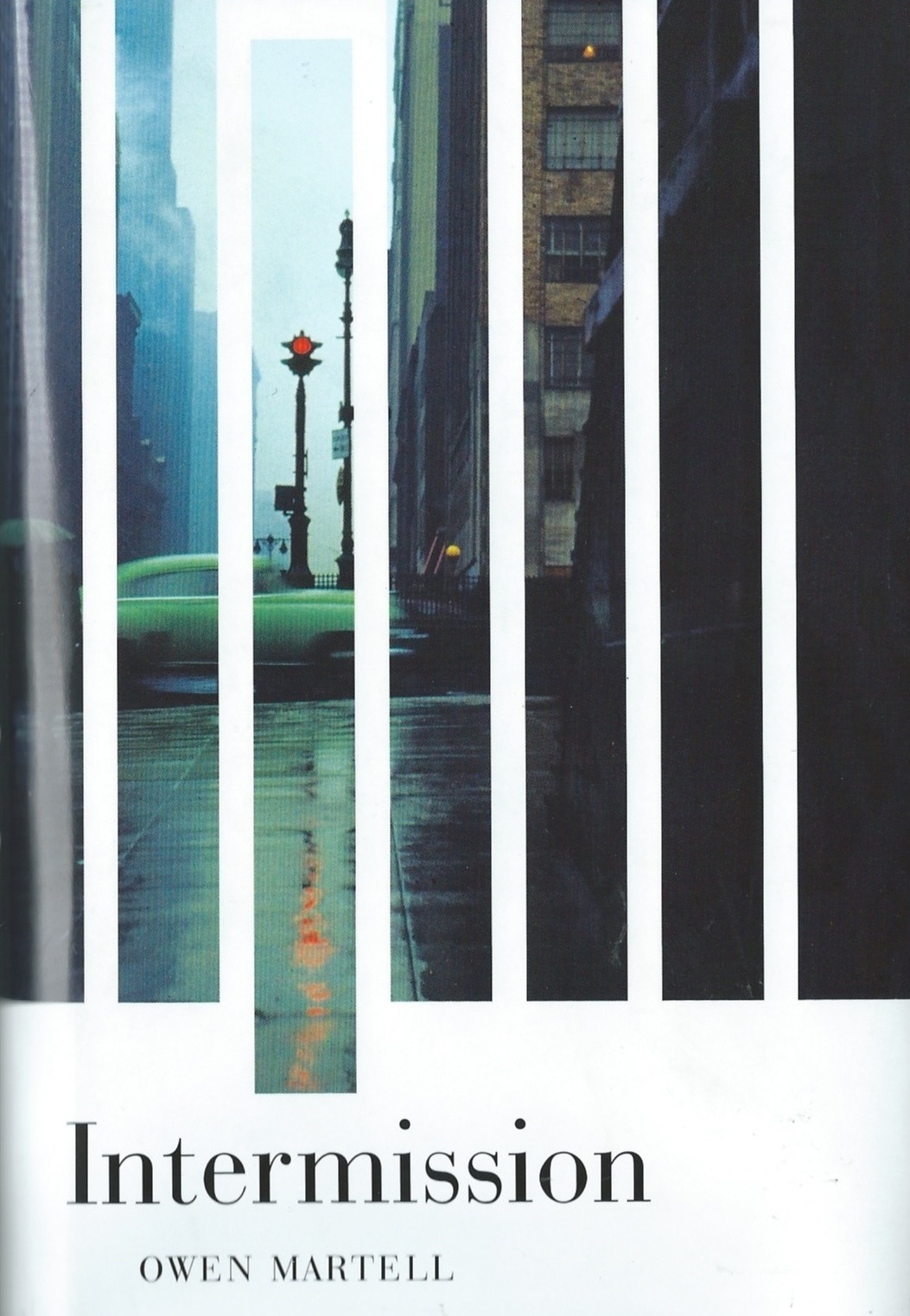
A word should be spared for the elegant cover, by Suzanne Dean, which appropriates the format of Reid Miles’s design for the jacket of Freddie Hubbard’s 1962 Blue Note LP Hub Tones, applying it to a New York street photograph by the late Esther Bubley. It matches the tone of a quiet, perceptive study of a musician whose masterpieces exacted a cruel price.

Dave King on the line

An album that claims it was recorded “in a little church in Minnesota for 4 hours on March 13th 2012” is not, of course, guaranteed to be a work of genius. But that’s not a bad way of introducing yourself. And, as it turns out, Dave King’s I’ve Been Ringing You, the album in question, has been my favourite listening for the past few weeks.

King is the drummer with the Bad Plus, a piano trio whose intense, highly sophisticated work I sometimes find easier to admire than to enjoy (they have a new album, too, called Made Possible). But although I’ve Been Ringing You shares the instrumental format of his regular band, it travels to the other end of the aesthetic spectrum, revisiting a selection of the sort of Broadway standards that have formed the staple diet of piano trios for the past 70 years, from Bud Powell via Ahmad Jamal and Bill Evans to Keith Jarrett and Brad Mehldau, yet dealing with them in a completely different way.

This is quiet, careful, ruminative music, built on free interplay around the skeletons of such sublime tunes as Gordon Jenkins’s “Goodbye”, Cole Porter’s “So in Love” and Richard Rodgers’ “People Will Say We’re in Love”. There’s one jazz standard, Ornette Coleman’s “Lonely Woman”, and one original, the title track, which is wholly improvised and credited to all three players. If I say that Bill Carrothers, the pianist, outlines the themes while Billy Peterson, the double bassist, and King produce responses that don’t necessarily follow the conventional harmonic and rhythmic guidelines, then that doesn’t sound particularly interesting. But the sensitivity and lateral-thinking adventurousness with which they react to each other is truly exceptional: it’s one of the few records of its type that I could put on immediately after Bill Evans’s genre-redefining 1961 Village Vanguard recordings without a sensation of anti-climax. And if you want to know how far piano-trio music has travelled in 50 years, compare this approach to Rodgers’s “This Nearly Was Mine” with the great version from 1960 by Cecil Taylor, Buell Neidlinger and Dennis Charles (on The World of Cecil Taylor).

I can’t give you a link to any of the actual music from the album, which is on the Sunnyside label (www.sunnysiderecords.com), but here is an interview with http://www.bebopified, the Minneapolis-St Paul jazz website, in which King describes how the album came about, and here’s a recent interview from Modern Drummer magazine, in which he talks interestingly about his influences.

Bryan Ferry’s Jazz Age

It’s a pleasure to see Bryan Ferry’s The Jazz Age getting approving coverage from publications as diverse as the New York Times and Jazz Journal (where Dave Gelly raves about it in the current issue). When Bryan invited me to write the sleeve note, and told me that the project involved restyling old Roxy Music songs — “Do the Strand” and “Avalon” among them — in the idiom of 1920s jazz, I wasn’t entirely sure that this was a good idea. But then he sent me some MP3s and the more I listened to them, the more convinced I became that he and his musical director, Colin Good, had tried something very imaginative and succeeded admirably. Everybody who’s listened to it properly seems to love it. There was a launch party a few weeks ago, at which the band played and Bryan sang one number (which he doesn’t do on the record). It would be good to see them get a week’s residency at some suitable dive in the West End. Here’s a clip of them playing “The Only Face” live:

The archaeology of ECM

ECM Haus der Kunst

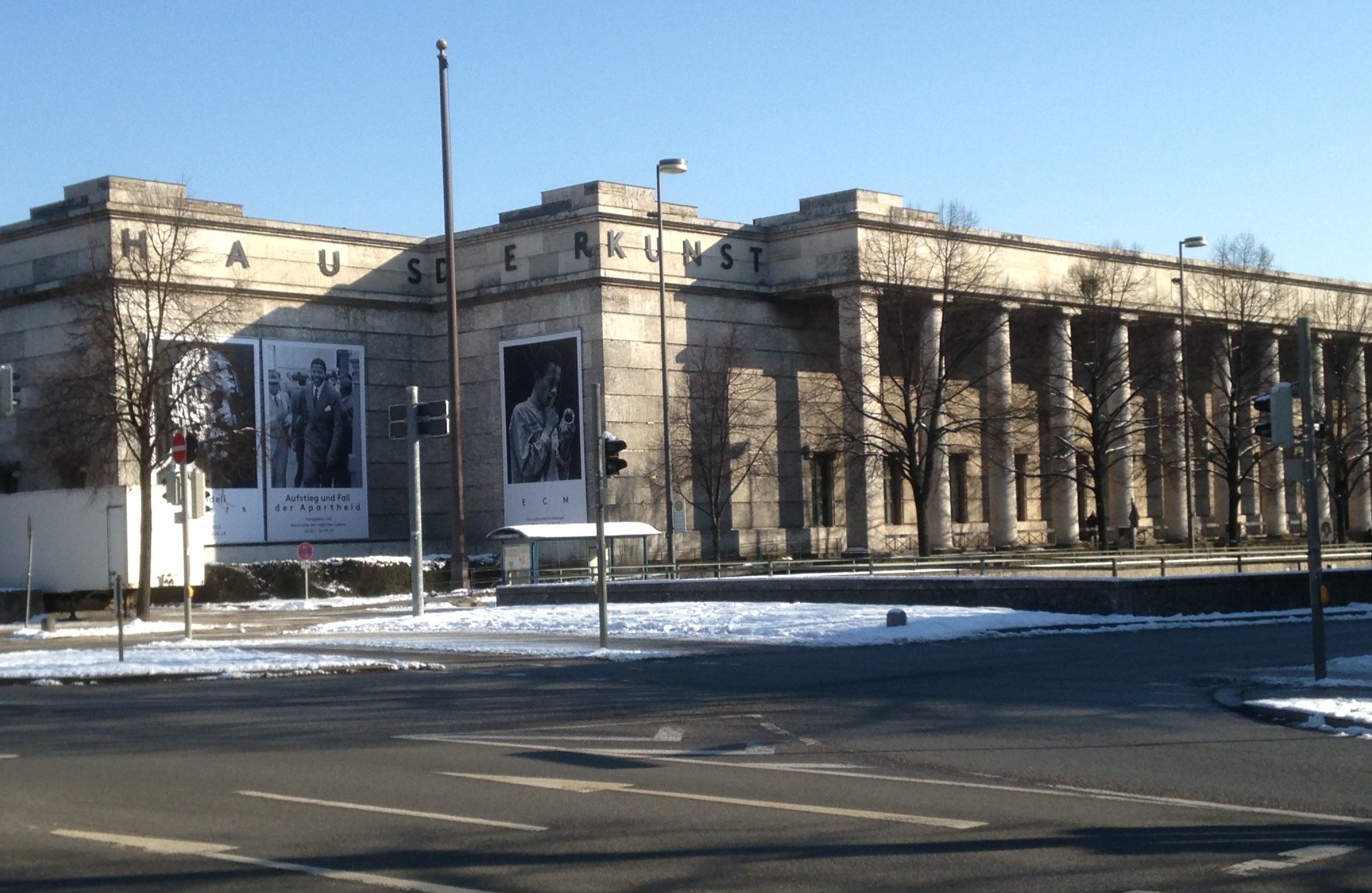
A wall of shelves filled with master tapes might not be everyone’s idea of an artwork, but it was one of the things that caught my attention in Munich’s Haus der Kunst last weekend, as part of an exhibition titled ECM: A Cultural Archaeology. Here, on shelf after shelf, were boxes of two-inch recording tape carrying the labels of the studios in Ludwigsburg, Oslo, New York, Lugano and elsewhere in which Manfred Eicher, the founder of Editions of Contemporary Music, has recorded Keith Jarrett, Pat Metheny, Arvo Pärt, the Art Ensemble of Chicago, Jan Garbarek, Bill Frisell, and many others.

It seemed an appropriate installation since attention to the quality of recorded sound was one of the factors that enabled the Munich-based ECM, particularly in its earliest days, to stand out from the herd. Eicher wanted his records to sound beautiful, and he made every effort to get what he wanted. He wanted them to look good, too, and ECM’s artwork – particularly the wonderful graphic designs of Barbara Wojirsch – takes its proper place in the exhibition.

ECM Don CherryIt was nice to see a photograph of the late Don Cherry, who made many important albums with Eicher, on the poster advertising the show. Curated by Okwui Enwezor and Markus Müller, it opened in November and alongside the visual material and the sound installations it included several films related to the label and its artists. Among them were Theodor Kotulla’s See the Music (1971), featuring Eicher in his pre-ECM incarnation, playing bass with the alto saxophonist Marion Brown and the trumpeter Leo Smith; Meredith Monk’s haunting Ellis Island (1981); and Anri Sala’s striking Long Sorrow (2005), in which the alto saxophonist Jameel Moondoc plays while sitting on a window ledge on an upper floor of a Berlin apartment block.

The exhibition was accompanied by a series of concerts which ended on Saturday night with the Polish trumpeter Tomasz Stanko and his New York Quartet, featuring David Virelles on piano, Thomas Morgan on double bass and Gerald Cleaver on drums. This is the line-up that appears on Stanko’s new album, Wislawa, and although there were a few signs to indicate that they hadn’t played together since the recording last summer, there was also a great deal to enjoy.

I found myself listening closely to the playing of Morgan, who was introduced to Eicher by the late Paul Motian; they appeared together last year on the pianist Masabumi Kikuchi’s superlative trio album for ECM, Sunrise, one of Motian’s last recordings. Thirty-one years old but looking about half that, Morgan is unusual among modern bassists because his playing is modest and unassertive, containing none of the rhetorical gestures that most of his contemporaries use to inject drama into their solos – particularly since bass strings got lighter, the action of the instruments became more finger-friendly, and amplification improved. If Morgan’s improvisations sometimes give an impression of tentativeness, that’s merely because he’s weighing and measuring every note he plays.

It’s 43 years since the first ECM release – Mal Waldron’s Free at Last – landed without fanfare on my desk at the old Melody Maker office in Fleet Street. More than 1,000 albums later, no record company has done more to encourage and facilitate a fruitful expansion of jazz’s frontiers, helping to widen its audience as the music expands into an uncertain but exciting future.

The story of Eicher’s project was told in Sounds and Silence, a film made in 2009 by Peter Guyer and Norbert Wiedmer and also on view in the exhibition. It’s worth seeing the whole thing, but here’s a link to a very brief trailer, including snatches of Nik Bartsch and Arvo Pärt: http://bit.ly/3xvKP9

Discovering Alexander Hawkins

For the past couple of years the pianist and composer Alexander Hawkins has been fêted as one of the most interesting young musicians on the London improvsed music scene. I first heard him playing very unorthodox Hammond organ in a free-jazz trio called Decoy, with the bass player John Edwards and the drummer Steve Noble, who occasionally appear with guest soloists. One particularly good night at the Café OTO with the veteran saxophonist Joe McPhee was released by the Bo’Weavil label, and I can recommend it despite the fact that I wrote the sleeve note.
A couple of weeks ago I went back to the same East London venue to hear Hawkins in a trio context, this time playing piano with the bassist Neil Charles and the drummer Tom Skinner. It was only their second gig together, and the rough edges were evident as they worked through a series of angular, unpredictable tunes, but it was also clear that, given time, they could develop something linking them to the special strand of piano-trio jazz associated with Herbie Nichols, Thelonious Monk, Elmo Hope and Andrew Hill (a couple of whose tunes they included).
Hawkins works with all kinds of units and he is back at the Café OTO twice in February: on the 24th in a trio with the bassist Guillaume Viltard and the former People Band percussionist Terry Day, and on the 26th with his own octet, featuring compositions for a line-up of brass, strings and woodwind. This is a good time to catch him.