Chet Baker at the Canteen
 The Canteen was a jazz club at 4 Great Queen Street, on the eastern fringe of Covent Garden: a narrow single-fronted space on the ground floor, backing on to Parker Street. It functioned for probably not much more than a year in the early 1980s, after which it became Blitz, the headquarters of the New Romantics, then Browns, a sort of celebrity discothèque. Now it’s a “gentlemen’s club” called the Red Rooms. Among the musicians I saw there during its jazz incarnation were Ahmad Jamal, Slim Gaillard, Lee Konitz, Howard McGhee, Bill Perkins and Esther Phillips, who was backed by a tidy little band including Tim Hinkley on keyboards and Mel Collins on tenor saxophone. The club’s energetic publicist was a man called K.C. Sulkin, whose father had been a society bandleader in Boston between the wars.
Chet Baker’s week at the club in March 1983 was among the highlights of its short life. If you needed proof that he was always more than just a Great White Hope, here it was. “The former golden boy of the cool school has come through the fire,” I wrote in a review for The Times, “but you would not know it from his playing at the Canteen.” Accompanied by an excellent local rhythm section — John Horler (piano), Jim Richardson (bass) and Tony Mann (drums) — and sitting sidelong to the audience, his improvising was serious and creative and full of substance.
Luckily, and with Baker’s permission, Richardson recorded the engagement on a Sony cassette machine. Now, more than three decades later, the tapes have been disinterred, professionally restored and released as a two-CD set. The sound is excellent and the quality of the playing compares favourably, I would say, with the recordings from Paris, Tokyo and Hannover (1981, 1987 and 1988 respectively) on which I wrote in a post about Chet a while ago.
The trumpeter’s tone on tunes like Sam Rivers’ “Beatrice”, Hal Galper’s “Margarine”, Richie Beirach’s “Leaving” and the standards — including “I’ll Remember April”, “Have You Met Miss Jones?” and “With a Song in My Heart” — is firm and confident, the lines long, the phrasing fluent. By this point in his life, 30 years after first recording it with the Gerry Mulligan Quartet, he had played “My Funny Valentine” so many times that you would have expected his interpretation to be threadbare; here, in the course of a long solo, he investigates its familiar contours as if exploring them for the first time, shaping his double- and triple-time runs with such elegance that it’s easy to forgive him for running out of steam in the closing bars, before handing over to Horler.
The rhythm section is alert and resilient throughout the recording, exemplary in its collective command of the appropriate post-bop approach. So it was a treat to see the trio reassembled for the first time in 33 years at Ronnie Scott’s last week to celebrate the album’s imminent release, and playing just as well. They were joined by the trumpeter Quentin Collins, the tenorist Leo Richardson and the singer Norma Winstone to pay tribute to Baker by reprising the repertoire from the Canteen sessions. Wisely, Collins did not attempt an imitation, evoking the spirit rather than the manner (his personal stylistic compass points him closer to Lee Morgan territory). On “Beatrice”, Richardson’s middleweight sound and mobility reminded me a little of Hank Mobley, which can’t be bad. Winstone delivered “The Touch of Your Lips” and “My Ideal” with characteristic grace.
A few days earlier I’d been to see Ethan Hawke portraying Baker in Robert Budreau’s film Born to Be Blue. Like Don Cheadle impersonating Miles Davis in the recent Miles Ahead, Hawke gives an honest and sincere performance, at times genuinely touching. There are several good scenes, but the apparent need to modify the narrative to fit a Hollywood feature-film template diminishes rather than enhances the story. Your money would be better spent on Chet Baker Live in London, a valuable souvenir of an interesting week.
* Chet Baker Live in London will be released on the Ubuntu label on October 28.
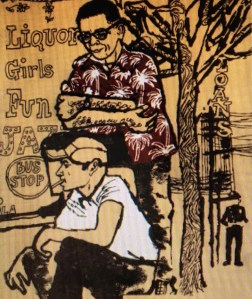
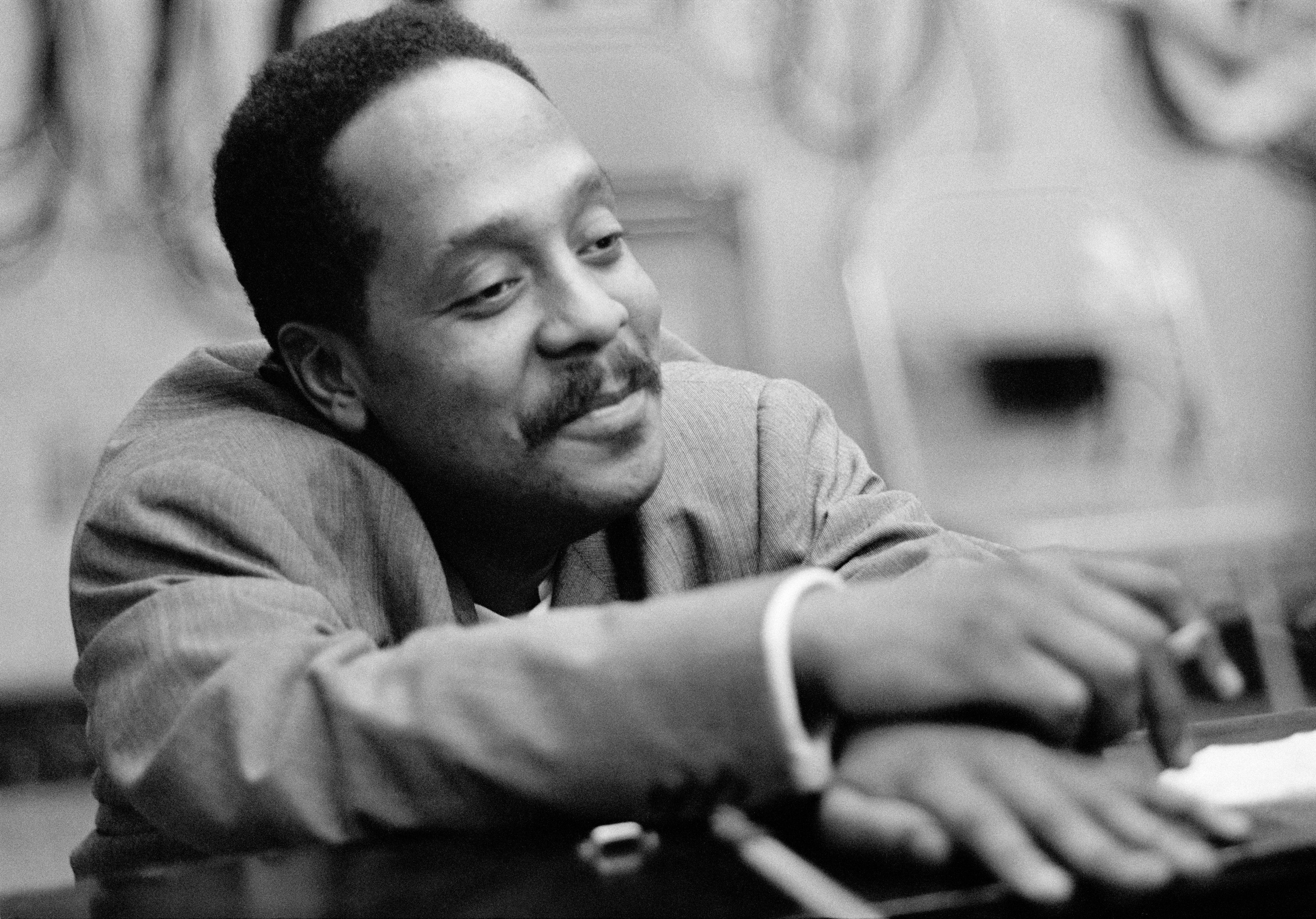 Bud Powell never made being a genius look easy. Fifty years ago tomorrow — on July 31, 1966 — his death at the age of 41 put an end to an existence that seems to have been defined by two factors: first, his extraordinary talent; second, an incident that took place when he was not even 21, and which began the process of stifling his brilliance.
 Harry Beckett was ordering a drink at the bar of the Beachcomber Club in Nottingham one night in 1965, relaxing between sets with Herbie Goins and the Nightimers, when I plucked up the courage to address him. The Nightimers were an excellent jazz-inflected soul band — their personnel also included former Blue Flames Mick Eve on tenor saxophone and Bill Eyden on drums, with Mike Carr on Hammond organ — and I wanted to tell their trumpeter how much I’d enjoyed his solo on their set-opening version of Lee Morgan’s “The Sidewinder”. Showing the good humour and courtesy which would become familiar over the years, Harry was happy to chat to a new fan.
 Alexander Hawkins and Evan Parker were two of the winners at the recent Parliamentary jazz awards: the former for being the instrumentalist of the year, the latter for, well, being Evan Parker. Last week they appeared together at the Vortex. Alex is 35; Evan is 72. What they gave us was a demonstration of the special ability of jazz-based free improvisation to span the generations without forcing the younger man to play the older man’s music, or vice versa. Musica franca = lingua franca, you might say.
 During a public conversation at the ICA a couple of weeks ago, Brian Eno mentioned his interest in churches as potential performance spaces. After all, he pointed out, they were built with the idea of providing an environment for reflection. The truth of his words was evident in London last night, when the Norwegian trumpeter Arve Henriksen presented the music from his 2014 album Places of Worship in the Jerwood Hall at LSO St Luke’s, the deconsecrated and repurposed Anglican church built in Clerkenwell by Nicholas Hawksmoor and John James in 1733.
 Karsten Vogel made his London debut at the Wigmore Hall in 1968, alongside John Tchicai in Cadentia Nova Danica, one of the outstanding European bands of the ’60s jazz avant-garde. A little over a year later he was back as a member of Burnin Red Ivanhoe, the Danish jazz-rock band who played the Lyceum, the Speakeasy, the Marquee and other joints, and recorded their second album for John Peel’s Dandelion label. (Last year I wrote
  XJAZZ is the name of an annual festival held in Kreuzberg, a district of Berlin that is home to a large immigrant population. The four-day event is dispersed between a dozen or so venues, all within walking distance of each other. Most of them are rock or dance clubs, but there are also the very striking 19th century Emmaus Church, reconstructed after 1945, and the Lido, built in the 1950s as a cinema.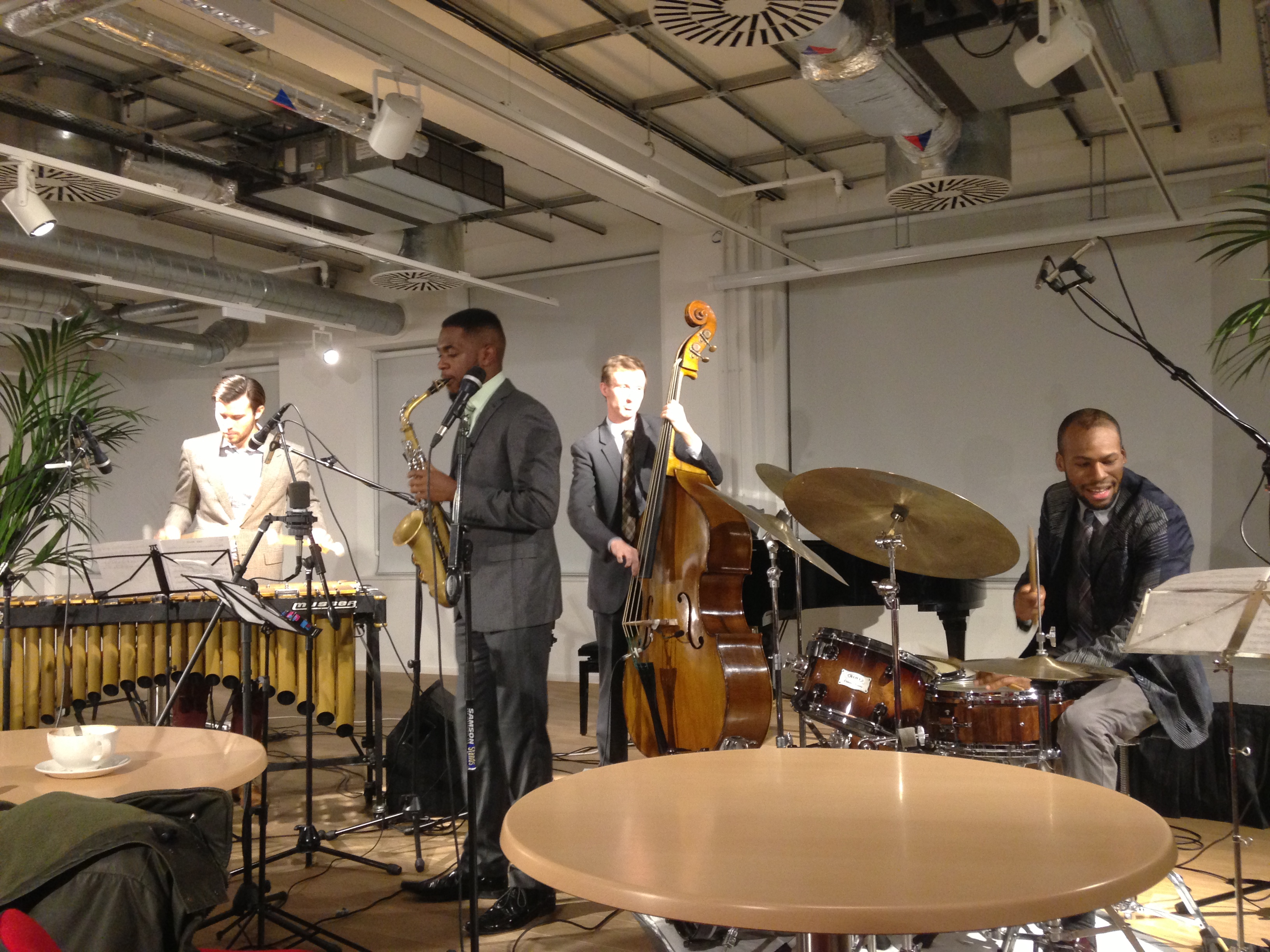

 thebluemoment.com