Ry Cooder’s ‘The Prodigal Son’

The Prodigal Son, Ry Cooder’s first studio album in six years, arrived the other day, and I’ve been playing it non-stop. Following the political and social commentaries of Pull Up Some Dust and Sit Down and Election Special, this is his gospel album: the music of the church, black and white, filtered through his own approach, with Cooder playing guitar, mandolin, banjo, bass and keyboards as well as singing, his son Joachim playing drums and percussion, and three of his regular singers, Bobby King, Arnold McCuller and Terry Evans (who died earlier this year), providing the necessary chorus here and there.
A gospel influence has been present in Cooder’s music all along, of course, from Blind Willie Johnson’s “Dark Was the Night” on his debut album in 1970, Joseph Spence’s “Great Dream of Heaven” on Into the Purple Valley and “Jesus on the Main Line” on Paradise and Lunch. But this time it’s allowed to filter to the surface and stay there in a mixture of originals and songs borrowed from the Pilgrim Travelers, the Stanley Brothers, Blind Alfred Reed and others, including two more from Blind Willie Johnson. He was trying, he says in a little promo film for the album, not to make it heavy or preachy. It’s clear that what he was after was the spirit of the people who originally made this music, and of the timeless relevance of their hopes and yearnings.
If you already know Cooder’s music, you’ll know the way this album sounds, although Joachim’s interest in creating new percussion instruments subtly expands the palette of colours and textures. The most obviously appealing track is the version of the Pilgrim Travelers’ “Straight Street”, a redemption song with a chorus begging the listener to add her or his own harmonies, at least in the privacy of their own home, buoyed by Joachim’s electric mbira — a sound “like slow water”, in his father’s phrase — and Ry’s mandolin.
Of the original tunes, the most striking is “Jesus and Woody”, a plain ballad in which Cooder imagines the Lord inviting Woody Guthrie to bring his guitar and sit down next to the heavenly throne and “drag out your Oklahoma poetry, ’cause it looks like the war is on.” It’s the nearest the album gets to an outright declaration on the current state of the world: “Well, I’ve been the Saviour now for such a long time / And I’ve seen it all before / You good people better get together / Or you ain’t got a chance any more.”
When I interviewed Ry for The Times in 1982, he used an interesting word to describe a certain quality inherent in the voices of the early soul singers he so much admired. That word was “unbought”, and it stuck with me. It could equally well be applied to his own music.
At the time of the interview he was probably at the peak of his popularity as a performer, having arrived in London for a run of eight consecutive nights at the Hammersmith Odeon. Still, he was remarking drily that his records “end up in the disc jockeys’ homes, not on their studio turntables.” And he was not enamoured of the art of live performance: “The music should speak for itself, but you have to illustrate it and dramatise it in some way.” Which was not really his thing at all.
He remains a musician as loved as he is admired, the arrival of each new album eagerly anticipated. And when I tried to buy tickets for his October concert at Cadogan Hall the other day, they were all gone. The Prodigal Son, with its theme of consolation, will have to console me, too.
* The photograph of Ry Cooder was taken by Joachim Cooder.
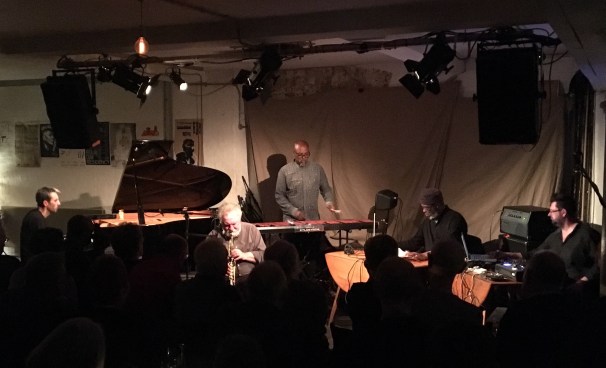
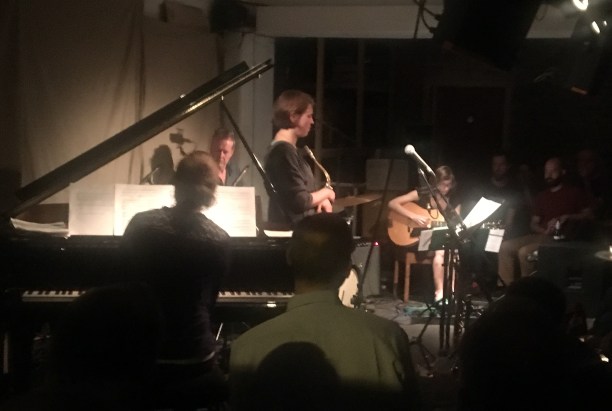
 If I were given the freedom to design a place at which people could gather for the purpose of playing and hearing music, it would probably end up very much like Cafe Oto. Some of the Dalston venue’s features include an entrance straight off an interesting side street, chairs and tables on the pavement for use during the intervals between sets, large picture windows to give passers-by a glimpse of the goings-on inside, an informal and intimate performance space with no stage, with discreet lighting and perfect sound, a good piano, the option to sit or stand, unselfconscious interaction between musicians and listeners, excellent refreshments, bike parking. And, most important, an audience equipped with open ears and minds, not drawn from a single demographic.