Remembering Fats Domino
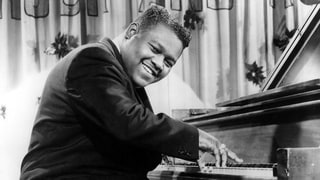
When I was ushered into his room in the Churchill Hotel by the personal valet who had worked for him for more than 20 years, Fats Domino was wearing his off-duty outfit: a brown knitted suit and a hair-net. On stage at the Hammersmith Odeon a couple of nights later, the look was very different: white jacket, shoes and socks, pink tie and trousers, diamonds covering his fingers, his belt buckle, his tie clip, his watch. Here was the man whose record sales in the 1950s were second only to Elvis Presley.
This was April 1973, and he was a couple of weeks away from his 44th birthday. In person, giving an interview to the reporter from the Melody Maker, he was pleasant, if a little guarded. He dutifully ran through his history for me, the stuff that’s been in all the obituaries over the past couple of days, telling me about falling in love with the piano as a child, copying the great boogie-woogie pianists (he mentioned Meade Lux Lewis, Pete Johnson and Albert Ammons), how Lew Chudd had signed him to Imperial, and how when Imperial was bought by Liberty he had left and made deals first with ABC Paramount, then with Mercury and Reprise. When we spoke, he was without a recording contract.
His stage show was magnificent. Here’s what I wrote, comparing his concert performance with those of other rock and roll pioneers in middle age: “Unlike Chuck, he wasn’t cynical or saddled with a poor backing band; unlike Jerry Lee, he didn’t want to sing country ballads; unlike Little Richard, he wasn’t carried away with his own divinity. He was, quite simply, Fats Domino. He sang almost nothing that wasn’t a million-seller, or close to it, and he sang them exactly as he’d laid them down on the original recordings.”
He’d brought a fine band from New Orleans: the ripe-toned saxophone section of Fred Shepherd (alto), Walter Kimball, Maurice Simon and Fred Kemp (tenors) and Roger Lewis (baritone), plus the great Roy Montrell on guitar, David Douglas on bass and Walter Lastie — a member of one of those Crescent City musical dynasties — on drums. The songs they performed included “I’m Walkin'”, “Blue Monday”, “Let the Four Winds Blow”, “I’m in Love Again”, “I’m Gonna Be a Wheel Some Day”, “I Want to Walk You Home”, “Hello Josephine”, “Ain’t It a Shame”, and “So Long”, plus “The Saints”, “Stag-o-lee”, “Shake, Rattle and Roll” and Professor Longhair’s “Goin’ to the Mardi Gras”, all in 45 minutes. Apart from the general impression of good humour and good times, I can recall Lastie’s brisk double-shuffle on “I’m Walkin'” and an excellent gravel-toned baritone solo on “Blue Monday”.
It was only Domino’s third visit to the UK. He’d been here as part of a package tour in 1962, and had returned in 1967 for one of Brian Epstein’s concerts at the Savile Theatre. Given that the Beatles loved and revered his music, it’s a pity they didn’t sign him to Apple and help him make some more good records.
I mentioned to him that Dave Bartholomew, the trumpeter and bandleader who had been the co-writer and musical director on his early hits, had told me a year or so earlier that, when they went into the studio back in the early ’50s, they were attempting to make the first fusion of Dixieland jazz and R&B. Fats didn’t entirely agree. “We was just doing what we wanted,” he said. “That’s all — there weren’t no more to it than that.” Enough, however, to help change the world.
 A few hours ahead of her gig with her band, the Weather Station, at the Lexington pub in Islington last night, the Canadian singer-songwriter Tamara Lindeman tweeted a photograph she’d taken during a walk along the nearby Regent’s Canal. “Sandy Denny in headphones,” she added. Sandy would have been pleased by the compliment and intrigued by her admirer’s performance, and in particular by the way Lindeman managed to make the 50-year-old concept of folk-rock sound brand new.
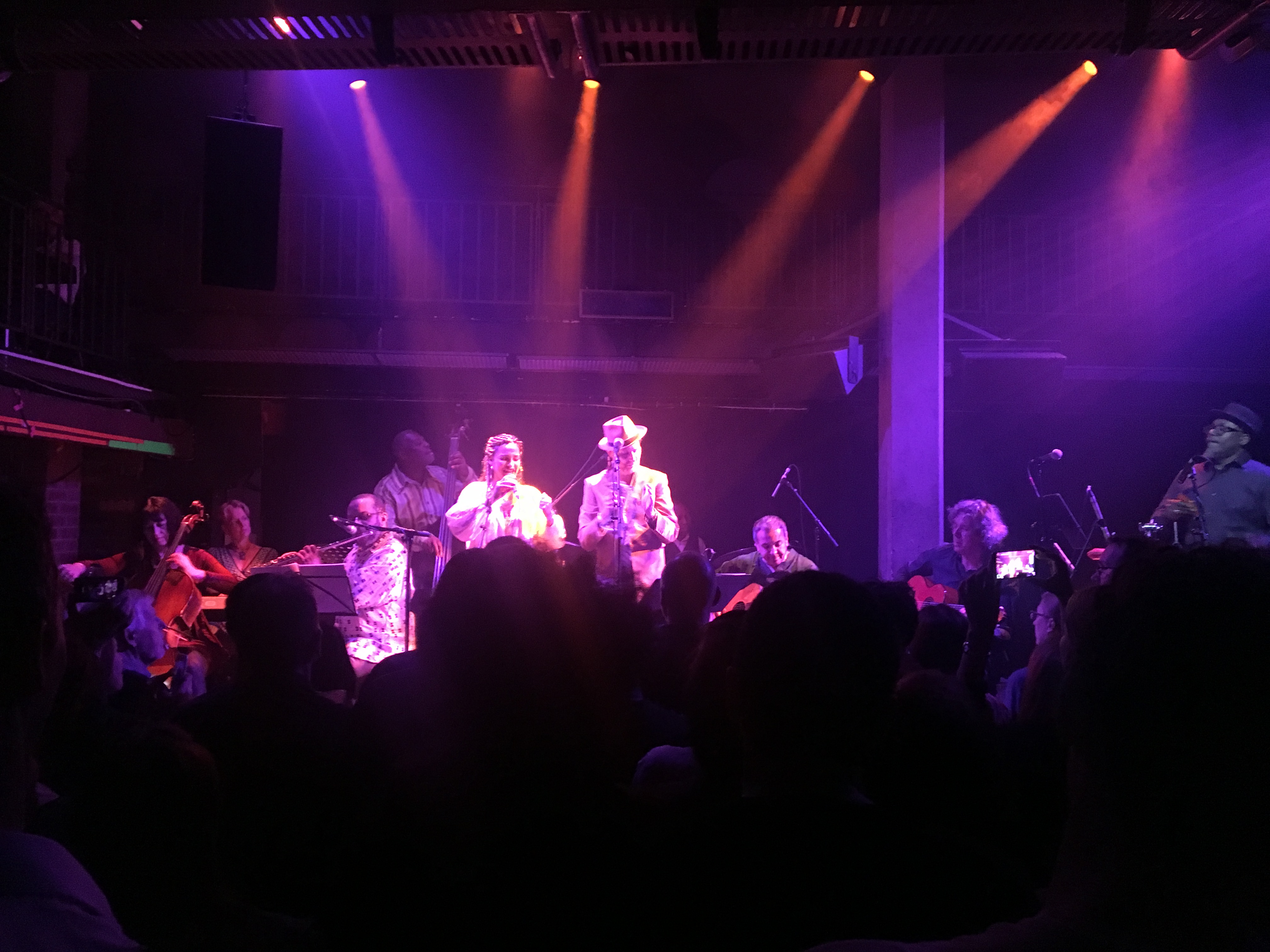 If your name isn’t Van Morrison, it takes some kind of courage to tackle Astral Weeks, one of the sacred texts of the late ’60s. No one has ever really explained how the singer, his American musicians and Larry Fallon, the arranger and conductor, and his producer, Lewis Merenstein, came up with the unique blend of idioms that make the album so distinctive. Jazz, folk, rock and blues are all in there, but so thoroughly metabolised that the eight songs create, for the length of a long-playing record, an idiom of their own. In his lyrics, too, Morrison plunged head-on into a new world of poetic spirituality.
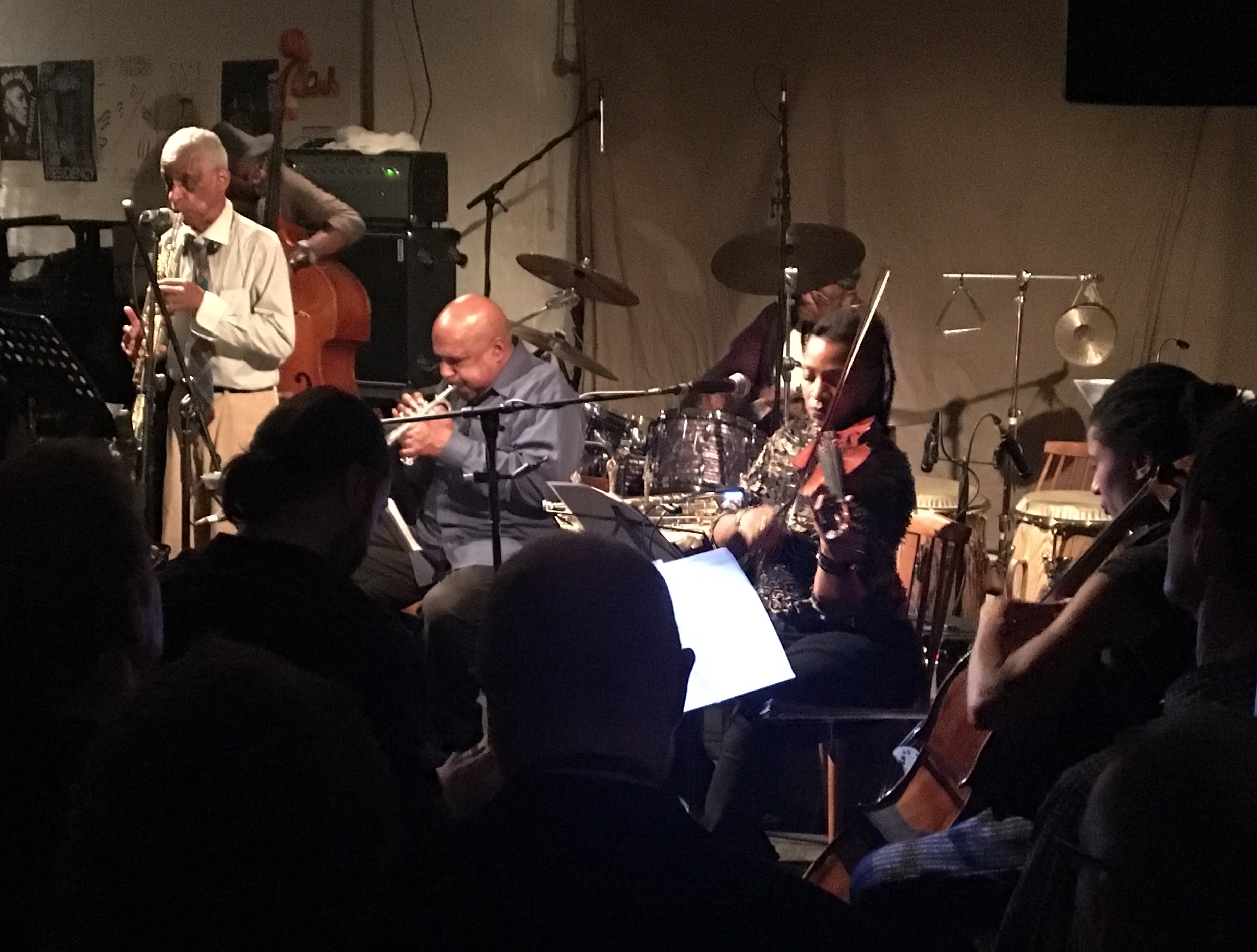 Amid the strangest weather in 30 years, with sand from the Sahara and dust from Iberian wildfires turning the air in London dark red at lunchtime on the hottest October 16th since records were first kept, there was another surprise awaiting the audience for the second of the Art Ensemble of Chicago’s three sold-out nights at Cafe Oto this week.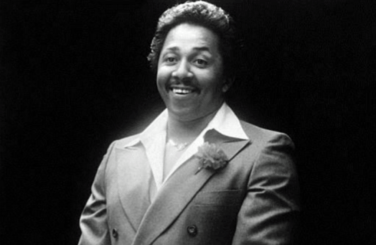
 It’s been my experience that no time spent checking out the Kronos Quartet’s latest activity is ever wasted, and the group’s new album, Ladilikan, in which they accompany Mali’s Trio Da Kali, is a beauty. The meeting between the voice of Hawa Diabaté, the balafon of Lassana Diabaté and the bass ngoni of Mamadou Kouyaté and the violins of David Harrington and John Sherba, the viola of Hank Dutt and the cello of Sunny Yang turns out to sound like something that has always existed, somewhere in the universe.
 Jazz never had a more faithful friend than John Jack, who died on September 7 and whose life was celebrated at the 100 Club yesterday, following a committal at the Islington and Camden/St Pancras crematorium. Among those musicians and poets queuing up to pay tribute by through performance were Mike Westbrook and Chris Biscoe (pictured during their duet), Evan Parker and Noel Metcalfe, Jason Yarde and Alexander Hawkins, Steve Noble (with Hogcallin’, one of John’s favourite British bands), Pete Brown and Michael Horovitz. Many others were present, along with scores of faces familiar from countless nights in dozens of clubs down the years, all of us having trouble believing that we won’t be seeing John again with his beloved Shirley at their usual table in the Vortex.
 thebluemoment.com