The return of Kenny Wheeler
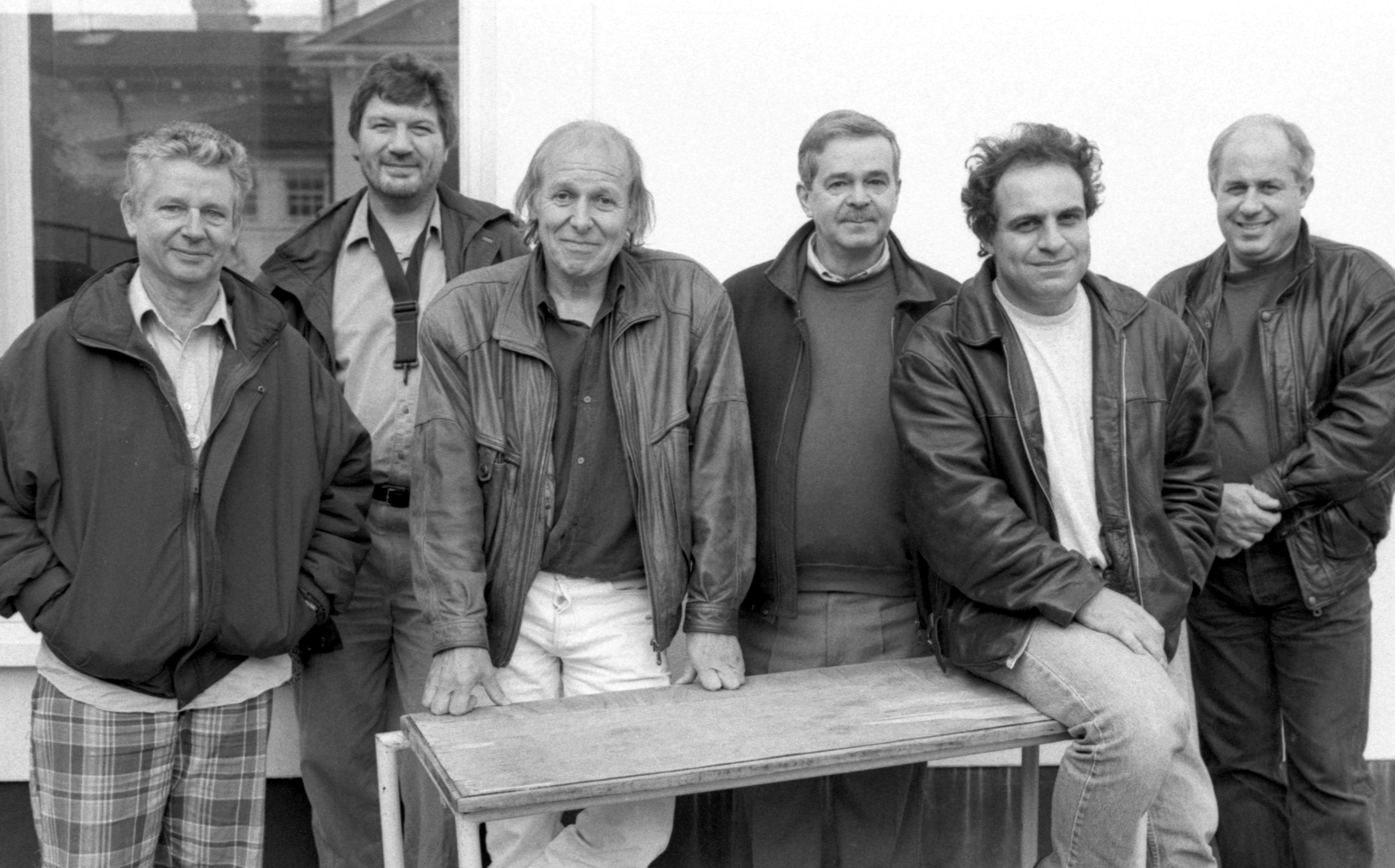
The Toronto-born trumpeter and composer Kenny Wheeler left a big hole when he died in London in 2014, aged 84, after more than 60 years in the UK. A quiet and almost pathologically self-effacing man, he was hugely admired by his peers, who recognised not just the originality of his conception as a player and writer but the quality of his vision, which embraced both purity and open-mindedness. He made the music he wanted to make.
And he hasn’t really gone away. Last year some of his big-band charts were recorded for an album called Some Days Are Better by the Royal Academy of Music’s jazz orchestra and guest soloists, conducted by Nick Smart, Wheeler’s co-biographer; rather wonderfully, it received a Grammy nomination. And there’s also a new album called Vital Spark in which the bassist Dave Holland and the singer Norma Winstone collaborate with the London Vocal Project under Pete Churchill’s direction on performances of Wheeler’s unrecorded settings of poems by Langston Hughes, Stevie Smith, William Blake and Lewis Carroll, with new lyrics by Winstone completing some of Kenny’s late compositions.
Of course many of Wheeler’s own albums, particularly the ECM classics Gnu High (1975), Music for Large and Small Ensembles (1990) and Angel Song (1997), remain available. And now there’s an important new addition to his discography with the appearance of What Was, a sextet album originally recorded by Evan Parker for his Psi label in 1995 at Gateway Studio in Kingston upon Thames and now finely packaged for release.
The line-up is Wheeler on flugelhorn with Ray Warleigh on alto saxophone and flute, Stan Sulzmann on tenor, John Parricelli on guitar, Chris Laurence on double bass and Tony Levin on drums — an A-team of the Canadian’s regular partners. There are seven tracks, amounting to 64 minutes of music, all recorded within a single day in a room that had originally been built by Kingston University as a rehearsal space for the London Sinfonietta before being repurposed as a studio. The sextet sounds both lustrous and sinewy; thanks to the resident engineer, Steve Lowe, the tonal quality and balance are unimpeachable.
As is the music. In the sleeve notes, Sulzmann says this: “It was an old-school recording date where we all turned up on the day, no rehearsals, and we all brought a tune or two to try.” The brilliance of the players ensures that there are few dropped stitches, but the spontaneous nature of the session surely accounts for the freshness that the music radiates.
There are two compositions by Warleigh, two by Sulzmann and one by the pianist Mike Pyne before we reach Wheeler’s own two contributions. It’s fascinating to hear what a difference Parricelli’s imaginative background textures can make to a relatively standard post-bop piece, particularly to Warleigh’s Latin-inflected “Blue Nile”, which draws a fantastically inventive alto solo from the composer — one the finest on record, I’d say, from another figure sadly missed since his death in 2015.
It’s all first-class, until we get to the two Wheeler tunes, where things go up another level again. “What Was” glides teasingly through unpredictable changes, distantly related to the standard “What Is This Thing Called Love”, that provoke these master improvisers into compelling solos, with superlative support from Laurence and Levin, and a marvellous series of exchanges between the flugelhorn and the drummer, wittily leading into a closing statement of “Subconscious-Lee”, Lee Konitz’s take on the same source material. “Kind Folk” is a tune Wheeler returned to in various forms, and is the only previously released track in this set (it appeared in 2003 on Dream Sequence, a Psi album compiled from various Gateway sessions); here it slides in and out of tempo, like water flowing from one pool to another, with Sulzmann in particular benefitting from the reflective mood.
I said there were few dropped stitches. The ones you spot — a tiny hesitation here, a truncated thought there — merely confirm that this music was being made in the moment, with full collective commitment. A precious document indeed.
* What Was is out now on the False Walls label: http://www.falsewalls.co.uk. Some Days Are Better and Vital Spark are on the Greenleaf and Edition labels respectively.


