Skip to content

Posts tagged ‘Empirical’

Monday at the Cockpit

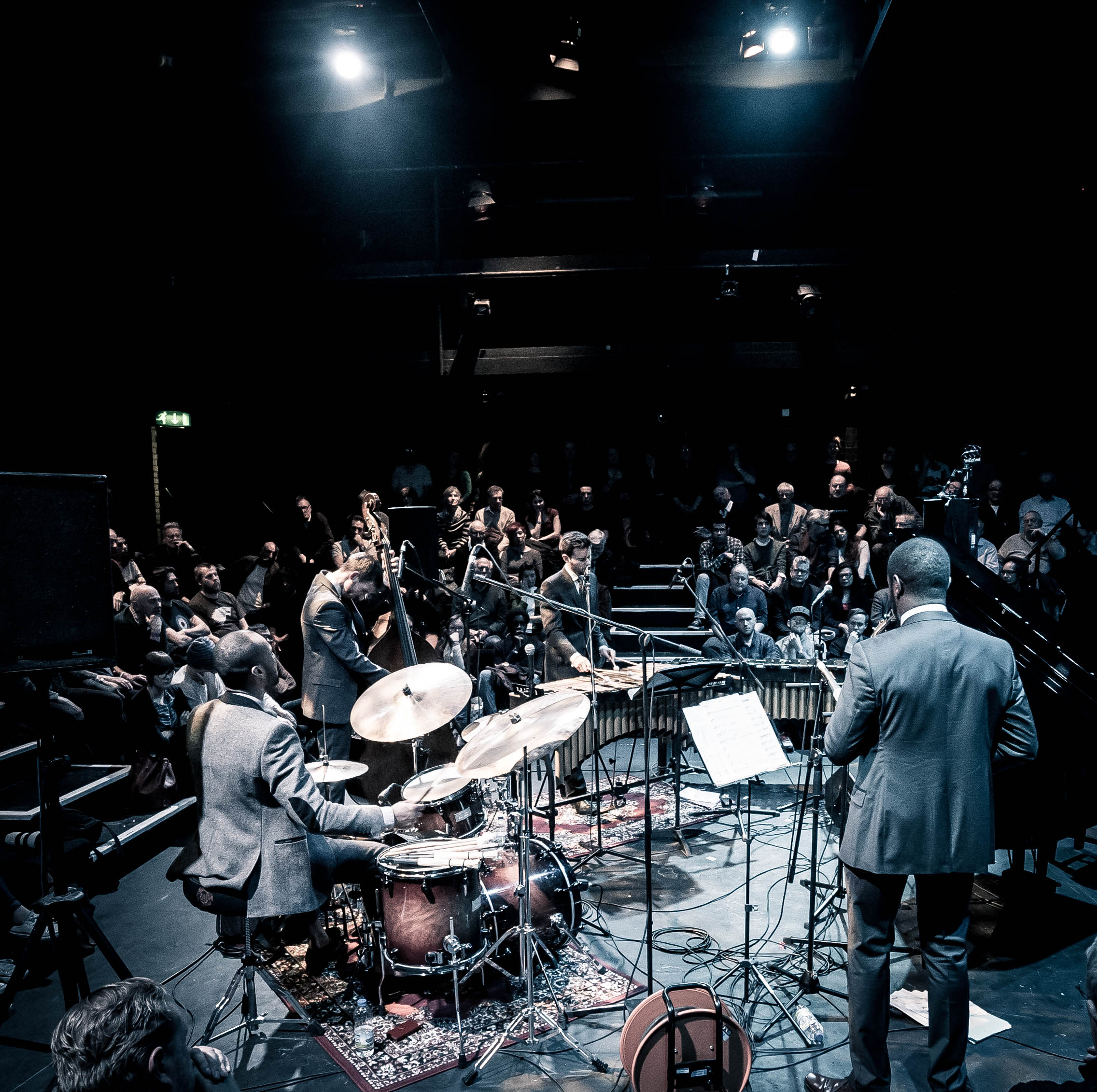
Empirical’s Shaney Forbes at the Cockpit (photo: Steven Cropper)

I was pretty horrified over the new year to see, in the guides to the arts in Britain in 2025 produced by the Guardian and The Times, no mention at all of anything that might be happening in the world of jazz. Both papers have a long tradition of covering the music in an informed way, but that seems to have been set aside by the current generation of arts editors.

It’s more than a pity, particularly at a time when jazz, although its household names have gone, is showing such vitality at all levels, and particularly among a younger generation. That was an unmissable feature of Monday’s Jazz in the Round gig at the Cockpit Theatre, not just among the musicians taking part but in the audience.

Sure, the usual jazz listeners with decades of experience were well represented. But there were also lots of people of student age, a few with instrument cases, settling on the tiered benches surrounding the players on all sides. Some of them were obviously friends of the pianist Emily Tran’s very spirited quintet, featured in the opening slot nowadays reserved for JITR’s Emergence new-talent programme, but they and the other younger listeners in the room effectively reinvigorated the whole ambiance.

After Tran’s group, its front line of alto saxophone and trombone recalling Jackie McLean’s Blue Note albums with Grachan Moncur III, came the Portuguese guitarist Pedro Valasco, 20 years a London resident, building loops and effects with his elaborate pedal board, exploring the sort of territory John Martyn might have entered, given a couple of extra booster rockets. And finally came Empirical, a long-established but perennially creative quartet, with Jonny Mansfield replacing Lewis Wright at the vibraphone.

I’ve said before that Jazz in the Round is my favourite live listening environment, and during Empirical’s set there was a good example of why that might be. It happened while Shaney Forbes was carefully unfolding a drum solo on “Like Lambs”, his own composition, against overlapping rhythm patterns played by Mansfield, altoist Nathaniel Facey and bassist Tom Farmer in what sounded like three different time signatures.

Suddenly Forbes’s concentration was abruptly broken when the bass-drum beater flew off its pedal, landing at the feet of the front row. In many decades of watching drummers, I don’t think I’ve ever seen that happen before. Anyway, the nearest member of the audience was able to lean across and hand it back to the drummer, who quickly refitted it and screwed it up tight while the other three maintained their patterns without disruption, before resuming his train of thought and taking it to a conclusion.

There was, of course, a special roar of applause when the piece ended, but that in itself is not unusual for Empirical. Their music is complex, and sometimes knotty, but they consistently engage their listeners’ emotions in a straightforward way which demands a response. That in itself is quite unusual in this kind of jazz. You could analyse what they do in terms of pacing and projection but there never seems to be anything calculating about it.

They have the spontaneity that is the propellant of jazz and the warmth that is its lubricant, qualities for which Jazz in the Round, programmed and presented by Jez Nelson and Chris Phillips, provides a consistently rewarding environment.

The sound of London

It’s been exciting to watch the blossoming of a new young UK jazz scene in recent years, and now it’s possible to welcome a historical survey of its emergence. André Marmot’s Unapologetic Expression, published this month, is an insider’s explanation of why and how it happened, by whom and to whom. This is history almost in real time, with the con trails still visible in the sky

Marmot is a musician who has worked for the last few years as agent, promoter and label owner. Perhaps that makes him an unusual person to write such a work. But it also gives him access to the people on the scene, justifying the subtitle: “The Inside Story of the UK Jazz Explosion”. More important, he can really write. Not in a fancy way, but with a clarity of thought and a simple elegance of expression that make it a pleasure to turn from page to page.

It’s a story of the music’s evolution in London; there are a few mentions of Soweto Kinch and GoGo Penguin, but none of Xhosa Cole or Nat Birchall. And its focus excludes the parallel world of free improvisation, the descendants of the SME and AMM. But at least we know where we are, and where the author is coming from.

The narrative takes in United Vibrations, Steez, Brainchild, Total Refreshment Centre, Steam Down, Brownswood and We Out Here, Jazz Re:freshed, Church of Sound, Tomorrow’s Warriors and more. The soundtrack might be Moses Boyd’s “Rye Lane Shuffle” and Yussef Kamaal’s Black Faces. One of the key events might be the appearance of Boyd, Shabaka Hutchings and Theon Cross at South by Southwest in Austin, Texas in 2017, when it became obvious that this scene could gain traction with listeners beyond Peckham and Dalston.

It’s quite a political book, in the sense that Marmot is not afraid to spend time criticising the effect of government policy on the arts and on young jazz musicians in particular, and propounding his belief (impeccable in my eyes) that jazz is essentially a black music in which others are welcome to take part. He puts his arguments concisely and chooses his supporting voices well.

For this is, in large part, an oral history. And whatever the perspective he’s examining — there are chapters called “Jazz Ownership and Appropriation”, “Jazz and Postcolonial London” and “New Industry Models and the End of Musical Tribalism” — he allows the musicians themselves to have their unmediated say. It’s no surprise that people like Sheila Maurice-Grey, Dave Okumu, Poppy Ajudha, Jason Yarde and Emma-Jean Thackray turn out to have interesting opinions.

If those chapter headings make the book sound academic, it isn’t. It’s anything but. It’s as full of life and energy, as sparky and challenging, as the music itself. It might even convert some of those who look with scepticism on audiences — some of whose members perhaps don’t know Lester Young from Coleman Hawkins and may never have heard “West End Blues” or “Parker’s Mood” — dancing and cheering as these musicians play for people who look, think and live like themselves.

But in order to exalt the new, it’s not necessary to denigrate the past, and there are some passages here that may annoy jazz fans of former generations. It’s easy to pour scorn on views expressed in earlier times, which is what Marmot does here with, for example, an autobiography from 1998 in which John Dankworth — who did much to popularise the music in Britain in the past-war decades — claimed that jazz “since its beginnings… [has been] an instrument of goodwill and peaceful and gradual change rather than anything really revolutionary.” I tend towards Marmot’s view rather than Dankworth’s, but I’d caution him that the passage of time can distort as well as clarify.

In between sessions of reading his book, I was listening to two new British jazz albums. The first is the latest from Empirical, who receive only a single slighting mention for their “dressed-up-for-the-wedding, jazz-cliché” look, which he compares unfavourably with the dressed-down, funky-Peckham vibe of Binker Golding and Moses Boyd on the cover of their 2015 debut album. I think it’s a ridiculous criticism, as irrelevant as dissing the MJQ for wearing tuxedos, and — like the Dankworth swipe — unworthy of what is otherwise a valuable piece of work.

Empirical’s Wonder Is the Beginning features the basic quartet with guests Jason Rebello on piano and Alex Hitchock on tenor saxophone. Most of the knotty but engaging tunes are written by Tom Farmer, the bassist, with one apiece from Nat Facey, the alto saxophonist, and Lewis Wright, the vibes player. Anyone who has ever enjoyed their work will find plenty to digest here, in a well established groove that enters the room occupied by Andrew Hill, Bobby Hutcherson and Eric Dolphy in their Blue Note period and pushes the walls out slightly. The addition of the guests enriches the range of tone and gesture without disturbing the group’s fine balance.

Cassie Kinoshi belongs firmly in the generation promoted by Marmot, and is among those providing the author with interesting opinions on his chosen topics. Her latest album finds an 11-piece version of her group Seed operating in partnership with the London Contemporary Orchestra and the turntablist NikNak on a 22-minute, six-part suite called Gratitude (from which the album takes its title), recorded at the Purcell Room in March 2023, and in a 10-piece formation performing a five-minute piece called “Smoke in the Sun” at Total Refreshment Centre in 2021.

This isn’t a long album, then, but it gets a lot of substance into its half-hour duration, thanks to Kinoshi’s fast-developing gift for deploying the instrumental resources at her command. Her music is astringent in its sound and strong in its movements. The strings and woodwind, for instance, carry as much weight as the brass, reeds and rhythm: there’s no danger of anything sounding effete or chamber music-y here. The double bass of Rio Kai and the drums of Patrick Gabriel-Boyle provide both line-ups with a loose-limbed swing.

There is plenty of space in the music, and a great deal of variety. When she clears a space for a soloist, she does it very adroitly: the guitarist Shirley Tetteh, the trumpeters Jack Banjo Courtney and Joseph Oti-Akenteng, and eventually herself, with an improvisation that really soars, leading the sixth and final movement to a dramatic but graceful conclusion. Nothing sounds pasted-in or anything less than organic.

Both these albums, and André Marmot’s book, tell a very encouraging story about the condition of British jazz: not just about the skill and originality of its practitioners, but about their continuing ability to find, expand and stay close to their audience.

* André Marmot’s Unapologetic Expression is published by Faber & Faber. Empirical’s Wonder Is the Beginning is on Whirlwind Records. Gratitude by Cassie Kinoshi’s Seed with NikNak and the London Contemporary Orchestra is on International Anthem.

Empiricism

I can still hear the roar that greeted the end of the performance by Empirical at the 2017 JazzFest Berlin, the reaction of an audience of around 1,000 people who instinctively recognised and responded to the skill, seriousness of purpose and inherent gift for drama emanating from a group of four British musicians of whom they previously knew little or nothing.

Last night I heard that roar again. Empirical were celebrating their 15 years together with a special performance in the very different and more intimate surroundings of the Vortex in Dalston, playing to another capacity crowd — this one already familiar with their history and their qualities.

Even as their appearances together have grown less frequent, the alto saxophonist Nathaniel Facey, the vibraphonist Lewis Wright, the bassist Tom Farmer and the drummer Shaney Forbes (above) have remained an adornment to the British scene. In their case, longevity has never equalled staleness. They are predictable only in the consistency of their high standards.

The co-operative nature of the band extends to sharing the provision of the repertoire. Each of the four contributes compositions that create a collective personality with roots in the music made by a select group of artists on the Blue Note label in the mid-’60s, a time when Bobby Hutcherson, Andrew Hill, Eric Dolphy, Joe Chambers and others were forging something that applied the instincts of the avant-garde to the virtuosity of post-bop jazz. It was a special thing, a very demanding kind of music, but Empirical go far beyond trying to recreate it. Avoiding fashionable gestures, their music gains its freshness from its inherent quality, while the sense of drama ensures its grip on an audience.

I heard one set last night, which began with Facey’s serpentine “Stay the Course”, featuring a characteristically incendiary solo from Wright. Forbes’s “Like Lambs” was typical of the extended, multi-themed compositions in which they negotiate changes of trajectory with marvellous fluency, including a sizzling alto solo and climaxing with a drum improvisation that could quite reasonably be described as symphonic.

Dolphy’s hustling “Gazzelloni” introduced a guest, the tenor saxophonist Julian Siegel, an early colleague, influence and inspiration. After Farmer had introduced “Ursa” with a beautiful solo, Siegel switched to bass clarinet for “A Bitter End for a Tender Giant”, Facey’s lament for Dolphy, recreating the astringent blends with the bowed bass and the alto from the original version on the group’s second album, Out ‘n’ In, recorded in 2009.

However much longer they choose to continue their work together, Empirical deserve to be thought of as one of the greatest small groups in the entire history of British modern jazz, up there with the Joe Harriott Quintet, the Tubby Hayes Quartet of Mexican Green and whoever else you care to name. In their case, the secret is in balancing the music’s formidable intellectual knottiness with a priceless ability to use it to communicate emotion.

* Empirical’s recordings, including their most recent EP, Like Lambs, are on their Bandcamp page: http://www.empiricalmusic.bandcamp.com. The photograph of Shaney Forbes in Berlin in 2017 is by Camille Blake.

Jazz nights in London

Maisha 2

Maisha at Ghost Notes

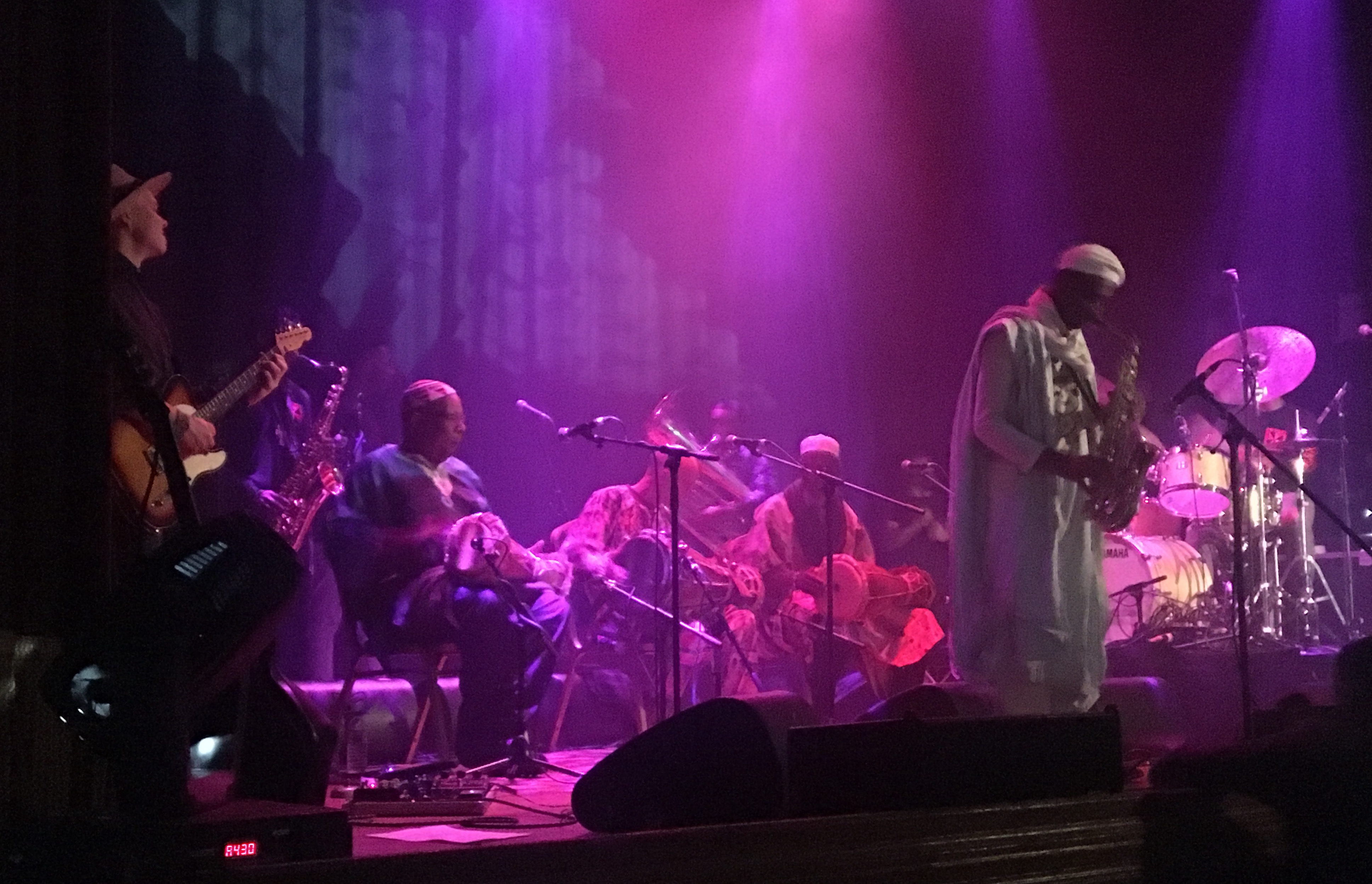
There was a lot of excitement in the air as Nubya Garcia, saxophone in hand, squirmed her way through the crowd to join the other members of Maisha on the low stage at Ghost Notes in Peckham the other night. The whooping and cheering had already started, and it didn’t stop as the London-based band set up a series of grooves that kept the audience moving as well as listening through the long set, part of this year’s EFG London Jazz Festival.

This is jazz in London in 2018, or at least the part of it that is attracting a new audience. The streets of Peckham and Hackney are its incubators, and it is made by people to whom grime, hip-hop and Afro-Beat are as familiar as bebop and the ’60s avant-garde. Under their leader, the drummer Jake Long, Maisha reminded me at various times of Pharoah Sanders, Osibisa and the Santana of Abraxas and Caravanserai. Garcia, the guitarist Shirley Tetteh and the pianist Sarah Tandy were the main soloists. Occasionally, as on the beautiful tune called “Azure”, it was possible to hear the two string quartets, one set up at each end of the long stage, on either side of the basic seven-piece band.

What most amazed me was how this audience has clearly acquired a habit of cheering not just the end of an improvisation but individual moments within a solo: a particularly resonant phrase, or a tricky high-register figure. If you were being cynical, you might say that this was like the 1940s, when tenor-players such as Big Jay McNeely walked the bar, goading the audience with squeals and honks. And it’s true that a young soloist might be encouraged by that kind of enthusiasm into a adopting a less reflective approach. But there’s more to it than that. And on their first album, There Is a Place, which they were launching at this gig, they showed that they are capable of as much subtlety and seriousness as anyone could require, while keeping that groove going.

Moses Boyd Exodus 2

Moses Boyd Exodus in Islington

That same feeling was in the air at Islington Assembly Hall a couple of nights later, in a gig by Moses Boyd’s Exodus that was not technically part of the festival but was very much of it in spirit. In this venue the band were not as close to the capacity audience in physical terms, but once again they managed to communicate very directly through the medium of storming rhythms and Boyd’s very engaging compositions: his irresistible “Rye Lane Shuffle” feels like a theme tune for the whole movement.

The trumpet-tenor-trombone front line was driven by Boyd’s astonishingly fluent drumming and Theon Cross’s tuba, a one-man perpetual motion machine, while Artie Zaits played some nice solos in a style with inflections from Wes Montgomery and Grant Green. After two or three tunes Boyd introduced a group of bata drummers, who performed a couple of chants, with Kevin Haynes taking the lead. Then the rest of the band returned and Haynes picked up his alto saxophone, sounding a little like Dudu Pukwana on “Marooned in SE6”, the highlight of the set and one of the strongest tracks on Displaced Diaspora, the band’s debut album, which I can’t recommend too highly.

Empirical Old St

Empirical at Old Street

For me, this was the defining vibe of this year’s festival. The event’s other key characteristic, every year, is superabundance. You can’t hope to make it to everything that sounds attractive, and I was sorry to miss Tandy’s solo set at the Purcell Room, Garcia’s own gig at the Vortex, the altoist Cassie Kinoshi’s band at the Vortex, two of the three nights of Ethan Iverson’s King Place residency, and much else. But on Friday evening I did make it to the Old Street subway, where Empirical spent a week doing pop-up sets for commuters and other passers-by in a very nice loft-style space.

Material from their fine new album, Indifference Culture, was played, Lewis Wright’s “Persephone” and Shane Forbes’s “Celestial Being” particularly catching the ear. As always, their staggering level of eloquence, creativity and energy captivated not just those familiar with their sophisticated post-bop language but everyone exposed to the perfectly honed and balanced collective sound of Nathaniel Facey’s alto, Wright’s vibes, Tom Farmer’s bass and Forbes’s drums.

Amir ElSaffarJPG

Amir ElSaffar at Kings Place

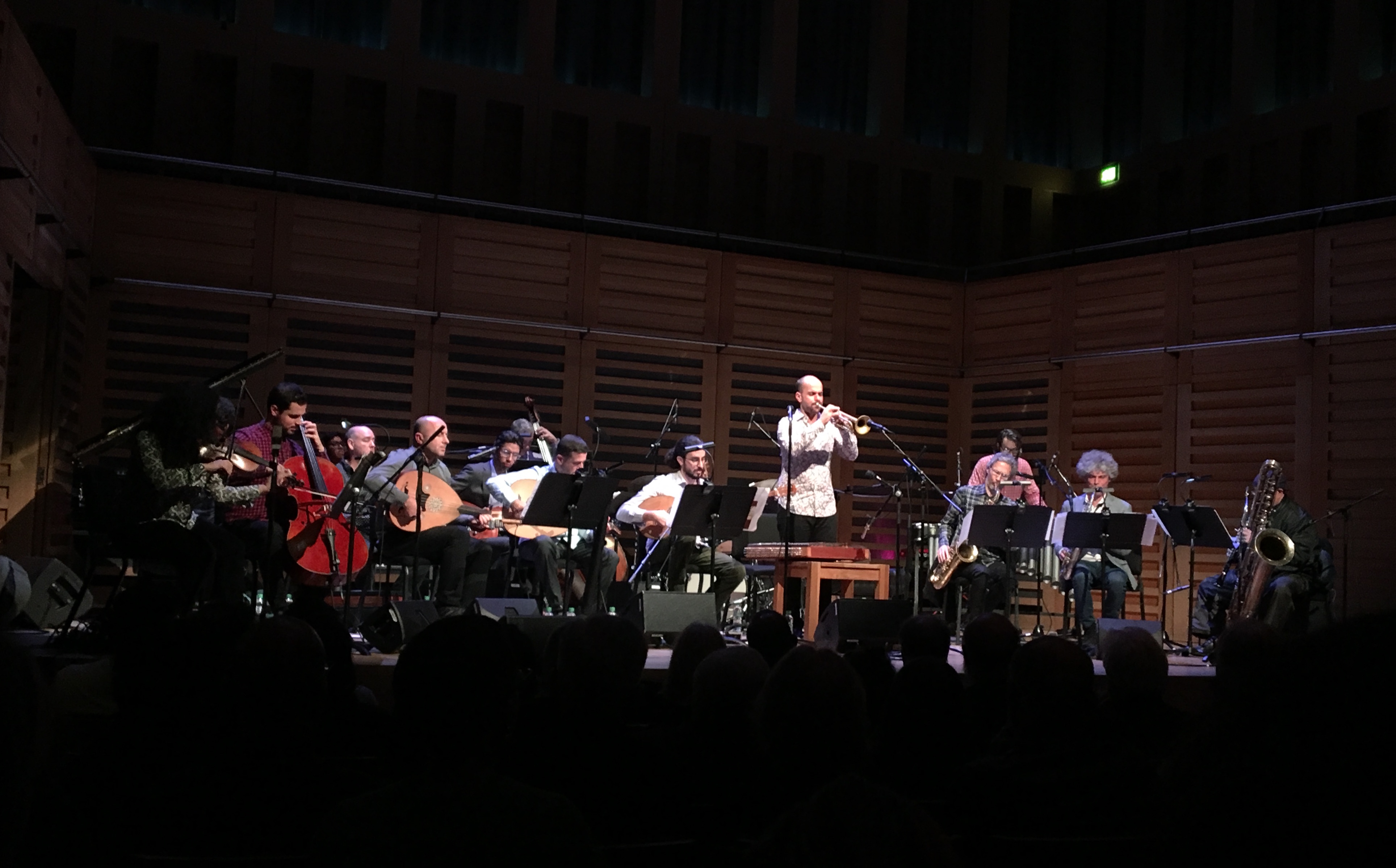
So much that was good about the 2018 festival was home-grown, and congratulations are due to John Cumming, its founder and outgoing artistic director, for recognising and encouraging British musicians. Of the visitors, I particularly enjoyed Amir ElSaffar’s Rivers of Sound (above), a large ensemble with which the Iraqi American trumpeter/composer explores a blend of microtonal maqam music and jazz. ElSaffar also sang and played santur, while Nasheet Waits (drums), George Ziadeh (oud), J. D. Parran (bass saxophone), Miles Okazaki (guitar) and, particularly, the Norwegian tenor saxophonist Ole Mathisen made powerful contributions. Their album, Not Two, is another that I’d strongly recommend, if you can find it.

Jaimie Branch

Jaimie Branch at Cafe Oto

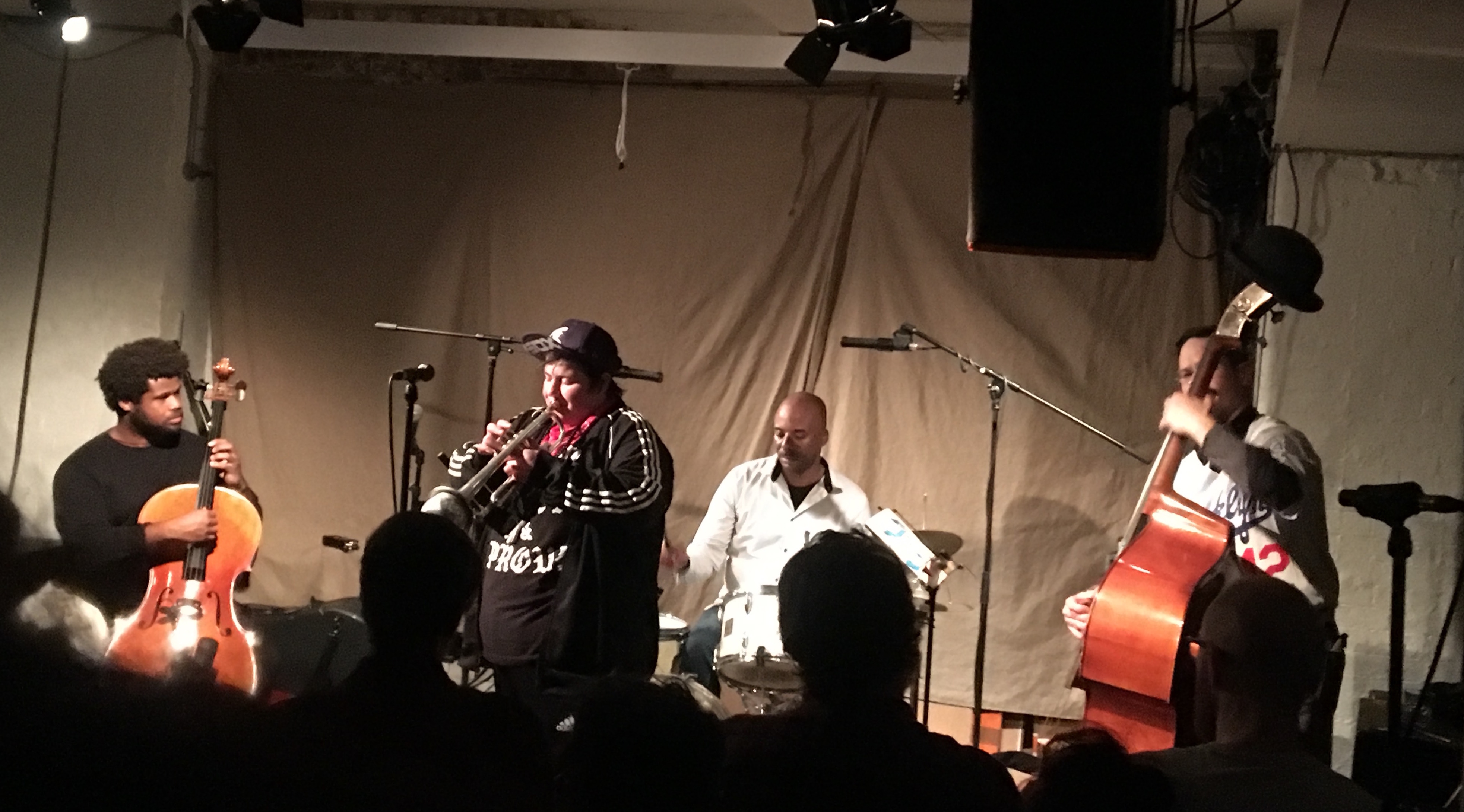
Cafe Oto was packed for Jaimie Branch, the Chicago trumpeter, leading her Fly or Die quartet through a set of high drama, featuring the material from the group’s eponymous album. Branch’s sound on the horn goes back to the distant origins of jazz, much like Donald Ayler’s did, but the bold, brassy attack is deployed with devastating control, particularly when she switches between two microphones: one dry, the other drenched in reverb (which sounds like a gimmick, but isn’t). The cello/bass combination was used with great subtlety, and Chad Taylor once again showed himself to be among the era’s most stimulating drummers.

Bill Frisell‘s solo concert at the Cadogan Hall was a joy from beginning to end: like sitting in the great guitarist’s living room listening to him play for his own pleasure. Apart from the lovely pieces based on country and folk cadences, I enjoyed a version of “Goldfinger” that switched between the styles of Wes Montgomery and Vic Flick, gorgeous readings of “Lush Life” and “What the World Needs Now”, a perfectly flighted snatch of “In a Silent Way”, and an eye-moistening encore of “In My Life” and “Give Peace a Chance”.

To close the festival week, I went to Kings Place to hear a vinyl repress of Joe Harriott‘s Abstract, played over a very good sound system and introduced by John Cumming, with a subsequent commentary by Soweto Kinch. I know the eight tracks of this 1962 masterpiece by heart, but I wanted to be made to sit and listen to it in undistracted silence. Every note sounded brand-new, just as startling in its freshness and beauty as it was five and a half decades ago. Then I went home to watch the final of the BBC’s Young Jazz Musician of the Year competition, won by a 22-year-old tenor saxophonist from Handsworth in Birmingham called Xhosa Cole. A life playing jazz is not an easy choice, but it seems to me that he couldn’t be joining the scene at a better time.

* Maisha’s There Is a Place is on the Brownswood label. Moses Boyd Exodus’s Displaced Diaspora is on Exodus Records. Empirical’s Indifference Culture is on Empirical Music. Amir ElSaffar’s Rivers of Sound: Not Two is on the New Amsterdam Records. Jaimie Branch’s Fly or Die is on the International Anthem label.

Connecting with Empirical

Empirical 1

How many great modern jazz ballads are there? I’m not thinking of the kind of American Songbook standards, such as “Body and Soul” or “Lush Life”, that have offered their melodies and chord sequences to jazz improvisers over the decades. I’m thinking of strictly instrumental pieces written by jazz musicians: things like Monk’s “Round Midnight”, Benny Golson’s “I Remember Clifford”, Bill Evans’s “Blue in Green”, Elmo Hope’s “Mirror-Mind Rose”, Stan Tracey’s “Starless and Bible-Black”, or Dudu Pukwana’s “B My Dear”.

There’s one on Empirical’s new album. It’s called “Lethe”, written by the band’s vibraphone-player, Lewis Wright. It starts with soft chimes and Tom Farmer’s double bass in a rising four-note pattern, Shaney Forbes’s pattering mallets on his tom-toms introducing an exposed theme for Nathaniel Facey’s plaintive alto saxophone. Facey’s subsequent improvisation slips easily in and out of double and triple time, encouraging the others to get busier and thicken the textures, but the band never loses the enraptured mood of the theme, which turns the whole seven-minute piece into a complete and very elegant construction, rather than something that just happened.

I’ve heard them play it two or three times in various settings over the past year, along with some of the other new material, and one of the things that strikes me about the album, which is titled Connection, is the way they’ve not only captured the spirit of their live performances in the studio but even taken the process a step further.

The band’s fifth release continues their 10-year exploration of the kind of jazz first measured out in those Blue Note albums of the mid-’60s — by Andrew Hill, Eric Dolphy, Bobby Hutcherson and others — that took bebop in a late-modernist direction, very harmonically and rhythmically demanding, avoiding the easier options offered by post-Kind of Blue modal jazz. The music is challenging, often superficially austere and angular, but never academic or unfriendly. The 10 compositions by Facey, Wright and Farmer come at the idiom from a variety of angles, offering plenty of light and shade and exploiting the basic tonal palette and their internal relationships to the full.

They can do many things extremely well, and one of them is swing. Forbes’s drumming on two of Farmer’s tunes, “Driving Force” and “Card Clash”, creates classic triplet-based propulsion of the highest quality, establishing a really inspiring platform for the soloists. By contrast, Farmer’s “The Maze” explores a favourite trick of Miles Davis’s second great quartet by having the lead voices — Facey and Wright — stick to a measured written theme while the rhythm instruments are allowed complete freedom to invent. Wright’s closing “It’s Out of Our Hands” brings their innate lyricism back to the surface, with passages utilising a great asymmetrical Latin groove.

Exceptionally well recorded by Richard Woodcraft at RAK Studios in London, and mixed by Alex Bonney, this is a staggeringly good album that stands comparison with the very best of jazz in the 21st century. And from the way “Lethe” has lodged itself in my head over the past 12 months, I’d say that one deserves to become a classic.

* The photograph of Empirical was taken at Foyle’s in London last year.

Jazz in the Round

Jazz in the Round 1Jez Nelson’s monthly Jazz in the Round nights at the Cockpit Theatre in Marylebone are as good a way to hear improvised music in London as anyone has yet devised. A couple of hundred listeners settle themselves down in mini-bleachers on all four sides of the floor, where the musicians set up to face each other, creating an unusual degree of intimacy radiating through 360 degrees. As a member of Empirical — I think it was Nathaniel Facey, the alto saxophonist — told last night’s audience, it makes you play differently. In a good way.

Facey and his colleagues kicked off what turned out to be a special night even by the standards of this excellent series. The evening was being recorded for transmission (on March 28) as the last-ever Jazz on 3, which Nelson presents, and after 18 years he was understandably emotional as he introduced a bill handpicked to represent the programme’s philosophy over the years. After Empirical came Django Bates, who gave the solo performance that traditionally separates the evening’s two bands, followed by a set of free improvisation from a multi-generational quartet assembled specially for this event: Laura Jurd (trumpet), Alexander Hawkins (piano), Orphy Robinson (marimba) and Evan Parker (tenor saxophone).

Empirical were coming off a week of thrice-daily gigs in a pop-up revue at Old Street tube station: a wheeze that apparently worked as well as it deserved to, attracting crowds of passers-by intrigued by what they heard. They’re an exceptional band and they played a fine set of striking new compositions by each of the four members, ending with “Lethe”, a quietly beautiful slow tune by the vibraphonist Lewis Wright. I’ve heard them play it before, and it stuck in my head. I was delighted to hear it again, and to discover that it’s on their new album, Connection.

Bates had just arrived from Switzerland, where he is a professor of jazz at Bern’s University of the Arts. He began by singing, to his own deft kalimba accompaniment, a little song about the anxiety of a man introducing himself to a piano (which turns out to be female). Then he sat down at the keyboard to play a piece in which he doubled his improvised single-note lines in the treble register with whistling of virtuoso standard. A tenor horn solo preceded a final stint at the keyboard, which included some gorgeous gospel figurations and a song about a London pub transformed by a developer into empty luxury apartments. “Empty luxury,” he repeated, sotto voce but with emphasis.

The members of the final improvising group were chosen to show how Jazz on 3 has always reflected the way this music spans the generations, with the accent on new developments. They had never played together as a unit, but the shared qualities of musicianship and sensitivity ensured that they created a genuine conversation that not only gripped their listeners but enfolded them in the act of creation. It was, as Nelson pointed out, the best possible way to demonstrate that, in the hands of such people, the music’s future is safe.

* The photograph of Empirical at the Cockpit Theatre was taken by Steven Cropper, and is used by kind permission. His blog, with more of his fine images, is at http://www.transientlife.uk. Jazz on 3 will be replaced on BBC Radio 3 by Jazz Now, presented by Soweto Kinch. Jez Nelson’s Somethin’ Else will be on Jazz FM on Saturday nights from April 2. Jazz in the Round takes place on the last Monday of each month: http://www.thecockpit.org.uk/show/jazz_in_the_round_0.