Skip to content

Posts tagged ‘Eivind Aarset’

Other sounds 5: Feat. Arve Henriksen

A fugitive sound, soft, glancing, indirect: the Norwegian trumpeter Arve Henriksen has a signature I love, in pretty much whatever context it appears. It could be in his group Supersilent, or with Jan Bang, Christian Wallumrød, Dhafer Youssef, Terje Rypdal, Iain Ballamy or Trygve Seim, or on his own albums, particularly Places of Worship (Rune Grammofon, 2013), which I think of as this century’s Sketches of Spain.

He’s developed the European equivalent of Jon Hassell’s trumpet sound, using electronics and a natural tendency towards understatement to take the instrument out of its normal brassy universe and into somewhere more mysterious. And he finds two soulmates in the Danish drummer Daniel Sommer and the Swedish bassist Johannes Lundberg on Sounds & Sequences, a trio recording made in a Gothenburg studio.

A series of 11 pieces evolving from free improvisations subjected to post-production processes of editing and shaping, this is a very beautiful thing indeed. Sommer’s playing draws the ear throughout, pulling gentle grooves out of the air and adding the finest of detail. Lundberg and Henriksen both contribute electronic beds and textures (Henriksen also uses his counter-tenor voice from time to time), nudging the music towards something that touches the celestial sublime.

The trumpeter pops up in Triage, the new album from Erik Honoré, one of the founders of Kristiansand’s remix-based Punkt festival, which celebrated its 20th edition last month. Deploying colleagues including Sidsel Endresen, Eivind Aarset, Ingar Zach, Nils Petter Molvaer and Jan Bang, Honoré creates little tone poems, some of them used as settings for found texts.

These include Emily Dickinson’s poems “Hope Is a Thing With Feathers” and “Pain Has an Element of Blank”, portions of Ezra Pound’s Cantos — read by Bang — and a section from the US Surgeon General’s undated instructions on early care of combat wounds: “A not uncommon occurrence in the present war are those distressing wounds of the face and jawbones which have attracted particular attention not only on account of the disfigurement which they cause but even more so from the difficulty that was first encountered on dealing with them…”

The use of different readers adds variety and surprise, as if there were not already enough in the music itself, which also makes use of radio samples and field recordings. An instrumental piece called “Prague”, featuring Molvaer’s trumpet over Bjørn Charles Dreyer’s guitar and Mats Eilertsen’s treated double bass, is particularly striking, as is “In the Station of the Metro”, in which Henriksen’s breathy trumpet emerges between Pound’s lines and Honoré’s manipulated samples with typical probing grace.

Finally, Henriksen’s recent album of duets with the Dutch pianist Harmen Fraanje, Touch of Time, is more conventional in terms of exploitation of the available sonic materials, allowing a clearer view of the trumpeter’s playing, with only the occasional effective touch of electronics. Compositions by both men create music that is delicate, pensive, carefully weighted, devoid of affectation or allusion to outside worlds. The closer you listen, the stronger it gets.

* Sounds & Sequences is on the April Records label (www.aprilrecords.com). Triage is on Punkt Editions/Jazzland. Touch of Time is on ECM. All are out now.

Written in air

Jan Bang is one of the people responsible for the great wave of creative music from Norway over the past three decades. As a producer and player, he’s collaborated with Dhafer Youssef, Nils Petter Molvaer, Arve Henriksen, David Sylvian, Bugge Wesseltoft and many others. In the fishing port of Kristiansand, where he was born in 1968, he and his friend Erik Honoré founded the annual Punkt Festival, where since 2005 live performances have been subjected to immediate remixes. (I wrote about a visit to the 2019 edition here.)

His new album, Reading the Air, is a sequence of songs with music mostly by himself and lyrics by Honoré. The musicians include Henriksen on trumpet, the singers Simin Tander and Benedikte Kløwe Askedalen, the guitarist Eivind Aarset, the bassist Audun Erlien, the drummer Anders Engen and the percussionist Adam Rudolph.

What does it sound like? I was put in mind of late Blue Nile filtered through Jon Hassell’s Fourth World recordings: fragile-sounding melodies, introspective lyrics, voices singing from some private sphere, gauzy textures shaped and layered with great care, on the edge of decay. Through the 10 tracks, there’s a consistency of mood, elegant and reflective.

Here are the opening lines of Honoré’s lyric for the exquisitely beautiful title song: Moving on /We’re planning our escape / Preparing to leave / The disconnected state / Bridges burned / The tables turned / Reading the air / To reconnect with fate. A piano is played in an empty ballroom. A swaying groove emerges and simmers quietly. Bang’s ruminative vocal is sometimes doubled by a female singing over his shoulder. What sounds like a section of shakuhachis turns out to be overdubbed trumpets played by Henriksen, who steps forward for a lighter-than-air solo. I could easily imagine successful covers of this by Annie Lennox, Bryan Ferry or Beth Gibbons with Rustin Man.

The other track I want to mention is the only non-original composition, a version of the old folk-blues song called “Delia” or “Delia’s Gone”, which exists in many versions. This is not the murder-ballad variant recorded by Bob Dylan on World Gone Wrong in 1993 (credited as “traditional”) or the bloodier iteration that Johnny Cash included on the first volume of his American Recordings in 1994 (credited to Cash, Karl Silbersdorf and Dick Toops). Curiously, it’s the smoother and more lyrical variation that Harry Belafonte sang in 1954 on his debut album, “Mark Twain” and Other Folk Favourites, credited to Lester Judson and Fred Brooks. Judson was a commercial songwriter. Brooks was a temporary nom de plume for Fred Hellerman, a member (with Pete Seeger) of the Weavers, who were then under investigation by the FBI for alleged Communist sympathies.

Bang’s version is a sort of Nordic Americana: the bell of a wooden church in the snow, muffled drums, the refined twang of Arset’s lightly picked guitar. No murders in the lyric, but three-part vocal harmony like a bluegrass family stranded up a fjord, in danger of death from exposure to the cruel elements. The line about “everything I had is gone” can rarely have sounded so final.

* Jan Bang’s Reading the Air is released on 19 January on the Punkt Editions label. The photo of Bang is by Alf Solbakken. You can hear “Delia” on this link: https://janbang.bandcamp.com/album/reading-the-air

Punkt postponed

Punkt 1

The news that this week’s Punkt festival in Birmingham has been postponed is no surprise. Live music of any sort in a public setting is going to be unavailable to most people for some time to come, but the loss of this two-day event will be keenly felt. As I discovered at its Norwegian home in Kristiansand last year, Punkt is a very special event, conceived by Jan Bang and Erik Honoré as a vehicle for the exploration of the possibilities of live remixing.

Among those due to perform in Birmingham were the trumpeter/singer Arve Henriksen, the guitarist Eivind Aarset, the singer Maja S. K. Ratkje, the saxophonist Trish Clowes and the drummer Mark Sanders. Also on the schedule was a live remix of The Height of the Reeds, the piece specially commissioned to accompany walks across the Humber Bridge during Hull’s year as Europe’s city of culture in 2017.

I can think of only one direct way of making up for the loss of the festival, and that’s by listening to new albums by some of the Punkt’s principal figures. Snow Catches on Her Eyelashes finds Aarset and Bang creating a series of beguiling soundscapes that feature contributions from the singer Sidsel Endresen, the trumpeter Nils Petter Molvaer, the pianist Hilde Norbakken, the percussionist Anders Engen and the bassist Audun Erlien, with Honoré making an appearance on synthesiser. Bang and Aarset specialise in making electronic music that never forfeits its humanity to science. “Before the Wedding”, featuring Norbakken, has a lyrical simplicity that is as lovely as anything you’ll hear this year.

Arve Henriksen’s The Timeless Nowhere is a box containing four vinyl LPs, each in its own sleeve, each recorded under different circumstances. Towards Language was recorded live at Kick Scene in Kristiansand during Punkt in 2017 with the basic quartet complete by Bang, Aarset and Honoré. Acousmograph is a series of overdubbed solo explorations for trumpet, vocal, keyboards and field recordings. The rapt tone poems of Captured Under Mountainsides make it a close cousin to Henriksen’s classic Places of Worship. And Cryosphere involves Bang in exquisite remixes of pieces from earlier projects.

There are many different strategies here. Henriksen’s music can morph from stateliness to pathos, from reflection to disquiet, sometimes layering contradictory states. But it feels all of a piece: a tapestry of beautiful moments woven together by a unique controlling sensibility of superlative aesthetic instincts.

Meanwhile, the chaos around us at the moment prompts all sorts of thoughts. One is that musicians are going to suffer badly from this enforced hiatus, and a way of continuing to support them is to buy their physical records. Another is this: what happens to music that was never played?

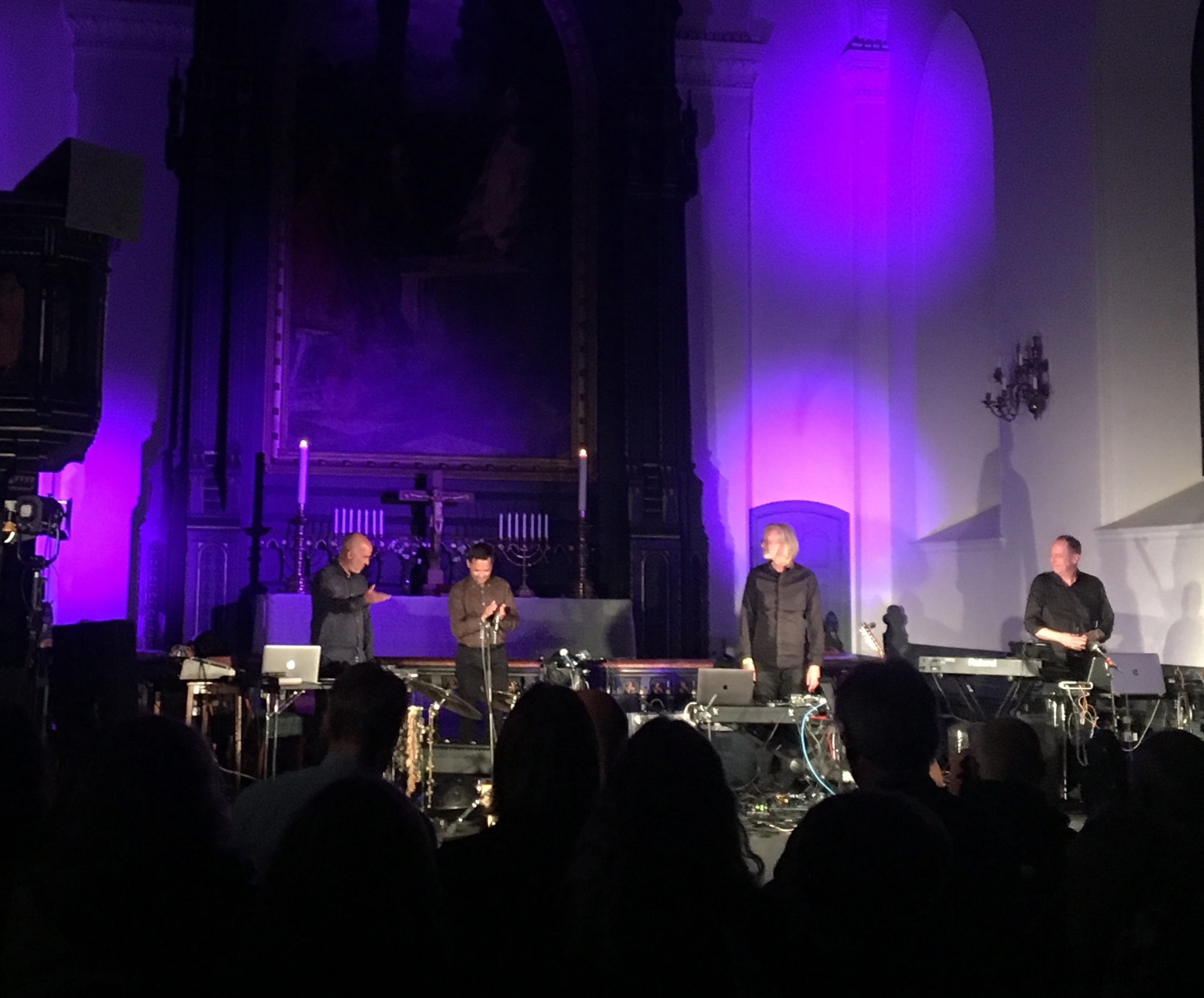
* Snow Catches on Her Eyelashes is on Jazzland Records. The Timeless Nowhere is on Rune Grammofon. The photograph — taken in Kristiansand’s cathedral, the Domkirken, last year — shows (from left) Jan Bang, Arve Henriksen, Eivind Aarset and Erik Honoré.

The Height of the Reeds

Humber Bridge 1

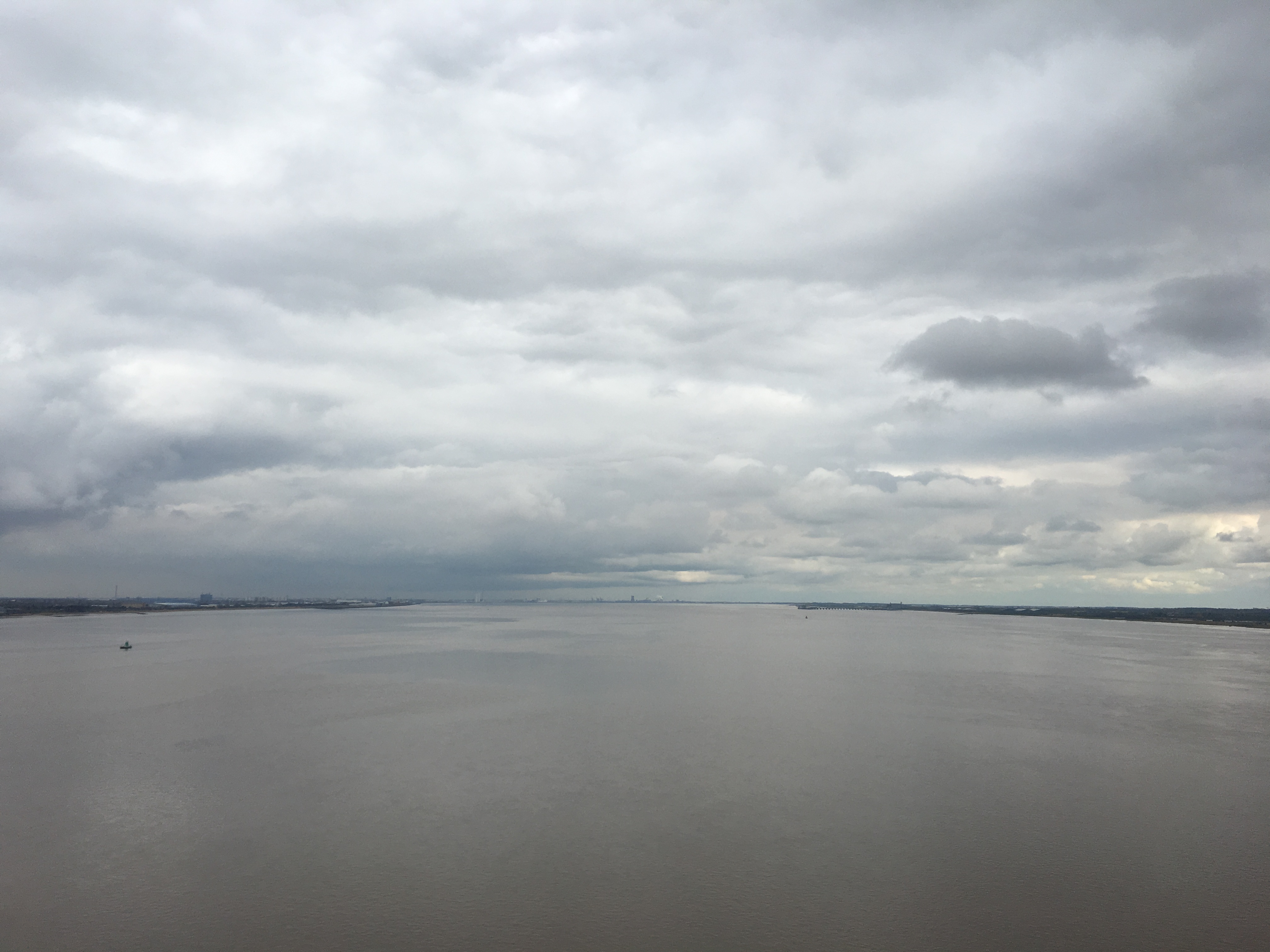
Halfway through the 40-minute walk across the Humber Bridge on Saturday,  I started to slow down. Eventually I came to a halt and just stood there, looking out over the water. The reason: I wanted to enjoy the music.

What music? A sound installation titled The Height of the Reeds, a contribution by Opera North to Hull’s year as the UK’s City of Culture. It was composed by and features three of my favourite Norwegian musicians — the trumpeter/singer Arve Henriksen, the sampling wizard Jan Bang and the guitarist Eivind Aarset — in collaboration with the Hull-based sound artist Jez riley French, who made field recordings of the noises emitted by the suspension bridge’s component parts, including the resonances of its vast anchor chambers and the creaking of its many steel wires. The arrangements for Opera North’s orchestra and chorus are by another Norwegian, Aleksander Waaktar. Also embedded in the piece are translations of words by the Norwegian poet Nils Christian Moe-Repstad, read by three Hull voices: the actors Barrie Rutter and Maureen Lipman and seven-year-old Katie Smith, a pupil at a local primary school.

You listen to it on a pair of headphones attached to a small receiver worn on a lanyard. The piece lasts 41 minutes; it’s in eight sections, each transition triggered at a particular point during the 2.2km walk across the bridge. It begins quietly, with some of the sounds recorded by French, and with the young girl’s voice. Thereafter I was too busy listening to take notes, but there are several passages of heart-stopping beauty as the music accompanies your journey from the north to the south shore. Were it available on CD, I’d have bought one as soon as the walk was over, and I imagine many others will feel the same.

As for the bridge itself, you can’t spend time in proximity to such a thing without admiring the genius of the civil engineers who turned an architect’s design into physical reality. I was awed by the sheer mass of the tilted and tiered concrete blocks holding down the structure at either end, the soaring simplicity of the two towers, and — most of all — the sense of countless lines and points of tension held in stasis by spun steel wires (well, not exactly stasis: the centre of the bridge, which carries four lanes of traffic with a walkway on either side, is designed to accept lateral movement of 4m in high winds).

All sorts of thoughts cross your mind: some to do with the weather, which is liable to change during your passage, and others concerning the landscape’s ancient history and its reshaping in the age of human intervention. As you approach the southern shore, you see a bed of reeds, a muted orange against the pale grey-brown river and the dark green of the riverbank. Visible in the far distance are the steel chimneys of an oil refinery, an arrangement of silver pipes looking like some strange percussion instrument from another world.

The good news is that the installation is open to the public for the month of April; the bad news is that all 5,000 tickets have already been sold. In the light of that success, it’s hard to believe that Opera North and the Hull authorities won’t find a way of prolonging its run. The bridge was opened in 1982 and has a design life of 120 years, so future generations could be enjoying this remarkable creative response almost a century hence. I hope they get that chance.