Skip to content

Posts tagged ‘Bryan Ferry’

Antony Price 1945-2025
Of course there was the shock of the music, exquisite to some and befuddling to others. But it was the list of credit on the cover of the first Roxy Music album that really got people going. Concept by Bryan Ferry. Art by Nicholas de Ville. Photography by Karl Stoecker. Clothes, make-up and hair by Antony Price. Something different was going on here.

A lot of it had to do with Antony Price, a Yorkshire-born former Royal College of Art student who got together with Bryan Ferry to devise the group’s look. Price died this week, aged 80, having made a significant contribution to the way the culture around the music evolved in the 1970s. Price made the ruffled satin swimsuit in which Kari-Ann Moller posed on the wraparound gatefold cover image of that debut album, the strapless sheath dress that Amanda Lear wore on the front of For Your Pleasure, and so on all the way through Roxy’s eight studio albums.

Here’s Phil Manzanera, talking to me a few years ago about joining the band in 1972. “I remember getting on the 137 bus from Clapham to go to the photo session for the first album and of course I had no idea about style. My mum sewed some diamante on to a white shirt and I turned up at the session and Antony takes one look at me and says, ‘No, no, no!’ He hands me the bug-eye glasses. ‘Stick these on! And here’s a leather jacket!’ Job done. Fantastic. Antony was a bloody genius.”

Here’s how Ferry remembered putting that first cover together: “I think it was after the recording. Either we were still making, it, or just about finished. I remember calling Antony from a red phone box, I think in the King’s Road, which makes sense because I used to hang around EG (Management)’s offices. I was living in Battersea with Andy Mackay. I remember Antony saying, in his gruff way, ‘I want to hear what it sounds like!’ So I guess I went round to see him.

“Antony had this photographer friend who he’d already done a couple of things with, called Karl Stoecker, married to Errol Flynn’s daughter – a very handsome man, a real ladies’ man. We went to his studio and did this picture. Antony and I talked about it… (he) had this girl called Kari-Ann who he thought was ideal – I wanted a woman, dressed by him. It turned out to be the perfect thing to go with the music.”

What was the cover image saying? “All the ’50s references in the music, late ’50s, early ’60s, were being reflected. It wasn’t that long gone, but it seemed like an age. But although it was a cheesecake kind of thing, it was a bit more knowing. It was all in the details, I think… the make-up, everything, the gold disc – that was a conceit, a cheeky little thing. Yes, it was challenging – and she was looking in a challenging way. It was in the (pre-digital) days when you didn’t know if you had the picture at all. A week later you’d look at the prints. I was so excited.

“Then Andy Mackay found this piece of fabric which we used on the inside cover. Nick de Ville, I got him involved, he was a friend from art college. Finding typefaces and fiddling around with that. Then we liked the idea of the (band) pictures looking like postcards. It was a cottage industry, really. We did a session with Karl Stoecker and Antony, dolling us all up. Eno’s girlfriend made a shirt for him – Carol McNicoll, who was a really brilliant artist working in ceramics – she also did his outfits, the feather things later on. Great, like theatre costumes. Andy’s things were a bit more raunchy. Wendy Dagworthy did Phil’s outfit. And Paul was dressed like a caveman – his sound was quite primitive.”

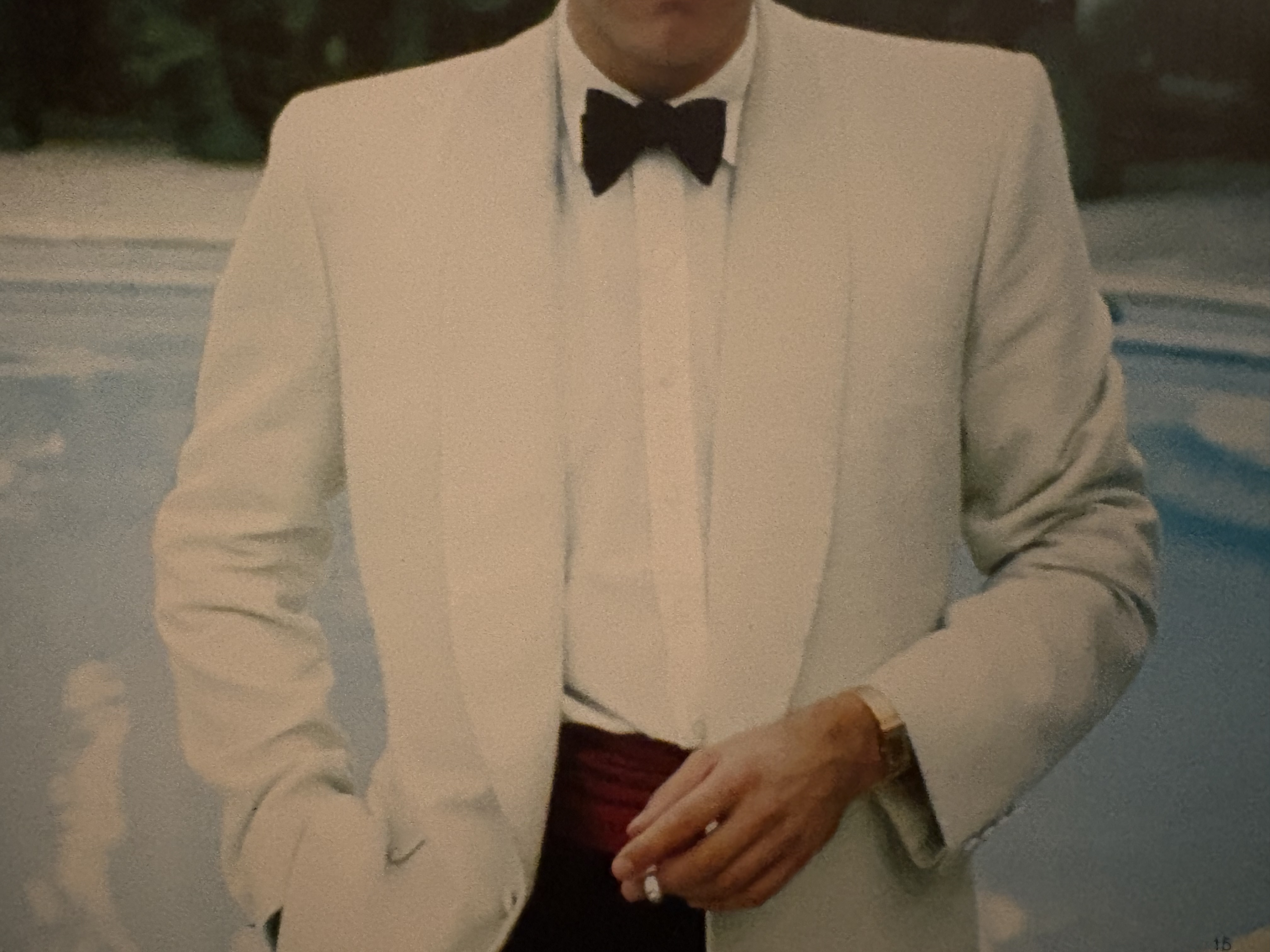
In 1974, for the cover of Another Time, Another Place, Ferry’s second solo album, Antony made two identical white dinner jackets — single-breasted, shawl-collared — for the cover shoot, taken by Eric Boman against a swimming pool, with elegant people in the background. That summer I was going to an Island Records party in the big studio at Basing Street and needed something to wear. Bryan lent me one of those jackets. Nothing has ever felt quite like it.

Portrait of the artists

Bryan Ferry might have made a career for himself as a painter or ceramicist, and he had a go at both. Instead he chose music. But everything he’s done since has been about being an artist in a very particular sense. Roxy Music worked best when seen as an art project: “Re-make / Re-model”, “In Every Dream Home a Heartache”. The same could be said of his solo work: the readymades of These Foolish Things, the more-than-homage of Dylanesque, the ’30s glide and swoon of As Time Goes By, the brazen charm of The Jazz Age, the wintry covers of “Back to Black” and “Johnny and Mary”.

I’ve been thinking about that while listening to his latest release, Loose Talk, created in partnership with the poet and painter Amelia Barratt, which is immediately interesting because it’s a collaboration between artists at very different stages of their careers (she is in her thirties, he will be 80 in September). It’s also the first Ferry album on which someone else is responsible for the words and their delivery.

He’s a great assembler of words himself, of course, as his collected Lyrics underlined when it was published by Chatto & Windus three years ago, but it’s often been a painful business for him. I remember stories from the ’70s of his then-manager, the department store heir Mark Fenwick, sitting in an armchair sighing and tapping his fingers like an exam invigilator while Bryan struggled to carve out the words of the final verse to the last song for a new album, its release date already postponed by a record company impatient for product.

Loose Talk is an album in which Barratt reads eleven of her poems to Ferry’s musical settings, some using material set aside from his earlier projects. It would be flippant — and wrong — to suggest that he’s solved a problem by delegating the job of providing the words to a collaborator. It’s a legitimate artistic project, from both perspectives.

Barratt is a slender young woman with the sort of looks Cecil Beaton captured in his photographs of the pre-war Bright Young Things. Her voice is quiet, reserved, unemphatic. It’s a voice you might overhear amid the gush and babble at a party — a gallery opening or a book launch, perhaps — and look around to discover its source.

Her verses are not song lyrics: they’re poems, allusive and enigmatic and unresolved, filled with fleeting exchanges that hint at narrative but yield impressions rather than stories, occasionally threaded with contemporary images: “Wasting her time / she’s flipping channels with the remote control” or “My sneakers now washed / hang by their laces.” When combined with Ferry’s music, they take us to familiar territory: “She’s one to watch” is the first line of a track called “Stand Near Me”, a prime Ferry opening if I ever heard one, while “Pictures on a Wall” provides a neon-splashed groove that might have come from any Ferry session from Horoscope/Mamouna in the early ’90s to Avonmore in 2014.

There are decayed pianos being played in abandoned ballrooms, a mood that Ferry has explored with and without Roxy Music. Often the accompanying cadences descend with slow, muted elegance: the echoing piano on “Florist”, the bass on “Orchestra”. That’s another Ferry signature.

Barratt’s poems work for me, mostly, because her delivery sounds like a modern way of speaking and sometimes she produces a sketch whose images and emotions provide a satisfying coherence. “Florist” has an intriguing arc and a moment of piercing disquiet: “Imagine one day / he comes to me and says / There is nothing more I want than this / He gestures to the tulips / that look out from a bucket, bunched / in the passenger seat of the van / To his apron / To his diary with nothing in / and I say / That’s perfectly fine / Perfectly alright / Perfectly without the need to tell me all the time.”

There are some familiar names in the credits — the guitarists Neil Hubbard and Ollie Thompson, the bassists Neil Jason and Alan Spenner, the drummers Paul Thompson and Andy Newmark — but their individual presences are never noticeable: these tracks are stripped back to form a watchful background. The most assertive music comes in the final piece, the title track, where Barratt’s economical verses are accompanied by a subdued but baleful 12-bar blues, somewhat in the manner of “Let’s Stick Together”, Ferry’s 1976 solo hit.

Ferry’s own voice is allowed to peep through two or three times as a kind of palimpsest, probably leftover guide vocals from the demos, notably on “Orchestra”, where the atmospherics are at their most languid and dream-like. But in this collaboration he’s found another way to extend his expressive reach. It’s the latest episode in a long life full of interesting creative decisions. Another twist in an artist’s career.

* Loose Talk by Amelia Barratt and Bryan Ferry is out on Dene Jesmond Records on March 28. The photograph of Ferry and Barrett was taken in Los Angeles by Albert Sanchez.

Diamante visions

Phil Manzanera has been a friend since I first interviewed him during the days of Quiet Sun, the band of school friends he was in before being recruited by Roxy Music in time to play on their debut album in 1972. So I can’t pretend to be completely objective about Revolución to Roxy, his newly published autobiography. But I can be completely honest in saying that it will prove informative and entertaining to anyone who’s followed his career over the past half-century, even from a distance.

Here’s a sample that had me almost collapsing with laughter, when he spins a metaphor out of one of the trappings of early success: a maroon Rolls-Royce coupé whose combination of heavy weight and light steering was guaranteed to induce car sickness in children, making it “completely useless as an everyday family vehicle” and forcing him to keep in storage, bringing it out only on special occasions.

“The car carried a famous brand name,” he writes, “it was sleek, stylish and smooth, and undoubtedly in its own way it was iconic. It was a treat to take out, and whenever I did, it was admired and enjoyed by everyone who experienced it. Eventually, though, the time would come when it needed to go back into the garage and once again be covered by the tarpaulin to keep it well preserved and in good order, ready for the next outing.

“I guess you can see where this is going. There was something about that Roller which felt to me to be a bit like Roxy Music. Eye-catching, stylish and high quality, extremely enjoyable and I was proud to be associated with it. From time to time, it would be an absolute joy to take out for a ride so that it could be admired and appreciated; but the ‘steering’ difficulties and the resultant discomfort meant that its outings were strictly limited. After a while it had to go back under the tarpaulin so I could live my everyday life in my runabout.”

The history of Roxy Music as a kind of artistic Petri dish is, of course, explored in some depth throughout these 300 pages, from Manzanera’s first failed audition through the years of great success to the period in which, he began to feel like “not much more than a session player in my own band” — a band in which “I had to find out what was going on more or less by accident.”

Not least, the book is an interesting exploration of rock-band dynamics, with all the associated uncertainties, insecurities, frustrations and exasperations, and Manzanera has a perceptive take on Bryan Ferry’s legendary penchant for procrastination and prevarication: “His Fine Arts background obliged him to tinker and fiddle way beyond the point where the vast majority of people would long since have settled. I now understand this is about his need to make everything he does artistically beautiful and perfect. I tend to want to do things quickly and I’m not worried if they have a primitive edge, and what I’ve learned is that in Roxy opposites can attract. That’s integral to what makes Roxy music special. Makes it us. Makes us it.”

As musical director of the Guitar Legends festival in Spain is 1991, he had the job of telling Bob Dylan that the organisers expected him to perform “All Along the Watchtower”. How he coped and got there in the end, with the aid of Richard Thompson, is worthy of a place in Ray Padgett’s recent book of interviews with people who’ve worked with Dylan. Recollecting in tranquillity, Manzanera writes: “The way I think about the whole thing is much the same as I used to think about my first visit to various foreign countries. I’m really keen to go, really keen to get to know their individual customs and idiosyncrasies, but having been there and done that, I don’t necessarily ever feel the urge to revisit.”

There are stories about his long collaboration with David Gilmour, a shorter and almost Dylanesque one with the Argentinian hero Fito Paez, a WOMAD tour of South Africa and the Antipodes, his discoveries of the pizzica music of Puglia while directing another festival, his adventures with Jack Bruce in Cuba, his songwriting partnership with Tim Finn and his long relationship with Robert Wyatt. And about 801, that short-lived but incandescent all-star band he created in 1976 with Brian Eno, Bill MacCormick, Francis Monkman, Simon Phillips and Lloyd Watson. And, of course, about those diamante-studded bug-eyed sunglasses created for him in Roxy’s early days by Antony Price.

But, as the man who interviewed Phil for today’s Times observed, this isn’t one of those rock-star biogs where you skip the early chapters dealing with childhood, family and schooldays. In this case, that aspect of the narrative is quite as compelling as the rock-star stuff. Phil was born in London but grew up in Cuba during the run-up to the Castro revolution, the son of an Englishman, Duncan Targett-Adams, who had worked for the British Council in Colombia but now represented BOAC in South America, and a Colombian mother, Magdalena Manzanera. There were mysterious elements on his father’s side of the family — was he a spy? where did an Italian opera singer fit into the picture? — and the Latino influence from his mother’s side on his life and work is interestingly explored.

In a way, though, the most striking passage in the book come when he discusses the phone call from America one day in 2012 in which he was told that Kanye West and Jay Z had sampled a riff from K-Scope, his slightly obscure second solo album, then more than 30 years old. They used it on “No Church in the Wild”, a bleak modern masterpiece and the lead track from their album Watch the Throne, which went platinum in the US and gold in the UK before the track appeared in ads for Audi and Dodge cars. Most significantly of all, as it turned out, it was used by Baz Luhrmann on the soundtrack and the trailer for The Great Gatsby.

“Who knew,” Phil writes, in a sentence that tells you a great deal about the evolution of the music industry in our lifetime, “that I would earn more money from a short guitar riff I wrote one evening on a sofa in front of the telly in 1978 than I ever earned in the entire 50 years as a member of Roxy Music?”

* Phil Manzanera’s Revolución to Roxy is published by A Way With Media (£35)

Fifty years later

Bryan Ferry was kind enough to invite me to contribute the introductory essay to the programme for Roxy Music’s 50th anniversary concerts in North America and the UK, so I went along to the O2 last night to see the closing date of the tour and to witness what might, I suppose, have been their final performance together. I don’t like arena shows, but once the sound had settled down it was possible to enjoy what the four members who played on the debut album in 1972 — Ferry, Andy Mackay, Paul Thompson and Phil Manzanera — and their six auxiliary musicians and three backing singers were up to. And of course there was that funny bitter-sweet feeling you get while watching something you first saw in a basement with a few dozen other people half a century ago scaled up to world-conquering proportions in its ultimate iteration. In the essay I wrote about the inevitability of the process by which what had begun as an experiment would become a performance, but hints of the original art-school excitement and uncertainty managed to survive even today’s production values and resources, and the lighting and the back-projections — endless highways for “Oh Yeah”, Warhol images for “Editions of You” — made it beautiful to watch. The show began with reminders of the slightly gawky early stuff (“Re-make/Re-model”, “Ladytron”) and finished with full-throttle favourites (“Love Is the Drug”, “Virginia Plain”) but in between came a long passage in which the pace slowed to a resting heartbeat as luxuriant textures and romantic descending patterns took over. Introduced by the wordless “Tara”, the sequence of “The Main Thing”, “My Only Love”, “To Turn You On”, “Dance Away”, “More Than This” and “Avalon” swept elegantly by in one long candlelit swoon. Not a bad envoi, if that’s what it was.

Bryanesque

Bryanesque

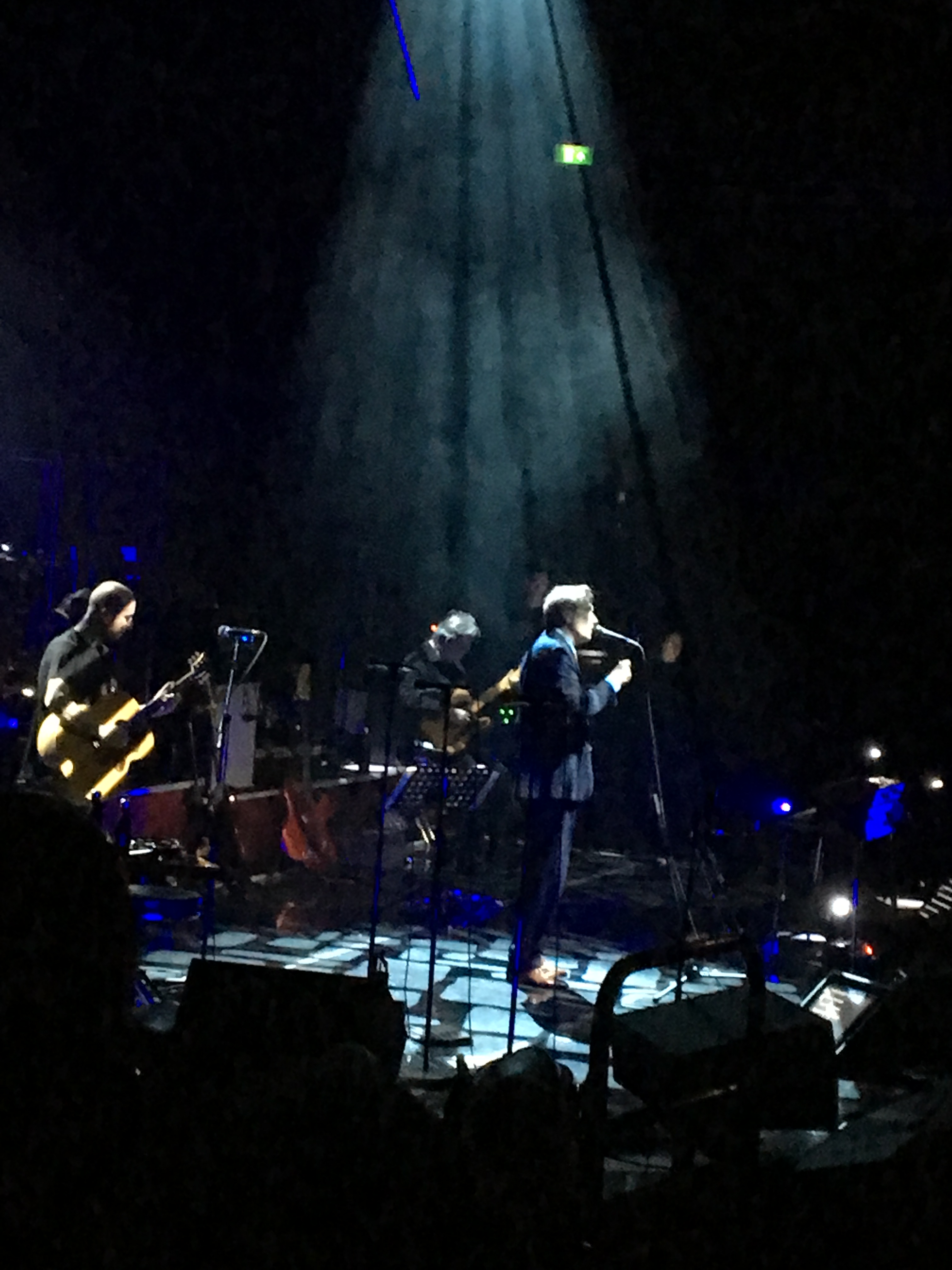
Only a month after writing about the release of Bryan Ferry’s 1974 Albert Hall concert, last night I found myself back in practically the exact same seat I occupied 46 years ago, watching Ferry, midway through the first of three concerts, step into a cone of light to deliver “Don’t Think Twice, It’s All Right” with just the guitars of Tom Vanstiphout (acoustic) and Chris Spedding (almost subliminal Telecaster) for company.

I thought about a recent conversation with my friend Caroline Boucher (once of Disc & Music Echo), who remarked on the extra-special quality of Ferry’s singing on his 2007 album of Dylan covers, Dylanesque. He’d recorded “Don’t Think Twice” five years earlier, on Frantic, accompanied by Colin Good’s piano. Last night’s version was very different: almost unbearably tender in execution and spirit, it formed a pair with the Dylan cover that followed it, “Make You Feel My Love” (which was on Dylanesque). When he launched the familiar roar of “Hard Rain” half an hour later, it was tempting to think of Ferry as the Bard of Hibbing’s most interesting interpreter.

“Don’t Think Twice” was the point at which the concert pivoted away from its opening sequence of a dozen non-hits into the drive towards the encores. Highlights of the first half for me were the unstoppable groove of “You Can Dance” (from Olympia), the slinkier seduction of “Your Painted Smile” (from Mamouna), and the glorious shifts from minor-key verse into the deceptively sunny Europop chorus of “Hiroshima” (from Frantic).

The second half was the formula beloved of Ferry’s wider audience: “Avalon” and “Dance Away”, “Love Is the Drug” and “Street Life”, “Hard Rain” and “The ‘In’ Crowd”, “Virginia Plain” — still a stunning piece of pop art, worthy of his mentor, Richard Hamilton — and “Editions of You”, all delivered with style and energy. Throughout, Ferry received exemplary support from his dozen musicians, notably Neil Jason on bass guitar, Luke Bullen on drums and Jorja Chalmers — Louise Brooks dressed as Catwoman — on various saxophones. If this was a last night out before the coronavirus shuts everything down, then it wasn’t a bad way to finish.

Bryan Ferry at the Albert Hall, 1974

Bryan Ferry Albert Hall

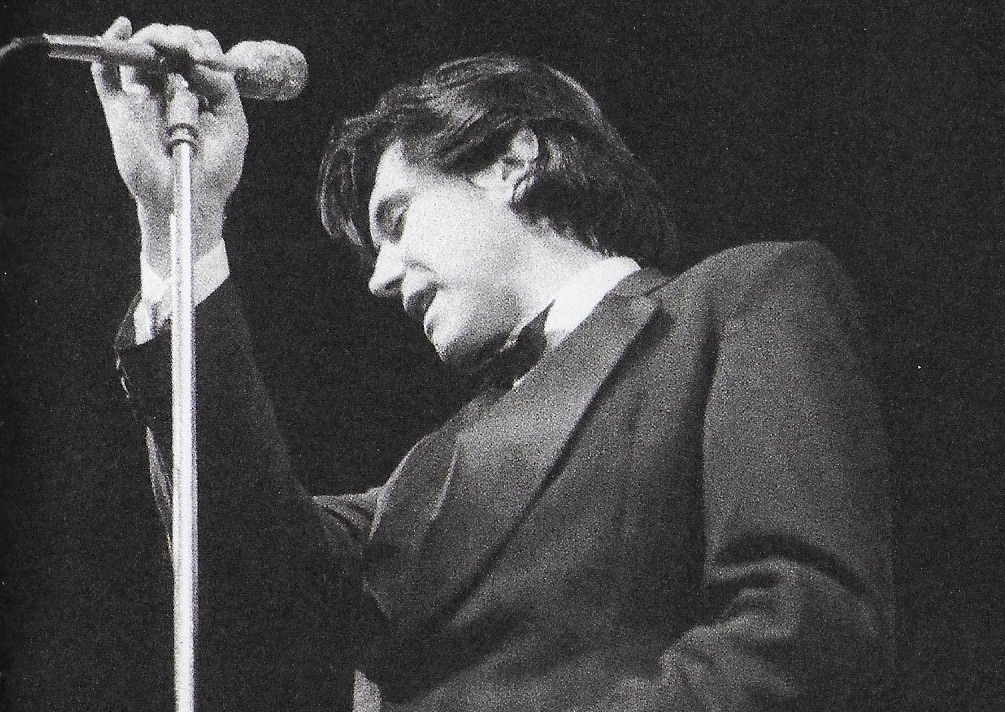
My most powerful memory of Bryan Ferry’s debut as a solo artist at the Albert Hall, four and a half decades ago, is of a blonde woman sitting just along the row from me in the ringside seats. She was in her early thirties, I’d guess, tanned and expensively dressed and coiffed; she’d arrived by herself, carrying a bouquet of flowers. After each song, she rose to her feet and shouted “Bravo!” several times, as if we were at the Royal Opera House. I think she might have been German, possibly Austrian or Swiss. At the end of the encore she reached under her seat to retrieve the bouquet, which she hurled towards the stage. It seemed a clear sign that Ferry had made a decisive move away from the college and club circuit on which Roxy Music had made their reputation, and had acquired a new audience in the process.

Now a recording of that night at the Albert Hall in December 1974 — one of three concerts making up a short tour, the others being at Newcastle City Hall and Birmingham Odeon** — has finally been released, and it fully captures the sense of occasion. Barely two years after Roxy’s debut album had made them the object of mingled wonder and scorn, their singer now had two solo albums behind him and was confident enough to present himself alone in the spotlight in the country’s most famous concert hall.

Musically, it was a lavish production: John Porter and Phil Manzanera on guitars, Eddie Jobson on piano and violin, John Wetton on bass, Paul Thompson on drums, plus three female backing singers (one of them Vicki Brown, formerly of the Vernons Girls and the Breakaways), and a large orchestra, conducted by Martyn Ford, including Chris Mercer and Ronnie Ross on saxophones, Martin Drover on trumpet and Malcolm Griffiths on trombone. It sounded big at the time, and I’d guess not much 21st-century post-production was needed to make it sound impressive today.

The repertoire is mostly drawn from those two solo albums, from the arch teenage pop of the Paris Sisters’ “I Love How You Love Me” and Lesley Gore’s “It’s My Party” via the howling rock and roll of “Sympathy for the Devil”, “(You’re So Square) Baby I Don’t Care” and “A Hard Rain’s a-Gonna Fall” to the grown-up cocktail-hour balladry of “Smoke Gets in Your Eyes” and “These Foolish Things”. There are a couple of originals: “Another Time, Another Place” and “A Really Good Time”.

For me, the biggest successes are Ferry’s daring covers of two of my all-time favourite records: the Beach Boys’ “Don’t Worry Baby” and the Miracles’ “The Tracks of My Tears”. You tamper with the masterpieces of Brian Wilson and Smokey Robinson (and their co-writers) at your peril, but Ferry treated them with affection, respect and imagination. I remember being in AIR Studios on Oxford Street during the sessions for These Foolish Things — the first solo album — and listening to a playback of “Don’t Worry Baby”, during which I was particularly struck by the guitar solo, played by Porter. Ah yes, Ferry said — he’d told his old Newcastle University friend to start the solo at the bottom of the lowest string and finish, eight bars later, at the top of the highest. It was a perfect example of the application of art-school thinking to pop music. The Miracles song is rendered beautifully, with one minor niggle: I wish he’d sung “You’re the permanent one” — the way Smokey did — rather than “You’re the only one”, as subsequent interpreters (including Gladys Knight) have done.

Maybe the most successful piece of all is “The ‘In’ Crowd”, a Top 20 hit for Ferry earlier in 1974, in which he gives Dobie Gray’s Mod-era anthem a thorough update: those implacable opening electric-piano chords, the screeching, chopping guitars of Porter and Manzanera, the double-beating thunder of Wetton and Thompson, and a vocal speaking directly to party people from Bigg Market to Saint-Tropez. As the song ends and the applause erupts, I’m almost sure I can detect a German-accented shout of “Bravo!”

* The photograph of Bryan Ferry, © Michael Putland, is from the jacket of Live at the Royal Albert Hall 1974, released by BMG.

** The piece originally suggested that Ferry played three consecutive nights at the Albert Hall. Not so. Thanks to Andrew Harrison for the correction.

Roxy in the Hall of Fame

Roxy demo

Roxy Music will be among the performers tonight at the Barclays Center in Brooklyn, when the Roll and Roll Hall of Fame opens its arms to the latest group of inductees. No one really needs the validation offered by this much derided and arguably unnecessary institution, but it’s like the Oscars or the Booker: at least it gives you something to argue with.

I suppose Roxy are getting in on the strength of Avalon, the band’s only million-selling album in the US. In their home country, their biggest impact was created — as David Hepworth notes in A Fabulous Creation, his new book about the history of the pop LP — by their debut album, which slid a dagger into the heart of progressive rock and endless boogie in the summer of 1972.

Bryan Ferry, Andy Mackay and Phil Manzanera will be there tonight. Brian Eno and Paul Thompson won’t, for various reasons. Nor will Graham Simpson, the original bassist, who left before the first album came out but without whom, as Ferry has said, there would probably never have been a Roxy. Simpson died in 2012; he’s the subject of a forthcoming documentary directed by Miranda Little, several years in the making (here is the trailer).

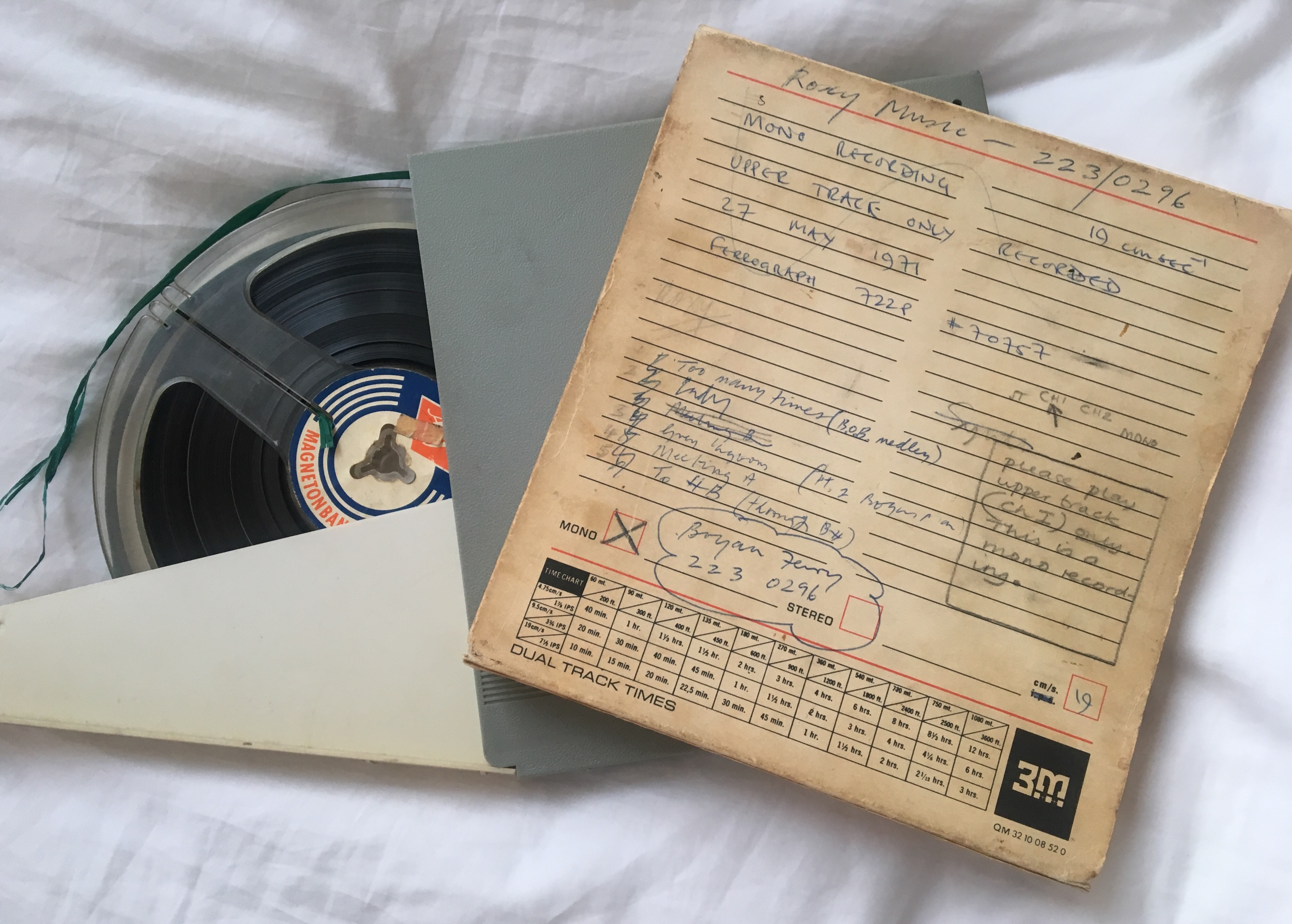
Anyway, just to amuse you, here (pictured above) is the original Roxy demo tape, recorded on May 27, 1971 on Eno’s Ferrograph. Ferry, Simpson, Mackay and Eno were on it, but not Manzanera or Thompson. The guitarist then was Roger Bunn, formerly with Pete Brown’s Piblokto! and Giant Sun Trolley, and the drummer was someone calling himself Dexter Lloyd, a draft-dodging classical percussionist from Chicago whose real name was James Strebing (both would be gone by the end of the summer).

A month later, the demos were dropped off at my flat in Shepherds Bush. “4.30 Brian somebody with tape at home” is the entry in my diary. “Brian somebody” was Ferry. That’s his writing on the box, and his phone number. I just tried calling it, but no one picked up.

David Enthoven: the last goodbye

EG King's RoadOn my way to David Enthoven’s funeral this morning, I walked from Sloane Square down the King’s Road and paused at No 63A, where it all began. The weather was glorious: in the perfect sunshine, it was easy to drift back to the Chelsea of an imagined and sometimes real ’60s.

David died in London last week, aged 72, five days after being diagnosed with kidney cancer. Behind that door and up a flight of stairs, he and Johnny Gaydon, his schoolfriend and first business partner, set up EG Management in 1969, with King Crimson as their first clients. Marc Bolan, ELP and Roxy Music soon joined the roster. They were great days. (And here’s the obituary I wrote for the Guardian.)

When I got to St Luke’s, a large 19th century Anglican church just off the King’s Road, it was already close to packed with people wanting to say farewell to an extraordinary man. As they lingered in the sunlit churchyard after the ceremony, the event had something of the qualities of an English garden party, which was just as it should have been.

Tim Clark, his friend and partner in IE:Music, his second management company, gave an address which stressed the life-enhancing qualities that made David special to every single member of the congregation. Robbie Williams, whose life and career David and Tim had salvaged and remade, sang “Moon River” — a lovely choice — accompanied by the acoustic guitar of Guy Chambers. Lucy Pullin and a choir sang “Angels”, which Williams and Chambers wrote after David and Tim had brought them together. Lamar led the singing of “Jerusalem”.

The congregation included Robert Fripp, the founder of King Crimson, and all five surviving members of Roxy Music from the sessions for the band’s debut album in the summer of 1972: Brian Eno, Bryan Ferry, Andy Mackay, Phil Manzanera and Paul Thompson, who came down for the funeral from Newcastle, where he now plays the drums with Lindisfarne.

One of the morning’s pleasures, over which the man in whose memory we were gathered would certainly have shared a chuckle, was the sight of Fripp, Eno and Ferry (so much history there, from Ferry’s failed audition for King Crimson to Fripp and Eno’s collaboration on No Pussyfooting and beyond) joining the singing of “All Things Bright and Beautiful”. You don’t get that every day.

For art’s sake

Rene Urtreger 2The French pianist René Urtreger, who celebrates his 80th birthday next month, was a member of the Miles Davis Quintet that recorded the celebrated soundtrack to Louis Malle’s Lift to the Scaffold in 1957. He had become a frequent collaborator with Lester Young, Chet Baker, Sonny Rollins, Stan Getz and many others during an era when his native Paris provided American jazz musicians with a warm welcome. Until now, however, his only appearance in Britain had been in the 1970s, when he visited London in his rather different capacity as Sacha Distel’s musical director.

Last night he and the other members of his trio — the bassist Yves Torchinsky and the drummer Eric Dervieu — performed in a small downstairs ballroom at the Connaught Hotel in Mayfair. They were playing to celebrate the opening of a new show, at the Timothy Taylor Gallery in Carlos Place, next door to the hotel, by the abstract expressionist painter Sean Scully, who was born in Dublin and brought up in South London, and now lives in New York and Bavaria. The centrepiece of the exhibition is a work titled Kind of Red, inspired by Miles Davis’s Kind of Blue: a series of five large paintings, in oil on aluminium, conceived as a single unit (you can see them on the gallery’s website, here).

Given the nature of the work’s origin, and Scully’s love of music (as a teenager he ran a blues club over a pub in Bromley High Street, and later named one of his paintings after John Coltrane’s “Dakar”), Timothy Taylor wanted something special to provide an unusual end to the conventional sequence of a private view followed by a small dinner. It seemed right to call on someone with a connection to the inspiration behind the paintings. The way Miles went about recording the music for Lift to the Scaffold — in particular the paring away of harmonic material — exerted a profound influence, two years later, on the concept of Kind of Blue. And Urtreger is now the only surviving member of the group that recorded the soundtrack to Malle’s noir classic.

His story is a fascinating one, revealed in an extensive interview with Pascal Anquetil in last January’s issue of the French monthly Jazz Magazine/Jazzman. To me the most striking single detail was his account of how, having waited day after day as an 11-year-old at the Gare de l’Est for the return of his Polish-Jewish mother, deported by the Nazis, only to discover that she had perished in the gas chambers at Auschwitz, he responded a handful of years later to the discovery of bebop: a music without overt sentiment.

But not, of course, without feeling, as we discovered last night in his fluent, thoughtful versions of “Old Devil Moon”, “So What”, “The Duke” and a handful of bop themes. “I suffered during my youth from a shyness that led me to imagine that I wasn’t at the same level as my (musical) partners,” he told Anquetil. “Today, that’s over. I’ve reached an age at which I have nothing to prove, and everything to give.” Last night’s audience, in which gallerists and collectors were joined by Bryan Ferry (like Scully, a former art student in Newcastle) and several of the painter’s friends, including the former champion boxer Barry McGuigan and the poet Kelly Grovier, accepted the gift with warmth and gratitude.

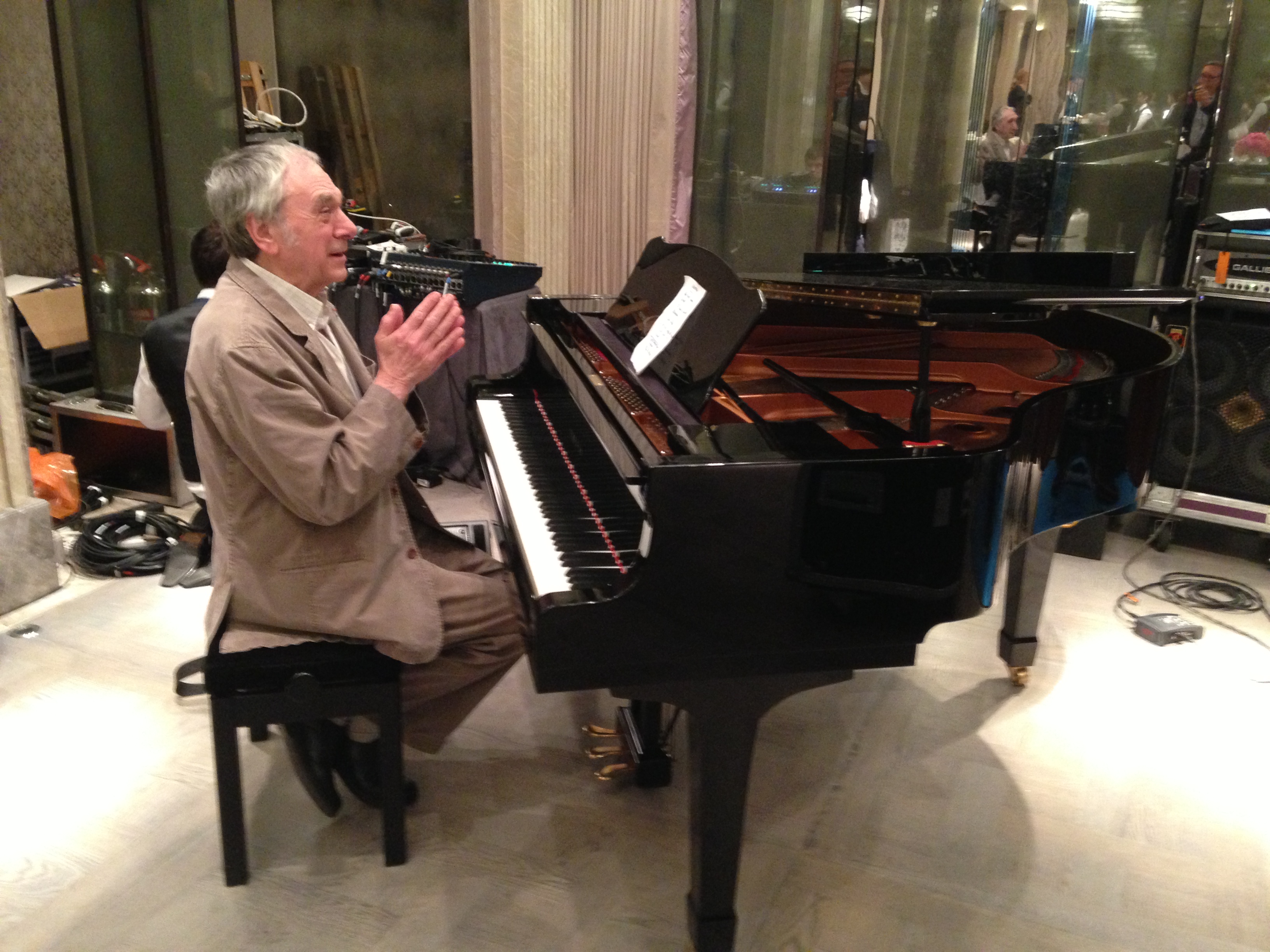
* The photograph of René Urtreger was taking during the sound-check at the Connaught. His most recent solo piano album, Tentatives (Minium, 2006), is highly recommended, and there will be a new album by the trio this summer. The Kind of Red exhibition opens today, June 11, and is on show until July 12 at 15 Carlos Place, London W1. Thcatalogue is published by the Timothy Taylor Gallery. 

Bryan Ferry’s dance to the music of time

Bryan Ferry 2Bryan Ferry is doing a rather brave thing with his current tour, which reached the Albert Hall last night and continues around the country for the next three weeks. Unlike most performers of his age, he is trying to give us more than we bargained for.

The show begins with the nine members of the Bryan Ferry Orchestra, the band that created instrumental versions of Roxy Music songs in the style of Jelly Roll Morton, Bix Beiderbecke and Duke Ellington on The Jazz Age and went on to contribute to the soundtrack of Baz Luhrmann’s The Great Gatsby. So we’re presented with a banjo, a bass saxophone, a variety of clarinets, a string bass and a drum kit from a 1920s photograph: but Colin Good, Ferry’s musical director, has such a profound understanding of this form — as do his musicians, notably the trumpeter Enrico Tomasso — that the results go well beyond mere pastiche or novelty.

For some members of the audience, however, it is undoubtedly something of a shock to hear “Avalon”, “Slave to Love”, “The Bogus Man” and “Do the Strand” so radically transformed, and they have to wait until half a dozen pieces have been delivered in this fashion before Ferry himself arrives on stage to sing “The Way You Look Tonight”, joined by his two backing singers. “Reason or Rhyme” also begins in the same idiom, but is transformed by the mid-song arrival of Cherisse Ofosu-Osei, who settles behind a second drum kit, and Oliver Thompson, who plugs in his Gibson Les Paul, heralding a sudden time-shift to the present day.

From that instant the momentum builds, thanks in large part to Ofosu-Osei, who bludgeons her equipment with an unwavering ferocity that would make Paul Thompson, Roxy’s hard-hitting old drummer, sound as though he were playing for tea-drinkers at the Ritz. But Ferry hasn’t stopped taking chances. He’s going to sing what he wants to sing, and what he wants us to hear, and much of the pleasure of the concert is derived from seeing how he and Good marshal their resources to refresh the material, with Martin Wheatley switching from banjo and guitar to mandolin for a delicate “Carrickfergus”, John Sutton adding percussive decoration to Ofuso-Osei’s rolling thunder, and Tomasso and Iain Dixon providing a blast of Dizzy Gillespie and Charlie Parker on “Au Privave” as a prelude to “N.Y.C.” (a song from Ferry’s album Mamouna). And if you have a bass saxophone standing there, why not use it on “Editions of You”?

The set is liberally sprinkled with Dylan songs, including a lovely voice-and-piano treatment of “Don’t Think Twice, It’s All Right”, and there’s a version of “Shame, Shame, Shame” in which the backing singers interpolate a chorus of “Can I Get a Witness”: a witty and appropriate touch that you can’t imagine coming from anyone who didn’t have a real love and first-hand experience of that kind of R&B.

And that’s what I liked most about the concert. It was about the music, not the image. Ferry seems to have adopted Dylan’s view of time, which is that there is no division between the past and the present. On this evidence he seems to be making it work, for us as well as for him.