Skip to content

Keith Tippett with poetry and strings

Keith TippettLike many British improvisers of his generation, the pianist and composer Keith Tippett could be forgiven for adopting a mildly jaundiced view of the acceptance he is accorded in his own country, at least as measured in the frequency with which he is invited to play before an audience. But last night, as he opened a three-night residency at the Vortex in East London, there was no mistaking the warmth of the response for a well attended concert that satisfyingly expanded an appreciation of the artistic compass of a man whose past exploits have ranged from compelling solo recitals to those celebrated concerts back in 1971 with the mind-bogglingly variegated 50-piece band he called Centipede.

Last night’s gig began with Tippett accompanying his wife, Julie Tippetts, as she recited five of her poems — although “recited” is not quite the appropriate term, since Julie (nee Driscoll) frequently slipped from speech into improvised song. The bringing together of jazz and poetry is a notion with a history of few successes and many honourable failures; this attempt proved very effective, thanks to the engaging and unpretentious quality of Julie’s writing, the sheer musicality of her voice and the beautifully spare commentary from Keith’s piano. “We’ve never tried that before,” Keith said afterwards, “not even at home.”

The remainder of the evening featured the Elysian Quartet — Emma Smith and Jennymay Logan (violins), Vincent Sipprel (viola) and Laura Moody (cello) — by themselves in Tippett’s first string quartet, written for the group in 2008, and then with the composer in his piano quintet, commissioned by the Kreuzer Quartet almost 20 years ago. Astringent writing in the first and third movements of the quartet made room for thoughtful improvisation — imagine trying to get a string quartet to improvise when Tippett was starting out on his career, 40-odd years ago — counterbalanced by a brief second movement based on a lilting country-dance melody. The quintet was full of the dramatic contrasts that have always characterised his music, ranging from the pastoral through the romantic to the motorik, with a couple of floor-shaking passages in which the strings fought against the roiling bottom octave of the club’s Steinway.

Tonight’s instalment finds him leading a new trio (with the drummer Peter Fairclough and the bassist Tom McCredie) and giving the first performance of a suite for octet, The Nine Dances of Patrick O’Gonogon. On Saturday he and the Elysian Quartet will reconvene for an evening of spontaneous composition. If it continues the way it began last night, this short residency will be go down as a triumph for one of the great figures of contemporary British jazz.

Lee Konitz: the improviser at 85

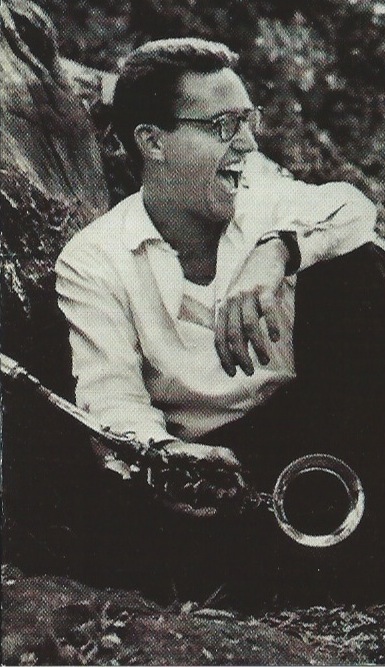
Lee Konitz 1No musician interrogates a song more thoroughly than the alto saxophonist Lee Konitz: separating its components, wiping off the accumulated dirt and scraping away the rust, holding the bits up to the light, examining them from all angles, and then reassembling them in a more interesting form. He was doing it in 1947, when he made his first recordings with the Claude Thornhill Orchestra, aged 20. He is still doing today, halfway through his ninth decade.

He’s featured on a new CD, Costumes Are Mandatory, released on the HighNote label and recorded in August 2012 with a quartet under the leadership of the pianist Ethan Iverson, noted for his work with the trio The Bad Plus. The bassist Larry Grenadier and the drummer Jorge Rossy complete the group. Together with two other albums released in the past couple of years, Live at Birdland (ECM), recorded in December 2009 with Brad Mehldau, Charlie Haden and Paul Motian, and Enfants Terribles (Half Note), made in June 2011 with Bill Frisell, Gary Peacock and Joey Baron, it provides a view of a great artist in his final years, his work subject to the changes imposed by time and the ageing process.

The late work of a long-lived great artist is always interesting and can provide a fascinating distillation of his or her career-long preoccupations. Sometimes the reduced powers are physical, sometimes they are mental. The painter Willem De Kooning was suffering from a form of Alzheimer’s disease when, in his eighties, he produced a series of strange, pale, almost luminous canvases that seemed like the ghosts of his former work. Fortunately, any reduction in Konitz’s powers is purely physical; the articulation might not be as swift, but the intellect is as sharp as ever.

No longer the fleet-footed musical athlete of his youth, when he and his fellow saxophonist Warne Marsh leapt with such alacrity over the high hurdles set for them by their mentor, the pianist Lennie Tristano, now Konitz deploys his reduced powers to different ends. The last of his strength is being spent on searching his material — almost always drawn from the standard American songbook — for new connections, new angles, new avenues of approach.

My best memory of Konitz is also one of my best memories of music, full stop. It comes from about 30 years ago, and a night at a short-lived jazz club called the Canteen on Great Queen Street in Covent Garden, occupying premises that had formerly been Blitz, the headquarters of the New Romantic movement, would later become a discotheque and now house a lap-dancing club. The Canteen, although ultimately unsuccessful in its attempt to rival Ronnie Scott’s, was for a while a very good place to hear such people as Esther Phillips, Chet Baker and Lee Konitz.

On the night in question Konitz was accompanied by an excellent British rhythm section: the pianist (and composer) Bob Cornford, the young bassist Paul Morgan and the experienced drummer Trevor Tompkins. What I remember most vividly is that one complete set was taken up by a treatment of “On Green Dolphin Street”, the Hollywood film theme composed by Bronislau Kaper in 1947 and rescued just under a decade later by Ahmad Jamal, who was responsible for its subsequent popularity among jazz musicians. Konitz started out by improvising unfamiliar and seemingly arbitrary phrases, inviting the other three musicians to go along with him as he gradually allowed these shreds of melody to take new forms, uncovered the connective tissue between them. This mesmerising process reached its apogee when, after much feinting and seeming disgression, Kaper’s theme gradually began to emerge and was stated for the first time as the piece ended. It was like watching a film of an explosion being run backwards in super slow motion.

Lee Konitz 3He does something similar, at a more compressed and less exalted level, on the version of “What’s New” included in Costumes Are Mandatory, allowing Iverson to lead the way, before entering with a phrase from the theme which is quickly deformed into a series of glancing allusions to the original tune, inventing their own sense as they go along. This is something that used to be called “thematic improvisation”, and it is almost a lost art. His distinctive tone — which once proposed an alternative to the all-pervasive influence of Charlie Parker — may be more fibrous and less robust than in his youth or his prime, and the comparison with Live at Birdland and Enfants Terribles indicates that time is having an inevitable effect, but it remains the perfect vehicle for his thoughts.

Konitz, of course, was a member of Miles Davis’s famous 1948 nonet, the Birth of the Cool band, and another personal memory of his playing comes from 1991, when he appeared at London’s South Bank with a band billed as Re-Birth of the Cool, an attempt by another original member, Gerry Mulligan, to recreate those celebrated sessions. Lew Soloff played Davis’s parts, and the other original present was Bill Barber, the tuba-player. For me, the outstanding impression was left by the way Konitz approached the project: he was the only one not interested in honouring the past by recreating it note-for-note but was intent on playing as though more than 40 years had passed and the world had moved on.

Working as a soloist for hire suits him because it presents him with a constant variety of challenges. That is how he has operated throughout his career, which has never been short of recorded documentation, from those early sides with Thornhill, Davis, Tristano and Stan Kenton through his own albums on Atlantic and Verve, his fascinating and fearless encounters with Martial Solal, Elvin Jones, Albert Mangelsdorff, Kenny Wheeler and countless others, to this most recent crop of albums. As a body of work, it offers not just a vast quantity of great music but a salutary lesson in the value of living in the present.

* The photograph of Konitz at the top is a detail from the cover of the 1955 Atlantic album Lee Konitz with Warne Marsh, taken by William Claxton. The lower photograph is a detail from the cover of Costumes Are Mandatory, taken by John Rogers. For those who want to know more, I thoroughly recommend Lee Konitz: Conversations on the Improviser’s Art by Andy Hamilton, published by the University of Michigan Press in 2007.

“Thanks for the song, Mr Knight…”

Frederick KnightThose are the words spoken by Leonard Cohen over the final notes of one of the tracks on his 1992 album, The Future, and they came to mind when I read something Sharon Robinson, Cohen’s songwriting and singing partner for the past three and a half decades, said during the course of an interview in last Saturday’s FT magazine.

The interviewer, Philippe Sands, reminded Robinson that she had joined Cohen’s band in 1979 “as a classically trained pianist (having studied at the California Institute of the Arts) with a serious interest in R&B and soul, the likes of Sam Cooke and Otis Redding”.

Her response was interesting. “He likes to bring that flavour into some of his music,” she said.

It reminded me of a track from The Future, one that has always been among my  favourite Cohen recordings: a cover version of Frederick Knight’s “Be For Real”, a glorious, gospel-drenched deep soul ballad delivered with a very proper sense of how to treat such material: i.e. with the utmost respect.

Cohen doesn’t do many cover versions, and he knew that you don’t mess with a song like “Be For Real”. He used a great Los Angeles rhythm section — Greg Phillinganes on keys, Paul Jackson Jr on guitar, Freddie Washington on bass guitar, James Gadson on drums and Lennie Castro on percussion — and a warm but never overbearing arrangement for backing voices and strings by David Campbell. Everything about it, including the dead-slow tempo, serves the quality of the song.

It had been recorded once before, by Marlena Shaw in 1976 on a Blue Note album called Just a Matter of Time. Produced by Bert DeCoteaux and Tony Silvester, Shaw’s version is pretty good, although she twists the melody more than necessary in her efforts to be expressive. In 1996, unaccountably, it was absolutely murdered by the Afghan Whigs as part of the soundtrack to Ted Demme’s Beautiful Girls, otherwise one of my favourite films. (It’s here, but I wouldn’t listen to it if I were you.) This is a song that is best left to sing itself, as I discovered when I heard Knight’s original demo a few years ago.

The composer’s version is hidden away on a four-CD compilation, not for sale to the general public, called East Memphis Music: The Hits, compiled and circulated inside the business in 1988 by the Stax publishing company’s then licensees, Irving Music and Rondor Music. Almost all of the 80 tracks are the well known versions of the songs from which the publishers were trying to extract additional life: Carla Thomas’s “B-A-B-Y”, Otis’s “Dock of the Day”, Sam and Dave’s “Hold On, I’m Coming”, the Staple Singers “Respect Yourself”, and so on.  Frederick Knight’s “Be For Real” is the exception that, from my point of view, makes the whole exercise worthwhile.

You might remember Knight from his days as a Stax artist, a period which yielded his big hit with “I’ve Been Lonely For So Long” in 1972 and the not quite as successful “I Betcha Didn’t Know That” three years later. He was born in Birmingham, Alabama in 1944, and after Stax fell apart his only real claim to fame came when he wrote “Ring My Bell” for Anita Ward in 1979, at the height of the disco boom.

His version of “Be For Real” is clearly a demo, and that’s part of its charm. A piano that hasn’t been tuned lately, a Hammond B3 dialled into a deep church setting, a bass guitar, a drummer who seems to have left everything except his basic snare and kick drum combo at home, and falsetto backing vocals that could well be Knight himself overdubbed a handful of times, every voice and instrument performing — and recorded — with the maximum of restraint and no tricks: that’s all it takes to render the classic version of this glorious, timeless song.

I’m sorry I can’t give a link to it. As far as I know (and I hope someone will pop up to prove me wrong), it has never been commercially available. It’s not on either of the two Knight albums that go for exotic prices on Amazon. But there’s a copy of East Memphis Music: The Hits for sale here at http://www.discogs.com at what seems to me to be a reasonable price; if I were you, I wouldn’t hesitate, even if the package as a whole contains dozens of tracks you already possess. And if anyone reading this is in a position to put forward material for Aretha Franklin’s next album, then her version, appropriately produced, is the only one I can think of that might live on equal terms with the original.

A staircase on 86th St

Corso

Ray Barretto’s “El Watusi” was one of my favourite 45s of 1963, a sudden blast of exoticism amid the green shoots of Mersey Beat and New Wave R&B (as the emergent soul music was briefly known). Hispanic voices harangued each other over a basic Latin piano vamp and strategic handclaps. Eventually the rest of the band joined in: riffing violins, jaunty flute, the scrape of a guiro, a rattle of timbales and, of course, Barretto’s congas. There was no song, no lead vocal. The record faded out with the music stripped back again to piano and handclaps and the verbal exchanges still in full spate. I hadn’t a clue what the voices were saying, but it didn’t matter. To a 16-year-old in England it represented a slice of Spanish Harlem street life, two and a half minutes of riveting authenticity.

It was released in the UK on the Columbia label, EMI having picked up the rights via a deal with Roulette, on whose Tico imprint it was issued in the US, and it became an enduring Mod favourite. Roulette was Morris Levy’s company, and Tico was run by George Goldner. Both men were notorious for their connections, but between them they were responsible for a fair proportion of the great pop music that came out of New York in the pre-Beatles era. Teddy Reig, who had produced Charlie Parker’s Savoy sessions for the equally notorious Herman Lubinsky and Count Basie for Roulette, got the producer’s credit for “El Watusi”, which was recorded in October 1962 in the ballroom of New York’s Riverside Plaza Hotel, a very ornate bulding on West 73rd Street which had originally been a Masonic club. Now the record has been very nicely reissued by the Malanga label on a CD coupling two LPs by Ray Barretto y su Orquesta: Charanga Moderna and La Moderna de Siempre, both recorded in the same year and at the same venue.

This gives me an excuse to write about the first time I saw Barretto in person, at a club called the Corso at 205 East 86th Street, off the corner of 3rd Avenue, half a dozen blocks below East Harlem, also known as Spanish Harlem, or El Barrio. From 1970 to 1985, a period encompassing the start and the flowering of the salsa era, the Corso was perhaps New York’s principal rendezvous for lovers of Latin music, as the Palladium had been in the 1960s. Its owner, a restaurateur and club owner named Tony Raimone, had bought it in 1968 and was soon persuaded by Pete Bonet, one of Barretto’s singers (and one of the voices on “El Watusi”), to institute a musical policy appealing to the city’s Cuban and Puerto Rican expatriates.

It was a great success. By the time I got there in 1974 the club — up a steep flight of steps, above a restaurant — was featuring three bands nightly, five nights a week, and was packed with dancers from the Latin community, the sort of people who hadn’t needed to take lessons in order to dance to a clave rhythm.

I was in New York on assignment from Island Records’  Chris Blackwell, who had made a deal with Jerry Masucci of Fania Records, the hot new salsa label. Blackwell wanted me to scope out the possibilities for UK releases and tours. I was there for a week, and just about every night I ended up at the Corso, leaning against the long bar at the back of the dance floor and absorbing some wonderful music while marvelling at the fluency and inventiveness of the dancers, young and old. Among the bands I saw there were that of the young pianist Larry Harlow and two excellent charanga outfits, Tipica ’73 and Tipica Ideal. Among the clearest memories is that of one of the speciality acts who performed between the sets: a tall, lithe woman wearing a top-to-toe catsuit in black lace who performed sinuous dance routines in partnership with what I think was a  boa constrictor, at least 10ft long. I’m not sure you’d be able to find that sort of entertainment very easily now.

Good times at the Corso came to an end in the spring of 1985, the night the NYPD completed a sting and nabbed Tony Raimone, along with his son and his nephew. Over the preceding months an undercover agent had been buying heroin from them — about $5m of the stuff at street prices — in transactions made at another of Raimone’s establishments, further along 86th St. The final deal took place in the restaurant downstairs from the Corso.  The cops pounced, and that was that. The dancers had to find another home.

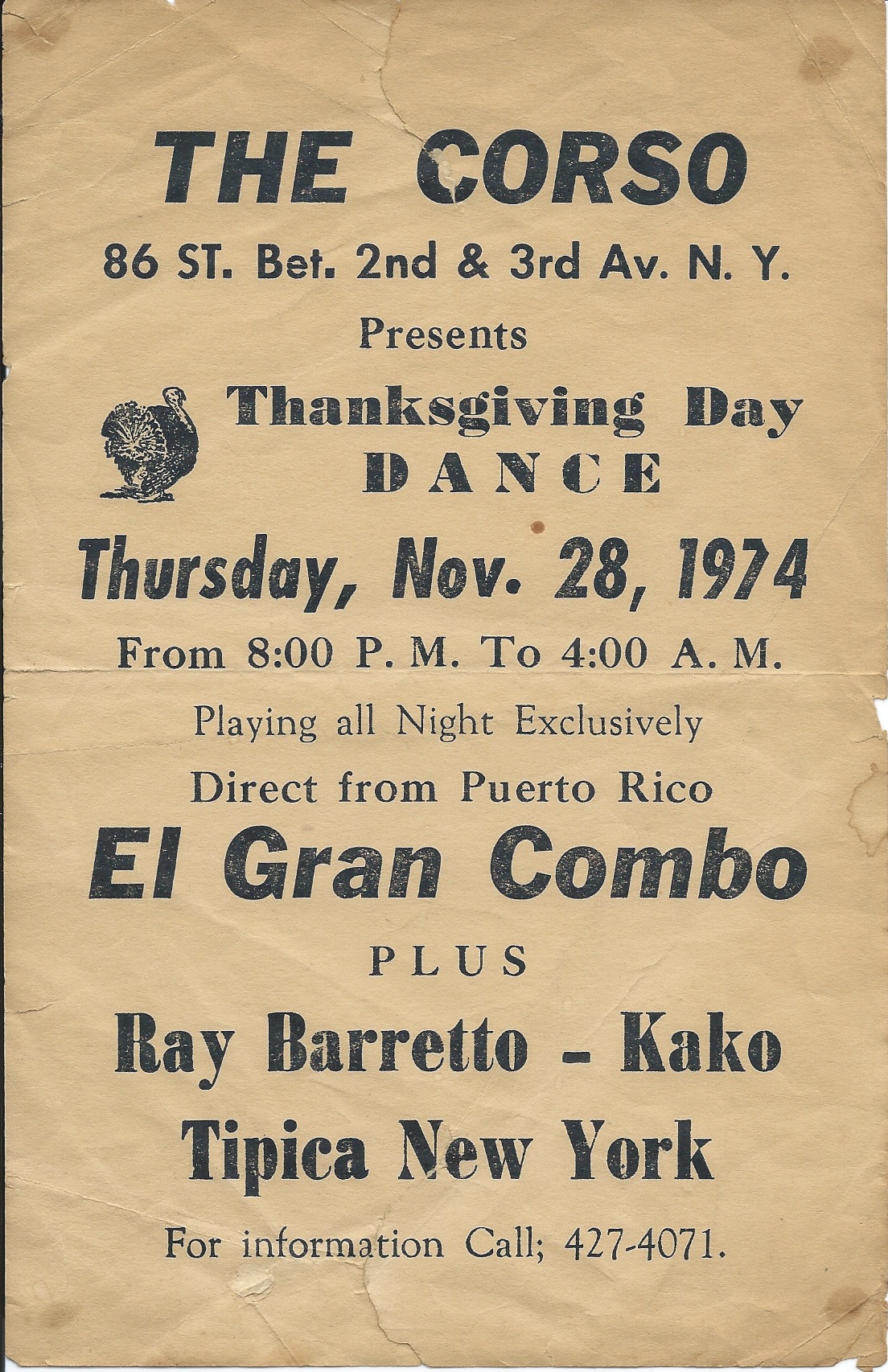
I kept the handbill above as a souvenir of a wonderful experience, one we came close to replicating in West London the following year when Hector Lavoe and his brilliant orchestra played a one-off gig at the old Nashville Rooms on North End Road, with the marvellous Professor Jose Torres on piano. It was a sensational night, and a few months later Ray Barretto himself arrived with Celia Cruz, Johnny Pacheco and the rest of the Fania All Stars to play at the Lyceum, a much bigger gig, with Steve Winwood as a special guest.

It would be another 10 years before salsa found its place in UK dance culture. But if you’re browsing a second-hand vinyl store and you see a copy of one of the compilations I put together for Island’s budget-price HELP label at that time, Salsa! and Salsa Live!, don’t hesitate: just snap it up.

Homages to Gil

Gil EvansI often wonder how music would have sounded today had Gil Evans never existed. We celebrated the centenary of Gil’s birth last year, and this year marks the 25th anniversary of his death, but for those of us who love his work he seems ever present, both in the enduring wonder of his own music and in his subtle but persistent influence on others.

A few weeks ago it was announced that Ryan Truesdell’s Centennial, a crowd-funded (via ArtistShare) CD of new recordings of lost or obscure Evans arrangements, had been named record of the year by the US Jazz Journalists’ Association. A New York-based composer, Truesdell secured access to Gil’s archive and delved deep into the arranger’s history for previously unrecorded pieces for Tommy Dorsey (“Dancing on a Great Big Rainbow”) and Claude Thornhill (“Who’ll Buy My Violets?”, “Beg Your Pardon”, “How About You?”), and a version of “Maids of Cadiz” written for Thornhill seven years before it appeared in reworked form on Miles Davis’s Miles Ahead. He does a wonderfully empathetic job of imagining how Gil might have completed work on “Punjab”, a piece which previously only existed in a skeletal rejected version (from the 1964 sessions for the classic The Individualism of Gil Evans).

He also earns my gratitude, in particular, for unearthing a couple of important arrangements written by Gil for a concert with a 24-piece Dream Band at the Berlin Jazz Days in 1971. I was present that night, and I retain a vivid memory of how, although the band was full of excellent musicians, the performance was disappointing and suffered badly from a lack of adequate rehearsal time. Particularly in the days before he espoused electric instruments, Gil’s music was all about nuance and heavily dependent on his musicians’ understanding of his unusual modus operandi, including an approach to conducting that was, shall we say, suggestive rather than prescriptive. Thanks to Truesdell’s diligence, here there are no such problems, and we get an extended 12-minute treatment of “The Barbara Song” (the Kurt Weill tune also featured on The Individualism), now with a thoughtful vibes solo from Joe Locke in place of Wayne Shorter’s immortal tenor saxophone improvisation, and a 19-minute medley of “Waltz”, “Variation on the Misery” and “So Long”. The glistening performances are everything Evans might have wished to hear that night in Berlin, and completely true to his spirit.

If it is one thing to recreate the music he wrote as accurately and sympathetically as possible, it is another to use it as a platform for further exploration, which is what, in his characteristically quiet way, the composer and arranger Mike Gibbs has done on his latest album: Mike Gibbs + 12 Play Gil Evans, released this month on the Whirlwind label. Unparalleled in his devotion to and understanding of Evans’ music, Gibbs has allowed it to colour and inspire his own work for the past 40-odd years, ever since he came to prominence with such compositions as “Family Joy, Oh Boy” and “Sweet Rain”, made famous by Gary Burton and Stan Getz respectively in the late ’60s.

For this new album, recorded in London earlier this year, he takes six of Gil’s arrangements and, rather than using the original charts as Truesdell did, makes his own transcriptions, to which he adds his own variations. I can’t imagine anyone else bringing this off, but from the very start, with “Bilbao Song” (another Weill tune, recorded by Evans on Out of the Cool in 1960), it’s apparent that he is fully capable of adding something new and valuable to what is already a masterpiece. We also get a third great cover version of Gil’s perennially seductive “Las Vegas Tango” (based on Ravel’s “Piece en forme de habanera”), to go with those on Robert Wyatt’s End of an Ear (1970) and Michael Shrieve’s Stiletto (1989), and beautifully enhanced treatments of “Sister Sadie”, “Spring is Here”, “St Louis Blues” and “Wait Till You See Her”.

The album is completed by arrangements of four tunes with no Evans connection: Ornette Coleman’s “Ramblin'”, Carla Bley’s typically enigmatic “Ida Lupino” and Gibbs’ own “Feelings & Things” and “Tennis, Anyone?”. It’s the highest of compliments to say that all 10 pieces maintain a unity of tone, texture and vision, with “Ida Lupino” contrasting a clarinet lead and low brass in a way Gil would surely have loved, while demonstrating just how far from pastiche this exercise is.

The soloists, too, are up to the task. The bassist Michael Janisch, outstanding throughout in partnership with the drummer Jeff Williams, is featured at length on “Bilbao Song”, showing himself to be one of a new breed of player (along with Thomas Morgan and Larry Grenadier) whose renunciation of the desire to play faster, higher and ever more intricate lines acts to the great benefit of the music. Julian Siegel’s tenor saxophone and Mark Nightingale’s trombone are featured to good effect on “Las Vegas Tango”. Robbie Robson adds a light-fingered trumpet solo to “Sister Sadie” and plays the Miles role more than efficiently on “Spring is Here”. The altoist Finn Peters evokes the very different spirits of Coleman on “Ramblin'” and Cannonball Adderley on “St Louis Blues” without being remotely imitative. And the gifted pianist Hans Koller brings his own approach to Evans’ sidelong, minimalist keyboard style.

I’ve gone on at length about these records because, as hard as it been to accept for the past quarter-century, we won’t be getting any more new music from Gil Evans. There wasn’t even nearly enough of it in his lifetime, thanks to the difficulty he always experienced in trying to write quickly or to order. Maybe one way of measuring his stature is to look at what he has inspired in others, and there can’t be much higher praise than to suggest that these two albums belong next to his own.

Big hit records

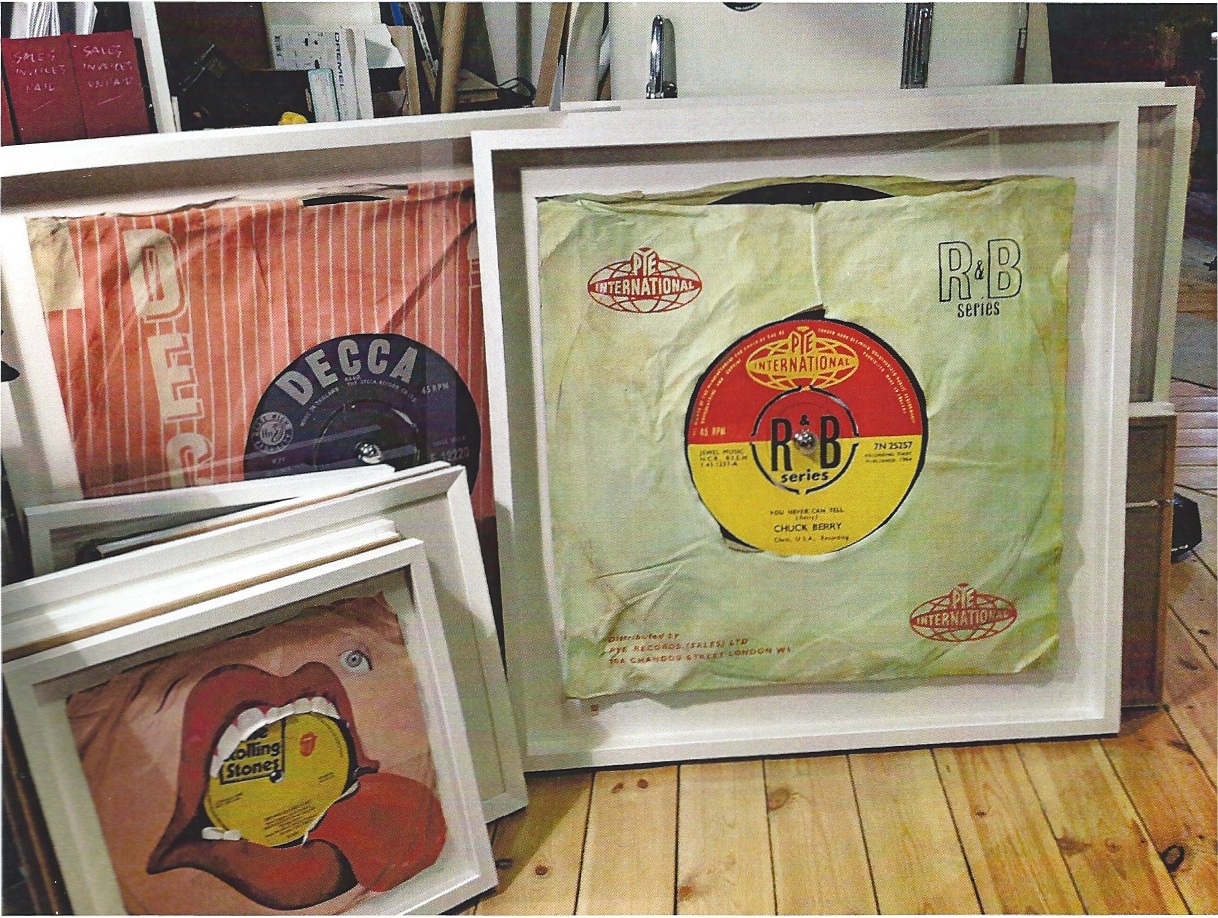
Morgan Howell's 45sMorgan Howell recreates 45s as pieces of art because he wants to make them larger than life. As big, in fact, as the space they take up in your heart and mind. That means making 27-inch discs rather than seven-inch, encasing the enlarged vinyl facsimile in a reproduction of the original paper bag made out of canvas and painting the original graphics and type from the label and the bag, and then mounting the result in a 32×32 frame. But Howell is not trying simply to reproduce the record as it came out of the freshly delivered box of 25 on the record shop counter one Friday morning two or three generations ago. He wants to show the whole history of the individual record: the signs that it has been played and played and played again, treasured and cherished and carried from bedsit to party and onwards through life. So, with infinite care, he reproduces all the creases and tears, all the fading, all the smudges and lipstick smears, and even the traces of a long-since removed sticky label.

Thirty of these three-dimensional objects — several full-scale originals, and some smaller prints — are on show all this month at the Snap Gallery, situated in an arcade between Piccadilly and Jermyn Street in London W1. Among them is Chuck Berry’s “You Never Can Tell”, issued on the gorgeous yellow and red Pye International R&B label in 1964, about which David Hepworth wrote quite beautifully in his blog a few weeks ago (click on http://www.davidhepworth.com/blog.html and scroll down to June 19, 2013). You’ll also find “Shakin’ All Over” (with that marvellous expressionist 1960 EMI bag), “Green Onions” on Stax, “Good Luck Charm” on UK RCA, “My Generation”, the Chiffons’ “Sweet Talkin’ Guy” on Laurie, the original US Columbia issue of “Like a Rolling Stone” and many others.

When Morgan Howell told me that the first one on which he’d tried the technique was Martha and the Vandellas’ “Heat Wave”, borrowed from his big sister’s record collection, I knew he was a man after my own heart. I told him that I could remember precisely where and when I heard that record for the first time, standing beside my parents’ KB valve radio one evening in September 1963: my first blast of the full-strength, fully developed Motown sound. His own favourite is one of which he’s done both the A and B sides: “Get Back” and “Don’t Let Me Down” by the Beatles, which has a special meaning for him since he happened to be sitting in the back of his father’s Ford Zodiac, aged three, when they got stuck on Savile Row in an unexpected traffic jam on January 30, 1969, the day the Beatles played together in public for the last time on the Apple roof.

They’re not cheap: the originals cost £9,600, prints at the same size are £2,000, and the scaled-down versions are £595. In any size they’d be a very nice thing to have on your wall, even if you preferred “Paranoid” or “Hotel California” to “You Never Can Tell”. And, inevitably, you start playing the game of what you’d commission him to paint, if you could afford it. At the moment — and this is a purely imaginary exercise, you understand — I’m thinking Billy Preston’s “Billy’s Bag”, on the UK Sue label, with that fantastic paper bag listing all the label’s artists. Or maybe the Reflections’ “(Just Like) Romeo and Juliet” on Stateside. No, it’s got to be Kenny Dino’s “Your Ma Said You Cried in Your Sleep Last Night”, with my then-girlfriend’s name inscribed in nail polish on its HMV/United Artists label 51 years ago. Now there’s a record that deserves to have its portrait painted.

Rod’s Miura

Rod's MiuraThe last time I saw this car, in May 1971, it was parked outside Morgan Studios in Willesden, North London. Its owner was inside the building, finishing off Every Picture Tells a Story.

That February I’d been on the road with Rod Stewart and the Faces in Boston and Jersey City, writing a story for the Melody Maker. You can imagine it was pretty good fun, as long weekends go. Now here I was, three months later, listening to Rod waxing lyrical about David Ruffin as he put the final touches to his cover of the Temptations’ “(I Know) I’m Losing You”. Then came the wonderful experience of having “Mandolin Wind” and “Maggie May” played back through the studio speakers. Martin Quittenton was in the studio that night, having made a vital contribution to the album as guitarist, mandolinist and co-writer. “Mandolin Wind” remains my favourite of Rod’s recordings, by a distance.

On the way into the studio I’d admired the brand-new yellow Lamborghini Miura parked on the forecourt. There weren’t many of those in London in 1971. This was the first of Rod’s many exotic cars, including a whole string of Lamborghinis, and probably the prettiest of the lot. Who cared that the clutch was unbearably stiff or that it overheated constantly? He’s very funny about it in his droll autobiography, put together last year with the help of Giles Smith. “The Miura was a considerable investment: £6,500,” he recalls. “Bear in mind that the first house I had just bought, in Muswell Hill, had only cost me £5,000. So, for a while there, my car was worth more than my house. And there was no off-road parking, so I had to leave it on the street. Small wonder I couldn’t sleep at night.”

The car over which he lost sleep is now to be auctioned by Bonhams at the Goodwood Revival in September. The picture above is of the sale brochure, and the estimate for the car is between £750,000 and £850,000. A lot of money, but almost certainly a great deal less than the value of whichever of his houses its first owner will be sleeping in tonight.

I’ll save my story about seeing Rod for the first time in 1964, with one of my favourite bands ever, for another day.

Mick Farren 1943-2013

Mick FarrenMick Farren collapsed and died on stage at the Borderline in London on Saturday night while singing with the latest version of his band, the Deviants. After three decades in New York and Los Angeles, he had spent the last few years back in Britain. Here’s a tribute by his old friend and NME colleague Charles Shaar Murray, and here’s my obituary, both from today’s Guardian.

I knew Mick at the end of the ’60s and the beginning of the ’70s, which was probably his best time, and I always enjoyed his company. I’d first clapped eyes on him in Nottingham in 1967, when an enterprising friend of mine organised the city’s first (and only) “happening” at the Rainbow Rooms, and booked the Social Deviants — as they were then called — along with a projector and a print of Kenneth Anger’s Scorpio Rising, a bubble machine and the bits and pieces to make a rudimentary light show. How cool we were, suddenly transformed from mods into hippies! I bought a Tibetan love bell and gave my friend Paul Smith, then managing the men’s floor of a boutique called Birdcage, 25 shillings to get his tailor to make me a royal blue kaftan with floral braid. It looked fine until I tried to dance and discovered that the arm-holes had been made so small that I could barely move. So much for letting it all hang out. (Having some sense of history, I kept the garment; it made a second public appearance in True Brit, the exhibition devoted to Paul’s work at the Design Museum a few years ago.)

The photograph above is taken from the back of the dust jacket of Mick’s excellent memoir, Give the Anarchist a Cigarette, published by Jonathan Cape in 2001. It was taken by Barrie Wentzell, the Melody Maker‘s staff photographer, and it records a round-table discussion at the MM‘s old Fleet Street offices, probably in 1971. The discussion was being moderated by Michael Watts, who has his back to the photographer, and our much-missed colleague Roy Hollingworth, on Watts’s left. Neither of us can remember who the hippie on Hollingworth’s left is. That’s Farren next to the unknown person, with Sandy Denny opposite him at the top of the table (no, it’s not Sandy Denny: see Comments). On Sandy’s left, wearing a cap, is Robert Wyatt. On Robert’s left is another person whom neither of us can identify. We can’t remember what the subject of the discussion was, either. Maybe someone out there can help.

Frances Ha

It’s not often I want to get up and dance in the aisles of a cinema, but that’s how I felt halfway through Noah Baumbach’s Frances Ha the other night, when David Bowie’s “Modern Love” erupted out of the speakers. I’ve never been keen on Bowie (although I admire the stuff from his Berlin period), but “Modern Love” is one of those tracks — like Boffalongo’s “Dancing in the Moonlight”, Danny Wilson’s “Mary’s Prayer” or the New Radicals’ “You Get What You Give” — that automatically quicken the heartbeat and turn the world’s colours up a shade. It doesn’t matter who it’s by. Listen without prejudice, as someone once suggested.

Frances Ha benefits from an excellent soundtrack, including a fine cello-led piece by Joan Jeanrenaud (the Kronos Quartet’s original cellist) and incidental music by Dean Wareham and Britta Phillips. You might or might not remember Wareham from the indie rock bands Galaxie 500 and Luna, in which he was joined by Phillips, to whom he is now married. They’ve also recorded as Dean and Britta, and they contributed music to Baumbach’s first film, The Squid and the Whale, in 2006.

I hadn’t expected to like Frances Ha as much as I did. It’s not nearly as cutesy as this trailer might make it seem. By the end, Greta Gerwig turns Frances into a character with real depth, someone you really care about.

Don’t forget the Motor City

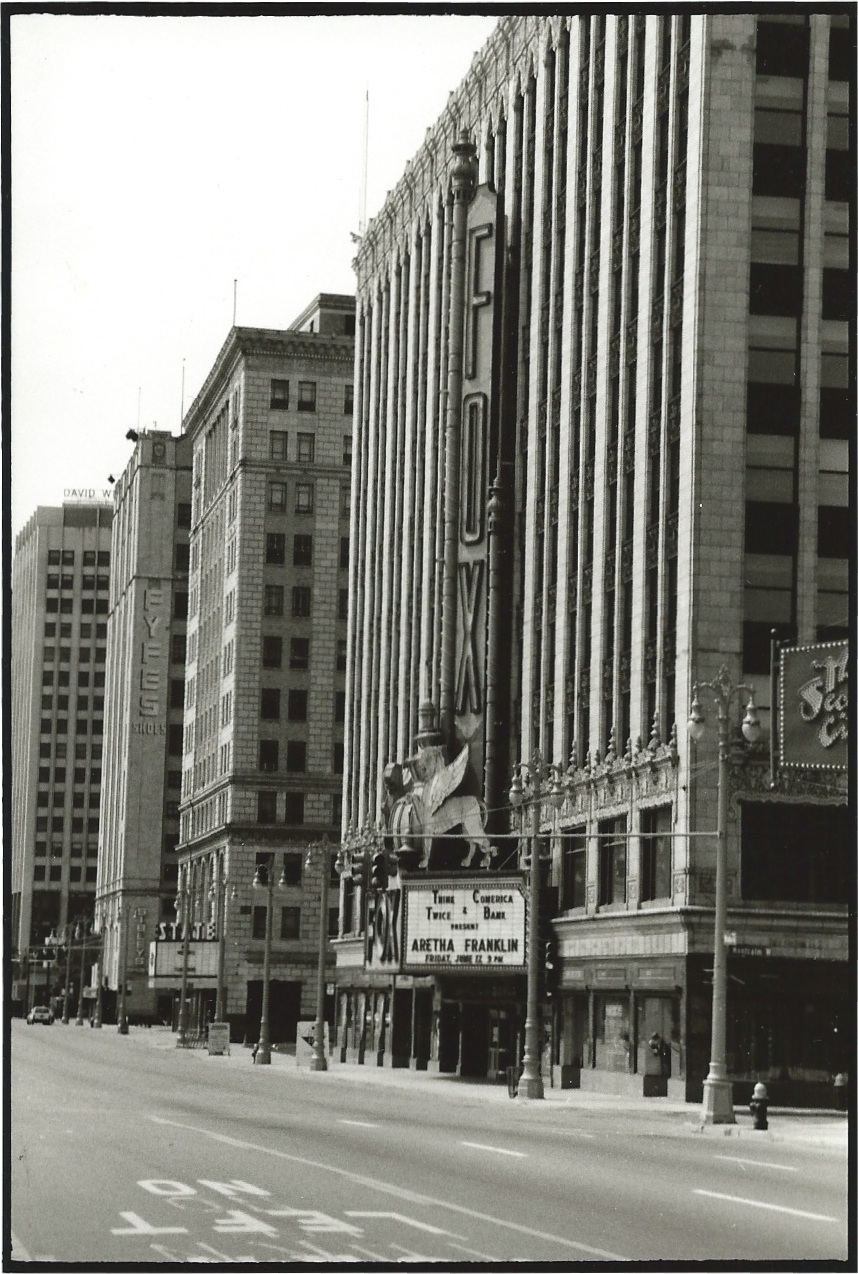
Fox TheatreYou’ll have read that Detroit went bankrupt the other day, and you might have felt more than a twinge of sympathy for the city that gave us so much music. (The Independent‘s Ian Burrell did, and wrote about it very touchingly here.) You might also have seen The Ruins of Detroit, the 2010 book in which Yves Marchand and Romain Meffre photographed the abandoned hulks of factories and municipal buildings, lending them a terrible glamour. I’m currently reading Mark Binelli’s widely praised The Last Days of Detroit, in which a Rolling Stone journalist returns to examine the fate of his home town. It made me go and dig out a photograph I took in 1994, during the World Cup, when I was in Detroit to watch Brazil play Sweden in the Pontiac Silverdome.

This is not a photograph of a ruin. Quite the reverse, in fact. It shows the Fox Theatre, a famous establishment on Woodward Avenue in the downtown area. Opened in 1928, with 5,000 seats, lavishly appointed and built at great expense, it became the world’s first cinema to install sound equipment for the screening of talkies. Live shows were also a part of its programme: Swing Era stars like Benny Goodman packed the place, Elvis Presley played there for three nights in 1956 (his first appearances in the city), and the Motortown Revue got into the habit of taking over the theatre for 10 days over the Christmas period in the ’60s. By the 1980s, however, “white flight” to the suburbs had changed the character of downtown and the heavily dilapidated Fox was showing kung-fu movies. Then along came the family who own the Little Caesars pizza chain, the Detroit Red Wings (ice hockey) and the Detroit Tigers (baseball), who bought and renovated it, re-opening in 1988 with a show starring Count Basie and Smokey Robinson.

The day I passed by with my camera, the marquee was still advertising an Aretha Franklin concert which had taken place a week earlier. (Detroit is also Aretha’s home town: it was where her father, the Rev C.L. Franklin, set up his New Bethel Church in 1946.) A check on the Fox’s website tells me that this year’s future attractions include Steely Dan, John Legend, Get Back: The Beatles Laser Experience, Sarah Brightman and the Moscow Ballet. Aretha sang there again last year.

Hope you like the picture. And good luck to Detroit, whatever its future holds.