Skip to content

Giorgio Gaslini: maestro of jazz
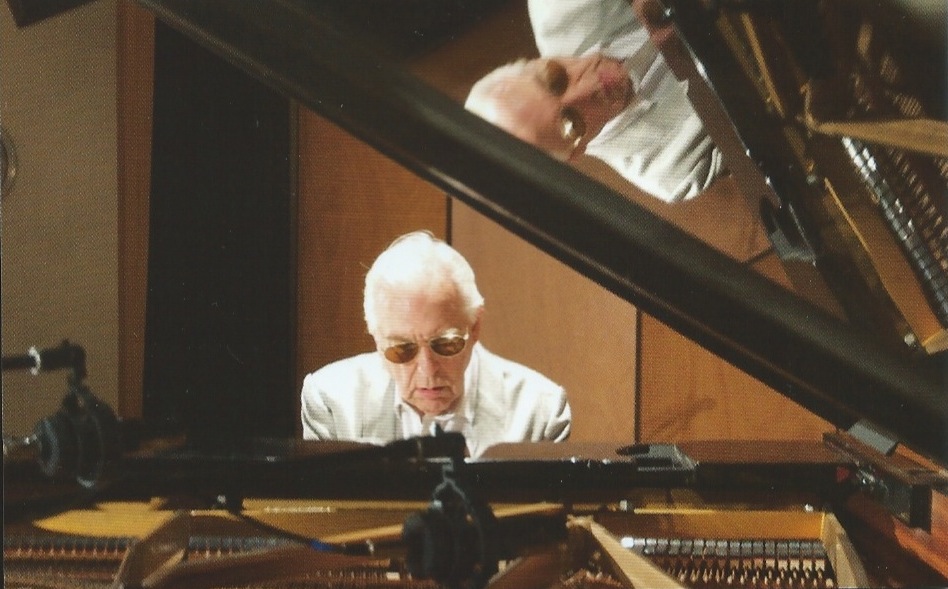
Giorgio Gaslini 1If I had to nominate the most interesting jazz composer to emerge from the European scene in the past 60 years, the list would certainly include Krzysztof Komeda, Andre Hodeir and Mike Westbrook. But in the end I’d probably settle for a musician hardly known outside his native country, and virtually not at all in Britain: the 84-year-old Giorgio Gaslini, who was a product of the bebop era and made his first recordings in 1948 but remains in possession of a mind so open and inquisitive that his catalogue includes albums devoted to solo piano recitals of the music of Sun Ra, John Coltrane and Albert Ayler.

In 1960 Gaslini wrote and recorded the music for Michelangelo Antonioni’s masterpiece La Notte. Five years later he made a record called Nuovi Sentimenti (New Feelings), with a band including Don Cherry, Steve Lacy, Gato Barbieri, two bassists and two drummers: an early example of a European musician embracing the avant garde. Since then he has written and recorded music in just about every conceivable format, from solos and duos through a regular quartet that featured the fine Italian tenorist Gianni Bedori, to quintets, sextets, septets, octets and many kinds of  large ensemble; he has composed jazz pieces for his own big band and the Italian Instabile Orchestra, symphonies, choral pieces, ballet scores, and an opera called Colloquio per Malcolm X.

His most recent release, a set of solo piano pieces titled Incanti, appeared on the CamJazz label in 2011. Recorded at a concert in Messina, it featured his improvised meditations on classical pieces by Monteverdi, Faure, Tchaikovsky, Bartok and others, and it was among my favourite albums of that year, thanks not least to a magical version of Handel’s aria “Lascia ch’io piange”: four minutes and 49 seconds of magically understated beauty.

Gaslini has spent much of his time as an eminent teacher at conservatories in Rome and Milan, but he’s also made a huge number of records over the years, and it doesn’t take much effort to find quite a decent proportion of them. In 1997 the Italian label Soul Note issued a pair of two-CD sets documenting his early work, starting with a 1948 piano trio version of the bop classic “Ow!” and including the soundtrack to La Notte and the fantastic Nuovi Sentimenti. Ten years later they issued two more, devoted to his work with various ensembles between 1968 and 1974. Now another Italian label, Dischi della Quercia, has filled in a large gap in his recent output by issuing a box containing 11 albums recorded between 1976 and 1985, all remastered and packaged in card facsimiles of their original sleeves.

For your £40 you get a great deal of music, much of of it excellent and some of it a great deal more than that. To my ears, the least interesting items are the duo albums with Roswell Rudd, Eddie Gomez and Anthony Braxton. Two album-length suites for octet, Indian Suite and Monodrama, are uneven, but contain interesting passages. There is a very nice quartet album — another suite — called Murales, featuring Bedori, and a decent quintet set recorded live at New York’s Public Theatre; you can hear the influence of Monk on Gaslini’s angular, playful tunes, but there’s never a sense of imitation.

The most fully realised music, however, is contained on the two albums devoted to a sextet he led in the late ’70s, with Bedori on tenor and soprano saxes, Gianluigi Trovesi on alto and soprano sax and bass clarinet, Paolo Damiani on double bass, Gianni Cazzola on drums and Luis Agudo on percussion. The first of them, dating from 1977, is called Free Actions and sounds today as fresh and compelling as any post-Coltrane jazz that was being played anywhere in the world at the time. Better than that: anyone listening to the brilliantly imaginative solos of Bedori and  Trovesi against an active, hard-swinging ostinato figure during the fifth and final movement of the suite from which the album takes its name might well find themselves thinking of the current Wayne Shorter Quartet, and concluding that the Italians are not shamed by such an exalted comparison, even though they were making their music almost three and a half decades ago.

The second sextet album, Graffiti, was recorded live in Milan the following year and is almost as good: just four and a half stars against the five of its predecessor, you might say. Again it’s a suite, and one of the movements — called “Soul Street” — brilliantly captures the spirit of the Charles Mingus of East Coasting and Jazz Portraits. It’s also in this track that Gaslini’s piano solo demonstrates how well he can blend the free with the funky. Once again Bedori and Trovesi are outstanding throughout, while Damiani’s sinewy bass lines remind me of his British contemporary, the late, lamented Jeff Clyne.

Once you enter Giorgio Gaslini’s world, there’s a lot to discover. How nice it would be if, even at this late stage, somebody gave him the chance to show British audiences what he can do.

* The photograph of Giorgio Gaslini is from the sleeve of Incanti and was taken by KDPhoto.

Lou Reed 1942-2013 (2)

Lou Reed:MM

You might feel you’ve read enough about Lou Reed in the last couple of days (and here is my Guardian obituary), but here are a few last thoughts.

1.

You’ll have heard a lot about how difficult it was to interview Lou successfully. Without wishing to criticise my colleagues, it always seemed to me that the journalists who had a hard time with him were the ones who felt he owed them answers to questions he had already been asked a million times. I mean, “Were you really on heroin when you wrote ‘Heroin’?” — asked 40 years after the fact — was unlikely to elicit a positive reaction.

Not to say that he was a little ray of sunshine even in the most propitious circumstances. But, like a lot of artists, he preferred contemplating the present and anticipating the future to raking over the past. He was proud of the early stuff, but you can tell just by reading the later interviews that he didn’t want to spend his life discussing it. He usually responded well to people who showed that they had taken the trouble to keep track of what he had been up to in the years since the achievements that brought him his legendary status. If an interviewer wanted to talk about Ornette Coleman (as Bob Elms did on Radio London) or Tibetan philosophy (as Mick Brown did in the Telegraph), he was likely to show genuine enthusiasm and engage in something resembling a real dialogue.

I suppose I was lucky to get to him before the period that began when Transformer and “Walk on the Wild Side” made him a hot act, the point at which large numbers of reporters started to interrogate him. He hadn’t yet met David Bowie — and might not even have heard of him — when I sat down with him at the Inn on the Park in London one day in mid-January, 1972.

He was in London to record his first solo album, accompanied by his producer, Richard Robinson, and Richard’s wife, Lisa, then the New York correspondent of Disc and Music Echo. The Robinsons were friends of mine and they knew I was a Velvet Underground fan of long standing, and soon after their arrival we all had lunch together at the hotel. Lou was quiet and a little preoccupied but perfectly good company.

A few weeks later, after they’d recorded and mixed most of the album with a very heterogeneous bunch of English musicians at Morgan Studios in Willesden (where Rod Stewart had cut Every Picture Tells a Story), I sat down with Lou in his room to listen to some of the near-completed tracks, with the intention of writing a piece for the Melody Maker. It was a very congenial experience. He was so relaxed and willing to talk about his past that when I read the piece now, I feel guilty that I didn’t convey more of his thoughts about the new material. As things turned out, the album — called Lou Reed — created barely a ripple of public interest; soon to be overshadowed by Transformer and his liaison with Bowie, it acquired the dismal aura of a failed project. Give it a proper listen today, however, and you’ll find that “Wild Child”, “Love Makes You Feel” and “Ride into the Sun” are more than worth their place in his canon.

At one point I asked him about the Velvets’ third album, and if he would be willing to support my theory, aired in a review when it came out in 1969, that its 10 songs constituted a single narrative. He seemed delighted. “I’ve never known whether it worked for other people,” he said. “I’ve always written with the idea of putting songs into concepts so that they relate to one another. I always thought of these like chapters in a novel, and that if you played the first three albums all in order, it would really make huge total sense. No one ever seemed to pick up on that, and why should they? I don’t put out that many albums anyway, so by the time Chapter Three arrived, you had to go running back to the archives to find where Chapter Two left off.”

When the song on Lou Reed called “Berlin” mutated, a couple of years later, into the entire album called Berlin, with its cast of characters and single continuous and coherent narrative, he seemed to have achieved his ambition to make a rock and roll album that worked like a novel.

2.

No doubt there will be a great deal of reassessment of Reed’s work in the coming years. Given the way the once-despised Berlin was rehabilitated, don’t bet against something similar happening to Lulu — his recent album with Metallica, even more voceriferously despised by US critics — one day. I’ve been listening to it over the past 24 hours, and it seems to me that anyone who claims to adore the harsher moments of White Light/White Heat yet dismisses this one needs to have a serious rethink.

A more likely beneficiary, however, could be Songs for Drella, the album he made with John Cale for Sire in 1990 as a farewell to Andy Warhol, their former patron. Originally performed at the Brooklyn Academy of Music, it’s a biography in music, beginning with Warhol’s origins as a youthful misfit in Pittsburgh and tracing the story through his early days as an advertising artist and his rise to prominence as a succes de scandale in the New York art world of the 1960s to Valerie Solanas’s attempt to kill him and his eventual death from a heart attack following gallbladder surgery in 1987.

Reed and Cale were close to Warhol, but their view of his world is as clear-sighted and illuminating as it is generous and affectionate. Musically, it gains impact from its sense of intimacy: the instrumentation is restricted to Reed’s guitars and Cale’s various keyboards and viola. They both sing, the simplicity of the surroundings highlighting the restrained emotion in their voices. There’s a lot of contrast, effectively employed, like the jump from the elegance of Cale accompanied by strings on the delicate “Style It Takes” to Reed’s rapid-fire delivery over the chattering keyboard and buzz-saw guitar of “Work”, but the whole song-cycle coheres beautifully, forming a perceptive and touching tribute to a man who played a significant role in their careers. It’s easy to imagine its reputation increasing as the years pass.

3.

If you don’t already know it, try to hear Lou’s version of Doc Pomus and Mort Shuman’s “This Magic Moment”, included in a CD called Till the Night Is Gone: A Tribute to Doc Pomus, issued in 1998 by Forward/Rhino. The album features a stellar cast — Dylan, B.B. King, Brian Wilson, Irma Thomas, Los Lobos, Roseanne Cash, Dr John, Aaron Neville, Dion, Solomon Burke, etc — but his track is a standout. Originally a Top 20 hit for the Drifters in 1960,  it allows him to demonstrate both his deep affection for R&B and his gift for stripped-down rock and roll, his two guitar parts — one skirling, the other snarling  — accompanied by Fernando Saunders on bass and George Recile on drums. And he really was among the most unorthodox and creative of rock guitarists, a fact often overlooked in the desire to acclaim his more headline-friendly characteristics.

The Byrd who fell to earth

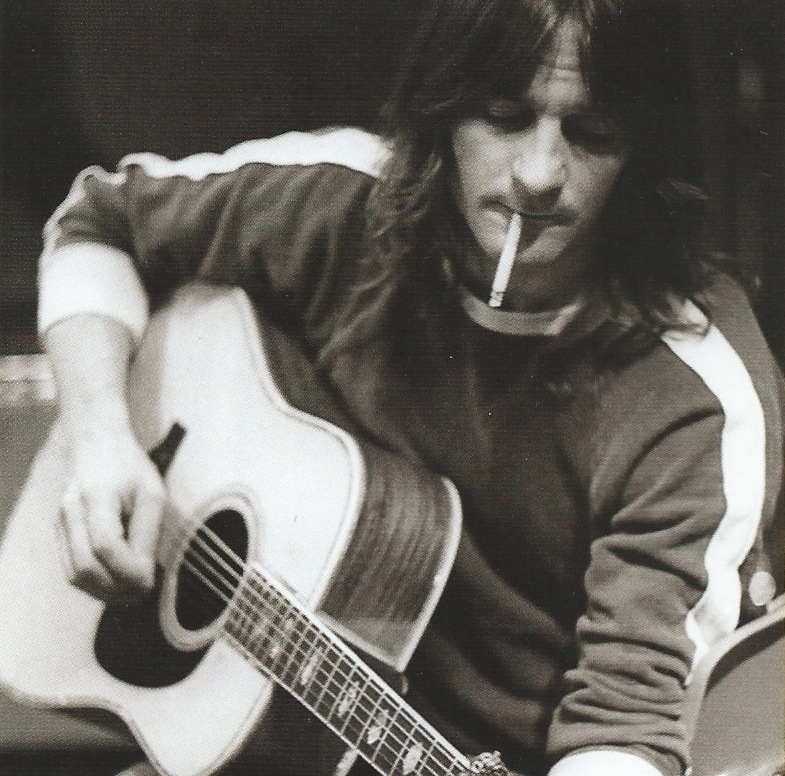
Gene ClarkSomehow Gene Clark never looked young, even when “Mr Tambourine Man” was hitting the charts before he had turned 21. Unlike the other members of the Byrds, or of their rival groups breaking through on both sides of the Atlantic in 1965, he didn’t look like a boy. He had a face that seemed to have seen things, a face of premature experience.

We learn a lot about the background to the way he looked in The Byrd Who Flew Alone: The Triumphs and Tragedy of Gene Clark, a two-hour documentary  by Jack and Paul Kendall, released on DVD this week, in which the two English film makers talk to just about everyone involved in the story of a great singer-songwriter who didn’t begin to receive proper attention as a solo artist until after his untimely death in 1991. Chris Hillman, Roger McGuinn and David Crosby from the Byrds, the producer Larry Marks, the record company president Jerry Moss, the singer Carla Olson, his wife Carlie, members of his family and many others are among those providing testimony, interspersed with snatches of music from the various phases of his career.

Gene Clark’s face turns out to have been that of a person who grew up in a small community in rural Missouri, in circumstances described by one his brothers as “austere”. He began playing in bands at the age of 14, moved to Los Angeles while still in his teens, joined the New Christy Minstrels, and decamped to the fledgling Byrds in 1964. Just over a year later he was receiving a first royalty cheque. Because he wrote songs that the group recorded as B-sides and album tracks (such as the wonderful “Feel a Whole Lot Better” and “Set You Free This Time”), he earned more money than the other four members. That first cheque was for $47,000. The others got $4,000 each. “The rest of us were still taking buses and walking around LA,” Roger McGuinn remembers, “and he had a little MG. That created a bit of tension.”

The MG was followed by a Porsche and then a very nice maroon vintage Ferrari. And there were other factors. “You take a group of young men, very different young men, give ’em some money, introduce them to drugs… I don’t think there was anything wrong with the fact that we all of a sudden got laid a lot… but the money and the drugs… that’ll do it every time,” says David Crosby, one who knows whereof he speaks.

Clark’s departure from the group and the various chapters of his solo career are dealt with in fascinating detail. I always loved the two Dillard & Clark albums, particularly The Fantastic Expedition, and it was sad to listen to the reasons behind the disintegration of that pioneering project in 1969, followed by many more false starts.

“He had great songs,”  Hillman says, “and he sang from the heart. Why didn’t it work? That’s the question.” Chronic indiscipline when under the influence of drink or drugs seems to have been the simple answer. Perhaps the happiest period of his life began in 1970, when he moved out of LA to Mendocino with Carrie McCummings and enjoyed a return to his roots in rural surroundings. It was there that he wrote the songs for the album White Light, produced by Jesse Ed Davis and released in 1971, which I consider to be the highlight of his career: the recording in which his gifts find the best balance and the most sympathetic environment.

Many of his admirers would nominate No Other, the album that followed in 1974, recorded for David Geffen’s Asylum label and produced by Thomas Jefferson Kaye with a huge budget and a cast of thousands. It’s a cult classic, to be sure, and it contains some fine songs that only Clark could have written, but I find it overproduced, overarranged, overplayed, overpackaged — just overwrought in every direction. Its commercial failure more or less put an end to his prospects of once again experiencing the success he had all too briefly known with the Byrds.

He wasn’t entirely finished. I wouldn’t be without the album he made with Olson, called So Rebellious a Lover, released the year after his death and containing two real classics: his own “Gypsy Rider” (“Crank her over once again / Put your face into the wind / Find another road where you’ve never been”) and the most gorgeously compelling version of “Come All You Fair and Tender Ladies” I’ve ever heard. But the life did for him when he was only 46.

There are some sad and illuminating reflections in the course of the film. “I watched him go from an innocent country boy to road-weary and just… tired of it all,” McGuinn says. Marks, who produced his first solo album, says: “You couldn’t help but just feel the energy that Gene put out whenever you were with him. It wasn’t all good. That energy carried some danger with it.”

Luckily, bits and pieces of his music continue to emerge. The latest is Here Tonight: The White Light Demos, released on Universal/A&M’s Omnivore label, containing bare-bones versions of some of the great songs — “For a Spanish Guitar”, “The Virgin”, Where My Lover Lies Asleep” — plus others than didn’t make the cut, including the lovely “Here Tonight”, which turned up on the restored version of an abandoned album called Roadmaster, which was to have been his next A&M release after White Light. The demos are touching in their plainness. You wouldn’t swap them for the original album, but they’re very welcome. And the documentary is highly recommended.

* The photograph of Gene Clark is from the insert with Here Tonight: The White Light Demos, and was taken by Henry Diltz.

Lou Reed 1942-2013 (1)

Lou Reed 2The death of Lou Reed has just been announced. I’m thinking back to the early weeks of 1967, and the release of The Velvet Underground and Nico, which had such a profound impact on all who were prepared to be receptive to such provocative music: “I’m Waiting for the Man”, “All Tomorrow’s Parties”, “I’ll Be Your Mirror”, “Black Angel’s Death Song” and, of course, “Heroin”. And then White Light/White Heat and the third album. Each of them a map leading to a different future. He was a strange, difficult and brilliant man.

Forty five years ago I managed to get an extended review of the first album into the local paper for which I was working as a junior reporter, serving my apprenticeship. It made a change from covering juvenile court and golden weddings. And now I have to sit down and write his obituary for the Guardian. So although I’ll keep any further thoughts for that, I didn’t want his passing to go unmarked on this blog. The pages above are from the copy of Screen Tests (Kulchur Press) I bought in the year that The Velvet Underground and Nico was released. Words: Gerard Malanga. Photograph: Andy Warhol.

Two kinds of modern beauty

Necks1.
It was my friend and erstwhile Guardian colleague John L Walters who made the neat comparison between the experience of listening to the Necks and a stroll through an art gallery, during which the attention might wax and wane as the eye is caught, becomes absorbed, moves on, glances briefly at something else and moves on again. While listening to the Australian trio’s new CD, Open, which consists of a single 68-minute piece, I thought of a different analogy, one that works better for me. It’s like being on a long train journey, perhaps through several countries: the view can change many times in the course of the trip, gradually but inexorably, perhaps from vast wheatfields to industrial landscapes to valleys between snow-capped mountains, and the weather modulates along with the scenery. Occasionally you might dive into a tunnel, requiring the senses to adapt, and the landscape might have changed again when you re-emerge.

“Open”, which is also the name of the piece, starts with the gentle clanging of something that sounds like (but almost certainly isn’t) the strings of an abandoned piano being struck with a rubber mallet. Little cymbals are struck, a double bass enters (with the sort of sparse, sonorous, simple figure that so often provides an underpinning to the Necks’ long-form pieces), and a real piano makes its appearance, sounding a series of vaguely oriental arpeggios with the sustain pedal held down. Tony Buck, Lloyd Swanton and Chris Abrahams are all aboard, and we’re on our way.

The landscape changes pretty slowly on this trip. As it does, there’s always one element — perhaps the bass figure, or the tapping of a closed hi-hat, or the piano holding the key centre — to maintain a sense of continuity. There are quiet periods when nothing much seems to be happening, and passages of great intensity. In the first third there’s some fine drumming from Buck, whose ability to draw a lovely tone from his instruments reminds me of the young Tony Williams; around about the mid-point the oscillations of a single octave-doubled note held on a Hammond organ blend with a baleful industrial noise; there are several passages in which Abrahams moves between the quietly ecstatic approaches of Alice Coltrane and Charlemagne Palestine; and the gentle final stages feature what sounds like a choir of Swanton’s overdubbed basses.

It’s their 17th album, and even at this early stage of listening it sounds like one of their best, up there with Aquatic and Silverwater, in my view. And there are UK gigs — including three nights at Cafe Oto — to look forward to next month.

2.

Arve Henriksen is also visiting the UK in November, to play Andrew Smith’s Requiem (inspired by the Utoya massacre) with a choir and the organist Stale Storlokken at St Luke’s in London and elsewhere. In the meantime there’s his new CD, Places of Worship, a work of very special beauty.

I’ve never heard Henriksen’s trumpet (or his counter-tenor vocals, for that matter) sound as profoundly and consistently expressive, that ability to mutate tone and attack matched by some wonderful phrase-making and a powerful sense of continuity. Nor has he ever benefited from more lustrous electronic backgrounds, the samples and programming mostly manipulated by Jan Bang and Erik Honore, with occasional help from Eivind Aarset’s guitar and Jon Balke’s keyboards. As a tailpiece, there’s a pretty song called “Shelter from the Storm” (not that one), sung by Honore.

In his five-star review in this morning’s Guardian, John Fordham drew a comparison with Sketches of Spain. That had been going through my head, too, particularly when listening to “Le Cimetiere Marin” and “Bayon”, two of the album’s 10 tracks. I was also reminded of Siesta, Miles Davis’s soundtrack to a 1987 film (directed by Mary Lambert) that nobody seemed to like but for which Miles, with the help of Marcus Miller, produced some beautiful moments at a time when conventional ideas of beauty did not seem to be high on his agenda.

Where Open demands a proper degree of commitment, Places of Worship opens its arms to any listener. In their different but equally wonderful ways, these are likely to be the albums by which I’ll remember the year.

* The photograph of the Necks — left to right: Lloyd Swanton, Tony Buck and Chris Abrahams — is by Camille Walsh. Their album is released on the RnR MEGACORP label. Henriksen’s album is on Rune Grammofon.

Volume control

Romain PilonNo one influenced the way jazz has been played on the guitar for the last 40 years more profoundly than Jimi Hendrix, who wasn’t a jazz musician in any way but nevertheless exerted an influence as profound as that of Charlie Parker or John Coltrane on saxophone players.

Hendrix’s example granted guitarists a licence to exploit the variations in tone and attack made possible by their electronic equipment, to break away from the restrained approach of earlier giants, from Charlie Christian to Wes Montgomery, and to spend more time exploring colour and texture in sound. A list of those players whose conception was touched by his influence to a greater or lesser degree might include such figures as Larry Coryell, Sonny Sharrock, John McLaughlin, Terje Rypdal, David Torn, Vernon Reid, Bill Frisell, Pat Metheny and the man we saw in London last week, Marc Ribot.

So it makes a nice change to listen to a young guitarist whose playing, while thoroughly modern, shows no traces whatsoever of a similar inclination. Romain Pilon was born in Grenoble, spent four years studying at Berklee, lived in New York for a year and is now based in Paris. The Whirlwind label released his first album, by a trio, last year, and now comes its successor, called Colorfield. This one features a quartet in which Pilon is joined by three Americans: the tenor saxophonist Walter Smith III, the double bassist Michael Janisch and the drummer Jamire Williams. Recorded in London, the album contains seven of Pilon’s absorbing compositions plus Horace Silver’s lovely ballad “Lonely Woman” (not to be confused with Ornette Coleman’s oft-performed piece of the same title).

Here is an hour of music in which substance triumphs over style. The tunes are attractive and varied but never flamboyant, and they inspire solos which have no ambition beyond a thorough exploration of their themes and structures. Pilon plays with a small, rounded, soft-edged tone reminiscent of the great Jim Hall, and uses absolutely no effects other than his great ear for harmonically acute, melodically elegant, rhythmically fluid improvisation. His colleagues are equally outstanding, particularly Smith, who confirms the impression he made last year on the trumpeter Ambrose Akinmusire’s much praised debut album — he’s another unshowy player, avoiding the customary influences in favour of an approach that might be what you’d get if you blended Warne Marsh with Sam Rivers and added a dash of Joe Henderson.

Janisch and Williams play a full part in these outstanding conversations, in which everyone has something worth saying and no one tries to shout anyone down. If you want a lesson in how to swing very hard indeed without raising the voice above a civilised murmur, listen to the final track, “7th Hour”. All in all, highly recommended.

John Abercrombie is a guitarist of an earlier generation, similarly unflashy and always worth hearing. His 39 Steps caught my eye before it caught my ear. It’s on ECM, whose releases are noted for the quality of the photography adorning their covers. But where there’s usually a moody land- or sea- or cityscape, with this one there’s an aerial picture of part of a football pitch: just the mown grass and the whitewash of the halfway line, the centre circle, the penalty area and the D. No players, however. In this context the image has more to do with geometry than sport; it seems to have no relationship to the music, which is by the American guitarist’s quartet, including  Marc Copeland on piano, Drew Gress on double bass and Joey Baron on drums. Or, indeed, to the album’s title, which is reflected in several tunes named after other films by Alfred Hitchcock.

This is an even quieter album than Pilon’s. With six compositions from Abercrombie and two from Copeland, plus the standard “Melancholy Baby” and one short collective improvisation, it barely disturbs the air in the room. A form of chamber music, certainly, but of a very high order when the four men are exploring the nuances of tunes as elegantly appealing as the guitarist’s “Vertigo” or the pianist’s “Spellbound”. Copeland occasionally inserts a hint of astringency that I suppose you could call noir-ish, but no violence is committed. For those prepared to listen closely, the relatively circumscribed emotional range will be no barrier to enjoyment of another exceptional album.

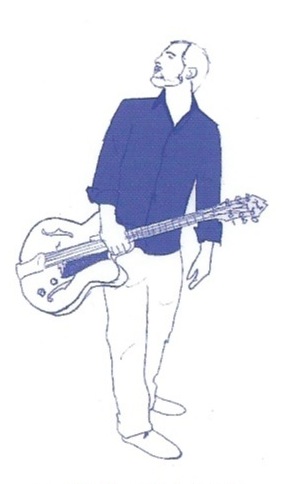
* The drawing is from the cover of Colorfield. It is uncredited.

Willie and the women

Willie NelsonDid Willie Nelson ever encounter a female singer with whom he didn’t think he could bring off a passable duet? I very much doubt it. His new album, To All the Girls…, is full of successful new collaborations with Rosanne Cash, Alison Krauss, Dolly Parton, Sheryl Crow, Emmylou Harris, Shelby Lynne and a dozen others. It can’t fail, and it doesn’t.

My all-time favourite Nelson album is Stardust (1978), which I’d class with Billie Holiday’s Lady in Satin and Frank Sinatra Sings For Only the Lonely among the most exalted recitals of the great American songbook. My second favourite is Across the Borderline (1993), in which he tackled standards of more recent vintage from the pens of Bob Dylan, Paul Simon, Lyle Lovett, John Hiatt and others with equal success; maybe its most striking track is Peter Gabriel’s “Don’t Give Up”, in which Willie and Sinead O’Connor sing the parts originally recorded by Gabriel and Kate Bush. Now Willie, who turned 80 in April, might just have presented me with a new candidate for third favourite.

If there’s nothing adventurous about To All the Girls…, that’s in no way to the new album’s discredit. Produced by Buddy Cannon, it’s a spare, unassuming collection of fine songs performed by terrific singers working in a sensitive environment. Willie’s voice, as ever, is the essence of understatement, as comfortable as a much-washed raw cotton shirt. The arrangements represent the essence of restraint and economy: a steel guitar here, a Hammond organ there, a hint of strings or harmonica, all subordinate to Willie’s unmistakeable gut-string guitar. It’s the pattern set by Booker T Jones on Stardust 35 years ago, and it can’t be beaten.

The highlights include Kris Kristofferson’s “Please Don’t Tell Me How the Story Ends” with Cash, Waylon Jennings’s “She Was No Good For Me” with Miranda Lambert, Bruce Springsteen’s “Dry Lightning” with Harris and the imperishable “Always on My Mind” (by Johnny Christopher, Mark James and Wayne Carson) with Carrie Underwood. Norah Jones does beautifully with Willie’s “Walkin'” (containing one of my favourite openings: “After carefully considering the whole situation / I stand with my back to the wall…”), Mavis Staples manoeuvres Nelson into a slightly funkier area on Bill Withers’ gorgeous “Grandma’s Hands”, and Paula Nelson has the good fortune to be featured on a lovely version of John Fogerty’s “Have You Ever Seen the Rain?”. The surprise for me is Lily Meola, a young Hawaiian singer who sounds as  perfect partner as any on Willie’s “Will You Still Remember Mine”, a sultry last waltz on which a six-decade age gap is closed to nothing.

But the one I can’t get out of my head is “No Mas Amor”, another Willie song, on which he’s joined by the divine Krauss and a mariachi trumpet: there’s almost nothing to it, but it won’t go away. Just like the whole album, which is likely to remain close to the top of the pile for as long as there’s a pile to be close to the top of.

* The photograph of Willie Nelson is from the cover of To All the Girls… There’s a rather sweet seven-minute promo video here.

** An early version of this piece credited Willie as the writer of “Always on My Mind”. Thanks go to Phil Shaw for putting me straight.

Ribot, Grimes & Taylor

Ribot Grimes Taylor 1

On a small table in front of the chair on which he sat to play guitar at the Cafe Oto last night, Marc Ribot had a large egg-timer. I’ve often wonderered how musicians — improvising musicians in particular — know when they’re reached the end of their alloted time. Most of them seem to have an internal clock, its calibration refined over the years. But I’ll never forget the morning after a particularly mesmerising performance by Art Pepper at St Paul’s Church in Hammersmith at the end of the ’70s, when a photographer came into the Melody Maker‘s office with a set of pictures from the concert, including one that showed the great saxophonist taking a surreptitious look at his wristwatch.

I’d be surprised if anyone was clock-watching last night. The trio of Ribot, the bassist Henry Grimes and the drummer Chad Taylor started with a medley of Albert Ayler tunes, providing the guitarist (who is probably best known for his work with Tom Waits and Marianne Faithfull) with a canvas for the scrabbling, string-scrubbing, sound-splintering techniques that place him somewhere on the spectrum between Jimi Hendrix and Derek Bailey. As he eased away from adding country inflections to Ayler’s march-hymn structures and wound himself up into a state of near-catharsis, I was reminded of Robert Fripp’s startling solo on King Crimson’s “A Sailor’s Tale” (from the album Islands), one of my favourite guitar improvisations.

There can’t have been more than a handful among the capacity crowd who were born when Grimes disappeared off the jazz map in 1970, having spent a dozen years establishing himself — via such important recordings as Don Cherry’s Complete Communion, Cecil Taylor’s Unit Structures and Albert Ayler’s Live in Greenwich Village — as one of the foremost members of an unusually gifted generation of double bassists. The story of his rediscovery more than 30 years later, living in Los Angeles, surviving on non-musical jobs, writing poetry and unaware of any developments in the music during the intervening period, has passed into legend. Now, at 77, he overflows with energy, ideas and purpose, the strength and fluidity of his playing absolutely unscarred by that extended lay-off.

The second tune of a long set began with a less than convincing rock beat but soon doubled up into fast bebop time and felt all the better for it. The third and last item opened with a slow, abstract passage in which Grimes played the violin, reminding us of his Juilliard training in the ’50s, before the adroit use of a volume pedal enabled Ribot to produce jolting note-cluster explosions. Taylor concluded the piece with a marvellous solo reminiscent of the immortal Elvin Jones, suggesting rhythm without specific metre or pulse and building excitement without the use of licks or repetition.

If Grimes’s tale reminds us how many years have passed since this music first turned the jazz world on its ear, a gig such as last night’s demonstrates how much scope it still offers to the creative mind.

* Before the first set, the audience was asked not to use recording or photographic equipment. The picture above was taken 20 minutes earlier, while the musicians were setting up their instruments. No protocols were breached.

The Band: London to New York

The BandThe Band came to London for the first time in the early summer of 1971. At 2.30pm on Monday, May 17 a handful of us gathered at the Inn on the Park, near Hyde Park Corner, where EMI Records had booked the Hamilton Suite, rooms 206-210, for Robbie Robertson, Levon Helm, Rick Danko, Richard Manuel and Garth Hudson to meet journalists. I talked to Robertson and Danko for a feature that appeared in the next week’s Melody Maker, a few days ahead of their two dates at the Albert Hall on June 2 and 3.

They were enjoyable interviews. Robbie talked about the early days with Ronnie Hawkins, and about their influences. Among the names he mentioned were those of Jimmy Reed, Charlie Rich, Sanford Clark and Billie Lee Riley, which reminded him of his first visit to London, along with Rick, Garth and Richard, for Bob Dylan’s Albert Hall shows in 1966, when they stayed at the Savoy.

“A bunch of people came by the hotel,” he said, “a bunch of rough-looking characters. I don’t know what you’d call them, but they were into pure rock ‘n’ roll. They didn’t like Bob’s music at all. They were into Ronnie Hawkins, and they were giving me this whole story about giving up this Bob Dylan shit and getting back to the real meat of things. They were very sincere, actually. What do you call them? Do you have a name for them?”

“Rockers,” I said.

“Rockers? I told Ronnie about them. I mean, they had people named after his songs, even.”

“Wild Little Willie?”

“Yeah, that was one of the guys. Are they still around?”

They were indeed, a bunch of superannuated Teddy Boys still trying to convince the world that any rock ‘n’ roll that sounded as though it had been made after Elvis went into the army wasn’t worth a teaspoon of oil for a Triumph Bonneville. I happened to know that Wild Little Willie was one of the leading members of their coterie, named after one of Hawkins’s best known songs.

Talking to Danko, I asked why their performance at Woodstock two years earlier hadn’t been included in the subsequent movie. “I just didn’t feel that their sound was together,” he said, “and I didn’t believe it was the sort of film that I’d want to look at myself in 20 years’ time, because I’m sure all that comes back, at one time or another. It was not our PA system. We were using other people’s facilities, which means that we didn’t have any control over it, and if you can’t control it then I don’t consider the people are getting their money’s worth. The Isle of Wight impressed me in 1969. The people there were very orderly. I thought it was like being in a giant high-school gymnasium. But it’s hard. We limit our PA system, like you do in a studio, which cleans it up for the people, so it sounds more like a record.”

They hadn’t brought their own system to Europe, relying instead on a system supplied by Charlie Watkins, the South London amplification expert and inventor of the great Copicat tape-echo unit. According to Danko, Watkins had been to see them in the US, examined their system, and promised to create something equally effective.

He was as good as his word, and those of us present at the Albert Hall still talk about the pin-sharp but very warm quality of the sound, and how they were the first rock band to master the acoustics of a venue that had been notoriously unfriendly to amplified music. As Danko promised, the sound was just like the records, allowing us to appreciate the astonishing quality of their playing. It was one of the great gigs, and three of the songs from the first night — “Strawberry Wine”, “Rockin’ Chair” and “Look Out, Cleveland” — were unearthed for A Musical History, the handsome boxed set released by Capitol in 2005. Which must mean that the rest of the concert is in the vault somewhere, and it would be nice to hear it all one day.

After finishing their European dates they spent the remainder of 1971 finishing and releasing their fourth album, Cahoots, and touring the US, winding up the year with four nights at the Academy of Music in New York, where they were augmented by a five-piece horn section under the direction of the New Orleans master Allen Toussaint. Those shows were initially commemorated in Rock of Ages, a vinyl double album released the following year. Now Robbie Robertson has gone back to the archive, unearthed the original master tapes, remixed and remastered them, and put together a new boxed set including three CDs and a DVD, plus a more modest two-CD package.

The latter, for which I opted, includes the Band’s full 25-song set — eight more than could be squeezed on to the two vinyl discs of the original release, and two more (“Smoke Signal” and “Strawberry Wine”) than appeared on the last CD version, plus four songs with Dylan — “Down in the Flood”, “When I Paint My Masterpiece”, “Don’t Ta Tell Henry” and “Like a Rolling Stone”, all of which appeared on the earlier expanded CD release.

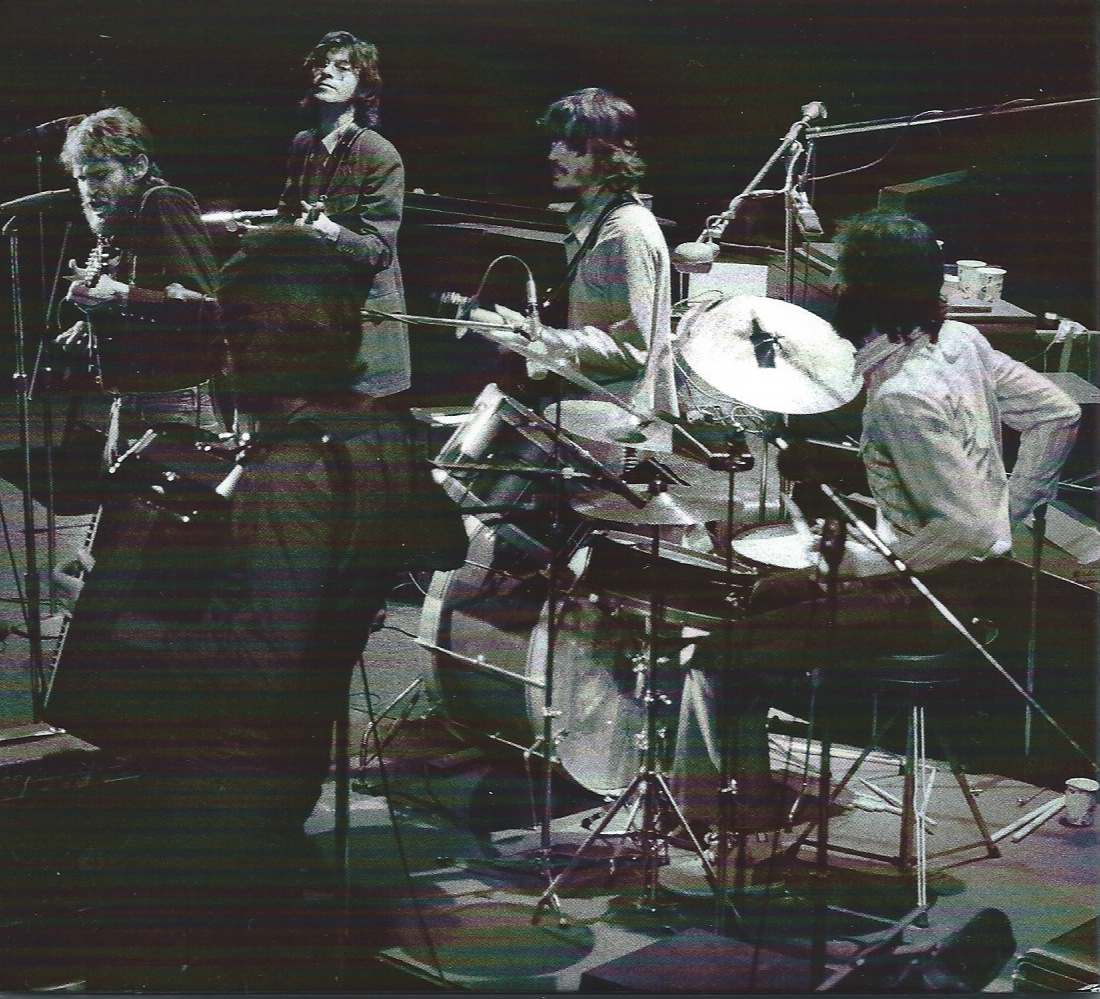
They sound better than ever, and they sounded pretty good in the first place. It reminds me of the extraordinary finesse and flexibility that became apparent during the Albert Hall concert, not least when — as you see them in the photograph above — Levon picked up a mandolin, Garth strapped on an accordion and Richard settled himself behind that beautiful old-fashioned drum kit. Back at his Lowrey organ, Garth played an astonishing extended solo introduction to “Chest Fever”, known as “The Genetic Method”; a friend of mine claims he played it on the Albert Hall’s mighty pipe organ, but that’s not my memory of it.

Everything about that concert was perfect, except for the interval, when I went for a drink and found myself accosted at the bar by Peter Grant, Led Zeppelin’s manager and a master of the art of intimidation, who approached me, with Jimmy Page lurking in his  shadow, and accused me of trying to break up his band. That’s another story, but it was a relief to get back to my seat and listen to some more from the greatest combo of their era, functioning at their peak.

* The photograph is taken from the insert to The Band: Live at the Academy of Music 1971. It is uncredited.

A song for a friend

Paul McCartneyPaul McCartney has a new album out. I was shut in a room with it for a morning the other week, in order to write a review for Uncut magazine, and I came out feeling it contains five songs — “Early Days”, “On My Way to Work”, “Looking at Her”, “Scared” and the title track, “New” — that would make a fabulous EP, if such things still existed. Five really good new songs: not a bad return at this stage of the game.

None of them, however, comes within a mile of matching my favourite McCartney track, which is one that hardly anybody, outside the realm of the fanatics, seems to have heard, or at least to remember. Perhaps that’s because it’s hidden away on Wings’ Wild Life, one of his least memorable albums, recorded in 1971, when his credibility was not exactly at its apogee.

It’s called “Dear Friend“. It’s a six-minute ballad with a simple but beautifully contoured melody: two four-line verses, repeated in sequence to make four verses in all, each 12 bars long and each separated by a pause or a moment’s hesitation. No chorus. A haunting lyric: “Dear friend, what’s the time? / Is this really the borderline? / Does it really mean so much to you? / Are you afraid, or is it true?” — and then: “Dear friend, throw the wine / I’m in love with a friend of mine / Really, truly, young and newly wed / Are you a fool, or is it true?” And the most gloriously subtle arrangement, based on a laconic piano, a bass guitar, minimal drumming and the dark glimmer of a vibraphone (all of which I imagine he played himself), each verse individually coloured by a small string orchestra, a couple of oboes, or briefly, in the final minute, a gorgeously grainy horn section that sounds like a brass band who’ve walked in off the street.

The whole thing is so plain, so underplayed, so brilliantly understated by whoever worked with him on the arrangement, that you can hardly believe it’s Paul McCartney in his solo guise at all. His singing, some of it in his falsetto register, is perfectly attuned to the sobriety of the arrangement, not least when he introduces a dozen bars of scat-singing in which his tone and note-choice are as eloquent as words. I don’t think he’s ever sounded so unselfconsciously introspective.

You only have to read the lyric to see why most people assume the song is about John Lennon, with whom his relationship was then at its most difficult. Perhaps that’s true. I prefer to take the Bob Dylan line, which is that it’s an artist’s job to take the particular and turn it into the universal, to play fast and loose with the truth in order to create a new and greater one. So when I hear “Dear Friend”, I encounter an emotion that isn’t tied to whatever its factual origin may or may not have been, and which somehow illuminates and expands feelings of my own. That’s art for you.

And for some reason he chose to hide it away towards the end of the second side of a mediocre LP. You can’t believe he wasn’t proud of it. If I had to take a Beatle-related record to a desert island, it wouldn’t be “I’ll Be Back” or “In My Life”: it would be this.

* The photograph of Wings — Denny Seiwell, Paul McCartney, Linda McCartney and Denny Laine — is from the cover of Wild Life and was taken by Barry Lategan.