Skip to content

Far from dumb

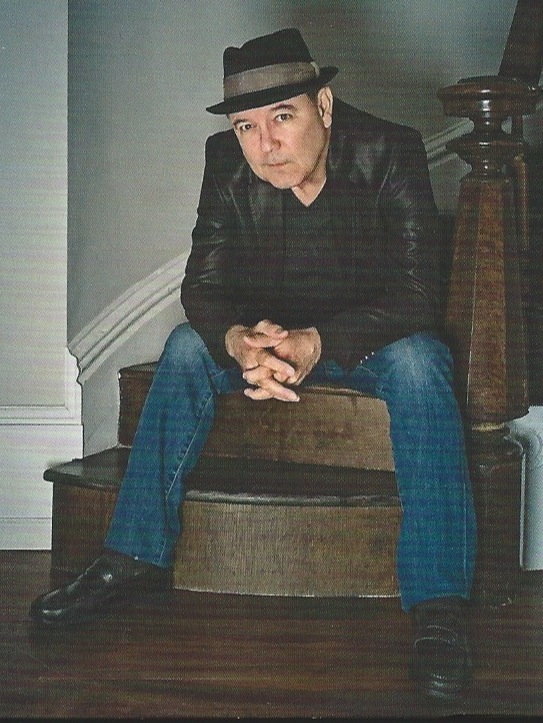
Russ TitelmanGerry Goffin, whose death was announced yesterday, didn’t just write songs with Carole King. Even during their most successful and prolific time together in the mid-’60s he was collaborating with other writers, as I point out here, in my tribute to his lyric-writing genius for the Guardian’s music blog. The one that comes most readily to my mind is Russ Titelman (pictured above), later a staff producer for Warner Brothers and now best known for his work in the studio with Little Feat, Ry Cooder, Randy Newman, Rickie Lee Jones, Eric Clapton, George Harrison, Steve Winwood and others.

Goffin and Titelman wrote two wonderful songs together. First, in 1964, came “I Never Dreamed” for the Cookies, a fabulous girl-group record which they produced together, with King providing the arrangement. Goodness knows how it didn’t follow the group’s other songs into the charts. A year later they wrote “What Am I Gonna Do With You (Hey Baby)“, recorded by the Chiffons, Skeeter Davis, Lesley Gore and finally, in 1967, by the Inspirations on the obscure Black Pearl label. Each of these versions has its fans, but mine is the last of them, in which the echo-heavy production and the lead singer’s delivery mirror the plaintive mood of Goffin’s lyric.

Titelman was born in Los Angeles in 1944. I’m indebted to an interview in Harvey Kubernik’s Turn Up the Radio! for the information that his older sister, Susan (later to marry Cooder), was the girlfriend of Marshall Lieb, a member of the Teddy Bears, who rehearsed in the Titelmans’ lounge on their way to stardom. Phil Spector, their leader, was going out with Susan’s best friend, and young Russ fell under his spell: “He was so smart, and so funny, and so charming, and so incredibly charismatic, and so you were sort of charmed by it all. Then there was the other side of him, which was this dark, murky, scary person, you know, who made shit up.”

He went to work as a songwriter for Lou Adler and Don Kirshner at Screen Gems-Columbia Music, in whose LA offices he met Brian Wilson. Together they wrote “Guess I’m Dumb”, which would have made a great track for Pet Sounds but was instead recorded by Glen Campbell, a future Beach Boy. Wilson is credited as the arranger, conductor and producer of what remains one of his very finest efforts.

Titelman’s early adventures in the LA pop business also included collaborations with the young David Gates (later the founder of Bread), who produced Margaret Mandolph’s utterly sublime version of a Titelman co-composition (with Cynthia Weil) called “I Wanna Make You Happy”. The Titelman/Gates partnership was also responsible for Suzy Wallis’s delightful “Little Things Like That”

On all these records, Titelman’s involvement seemed to guarantee that they would somehow capture the very essence of teenage pop music. They have great hooks and an understanding of how a simple chord change can sell a song. Eventually, of course, he had to grow up, as did his friends and accomplices, including Goffin and Gates. But the stuff they left us from that time continues to give undiminished pleasure decades after its supposed expiry date.

Jarrett & Haden revisited

Keith Jarrett:Charlie HadenI like Keith Jarrett best when he’s forced to deal with vulnerability. Sometimes it’s his own, as in the exquisite solo album called The Melody at Night, With You, which he recorded at his home in 1998 when his store of energy was still depleted after two years of musical inactivity caused by a persistent condition called chronic fatigue syndrome (he talked about it to me the following year, and you can find the interview here). In the case of his new album, Last Dance, it’s that of Charlie Haden, his long-time friend and musical partner.

Jarrett’s virtuosity is undeniable. No doubt it was hard-won, and it has led him to some interesting places, but I prefer it when he has to think about music from another perspective. To me, that’s when his real musicality becomes apparent: when the essence, rather than the surface, is all there is.

Last Dance is the second release from sessions he and Haden conducted in 2007, when they played standard tunes together in the relaxed environment of Jarrett’s home studio in New Jersey. The first, titled Jasmine, was released four years ago and, like The Melody at Night, With You, found a large and appreciative audience (beguiled not least by a brief but glowing reading of Joe Sample’s “One Day I’ll Fly Away”). I think Last Dance is the better of the two.

Haden, who suffered from polio as a child, has encountered further health problems in recent years, including a couple of conditions, tinnitus and hyperacousis, related to his hearing. His playing is no longer as strong as it was when he strummed that famous solo on Ornette Coleman’s “Ramblin'” in 1959 or plucked the beautiful melody of his “Song for Che” on the classic Liberation Music Orchestra album 10 years later. When I listened to Jasmine on its release, I thought the signs of debilitation were evident: if his lines beneath Jarrett’s improvisations, were clear, they seemed to lack vitality.

I have no such problem with Last Dance. Whether it’s me, or whether Jarrett and Haden (or the executive producer, Manfred Eicher) selected tracks for the first release that expressed a certain mood, I can’t say. But the programming of the new album — including lengthy explorations of Kurt Weill’s “My Ship”, Monk’s “Round Midnight”, Richard Rodgers’ “It Might As Well Be Spring” and Cole Porter’s “Every Time We Say Goodbye”, with a change of pace on Bud Powell’s “Dance of the Infidels” — creates an ambiance that, while no less reflective, seems to possess a greater degree of intellectual vigour.

For evidence, compare the two versions of Gordon Jenkins’s “Goodbye”, one on each album. It’s probably my favourite song, as I wrote here last year, so I always listen to it with special interest. Whereas the reading on Jasmine didn’t move me greatly, and still doesn’t, this alternative take seems absolutely perfect, drawing out the finest eloquence from both men (and Haden in particular). Maybe it’s a matter of context: the choice and sequencing of tracks. Maybe it’s just a mystery. Whatever it is, Last Dance is a wonderful album. A small masterpiece, in fact.

* The photograph of Keith Jarrett and Charlie Haden is from the sleeve of Jasmine and was taken by Rose Anne Jarrett. Jasmine and Last Dance are on ECM Records.

Two gentlemen of soul

Lou Johnson

While I was interviewing Allen Toussaint at length recently, for a piece published in the current (July 2014) issue of Uncut, I asked the great man which of his many songs was his favourite. Well, he replied, he’d have to say “Southern Nights”: “It’s like a little movie to me, every person in it is a real story of what happened then, when I was six or seven years old.” Then, after a pause, he added: “If I have a song that I consider more of a serious song, there’s one that no one would know but me called ‘Transition’. No one would ever know that, but it’s the most serious. If I was going to grade myself on how did you do as a songwriter, I would probably put that down.”

I told him that I’d be looking for it. He shrugged, as if to say, “Don’t bother.” Which, of course, made me all the keener to find it.

The version I discovered — there may be others — is hidden away on an album by Lou Johnson called With You in Mind, released on the Volt label, a Stax subsidiary, in 1970. That made me particularly happy since Johnson has been one of my favourite singers since I first heard his original versions of “(There’s) Always Something There to Remind Me”, “The Last One to Be Loved”“Reach Out for Me” and “Kentucky Bluebird (A Message to Martha)” in the early ’60s. He’s one of that breed of smooth-but-gritty uptown soul singers — also including Chuck Jackson, Jerry Butler and Jimmy Radcliffe — who could slip into a Bacharach-David song as if it were a made-to-measure suit.

Born in New York City in 1941, Lou Johnson should have been the male Dionne Warwick. He had Bacharach’s songwriting, arranging and producing genius on his side at exactly the right moment. Somehow it didn’t happen, and he remained in relative obscurity. A couple of years ago Ace Records collected his Big Hill/Big Top sides — the Bacharach material and much more, including a stunningly different version of “Walk On By” produced by Toussaint in 1966 — on a CD titled Incomparable Soul Vocalist, and his 1968 album for Atlantic’s Cotillion subsidiary, Sweet Southern Soul, produced by Jerry Wexler and Tom Dowd at Muscle Shoals (with arrangements by Arif Mardin), was reissued in 2004 on the Water label. It’s all worth hearing.

With You in Mind was his last recording. It has never been reissued, either on vinyl or CD, for reasons that — according to Tony Rounce, the world expert on matters pertaining to Lou Johnson — are to do with a dispute over ownership of the tapes. I’d guess that argument has its roots in the original release, which came at a time when Stax had lost its entire back-catalogue to Atlantic Records and was desperate to rebuild. Presumably they leased the master from Sansu Enterprises, the production company Toussaint ran with his partner, Marshall Sehorn, who gets a co-production credit. It would be interesting to see what the contract said.

The first surprise was that “Transition” is eight minutes and 19 seconds long: an unusually epic scale for a songwriter associated throughout his hit-making career, from “Mother-in-Law” to “Lady Marmalade”, with three-minute miracles. It’s a multi-part song, quite heavily arranged and orchestrated, beginning with Toussaint’s solo piano (which shadows Johnson’s voice throughout) but evolving to include elaborate scoring for horns, strings and a backing choir as well as a full rhythm section (including that infallible trademark of quality, the electric sitar). With all its tempo and dynamic changes, it reminds me of a Broadway musical — in a good way, I hasten to add. It’s a song of self-discovery and redemption with the occasional touch of great soul-music lyric-writing: “Can we take the bad times / Just like the glad times / Can we take the bitter with the sweet / In the house on the street of love.” It finishes with an intriguingly enigmatic climax, Johnson in full bebop scat-flow while a trumpeter and the electric sitarist develop a free-jazz jam, leading to a strings-only fade pitched somewhere between Gyorgy Ligeti and “I Am the Walrus”.

The other nine tracks are less ambitious but equally congenial, driven along by Toussaint’s expert house rhythm section (the Meters, basically) and horns. At the other end of the extreme from “Transition” is a tight little song called “Crazy About You” written by the Meters’ guitarist, Leo Nocentelli, a bit of classic ’70s pre-disco soul with fantastic bass-playing (take a bow, George Porter) and a horn-driven breakdown that I’d describe as beautifully reminiscent of Eddie Kendricks’s “Girl You Need a Change of Mind” were it not for the fact that Kendricks’s dancefloor classic lay a couple of years into the future. Toussaint’s “Who Am I?” is another beauty, sung against a fine New Orleans groove, as is “The Beat”, a laconically funky piece on which the writer/pianist/arranger/co-producer can also be heard double-tracking the backing vocals. The best of the lot might be a tortured southern-style ballad called “Nearer”, which would have been worth a place on one of the late Dave Godin’s Deep Soul anthologies.

Toussaint and the Meters, Bacharach and David, Wexler and Mardin: no one can say that Johnson wasn’t given the platform for a successful career. It just didn’t happen. Apparently he’s spent the last few decades living in Los Angeles, not far from the airport, occasionally playing piano in clubs but refusing all invitations to perform for his fans in Europe (the hip-swivelling “Unsatisfied”, a 1965 Big Top recording, is a Northern Soul favourite).

A peculiarity of With You in Mind is that no one seems to have tuned the piano, which sounds a fraction out. In fact that may be a fault of the vinyl pressing, both of the one I acquired on eBay and of those that people have used to upload on to YouTube. It certainly seems unlikely that Toussaint, such a meticulous man, would have put up with a slightly desafinado instrument on one of his own productions. In my view, however, it only adds to the character of the recording. If I ever have the good fortune to meet him again, I’ll ask him about it.

It’s not at all hard to imagine Toussaint and Johnson getting on well together. The former is a gentleman, and the latter sings like one. It would be great if someone could sort out the legal problems and make their fine and overlooked collaboration available once again.


For art’s sake

Rene Urtreger 2The French pianist René Urtreger, who celebrates his 80th birthday next month, was a member of the Miles Davis Quintet that recorded the celebrated soundtrack to Louis Malle’s Lift to the Scaffold in 1957. He had become a frequent collaborator with Lester Young, Chet Baker, Sonny Rollins, Stan Getz and many others during an era when his native Paris provided American jazz musicians with a warm welcome. Until now, however, his only appearance in Britain had been in the 1970s, when he visited London in his rather different capacity as Sacha Distel’s musical director.

Last night he and the other members of his trio — the bassist Yves Torchinsky and the drummer Eric Dervieu — performed in a small downstairs ballroom at the Connaught Hotel in Mayfair. They were playing to celebrate the opening of a new show, at the Timothy Taylor Gallery in Carlos Place, next door to the hotel, by the abstract expressionist painter Sean Scully, who was born in Dublin and brought up in South London, and now lives in New York and Bavaria. The centrepiece of the exhibition is a work titled Kind of Red, inspired by Miles Davis’s Kind of Blue: a series of five large paintings, in oil on aluminium, conceived as a single unit (you can see them on the gallery’s website, here).

Given the nature of the work’s origin, and Scully’s love of music (as a teenager he ran a blues club over a pub in Bromley High Street, and later named one of his paintings after John Coltrane’s “Dakar”), Timothy Taylor wanted something special to provide an unusual end to the conventional sequence of a private view followed by a small dinner. It seemed right to call on someone with a connection to the inspiration behind the paintings. The way Miles went about recording the music for Lift to the Scaffold — in particular the paring away of harmonic material — exerted a profound influence, two years later, on the concept of Kind of Blue. And Urtreger is now the only surviving member of the group that recorded the soundtrack to Malle’s noir classic.

His story is a fascinating one, revealed in an extensive interview with Pascal Anquetil in last January’s issue of the French monthly Jazz Magazine/Jazzman. To me the most striking single detail was his account of how, having waited day after day as an 11-year-old at the Gare de l’Est for the return of his Polish-Jewish mother, deported by the Nazis, only to discover that she had perished in the gas chambers at Auschwitz, he responded a handful of years later to the discovery of bebop: a music without overt sentiment.

But not, of course, without feeling, as we discovered last night in his fluent, thoughtful versions of “Old Devil Moon”, “So What”, “The Duke” and a handful of bop themes. “I suffered during my youth from a shyness that led me to imagine that I wasn’t at the same level as my (musical) partners,” he told Anquetil. “Today, that’s over. I’ve reached an age at which I have nothing to prove, and everything to give.” Last night’s audience, in which gallerists and collectors were joined by Bryan Ferry (like Scully, a former art student in Newcastle) and several of the painter’s friends, including the former champion boxer Barry McGuigan and the poet Kelly Grovier, accepted the gift with warmth and gratitude.

* The photograph of René Urtreger was taking during the sound-check at the Connaught. His most recent solo piano album, Tentatives (Minium, 2006), is highly recommended, and there will be a new album by the trio this summer. The Kind of Red exhibition opens today, June 11, and is on show until July 12 at 15 Carlos Place, London W1. Thcatalogue is published by the Timothy Taylor Gallery. 

Orson Welles and Lady Day

Pierre Briancon coverTwo of the most interesting jazz-related books of recent years have an author in common. He is Pierre Briançon, a French journalist who lives in London and works as a senior financial commentator for the Reuters wire service. The first book, San Quentin Jazz Band, written in French and published by Editions Grasset in 2008, tells the story of some of the musicians who ended up in the eponymous California prison in the late 1950s and early 1960s, on a variety of drug-related charges. They included the saxophonists Frank Morgan and Earl Anderza, the trumpeters Dupree Bolton and Nathaniel Meeks, and the pianist Jimmy Bunn; it’s a pretty amazing and important piece of work, shining a light into the corners of the lives of some of the talented men who fell victim to what amounted to a plague.

While planning the book, Briançon came across the piece I’d written about the hitherto mysterious Bolton for Granta in 2000. (With the aid of a private investigator, I’d established for the first time that he was actually dead — and unearthed his birth and death certificates, plus other pieces of evidence from his life, including photographs from an old girlfriend.) Pierre and I met and shared information, and I was quickly impressed by his seriousness and willingness to do the necessary digging. During his research in the prison’s archives he uncovered a great deal of new information. It still surprises and disappoints me that no one has seen fit to publish an English translation of this remarkable work, written with an acute sensitivity to the social forces of the time.

His new book, written in English, is called Romance in the Dark. A novel, it is an imagined account of the relationship between Billie Holiday and Orson Welles, one that is mentioned by Holiday in her highly unreliable autobiography and appears to have begun in 1941. Briançon starts his narrative inside the head of the trumpeter Shad Collins, who is driving a New York City taxi cab one day in 1972 when his memories are triggered both by a chance remark from a passenger and the sight of the poster for the lamentable Lady Sings the Blues. He reminisces about witnessing that initial encounter between the singer and the director, a few days after he and Lester Young had recorded a handful of sides with Holiday, including “Romance in the Dark”. The meeting occurred at the Chicken Coop club in Harlem, at a party following the premiere of Welles’s production, with his Mercury Theatre company, of Richard Wright’s Native Son, which starred the Chicken Coop’s owner, the actor Canada Lee.

Here’s a paragraph from that opening chapter, to give you the flavour:

Billie was something else. Shad loved her, as a best friend. Used to call him Lester junior, even though she didn’t call the other Lester Lester. Prez was what she always called him. But Shad was born Lester Rallington Collins after all, didn’t even remember where the Shad came from except that Lester – Prez – had been the first to call him that, when he’d joined the Basie band and they became buddies. Had stuck ever since. Prez, that’s a man who would have done anything for Billie. Shad never knew whether they’d had a fling, never dared to ask. They weren’t the kind of people you’d question about it. Probably not. Once, as the band was chilling after a concert at Kelly’s Stables, one of the boys had tried to make a joke about it. Prez was cleaning his horn, shot him a glance you’d never forget. Silenced the dude right there and then.

Briançon brings other witnesses back to life to the page, including the philanthropist Caresse Crosby, the actor Everett Sloane, the dancer Ruby Helena, Billie’s husband Jimmy Monroe, the screenwriter Cy Endfield, the gofer Shorty Chirillo and the pianist Joe Springer. Their voices are heard in the form of interviews, diaries, unpublished autobiographical manuscripts — and, in the case of J. Edgar Hoover, in the form of FBI files on Welles’s professional and personal relationships with black people and his possible communist sympathies.

The book ends with the very noirish scene of the drummer Roy Harte (later a co-founder of Pacific Jazz Records in Los Angeles) scoring cocaine for Holiday in a Havana bar in 1943. Nineteen years old, befriended by the singer in New York, he is now accompanying her and her friend Greta Knox, an actress, around the clubs of the Cuban capital. Here, as everywhere, the level of historical and circumstantial detail is again impressive, contributing to the pungent period flavour and the inconclusive but nevertheless compelling story. By the time I’d read a few chapters, I’d completely stopped worrying about what was real and what was invented.

Briançon is looking for an English publisher. Meanwhile he’s put it up on Amazon in the form of a Kindle edition, which will cost you £2.99. The text is as it came off his keyboard, with the occasional little glitch and minor error that an editor would sort out (for instance, Richard Wright appears at the first mention as Robert Wright). But you can make allowances for that, as I was happy to do, in order to enjoy this valuable addition to the genre that includes Michael Ondaatje’s Coming Through Slaughter and Geoff Dyer’s But Beautiful. I think it’s something special.

Trumpet + rhythm

Nick Malcolm QuartetBe it Chet Baker with Russ Freeman on Pacific Jazz or with Dick Twardzik on Barclay, Booker Little on Time, Joe Wilder on Savoy, Tony Fruscella at the Open Door, The Musings of Miles, Lee Morgan’s Candy, Freddie Hubbard on Herbie Hancock’s Empyrean Isles or Tomasz Stanko’s Soul of Things and Suspended Night, the line-up of trumpet, piano, double bass and drums has a great attraction for me. There’s something clean and uncluttered about it. That certainly struck me again last night, while listening to the Nick Malcolm Quartet at the Vortex.

Malcolm teaches trumpet at Wells Cathedral School and he has a lovely bright, rounded tone that any student would do well to emulate. He also has an outstanding rhythm section: Alexander Hawkins (piano), Olie Brice (bass) and Ric Yarborough (drums). The gig was part of a short UK tour arranged to coincide with the release of their second album, Beyond These Voices, on the leader’s own Green Eyes label, which was recorded with the band’s earlier drummer, Mark Whitlam, and also features guest appearances by the outstanding vibraphonist Corey Mwamba.

The quartet began with a piece yet to be recorded, a long slow blues anchored by a deep, sinewy bass line with a clever rhythmic twist. Malcolm started conservatively but balanced his phrases quite beautifully, while Hawkins found the common ground between Monk and gospel music with some rousing two-handed phrases. I wanted to hear it again straight away.

There would be other new compositions alongside material from the album (and its predecessor, 2012’s Glimmers). Brice and Whitlam underscored the ingenious arrangements with enthusiastic precision, always attuned to the occasional need for silence but deploying, when appropriate, a momentum that encouraged the trumpeter and pianist to loosen up as the set progressed. Malcolm incorporated growls, flutters, microtones and other effects into his lines, occasionally unfurling long, seamless legato phrases reminiscent of Kenny Wheeler and on one occasion, while playing an unaccompanied interlude, blowing directly at the open lid of the club’s Steinway, the sound reflecting down to produce sympathetic tones from the piano’s strings. Hawkins, freed from the responsibility of leadership, seemed to enjoy himself enormously, unleashing a homage to Erroll Garner on a boppish piece called “There’s Lead in Their Pencils” and elsewhere deploying his range of techniques with such elan that his hands disappeared into a blur.

The only non-originals were interesting choices: the sombre title piece from Andrew Hill’s 1999 septet album Dusk and Ornette Coleman’s bouncy “Checkout Time”, from Love Call (1968). Both proved to be ideal material for this line-up, the latter inspiring Hawkins to a brilliant extended solo consisting of one unbroken single-note line from his right hand while the left lay completely idle, creating a sense of spaciousness that was both unusual and quite typical of a thoughtful ensemble whose consistently compelling work deserves wider attention. Not “trumpet and rhythm” at all, of course, but a highly evolved mechanism in which four voices create a sense of perfect integration.

Jim Godbolt has the last word

Jim Godbolt funeralJim Godbolt’s funeral took place on a winter’s day in Finchley, north London, last year. A group of old friends lugged their instruments through the snow to give him a proper British jazz enthusiasts’ version of a New Orleans send-off. Goldbolt was a British jazz enthusiast of the early type, his characteristic responses formed by the wider world’s dismissal of the music he loved. Those whose encounters with him never got beyond the superficial tended not to see below the sardonic, suspicious surface.

His two-volume History of Jazz in Britain (1919-1950 and 1950-70) is invaluable. But it was through his two works of semi-authobiography, All This and 10 Per Cent (1976) and All This and Many a Dog (1986), that he gave us an amusing and perceptive account of a jazz fan’s precarious life on the music’s margins, where he functioned as a promoter, manager, booker, writer and editor. So precarious, in fact, that he had a spell reading meters for the gas board. In one of his books he created a character whom he described as “a snarling anti-social inverted snob with a chip on his shoulder”; it was, he later admitted, a self-portrait.

He was 90 when he died. We’d had our disagreements now and then and I suppose I’d always thought of him, in the phrase used by moderns to disparage traditionalists, as a bit of a mouldy fygge. But he wasn’t, really. He just liked what he liked and had got used to mounting a sort of passive-aggressive defence of it. And he managed to edit the house magazine of Ronnie Scott’s with distinction for more than a quarter of a century, a job that required him to engage with the sort of modern stuff heard in the club. His diary pieces were a kind of jazz version of a cross between J.B. Morton (“Beachcomber” of the Daily Express) and Michael Wharton (“Peter Simple” of the Daily Telegraph), which means they were full of fantastical invention, characterised by an ingrained pedantry and a deep scepticism directed at anything remotely fashionable. Like their author, they were cranky and sometimes infuriating but often very funny.

Now his final memoir, titled All This and Slowly Deteriorating Fast, has been issued by Proper Records in an interesting hybrid format: a 240-page book shaped like a CD, with a disc of some of Godbolt’s favourites (from Bogus Ben Covington via George Webb’s Dixielanders and Mick Mulligan’s Magnolia Jazz Band to an excerpt from Ellington’s Nutcracker Suite). In the text he revisits some of the episodes covered in the earlier volumes, from the perspective of a man who knows that he is closer to the end than to the beginning, but the elegiac tone is spiced with typical tartness. There is a substantial amount of elaborate score-settling, much of it savagely amusing: “My enemy had a heart transplant operation, at which one normally shows sympathy, but in this case my concern was more for the doctor than the patient as he must have had a hell of a time looking for the afflicted organ.”

I suppose Godbolt was one of the last of a breed of British jazz fan whose deep and enduring allegiance to the music was formed at a time when it was at best patronised and at worst despised by the arbiters of culture. Those of us who came along later will never know quite how that felt.

Caetano Veloso: an exile’s return

They were not, by a long way, the artistic highlights of the remarkable set with which Caetano Veloso enthralled a capacity house at the Barbican last night, but the two songs he wrote during his time in London 45 years ago had a special poignancy when performed in the city to which he and his pal Gilberto Gil were exiled in 1969, having been released from prison and deported by Brazil’s military government. He included them among his encores. In one, “Nine Out of Ten”, he sang about walking down Portobello Road, listening to reggae and feeling alive. The other, “London, London”, had a sweet final line about gazing at the sky, looking for flying saucers, with which the audience joined in, perhaps lost in their own memories.

For Veloso and Gil, London was a cold and not always welcoming place, although at least it offered them safety. No one took much notice of the presence of these two pioneers of the Tropicália movement, which infused traditional Brazilian sounds with the harsher modes of Anglo-American rock music and carried a political message. Veloso will have been all too familiar with last night’s rain and the dropping temperature, but the city is a different place in the 21st century. After a couple of songs he said that he was now going to make an introduction in English: “There must be two or three here, right?”

Indeed, the Barbican was packed with his compatriots, and on the day after the anti-immigration UKIP party’s success in the European elections, this was a good place to be. If Veloso really wanted to know how London has changed since his two-year exile, he could also take a drive through the north-western suburb of Harlesden, perhaps on his way to a football match at Wembley, and see the number of cafes and other businesses established by the Brazilian community, with names like O Estadio and O Jogo, their signs and frontages mostly painted in the green and gold of the bandeira.

A large proportion of Veloso’s set was devoted to songs from his most recent album, Um Abraçaço, delivered with the help of a skilled and sensitive three-piece band. I loved the gorgeous “Coração Vagabundo” (which you can hear here in a version with the great harmonica player Toots Thielemans) and his ardent acapella version of “Tonada de Luna Llena”, by the Venezuelan composer Simón Diaz, which Pedro Almodóvar used in his 1995 film The Flower of My Secret. Veloso’s seamless shifts from falsetto to his natural tenor register and back again were, with his lovely loose dancing and eloquent gestures, among the highlights of an enchanted evening. I hope he felt at home.

Three of a kind x 5

"On Sacred Ground"  The Bad Plus perform Stravinsky's Rite of SpThe piano trio is the string quartet of jazz: a perfectly balanced structure, compact in scale but seemingly infinite in its possibilities. I’ve been mildly obsessed with it for the past few years, fascinated not just by its extraordinarily multifaceted history, from Teddy Wilson and Bud Powell via Herbie Nichols and Ramsey Lewis to the Necks and In the Country, but by the way it has so spectacularly mushroomed in popularity in recent years, resourcefully adapted by young musicians to express anything they feel like saying. The latest crop of piano-trio album releases is a good illustration of the scope the format offers, and the rewards it brings.

First among equals must be the interpretation of Igor Stravinsky’s The Rite of Spring by The Bad Plus, the American group known for bringing elements of classical technique and structure to the format of the jazz trio. Ethan Iverson, the pianist, Reid Anderson, the bassist, and David King, the drummer, began working on their arrangement of the piece, originally written in 1913 for a Diaghilev ballet, while engaged as artists in residence at Duke University in Durham, North Carolina four years ago, inspired by the composer’s own version for two pianos.

When I’ve seen The Bad Plus, I’ve been impressed by the vigorous muscularity of their collective attack. They don’t lack subtlety or a sense of intellectual inquiry, but the sheer force is what hits you first. That certainly suits The Rite of Spring, whose jaggedly emphatic, almost barbaric syncopations, echoed in Nijinsky’s choreography, were surely what aroused the anger of the first-night crowd at the Théâtre des Champs-Élysées just over 100 years ago. And The Rite suits the musicians perfectly. Improvisation isn’t the point here: this isn’t Jacques Loussier doodling on a Bach prelude. What they bring to the piece is a jazz-derived working method and a set of instrumental timbres and techniques that enable us to look at it from another perspective. If the individual playing is magnificent, the totality — enhanced by Anderson’s sparing and always effective use of electronics — is superlative. Here’s an extract.

In a note accompanying the version conducted by the composer with the Columbia Symphony Orchestra in 1962, Stravinsky described his reaction to that tumultuously historic first night but then added: “I remember with more pleasure the first concert performance… the following year, a triumph such as few composers can have known the like. Whether the acclaim of the young people who filled  the Casino de Paris was more than a mere reversal of the verdict of bad manners a year before is not for me to say, but it seemed to me much more.” Those young people, and Stravinsky himself, would surely have admired this latest interpretation, released by Sony Masterworks.

Phronesis are one of Europe’s most stimulating young trios: the bassist Jesper Hoiby, the pianist Ivo Neame and the drummer Anton Eger gobble up time, changes and melody with a ferocious appetite for discovery. All three contribute pieces to Life to Everything (Edition Records), their fifth album, recorded at the Cockpit in London during last year’s EFG London Jazz Festival. In terms of awesome trickiness and unpredictability, this is the state of the art; only occasionally do I have the uneasy feeling that this music might, with the wrong kind of encouragement, head off in the direction of prog-rock. Here’s a two-minute film from that gig which perhaps shows what I mean. But they deserve the whoops they elicited from their audience last November.

Very different in tone is Le Vent, the second ECM album by the trio of the Swiss pianist Colin Vallon. Assisted by Patrice Moret on bass and Julian Sartorius on drums, Vallon explores a series of pieces notable chiefly for their pensive lyricism. It would be easy to dismiss this as superior mood music, the soundtrack to a day spent watching raindrops gather on the window of some European café, but Vallon is after something more profound, always calibrating the touch and weight of his phrases with great emotional precision, abetted by the sympathetic and imaginative work of his colleagues. Most of the dozen pieces were written by the leader, but here’s a track composed by Moret, called “Juuichi”.

GoGo Penguin are a young Manchester trio — Chris Illingworth (piano), Nick Blacka (bass), Rob Turner (drums) — whose music would fit in just about anywhere. They enjoy finding a groove, and they adore a nice chord cycle. You can feel the enthusiasm and the sense of self-discovery. V2.0 is their second album, released on the Gondwana label, and it will make them more friends. There’s not much depth to the music yet, but it will be interesting to see where they go. Here’s their film of a track called “Hopopono” (and I can’t help being amused by Illingworth’s resemblance to the young Manfred Mann, who would probably be doing something very much like this if he were GoGo Penguin’s age today).

Not surprisingly, some of the most adventurous piano trio music is coming out of Norway, and Moskus follow the example of In the Country, whose albums on Rune Grammofon and ACT I love. Moskus are Anja Laudval (piano), Fredrik Luhr Dietrichson (bass) and Hans Hulbækmo (drums), and their new album, Mestertyven, is their second for the Hubro label. Like its predecessor, 2012’s Salmesykkel, it’s distinguished by a mixture of seriousness and humour. They enjoy undercutting a simple tune with the occasional strange noise from the percussion department, but they never let silliness take over and some of the more intense pieces are exceptional. In the clenching phrases of the brief “Yttersvigen”, for example, you can hear how far one line of this music has come in a more or less straight progression from Bill Evans, Scott LaFaro and Paul Motian taking “Milestones” apart at the Village Vanguard back in 1961. You’ll find “Yttersvigen” among their Soundcloud tracks here.

So there we are: five very different ways of approaching a format that was once dismissed as fit for nothing but the cocktail lounge. The story of the piano trio goes on, seemingly without end.

* Darryl Pitt’s photograph of The Bad Plus performing The Rite of Spring for the first time at Duke University in March 2011 is taken from Do the Math, Ethan Iverson’s fine blog: http://www.dothemath.typepad.com

LA stories

Carol ConnorsMy Los Angeles is a place of myths and legends, all bathed in the glow of an endless neon sunset. It’s where the young trumpeter Dupree Bolton, barely into his teens in the early 1940s, secreted articles of his clothing night after night in a suitcase hidden backstage at a Central Avenue club so that when the right day presented itself he could leave home without telling his parents and go on the road with Jay McShann’s band. It’s the El Monte Legion Stadium, outside the city limits, where young blacks, whites and Latinos mingled, avoiding LA’s bylaws against mixed dances, to hear the DJ-turned-impresario Art Laboe presenting great doo-wop outfits like the Penguins and Don Julian and the Meadowlarks. It’s the image of Art Pepper, just out of jail, trudging up an Echo Park hillside in baking afternoon heat, wearing a check sports jacket and carrying his alto saxophone. It’s Richie Valens recording “Donna” at Gold Star Studios, with that perfect echo. It’s Ornette Coleman, Don Cherry, Paul Bley, Charlie Haden and Billy Higgins inventing the future at the Hillcrest Club on Washington Blvd. It’s Brian Wilson, with the rest of the Beach Boys off on tour, concocting miracles of sound in a series of Hollywood studios. It’s photographs like the one above, which shows the young singer and songwriter Carol Connors, formerly known as Annette Kleinbard when she sang lead on the Teddy Bears’ “To Know Him Is to Love Him”, celebrating the gift of an AC Cobra from its inventor, the racing driver Carroll Shelby, whose jovial challenge — “If you write a song about my car and it goes to number one, I’ll give you one” — had sent her home to write “Hey Little Cobra” for the Rip Chords (she’s holding up the sheet music).

This is not just my Los Angeles. It’s Harvey Kubernik’s, too. The difference is that Harvey’s LA is real. It’s where he was born, and where he grew up in the 1960s. He attended Fairfax High, listened to Hunter Hancock on KGFJ, B. Mitchel Reed on KFWB and Wolfman Jack on XERB, and saw the Beach Boys at a record store appearance in Culver City in 1962 and the Seeds at the Valley Music Center in 1967. He even danced, so he says, on Dick Clark’s American Bandstand. He watched the whole parade pass by: the Byrds, Love, the Doors, Johnny Rivers, Sonny and Cher, the Wall of Sound, the Monkees, Buffalo Springfield, and on and on. He’s been writing about it for 40-odd years. And, best of all, he’s retained every drop of enthusiasm for the place and its history, much of which is to be found between the covers of his latest book: Turn Up the Radio! Rock, Pop and Roll in Los Angeles 1956-1972, published by Santa Monica Books.

It’s a large-format book and the photographic content is extremely rich (those familiar with Harvey’s earlier volume, Canyon of Dreams, will know what to expect). But the oral history is the point, and there is no one better to convey it than an indefatigable interviewer with an enviable contacts book. “I conducted over 200 interviews for this book over 38 years,” he writes, and although there are big names here, such as Johnny Otis, Roger McGuinn, Michelle Phillips, Lou Adler and Herb Alpert, some of the most fascinating testimony comes from session musicians like Hal Blaine, Julius Wechter, Jim Keltner and Joe Osborn, producers like Russ Titelman, Jim Dickson and Bones Howe, industry figures like Russ Regan and Lester Sill, and scenemakers like Henry Diltz and Rodney Bingenheimer.

Maybe you don’t want a book containing Titelman’s story about how he was studying sitar at the Kinnara School of Music when he met Lowell George, who was then playing shakuhachi. Or the view — shared by Phil Spector and Andrew Loog Oldham — that “Good Vibrations” represented not a liberation but a trap for Brian Wilson. Or the guitarist Elliot Ingber (who became Winged Eel Fingerling of Captain Beefheart’s Magic Band) talking about how he felt like he was “landing on another planet” when, as a teenager, he made the bus journey from Hollywood to John Dolphin’s record shop in Watts, where he was able to discover the playing of Lowman Pauling with the “5” Royales and Hubert Sumlin with Howlin’ Wolf. But if you do, this is it. Because there’s one of those on almost every page.

* The photograph appears in Turn Up the Radio! and is from the collection of Carol Connors.