Skip to content

Heavy makes you happy

Hedvig MollestadWhen it comes to heavy rock, I draw the line at Jimi Hendrix and the first Vanilla Fudge album: that’s a frontier beyond which I do not choose to venture. But a late-night gig at the Berlin Jazz Festival last weekend persuaded me that the Hedvig Mollestad Trio have found a way to make head-banging feel good.

Mollestad, a guitarist with a Valkyrie’s blonde tresses and a sparkly red mini-dress, studied musicology at the University of Oslo before spending five years at the Norwegian Academy of Music. Evidently all that academic training didn’t get in the way of a desire to turn her amp up to 11. She and her trio — Ellen Brekken on bass and Ivar Loe Bjornstad on drums — wail away with such intensity and at such volume that ear-plugs were being offered at the entrance: a first for a jazz gig, in my experience.

I left my hearing unprotected, and I was glad I had. The conditions were ideal: a smallish darkened room with a bar and lots of standing room. It reminded me of the Marquee in the late ’60s, and so did the music — in a good way. The sound of Mollestad’s band might be that of heavy rock, the sort of thing that evolved from the British blues scene of the mid-’60s, but the heart is very different. Yes, there are riffs, but they’re not just riffs. Best of all, nobody tries to sing on top of such a hurricane of sound. And although this is a genre powerfully associated — thanks to a generation of British rockers — with gothic gloom, the trio make it sound like enormous fun (their energy is vivacious rather than bludgeoning), while making it clear that they’re serious about finding a new direction in which to take this music.

Mollestad met Brekken and Bjornstad during her time at the Academy, and all three bring to their work not just a high degree of technical command but a collective sense of imagination and, yes, subtlety. The leader uses her effects pedals to the full, but there’s always something wild and worthwhile happening in her solos, demonstrating a phenomenal deftness and gift for detail. Brakken plays both electric and acoustic basses with an impressive physicality, and it’s amusing that she drives the band just as hard on the latter instrument. Bjornstad can start a solo like a regular rock drummer, but then he flicks a switch and plays something of which Billy Higgins or Frank Butler would be proud. When they play a ballad, they’re so quiet that you strain forward to catch every nuance, as if that were Bill Evans, Scott LaFaro and Paul Motian up there on the stage.

I wrote about Tony Williams’ Lifetime in a piece on Jack Bruce a week or so back, and that’s the group of which, in some respects, they remind me — along with the early Experience, just a bit. Not at that level of invention, unsurprisingly, but on the right path. Others have made comparisons with John McLaughlin’s Mahavishnu Orchestra, Jeff Beck, Led Zeppelin, Motorhead and Black Sabbath, but I don’t hear those, except in the very crudest terms. I suppose the Trio of Doom, which briefly united Williams, McLaughlin and Jaco Pastorius in 1979, might be a point of comparison, but Mollestad’s band are much less egocentric and actually more genuinely creative within the form.

What’s particularly interesting is to hear this kind of music, traditionally associated with male guitar-hero posturing, completely stripped of its machismo while retaining every ounce of what I suppose one can only call its heaviness. And, naturally, all the better for it.

They’re supporting McLaughlin’s 4th Dimension at the EFG London Jazz Festival on November 20. I don’t expect the Festival Hall will provide as helpful an environment as a small dark room packed with fans, but they’ll give the great man some competition.

* The photograph of Hedvig Mollestad is © Per Ole Hagen. It is used by permission of the photographer, and all rights are reserved. It’s one of a set that can be seen on his website: http://artistpicturesblog.com.

Abelardo Barroso

Aberlardo BarrosoI had to laugh the other day when I read an obituary of Oscar de la Renta, the Spanish-born designer of expensive frocks. A man who understood the language of clothes, de la Renta said that he always wore a tie “because I have this complex that if I walk into a place wearing a colourful shirt, someone will stop me and say, ‘I’m sorry, but the Latin band comes through the other door.'” He could have been thinking of Abelardo Barroso — pictured above, in an illustration from the 1950s — and Orquesta Sensación.

Barroso’s story is one with which I was not familiar until the arrival of Cha Cha Cha, a new World Circuit compilation of hits from the latter part of his career. In the 1920s and ’30s, Barroso had been one of Cuba’s most popular singers. Then fashions changed and he hit hard times until a meeting with Rolando Valdes, the leader of Orquesta Sensación, in the mid-’50s restored his fortunes.

His speciality was charanga, Cuba’s popular music before the arrival of salsa. The basic formula is two violins, a flute, piano, bass, two or three percussionists, two or three backing singers, and a lead vocalist who gets a chance to improvise when the band leaves the statement of the song behind and drops into a swaying montuno, or vamp, giving the lead singer a chance to engage in call-and-response improvisations with his chorus. It’s not as brash as Latin music became when trumpets and trombones came along to replace the violins, and it has a special charm, in part deriving from the sense that the singers are engaged in a conversation, whether about that chica who just strolled past or the taste of pancakes with sugar syrup and coconut.

The 14 tracks include “El Manisero” (better known to most of us as “The Peanut Vendor”) and a sweetly mournful song called “La Hija de Juan Simón”, the story of a gravedigger who has to bury his own daughter (listen to it here). There’s also a wonderful thing called “La Reina del Guaguancó”, featuring just voices and percussion weaving around each other in a three-minute masterpiece of raw Cuban soulfulness which will be appreciated by fans of Ray Barretto’s immortal “El Watusi”. It’s worth the price of the album alone.

Barroso was in his fifties when he made these recordings, and in fine voice. He died in 1972, a few years after an operation on his vocal cords had robbed him of his ability to sing. Compiled by World Circuit’s Nick Gold, the man behind the Buena Vista Social Club phenomenon, Cha Cha Cha is a nice way either to remember him or, if you’re like me, to make his acquaintance.

* The painting of Abelardo Barroso is from the booklet accompanying Cha Cha Cha. It is uncredited. 

Pieces of Robert Wyatt

The Amazing BandWhen I read, in the new issue of Uncut magazine, that Robert Wyatt has decided to stop making music, I felt an immediate pang of dismay. So I rang him up to see if he really meant it. His reply was to tell me a little story about the novelist Jean Rhys, who, after a long period of inactivity, responded to her publisher’s gentle suggestion that she might like to write another book by asking him if he’d enjoyed her last one. “Yes, of course,” he answered. “Well, read it again,” Rhys said.

We could all do a lot worse than work our way through Robert’s albums, starting with 1970’s End of an Ear, which includes his fabulous deconstruction of Gil Evans’s “Las Vegas Tango”, and concluding with 2010’s magnificent ‘…for the ghosts within’, on which he shares the credit with the saxophonist Gilad Atzmon and the violinist/arranger Ros Stephen. And we could cherish memories of live performances stretching, in my case, from the Soft Machine at Croydon’s Fairfield Halls in 1970 to Robert’s guest appearance — singing and whistling on “Rado de Nube” and playing cornet on “Song for Che” — with Charlie Haden’s Liberation Music Orchestra as part of Ornette Coleman’s Meltdown season at the Festival Hall in 2009.

We can also read Marcus O’Dair’s Different Every Time, an “authorised biography” of Robert, published today. Diligently researched and sympathetically told, it gives us the best all-round view we’re likely to get of the man who came to attention baring his torso behind a drum kit with Soft Machine everywhere from UFO to the Proms before the accident in 1973, at the age of 28, that cost him the use of his legs and propelled him into a different sort of existence, the one that produced Rock Bottom, “I’m a Believer”, Ruth is Stranger than Richard, “Shipbuilding”, “At Last I Am Free”, Old Rottenhat, Dondestan, Shleep and Comicopera, as well as collaborations with the likes of Carla Bley, Brian Eno, the Raincoats, Scritti Politti, Hot Chip and many others, most of them listed in O’Dair’s discography.

I say “most of them” because I’ve noticed an omission: a 1970 session with the Amazing Band, featuring the great cartoonist/illustrator Mal Dean on trumpet, Rab Spall on violin and accordion, Maia Spall on voice, Mick Brennan and Chris Francis on alto saxophones, Jim Mullen on bass and harmonica and Wyatt on drums and voice. Soon after they recorded it, Robert gave me an acetate of the proposed album, with a sleeve he’d made up himself, featuring the collage you see above. It wasn’t until 1997 that the music — just under 40 minutes of free improvisation — finally saw the light of day, released under the title Roar on the FMR label.

I listened to the acetate again last night and it remains a lovely example of the kind of open-minded, non-idiomatic, anti-materialistic music that was in the air back then. And still is, if you look hard enough. I’m sorry, of course, that seemingly there won’t be any more of it from Robert himself. But what he’s given us is quite enough to be going on with.

* Different Every Time is published by Serpent’s Tail (£20). Robert Wyatt will be talking to Marcus O’Dair at the Queen Elizabeth Hall on November 23, as part of the EFG London Jazz Festival.

The Pop Group

The Pop GroupThe banner above the stage at the Islington Assembly Hall on Sunday night read “ARMS DEALERS HERE TODAY — THIS IS NOT OK”. No surprise, then, that this was a show by the Pop Group. This is, after all, a band whose first single included the immortal line: “Western values mean nothing to her.” And in the 36 years since I first saw them at a small gig in Bristol, where they were formed, few of their principles — musical or political — have been compromised.

A good crowd showed up in NW1 for the last show of a short tour marking the latest stage of a reunion that began a couple of years ago. They were rewarded by a a set of edgy, driving, passionate songs that blended funk licks with punk attitude, as the Pop Group always did, and included such old favourites as “We Are Time” and “Where There’s a Will”. Mark Stewart bestrode the front of the stage, bellowing the lyrics in a tone at once irate and genial. Another original member, the drummer Bruce Smith, kept the grooves boiling in collaboration with Dan Catsis, who replaced Simon Underwood on bass-guitar in time for their second album in 1980. Gareth Sager scrubbed out rhythm licks — dovetailing with a new second guitarist, Alexi Shrimpton — and delivered the occasional howling solo.

The good news is that they’re actually better at it than they used to be back in the day, when I loved their attitude — a garage band meets George Clinton, Sun Ra, Sonny Sharrock and Augustus Pablo at a Socialist Workers Party rally — but had the odd reservation about their competence. No such problems on Sunday.

On the way out I bought Cabinet of Curiosities, a new compilation of rarities and unreleased stuff from their early days. Its highlights include an August 1978 John Peel session, a terrific live version of “Karen’s Car” (about the cover-up scandal surrounding the death of the US nuclear activist Karen Silkwood) from Helsinki in 1980, and an unreleased studio version of “She Is Beyond Good and Evil”, that great debut single. If the CD was a reminder of the youthful spirit of one of the most important British bands of the 1970s, the gig provided evidence of their continuing relevance.

Jack Bruce 1943-2014

Jack BruceIt was around two o’clock in the morning, and a few minutes earlier the band called VSOP — Freddie Hubbard, Wayne Shorter, Herbie Hancock, Ron Carter and Tony Williams — had just finished playing to an audience of record industry folk in the ballroom of the Grosvenor House hotel on Park Lane. The occasion was the 1977 Columbia Records international sales convention, and the salesmen’s minds had been elsewhere, following their bodies out into the night as the performance went on. Few were left by the time the set ended.

The restroom door swung open. A short figure lurched out and stumbled straight into me. His eyes took a couple of seconds to focus before he recognised someone he had met a handful of times. “You used to be Richard Williams,” he said. “I used to be Jack Bruce.”

And now, following the announcement of his death today, at the age of 71, he really did used to be Jack Bruce. Here was a musician whose achievements now seems mind-boggling in their stylistic breadth. Who else spanned such a range of music — from Manfred Mann’s “Pretty Flamingo” to Carla Bley’s Escalator Over the Hill — in those years when a generation of young players, bursting with creative energy, were spending their lives venturing into uncharted territory?

The further out Jack got, the more compelling I found him. When I saw Cream on their first go-round of clubs, I couldn’t hear anything interesting. For me, that didn’t change. But the John Burch Octet of 1963: now that was a band, especially if you were fond of Blues & Roots-era Charles Mingus. They never released a record, but just before he died eight years ago Burch gave me a precious cassette of a couple of BBC broadcasts they made.

With Jack on double bass, Peter “Ginger” Baker on drums, Burch himself on piano, Mike Falana on trumpet, John Mumford on trombone, Graham Bond on alto saxophone, Stan Robinson on tenor (depping for Dick Heckstall-Smith) and “Miff” Moule on baritone, they played Bobby Timmons’ “Moanin'”, Oliver Nelson’s “Going Up North” (from Afro-American Sketches), Jimmy Heath’s “All Members”, Benny Golson’s “I Remember Clifford”, Sam Jones’s “Del Sasser”, Burch’s own “Nightwalk” and, best of all, Ginger’s wild arrangement of the prison work song “Early in the Mornin'”, first heard with the edition of Blues Incorporated in which most of the octet also appeared.

A couple of years later there was the amazing album by the pianist Mike Taylor, Trio, on which Bruce and Ron Rubin shared the bass duties: sometimes together, sometimes alternating. Taylor’s conception was that of an English Dick Twardzik, abstract and cerebral even on standards like “All the Things You Are” and “The End of a Love Affair”, and Jack was the perfect fit.

When I interviewed him a few years later, he’d made his fortune and there was a very nice Ferrari Daytona parked outside his manager’s office. But nothing could stop him joining Tony Williams’ Lifetime, a band who were never going to fill stadiums, even though they played two of the loudest (in terms of decibels per cubic foot) and most powerful gigs I’ve ever heard. The first, before Bruce joined, was in the early weeks of 1970 at a club called Ungano’s in New York. As Williams, John McLaughlin and Larry Young shook the walls, Miles Davis slouched elegantly at the bar, checking out his protégés.

In October of that year, with Bruce on board, Lifetime played a British tour. I went to see them at the Marquee with Robert Fripp, and we spent the evening glancing at each other in wonderment as the storm raged through the club, threatening to strip the black paint from the walls. I don’t believe the sheer ferocity of it, the unstoppable outpouring, the brutal intensity and sometimes ecstatic interplay, could ever be recreated. Sadly, their records didn’t even begin to tell the story.

Snowed in with Emily Barker

Emily Barker : Vena PortaeThe first time I met Emily Barker, eight or nine years ago, she was working behind the counter at Brill in Exmouth Market, a small but perfectly formed Clerkenwell coffee-and-CDs shop. She’d come over from Australia a couple of years earlier, and soon she was recording an album and playing gigs with her band, Red Clay Halo (including one memorable performance to about 50 people crammed into the shop). A stroke of deserved luck arrived when “Nostalgia”, a track from her second album, was used as the title music for the BBC’s remake of Wallander, winning her a BAFTA award.

Her latest project is an album by a trio with Dom Coyote and Ruben Engzell, called Vena Portae. They recorded it in a temporary studio in  Mölnbo, a small town in Sweden, while snowed in during the winter before last: a kind of Scandinavian Big Pink. It came out a few weeks ago on the Humble Soul label. Here’s the lead-off track, “Summer Kills”: listen out for the subtle touches of saxophones and bass clarinet (all played by Magic Gunnarsson) behind Emily’s lovely voice.

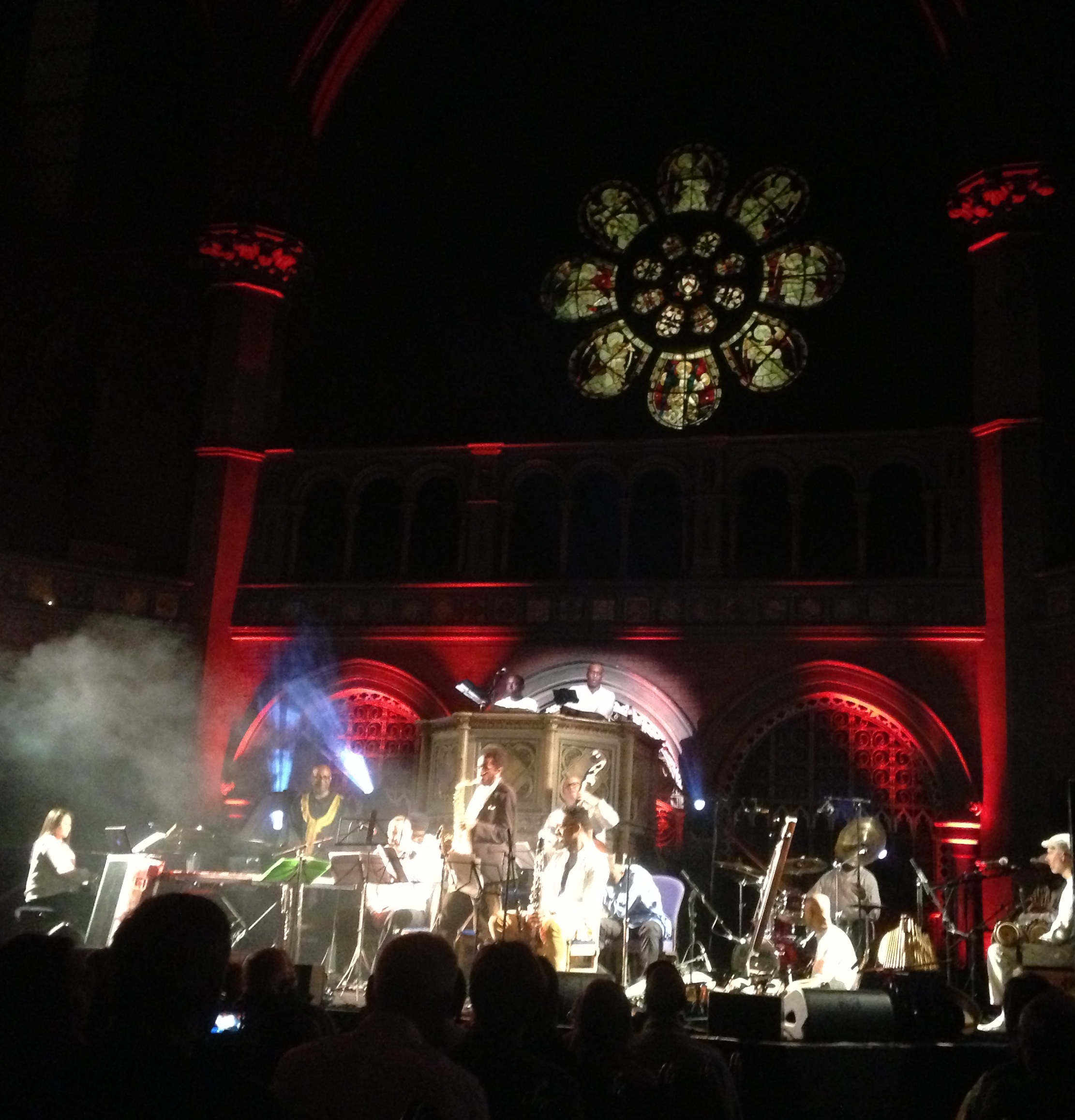
She and Red Clay Halo — Anna Jenkins (violin, viola), Jo Silverston (cello, bass, banjo, saw) and Gill Sandell (accordion, piano, flute) — are on tour in Britain next month. I’m going to try and catch them at St James’s Church in Piccadilly. Meanwhere here are a couple of video clips: first at the Union Chapel in Islington two years ago, performing “Nostalgia”, and then in the studio this month with a quite heartbreakingly beautiful cover of Tom Waits’s “Day After Tomorrow”.

* The photograph is from the jacket of Vena Portae and was taken by Johan Bergmark.

The Promised Land calling…

Fifty years ago this month the folks at Chess Records were preparing the release of a new Chuck Berry album called St Louis to Liverpool, containing the first new recordings since his release from jail a few months earlier. The album’s title, of course, acknowledged the effect of the British Invasion: the sudden takeover of the US charts by the Beatles, the Dave Clark 5, Freddie and the Dreamers, and others. Berry could hardly fail to have taken notice, since most of them were playing his songs.

Among the new numbers on the album was one I believe to be among his half-dozen finest: “The Promised Land”, the story of a poor boy making the trip from his home in Norfolk, Virginia to a new life in Southern California. The journey takes him through the Carolinas, Georgia, Alabama, Mississippi, Louisiana and Texas, where — in Houston, with the aid of friends — he’s put on a jet plane for the final leg of the journey, over New Mexico and on to touchdown in Los Angeles.

The form of it is inspired by Bobby Troup’s “Route 66”, made famous by Nat King Cole but chopped and channeled by Berry into a beat-group classic. He wrote his new song in prison, and was initially turned down when he asked for a road atlas of the US to help him with the geography, on the grounds that it might help him escape. After an appeal to the governor, the request was eventually granted.

The trick of the song is that, like the journey it describes, it never turns back on itself. There’s no chorus. Nothing is repeated. The title emerges only in the song’s very last thought. As well as precise geographical information, it’s full of beautiful details — the through-train ticket on the Midnight Flyer, the silk suit, the T-bone steak à la carte — and whole lines that, once you heard them, you never forgot, like that amazing penultimate verse: “Swing low, chariot, come down easy / Taxi to the terminal zone / Cut your engines and cool your wings / And let me make it to the telephone…”

It’s a song that seems quintessentially American, perhaps especially to a non-American who fell in love with that culture when it was at its jet-engined, tail-finned, jukebox and blue jeans height. I happen to harbour a special reverence for the version Elvis cut at the Stax studio in Memphis in December 1973, because (as I wrote in a piece in my book Long Distance Call) the combination of singer and song seems to incorporate so many myths and legends, dreams and desires. And, of course, Elvis sings the hell out of the song, like he’d written it or lived it. He really is the boy whose first instinct, on arriving in the place where he plans to make a new life, is to call home.

At the top you’ll find a YouTube clip of the man who wrote the song delivering his masterpiece in a TV studio in Paris, I’d guess during his European tour in January 1965. The pick-up rhythm section would obviously rather be playing “How High the Moon”. There’s a lovely moment when the stand holding the vocal microphone collapses. Towards the end of the song the bass-player retunes his D and G strings in mid-flow with a rather unnecessary fastidiousness. And Mr Berry is, as ever, his own sweet-and-sour self, a true genius of rock and roll.


The Berlin variations

Dylan Howe 2Dylan Howe and his band wrapped up their short tour in front of a full house at Warwick University’s Arts Centre last night, performing the versions of David Bowie’s Berlin-era instrumentals heard on the drummer’s excellent new CD, Subterranean. Only the pianist Ross Stanley remained from the recording line-up; for the tour, he and Howe were joined by Andy Sheppard (soprano and tenor saxophones), Steve Lodder (synthesiser) and Dave Whitford (double bass), creating a compact line-up fully capable of the subtlety and range of gesture demanded by the project. And the timing could hardly have been better, given that Bowie himself has just revealed an intriguing and vaguely jazzical track called “Sue (Or in a Season of Crime)”, the result of a collaboration with Maria Schneider’s big band.

The instrumentals adapted for Subterranean from Low and Heroes — among them “Neuköln”, “Warszawa” and “Moss Garden” — happen to represent the Bowie I like best, and Howe’s arrangements work with the original moods through careful use of texture (often via the restrained employment of Lodder’s Korg) while opening them up to thoughtful improvisation. Sheppard responded like the master he now is, never straining for a climax as he unfurled his variations, and Stanley’s solos displayed a lovely open-hearted lyricism. Whitford, a member of the new generation of bassists who decline to show off, made a telling contribution both in support and as a soloist.

Above and behind the players, a screen showed evocative Cold War-era documentary footage of West and East Berlin. The visual counterpoint slightly lost its freshness in the second half, when the same sequences were reshuffled, but at the end of two hour-long sets the audience responded with great — and, for the drummer-leader, surely very gratifying — enthusiasm.

* Dylan Howe’s Subterraneans at Warwick Arts Centre (left to right): Steve Lodder, Ross Stanley, Dave Whitford, Andy Sheppard, Howe.


Remembering Laura Nyro

Laura Nyro 1Laura Nyro had missed her intended flight from New York to London, forcing her to take a plane that arrived at six o’clock in the morning. Now here she was, barely 12 hours later, warming up before recording a performance in front of an invited audience in a small auditorium at the BBC’s Television Centre, for a series called In Concert.

This was in May 1971, three months after she had made her British debut at the Royal Festival Hall, giving a solo concert in which the first set was performed by her then boyfriend, Jackson Browne, who was also appearing in the UK for the first time. It had been a wonderful recital: she started with “Stoney End”, included “Timer”, “Been on a Train”, “Emmie”, “Map to the Treasure” and “Christmas in My Soul”, read a poem called “Coal Truck”, and finished with a lovely medley of “He’s Sure the Boy I Love” and “Spanish Harlem”. Such range, such composure, such deep connection with her audience seemed exceptional in one who was still only 23 years old.

She readied herself for the BBC’s cameras in a voluptuously flowing mauve and lilac dress with lace half-sleeves: a typically dramatic costume. As she sat at the piano, I was struck by the way that she could turn her head to look like at one moment like a exquisitely soulful contessa from a Velasquez painting and at the next like a lusty young maid from one of Chaucer’s tales.

As well as her manager of the time, Richard Chiaro, there was a new boyfriend along for the ride. “You’ve got to sit somewhere I can see you,” she told him. But a few minutes later she was scolding him for singing along while she ran through some of her numbers.

In such an intimate setting, the evening was unforgettable: opening with a medley in which “Ain’t Nothing Like the Real Thing” sandwiched “Natural Woman”, she sang “Buy and Sell”, “Stoned Soul Picnic”, the then-unrecorded “I Am the Blues”, “Christmas in My Soul”, a medley of “Timer”, “Ooo Child” and “Up on the Roof”, and “Mother Earth”; she delivered “Stoney End” as an encore. It was transmitted on BBC2, but in the intervening years it seems to have vanished. Long ago I asked Alan Yentob, a senior arts person at the corporation, to see if he could unearth it, but there was no trace.

It was 23 years later, in November 1994, that Laura made her final British appearance, accompanied by her three backing singers in the ideal 19th century Gothic environment of the Union Chapel in Islington. The set finished with her lovely version of “Walk on By”. And then she was gone, to be carried away by ovarian cancer in 1997 at the age of 49.

She remains a powerful and enduring presence among those who fell under the spell of her extraordinary talent. One of those fans is Billy Childs, an American jazz pianist — known for his work with Freddie Hubbard and Dianne Reeves, among others — who has just released an album called Map to the Treasure, on Sony’s Masterworks label, in which his arrangements of 10 Nyro songs are delivered by different singers.

It’s a risky undertaking. Nyro’s first success came with other people’s versions of her songs (the Fifth Dimension’s “Stoned Soul Picnic” and “Wedding Bell Blues”, Blood Sweat & Tears’ “And When I Die”, Barbra Streisand’s “Stoney End”, Three Dog Night’s “Eli’s Coming”), but it didn’t take long for her listeners to realise that the composer’s own versions far outstripped those of her interpreters. Nyro’s full-strength personality suffused her writing, as became apparent in her two masterpiece albums, Eli and the Thirteenth Confession (1968) and New York Tendaberry (1969), and their successors. Only she could properly explore the duality of the Madonna/streetchild persona (which she encouraged through her choice of jacket photos for those two albums). So to attempt cover versions at this stage of the game might seem otiose. Who, after all, can add anything new to such cherished pieces as “The Confession” and “Upstairs by a Chinese Lamp”?

Amazingly, Childs manages it — not by attempting to match or emulate the raw, romantic power of the originals, but by looking for facets of the songs to which he can apply his considerable resources, and by recruiting a group of singers who do not set out to sound like Nyro but bring their own voices, along with an unmistakeable admiration for the source of the material.

A string quartet appears on every track, with guests soloists featured alongside the singers: Wayne Shorter’s soprano saxophone with Esperanza Spalding on “Upstairs by a Chinese Lamp”, Chris Botti’s trumpet with Shawn Colvin on “Save the Country”, Steve Wilson’s alto saxophone with Susan Tedeschi on “Gibsom Street”, and Jerry Douglas’s dobro with Alison Krauss on “And When I Die”. Childs is the pianist throughout, supported by the impeccable rhythm team of Scott Colley (double bass) and Brian Blade (drums).

Childs jumps in straight at the deep end by opening the album with “New York Tendaberry”, one of Nyro’s most personal songs, delivered by the operatic soprano Renée Fleming and the cellist Yo Yo Ma. So right away you know we’re not in for a set of mere recreations. The beauty of Fleming’s tone and the sensitive formality of her phrasing takes the piece away from Nyro’s uptown-soul sensibility and into a different dimension.

That’s one of the highlights. Another comes straight afterwards, with Becca Stevens’s equally poised but comparatively uncorseted tilt at “The Confession”. At the centre of the whole thing, in structural and emotional terms, is Rickie Lee Jones: out of all the singers in the project, she is the one who most resembles Nyro in style and delivery (and, as she has often said, is most influenced by her), making her perfectly suited to bring out the tragedy of “Been on a Train”, helped by a most imaginative arrangement for the string quartet. Her presence makes me wish Childs had also called upon Mary Margaret O’Hara, the other singer I think of as an heir to Nyro’s legacy.

But once you get the measure of what Childs is up to, there isn’t a bad track here. What he gives us is a beautifully conceived and meticulously executed song cycle, a fitting tribute to one of the most original and gifted artists of our time. Yes, it’s a carefully polished thing, far more polished than Nyro’s own records ever were, but that polish is no superficial gloss: it’s the patina of a profound respect. And beneath it beats the heart of an extraordinary woman.

Laura Nyro BBC ticket

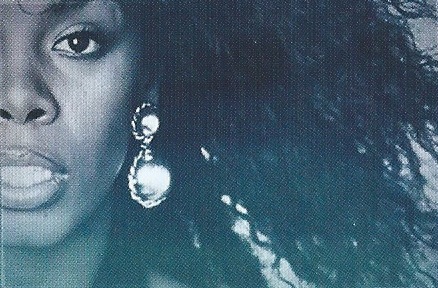
* The photograph of Laura Nyro comes from the cover of her 1984 album Mother’s Spiritual and was taken by Irene Young. The ticket for the 1971 BBC TV concert is mine. Anyone who loves Nyro’s music and hasn’t already read Michele Kort’s excellent biography — Soul Picnic: The Music and Passion of Laura Nyro, published by Thomas Dunne Books in the US in 2002 — should do so. And here, for free, is a link to an interesting piece by an academic, Patricia S. Rudden, from a 2006 edition of the newsletter of the Emily Dickinson Society (you’ll need to scroll down to the third page). Clips of Nyro on YouTube tend to get taken down quickly, but here’s a beauty: her performance of “Poverty Train” at the Monterey Pop Festival in 1967, giving the lie (despite a lame band of session men) to the myth that it was a total disaster. And here’s a real oddity from 1969.

Ida

IdaAmong the many reasons for seeing Pawel Pawlikoski’s new film Ida — briefly: the story, set in Poland in the early 1960s, of a novice nun who discovers that she is Jewish and that her parents were murdered during the war — is its use of music, and in particular that of a young modern jazz quartet whose leader, an alto saxophonist, plays a role in the nun’s story.

The group is heard in a club playing a couple of John Coltrane tunes, “Naima” and “Equinox”. (In his flat, the saxophonist slow-dances with the nun to Coltrane’s famous 1960 studio recording of the former.) Everything about the quartet appears to be patterned on the Zbigniew Namyslowski Modern Jazz Quartet, the first Polish jazz group to make an impact in Britain.

By coincidence, it’s 50 years this autumn since they arrived in London. Namyslowski (alto), Wlodzimierz Gulgowski (piano), Tadeusz Wojcik (bass) and Czeslaw Bartowski (drums) played a short series of dates, including the Marquee and the Richmond Jazz Festival. Among those who heard them was Derek Jewell, then the jazz and pop critic of the Sunday Times, who wrote: “Few visitors, even Americans, have surprised us more with their intensity, technique and originality.”

Zbigniew Namyslowski

By that time I suppose some of us were familiar with Roman Polanski’s Knife in the Water, with its great jazz soundtrack by the pianist and composer Krszysztof Komeda (of whose group Namyslowski had been a member). The surprise, to many, was that the altoist and his colleagues — the leader was the oldest, at 24, while the others were all 20 or 21 — had so clearly been listening to Coltrane and had so thoroughly absorbed the message. Those unable to see them in person could hear what they were up to via an album, titled Lola, which they recorded in London for Decca under the supervision of Mike Vernon, who would soon be making his name as a producer with John Mayall’s Bluesbreakers, Fleetwood Mac and other British blues bands. (The young studio engineer, Vic Smith, later became the Jam’s producer.)

Reissued on CD a few years ago, Lola still sounds great, the musicians perfectly at ease with the new language, even capable of playing it in 5/4 with confidence (on the longest and most ambitious track, “Piatawka”). The tartness of Namyslowski’s tone is reminiscent of Jackie McLean — another altoist who came out of bebop but whose conception was reshaped by later developments.

The band in Ida not only look perfect but reproduce the plaintive intensity of their predecessors. Dawid Ogrodnik, in the character of the alto saxophonist, is a musician as well as a gifted young actor, and it really is he who plays “Naima” and “Equinox” (** see footnote).

The film is beautifully made in an austere but gentle black and white, each shot but one (*** see footnote)  employing a fixed camera and framed with an interesting eye for composition, and with an unforgettable performance by Agata Kulesza as the nun’s aunt. Pawlikowski finds a calm, reflective and historically resonant way to tell a harrowing story.

* The still is from Ida, showing Dawid Ogrodnik as Lis, the saxophonist, and Agata Trzebuchowska as the eponymous young nun.  The photograph of the Zbigniew Namyslowski quartet was taken by David Redfern at the 1964 Richmond Jazz Festival, and is borrowed from the original sleeve of Lola.

** On second viewing, I’m pretty sure the actor only plays when the band are accompanying a female singer in a party scene. I think the two Coltrane tunes are probably overdubbed by two saxophonists named alongside Ogrodnik in the credits: Michal Kabojek and Zbigniew Zeno.

*** Again after a second viewing, I think it’s three shots in which the camera moves: each with a significance.