‘Eight Days a Week’
 Towards the end of Eight Days a Week, Ron Howard’s Beatles new documentary, all reason and proportion briefly fled and I was overpowered by a sense of rage. Those bloody Americans: it was all their fault. With their idiotic 50,000-seater stadiums and their imbecilic urge to misconstrue a perfectly innocent remark about Christianity in a John Lennon interview, they ruined the whole thing.
Not entirely true, of course. The dream was always going to end sometime. But you can see very clearly, in a film that purports to concentrate on the group’s touring years, how the pressure exerted by their immoderate success in the US in particular drove them to fall out of love with what life on the road had come to represent, once the novelty faded. After 1963 they were never able to perform live in an environment that allowed them to show how good they were. All four of them felt that frustration. The Plastic Ono Band, Wings and George’s stint with Delaney and Bonnie were among the consequences.
It’s interesting to speculate what might have happened had America not taken to them. Beatlemania in the UK and Europe would have died down a little, perhaps enough to allow them to continue touring together in more helpful conditions. Would they have been able to spend so much time in the studio, concocting Sgt Pepper and the White Album? Probably so; that’s the way they were heading anyway.
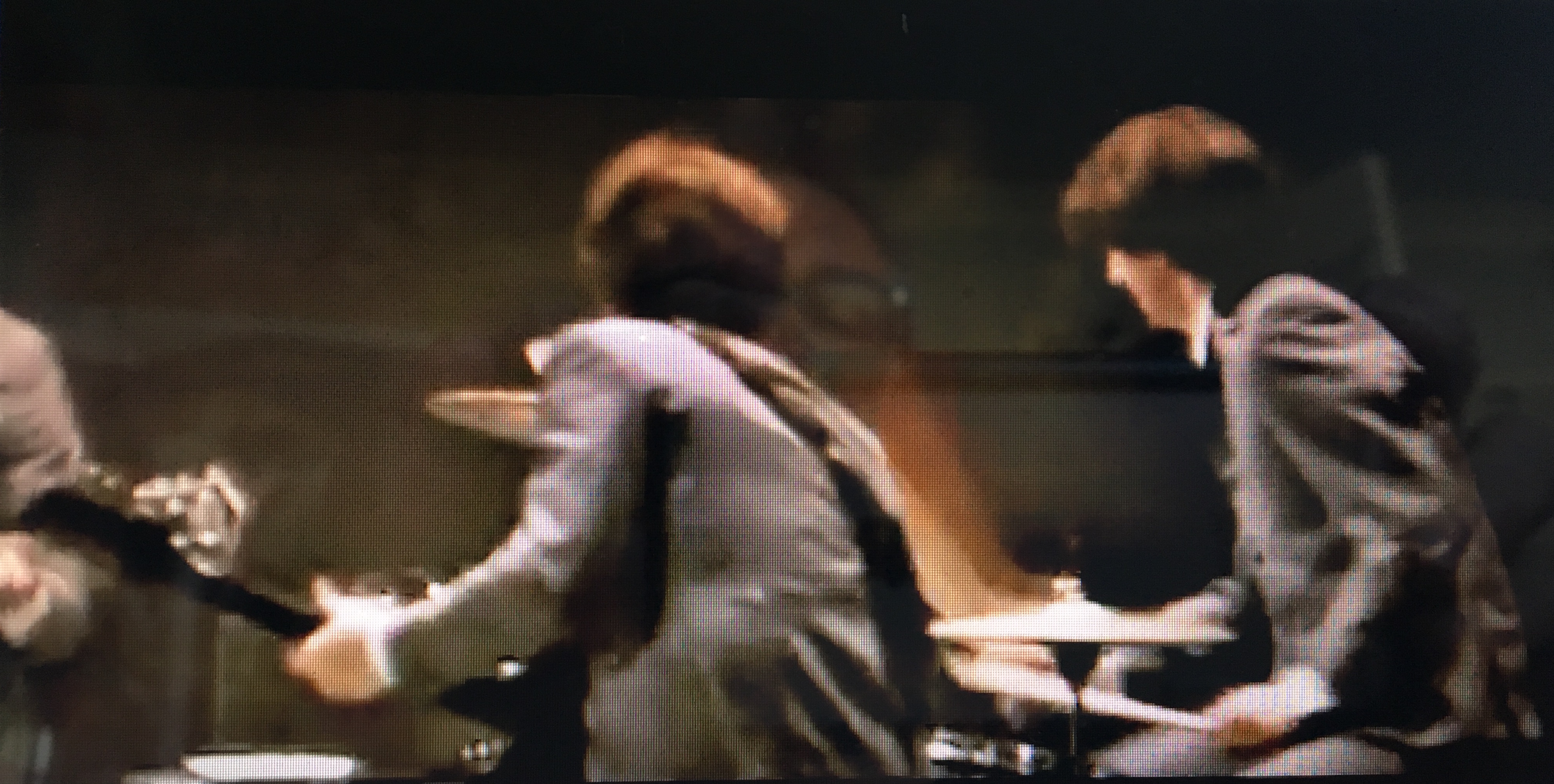
There are many cherishable moments in the film, not least a version of “I Saw Her Standing There” that shows what a blazing little band they were. The picture above, which I’ve grabbed from the trailer, is from that sequence; it captures the feeling. And the final sequence of “Don’t Let Me Down” and “I Got a Feeling” from the concert on the roof of No 3, Savile Row on January 30, 1969 — the first time they’d played live together in public not wearing a band uniform since Brian Epstein became their manager, as well as being the last time they played live together in public at all — is, as ever, deeply sad for the same reason. Imagine if they’d had the sort of rock-concert facilities they lay just around the corner.
As for the film itself, it’s a shame Ron Howard hasn’t learnt the lesson of the great documentary director Asif Kapadia’s work on Senna and Amy: at all costs, avoid showing talking heads on the screen. They slow it down and clutter it up. Elvis Costello and Whoopi Goldberg (particularly) are among those who have genuine insights to impart, but we don’t need to see them when there’s such a richness of archive footage available. But, of course, Eight Days a Week is not to be missed.
 Orphy Robinson must have known he’d had a great idea when he put together an octet to celebrate the music of the late
  One of the great qualities of Terry Riley’s In C, a foundational work of modern music, is that it can be played by any number of people using any kind of instruments for as long as they choose to make its sequence of 53 motifs last. Since the appearance of the original album in 1968 it has been recorded by a wide variety of ensembles, including the Shanghai Film Orchestra, Acid Mothers Temple, the Salt Lake Electric Ensemble, Adrian Utley’s Guitar Orchestra, and Africa Express with Damon Albarn and Brian Eno. The original album version lasted 42 minutes, but it can be made to go on much longer. (I haven’t heard of an attempt to compress it into the length of a 45rpm single, but I’ll bet someone’s had a go.)
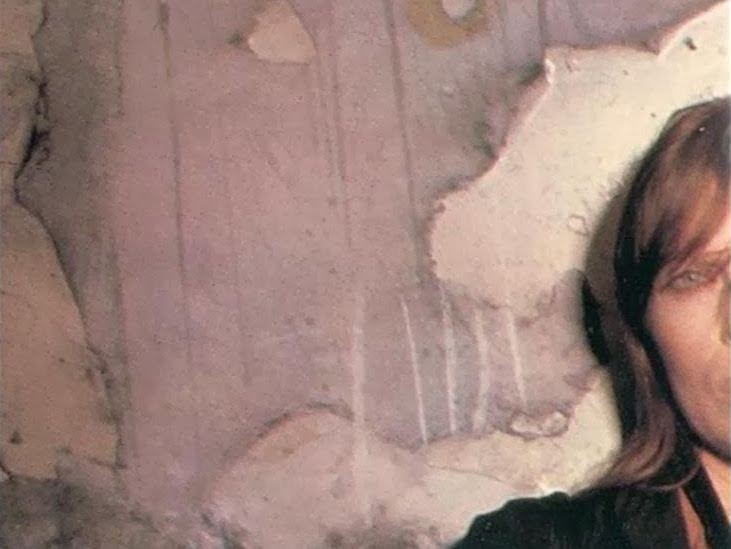 Nico died in Ibiza, a place she had loved for many years, one hot July day in 1988. Leaving the rented farmhouse where she was staying with her son, Ari, she headed into town, apparently intending to buy some hashish. At some point in the journey she fell from her bicycle and suffered a head injury. It was not until the following day that Ari called the police, gave them a description, and received the news that she had died in hospital.
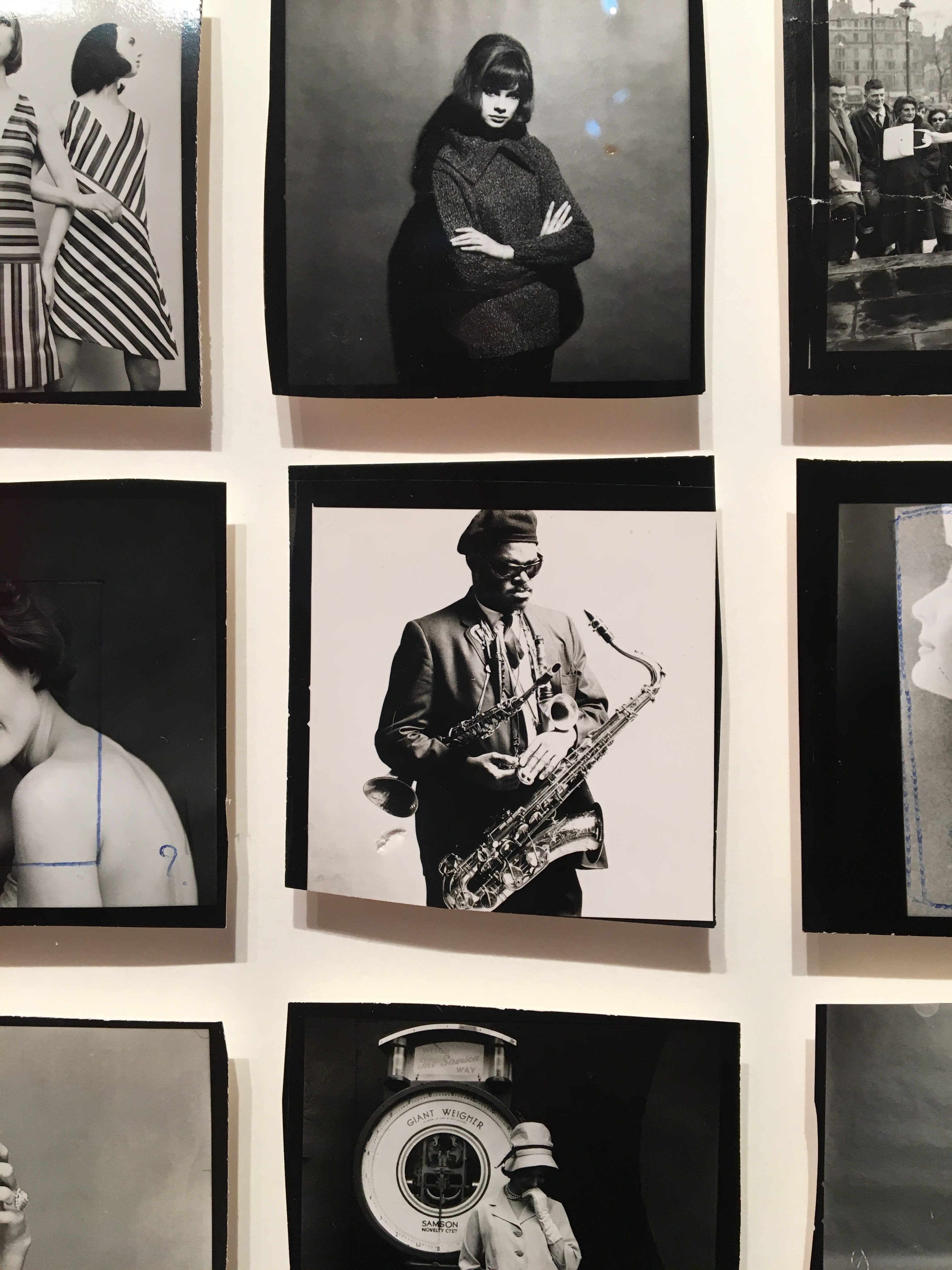 Here’s a surprise: in the middle of an assembly of frames snipped from contact prints included in a Photographers’ Gallery show of the work of the late Terence Donovan, there’s a picture of Roland Kirk. It was taken in 1963, during the American multi-instrumentalist’s first visit to London, when he played a season at Ronnie Scott’s Club — the original one on Gerrard Street in Chinatown — and a few concert dates around the country.
 Philip Clemo did well to attract Arve Henriksen not only to play on his sixth album but to participate as a member of the octet that launched Dream Maps in Kings Cross last night. The Scottish-born guitarist and composer’s work was greatly enhanced by the contribution of the Norwegian trumpeter and singer, who proved himself an excellent team player as Clemo’s soundscapes unfolded beneath a screen on which film of tundras, mountains and oceans gave an indication of the music’s subtexts.
 So I’m wandering into Mayfair on Monday, on my way to the launch party for this year’s EFG London Jazz Festival, and I have 10 minutes to spare. On Dover Street there’s an antiquarian book shop called Peter Harrington. I’ve never been in there before but there’s some nice stuff in the window so I open the door.