The sound of Shel Talmy
 Of the handful of Americans who landed in the UK in the 1960s to try and reverse the tide of the British Invasion, none had a more profound impact than Shel Talmy. A 25-year-old studio engineer with virtually no experience as a record producer but with a handful of Beach Boys and Lou Rawls acetates given to him by his mentor, Nik Venet, in order to persuade prospective employers of his bona fides, Talmy arrived from California in the summer of 1962. Dick Rowe, Decca’s A&R chief, was impressed enough to assign him to work with the Bachelors. It wasn’t really his idea of pop music, but when “Charmaine” was a hit, he was on his way. And after that came a handful of sessions that changed the way British pop records sounded.
Talmy had worked as a studio engineer in Hollywood, miking up the Wrecking Crew. He knew how to make records that didn’t sound as though the desks were being manned by men in lab coats who regarded distortion as a form of heresy. The results, when he was let loose on a new generation of English bands, included the Kinks’ “You Really Got Me”, “All Day and All of the Night” and “Tired of Waiting for You”, and the Who’s “I Can’t Explain”, “Anyway Anyhow Anywhere” and “My Generation”. He knew how to use session men like Jimmy Page and Nicky Hopkins while retaining the raw energy that characterised the young bands in their club appearances.
Making Time is the title of a new Ace Records compilation of his work in London’s recording studios. It’s full of riches and curiosities. My favourite — indeed, one of my favourite singles of the decade — is “Jack O’Diamonds” by the American actor Ben Carruthers and the Deep. As I wrote in a piece on this blog three years ago, it’s based on a poem Bob Dylan gave to Carruthers at the Savoy Hotel in London in 1965, and on a snatch of a Blind Lemon Jefferson song of the same name, and it’s played by a band put together for the session with Page on guitar, Hopkins on piano, Ian Whiteman on Lowrey organ, Pete Hodgkinson on drums and a bass guitarist remembered only as “John”.
My second favourite is very different, although no less of a pure product of the mid-’60s: “Surrender”, by a teenage singer from Belfast called Perpetual Langley (real name: Mary Langley), is a record I’d never heard before. It’s an early Nik Ashford-Valerie Simpson-Joshie Armstead composition, and Talmy gives it a perfect New York girl-group treatment. That would be Bobby Graham, I think, doing the Gary Chester thing at the drums in IBC Studios on Portland Place, Talmy’s favourite location. It was released on Talmy’s own independent Planet label, which was also the home of the Creation track that gives the anthology its title.
Although Talmy made his reputation with guitar bands, Making Time is quite a varied collection, including tracks by Roy Harper (“Ageing Raver”), Pentangle (“Light Flight”, the theme from the TV series Take Three Girls), the Nashville Teens, Lee Hazlewood (singing one of Talmy’s own songs), David Bowie (as Davy Jones, with an unreleased mix of “You’ve Got a Habit of Leaving”), the Easybeats, Chad & Jeremy, Tim Rose, and the Rockin’ Vickers (with Lemmy). There’s also “Drowning in My Own Despair” by Oliver Norman, a halfway decent pastiche of the Four Tops “Seven Rooms of Gloom”.
One band Talmy didn’t record at IBC was Manfred Mann, whose manager, Gerry Bron, called him in after they’d been dropped by EMI — who had given the departing Paul Jones a solo contract — and signed with Philips/Fontana. He made two singles (“Just Like a Woman” and “Semi-Detached Suburban Mr James”) and one album with the band and their new singer, Mike D’Abo, at the Philips studios on the corner of Bayswater Road and Stanhope Place. Wondering what it was like to work with Talmy, and what made him special, I emailed D’Abo and Tom McGuinness, who told me first of all that EMI had turned down their request to let John Burgess, the staff producer who had supervised their early hits, continue his successful collaboration with them.
“My recollection of Shel is of a cool, hands-off producer,” Tom replied. “We weren’t easy to produce. We were all very opinionated. We were also insecure as to whether we could carry on successfully after Paul’s departure. And we missed the security blanket of John Burgess. I can’t honestly recall how much Shel contributed. I know I read an interview with him years ago where he said something like, ‘Manfred Mann weren’t that easy to produce. They would stop in the middle of a take to discuss the political situation in Nicaragua.’ We were also schizophrenic in direction. Fontana wanted pop hits, but bands like Traffic were showing that albums were the way forward. A divide we never bridged.”
A couple of years ago D’Abo visited Talmy in Los Angeles, to which the producer returned in 1979. “I think Shel found recording the band quite a frustrating experience, pointing out to me that during recording sessions Manfred seemed to be forever making or taking phone calls, invariably related to finding out the latest price for his stocks and shares! I don’t think he felt much of a musical common bond existed within the group, and that perhaps our approach to recording singles was a bit too formulaic. Also, being brought up with American culture, it probably made it harder for him to relate to our English character, outlook and idiosyncracies. As a producer, he knew what format a song should take and trusted his instincts as to what made a hit song. He was a basically shy man, but once he felt comfortable in people’s company, he could be most entertaining, amusing and charming. His track record makes him a bit of a ’60s legend, I’d say.”
That’s certainly true. London was a richer place in those days for the presence of Sheldon Talmy, a man who was never afraid to let the needles go into the red and who celebrates his 80th birthday on August 11.
* The photograph of Keith Moon, Shel Talmy and Pete Townshend is from the cover of Making Time: A Shel Talmy Production.
 One of the gifts of Thomas Morgan, the unassuming 35-year-old bassist from Hayward, California, is to make every collaboration he undertakes sound like a perfect meeting of minds. No wonder Manfred Eicher, the founder of the ECM label, where intimate conversation between musicians is the dominant mode, likes him so much.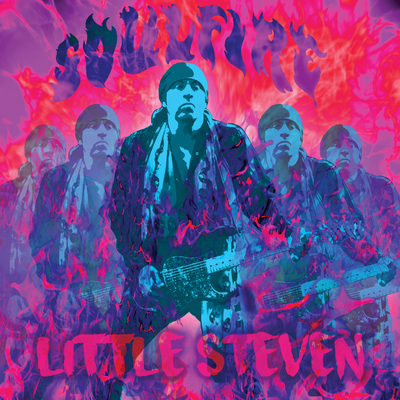
 I’m looking at some 50-year-old cuttings from a morning newspaper called the Nottingham Guardian Journal. The first of them is dated Saturday, May 13, 1967. It’s from a page called The Younger Set, containing pieces on fashion and music. The reviews include Hendrix’s “The Wind Cries Mary” (“magnificent… the most creative musician in Britain today”) and Percy Sledge’s “Out of Left Field” (“reaffirms my faith in soul music”). A week later we have the Doors’ debut album (“a very cool, tight sound”), Jefferson Airplane’s “Somebody to Love” (“a very mind-blowing cut from from one of the leading new-wave groups”) and, er, Dave Dee, Dozy, Beaky, Mick and Tich (“completely moronic”).
 Harvey’s book moves mostly between San Francisco and Los Angeles on its journey from January to December, with detours to Monterey and London. Some of the oral history — from backroom people like Andrew Loog Oldham, Shel Talmy and Bones Howe as well as stars such as Jerry Garcia, Al Kooper and Carlos Santana — is of rich in opinion and anecdote, despite being mostly divided into bite-sized chunks and arranged around the visual material. There are some real gems, as when the actress Peggy Lipton, one of the great beauties of the time, tells Kubernik about her Monterey Pop Festival experience: “There was a light drizzle and we went to hear Ravi Shankar. I remember I left my body.”
 A rather extraordinary thing happened at the Eurovision Song Contest in Kyiv last night. Amid the overheated cavalcade of stadium-rock effects and terrible English lyrics, a young man in a shapeless black suit and a dark shirt, his long hair tied up in an untidy top-knot, stood along on an unadorned stage and just sang a song in Portuguese, accompanied by a piano and a small group of strings. A very lovely song, a graceful ballad with a shapely tune, delivered in a high and gentle voice that managed to convey the ardour of the lyric without pushing the buttons that tend to fall automatically under a singer’s fingers on such occasions. And the song won the contest, carrying the votes both of the juries around Europe and of the audience at home.
 What’s so funny about peace, love and understanding? The fiftieth anniversary of the Summer of Love might be a good time to reconsider Nick Lowe’s rhetorical demand. In these harshly polarised times, we might look back with wonder on a brief era when a young generation commanded the world’s headlines with a philosophy that was essentially generous, outward-looking and benevolent.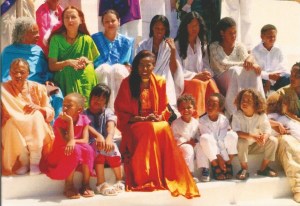
 A few years ago, in response to a realisation that a phenomenon was under way, I reorganised my jazz CDs to provide a special alphabeticised section for piano trios. There were a lot of them, going back to Teddy Wilson, Art Tatum, Bud Powell, Thelonious Monk and Bill Evans and incorporating Herbie Nichols, Elmo Hope, René Urtreger, Mike Taylor, Martial Solal, Howard Riley, Bobo Stenson and many others, and the number grew fast as the influence of Keith Jarrett, Brad Mehldau, the Necks, EST and the Bad Plus took hold on the younger musicians who formed trios such as Phronesis and GoGo Penguin. Like the string quartet in classical music and the two-guitars–bass-and-drums group in rock and roll, its components are held together in perfect structural tension and offer limitless flexibility.
 Everyone has their own Sun Ra. Mine is the one who made the Heliocentric Worlds albums for the ESP label in the mid-’60s, and whom I saw a few times in the early ’70s — at the Berlin Philharmonie, the Festival Hall and the Village Gate. Jez Nelson, the host of the monthly Jazz in the Round series at the Cockpit Theatre, had barely heard of him before interviewing him for Jazz FM in 1990, but quickly embraced the whole Sun Ra trip and gave us some lovely stories at the tribute evening he organised on Monday, as did Gilles Peterson, who came along with a bag full of rare Ra vinyl to play in the bar during the interval.
 After Peterson’s DJ set came Where Pathways Meet, a nine-piece band comprising Axel Kaner-Lidstrom (trumpet), Joe Elliot (alto), James Mollison (tenor), Amané Suganami (keyboards and electronics), Maria Osuchowska (electric harp), Mark Mollison (guitar), Mutale Shashi (bass guitar), Jake Long (drums) and Kianja Harvey Elliot (voice). Named after a Sun Ra tune, and dedicated to making music animated by a reverence for his spirit, they went about their work with energy and enthusiasm. Any rawness in the execution seemed unimportant by comparison with the good feeling they imparted.
 For two hours on Friday night, Caetano Veloso invited us into his living room. Well, the Barbican Hall, actually, but that’s how he made it seem. His guests were the singer Teresa Cristina and the guitarist Carlinhos Sete Cordas, who began the evening by performing songs from their recent album, a collection of duets on pieces by the late samba composer Angenor de Oliveira, better known as Cartola (the album is titled Canta Cartola).
 thebluemoment.com