Ron Rubin 1933-2020
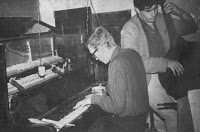
Among many distinctions, the bassist Ron Rubin, whose death on April 14 was announced in the Hampstead and Highgate Gazette, was playing with a trad jazz band led by the banjoist Ralph “Bags” Watmough on the opening night of the Cavern Club in his native Liverpool in 1957. He went on to a long career in the mainstream and modern idioms, with the bands of Humphrey Lyttelton, Sandy Brown and Al Fairweather, Tony Coe, Bruce Turner, John Picard, George Melly and John Chilton, Tony Milliner and many others. He played with such visiting Americans as Will Bill Davison, Billy Eckstine, Red Allen and Ray Nance, and in the freewheeling spirit of the time he was also briefly a member of Long John Baldry’s Hoochie Coochie Men and the New Departures jazz and poetry group.
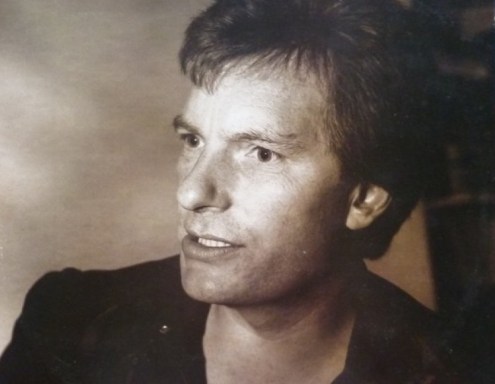
One gig about which he had mixed feelings was his collaboration with the brilliant but ill-fated pianist and composer Mike Taylor, on whose second and final LP, Trio, he appeared in 1967. Rubin played with Taylor at various times between 1962 and 1968, notably at the Little Theatre Club and Ronnie Scott’s Old Place, the two crucibles of the “new thing” in London in the late ’60s, and his diary entries provided the author Luca Ferrari with valuable information for his valuable biography of the pianist, Out of Nowhere.
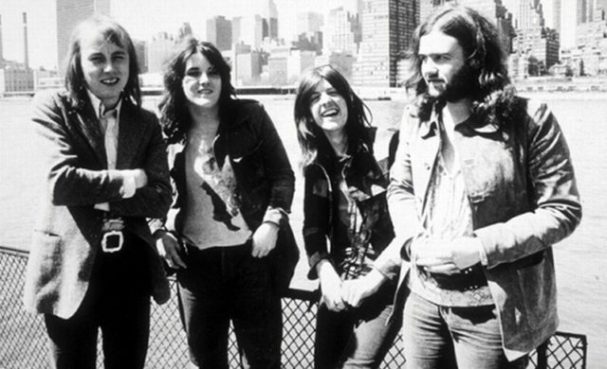
Rubin recognised Taylor’s talent, but he was uneasy about the avant-garde. He was even less comfortable when Taylor, his hitherto conservative personality and appearance transformed by LSD, started turning up for gigs barefoot and declining to play the piano, preferring a broken clay drum and some sort of flute. Taylor’s friends, such as the trumpeter Henry Lowther, feared he had lost his mind. In 1968 three of his tunes were recorded by Cream for Wheels of Fire, with lyrics by Ginger Baker, who had been his trio’s first drummer. The following year his body was washed up on the Essex shore. The coroner gave an open verdict, but suicide of some sort was assumed. He was 31.
The point of this, anyway, is not to rehearse the Mike Taylor legend. Trio is one of the great albums of British jazz, a document of such originality and confidence that it can still astound, and Ron Rubin was a part of it. Alongside the drummer Jon Hiseman, he appears on all but one of the eight tracks. He is the only bassist on “All the Things You Are”, “Just a Blues”, “The End of a Love Affair” and “Abena”, a wonderful ballad. He is joined by Jack Bruce on “While My Lady Sleeps”, “Two Autumns” and “Guru”. Bruce is the only bassist on “Stella by Starlight”. So, not exactly a trio, but never mind.
As so often happens with music on the cusp of a new movement, the standards are the listener’s way in. I suppose if you were to form a triangle with the young Cecil Taylor, Lennie Tristano and Bill Evans at its points, Mike Taylor might be somewhere in the middle, although he was no plagiarist. This was high-tension music, operating at a demanding intellectual level, requiring great commitment and creativity from all its participants, and Ron Rubin’s strong, assured and inventive playing was a big part of it, whatever his own feelings may have been at the time. (He was disconcerted, for example, when Taylor’s refused to give him the changes for “The End of a Love Affair”, which he didn’t know, telling him to play without them.) I hope he came to understand the esteem in which it is held today.
* The photograph of Ron Rubin with Mike Taylor in the early ’60s is from Luca Ferrari’s Out of Nowhere: The Uniquely Elusive Jazz of Mike Taylor, published by Gonzo Multimedia in 2015. Both Mike Taylor’s albums, Pendulum and Trio, were originally released in Columbia’s Lansdowne Series. The latter was reissued on CD in 2004 in Gilles Peterson’s Impressed Re-pressed series but is no longer available. (Pendulum — on which Rubin doesn’t appear — has never been properly reissued; the two vinyl copies currently for sale on the internet are priced at £1,280.01 and £1,372.95.)

 thebluemoment.com