Skip to content

The Japanese for ‘pathos’
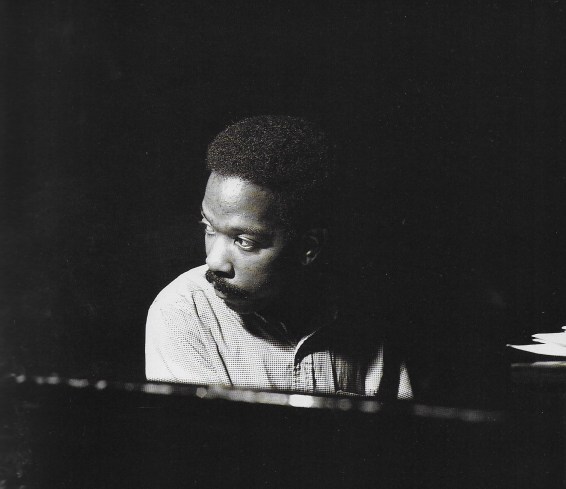
Sonny Clark F Wolff

The hip Sonny Clark album, as everyone knows, is Cool Struttin’, a quintet date from 1958 which has come to epitomise what we think of as the Blue Note style: relaxed but compact hard bop, rooted in a deep swing and with the blues never far away. Clark died of a heroin overdose in 1963, aged 31, with nothing to his name beyond his appearances on some exceptional recordings. He would no doubt be astonished to learn that his most celebrated album would sell over 200,000 copies between 1991 and 2009 — almost 180,000 of those copies in Japan, where Cool Struttin’ mysteriously became one of the biggest jazz albums of all time.

My favourite Clark album is something different: a trio session that didn’t see the light of day until its release in Japan more than three decades after the pianist’s death. Blues in the Night is a comparatively modest effort: only 26 minutes long, or 33 minutes if you count the alternate take of the title track. Presumably that’s why it wasn’t released at the time: simply not enough music to make a full 12-inch LP.

Clark was a fine composer, but Blues in the Night is all standards: “Can’t We Be Friends”, “I Cover the Waterfront”, “Somebody Loves Me”, “Dancing in the Dark”, “All of You”. It’s a supper-club set, with nothing to upset the horses. But it’s also, in its quiet and unassuming way, pure treasure. With the great Paul Chambers on bass and Wes Landers — otherwise unknown to me — on drums, Clark makes his way through these tunes at a variety of comfortable tempos with a wonderful touch perfectly highlighted by the simplicity of the setting. I can listen to it all the way through just concentrating on how he articulates a triad: putting down his fingers in a way that makes the chord far more than three notes being played at the same time, the minute unsynchronisations that make it human. And what he finds, I suppose, is a sweet spot between Bud Powell’s probing, restless single-note lines and the swinging, transparently joyful lyricism of Wynton Kelly. Which is a place I’m very happy to be.

I’m indebted for the Cool Struttin’ sales figure to an extraordinary chapter devoted to Clark in a book by Sam Stephenson called Gene Smith’s Sink, a kind of discursive biographical appendix to The Jazz Loft, an earlier book in which Stephenson gave a detailed history of the rackety loft apartment on New York City’s Sixth Avenue, in what used to be called the Flower District, where the great photographer W. Eugene Smith kept a kind of open house for beatniks and other outsiders, recording all their comings and goings on camera film and reel-to-reel tape. From 1957 to 1965 Smith’s loft was the location of an endless jam session featuring the likes of Thelonious Monk and Zoot Sims. Sara Fishko’s 2015 documentary film, The Jazz Loft According to W. Eugene Smith, is based on the book and is highly recommended.

Clark was a regular at the loft, and in Gene’s Sink the author recounts how Smith’s obsession with recording everything around him — even TV and radio news bulletins — extended to the sound of the pianist barely surviving another overdose. Stephenson himself fell in love with Clark’s playing when hearing another posthumous Blue Note release, Grant Green’s The Complete Quartets with Sonny Clark. He writes about him with enormous sensitivity, piecing together the story of a life that began as the youngest of a family of children in a Pennsylvania town called Herminie No 2, named after the mineshaft that gave the place its reason for existence.

If you’re interested in Sonny Clark’s progress from Pennsylvania coal country via Southern California to the New York jazz scene of the late 1950s, Stephenson’s beautiful piece of writing is the thing to read. And it was while following in Gene Smith’s footsteps to Japan (where the photographer documented the horrendous effects of mercury poisoning on the people of the fishing village of Minamata in the 1970s) that the author came across the ideograms most commonly used by Japanese jazz critics in discussions of Clark’s playing: they can be translated as “sad and melancholy”, “sympathetic and touching”, “suppressed feelings”, and one which combines the symbols for “grieving”, “autumn” and “the heart” to suggest “a mysterious atmosphere of pathos and sorrow”.

That mood isn’t really reflected in my favourite Sonny Clark record. What I hear, funnily enough, is an expression of pleasure in being alive to play the music he loved and for which he had such a precocious talent. I’m guessing he sometimes felt like that, too.

* Sam Stephenson’s Gene’s Sink: A Wide-Angle View was published by Farrar, Straus and Giroux in 2017. The Jazz Loft Project was published by Knopf Doubleday in 2012. The portrait of Sonny Clark is from Blue Note Jazz Photography of Francis Wolff, by Michael Cuscuna, Charlie Lourie and Oscar Schnider, published by Universe in 2000 (photo © Mosaic Images). Clark’s Blues in the Night was first released in Japan in 1979 and issued on CD in 1996. The tracks are also available on Clark’s Standards CD, released in 1998.
A Spanish sketch

Hardly anything from the three prime albums Miles Davis made with Gil Evans between 1957 and 1960 — Miles Ahead, Porgy & Bess and Sketches of Spain — was played live during the period in which they were written, recorded and released. To hear the original scores of such rich music brought to life in a concert hall or club, as with last November’s wonderful recreation of the full Porgy suite by alumni of the Royal Academy of Music, is to acquire a deeper appreciation of a music that has always inspired an unusually profound affection.

One of the biggest treats of lockdown listening has been last Thursday’s online release of the video of a socially distanced version of “Concierto de Aranjuez”, the centrepiece of Sketches of Spain, by the 21 musicians of the Gil Evans Project, a New York ensemble led by the composer and arranger Ryan Truesdell. Their two albums of Evans’s lesser known music, Centennial (which I wrote about here) and Lines of Color, have given me enormous pleasure since their appearance in 2013 and 2015 respectively, but this is a little different.

Riley Mulherkar, who takes on the daunting task of playing the soloist’s role, does an exceptional job, staying true to the sound and flight-path of Davis’s original playing while adding just enough inflections and inventions of his own to remind us that this is no mere impersonation but something with a life of its own. The true value of this performance, however, lies elsewhere. As with the Royal Academy’s version of the Gershwin arrangements, Truesdell was given the original scores by the Davis family, and again the scale of his band’s resources enables him to give full value to Evans’s orchestrations, which ranged far beyond the conventional jazz big-band instrumentation.

Those of us who love Evans’s music are very familiar with the effect of his favourite sounds, which included the alto flute and the bass clarinet, muted trumpets and French horns, a tuba and piccolo. But it was always hard to identify the individual components of the sound-washes that he created behind Davis. Now, thanks to the brilliant editing of this socially distanced performance, it’s possible to see exactly how he combined his colours to such magical effect.

To take just one example from this 17-minute recomposition of Joaquin Rodrigo’s guitar concerto, go to 11:50: there you’ll find four muted trumpets, three French horns, a bass trombone, a tuba, three flutes, a bassoon, a contrabass clarinet. It was Evans’ special gift to make such an elaborate combination feel so weightless.

As well as being deeply felt, the ensemble’s performance is so clear and precise that it’s amazing to think the musicians weren’t playing in the same room at the same time. If you want to know their names — and you should — go to Truesdell’s website: http://www.ryantruesdell.com. And maybe think about making a donation. In the present circumstances, it’s the only way we can subsidise something like this, while giving our thanks to performers whose skills and devotion bring a little light to our dark time. And, of course, to the eternal Gil Evans.

Rhythm and booze

MP_Lon11

A funny old movement, pub rock. If, that is, it was a movement at all, which you would have some trouble deducing from the 71 tracks making up a diligently compiled three-CD anthology titled Surrender to the Rhythm. It’s a stylistic odyssey travelling all the way from the Darts’ ’50s rock and roll medley of “Daddy Cool” and “The Girl Can’t Help It” to the pop-funk of Supercharge’s “You Gotta Get Up and Dance” via most of the stops in between.

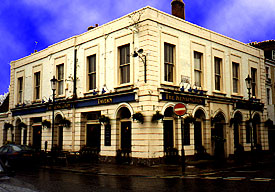
The subtitle is “The London pub rock scene of the Seventies”, and it certainly was a London phenomenon. The pubs I remember best in this connection are the Red Cow in Hammersmith, the Hope & Anchor in Islington and the Greyhound in the Fulham Palace Road. And, of course, the one in the picture, the Kensington in Russell Gardens, W14, just north of Olympia, which was where — at the prompting of my friend Charlie Gillett — I turned up one night in early 1973 to see a band called Bees Make Honey, whose repertoire veered from Louis Jordan to Chuck Berry.

Charlie’s Sunday-lunchtime Radio London show, Honky Tonk, was the parish magazine of pub rock. Before the Bees, he’d been listening to Eggs Over Easy, a mostly American band who proposed the shocking notion that there could be alternatives to progressive rock and the college/concert circuit: a relaxed, easy-going kind of music played in a relaxed, easy-going environment. The pubs fitted the music of people who still had Music from Big Pink in their ears and had more recently been listening to J. J. Cale, but also owned a copy of Lenny Kaye’s Nuggets compilation.

As a transitional movement, there was no real consensus — least of all on trousers, that infallible barometer, which went from drainpipes to flares and back again — except a unanimity of belief in the necessity of sweeping away the dominance of an old guard attacked in Mick Farren’s famous 1977 NME essay. “The Titanic Sails at Dawn”. The bands coalescing around this scene in its early days included Roogalator, Brinsley Schwarz, Ducks DeLuxe, the Kursaal Flyers, Ace, Kokomo and Kilburn & the High Roads. As a back-to-basics movement, it set the scene for punk, with a crossover point defined by Dr Feelgood and Eddie & the Hot Rods.

There are some obvious choices here — the Brinsleys track that gives the collection its title, the Feelgoods’ “She Does It Right”, the Kilburns’ “Billy Bentley”, the 101ers’ “Keys to Your Heart”, Elvis Costello’s “Radio Sweetheart”, the Hot Rods’ “Writing on the Wall” — and others that I wouldn’t have associated with this idiom at all, such as Chris Rea’s “Fool”, the Jess Roden Band’s “You Can Keep Your Hat On” and the Sensational Alex Harvey Band’s “Sergeant Fury”. Occasionally there’s something that’s a delight to hear again: Sniff ‘n’ the Tears’s irresistible “Driver’s Seat”, Chris Spedding’s charming “Bedsit Girl”, Starry Eyed & Laughing’s jingle-jangle “Money Is No Friend of Mine” and Roogalator’s “Ride with the Roogalator”, featuring the roadhouse guitar of Danny Adler. Obvious omissions are anything by Kokomo or Dire Straits, or Ace’s “How Long”, surely pub rock’s finest three minutes (instead we get their “Rock and Roll Runaway”).

The biggest surprise to me was Cado Belle’s “Stone’s Throw from Nowhere”, which I’d never heard before: a coolly soulful recording with an elegant lead vocal by Maggie Reilly, in the idiom of Minnie Riperton or Randy Crawford, and the sort of guitar-playing, by Alan Darby, that you might have found on a Norman Whitfield production. Also on the soul side is Moon’s chunky “Don’t Wear It”, a reminder of the excellence of Noel McCalla, their lead singer. They were one of the bands who landed a major-label deal without finding commercial success.

For A&R people — and I was one at the time — the early pub rock bands were a bit of a conundrum. Their modesty of scale put them at odds with the prevailing ambition, which was to search for the next really big act. I was always uneasy about the lack of any sense of genuine innovation. I was being guided by a belief in linear evolution, and I was probably wrong. Andrew Lauder at United Artists was right to sign the Feelgoods, and Dave Robinson was right to use the scene as a platform for his Stiff Records artists. Sometimes it’s necessary to step back in order to prepare for the next leap forward, and that’s what pub rock was about.

* Surrender to the Rhythm is released on Grapefruit Records.

A place in my heart

Perhaps you, like me, found yourself beguiled by a TV ad for the new Range Rover last year — the one with the dog staring out of the window of a loft apartment and a female voice singing what sounded like the opening 30 seconds of best ’60s Southern Soul ballad that never made it out of the vaults. I wasn’t alone in trying to track it down, only to discover that there was no more to it than those few lines.

They turned out to have been written by Dom James (melody) and Tommy Antonio (words) and recorded in London with the singer Emma Smith, formerly of the Puppini Sisters. It was created to order by people who do that sort of thing for a living, and that’s all of it that there was. But James noticed the interest it created, and he promised to finish it. Now he has.

Here it is, lip-synched by Emma on YouTube and available via Bandcamp as a fine slice of balm for this bizarre summer. Apart from a couple of lines of the lyric that could have stood a bit more work, it lives up to the promise of the original snippet. I can hear Gladys Knight singing it now. But the original will do just fine.

* Here’s the Bandcamp link: http://www.emmasmithmusic.bandcamp.com/

Soft Machine today

Soft Machine Baked Potato 1

It’s many years since, to all intents and purposes, I lost interest in the Soft Machine. One by one, the early members  — Daevid Allen, Kevin Ayers, Robert Wyatt, Mike Ratledge, Hugh Hopper — dropped away, taking their various eccentricities and my enthusiasm with them. Left behind was a constantly shifting corpus of musicians who, for all their individual qualities, didn’t seem to amount to much more than just another jazz-rock band, taking advantage of the mileage left in the name.

And it’s the old conundrum, going back to Theseus’s ship or the woodsman’s axe. Or whichever football club you happen to support. If, over the years, all the components are replaced, is it the same ship, axe or football club?

So when the latest album by the group currently calling itself Soft Machine arrived in the post, I played it out of nothing more mild curiosity, prepared to hit the eject button as soon as the twiddling-and-noodling quotient was exceeded. To my surprise, I found myself listening all the way through with increasing interest and enjoyment. And then playing it again. For the past couple of weeks it’s been a fairly constant companion.

It’s a live set, recorded in February 2019 by the present line-up — John Marshall on drums, Roy Babbington on bass guitar, John Etheridge on guitar and Theo Travis on soprano and tenor saxophones, flute and Fender Rhodes piano — at a Los Angeles jazz club called the Baked Potato, located on Cahuenga Boulevard, just the other side of the Hollywood Freeway from Universal Studios, and owned by the pianist Don Randi, once of the Wrecking Crew. The Softs’ changes of personnel over the decades would challenge even Pete Frame, compiler of all those celebrated Rock Family Trees. For those who haven’t been keeping up, it’s enough to mention that Marshall joined in 1972, replacing Phil Howard, who had replaced Wyatt in 1970; Babbington arrived as Hopper’s replacement the following year; Etheridge joined in 2004 (see note **), and Travis two years later. In the past, I believe, there have been problems over the use of the name; until quite recently they were unappetisingly billed as Soft Machine Legacy.

The set list is a good mixture of ancient and modern, beginning with Ratledge’s “Out-Bloody-Rageous” (first heard on Third in 1970), given a keyboard intro by Travis which recalls the Softs’ early interest in Terry Riley’s keyboard improvisations. Ratledge’s more fusion-y “The Man Who Waved at Trains” is also present, as is Hopper’s moody “Kings and Queens”, a feature for Travis’s attractively Charles Lloyd-ish flute. The Karl Jenkins era is represented by “Hazard Profile Pt 1” and “The Tale of Taliesin”, both reminders of how effective a musical organiser the Welshman could be in this kind of context.

Marshall contributes “Sideburn”, a two-minute drum solo showing the fine touch he always possessed, and there are two pieces from Etheridge and three from Travis, mostly operating in stylistic terms within a triangle formed by the Mahavishnu Orchestra, mid-’70s King Crimson and the Pat Metheny Group. Which is where I would normally take my leave, except that here there’s no sense of the sort of self-indulgence to which so many excellent musicians — particularly guitarists — were prone during the bad old days of the jazz-rock fusion.

All the pieces here are concise and well formed, and all the solos have substance. Etheridge’s “Heart Off Guard” is another vignette: a gentle study for guitar and soprano that slides into his lovely “Broken Hill”. His solo on the circling and rising chord pattern of “Hazard Profile” is genuinely lyrical and emotionally involving. Travis’s flute is again outstanding on his own “Fourteen Hour Dream” (its title surely a nod to the group’s origins in London’s psychedelic scene), where the supportive excellence of Babbington also takes the ear.

So there it is. There may be no pataphysical ramblings or “Moon in June”-style fantasias emanating from this group trading under the hallowed name, nor a sense of a continuing need to stretch boundaries, but it’s a pleasure to discover that I was wrong to write them off. Maybe I’ll have to trawl through their extensive back catalogue from the decades when I was looking the other way. But even if there isn’t time for that, this is a nice surprise.

* The photograph is by Mauricio Alvarado. Live at the Baked Potato is released on Moonjune Records: http://www.moonjune.com or http://www.softmachine.org

** As several people have kindly pointed out, John Etheridge first joined the Softs in 1975, replacing Allan Holdsworth. See? I told you I hadn’t been paying attention.

Eddie Gale’s Ghetto Music

Eddie Gale

The thing I know best about the trumpeter Eddie Gale, who has died at the age of 78, is the first of two albums he made for Blue Note at the end of the 1960s: Eddie Gale’s Ghetto Music, an uncompromising title for a piece of music designed to reflect the black experience. In mood and message, it aligns with Max Roach’s slightly earlier We Insist! and Archie Shepp’s slightly later Attica Blues.

Gale had already played with Sun Ra in the mid-’60s and appeared on Cecil Taylor’s first Blue Note album, Unit Structures, in 1966. As a child he’d listened to gospel music and hung around outside a Brooklyn club to listen to Lester Young. He’d taken lessons from Kenny Dorham and sat in with Coltrane at the Half Note: a life-changing experience. He would also be featured on Larry Young’s Of Love and Peace for the same label in 1969. Recording his Ghetto Music project was one of Blue Note’s more unexpected moves. The producer was not Alfred Lion, who took that role on just about every one of the label’s releases, but his partner in the business, Francis Wolff. (Lion had retired when Blue Note was sold to Liberty Records in 1967.)

The five compositions on this album use an instrumental sextet of trumpet (Gale), tenor (Russell Lyle), two basses (Judah Samuel and James “Tokio” Read) and two drummers (Richard Hackett and Thomas Holman), plus a choir of 11 voices, including two lead singers (Elaine Beener and Joann Gale). The leader apart, I’d never heard of any of these musicians before I got the album on its original release, and I’ve never heard of any of them outside of Gale’s orbit since. They seem to have been part of a collective based in Brooklyn.

Whoever they were, they made music with a raw edge and a powerful immediacy. You can hear that on A Walk With Thee, my favourite track from the album. The bass vamp, the martial/bolero drumming, the unison of the horns and voices: it’s a strong brew. Gale has a big sound with a wild edge. Lyle, the tenorist, solos with a kind of suppressed hysteria. It’s an offshoot of what Albert and Donald Ayler were doing a little earlier in the decade. It doesn’t need to be judged according to anyone else’s idea of finesse or sophistication.

A year later the singers and two of the players, Lyle and Judah, were on Gale’s second and last Blue Note album, Black Rhythm Happening, a year later, joined by Jimmy Lyons, the altoist, and Elvin Jones. Gale himself recorded with Sun Ra’s group in the ’70s (Lanquidity on Ra’s Saturn label) before moving to California, where he was an artist in residence at Stanford University, ran a workshop in Oakland and organised music-education programmes in San Jose, where he became the city’s official ambassador of jazz. In 2001 he received an award for his work from the California Arts Council.

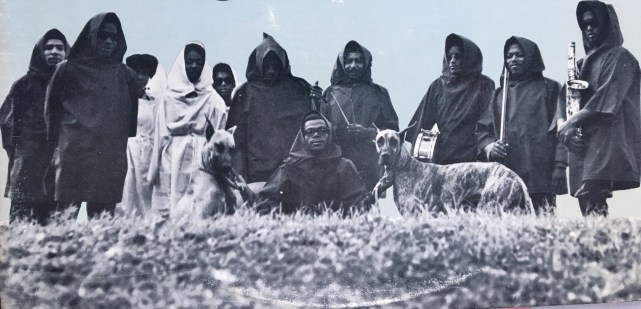
Breaking the mode of graphic presentation Blue Note had established under the art director Reid Miles, Eddie Gale’s Ghetto Music was released with a strikingly confrontational cover, at least by the standards of the time. A bunch of black men in hoods with women in white robes and mean-looking hounds? In 1969, that sent a message. And still it speaks.

* Originally issued on Blue Note in 1969, Eddie Gale’s Ghetto Music was reissued on CD by Water Music in 2003. The photograph of the musicians is from the original sleeve and was taken by Richard Graf. Some of the details of Gale’s life are from this interview in Jazz Times by Andy Tennille: https://jazztimes.com/archives/eddie-gale/

Listening to Lucio Battisti

19834_133814239566

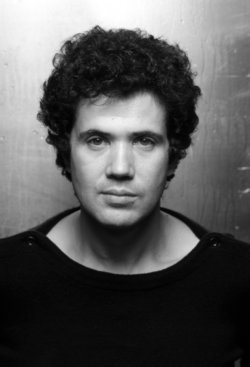
For no particular reason that I can pin down, I’ve spent a lot of this lockdown listening to the Italian singer Lucio Battisti. Well, maybe I just wanted music to remind me of being on holiday in Italy. The taste of a decent espresso. Traffic chaos in Naples. Olive groves on a Sicilian hillside. All of the stuff that seems so unreachable at the moment. Anyway, he’s been providing good company, as he has since I stumbled across his music almost 45 years ago. By that time he was already established as one of Italy’s biggest stars, with many hit singles and albums behind him.

The thing that first caught my ear in 1976 was a song called “Ancora tu”, on which he veered away from the singer-songwriter mode into an engagement with disco music. It’s an infernally catchy piece of music, but what also struck me were the words. Even with my rudimentary Italian, it was obvious that he was using dance music as a setting for one side of a conversation between two former lovers who’ve just bumped into each other again: “You again! How are you? Pointless question. You’re like me.” “Have you eaten, or not? Yes, I’m hungry, too.” “You look lovely. Younger than ever. Or maybe just nicer.” He tells her he’s given up smoking. At some point in your life, you may have had that kind of conversation. I liked the way the singer’s tone, conveying a mixture of fondness and concealed wounds, worked beautifully over the lightly pumping rhythm.

I was doing A&R at Island back then, so I called up some of Battisti’s earlier work and lost myself for a while in albums like Il mio canto libero, Il nostro caro angelo and Anima latina, each of which showed a willingness to absorb and adapt a variety of approaches, from English progressive rock to Brazilian new samba. “Ancora tu” was the lead track of an album whose title — Lucio Battisti, la batteria, il contrabasso, eccetera — itself highlighted his new interest in disco. I also found out that while Battisti was responsible for the music, he hadn’t written those interesting words. The lyrics to all his songs were by a man named Giulio Rapetti, who called himself Mogol.

The more I listened, the more I liked the way Battisti made records that sounded thoroughly modern while retaining some quality of traditional Italian pop music. He’d got his start through things like the San Remo Song Festival, and just enough of that flavour survived in his music to set it apart from his Anglo-American influences.

What I didn’t know was his string of hit singles — like Mi ritorni in mente (1969) and I giardini di marzo (1972) — had persuaded a generation of Italian kids that, as well as worshipping the Beatles and the Stones, they could have a pop music of their very own, speaking in their voice. It secured him a special and enduring place in their hearts. “He has been a sort of musical background to our lives,” the writer Giorgio Terruzzi told me the other day, “when we were passing between childhood and adolescence.” But that wasn’t what I heard, because I was listening to it in a different place at a different time. And by then he was becoming something different, too.

At some point, somewhere or other, I met both him and Mogol. Then in London I took Battisti to lunch at the Trattoo, a very nice Italian restaurant just off Kensington High Street. I wanted to try and work out a way to get his records — none of which had been released in the UK or the US — to an Anglophone audience. I liked him: he was a reserved but thoughtful person, and he was very happy discuss the fortunes of his football team, Juventus. Sadly, the idea didn’t come to anything. (The following year, in Los Angeles, he did make an album for RCA called Io tu noi tutti, with Hollywood session men, which gave him a couple more hits at home, although an English-language version titled Images didn’t work at all.) So, as a fan, I just carried on buying his Italian albums.

By the end of the ’70s he’d acquired the habit  of recording in London, with English producers, arrangers and musicians. For a while the records got lusher and more dependent on electric keyboards and synths, as you can hear in “Donna selvaggia donna” from the album Una donna per amico (1978) and “Il monolocale” from Una giornata uggiosa (1980), both produced by Geoff Westley with musicians like the guitarists Pip Williams, Phil Palmer and Ray Russell, the bassists Paul Westwood and John Giblin and the drummers Gerry Conway and Stuart Elliott.

Then it all changed. After so many years of success, Battisti and Mogol parted company, for reasons that have never really been explained. On the singer’s next album, E già (1982), the lyrics were credited to his wife, Grazia Letizia Veronese, and the music was stripped right back to a sound bed of electronics, created in the studio by Battisti and his new producer, Greg Walsh. I found it very adventurous and striking, and a track called “Straniero” made a deep and lasting impression. Then, four years later, came an album called Don Giovanni: more conventional in its arrangements, richer in texture, with words by the poet Pasquale Panella, and featuring several classics, like the irresistible “Fatti un pianto”, with its beautiful tenor saxophone work by Phil Todd on the intro and coda.

By this time Battisti had removed himself from the public eye. He stopped giving interviews and simply released an album every couple of years, all on the Numero Uno label, which he and Mogol had founded in the early ’70s after Ricordi had been reluctant to release their extraordinary concept album, Amore non amore. Each of these new albums had a standard look — very minimal white covers featuring simple black line drawings and no photographs — and each, sadly, was increasingly unsuccessful with the public.

L’apparenza (1988), La sposa occidentale (1990), Cosa succederà alla ragazza (1992) and Hegel (1994) had different producers — Robyn Smith, Greg Walsh, and, for the last two, Andy Duncan — but I think of them as a continuous work: an extended suite of electro-dance music made by a singer-songwriter, the innate vulnerability of Battisti’s voice ensuring that it never lost its human warmth. Sometimes, at their most driving and joyous, as in “Cosa succederà alla ragazza” or “La voce del viso”, these late tracks make me think of the Pet Shop Boys holidaying on that stretch of the Tyrrhenian coast around Viareggio, warmed by the Tuscan sun. But it’s all pure Battisti, really.

Hegel turned out to be his last word. Four years after its release, in 1998, he died in a Milan hospital, apparently of cancer, aged 55. Although in recent years there has been some controversy over the ferocity with which his widow guards his legacy, his music is available to be discovered by anyone who, like me, came to it a little late and found a friend.

* Many of Lucio Battisti’s recordings, including the final quartet of “white albums”, were reissued two years ago by Sony Legacy / Numero Uno in limited editions of CDs replicating the original album artwork. They seem to be still available.

Uptown soul masters

Gene Burks

If you’ve been reading these pieces for a while, you’ll know that I have a soft spot for heavily orchestrated male soul balladeers from the first half of the 1960s. Much of this kind of music came out of the Brill Building in New York, but as Ady Croasdell points out in his notes to an excellent new compilation called Soul Voices: 60s Big Ballads, it was a style that migrated to Los Angeles, Chicago, Philadelphia, Memphis and elsewhere.

Its great producers and songwriters included Burt Bacharach and Hal David, Jerry Ragovoy, Bert Berns, Teddy Randazzo and Van McCoy. Among the most expressive voices were numbered Chuck Jackson, Garnet Mimms and Ben E. King, who were big names back then, and such cult favourites as Lou Johnson, Jimmy Radcliffe, Walter Jackson, Tommy Hunt and Tony Mason. All those luminaries are to be found among these tracks, together with such lesser known singers (to me, anyway) as Clarence Pinckney, Garrett Saunders, Gene Burks and Brooks O’Dell. Be assured of this: they all have something to say, and something worth listening to.

One way of looking at this album, admittedly in a slightly reductive way, is to see it as a 24-track publishers’ demo for the next Walker Brothers album in, say, 1966. It’s possible to imagine Scott Walker recording almost any of these songs with Ivor Raymonde arrangements in the old Philips studios on the Bayswater Road near Marble Arch, as he did with “Make It Easy on Yourself”, “My Ship Is Coming In”, “Stand By Me” and “Stay With Me Baby”.

But the results wouldn’t have been as good. Apart from the great songwriting, arrangements and production, what makes these sides so powerful is the quality shared by all the singers: a certain dignified ardour, usually resigned, occasionally optimistic, generally suave, always grown-up. A compilation that chooses to start with Walter Jackson’s sombre “Forget the Girl”, a wonderful Chicago record with marvellous Floyd Morris piano octaves tinkling through the Riley Hampton arrangement, is setting itself a challenge, but the standard never drops.

Sometimes it reaches the heights. Those moments certainly include Chuck Jackson’s “I Can’t Stand to See You Cry”, a Van McCoy masterpiece worth listening to all the way through again, once you’ve had your heart satisfactorily torn apart by Jackson’s lead vocal, just for the quality of Gary Chester’s drumming. Equally magnificent is Jimmy Radcliffe’s “Through a Long and Sleepless Night”, a classic Bert Berns production arranged for Spanish guitar, double bass and, I’d guess, the Greek chorus of Cissy Houston and Dee Dee Warwick.

Sometimes the individual components of the style make themselves obvious, like the gospel influence on Garnet Mimms’ “Anytime You Want Me”, produced by Jerry Ragovoy, or the Latin tinge of James Carr’s “Lover’s Competition”, or the southern soul of Gene Burks’s “Can’t Stand Your Fooling Around” or the Spectorish sweep of Jimmy Beaumont’s “You Got Too Much Going For You”. Elsewhere there’s the mellifluous strength of Roy Hamilton on “Heartache (Hurry on By)”, the striking tuba intro to Kenny Carter’s “Like a Big Bad Rain”, Al Hibbler’s gentle crooning on Randazzo’s “Good For a Lifetime”, the ice-rink Wurlitzer intro to Junior Lewis’s unreleased “I Love You So Much”, and a lot more besides, including two slices of prime Bacharach: Lou Johnson’s original version of “Reach Out For Me” and Tommy Hunt’s unreleased remake of “Don’t Make Me Over”, which uses the Dionne Warwick backing track.

So now, if you’ll excuse me, I’m going to slip a gaberdine raincoat over a navy mohair suit and go out and walk the tear-stained streets. This isn’t the weather for it, but the soundtrack never gets old.

* The photograph above is of Gene Burks. Soul Voices: 60s Big Ballads is on Ace Records.

‘Echo in the Canyon’

Laurel_Canyon-3

There’s a lot to like about Echo in the Canyon, a new 90-minute documentary about the Laurel Canyon music scene in the mid- to late-’60s, directed by Andrew Slater. One asset is the constant presence of Jakob Dylan, who has been silent as a recording artist for several years but here proves to be a sensitive interviewer and performer. I suppose it shouldn’t be a surprise that someone who’s grown up as the son of Bob Dylan isn’t sycophantic towards his celebrated interviewees, but his thoughtful silences are often expressive — they give us, too, the chance to think.

It’s an unusual film in that its framing device is the assembling of a group of musicians, led by Dylan, to perform in concert the songs of the Pet Sounds-era Beach Boys, the Byrds, the Mamas and the Papas, and Buffalo Springfield. Dylan’s on-stage guests include Regina Spektor, Beck and Fiona Apple — and, I guess, the members of his band, the Wallflowers. Those he interviews include Roger McGuinn, Brian Wilson, Michelle Phillips, Lou Adler, David Crosby, Stephen Stills, Graham Nash, John Sebastian, Jackson Browne, Eric Clapton and Ringo Starr. There are lots of archive clips, many of them cherishable.

The real focus is very specific. It’s the moment folk music and rock music merged in the Byrds’ version of Bob Dylan’s “Mr Tambourine Man”. Specifically, it’s the moment Roger (then known as Jim) McGuinn got hold of a 12-string Rickenbacker — the second to be produced, we learn — and constructed that famous introduction, which echoed the “jingle-jangle” of the lyric and became a genre in itself, working its way through Tom Petty and ending up as power-pop.

A lot is made of the influence of the Beatles on this movement, quite correctly, and also of the way the Byrds’ early records influenced George Harrison to write “If I Needed Someone”. Personally I think they should have given considerable credit to the Searchers’ versions of Jack Nitzsche and Sonny Bono’s “Needles and Pins” and Jackie DeShannon’s “When You Walk in the Room”, which came out in 1964 and predicted the jingle-jangle sound with great precision. Also, given Nash’s presence, some mention should have been made of the Hollies’ influence.

But then David Crosby doesn’t think much of the pop music that came before… well, before David Crosby. It was, he says, all “moon-and-june and baby-I-love-you”. Oh, right. “I close my eyes for a second and pretend it’s me you want / Meanwhile I try to act so nonchalant.” That’s not poetry, huh? Sure, “To dance beneath the diamond sky / With one hand waving free / Silhouetted by the sea” is poetry, too. Ah well. Tutto fa brodo, as they say.

Having read two biographies of Crosby, Stills, Nash and Young for a Guardian review last year, my appetite for stories of internecine warfare in the Byrds and Buffalo Springfield is pretty well sated, and nothing uttered here adds interesting detail or insight. It’s nice to see Brian Wilson and to hear Michelle Phillips, and Petty’s conversation with Dylan in a guitar shop is apparently the last interview he gave before his death in 2017. But anyone expecting this to be the story of the Laurel Canyon of Joni Mitchell and James Taylor will be disappointed, which makes the presence of Jackson Browne puzzling: he talks well, of course, but really had nothing to do with what the film is talking about.

Apparently Slater was inspired to make the documentary by seeing Jacques Demy’s 1968 film Model Shop, set in Hollywood and starring Anouk Aimée and Gary Lockwood, with a soundtrack by Spirit (who, like Love and the Doors, are never mentioned). I’ve never seen it, but the clips we’re shown certainly make me want to rectify that omission. The director tries to recreate that lost vibe as Dylan cruises the boulevards and wanders from one legendary studio to another: United and Western (now merged), Capitol… not Gold Star, of course, demolished many years ago. The use of Laurel Canyon itself is disappointing: I wanted get more of a sense of the topography and to see the houses where these people lived and (in every sense) played.

Some of the newly performed music is enjoyable, although the chopped-up editing can be frustrating, and having Stills and Clapton perform a guitar duel in studios on different continents wasn’t really a very good idea at all. The best comes at the end: a sensitive version of “Expecting to Fly” is the finale, preceded by Dylan and Beck duetting quite beautifully in front of their band on the Byrds’ arrangement of Goffin and King’s “Goin’ Back”. “A little bit of courage is all we lack / So catch me if you can / …” It made me stand up, grab the nearest air guitar, and find a harmony to sing. And that doesn’t happen every day, I can tell you.

* Echo in the Canyon is on Amazon Prime. The photograph is taken from the Laurel Canyon Radio website: http://www.laurelcanyonradio.com/view-from-laurel-canyon/

Measuring the heart

ambrose-akinmusire

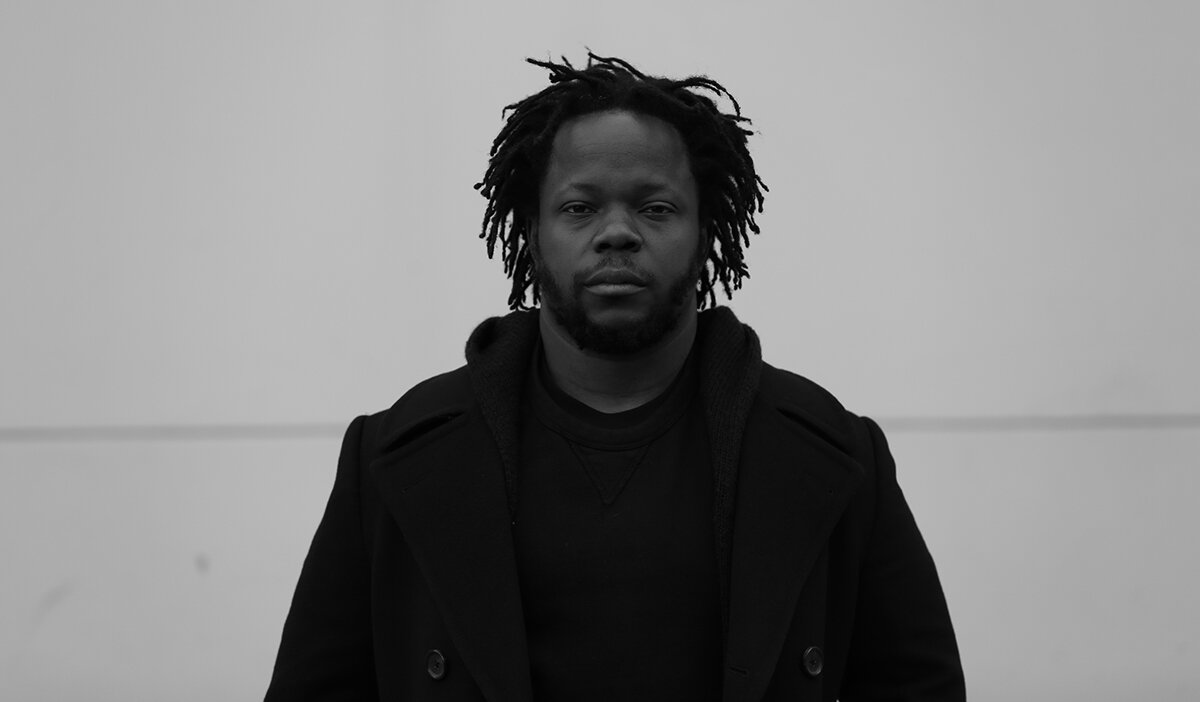
The great figures of jazz are the people who, as the decades pass, you can set your compass by. For me, in my generation, that meant Miles, Coltrane, Ornette. It’s always tempting to think that they don’t make people like that any more, but it’s not true. And I’m thinking that the trumpeter, composer and bandleader Ambrose Akinmusire might be one of them.

Akinmusire’s music has a moral heft that makes it a good place to turn to in times like these. Not many artists can so successfully maintain a commitment to beauty while bringing  intellect and rigour to bear on the issues of the day, never letting us forget what got him (and us) here: the history of African Americans.

In 2014, on The Imagined Savior Is Far Easier to Paint, the second of his five Blue Note albums, Akinmusire included a piece called “Rollcall for Those Absent”, in which a small child recites the names of black victims of police homicide, including Amadou Diallo and Trayvon Martin. It still rings in my head every time a new atrocity occurs. Throughout that and his other albums, even when there is no explicit text, a sense of mourning is mixed with the celebration.

On his new one, called On the Tender Spot of Every Calloused Moment, that underlying emotion is redoubled. Even when this music is at its most complex, rippling and sparkling with detail, it moves on an undertow of the blues. The album begins with Akinmusire’s beautifully pure natural trumpet sound, all alone, introducing a track called “Tide of Hyacinth” which moves through dazzling interplay with the members of his regular quartet — Sam Harris (piano), Harish Raghavan (bass) and Justin Brown (drums) — and incorporates a recitation in Yoruba by the Cuban-born singer and percussionist Jesús Díaz. That’s a taste of the various approaches explored here, which range from a lovely little song pairing the voice of Genevieve Artadi (the singer with the LA electro-funk duo Knower) with Akinmusire’s Fender Rhodes piano, through the Monkish angularity of “Mr Roscoe” and the tender balladry of “Reset (Quiet Victories & Celebrated Defeats)” to a sombre, hymn-like dedication to the late Roy Hargrove, whose work with D’Angelo and others paved the way for Akinmusire’s appearance on Kendrick Lamar’s To Pimp a Butterfly.

One track, only half a minute long, is for unaccompanied trumpet, the squeezed half-valve sounds reminiscent of Rex Stewart. Akinmusire goes that far back, and all the way forward. I don’t know of a trumpeter from the generations after Don Cherry who uses vocalised effects so brilliantly. He does it again on the penultimate track, “Blues (We Measure the Heart With a Fist)”, where the notes are compressed so tightly that they can barely escape over Harris’s damped notes before the mood switches into a passage of fantastic trumpet/bass/drums improvisation that seems to explore a new way of swinging.

The album ends with the ringing, carefully-spaced chords of the Fender Rhodes, bringing the album to a close with a short piece titled “Hooded Procession (Read the Names Aloud)”, the latest in Akinmusire’s series of threnodies for the victims of police violence. The timeliness of this does not require emphasis. Once again, he has created a soundtrack for our time that will live long beyond its moment.

* On the Tender Spot of Every Calloused Moment is released on the Blue Note label.