Skip to content

Posts from the ‘Uncategorized’ Category

The Bridge

Sonny Rollins 1I heard Sonny Rollins play his sax on the Williamsburg Bridge once and only once live one afternoon so many years ago I can’t recall the walkway’s colour back then. Definitely not the pale red of my tongue when I wag it at myself each morning in the mirror, the walkway’s colour today at the intersection of Delancey and Clinton Streets where I enter it by passing through monumental stone portals, then under a framework of steel girders that span the 118-foot width of the bridge and display steel letters announcing its name. Iron fences painted cotton-candy pink guard the walkway’s flanks, and just beyond their shoulder-high rails much taller barriers of heavier-gauge steel chicken wire bolted to sturdy steel posts guard the fences. Steel crossbeams, spaced four yards or so apart, form a kind of serial roof over the walkway, too high by about a foot for me to jump up and touch, even on my best days playing hoop…

That’s an early passage from one of the best things I’ve read in a magazine this year, a short story called “Williamsburg Bridge” by John Edgar Wideman. I don’t always buy Harper’s magazine, but I seldom regret it when I do and the November issue was worth all of the €12.50 it cost at an airport news stand last week just for that piece alone, an extended monologue delivered by a man perched high on the bridge, with his back to the water, having removed all his clothes except his undershorts, preparing to jump off while allowing his mind to run through the thoughts that prefaced that decision.

Wideman, aged 74, is a novelist whose past honours include the PEN/Faulkner award and a MacArthur fellowship, the so-called “genius grant”. The several mentions of Sonny Rollins by the protagonist of “Williamsburg Bridge” take me back to the time I first got interested in jazz, around 1960, when Rollins was on his self-imposed sabbatical, reassessing his own work in the light of innovations of John Coltrane and working it all out en plein air on the iron structure over New York’s East River, where he could sometimes be glimpsed (and heard). It was part of an attempt to change his life, a regime that included giving up smoking, practising yoga and studying Eastern religions.

He re-emerged in 1961. The New Yorker‘s Whitney Balliett went to hear him and famously proclaimed: “Sonny Rollins isn’t merely back; he’s looming.” The following year Rollins marked his comeback with a very fine album called The Bridge, which — despite the obvious reference to his unconventional sabbatical — surprised critics by its conservative approach. He was accompanied by the guitarist Jim Hall, the bassist Bob Cranshaw and the drummer Ben Riley on a programme of standards and originals. At a time when Coltrane, Cecil Taylor and Ornette Coleman had thrown jazz into a ferment, there was no sign here that Rollins had returned to action with a plan to play them at their own game. (That would come a few months later, when he recruited Don Cherry and Billy Higgins into a quartet that adopted some of Coleman’s freedoms.)

The point of this, however, is to recommend Wideman’s story. The reader is never quite sure whether the protagonist — a writer, we learn — is really up there on the bridge, preparing to jump, or perhaps lying safely in his bed visualising the possibility, or even just writing a story about someone readying himself for the act. But, like one of those stream-of-consciousness improvisations in which Rollins used to specialise, scrolling through his thoughts with absolute confidence and unshakeable internal logic, it takes a grip and doesn’t let go.

* You can read the story here: http://harpers.org/archive/2015/11/williamsburg-bridge/  The photograph of Sonny Rollins is adapted from the cover image of The Bridge, taken by Chuck Stewart.

‘She’s Your Lover Now’

Bob Dylan She's Your Lover Now“What do you want to call this, for now?” Bob Johnston asks Bob Dylan, whose reply to his producer is punctuated by giggles. “This is called… yes… we’ll call it ‘Just a Little Glass of Water’.” And, on January 21, 1966, in Columbia Records’ Seventh Avenue studio in New York City, Dylan and his musicians — Mike Bloomfield and Robbie Robertson on guitars, Garth Hudson on the organ, Richard Manuel on piano, Rick Danko on bass guitar and Sandy Konikoff on drums — launch into the first recorded pass at a song that would become known to bootleggers as “She’s Your Lover Now”.

What turned out to be the best version — which we now know to have been take 15 — was included on a couple of the early bootlegs I bought in 1969/70: Forty Red White & Blue Shoestrings and GWW: Seems Like a Freeze Out. It’s a song I quickly grew to love, seeing it as part of the “revenge” series that began with “Like a Rolling Stone” and continued with “Positively 4th Street” and “Can You Please Crawl  Out Your Window?”, although for years I wrongly imagined it to have been recorded in Nashville during the sessions than began on February 14 and yielded the bulk of what became Blonde on Blonde.

Now, thanks to the release of the $599 18-CD “collector’s edition” of The Bootleg Series Vol 12: The Cutting Edge, we know how hard Dylan worked on this song before abandoning it at the end of the day. Indeed, we know how hard he worked on many of his songs. The many takes that were needed before “Like a Rolling Stone” emerged from its chrysalis were not the exception. On this evidence, any idea of Dylan’s attitude to the recording process as being one based primarily on intuition and spontaneity would be seriously to underrate his interest in detailed development.

As with several of his songs, mostly notably “Like a Rolling Stone” , “She’s Your Lover Now” began life in a rather stately triple metre before finding its ultimate destiny in a fast 4/4. (The many takes of “One of Us Must Know (Sooner or Later)”, for example, begin with a voice-and-piano sketch in 6/8 before making the change almost immediately.)

In terms of format, “She’s Your Lover Now” probably the most complicated song he ever wrote: by my amateur calculation its structure settles on A-A-B-C-D-A-E, where A is 8 bars, B is 13 (yes!), C is 8, D is 10 and E is 8. The contrasting cadences and their associated harmonic suspensions make perfect sense, but they must have been hell for the musicians to remember, particularly while trying to keep up with Dylan’s constantly changing attitude to the song’s metre and tempo, which by take 4 has temporarily settled on a rather plodding rock backbeat.

Between takes 10 and 11, with Dylan having taken over at the piano, we hear Johnston, with Dylan’s approval, suggesting a “double beat”: a fast 8/8 instead of the soggy 4/4. Immediately the song reveals its true personality. But the take breaks down, and Dylan is not satisfied. “It’s not together, man,” he says. “Just play it together. Just make it all together. You don’t have to play anything fancy or nothing. Just together. Okay?”

He also massages the lyric as he works through the song, most significantly changing the key line from “You’re Her Lover Now” quite late in the process, while experimenting with different stresses in his phrasing. Take 15 goes further than its predecessors and builds a terrific momentum until breaking down as he sings “Now your mouth cries wolf…”, possibly having run out of words.

At the end of the session, clearly having abandoned hope of getting it right with the band that day, he lays down a version alone at the tack piano. “Last take, any time,” Johnston says. “Okay,” Dylan replies. “It’s not going to be really exactly right.” He’s still exploring, and we can hear how, left to his own devices, he finds a 12/8 feel that somehow synthesises and incorporates all previous metrical variants. He would never return to the song, leaving us with a fascinating work-in-progress document of one that didn’t quite make it.

* The photograph is by Jerry Schatzberg and is included in the Collector’s Edition of The Cutting Edge (purchase details: bobdylan.com).

Annette Peacock at Cafe Oto

Annette Peacock 2“I live alone,” Annette Peacock told the audience as she settled at the piano stool on Monday evening. “So I talk to myself.” The sense of a continuous interior monologue is always present in the work of this most original composer and performer, and so it was throughout the second of her two nights at Cafe Oto.
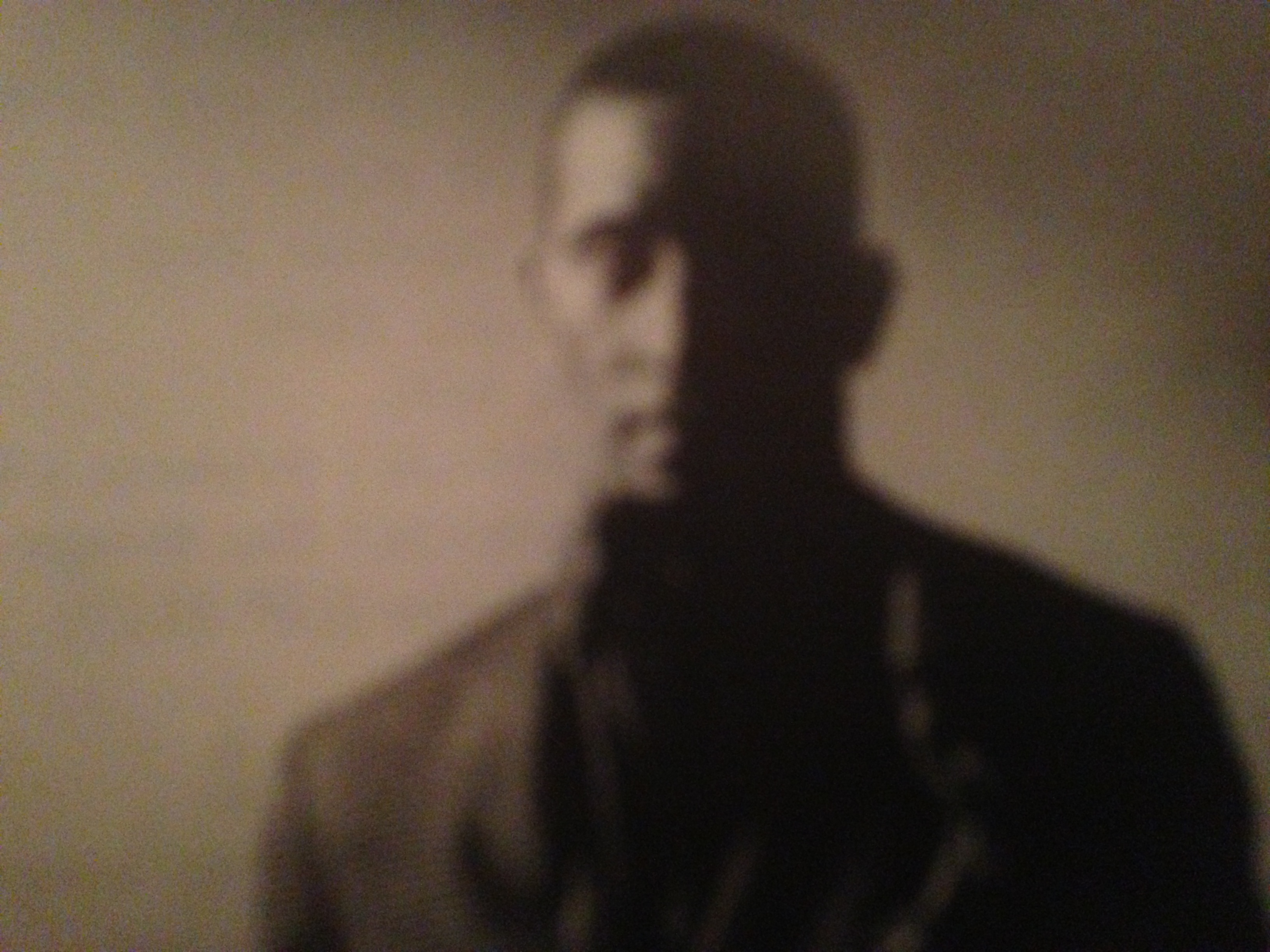
She took the stage in semi-darkness. Like Bob Dylan these days, she prefers to do without a frontal spotlight. Still slender and seemingly lithe at 74, she was wearing a grey fur hat pulled down to her eyebrows and a dark tailored jacket, possibly velvet, with ruched shoulders; she looked like something from Tolstoy, as though she’d just come indoors from a snow-covered St Petersburg street in the 1850s.

But this was Dalston in 2015, and the audience rewarded her hour-long set with such keen appreciation that it felt as though Annette Peacock’s time has come at last. Not that she is probably much concerned, having been through several brushes with fame since she arrived in Europe in 1971 with her then husband, the great Canadian jazz pianist Paul Bley, promoting the music in which they (mostly she) explored the possibilities of the Moog synthesiser.

Drawing on five decades’ worth of compositions, she dramatised her lyrics by alternating between her low speaking voice and that striking upper register. The ever-present sense of the erotic, explicit and implicit, was supercharged by the cold reverberations of her stark piano phrases, often picked out with the contrapuntal effect of a single-note line in each hand, sometimes against the background of digital string sounds from her Roland synthesiser — a pleasantly kitschy effect reminiscent of Angelo Badalamenti’s soundtracks — and the occasional rhythm pattern from a drum machine.

The set included “The Succubus” from 1979’s The Perfect Release and “b 4 u said” from An Acrobat’s Heart, the album with a string quartet released by ECM in 2000, and “Nothing Ever Was, Anyway”, first recorded by Paul Bley in 1968 and 28 years later by Marilyn Crispell (on both occasions with Gary Peacock, Annette’s first husband, on bass). There might also have been songs from 31:31, the album she quietly released on her own Ironic label in 2009, but since a new copy nowadays costs a minimum of £184 on Amazon, I’m unable to tell you that.

For her last song, she cued up a slow-jam backing track of funk bass and percussion. She sang for a while, then got up, and — while her pre-recorded voice and the instruments continued — walked quietly through the audience and away.

* The photograph was taken shortly after Annette Peacock had left the stage. Here is a track from 31:31, with an accompanying film directed by Dale Hoyt. Her first album, originally called Revenge, recorded in 1969, released in 1971 and then credited to the Bley-Peacock Synthesiser Show, has just been reissued by Peacock on her own label and under her own name, retitled I Belong to a World That’s Destroying Itself, after one of her songs. I would also recommend Annette, the album of her tunes played by Paul Bley, Gary Peacock and the trumpeter/flugelhornist Franz Koglmann, recorded in 1992 and most recently reissued on the HatHut label in 2010.

Turning Turtle

Peter Eden

Of all the performances I was able to catch at this year’s EFG London Jazz Festival, the one that will probably stay with me longest was the evening at Cadogan Hall titled An Evocation of Kenny Wheeler, featuring Dave Holland, Norma Winstone, Ralph Towner, Stan Sulzmann, Nikki Iles, John Parricelli, Henry Lowther, Evan Parker, Steve Beresford, Percy Pursglove, Louis Moholo and others, including the members of the London Voice Project. The proceedings began with a group of half a dozen trumpeters playing from the gallery above the stage and closed with a poignant recording of Wheeler playing solo, that softly burnished trumpet sound and those vaulting phrases bringing tears to more than a few eyes.

A significant absentee was the pianist John Taylor, whose death in July came 10 months after that of the trumpeter, his collaborator for four and a half decades. I went home and played Taylor’s debut album, Pause, And Think Again, released in 1971 on the Turtle label. Wheeler is prominently featured on this elegant and still striking record, recently reissued as part of a box set called The Turtle Records Story: Pioneering British Jazz 1970-71.

As that subtitle suggests, the story of Turtle Records was a short one. The box contains its entire output: just three albums. Taylor’s is one; the others are Mike Osborne’s Outback and Howard Riley’s Flight. Together they provide a valuable snapshot of British modern jazz at a particularly interesting stage of its evolution.

If Taylor’s music is characteristically considered and lyrical, Osborne’s — with Harry Beckett on trumpet, Chris McGregor on piano, Harry Miller on bass and Louis Moholo on drums — is much looser and more overtly impassioned. Riley’s trio, with Barry Guy on bass and Tony Oxley on drums and electronics, is a more cerebral unit, its music offering a greater challenge than that heard on the pianist’s earlier albums for CBS, Angle and The Day Will Come.

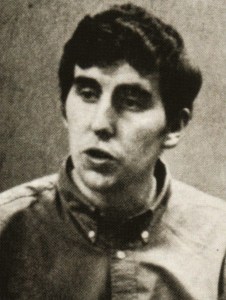
Turtle was founded in London by Peter Eden (pictured above), a record producer whose credits already included the early Deram albums by Mike Westbrook, John Surman, Alan Skidmore and Mike Gibbs. He moved on to Dawn, a Pye subsidiary, where his artists included Mike Cooper, Mungo Jerry, and the Trio, as Surman, Barre Phillips and Stu Martin called their group. And then, frustrated by the inadequacies of the major labels, Eden made what must have seemed the logical next step, striking out on his own.

All three Turtle albums had the benefit of excellent recording quality, good pressings and almost excessively lavish packaging. The gatefold sleeves of the Riley and Taylor albums featured semi-abstract artwork, making them look like the products of the progressive rock bands of the time. Eventually, not surprisingly, they became collectors’ items. The new box set miniaturises the original artwork and contains a booklet featuring highly detailed sleeve notes by Colin Harper, incorporating the views of several of the participants.

Eden was a modest and unobtrusive man of great discernment. He chose to work with highly creative musicians and let them get on with it. The contents of the box set show how well he succeeded, even if the market did not agree.

* The Turtle Records Story is released by Cherry Red.

Nico in London, 1971

I’ve spent a lot of time in Berlin over the past year, and every time I walk past the giant KaDeWe department store on the Ku’damm, I think of Nico. It’s where in 1953 she hung around one of the entrances, a beautiful blonde 15-year-old hoping to be spotted by someone from the fashion department. She got lucky, and from there her career took her to Paris, Rome, London (making a single for Andrew Loog Oldham’s new Immediate label in 1965), and New York, where she joined Andy Warhol’s troupe of “superstars”.

She returned to London in March 1970, her hair now the dark red favoured by her former lover, Jim Morrison. I arranged to meet her for an interview one Monday afternoon at her hotel, the Princess Lodge, off Kensington High Street. We went to a pub on Church Street, opposite Biba. She talked about going off to Ibiza, perhaps permanently (she would die there 18 years later). At some point during our conversation, a middle-aged man in a tweed suit came and sat down quite close to us. She didn’t seem to have met him before but soon she was saying goodbye and the two of them were leaving the pub together and disappearing down the street. I never quite worked that one out.

She was, of course, a marvellous enigma. Or not so marvellous, if you didn’t like the noise she made when she fired up her portable Indian harmonium and emitted that stentorian contralto, a voice like a church organ pipe. I loved it.

She made two appearances at the Roundhouse that month, and then vanished. A year later she was back, and a lot more people wanted to interview her. We were on the brink of the belated embrace of the Velvet Underground and all their works. So on February 2, 1971 she was in a BBC studio to record a session for John Peel.

This month the four songs she taped that day are released on a 12-inch 45rpm EP by Gearbox Records, the vinyl-only label based in King’s Cross, under the title Nico 1971: The BBC Session. The songs are “No One Is There” and “Frozen Warnings” (from The Marble Index), “Janitor of Lunacy” (from Desertshore) and “Secret Side”, which would be recorded three years later for The End, her Island album.

What these recordings allow us to appreciate is the strength of her performance. Her voice was always consistent in its accuracy and confidence; what also strikes one here is the strength of her playing of the small pump-organ. She was a very late starter in music: her soul-mate Morrison taught her how to write a lyric, and she bought the harmonium from a hippie in San Francisco in 1967.

According to her biographer Richard Witts (Nico: The Life and Lies of an Icon, Virgin Books, 1993), Ornette Coleman told her that the normal way to approach a keyboard was to play the chords with the left hand in the lower register and the melody higher up with the right hand. He suggested that she might try reversing the process — which she did, with striking results.

Witts also reports Viva, another Warhol superstar, remembering that Nico practised the instrument incessantly: “She had this fucking harmonium… she would practise it for hours, simple things, chords — really annoying stuff — for hours on end. She was very serious about it, dreadfully serious, like a Nazi organist. She’d pull the curtains across and light candles around her and do this funereal singing all day long. It was like I was living in a funeral parlour.”

Whatever torture her housemates endured, it turned out to be a perfect combination, enabling Nico to perform in more or less any environment, with or without accompanying musicians, for the rest of her career. John Cale did a wonderful job of adding startlingly original arrangements to The Marble Index, Desertshore and The End, but it’s interesting to be reminded by these four tracks — broadcast on Peel’s Top Gear on Saturday, February 20, 1971 — of how she could manage perfectly well without that armature.

* The signature is from a letter Nico wrote me in 1974, shortly before the release of The End, asking — too late, alas — for certain minor modifications to the artwork, including a request to make the title look more like that on the sleeve of the Doors’ albums.

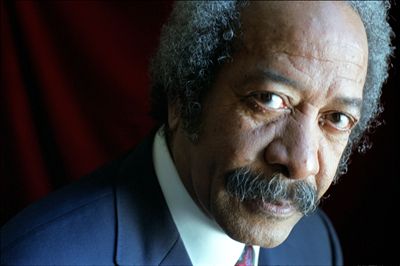
Allen Toussaint 1938-2015

Allen Toussaint 2When someone like Allen Toussaint dies, you go straight to your record collection. In this case the first disc I pulled out was Lee Dorsey’s “Freedom for the Stallion”, one of the most quietly moving songs to come out of the civil rights era: “Big ships sailing / Slaves all chained and bound / Heading for a brand-new land / That some cat said he upped and found / Lord, have mercy, what you gonna do / About the people who are praying to you / They got men making laws that destroy other men / They made money, Lord, it’s a doggone sin / Oh Lord, you got to help us find a way.”

Toussaint’s mournful arrangement — the slow-drag snare and bass drum, the rolling piano, the funeral-band horns — creates the perfect setting for Dorsey’s reflective vocal. There’s a great little moment at 2:24 when the tenor player starts testifying, as though unable to help himself. Such beauty.

And then Betty Wright’s “Shoorah Shoorah”, which Toussaint didn’t produce or arrange. What a song, though, inspiring a performance from a singer in delicious torment: “I check you out from the corner of my eye / You and the Devil walking side by side / You ain’t changed, let’s be real about it / And I can’t change how I feel about it.” Like Curtis Mayfield, Toussaint had a deep and natural understanding of the human condition.

Finally, here’s one he arranged and produced but didn’t write: Lou Johnson’s version of Burt Bacharach and Hal David’s “Walk on By”, in which an uptown song is taken for a ride all the way down to the edge of town, right where the swamp begins.

I spent a couple of hours with Toussaint last year, at the behest of Uncut magazine. He was wonderful value as he talked about his long history, beginning with learning to play boogie-woogie on the piano during his New Orleans childhood. “I was brought up very Catholic – a lot of Bach and classical music,” he told me. “But I heard a lot of gospel music in the baptist and holy-roller churches around the neighbourhood, and I fell in love with it, just like boogie-woogie. I first heard Professor Longhair on record, and I thought, ‘Good heavens – this is the way I want to go.’ I knew he was from New Orleans, but I wasn’t of an age where I could be where he was performing. All the kids around who tinkered with the piano, we all tried to play like Professor Longhair. One kid would have a few more notes of his music than the rest, and we’d feed off each other. So we came up as his disciples. My mother listened to Strauss and so on, so I heard that, and on the radio there was a lot of hillbilly music with the tinkling saloon pianos, and I loved that, too. It wasn’t hard to get that kind of sound, once you knew the formula. And I loved polkas. So I just found myself having equal respect for all of the genres, and everything I heard, I began trying to play.”

It’s all there, from “Do-Re-Mi” through “Fortune Teller” and “Mother in Law” to “Everything I Do Gonh Be Funky” and “Yes We Can”, and on to the fabulous Bright Mississippi album of 2009: the music of a very great man.

A new view from the Necks

The Necks Vertigo 1Because it’s impossible to predict what strategy they will have adopted, the arrival of a new studio album from the Necks is always an event. With Vertigo, the Australian trio maintain the habit.

I loved their previous album, Open, for its transparent beauty. Others, such as AquaticDrive By and Silverwater, I’ve loved for quite different reasons. Vertigo doesn’t resemble any of its predecessors; it’s like going into a familiar house and finding a new room with a window that opens on to a view not seen before.

A single piece of music, 44 minutes in duration, it uses the resources and time at their disposal in Studios 301 in Alexandria, a suburb of Sydney. While their live sets are the product of a mixture of spontaneous urges and the 30-year relationship between the three musicians, the studio albums aim for something different (and yet, in its essence, the same).

There are no grooves in Vertigo, or even any pulses, unless you count the slow oscillation of something that sounds like a contrabass theremin, which briefly enters the proceedings at around the 18-minute mark. There are no riffs and nothing that sounds like a tune. There is no obvious drama.

Glimpses of anything that could be called the Necks’ “sound” are infrequent. Early on, Chris Abrahams does some nice things with incomplete descending arpeggios. Tony Buck makes the occasional clattery percussion intervention (and is probably responsible for the bits that sound like a guitar being picked above the bridge). Lloyd Swanton uses his bow to create layers of groaning bass drones just after the half-hour.

But that’s not the point. The sounds are the sounds. The exact source of this scraping or that plinking is immaterial: the assembly is what matters, and that’s something of which they are masters. The sonorities and textures slide into view and drift away, like the weather on a long road trip. It’s probably not the album you’d give someone as their first Necks record, but it couldn’t be by anyone else.

* Vertigo is released in the UK on the ReR Megacorp label. The photograph is by Holimage.

Rico Rodriguez 1934-2015

Rico Rodriguez 2Big-time recognition came late to Rico Rodriguez, the wonderful Jamaican trombonist — and rather wonderful man — who died on Friday, aged 80. But when it came, it made a real impact: the patronage of Jerry Dammers and the Specials, the featured slot with Jools Holland’s big band, the MBE for services to music.

Rico was a product of Kingston’s Alpha Boys’ School, a reformatory located close to Sabina Park, Jamaica’s Test cricket stadium. Like Chicago’s DuSable High School and Detroit’s Cass Tech, the Alpha school was a vital incubator of musical talent, thanks in large part to the legendary Sister Mary Ignatius Davis, who ran the music programme there for several decades.

It was my privilege to be invited to contribute the sleeve note to That Man is Forward, Rico’s 1981 album for the 2-Tone label, on which he worked with his great friend Dick Cuthell, the flugelhornist and producer. During the course of a long conversation, Rico told me a story that began in Kingston’s teeming Mark Lane, where he was born to a Cuban father and a Jamaican mother. The details of his life are contained in David Katz’s excellent Guardian obituary. But I particularly relish his tale of getting his first break when he won the £10 first prize on Vere John’s Opportunity Hour, a radio talent show similar to those run by Major Bowles in the US and Carroll Levis in Britain. “After I’d won, I couldn’t enter again,” Rico told me, “so he’d have me on as a guest. The crowd was always behind me.” Vere John, a white journalist, offered just about the only opportunity for young local musicians to expose their talent to a wider public. “He was aware of the problems in our society,” Rico said.

Large stretches of Rico’s life involved a struggle to survive, including a spell on the production line at Ford’s Dagenham plant and another as a painter for a local authority, so it was great to see that he was finally appreciated. His skills were those acquired by countless musicians who learnt to play modern jazz and then applied the skills learnt from Charlie Parker, Dizzy Gillespie, J.J. Johnson, Miles Davis and John Coltrane to more popular forms — like the members of Ray Charles’s band in the ’50s, James Brown’s in the ’60s, Earth, Wind & Fire in the ’70s, and so on up to the guys playing with Kendrick Lamar today. Rico’s fellow alumni of the Alpha school included, at one time or another, the trumpeters Dizzy Reece, Eddie Thornton and Dizzy Moore, the saxophonists Joe Harriott, Bogey Gaynair, Harold McNair, Cedric Brooks, Lester Sterling, Tommy McCook and Headley Bennett, and the trombonists Don Drummond, Carlos Malcolm and Vin Gordon. You could make one heck of a big band out of that lot.

But it was his spell in the late ’50s at Renock Lodge in Wareika Hills, living among the Rasta community presided over by the drummer Oswald Williams, better known as Count Ossie, that made the biggest impression on him. “Most of what I know,” he told me, “I learnt from playing with them.”

* If anyone knows who took the lovely photograph of Rico that I’ve used above, please tell me so that I can provide a credit.

Forever Van

Van's 70thVan Morrison is 70 today, and I’m listening to his birthday concert, live on the radio from Cyprus Avenue in Belfast. Yes, it’s that Cyprus Avenue, where he made us all, no matter how far away, imagine how it would feel to be caught one more time.

The last time I saw him was at the Albert Hall six years ago, when he performed Astral Weeks with a band including Jay Berliner, who played guitar on the original 1968 recording, and the cellist Terry Adams, a much-admired member of his Caledonia Soul Orchestra in 1973. It was an excellent concert (as it needed to be, given the price he was charging for tickets), and later it was possible to relive it with the album recorded live at the Hollywood Bowl, although nothing could replace the soul-baring tension of the original.

The first time I saw him was at Fillmore East, New York, in April 1970, a few weeks after the release of Moondance, with the tight little band that had recorded it, including John Platania on guitar and Jack Schroer on saxophones. He was utterly brilliant, and I seem to remember that he kept his eyes tightly closed throughout the set. Most of the songs were from the new album, but he also did a wonderful version of “Cyprus Avenue” which led Geoffrey Cannon to describe him (in the Guardian) as “bursting with his adolescent passions, now past, stuttering in his need to understand the urgency of sexual desire, and of visions of beauty.”

I was at Birmingham Town Hall in 1973 for his triumphant return to Britain after a seven-year absence. That was the Caledonia Soul Orchestra tour, which climaxed with an electrifying gig at the Rainbow in London (partly commemorated in the great live double album titled It’s Too Late to Stop Now). The gig I wish I’d been to was the ones at the Masonic Auditorium in San Francisco and the Mystic Theatre in Petaluma, California, in 1994, captured as A Night in San Francisco, featuring John Lee Hooker, Junior Wells, Jimmy Witherspoon, Candy Dulfer, and Georgie Fame on Hammond B3. In the medleys of “Moondance” / “My Funny Valentine” and “In the Garden” / “You Send Me” / “Allegheny”, Van is at his very best.

In Belfast this afternoon — via BBC Radio Ulster, upon whose producers and engineers may a thousand blessings fall — he’s just done “Moondance”, “Born to Sing” with Chris Farlowe, an utterly beautiful “Sometimes I Feel Like a Motherless Child”, and an ultra-cool medley of “Baby Please Don’t Go”, “Parchman Farm” and Slim Harpo’s “Don’t Start Cryin’ Now”, which was Them’s first single in 1964, when Van was 19. Maybe if I cross my fingers and hold my breath he’ll do “Vanlose Stairway”, about a girl in Copenhagen, with its great opening lines: “Send me your picture… send me your pillow….” But it’s his birthday. He can do what he wants.

* The photograph is from irishrocknrollmuseum.com

In the Rothko Chapel

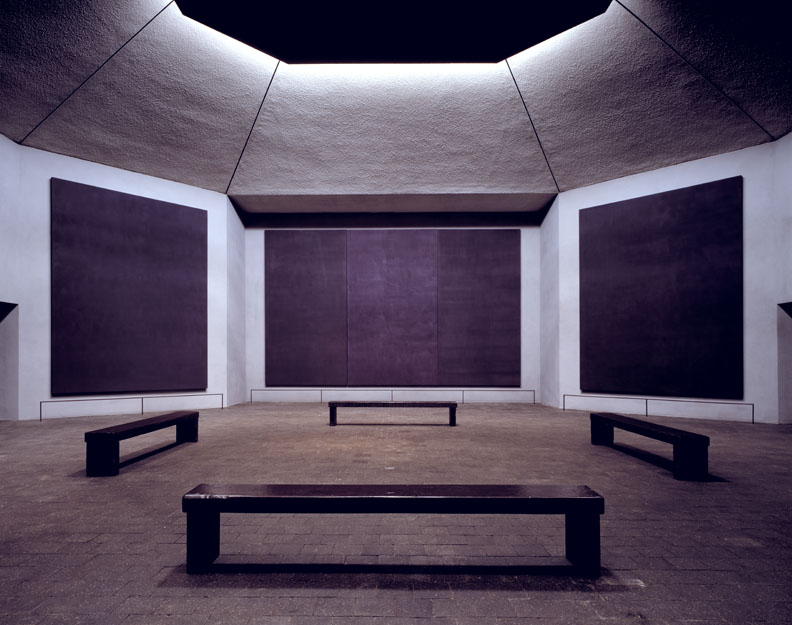
Rothko Chapel 1If I could be teleported anywhere in the world for just a couple of hours, I’d probably choose the Rothko Chapel in Houston, Texas. It’s a little painful to think that I’ll probably never get to see the place that I wrote about here for the Guardian a few years ago, prompted by a performance in London of the piece Morton Feldman wrote in 1972, two years after his friend Mark Rothko’s death.

Feldman’s Rothko Chapel is fully reflective of its subject. You might even take it to be the last word. But then, five years ago, the improvising trio called Mural — Jim Denley (wind instruments), Kim Myhr (guitars, zithers, percussion) and Ingar Zach (percussion) — were given permission to record a performance inside the chapel, documenting a very different response to the space in a 50-minute piece called “Doom and Promise”.

They have returned a couple of times since then, and on April 27, 2013 they recorded an unbroken set of almost four hours, three quarters of which now appears on a three-CD set titled Tempo. Each disc is devoted to between 45 and 51 minutes of the set, omitting the first section of the performance.

Denley, who is from Australia, studied classical flute and began a long career in new music — playing many different wind instruments, with and without mouthpieces — after encountering the music of Evan Parker and Derek Bailey during a stay in London in 1975. Myhr is a Norwegian improvising guitarist who has written for the excellent Trondheim Jazz Orchestra. Zach, also Norwegian, is a member of Huntsville, one of my favourite bands.

The two and a half hours of Tempo provide an object lesson in free improvisation by musicians sensitive to each other and to their environment. There are no imperatives beyond the unhurried collective ravelling of sound in reaction to the space. Words to describe parts of it might include tinkling, buzzing, fluttering, booming, whirring, scraping, tolling. The individual contributions are not what this music is about, although Denley begins the second disc with a very striking saxophone passage involving simultaneous key-tapping and a shakuhachi-like bending of notes before the others join in for a close examination of tones and textures that achieves moments of great beauty. Indeed, if the second disc were issued in isolation, it might be considered a masterpiece of its kind; it’s something you could use to persuade a sceptic of the value of free improvisation, if you could get them to sit still and pay proper attention.

As with Rothko’s canvases, the meaning of this music lies in a land of the emotions beyond adequate verbal description. But if you like what AMM do, or the meditative solo percussion music Frank Perry used to make with his collection of gongs and bowls, then this might well be your thing, too. And since I’m probably never going to make it to Houston, it will have to do for me.

* Tempo is released on the Sofa Music label on September 4. Its predecessor, Live at the Rothko Chapel, was released on the chapel’s own label. The photograph, by Hickey-Robertson, is from the chapel’s website: http://www.rothkochapel.org