Skip to content

Posts from the ‘Soul music’ Category

Moses Boyd at Frieze

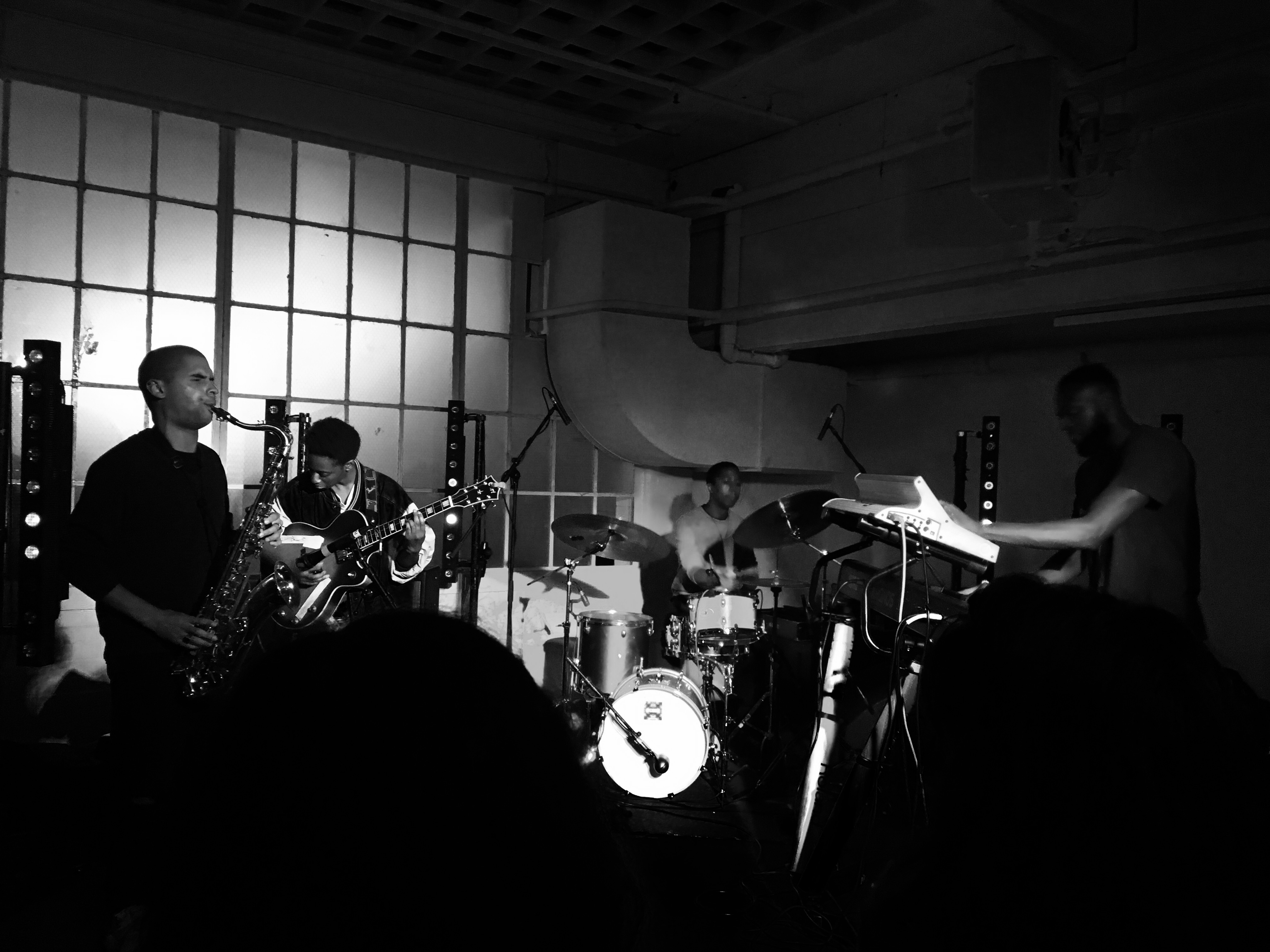
moses-boyd-at-tt-bwIt’s Frieze week in London, meaning that the streets of the more fashionable quarters of the city are thronged with art people. Last night some of them made their way to a party thrown by the Timothy Taylor Gallery in a Soho basement beneath the Phonica vinyl record shop on Poland Street, where the music was provided by a quartet under the leadership of the drummer Moses Boyd.

I’ve written about Boyd’s much-praised duo with the tenor saxophonist Binker Golding and, more recently, about his contribution to Orphy Robinson’s salute to Bobby Hutcherson, but this was something very different. Completing the quartet were Golding, the guitarist Shirley Tetteh and the keyboardist Niji Adeleye, and they started as they meant to go on: with Moses setting a groove that got the room moving, and the others joining in at full throttle. That’s where they stayed for the best part of an hour of unbroken music, with the groove shifting gears a couple of times but the volume and the intensity staying high.

If you can imagine a cross between the wildly distorted noise of the early Lifetime and the sophisto-funk of those Grant Green albums recorded live in 1970-71 at down-home joints like the Cliché Lounge in Newark, New Jersey and the Club Mozambique in Detroit, you’ll be part of the way to imagining what they sounded like. There were rough edges all over the place, but in a good way. Shirley Tetteh’s playing sound like it might be heading towards an interesting blend of Green’s plain-spoken bluesiness, the fluid rhythmic stutter of Hux Brown from Coxsone Dodd’s Studio One rhythm section, and the floaty lyricism of King Sunny Adé’s guitars. It’ll be interesting to see where she takes it.

Anyway, they blew apart any notion of what a conventional Frieze week social occasion organised by a high-end Mayfair gallery might be. “Party” is what it said on the invitation, and a party is what they made it. If the four of them can get the sense of unstoppable energy on to a record, you’ll be able to have that party in your very own home.

The sound of ’66

The portrait painted in 1966: 50 Years Ago Today, the BBC4 Arena documentary directed by Paul Tickell and based on Jon Savage’s recent book, was full of interesting things (notably a reminder of Jonathan Miller’s sensational quasi-psychedelic TV version of Alice in Wonderland). The mood Tickell strove to evoke, concentrating on a dour, monochrome paranoia, wasn’t the way I remember 1966 — a year only half a notch below its immediate predecessor in terms of cultural stimuli and general euphoria — but at least his programme had a point of view. And it also had, towards the end, a snatch of one of the greatest of all cover versions of a Lennon & McCartney song.

J.J. Barnes would eventually become a Northern Soul hero through tracks such as “Real Humdinger”, “Please Let Me In” and “Our Love (Is in the Pocket)”. His version of “Day Tripper” precedes and surpasses them, in my view. It was arranged and co-produced for Detroit’s Ric-Tic label by Andrew “Mike” Terry, a Motown studio regular whose fruity baritone saxophone solos could be heard on “Heat Wave”, “Where Did Our Love Go”, “This Old Heart of Mine” and many others. I love the way Terry takes on the riff from the Beatles’ original and, while keeping the driving 4/4 rhythm and the fuzz guitar, hardens up the groove, those trumpet stabs and flourishes adding an extra dimension behind Barnes’s Wilson Pickettish vocal. And presumably that’s James Jamerson, Paul McCartney’s bass-guitar hero, moonlighting from Hitsville USA to dig into the riff.

What gives the record its special immediacy is the grainy low-fi sound that would never have made it past Berry Gordy Jr’s quality control department. It was there on the original UK Polydor version I bought the week it came out in 1966, and it’s still there today, proudly resistant to any kind of digital clean-up technology.

Since we’re on the subject, there’s another favourite I’d like to mention. It’s Roy Redmond’s soulful version of “Good Day Sunshine”, arranged and produced by Jerry Ragovoy for the Loma label, Warner Bros’ soul subsidiary, in 1967. It has the lot: great laconic guitar intro, heat-drugged slow-drag beat, greasy southern horns, gospel-style female back-up choir, and an excellent lead vocal from another obscure soul-music hero. I believe McCartney himself had nice things to say about it, and no wonder.

* Ace Records have just announced the September release of Let It Be, the second volume in their Black America Sings Lennon & McCartney series. Vol 1 (titled Come Together) included Roy Redmond’s “Good Day Sunshine” among a quantity of other good stuff. J.J. Barnes’s “Day Tripper” isn’t on either volume, sadly. For that reason alone, there is bound to be a Vol 3.

Motown part 2 (of 3): The white guy’s story

Motown Barney Ales

The name of Barney Ales became a familiar one to those who took a close interest in the evolution of Motown Records in the 1960s. Ales didn’t sing, or write songs, or produce sessions. He wasn’t a musician or a choreographer or a voice coach. He was the guy hired by Berry Gordy Jr in 1961 as national sales manager and promotion director. And now he is the co-author, with the music historian Adam White, of Motown: The Sound of Young America, a lavishly produced history of the label.

Ales had worked for Capitol Records before joining Motown at the age of 27. His job was to get the records played on the radio and to ensure not just that they were distributed efficiently to record stores around the country but that the invoices got paid. Almost as much as the quality of the music, that was the secret of Gordy’s operation: business had to be taken care of with a different attitude from that of most black-owned labels. He needed someone who could talk to white disc jockeys and record distributors without the barrier, conscious or unconscious, of race.

One can assume that, having worked with the founder almost from the beginning and ending up as a vice-president before leaving in 1978, Ales knows a few secrets behind Gordy’s struggle to establish the label and extend its success beyond the boundaries of black America. Perhaps those with fond memories of Number One With a Bullet, the novelised version of the Motown story written by Elaine Jesmer, a former publicist, and never republished after its original appearance in 1974, will come to Ales’s memoir hoping for true-life confessions. That would be a mistake. This is a version of the tale that passes lightly over the darker episodes, while containing much detail that will be useful to those wanting to know more about Gordy’s triumph.

There are many books about Motown, including the autobiographies of Gordy, Smokey Robinson, Otis Williams and Mary Wilson. My own favourite is one of the more modest efforts: Susan Whitall’s Women of Motown, an oral history based on interviews with Martha Reeves, Claudette Robinson, Kim Weston, Brenda Holloway, Mable John, Carolyn “Cal” Gill and others, published in the US by Avon Books in 1998. White and Ales give us a view from a different perspective, and a valuable one.

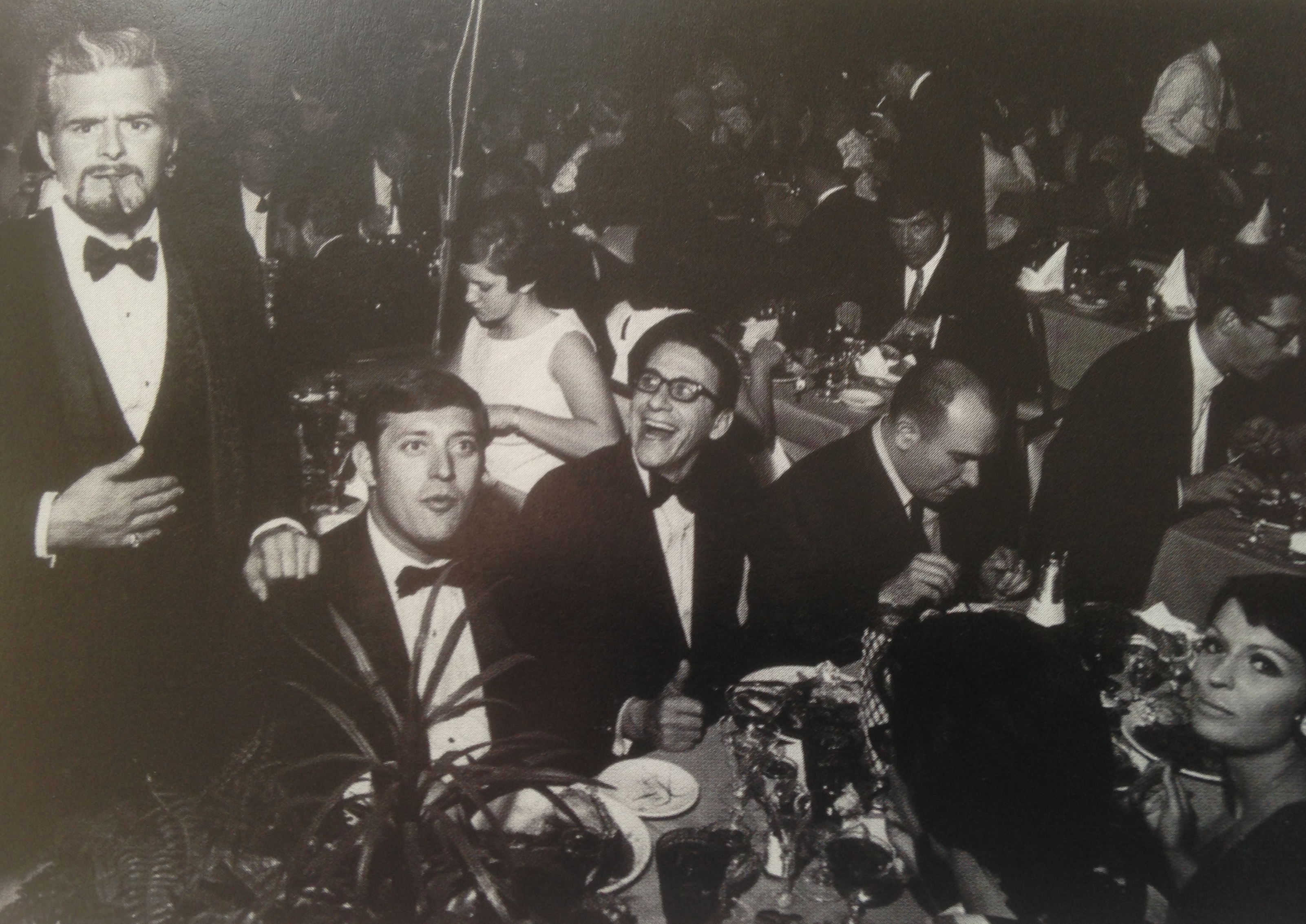
The narrative begins in an interestingly unorthodox way with a long and well illustrated account of the Detroit riot of 1967, which devastated clubs and record stores as well as homes and other businesses. It came perilously close to the Motown headquarters on West Grand Boulevard, where bullet holes in the flower pots outside the entrance were the only sign of damage to what, with gross income of $20m the previous year, was on the way to becoming America’s biggest black-owned business. The significance is that, only a month after the fires in the ghetto had finally been extinguished, Gordy and Ales had the courage to go ahead with Motown’s first-ever national sales conference, with a gala concert at the Roostertail Club on the banks of the Detroit River featuring the Supremes, Gladys Knight, Stevie Wonder, Chris Clark and the Spinners. Fifteen new albums were announced at the conference; on the day of the launch, the sales department was able to count a record $4m in orders, or 20 per cent of the preceding year’s revenue.

That’s typical of the kind of detail Ales provides. His description of his dealings with Morris Levy, the heavily Mob-connected boss of Roulette Records, contains the fascinating story of how Mary Wells’ “My Guy” was bootlegged in the New York area by Gordy’s ex-wife, Raynoma Liles, who had moved to the city to open an office for the company’s song-publishing division, only to have the funding cut off by her former husband. As she told it in her own autobiography (Berry, Me and Motown, published in the US by Contemporary Books in 1990), she had 5,000 copies pressed up and sold them to a distributor for 50 cents apiece in order to raise the money to keep the office open. It was unfortunate for Liles — an important figure in the early days of the company, as an arranger and musical director — that by selling counterfeit copies of the Wells hit, she was depriving Levy of income. Her own account does not mention him, perhaps because he was still alive when she wrote it.

All this, and much more, is extremely well told and to be enjoyed alongside the wonderful illustrations, including contact sheets, album jackets, picture sleeves and advertising material in this large-format publication. My favourite of the many fabulous photographs is one by Bruce Davidson, the great Magnum photographer, who catches the Supremes backstage in New York in 1965, sitting alongside each other in their dressing room, bathed in pink light, surrounded by make-up pots, perfume bottles and ashtrays. Davidson shoots from above and behind the three women, catching their reflections: Flo Ballard using a tissue to blot her mascara and Mary Wilson touching up her hair, both sharing a single mirror, while Diana Ross, with her own individual mirror, stares straight into his lens.

* In the photograph above, Barney Ales (standing, extreme left) is hosting a group of Detroit radio personalities at the Roostertail Club. It can be found in Motown: The Sound of Young America, which is published by Thames & Hudson, price £39.95.
Motown part 1 (of 3): The B-sides

Motown B-sides

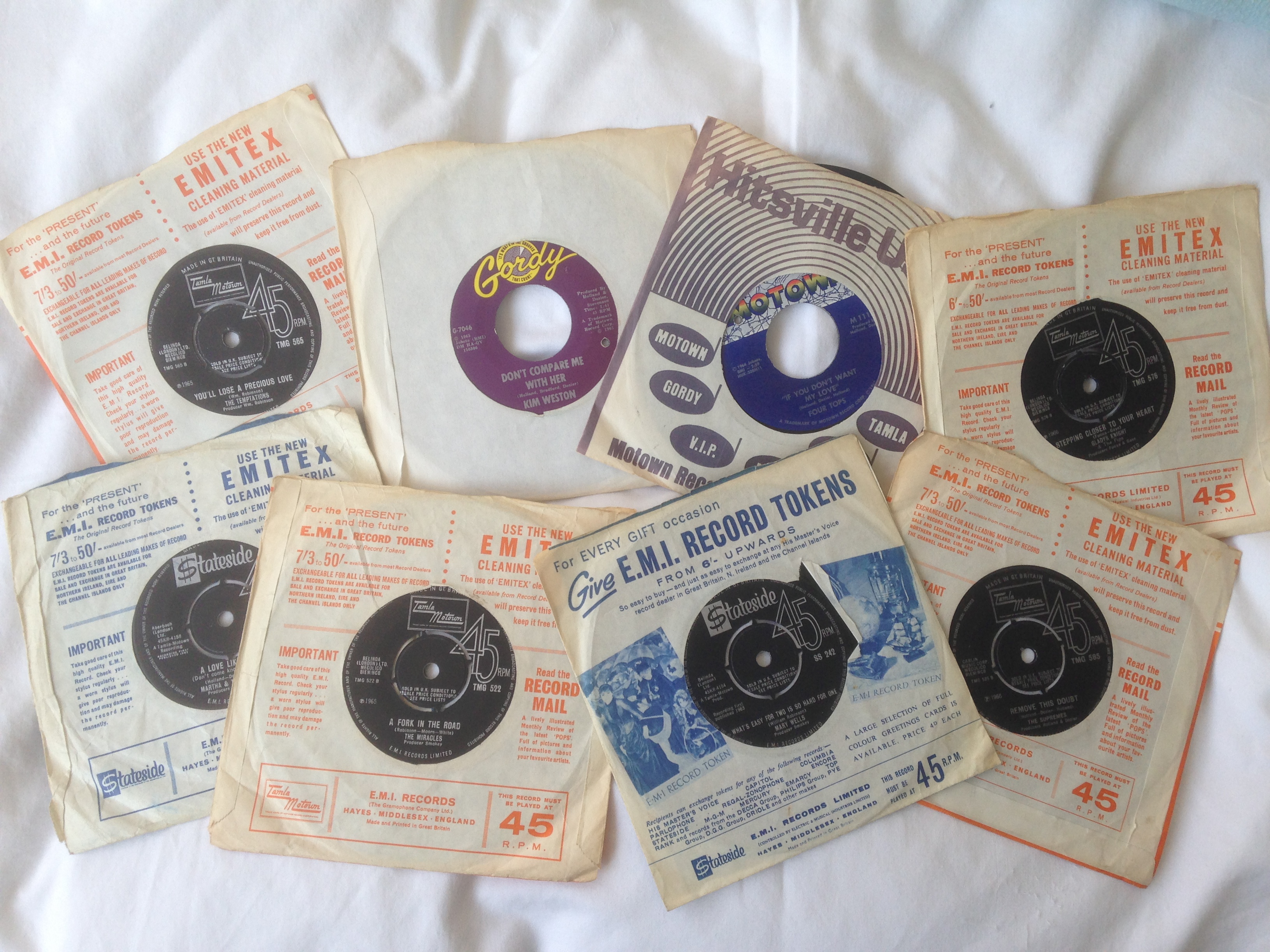
On its opening in London last week, Berry Gordy Jr’s Motown: The Musical drew this comment from the Independent‘s reviewer: “As for the occasional new numbers written to plug emotional gaps — they’re cheesy, clichéd affairs, which wouldn’t pass muster as B-sides.” It reminded me of the endless pleasure afforded in the 1960s by the discovery that on the B-side of the latest Motown purchase could often be found a track just as good as the designated A-side.

What the great B-sides of the 1960s often did was show you another dimension of the featured artist. In the case of Motown, whose A-sides were usually aimed at dancers, the songs on the flip were frequently ballads. The work ethic of Gordy’s songwriters, producers, musicians and singers meant that they were often every bit as good as the “plug sides”. Here are half a dozen of my favourites.

The Miracles: “A Fork in the Road” (1965)  What are the chances of the greatest record ever made — “The Tracks of My Tears”, of course — having an almost equally distinguished B-side? This is one of Smokey Robinson’s deepest ballads: “Seems like love should be easier to bear / But it’s such a heavy load / Worldwide traveller, you ain’t been nowhere / Till you’ve travelled down love’s road.” Voices, strings, vibes and Marvin Tarplin’s liquid guitar set up a mood of entrancement. But beware, danger’s there. Midway there’s a pause, while Smokey gathers himself in preparation for these lines of warning: “If there is something that you don’t see eye-to-eye / You’d better think before you tell your love goodbye / ‘Cause your paths may never cross again / Make sure you take the same bend / At the fork in love’s road…” Just listen to the way he delivers the word “’cause” at 2:41, with an ascending four-note phrase that is a lesson in the proper deployment of vocal virtuosity.

Kim Weston: “Don’t Compare Me With Her” (1965)  If I had too choose one record to represent Motown’s dancefloor magic, it would probably be Kim Weston’s “Take Me in Your Arms (Rock Me a Little While)”. And here on the B-side is an utterly glorious ballad from Eddie Holland, Lamond Dozier and Janie Bradford. Apparently Kim didn’t like being given sad songs all the time, even when the tempo was up. But that bitter-sweetness was a Motown speciality.

The Temptations: “You’ll Lose a Precious Love” (1966)  Released on the flip of “Ain’t Too Proud to Beg”, this gorgeous Smokey Robinson ballad was cut in 1964 and harks back to the streetcorner doo-wop roots of the composer and the group. David Ruffin reins in his customary gospel rasp to make a delicate job of the lead vocal, with bassman Melvin Franklin stepping forward for a brief solo contribution.

The Supremes: “Remove This Doubt” (1966)  Another B-side from 1964 coupled to a ’66 hit, this time “You Keep Me Hangin’ On”. Here’s the sweeter side of Holland-Dozier-Holland: a proper swoonerama for Diane Ross to get her teeth into. “Be more tender / Completely surrender your love to me / Be sweet and not discreet…” The swirly sound works better on a battered mono 45 than on this remastered stereo version.

The Isley Brothers: “There’s No Love Left” (1966)  The B-side of the floor-filling “This Old Heart of Mine (Is Weak for You)”, and I always preferred its combination of a heartbroken song with a deliberate mid-tempo 4/4, a small half-hidden masterpiece of the H-D-H oeuvre. Hear Ronald Isley cry as the melody hauls itself upwards: “Wondering what am I gonna do? Where can I go?” Answer came there none.

Four Tops: “If You Don’t Want My Love” (1967)  The flip of “You Keep Running Away”, the last of the their great run of hits penned by the H-D-H team before the producers turned to brilliant covers of Tim Hardin and the Left Banke. This one isn’t quite like anything else: it’s a gospel take on doo-wop, with Levi Stubbs wailing over a short chord cycle. Brilliant use of harpsichord to italicise the changes, too. And it has one of the great trademarks of the Tops’ hits: the keening sound of the Andantes (Louvain Demps, Jackie Hicks and Marlene Barrow), Motown’s regular female session singers, layered above the male voices: somehow, the pure sound of love in despair.

Many others could be added to that list. The Miracles’ sublime “(You Can) Depend on Me”, for instance, which appeared on the flip first of the unsuccessful “The Feeling Is So Fine” in 1959 and then coupled with the local hit “Way Over There” the following year. The Supremes’ delightfully winsome “He Holds His Own”. The Temptations’ Smokey-penned tragedies “Fading Away” and “Don’t Look Back” (on which Paul Williams sang lead). Martha and the Vandellas’ “A Love Like Yours (Don’t Come Knocking Everyday)”. Brenda Holloway’s “I’ve Been Good to You” and “Starting the Hurt All Over Again”. The Elgins’ “Darling Baby”. Gladys Knight and the Pips’ “Stepping Closer to Your Heart”. In those days at Hitsville USA, they really did have songs to burn.

* Parts 2 and 3 will look at Adam White’s new book, Motown: The Sound of Young America, and at One Track Mind, a new Ace Records compilation of material from the Motown vaults.

James Jamerson at 80

James Jamerson 2Had he lived, the most influential of all bass guitarists would have been 80 years old this week: on January 29, to be precise. Many of us will never stop marvelling at the creativity shown by the one and only James Jamerson during an era when session musicians who played his instrument were expected to do little more than mark the song’s chord changes and keep in step with the drummer.
Luckily, Jamerson (who died in 1983) played on so many records during his time as the No 1 bass player in Motown’s Detroit studio — roughly from 1960 to 1972 — that fans like me can spend a lifetime discovering half-buried examples of his artistry. A couple of years ago I wrote here about his contribution to Martha and the Vandellas’ “No More Tear Stained Make Up”. The latest one I can’t stop playing is a Mary Wells obscurity called “I’ve Got a Story”, recorded in 1962 and released a couple of years ago on a Hip-O Select from-the-vaults compilation called Something New: Original Recordings 1961-64.

An irresistibly catchy song by Marvin Gaye and two of Motown’s top backroom boys in the early years, Mickey Stevenson and Hank Cosby, its lyric has Mary telling us about a friend who’s made a disastrous decision to turn love aside before admitting that the fool is, in fact, her (“Now it was me… it was me who lost a real true lover”). It gets a fine Stevenson production featuring a chorus of grainy horns and an ace performance by the Funk Brothers, with a starring role for the bass.

A rattle of the snare and toms from Benny Benjamin’s mix ‘n’ match studio kit introduces a strutting medium-tempo rhythm entirely driven by Jamerson. He makes his Fender Precision sound almost as fruity as a tuba in a New Orleans marching band as he sits on top of the 4/4, adding his own distinctive hook to the track by inserting little descending 16th-note runs on the fourth beat of each bar, occasionally adding variation by switching the run to the second beat, and in the bridge — as the drummer adds a subtle Latin accent — sometimes extending the motif into a run across both the third and fourth beats.

The choice of notes in these beautifully articulated 16th-note flurries could only have come from someone with a jazz background, someone used to searching the chords for the most interesting variations. That’s what Jamerson had, and this is an example of how it could put it to creative use in the service of a pretty little pop song, probably something he’d already forgotten by the time he got into his car that evening and headed away from 2648 West Grand Blvd.

I’ve also been listening to his playing on the Four Tops’ hits, specifically “Bernadette”, on which he spins an amazing variety of figures around Richard “Pistol” Allen’s imperturbable four-to-the-bar snare drum beat with astonishing flexibility and imagination, and “Ask the Lonely”, where he does the opposite: by dropping anchor on the tonic while the chords shift, avoiding any hint of decoration, he underscores the song’s piercing melancholy.

But back to “I’ve Got a Story”. Recorded on June 28, 1962, it remained unheard for more than 30 years. Obviously it didn’t get past Berry Gordy Jr’s celebrated quality control committee. Could that be because, at 1:40 and 1:47, in the course of this virtuoso display, Jamerson hits two of the very few unconvincing notes of his career? Unlikely. They’re not wrong. They’re just not the perfect choices by a man to whom, in the dozen years that counted. perfection was an everyday matter of fact.

Love Don’t Love Nobody

As long as Boz Scaggs goes on making records, I imagine I’ll keep buying them. Although his new one, A Fool to Care, has its pleasant moments, it isn’t up there with the very best of his work. And, unusually for Boz, it also contains a serious misstep, one that’s worth noting because of its nature.

It’s a cover version, and when Scaggs chooses to cover a song, you can tell it’s because he loved the original. He never moves far from the way it first fell on his ears. And a man who can deliver a decent cover of something as extraordinary as Mable John’s “Your Real Good Thing (Is About to End)”, as he did on Come on Home in 1997, is not to be disrespected. With one song on the new album, however, he overreached himself before he even got started.

The Spinners’ “Love Don’t Love Nobody” was one of the finest soul records of the 1970s, and still sounds to me like one of the greatest deep-soul ballads of all time. It was written by Charles Simmons and Joseph Jefferson, whose credits appeared on many Philadephia records of the era; the arrangement and production came from the extremely great Thom Bell, who moulded the hits of the Delfonics and the Stylistics as well those of the Spinners. It also has a lead vocal that shows what was lost to the art of soul singing when Philippé Wynne died in 1984 at the age of 43, after suffering a heart attack on stage in Oakland, Calfornia.

Wynne could decorate a song with wonderfully inventive ornamentation which, by contrast with the work of the narcissists of today’s so-called R&B, never called undue attention to itself but was always in the service of the song, the arrangement, and the production. In that respect he was the peer of Ronald Isley and Teddy Pendergrass. And he was at his exalted best on “Love Don’t Love Nobody”: seven minutes and 13 seconds of soul heaven.

The record begins with Bell’s piano, discreetly shadowed by a bass guitar and vibes, quietly commanding attention. There’s gospel in the cadences, but also a grave delicacy in Bell’s keyboard voicings and a pensive elegance in his touch. It’s the sound of introspection, even the sound of sadness itself, setting Wynne up for his entrance with that heart-rending opening verse: “Sometimes a girl will come and go / You reach for love, but life won’t let you know / That in the end you’ll still be loving her / But then she’s gone, you’re all alone…”

As the track builds, Wynne adds his characteristic inventions to the song but firmly resists the temptation to overdo it. He’s listening to Bell’s arrangement, so spare, so subtly sophisticated as it adds strings and backing voices, and he’s making himself a part of it, even when he jams over the long fade.

One other thing. I was doing some remixing at Sigma Sound in 1974 when I fell into conversation with an engineer, and asked him about Thom Bell. When I told him how much I admired “Love Don’t Love Nobody”, he said that he’d worked on that session a year or so earlier. He told me that the rhythm track had been done in a single take, and that Bell had finished it in tears. That knowledge doesn’t make me listen to it in a different way, but perhaps it does help to explain the very deep connection that it can make.

Boz Scaggs does a decent job on a song of which he is obviously very fond. But I can’t help wondering if, had he known about Thom Bell’s tears, he’d still have decided to take it on.

R&B in Chinatown

Mar-Keys 1The next piece of central London to be threatened by homogenisation and/or development, according to last Sunday’s Observer, is Chinatown. It’s a small area bounded by Gerrard Street to the north, a short section of Wardour Street to the west (including the bit that once housed the Flamingo), Lisle Street to the south and Newport Place to the east. The original Ronnie Scott’s Club was housed from 1959 to 1965 in the basement of 39 Gerrard Street; after the move to Wardour Street, it was kept open for a while as the Old Place.

My fondest memory of Chinatown comes from the time when Lisle Street still mostly consisted of shops selling electrical equipment. In the 1970s it would become — and still is — the location of restaurants favoured by those who were really knowledgeable about Chinese food and followed the best chefs from kitchen to kitchen. But in the mid-’60s the basement of No 27 opened on Saturday mornings to sell American soul and R&B records.

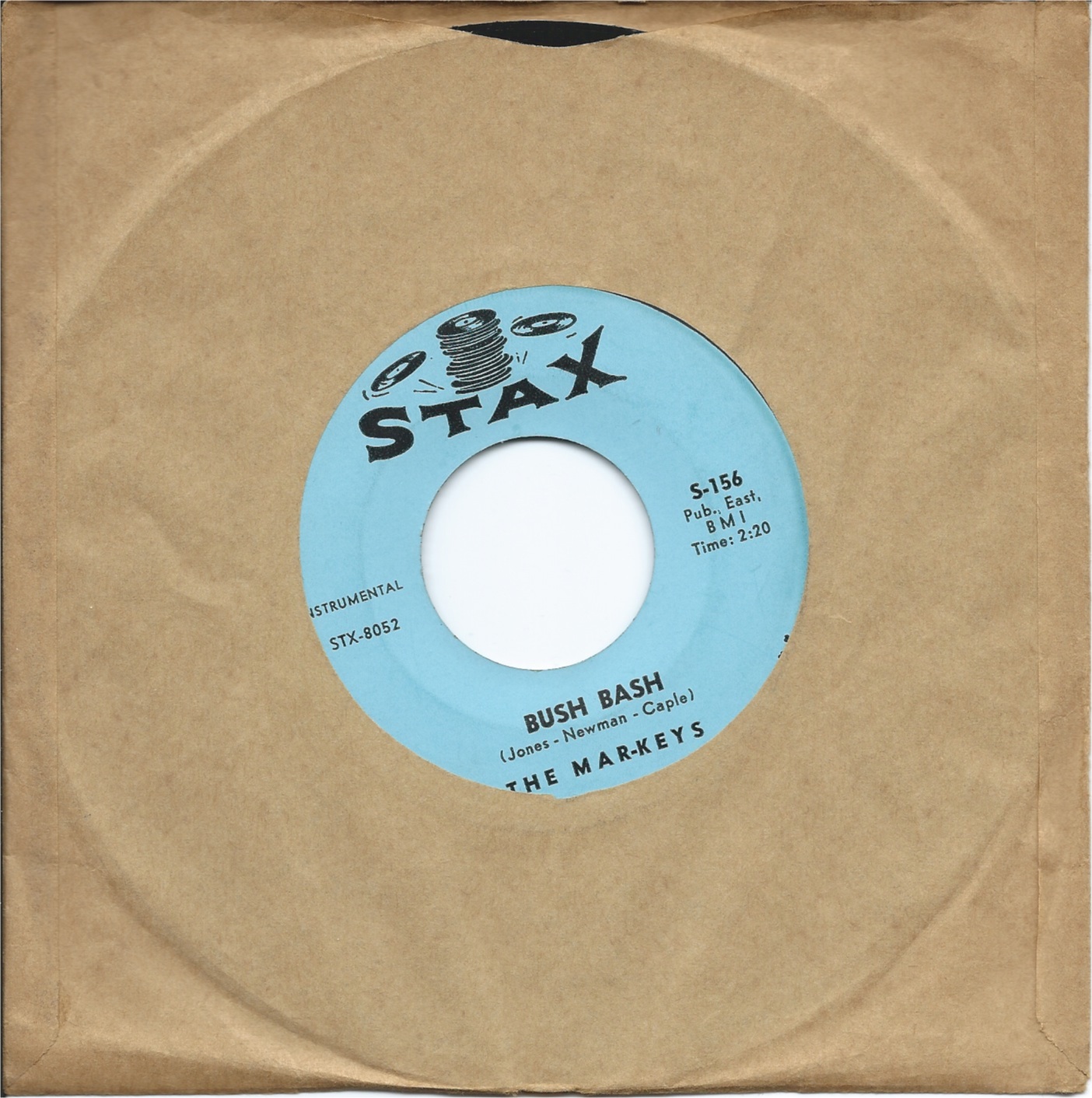
The shop was called Transat Imports, and there are some nice reminiscences of it here on the British Record Shop Archive. You have to remember that back then British fans of black American popular music still felt like members of a secret society. On a visit in 1964, during a day trip down to London, I remember seeing boxes full of stuff I wanted so badly that I could hardly breathe. I could only afford one 45, so I bought the Mar-Keys’ “Bush Bash”.

Following their huge success with “Last Night” in 1961, the Mar-Keys had stopped having hits, which meant that “Bush Bash” was unlikely to get a British release. That’s almost certainly why I chose it. It’s a minor but nevertheless snappy example of how good the Stax rhythm section (the MGs) and their friends sounded, with a particularly crisp Latin beat from Al Jackson Jr’s drums. There’s a short but pungently soulful tenor saxophone solo — probably by Gilbert Caple, who is listed as a co-writer, along with Booker T. Jones and Floyd Newman, who more usually played tenor but is probably on baritone on this tune.

(Three years earlier Caple and Newman, who were friends, had come up with the riff for “Last Night”, Stax’s first big hit and one of the all-time great instrumentals, but found themselves sharing the publishing with three others, including the producer and the record company owner’s son. When a band called the Mar-Keys went out on the road to promote it, neither of them was included. “I never thought that fair, not at all,” Newman said in Respect Yourself, Robert Gordon’s history of Stax, “because Gilbert and I was a part of that group, but we were black.”)

Maybe “Bush Bash” wasn’t the best record I bought in 1964, which was, after all, a very good year. But I liked it enough — and the memory of visiting Transat Imports — to have kept it with me all these years, in its original brown paper sleeve, just the way it came from the US.

Northern Soul

Northern Soul 2Elaine Constantine’s much anticipated feature film Northern Soul is finally due for its release in mid-October, some 17 years after the project started to form in her mind. The soundtrack album arrived the other day: a CD of 27 songs featured in the movie, a second disc of another 27 favourites for which she couldn’t find room, and a DVD including interviews with the director and Richard Searling, the DJ at the Wigan Casino.

Listening to Constantine’s choice of tracks revived an old yearning to have been born five or 10 years later, to have stayed in the Midlands, and to have taken part in the Northern Soul phenomenon. In the 1960s we didn’t know, as we danced to “Candy” by the Astors, or “Earthquake” by Bobbi Lynn, or “1-2-3” by Len Barry, that we represented merely the prelude to something much bigger. Now I listen to the records I never danced to, the stuff dug out by DJs in the early ’70s — the Fuller Brothers’ “Time’s a-Wastin'”, David and the Giants’ “Ten Miles High” or the Ad Libs’ “Nothing Worse Than Being Alone” — and experience a strange pang of thwarted belonging.

The inherent poignancy of so many Northern Soul records springs from an undertow of regret in the lyric or the voice, carrying the suggestion of a moment of pure happiness that can never be recaptured. There’s no better example than one of the most famous of them all, Tobi Legend’s”Time Will Pass You By”. “Life is just a precious minute, baby,” she sings. “Open up your eyes and see it, baby. Give yourself a better chance, because time will pass you right on by.” (A few years ago my Guardian colleague Laura Barton wrote an eloquent column about it.) Many years later the singer was filmed, miming to the record. Scroll through the comments under the YouTube clip and eventually you’ll come to this, posted five years ago by someone called “cherry blossom”:

This song takes me back to the last moments of dancing and grabbing your bag to get home on the train to Wigan. Remember oldies night and the nicotine and sweat dripping off the ceiling. Feeling everyone was your pal. Classic days.

“Feeling everyone was your pal.” What a wonderful memory to have. It lives on in this special music, in which the whirl of authentic emotion is all that counts.

The clip of Legend (real name: Bessie Gupton) was filmed at the behest of Ian Levine, the former Blackpool Mecca DJ, who tracked her down in Canada in 2007. When I was at Island in the mid-’70s, Ian had approached me with the idea of releasing some recordings he’d been making in Chicago with American singers. They included Barbara Pennington’s “Running in Another Direction”, which we put out. Sadly, it turned out to be not the sort of thing the Island promotion and sales machine was good at handling in 1976. I remember Evelyn Thomas’s “Weak Sport” and L.J. Johnson’s “Your Magic Put a Spell on Me” as being the other finished masters Ian brought with him. He went on to channel his productions in the direction of Hi-NRG dance music, with considerable success.

Anyway, Constantine’s soundtrack album contains some great stuff, running the gamut from Shirley Ellis’s sublime “Soul Time” to a fabulous eccentricity like The Crow’s “Your Autumn of Tomorrow”. I was extremely pleased to be reminded of “I Surrender”, by the wonderful Eddie Holman. It’s not a Northern Soul greatest hits collection, but there are plenty of those around. It’s more interesting and personal than that, and it certainly whets the appetite.

I hope the new film’s thunder hasn’t been stolen by Keeping the Faith, the excellent documentary shown on BBC2 a few weeks ago (you can find it here). I’m sure that, after all these years, there’s room for both approaches to a fascinating subculture that refuses to lie down and die. And if she can get close to the mood captured three years ago by this fine Dean Chalkley short, Young Souls, she’ll be all right.

* The photograph above is a still from Northern Soul. Details of the film, including the trailer, are on its website: http://www.northernsoulthefilm.com

Sharon Jones: the power of song

Sharon Jones & the Dap KingsDuring the golden age of soul music we were able to revel not just in great voices and wonderful playing but in the quality of the imagination and inventiveness shown by the best songwriters, and the lyricists in particular. They didn’t have to get fancy about it, either. Introduced to me was Delilah / Right away I reached for her hand / Suddenly a thrill went through me / Made me feel as though I was king of the land — Curtis Mayfield (for Major Lance). A simple touch upon my face / A tender kiss and a warm embrace / A few kind words, spoken sincere / These things will keep me loving you, dear — Harvey Fuqua, Sylvia Moy and Johnny Bristol (for the Velvelettes). Simple emotions, expressed with a succinct directness.

I’ve been listening to Give the People What They Want, the new album from Sharon Jones and the Dap-Kings. There’s so much to like about it. As usual, Sharon proves herself to be an outstanding soul singer, worthy of consideration alongside the likes of Betty Wright, Jean Knight and Ann Peebles. The musicians are terrific: they and their producers demonstrate a perfect understanding of the relevant styles and textures of the late 1960s and early ’70s. The singer and her band are so good at what they do that you never even stop to think that you’re listening to a recreation.

Only in one area can it be said that they fail to do themselves justice, and unfortunately it’s an important one: the songwriting. Once again all their material comes from inside the collective, mostly from the pens of bassist Bosco Mann, drummer Homer Steinweiss and saxophonist Cochemea Gastelum. Idiomatically speaking, it’s all fine. The funky swing of “We Get Along”, by Steinweiss and guitarist Joseph Crispiano, the walking bass line and great horn chart of Steinweiss’s “Now I See”, punctuated by tympani, and the sweet uptown soul of Mann’s “Making Up and Breaking Up” are extremely pleasant to the ear, but none of them contains the sort of hook, were these songs released as A-sides, that would make you put the needle back to the beginning over and over again until the whole thing had burned itself into your brain.

For me, the closest they got to that was in 2007 with “Tell Me”, a track written by guitarist Neil Sugarman for their third album, 100 Days 100 Nights. Now that had everything: not just a groove that grabs you and won’t let go, the smeary horns, the great lead vocal and the essential Northern Soul ingredient of vibes like broken milk-bottles, but a chorus that sticks to the ribs. I wish they had a few more of those.

What’s the problem? Almost certainly that, unlike the songwriters of the 1960s, they’re not engaged in fierce daily competition with rivals in other cities for the national hits that would keep them in a job. They’re not subjected to the kind of critical scrutiny that forced Smokey Robinson to keep his similes sharp and made Curtis Mayfield ensure that each song painted its own little picture. It’s a system that maintained its grip on country music but disappeared from soul and R&B some time in the 1970s. It didn’t matter whether it was “Seven Rooms of Gloom” or “What Made Milwaukee Famous (Made a Loser Out of Me)”, each song needed to start with a distinctive idea of its own. And those hits weren’t made without hard work.

I admire the people at Daptone Records a great deal. But if I were them, I’d locate one of the survivors of the golden age — someone like Benny Latimore, Phillip Mitchell or Paul Kelly — and  put them on the payroll, working with Mann, Steinweiss and the others to ensure that each song they write has its own identity and earns its place. Because, as I say, they’ve got everything else down.

* The photographs of Sharon Jones and the Dap-Kings is from the cover of their new CD, and was taken by Kyle Dean Reinford.

“Thanks for the song, Mr Knight…”

Frederick KnightThose are the words spoken by Leonard Cohen over the final notes of one of the tracks on his 1992 album, The Future, and they came to mind when I read something Sharon Robinson, Cohen’s songwriting and singing partner for the past three and a half decades, said during the course of an interview in last Saturday’s FT magazine.

The interviewer, Philippe Sands, reminded Robinson that she had joined Cohen’s band in 1979 “as a classically trained pianist (having studied at the California Institute of the Arts) with a serious interest in R&B and soul, the likes of Sam Cooke and Otis Redding”.

Her response was interesting. “He likes to bring that flavour into some of his music,” she said.

It reminded me of a track from The Future, one that has always been among my  favourite Cohen recordings: a cover version of Frederick Knight’s “Be For Real”, a glorious, gospel-drenched deep soul ballad delivered with a very proper sense of how to treat such material: i.e. with the utmost respect.

Cohen doesn’t do many cover versions, and he knew that you don’t mess with a song like “Be For Real”. He used a great Los Angeles rhythm section — Greg Phillinganes on keys, Paul Jackson Jr on guitar, Freddie Washington on bass guitar, James Gadson on drums and Lennie Castro on percussion — and a warm but never overbearing arrangement for backing voices and strings by David Campbell. Everything about it, including the dead-slow tempo, serves the quality of the song.

It had been recorded once before, by Marlena Shaw in 1976 on a Blue Note album called Just a Matter of Time. Produced by Bert DeCoteaux and Tony Silvester, Shaw’s version is pretty good, although she twists the melody more than necessary in her efforts to be expressive. In 1996, unaccountably, it was absolutely murdered by the Afghan Whigs as part of the soundtrack to Ted Demme’s Beautiful Girls, otherwise one of my favourite films. (It’s here, but I wouldn’t listen to it if I were you.) This is a song that is best left to sing itself, as I discovered when I heard Knight’s original demo a few years ago.

The composer’s version is hidden away on a four-CD compilation, not for sale to the general public, called East Memphis Music: The Hits, compiled and circulated inside the business in 1988 by the Stax publishing company’s then licensees, Irving Music and Rondor Music. Almost all of the 80 tracks are the well known versions of the songs from which the publishers were trying to extract additional life: Carla Thomas’s “B-A-B-Y”, Otis’s “Dock of the Day”, Sam and Dave’s “Hold On, I’m Coming”, the Staple Singers “Respect Yourself”, and so on.  Frederick Knight’s “Be For Real” is the exception that, from my point of view, makes the whole exercise worthwhile.

You might remember Knight from his days as a Stax artist, a period which yielded his big hit with “I’ve Been Lonely For So Long” in 1972 and the not quite as successful “I Betcha Didn’t Know That” three years later. He was born in Birmingham, Alabama in 1944, and after Stax fell apart his only real claim to fame came when he wrote “Ring My Bell” for Anita Ward in 1979, at the height of the disco boom.

His version of “Be For Real” is clearly a demo, and that’s part of its charm. A piano that hasn’t been tuned lately, a Hammond B3 dialled into a deep church setting, a bass guitar, a drummer who seems to have left everything except his basic snare and kick drum combo at home, and falsetto backing vocals that could well be Knight himself overdubbed a handful of times, every voice and instrument performing — and recorded — with the maximum of restraint and no tricks: that’s all it takes to render the classic version of this glorious, timeless song.

I’m sorry I can’t give a link to it. As far as I know (and I hope someone will pop up to prove me wrong), it has never been commercially available. It’s not on either of the two Knight albums that go for exotic prices on Amazon. But there’s a copy of East Memphis Music: The Hits for sale here at http://www.discogs.com at what seems to me to be a reasonable price; if I were you, I wouldn’t hesitate, even if the package as a whole contains dozens of tracks you already possess. And if anyone reading this is in a position to put forward material for Aretha Franklin’s next album, then her version, appropriately produced, is the only one I can think of that might live on equal terms with the original.