Skip to content

Posts from the ‘Poetry’ Category

In the Unreal City

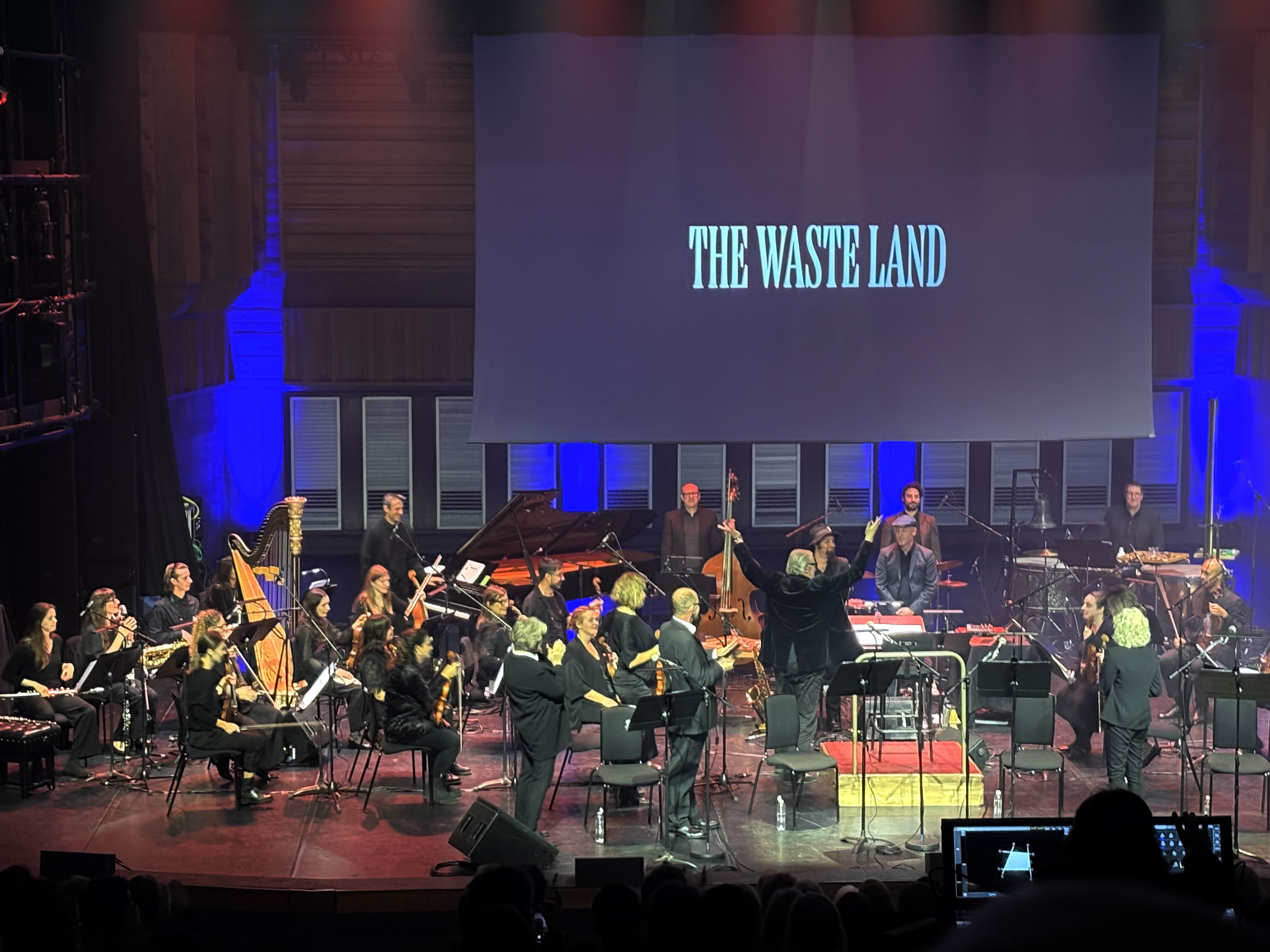
Snow fell in London yesterday morning. It seemed the right sort of day for a performance of T. S. Eliot’s The Waste Land at the Queen Elizabeth Hall. Although the poem contains all kinds of weather in all kinds of places, from the cracked earth of endless plains to thunder in the mountains and a summer shower on a Bavarian lake, taking the short walk from Waterloo station in a cold and dark London (the poet’s “Unreal City”) was like strolling straight into its heart.

Mounted as part of the EFG London Jazz Festival, the performance offered an expanded version of the treatment commissioned 10 years ago by the Beckett festival in Enniskillen from the Irish actor Adrian Dunbar. With the permission of the famously strict Eliot estate, Dunbar was able to devise an arrangement of the poem for four actors (two women and two men) plus a jazz quintet playing music by the saxophonist and composer Nick Roth.

I was 15 when an English teacher named Keith Yorke took us through The Waste Land, decoding its mysteries. I could never thank him enough. Dunbar, introducing last night’s performance, in which the quintet was augmented by a 25-piece orchestra, said he had encountered it while studying at the Guildhall School of Music and Drama 40 years ago; clearly, its impact on him was similarly profound. My previous experience of a live performance of the poem was the actress Fiona Shaw reciting it from memory beneath a single bare lightbulb on stage at the historic Wilton’s Music Hall in the East End on New Year’s Eve, 1998. In my eyes, that gave Dunbar and his crew a lot to live up to.

The readers were Anna Nygh, Orla Charlton, Frank McCusker and Stanley Townsend. Dunbar divided the lines between them, as appropriate to Eliot’s shifting cast of characters. Passages were rendered with German, Irish, American and Cockney accents. I was worried to begin that it might all seem a bit contrived, a bit stagey. That unease evaporated within a few minutes. The polyphony of the reading brought a different kind of life to an already highly polyphonic poem.

Ross’s music was used as an overture and as interludes between the five episodes. The overture, scored for the Guildhall Sessions Orchestra, evoked the European modernist classical music of the inter-war years: bold gestures, hints of dissonance. The first interlude had a ragtime flavour (“that Shakespeherian Rag… so elegant… so intelligent”). For the second, the quintet — Alex Bonney (trumpet), Roth (saxophones), Alex Hawkins (piano), Oli Hayhurst (bass) and Simon Roth (drums) — brilliantly created something that sounded like one of Charles Mingus’s bands paying homage to the pre-war Ellington small groups, or possibly vice versa. The third found the group moving towards free jazz, with Hawkins flailing the keyboard à la Cecil Taylor. The fourth exploited Bonney’s expert manipulation of electronic sound. Did that chronological progression echo something buried within the text? If certainly added a new perspective and a contemporaneity.

Nothing will ever dim the memory of Shaw’s spellbindingly majestic recitation, but Dunbar’s gamble paid off. The drama intensified until, by the time the closing lines of the fifth and final section were reached — “These fragments have I shored against my ruins / Why then Ile fit you / Hieronymo’s mad againe / Datta. Dayadhvam. Damyata. / Shantih shantih shantih” — the words and sounds had transformed the climate of a well-warmed hall and I felt a shiver run through me.
At the London Palladium

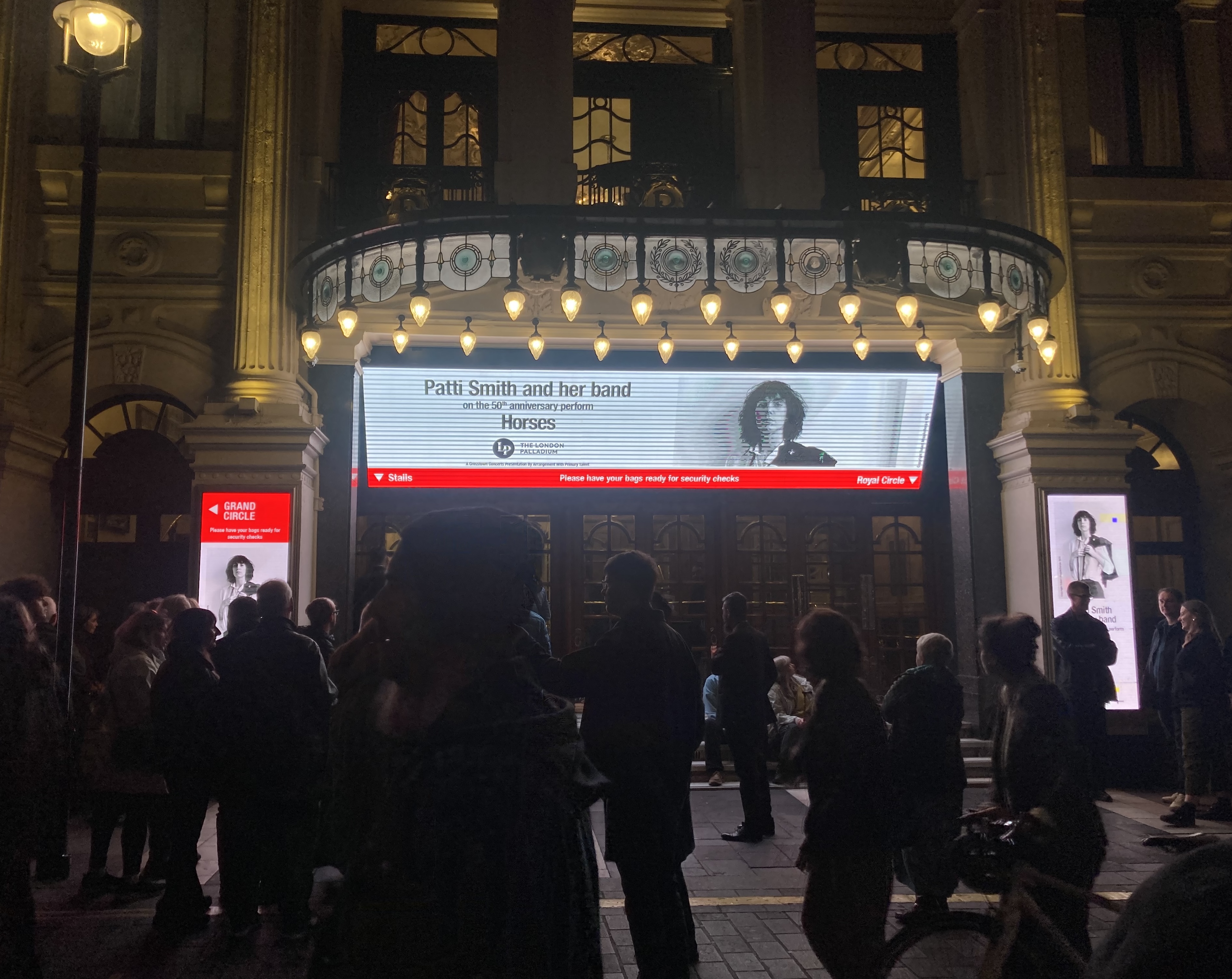
Two poets took the stage at the London Palladium this week. The first, Patti Smith, was celebrating the 50th anniversary of the release of the epochal album Horses by playing it all the way through with a band including two of her original confrères. The second, Al Stewart, had made it part of his farewell tour, and thus his final appearance in the city where he once shared a flat with the young Paul Simon and had a residency at Bunjie’s, a folk club a shortish walk across Soho from where he was saying his goodbyes.

Smith is 78. Stewart is 80. Horses came out in 1975, the year before Stewart enjoyed his biggest hit with the title track from Year of the Cat. Both drew full houses — Smith on two nights running — and performed with a vigour that reanimated the work of their youth.

We know Smith as a poet who rammed literary and musical forms together to great and lasting effect. Stewart’s success in turning big subjects — the Basque separatist movement, the French Revolution, Operation Barbarossa — into long narrative folk-rock songs reflected a creative use of the early impact of Bob Dylan on his songwriting. But where the enduring glamour of the New York era of CBGB and Max’s Kansas City ensures Smith’s continuing credibility, Stewart’s soft-rock associations have probably restricted his following to his original audience. There was no measurable difference in the enthusiasm that greeted both artists on a celebrated stage.

If the guitarist Lenny Kaye and the drummer Jay Dee Daugherty provided valued historical support for Horses, assisted by Jackson Smith and Tony Shanahan on keyboard and bass guitar, Stewart (and his four-piece band from Chicago, the Empty Pockets, plus the saxophonist/flautist Chase Huna) benefited from the guest presence of his old collaborator Peter White, who added beautiful guitar decoration to “Time Passages”, which he co-wrote, and “On the Border”, and remodelled the rhapsodic piano introduction — including “As Time Goes By” — to “Year of the Cat”.

To be honest, I hadn’t listened to Stewart for decades before last night. I bought the tickets as a treat for my wife, who knew him a little in Bristol folk scene of the late ’60s and remembers once giving him a lift to London. But as thrilled as I was to hear Smith declaiming “Redondo Beach” and “Birdland”, I was just as beguiled by Stewart’s “The Road to Moscow” and “The Dark and the Rolling Sea”.

Today Smith, of course, looks even more like a poet than she did in 1975. Stewart, who lives in Arizona, now resembles someone who might be the secretary of the local bridge club. Good on both of them.

Portrait of the artists

Bryan Ferry might have made a career for himself as a painter or ceramicist, and he had a go at both. Instead he chose music. But everything he’s done since has been about being an artist in a very particular sense. Roxy Music worked best when seen as an art project: “Re-make / Re-model”, “In Every Dream Home a Heartache”. The same could be said of his solo work: the readymades of These Foolish Things, the more-than-homage of Dylanesque, the ’30s glide and swoon of As Time Goes By, the brazen charm of The Jazz Age, the wintry covers of “Back to Black” and “Johnny and Mary”.

I’ve been thinking about that while listening to his latest release, Loose Talk, created in partnership with the poet and painter Amelia Barratt, which is immediately interesting because it’s a collaboration between artists at very different stages of their careers (she is in her thirties, he will be 80 in September). It’s also the first Ferry album on which someone else is responsible for the words and their delivery.

He’s a great assembler of words himself, of course, as his collected Lyrics underlined when it was published by Chatto & Windus three years ago, but it’s often been a painful business for him. I remember stories from the ’70s of his then-manager, the department store heir Mark Fenwick, sitting in an armchair sighing and tapping his fingers like an exam invigilator while Bryan struggled to carve out the words of the final verse to the last song for a new album, its release date already postponed by a record company impatient for product.

Loose Talk is an album in which Barratt reads eleven of her poems to Ferry’s musical settings, some using material set aside from his earlier projects. It would be flippant — and wrong — to suggest that he’s solved a problem by delegating the job of providing the words to a collaborator. It’s a legitimate artistic project, from both perspectives.

Barratt is a slender young woman with the sort of looks Cecil Beaton captured in his photographs of the pre-war Bright Young Things. Her voice is quiet, reserved, unemphatic. It’s a voice you might overhear amid the gush and babble at a party — a gallery opening or a book launch, perhaps — and look around to discover its source.

Her verses are not song lyrics: they’re poems, allusive and enigmatic and unresolved, filled with fleeting exchanges that hint at narrative but yield impressions rather than stories, occasionally threaded with contemporary images: “Wasting her time / she’s flipping channels with the remote control” or “My sneakers now washed / hang by their laces.” When combined with Ferry’s music, they take us to familiar territory: “She’s one to watch” is the first line of a track called “Stand Near Me”, a prime Ferry opening if I ever heard one, while “Pictures on a Wall” provides a neon-splashed groove that might have come from any Ferry session from Horoscope/Mamouna in the early ’90s to Avonmore in 2014.

There are decayed pianos being played in abandoned ballrooms, a mood that Ferry has explored with and without Roxy Music. Often the accompanying cadences descend with slow, muted elegance: the echoing piano on “Florist”, the bass on “Orchestra”. That’s another Ferry signature.

Barratt’s poems work for me, mostly, because her delivery sounds like a modern way of speaking and sometimes she produces a sketch whose images and emotions provide a satisfying coherence. “Florist” has an intriguing arc and a moment of piercing disquiet: “Imagine one day / he comes to me and says / There is nothing more I want than this / He gestures to the tulips / that look out from a bucket, bunched / in the passenger seat of the van / To his apron / To his diary with nothing in / and I say / That’s perfectly fine / Perfectly alright / Perfectly without the need to tell me all the time.”

There are some familiar names in the credits — the guitarists Neil Hubbard and Ollie Thompson, the bassists Neil Jason and Alan Spenner, the drummers Paul Thompson and Andy Newmark — but their individual presences are never noticeable: these tracks are stripped back to form a watchful background. The most assertive music comes in the final piece, the title track, where Barratt’s economical verses are accompanied by a subdued but baleful 12-bar blues, somewhat in the manner of “Let’s Stick Together”, Ferry’s 1976 solo hit.

Ferry’s own voice is allowed to peep through two or three times as a kind of palimpsest, probably leftover guide vocals from the demos, notably on “Orchestra”, where the atmospherics are at their most languid and dream-like. But in this collaboration he’s found another way to extend his expressive reach. It’s the latest episode in a long life full of interesting creative decisions. Another twist in an artist’s career.

* Loose Talk by Amelia Barratt and Bryan Ferry is out on Dene Jesmond Records on March 28. The photograph of Ferry and Barrett was taken in Los Angeles by Albert Sanchez.

Starless and bible black

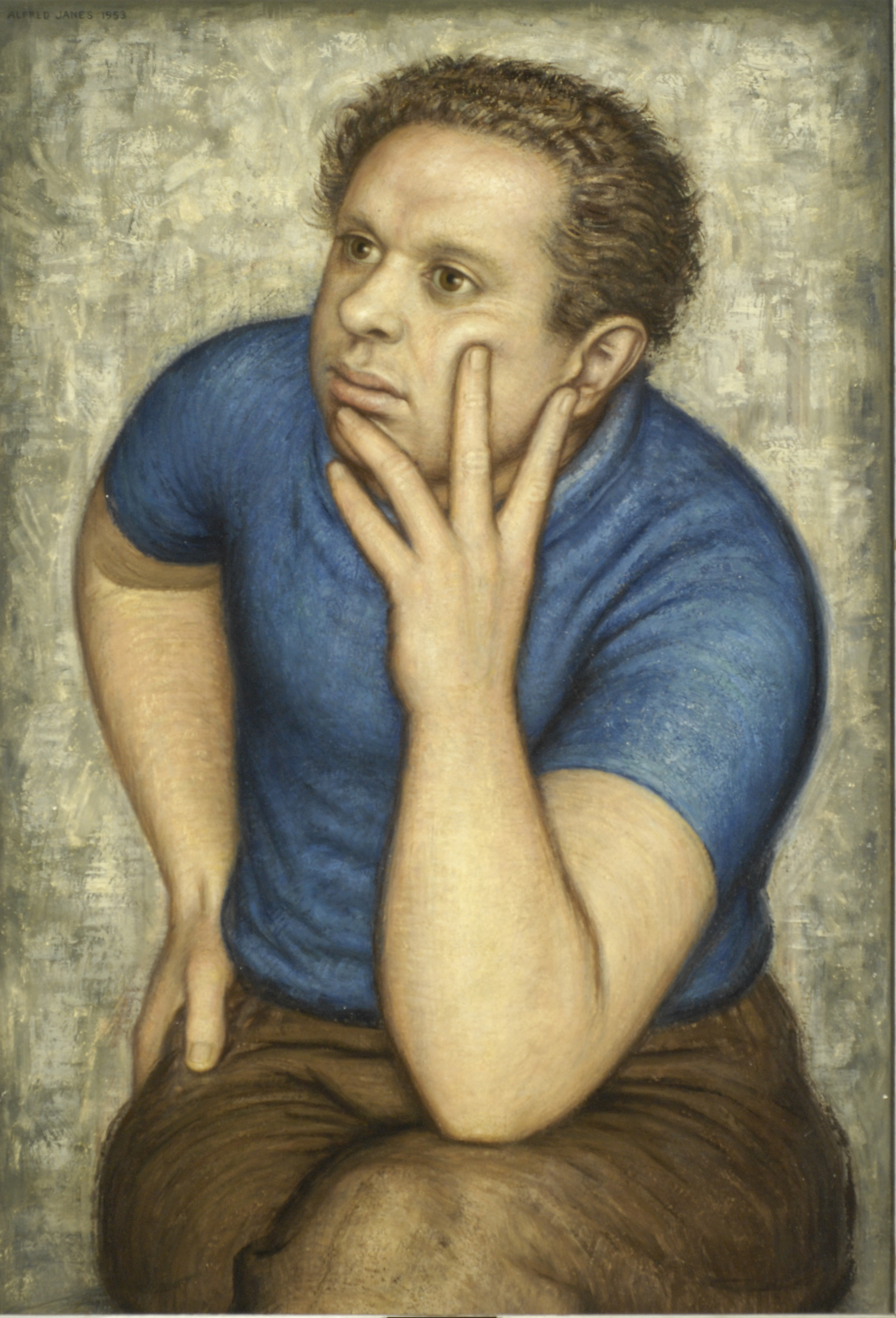
Dylan Thomas by Alfred Janes, 1953, Harry Ransom Centre, University of Texas at Austin © estate of Alfred Janes

To begin at the beginning:

It is spring, moonless night in the small town, starless

and bible-black, the cobblestreets silent and the hunched,

courters’-and-rabbits’ wood limping invisible down to the

sloeblack, slow, black, crowblack, fishingboatbobbing sea.

That’s how Dylan Thomas opened Under Milk Wood at his first readings of the drama in 1953. They were presented at venues from the Poetry Centre in the 92nd Street Y in New York City — with a full cast before an audience numbering 1,000 — to a solo performance for a local arts club at the Salad Bowl Café in Tenby on the south-west Wales coast. His health was deteriorating fast and he had died, aged 39, while back in New York for further performances — staying at the Chelsea Hotel, drinking at the White Horse Tavern — by the time Richard Burton read those words the following year in a famous BBC Radio production. Two years later the Caedmon label, which specialised in spoken-word recordings, issued a vinyl double-album of the Poetry Centre production, recorded using a single microphone.

The British pianist and composer Stan Tracey was so impressed by Under Milk Wood that he made it the inspiration for a suite recorded with his quartet in London in 1965. He started by jotting down some titles while listening to the play, then wrote the music to go with them. The producer Denis Preston supervised the recording at his Lansdowne Studios in Notting Hill, and it was released on EMI’s Columbia label the following year, to great acclaim. As an example of jazz arising directly from a literary or dramatic source, it has seldom been equalled.

More specifically, the album contains a track which has sometimes been called the greatest recording in the history of British jazz. That’s a big claim, and probably an absurdly unrealistic one, but the fact remains that “Starless and Bible Black”, the track in question, is a thing of unearthly and profound beauty, its simplicity of means and its relatively brevity (three minutes and 45 seconds) serving only to highlight its extraordinary nature and the intensity of its mood, preserved in a misty penumbra of reverb by the engineer Adrian Kerridge.

Tracey’s gentle outlining of the modal structure (the chords strummed almost as if by a harp), Bobby Wellins’s hushed tenor saxophone, Jeff Clyne’s bowed bass, and Jackie Dougan’s mallets on his tom-toms immediately recall the only possible model for this piece: John Coltrane’s immortal “Alabama”, recorded in 1963. But whereas Coltrane’s sombre threnody was recorded in response to the murder of four schoolgirls in the racist bombing of a church, Tracey’s tone poem issues from very different emotional source. It’s the sound of a small Welsh cockle-fishing village at night, the silence of its dark streets penetrated only by the dreams of its inhabitants — Captain Cat, Rosie Probert, Mrs Ogmore-Pritchard, Dai Bread, the Reverend Eli Jenkins, Organ Morgan and the rest of Thomas’s motley cast.

The remainder of the album consists of seven rather more conventional but still very worthwhile pieces, their titles, including “No Good Boyo”, “Llareggub” and “Cockle Row”, referencing Thomas’s play. Full of spirit and inventiveness, they display Tracey’s creative response to the stimulus of his two primary musical influences, Ellington and Monk. This particular quartet was one of the finest groups of the pianist’s long and illustrious career, affording a particularly welcome chance to listen at length to the marvellous Wellins, who was among the greatest of Scotland’s many distinguished jazz musicians.

Next Sunday, 14 May, is International Dylan Thomas Day, marking the anniversary — the 70th, on this occasion — of the first performance of Under Milk Wood in New York. I was reminded of this by Hilly Janes, an old colleague at The Times whose artist father, Alfred Janes, was a friend of Dylan’s and painted his portrait at various stages of his career — including, in 1953, the one above. It appears on the cover of Hilly’s excellent and warmly received biography of Thomas, first published in 2014, now in paperback, and containing a vivid description of the poet’s final year. Happily coinciding with the anniversary is the first vinyl reissue of Tracey’s album since 1976, remastered and with a new sleeve note by his son, the drummer and bandleader Clark Tracey.

Hilly also sent me someone’s playlist of other records inspired by Dylan, including John Cale’s “Do Not Go Gentle into That Good Night” and “A Child’s Christmas in Wales”, “Dylan & Caitlin” by the Manic Street Preachers, “Eli Jenkins’ Prayer” by the Morriston Orpheus Choir, Simon and Garfunkel’s “A Simple Desultory Philippic” and, of course, King Crimson’s very different idea of “Starless and Bible Black”. But on Sunday, to accompany the remembrance of a genius, the Stan Tracey Quartet’s album will be all the soundtrack you need.

* The vinyl reissue of Stan Tracey’s Jazz Suite Inspired by Dylan Thomas’s Under Milk Wood is on Resteamed Records. Hilly Janes’s The Three Lives of Dylan Thomas is published by Parthian Books. The portrait of Thomas by Alfred Janes is reproduced by permission of the Harry Ransom Centre, University of Texas at Austin, and is the copyright of the artist’s estate.

What a little bookshop can do

There was an event called Quiet Revolutions at the Barbican Library last week, celebrating radical bookshops old and new, from Housmans of King’s Cross, Newham Books in East London, New Beacon Books of Finsbury Park and Gay’s the Word of Marchmont Street to Five Leaves of Nottingham. I wasn’t there, but it reminded me of the importance of such places, and in particular the pivotal role played in my own life by two such places, the ancestors of Five Leaves.

The Trent Book Shop was opened in 1964 by Stuart Mills and Martin Parnell, two young men who’d abandoned careers as schoolteachers. It was on Pavilion Road, a little street leading down from Trent Bridge to the main entrance to the Nottingham Forest football ground (which may have been how I first found it). From the beginning it was a local equivalent to Indica and Better Books in London: a place to buy alternative literature, particularly the products of small poetry presses. After a couple of years Mills and Parnell found new and larger premises in Drury Hill, a narrow street running down from the Lace Market near the city centre, which they opened under the name Bux. It was there that I spent many hours until moving to London in 1969, buying the early editions of International Times and the publications they’d imported from the US, including the Village Voice and its rival, the East Village Other. I still have some of the books and pamphlets I bought there, including LeRoi Jones’s Blues People, The Dead Lecturer, The System of Dante’s Hell, Home and Preface to a 20-Volume Suicide Note, Che Guevara’s Bolivian Diaries and Guerrilla Warfare, the screenplays of Godard’s Alphaville and Made in USA, and the English-language edition of Cahiers du Cinéma.

The things I’m happiest to have preserved are copies of the only two editions of a jazz magazine called Change, published in Detroit in 1965 and ’66 and founded and edited by the poet and activist John Sinclair and the trumpeter Charles Moore under the aegis of the Artists Workshop Press, a co-operative organisation. Change was printed on cheap paper in A4 format, $1 a copy. Archie Shepp was on the cover of the first issue, photographed by Leni Sinclair, John’s wife, and Andrew Hill on the second. There were letters from correspondents in New York, Los Angeles, San Francisco, Paris and London. Tam Fiofori and Jim Burns sent pieces from the UK.

There were reviews of concerts (Shepp, John Coltrane and Cecil Taylor at the Down Beat festival in Chicago, Mingus at UCLA, Ornette Coleman in Paris and San Francisco) and albums (Hill’s Point of Departure, the New York Art Quartet’s ESP LP, Albert Ayler’s Bells, Shepp’s Fire Music, Coltrane’s Ascension). Sometimes the writers abandoned conventional prose and turned their reviews into poetry, e.g. Clark Coolidge’s abstract impressions, five pages long, of Giuseppi Logan’s ESP debut. That’s also how Sinclair wrote his introduction to the second issue: “We are the products / of our emotions, of our / uncovered lives. Changes/2 / is reflection. Dig your selves / & let them out / into the light. The sun / will never set.” The dateline on the piece was the Detroit House of Corrections, following Sinclair’s arrest for marijuana possession. (In 1969, having played a part in the emergence of the White Panther Party — formed to support the Black Panthers — and the MC5, he would be sentenced to a 10-year term for trying to sell joints to two people who turned out to be undercover cops, thus attracting the support of Abbie Hoffmann and John Lennon, which led to his early release.)

Now, so many years later, these magazines have their own soundtrack, in the shape of an album titled John Sinclair Presents: Detroit Artists Workshop: Community, Jazz and Art in the Motor City 1965-81, containing music recorded at concerts during and in the years after the short life of Change. There’s a spoken introduction by Sinclair from a radio show, followed by two pieces from Donald Byrd in concert with the Paradise Theatre Orchestra in 1978: “Blackjack”, the title track of one of his Blue Note albums, and a lovely version of the immortal “Cristo Redentor”. Three tracks from the Coltrane-influenced Detroit Contemporary 4 in 1965-66 feature Moore’s trumpet and the piano of the young Stanley Cowell. The tenorist Bennie Maupin leads his quartet. Other tracks feature outstanding work from the guitarist Ron English and an uncredited altoist who may be Marion Brown. A 1979 benefit for the altoist “Sonny Red” Kyner yields an invigorating composition for a big band and choir led by Teddy Harris, a pianist who had played on Jackie Wilson’s “Reet Petite” in 1957 and served as the Supremes’s musical director from 1970-86. Lyman Woodard’s Hammond B3 solo with his own band on the funky Latin rhythm of “Déjà Vu” is all too short (Woodard was also Martha and the Vandellas’ MD).

Good luck with trying to find copies of Change/1 and /2. But the album is easy to acquire and well worth it, not just for the music but for the documentation included in the accompanying booklet, particularly the manifesto of the Artists Workshop, written in November 1964 and fully illustrative of the sense of struggle and optimism in the air. Explaining the need to charge members an initial $5 a month in subscription for upkeep of the premises, the principles are outlined:

(1) Each member of the Workshop is to assume an equal responsibility in the project’s success. (2) Members have to go into their already near-empty pockets, thus the project cannot be treated lightly. (3) We feel that any commercial means of support, at least (& especially) in the beginning, would tend to create an artificial community hung together on money. Rather than a genuine community built on mutual need and mutual interest. (4) No ‘outside’ pressures, hang-ups, interferences. (5) The Workship ideal can be maintained, i.e. there will be no pressure on artists to produce work that would result in commercial success, rather than integrity and aesthetic honesty, as its ultimate purpose. We do believe, however, that commercial ventures will come into being as logical and desirable outgrowths of the Workshop as it has been conceived and is now operating. For example, we can see in the future a coffeeshop where musicians would present their work; a gallery for painters and other graphic artists to exhibit their work; a small printing and/or publishing concern through which poets & writers could introduce their work; an operating film society that would enable local film-makers to produce and possibly market cinematic ideas.

Dreams, dreams. And in Detroit, at least, such a dream came true, for a while.

* The CD of John Sinclair Presents: Detroit Artists Workshop is on the Strut label.

Patti Smith at the Albert Hall

When she was 15 or so, the woman said, she’d dreamed about a certain boy, about walking down the street holding his hand. And now here she was, performing at the Royal Albert Hall for the first time, and she was going to sing one of his songs. And at the end of a most elegant version of “One Too Many Mornings”, Patti Smith said quietly: “Bob Dylan.”

The last time I’d seen Patti was in 1995 at the Electric Factory in Philadelphia, when she and Dylan were touring together. She came on to sing “Dark Eyes” with him during his acoustic section, and then she joined him in the encores for “Knockin’ on Heaven’s Door”. It was nice to be reminded last night of the history they share, and she honoured it beautifully on the very stage where, 55 years ago, he sang “One Too Many Mornings” with another band.

But that was just one highlight in a night crammed with them, starting with the lyric to “Piss Factory”, the B-side of her first single in 1974, which she declaimed unaccompanied to start the 90-minute set. That was electrifying, and at the end of the evening my only regret was that she hadn’t done more reading.

But would I have swapped that for the lovely “Grateful”, the driving Velvets drone of “Dancing Barefoot”, the collective exhilaration of “Beneath the Southern Cross”, a most surprising and tender mid-set version of Stevie Wonder’s “Blame It on the Sun”, Lenny Kaye’s dedication of the Stones’ “I’m Free” to Charlie Watts, the cathartic “People Have the Power”, which Patti wrote with her late husband Fred “Sonic” Smith, or the thunderous closing run through “Not Fade Away”, when the instruments cut after the last “I’m gonna tell you how it’s gonna be”, allowing Patti, the band and the entire pan-generational audience to bellow “You’re gonna give your love to me”?

What I also admired was the way she and the band — Kaye and Jackson Smith (guitars), Jesse Paris Smith (piano), Tony Shanahan (bass guitar) and Jay Dee Daugherty (drums) — put on such a well calibrated show while keeping their garage-band rawness and honesty. Jackson Smith’s raga-rock solo on “Dancing Barefoot” was a beauty, as was Daugherty’s ability — probably learnt from reggae drumming — to leave spaces within a bar without losing power.

But I wasn’t really taking notes. I was on my feet, with everyone else.

Marianne & Joan

In 1965, when she was 18 years old, Marianne Faithfull was cast as Ophelia in Tony Richardson’s Hamlet, a Roundhouse production swiftly transferred to film. Two years later Bill Gaskill directed her in Chekhov’s Three Sisters at the Royal Court, alongside Glenda Jackson: “Marriane (sic) Faithfull looked Irina most plausibly,” Philip Hope-Wallace wrote in the Guardian, “even if she could still get more out of the words.” Today, in her maturity, Faithfull knows that the best lines can be allowed to speak for themselves.

Lines like Keats’ “The sedge has withered from the lake/And no birds sing”, for example, and Tennyson’s “The mirror crack’d from side to side.” They’re heard on her new album, She Walks in Beauty, in which she recites verses from the Romantic poets over backdrops created by the Australian musician Warren Ellis.

I’ve no idea whether, following her recovery from a bout of Covid-19 which put her in intensive care for three weeks, she has plans to make any more albums. If not, She Walks in Beauty would make a fitting capstone to a career that began in 1964 when, at a party for the singer Adrienne Posta, Andrew Loog Oldham spotted a convent schoolgirl who was already in thrall to the poetry she reads here.

The album adheres to a single mood, tending towards the ethereal: drifting ambient soundscapes sparingly garnished by Ellis’s violin, Vincent Ségal’s cello, Nick Cave’s piano and, on two pieces, Brian Eno’s treatments. Faithfull’s delivery of the verses is respectful and measured: her deep contralto has the grain of experience, grounding the poetics. About half the tracks received their voice tracks after her recovery, which might explain why one or two of them are more deliberate than the rest, although not obviously or disturbingly so.

Among the pieces I particularly enjoyed are Byron’s title piece, Keats’ “La Belle Dame Sans Merci”, Percy Bysshe Shelley’s “Ozymandias” and Wordsworth’s “Surprised by Joy”. I was amused, too, that she borrows a tactic perfected by her old admirer Bob Dylan with “Desolation Row” and “Sad Eyed Lady of the Lowlands”: the trick of leaving the collection’s epic performance until last. In this case it’s the 12 minutes of Tennyson’s “The Lady of Shalott”, which she gives in the 20-stanza version published in 1832, 10 years before the author revised the ending to suit Victorian sensibilities. (It’s a shame her script — repeated in the accompanying booklet — gave her “Through the squally east wind keenly/Blew…” rather than “Though…”, but the blemish is fleeting.)

It’s worth adding that ownership of the special edition of She Walks in Beauty is much enhanced by the inclusion of reproductions of a dozen watercolours — including the cover illustration — by the English artist Colin Self, any one of which I’d be happy to have hanging on the wall.

As a collateral benefit, Faithfull’s album sent me back to Baptism: A Journey Through Our Time, a 1968 release in which Joan Baez read and sang poetry over music by the composer Peter Schickele. Conceived by Maynard Solomon, the co-founder of Vanguard Records, it was an ambitious project in which Schickele created bespoke settings for verses from poets ranging from anonymous medieval Chinese and Japanese writers through John Donne, William Blake and Walt Whitman to Arthus Rimbaud, Wilfred Owen, Henry Treece, James Joyce, Federico García Lorca, Jacques Prévert, Countee Cullen and Yevgeny Yevtushenko.

The album is bookended by Treece’s “Old Welsh Song”, a fragment sung by Baez, backed by a harmonium. Much more of a mosaic of miniatures than Faithfull’s album, the mood of the programme is defined by a hatred of war and bloodshed, beginning with Whitman’s “I Saw the Vision of Armies”, read to softly rolling tom-toms and cymbals, and the Chinese verse “Minister of War”, punctuated by a distorted guitar and a clashing gong-like effects. A hovering unison cello and bass line wanders disconsolately behind Lawrence Ferlinghetti’s translation of Prévert’s “Song in the Blood”, glockenspiel and celeste accompany the sung version of Joyce’s early “Of the Dark Past”, a jaunty string quartet matches the vivacity of a fragment from the same writer’s Portrait of the Artist as a Young Man.

If the flute and harp embroidering Rimbaud’s “Childhood” are a bit twee, his “Evil” gets a cinematic soundtrack whose opening sounds of strife thin out as they give way to pathos. The flute, viola and celeste colouring Kenneth Rexroth’s translations of Japanese haiku are appropriately exquisite, and Schickele gives Baez a lovely melody for e.e. cummings’ “All in green went my love riding”. Wilfred Owen’s “The Parable of the Old Man and the Young”, with its devastating payoff, is wisely left unaccompanied.

Baez was 27 at the time of this recording. Sometimes her delivery could be a little over-reverent, but mostly she found the right tone, nowhere more powerfully than on the two short poems at the heart of the album: Blake’s “London”, with its appalled visions of the corruption of the flesh and the spirit, and Norman Rosten’s “In Guernica”, where a simple, almost photographic description deepens into tragedy through a single word: “In Guernica the dead children / Were laid out in order on the sidewalk / In their white starched dresses / In their pitiful white dresses.” Both pieces employ the tolling of tuned percussion over strange drones.

By 1968, Baez had sold a lot of albums. Her two In Concert albums had made the Billboard top 10 in 1962-63, and in a year later Joan Baez 5 reached the UK top three. Baptism made it no higher than No 84 in the US and failed to register at all in Britain Somehow, though, partly for its sense of adventure and partly for “London” and “In Guernica”, it’s the one that’s stayed with me.

In Underground London

Underground London 2

I’ve taken a lot of pleasure in recent days from listening to Underground London, a three-CD set that attempts to recreate, through a mosaic of recordings, the feeling of being a certain kind of person in London in the first half of the 1960s, someone either growing out of, or who had been a little too young for, the full beatnik experience in the 1950s, but looking for similar sensations in a changing time: free speech, free jazz, free verse, free love.

The first disc starts with Ornette Coleman’s “W.R.U.”, ends with Jimmy Smith’s “Autumn Leaves”, and includes Lawrence Ferlinghetti reading “Dog”, Allen Ginsberg reading “America”, a track from Red Bird, the jazz-and-poetry EP Christopher Logue made with Tony Kinsey, and György Ligeti’s “Atmosphères”. The second opens with Jimmy Giuffre’s “Jesus Maria”, ends with Albert Ayler’s “Moanin'”, and includes Ravi Shankar’s “Raga Jog”, Jack Kerouac reading from On the Road and Visions of Cody, and the Dudley Moore Trio playing the theme from Beyond the Fringe. The third opens with Cecil Taylor’s “Love for Sale”, ends with Thelonious Monk’s “There’s Danger in Your Eyes, Cherie” and includes Davy Graham and Alexis Korner playing “3/4 AD”, Aldous Huxley reading from The Visionary Experience, the MJQ playing “Lonely Woman”, Luciano Berio manipulating Cathy Berberian’s voice in “Visage”, and “A Rose for Booker” by the Chico Hamilton Quintet, with Charles Lloyd.

Add in Stockhausen, Don Cherry and John Coltrane, Annie Ross, John Cage and David Tudor, Sonny Rollins, Sun Ra, Eric Dolphy and Joe Harriott, and you get the idea. And to set up the mood for the sort of extended listening session the set deserves, I’d suggest candles in Chianti bottles, something vaguely cubist on the wall, the Tibetan Book of the Dead on the coffee table, and a black polo-neck sweater, or perhaps a chocolate-brown corduroy jacket. And if the party is going well, maybe a Beatle or two, in an adventurous mood, will drop by on the way home from Abbey Road.

But it’s not really a joke, or a caricature. There’s a lot of completely wonderful stuff here, some of it revealing new qualities when isolated from the context of its original full-album setting (an underrated virtue of anthologies or compilations). And practically everything is on the edge of something, some new discovery, some unexplored territory worth taking a risk to reach. How exciting was that?

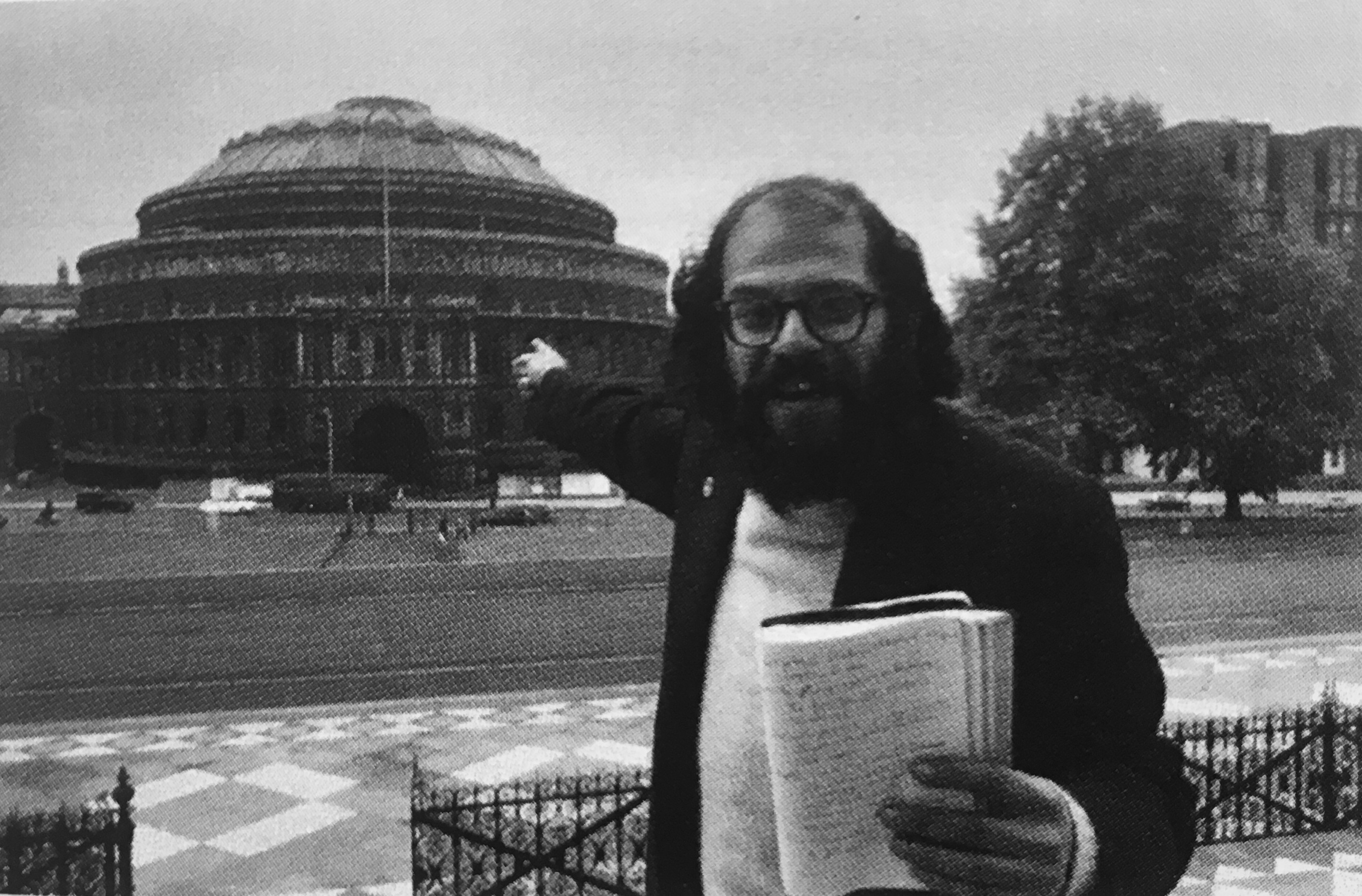
* The photograph of Allen Ginsberg outside the Royal Albert Hall was taken in 1965 by John Hopkins and was used in the poster for the International Poetry Incarnation held on June 11 that year. It’s included in the booklet accompanying Underground London: Art Music and Free Jazz in the Swinging Sixties, which is on él records, via Cherry Red. 

Another me, another way

Another me 3

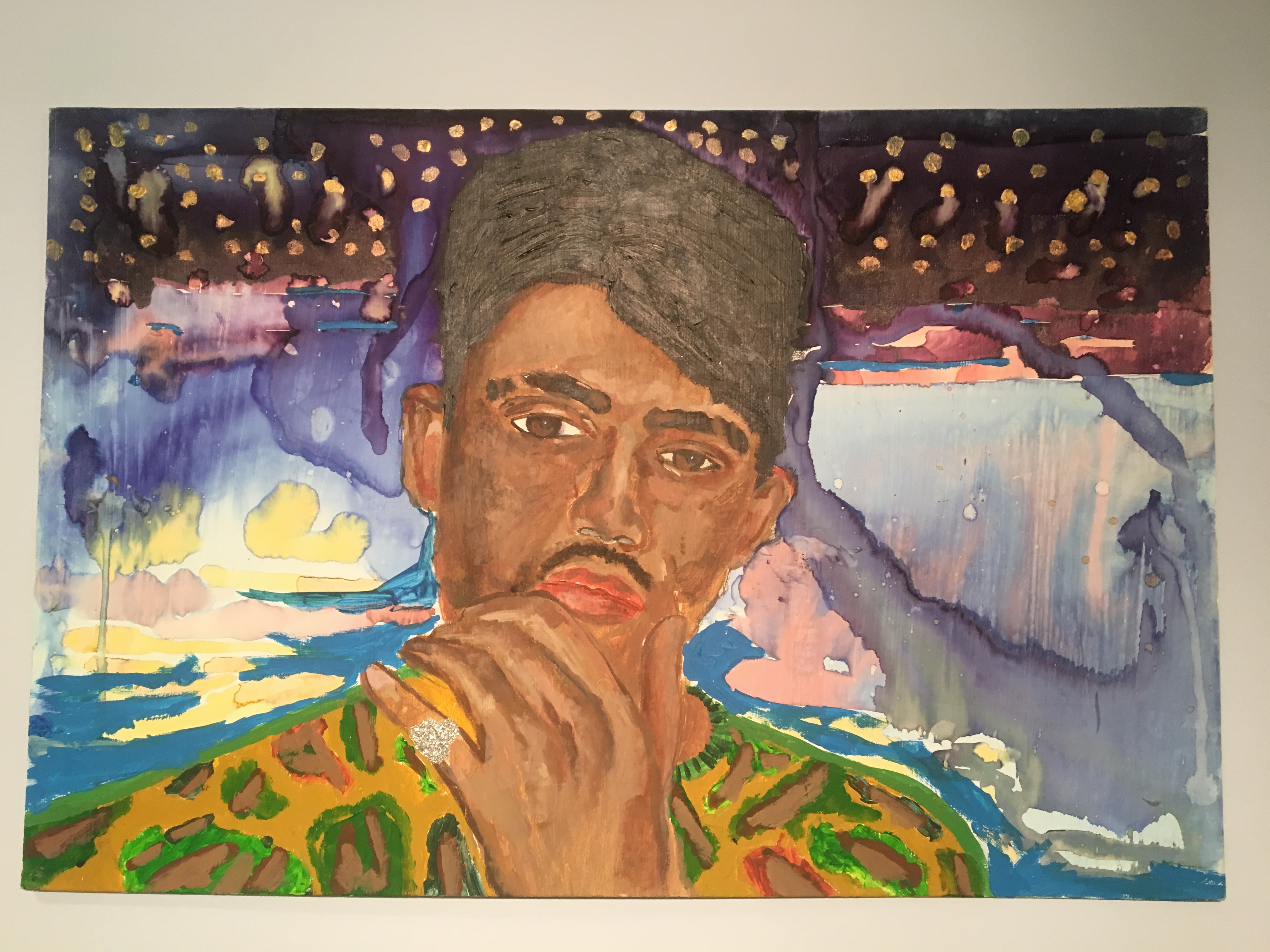
The self-portrait above was painted by an inmate of Vinney Green Secure Unit, a young offenders’ facility in Bristol. It’s part of “Another Me”, an exhibition of artworks by people incarcerated within the criminal justice system, currently on show in the Spirit Level rooms at the South Bank centre, below the Festival Hall. It caught my attention when I noticed that it had been curated for the Koestler Arts foundation by Soweto Kinch, the brilliant composer, saxophonist and bandleader. Anything Kinch is involved in tends to be worth your time, and “Another Me” is no exception.

At Koestler Arts’ building in Wormwood Scrubs, he went through 7,610 entries submitted in 52 categories from UK prisons and British prisoners abroad. His selection spans a range of media, from conventional painting and photography to wall-poetry, music of various genres (which you can hear through headphones), all ranging from the sombre to the defiantly whimsical. There’s a particularly extraordinary piece made from used nitrous oxide canisters found in various London locations — outside a school, an off-licence, a night club, a hospital — and labelled and framed in the style of Victorian museum objects under the title “Nitrouonites: Future Fossils”. As you walk around, you’ll hear the sound of drifting saxophones and electronics: a non-invasive but gently atmospheric sound installation specially devised by the curator.

Many of the works display great technical skill, but I was struck by the one at the top of this piece, a particularly eloquent and moving articulation of the exhibition’s theme. As another of the artists writes in a commentary on his own self-portrait, the title of show “suggest(s) so many possibilities, reflecting on past actions or future selves. It speaks of the masks we all use in our day-to-day lives. Our best selves, our worst. Perhaps most powerfully it suggests change is possible — there can always be another me, another way.”

* Another Me is at the Spirit Level exhibition space of the Royal Festival Hall until November 3. Soweto Kinch performs his new work The Black Peril at Hackney EartH on November 22 with an ensemble including the drummer Makaya McCraven, the bassist Junius Paul and members of the LSO, as part of the EFG London Jazz Festival.

Poem: Listening to Miss Peggy Lee

7622ffdee4d7cc753be675d134204

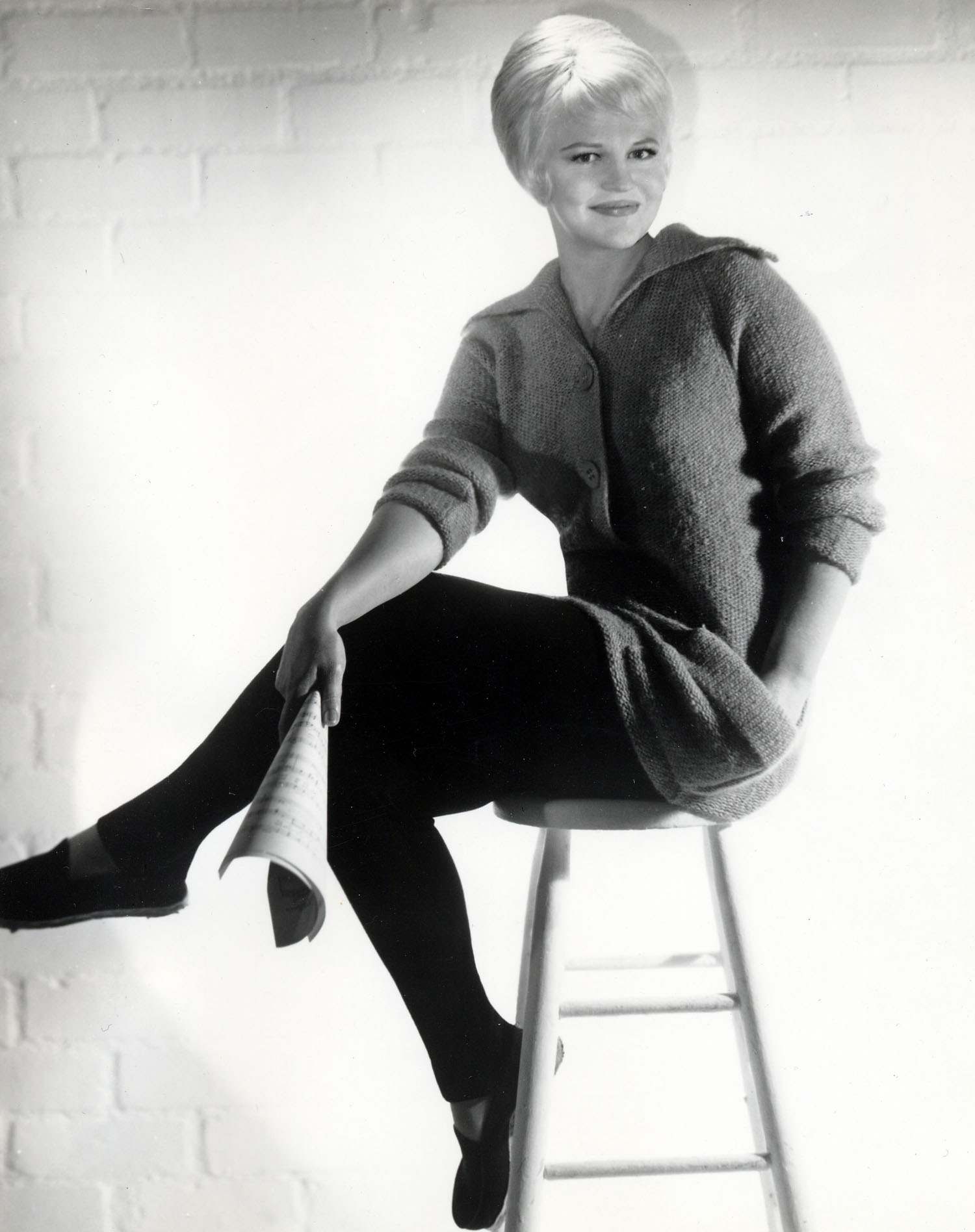
When Peggy Lee recorded “The Folks Who Live on the Hill” in 1957, the song — with music by Jerome Kern and words by Oscar Hammerstein II — was already 20 years old. Arranged by Nelson Riddle, conducted by Frank Sinatra, the recording became a Lee classic. I saw her perform it on The Perry Como Show, broadcast weekly by the BBC in the days when there were only two TV channels. On the surface, Lee and Riddle turned the song into a reassuring vision of the white-picket-fence America of the Eisenhower era. I heard that, too, but I found myself, young as I was then, responding to something deeper, more ambiguous, containing both optimism for adulthood and a hint of anxieties to come. The poet Roy Kelly seems to have experienced a similar reaction. Roy writes for The Bridge, the Bob Dylan magazine; his long piece on the ‘Mondo Scripto’ exhibition is in the next issue. His book Bob Dylan Dream: My Life with Bob was published in 2015. I’m grateful for his permission to publish this new poem, and I hope you like it as much as I do. RW


ON LISTENING TO MISS PEGGY LEE SING

THE FOLKS WHO LIVE ON THE HILL


By Roy Kelly


The song I heard as a child

and ever since, beautiful Fifties America

art song, popular and commonplace

in anyone’s Sunday kitchen,

coming out of radios as if it never

could end, that time, that childhood.

An arranged figure lifting

and repeating, horns and strings

in melancholy grandeur;

not the tune but inextricable

precursor to its unfolding,

to the appearance of her voice,

small and clear, steadfast, intimate,


close as a whisper rising into

the narrative of melody,

the story of a union to come,

Darby and Joan who used to be

Jack and Jill, woven and layered

in the resonance of words and music,

the grief at the core of happiness,

tears in the heart of all things,

so that for years I never hear it

but my eyes brim, my throat swells to closing.

Genius art song of Fifties America

informing me of a life that might have been

and the future I have now,


the family I am blessed with now,

in a story we need to tell each other

of how it is loving and being loved,

as she loved and was loved, wishing

on a world that lives in songs,

memory and imagination a focused vision,

childhood and old age meeting

in her voice, her eternal clarity,

the unison that moved me to tears

and will again though I forget she is dead,

the uplifting splendour of the everyday

coming alive on anyone’s radio

as if these moments never will end.