Grooving at Falcon Lair
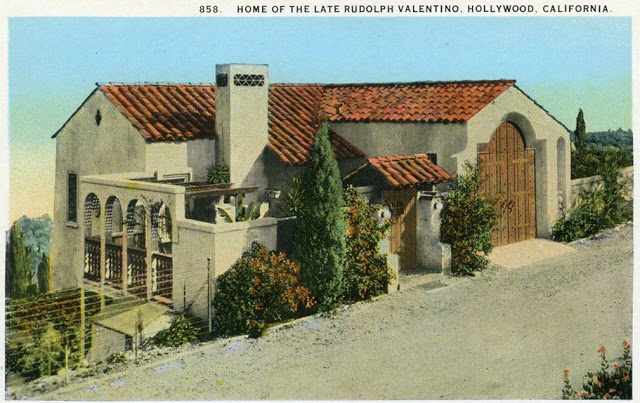
Few jazz musicians get to enjoy living quarters like Falcon Lair, a house in the Spanish colonial revival style built in 1924 by Rudolph Valentino high up in Benedict Canyon, in Beverly Hills. The architect was Wallace Neff, a favourite of the movie stars of silent era; four years earlier he had built Pickfair for Mary Pickford and Douglas Fairbanks Jr, turning an old hunting lodge into Hollywood’s most celebrated mock-Tudor mansion.
Doris Duke, the 40-year-old heiress to a vast tobacco fortune, bought Falcon Lair in 1953 and moved in with her new boyfriend, the pianist Joe Castro. They had met a year earlier in Hawaii, where Castro was performing with a jazz-tinged cabaret group called 3 Bees and a Queen. Duke, who liked jazz, asked him to give her piano lessons, and the relationship began.
Having become, on the death of her father when she was 12 years old, “the richest girl in the world”, she was a generous woman. She had previously been married to the Dominican playboy Porfirio Rubirosa; after their wedding in 1947 (her second, his third) she gave him a B-25 bomber to be refitted for his personal use, a string of polo ponies, and a Ferrari for him to drive at Le Mans; later, as part of their divorce settlement, he received a 200-year-old house in Paris. After she hooked up with Castro, they were soon making plans for a new home to share. Falcon Lair was their choice, and a studio was soon installed over the garage, with a Steinway D for Castro and recording equipment to enable him to tape the jam sessions that took place there over the next few years.
Castro, born in Arizona in 1927, was an accomplished bebop pianist who had a good feeling for the blues and a powerful sense of swing, and liked to mix chordal work with conventional single-note right-hand lines. And he soon showed himself to be at ease in fast company, with the great tenor saxophonist Teddy Edwards among his most regular musical companions. When Edwards recorded a pair of quartet albums, Sunset Eyes and Teddy’s Ready!, for the Pacific Jazz and Contemporary labels in 1959 and 1960, Castro was his preferred pianist in a line-up completed by the bassist Leroy Vinnegar and the drummer Billy Higgins. At around the same time, the group recorded an album called (rather misleadingly) Groove Funk Soul for Atlantic under Castro’s name.
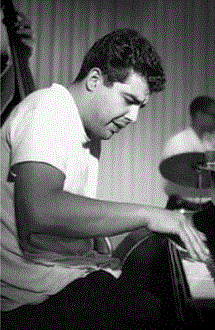
The relationship between Duke and Castro lasted, with the occasional hiatus, until early 1966. During that time they hosted innumerable jam sessions, not just at Falcon Lair but at at her New Jersey estate, Duke Farms, and her Honolulu property. They also booked sessions at various Hollywood studios for groups including Castro’s big band and Edwards’ 10-piece group, and in 1964 they set up a label, Clover Records, to issue the material. Only one album, a Castro quartet session, appears to have seen the light of day before the break-up put an end to the project.
Now comes an extremely handsome six-CD box titled Lush Life: A Musical Journey, devoted to all that lost work. There’s a whole disc devoted to Castro’s very respectable Basie-style big band, which includes such first-call LA session men as the trumpeters Al Porcino, Stu Williamson and Conte Candoli, the trombonist Frank Rosolino, the saxophonists Tony Ortega and Bob Cooper, the guitarist Howard Roberts and the drummer Larry Bunker. Another disc rounds up the work of Edwards’s tentet, with Freddie Hill on trumpet and Lou Blackburn on trombone. A third features an hour of the Castro-Edwards-Vinnegar-Higgins quartet at its best. The other three contain extracts from the informal jam sessions, and include the tenor saxophonists Lucky Thompson, Stan Getz and Zoot Sims (also featured — on alto, strangely — with Castro on a quartet album called Live at Falcon Lair, released by Pablo in 2o04). Among others present are the drummers Chico Hamilton and Ron Jefferson, the bassist Oscar Pettiford and the pianist Teddy Wilson, who takes Castro’s place to join Sims and Getz on tracks recorded at Duke Farms.
The box is released on the Sunnyside label and the compilation, annotation and packaging of the set — in which Castro’s son James played a leading role — are first-class. If none of the musical content is exactly revelatory, it’s all good stuff and highly representative of its period, and the jam session material benefits from the combination of an informal atmosphere and (except for the earliest disc) much better sound quality than was usually the case when such occasions were committed to tape in the post-war years.
Those who don’t know Castro’s work but have a strong feeling for mid-’50s jazz will enjoy making the acquaintance of a really engaging player who went on to work with the singers Anita O’Day and June Christy. He married another singer, Loretta Haddad, in October 1966, before they settled a few years later in Las Vegas, where they brought up their two sons and he became music director at the Tropicana Hotel. His jazz years seem to have ended when he moved his belongings out of the house at 1436 Bella Drive.
Duke died at Falcon Lair in 1993, aged 80. Platoons of lawyers took many years to settle the arguments between those who believed they had a claim to her very substantial remaining fortune, much of which she bequeathed to her charitable foundations. Her estate sold the property in 1998. A restoration project having failed, the house was demolished in 2006.
Her ex-boyfriend died in Las Vegas in 2009. Castro’s entire and rather fascinating story is well told in great depth here. And here, from the 1959 Atlantic album, with Edwards, Vinnegar and Higgins, is a good way to remember him, with a fine example of his ballad and mid-tempo playing, on a lovely version of “Yesterdays”.
 The great English jazz composer and bandleader Mike Westbrook turns 80 next month — on March 21, to be exact. His long career is studded with extended works of great ambition and achievement: Marching Song, Metropolis, Citadel/Room 315, The Westbrook Blake, The Cortège (his masterpiece, for my money), On Duke’s Birthday, London Bridge Is Broken Down, Mama Chicago, and others. What began in the late 1960s as a distinctively Westbrookian conception of jazz — with undertones of the approach Ellington and Mingus took to blending composition and improvisation — was broadened by an engagement with street theatre and brass bands, and by a collaboration with his wife, the singer and librettist Kate Westbrook, on pieces that reflected the influence of Berlin theatre song and British music hall.
 When a friend asked me this week to name the most memorable gig I’ve ever attended, I could answer him in a heartbeat: the Tony Williams Lifetime at the Marquee on October 6, 1970. Nothing has ever felt more like the future exploding in the audience’s ears.
 Matana Roberts was reminiscing about the first time she played with the great bassist Henry Grimes. It was during the New York blackout of 2004, when she was scheduled to appear at the Jazz Gallery with a group including Grimes and the pianist Vijay Iyer. She had been travelling on the L train from her home in Queens, and it had just emerged from the tunnel under the East River when all power vanished across the length and breadth of the city.
 The fact that Mette Henriette, a young Norwegian saxophonist and composer, has made her recording debut with a double CD might seem to align her with the current phenomenon of “muchness” recently identified by the New York Times‘s Ben Ratliff in his
 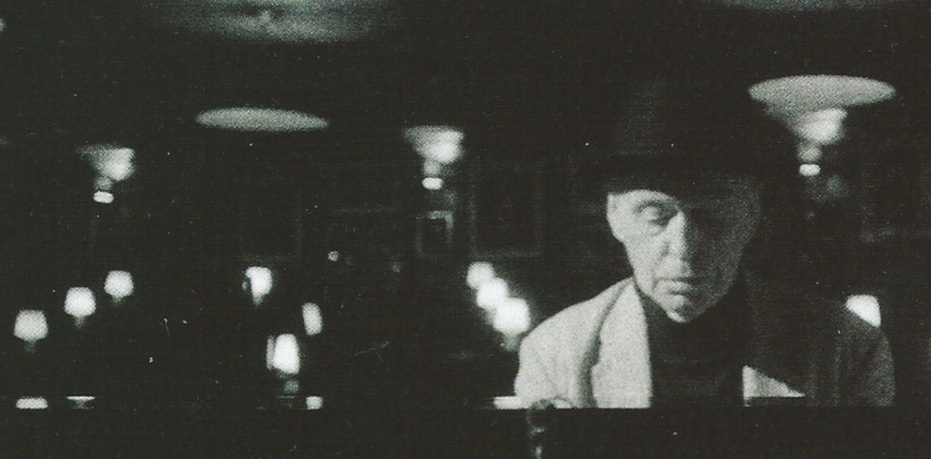 Can it really be true that, as Georgie Fame intimates, we should take the title of his new album seriously? Swan Songs is credited to “Georgie Fame and the Last Blue Flames”. It is, he says, his final recording. “In the twilight of a long career / When dementia’s all I have to fear / If I ever get to lose these blues / I’ve learned to put my life to better use,” he sings, and the compositions with which he fills the album seem designed to provide both a summary and a valediction.
 I heard Sonny Rollins play his sax on the Williamsburg Bridge once and only once live one afternoon so many years ago I can’t recall the walkway’s colour back then. Definitely not the pale red of my tongue when I wag it at myself each morning in the mirror, the walkway’s colour today at the intersection of Delancey and Clinton Streets where I enter it by passing through monumental stone portals, then under a framework of steel girders that span the 118-foot width of the bridge and display steel letters announcing its name. Iron fences painted cotton-candy pink guard the walkway’s flanks, and just beyond their shoulder-high rails much taller barriers of heavier-gauge steel chicken wire bolted to sturdy steel posts guard the fences. Steel crossbeams, spaced four yards or so apart, form a kind of serial roof over the walkway, too high by about a foot for me to jump up and touch, even on my best days playing hoop…


 thebluemoment.com