Remembering Bobby Hutcherson
 Orphy Robinson must have known he’d had a great idea when he put together an octet to celebrate the music of the late Bobby Hutcherson at the church of St James the Great in Hackney on Thursday night. But I don’t think he can have expected the large crowd who turned up to respond in quite the way they did.
Fans of contemporary jazz generally listen to their music with a silent attentiveness, occasionally applauding a solo but mostly reserving their signs of approval until the end of a piece. That wasn’t the case on Thursday. The unusual fervour of the music was matched by the response of the listeners, who shouted approval and encouragement during solos in a manner associated with the tenor battles of the 1940s.
Somehow, on this occasion, the musicians had accessed a different spirit. To me, it was the spirit of gospel music: the wave of emotion that can lift you to another level of feeling, in which inhibitions are broken down. Doubly appropriate, given the venue and the fact that the organisers were the promoters of a series known as Church of Sound.
Putting together the evening’s repertoire, Orphy mixed Hutcherson’s own compositions with those from other writers that the great vibraphonist recorded during his long career. I was only able to stay for the first of the two sets, so I missed the versions of Eric Dolphy’s “Gazzelloni” and “Hat and Beard” from the classic Out to Lunch. But I loved the arrangements devised for Eddie Marshall’s boppish “Knucklebean”, James Leary’s “So Far, So Good” and Hutcherson’s oft-recorded “Little B’s Poem” and the rousing “8/4 Beat”.
The line-up was a dream. Byron Wallen (trumpet), Roland Sutherland (flute), Tony Kofi (alto), Nubya Garcia (tenor), the leader on marimba and electric vibraphone, Robert Mitchell (piano), Dudley Philips (double bass) and Moses Boyd (drums) set up in the middle of the church, facing each other, surrounded by their listeners. As with the monthly Jazz in the Round series at the Cockpit Theatre, it made this seem the best possible physical format for jazz.
Kofi came close to blowing the doors off the place every time he took a solo. Orphy unleashed dazzling cross-hatched patterns of melody that skittered around the vaulted ceiling. Mitchell played one lengthy solo — on “8/4 Beat”, I think — of such ferocious emotional intensity that it threatened to melt his small electronic keyboard. And in an immaculate rhythm section, it was a special treat to hear Boyd playing straight time with such a lovely feel for swing, blending the alert crispness of Tony Williams with the beatific serenity of Billy Higgins.
The sound wasn’t perfect, but it didn’t matter a bit. Sometimes, for whatever reason, music goes beyond all the things that make it up and finds its way into a fourth dimension. This was one of those times.
 Philip Clemo did well to attract Arve Henriksen not only to play on his sixth album but to participate as a member of the octet that launched Dream Maps in Kings Cross last night. The Scottish-born guitarist and composer’s work was greatly enhanced by the contribution of the Norwegian trumpeter and singer, who proved himself an excellent team player as Clemo’s soundscapes unfolded beneath a screen on which film of tundras, mountains and oceans gave an indication of the music’s subtexts.
 So I’m wandering into Mayfair on Monday, on my way to the launch party for this year’s EFG London Jazz Festival, and I have 10 minutes to spare. On Dover Street there’s an antiquarian book shop called Peter Harrington. I’ve never been in there before but there’s some nice stuff in the window so I open the door.
 The Canteen was a jazz club at 4 Great Queen Street, on the eastern fringe of Covent Garden: a narrow single-fronted space on the ground floor, backing on to Parker Street. It functioned for probably not much more than a year in the early 1980s, after which it became Blitz, the headquarters of the New Romantics, then Browns, a sort of celebrity discothèque. Now it’s a “gentlemen’s club” called the Red Rooms. Among the musicians I saw there during its jazz incarnation were Ahmad Jamal, Slim Gaillard, Lee Konitz, Howard McGhee, Bill Perkins and Esther Phillips, who was backed by a tidy little band including Tim Hinkley on keyboards and Mel Collins on tenor saxophone. The club’s energetic publicist was a man called K.C. Sulkin, whose father had been a society bandleader in Boston between the wars.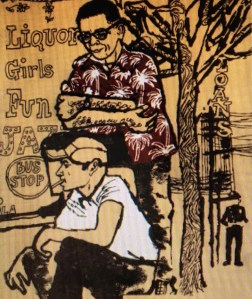
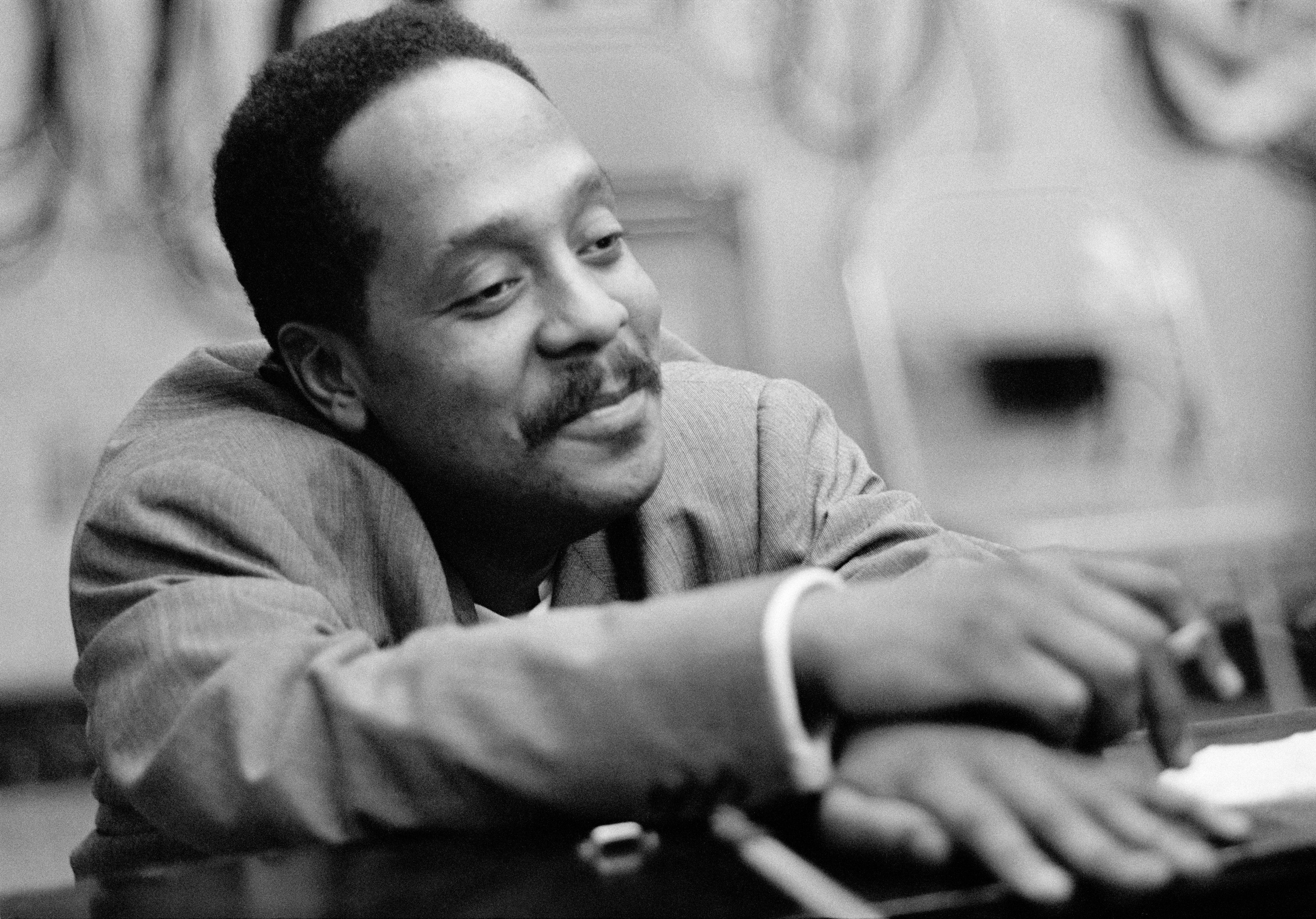 Bud Powell never made being a genius look easy. Fifty years ago tomorrow — on July 31, 1966 — his death at the age of 41 put an end to an existence that seems to have been defined by two factors: first, his extraordinary talent; second, an incident that took place when he was not even 21, and which began the process of stifling his brilliance.
 Harry Beckett was ordering a drink at the bar of the Beachcomber Club in Nottingham one night in 1965, relaxing between sets with Herbie Goins and the Nightimers, when I plucked up the courage to address him. The Nightimers were an excellent jazz-inflected soul band — their personnel also included former Blue Flames Mick Eve on tenor saxophone and Bill Eyden on drums, with Mike Carr on Hammond organ — and I wanted to tell their trumpeter how much I’d enjoyed his solo on their set-opening version of Lee Morgan’s “The Sidewinder”. Showing the good humour and courtesy which would become familiar over the years, Harry was happy to chat to a new fan.
 Alexander Hawkins and Evan Parker were two of the winners at the recent Parliamentary jazz awards: the former for being the instrumentalist of the year, the latter for, well, being Evan Parker. Last week they appeared together at the Vortex. Alex is 35; Evan is 72. What they gave us was a demonstration of the special ability of jazz-based free improvisation to span the generations without forcing the younger man to play the older man’s music, or vice versa. Musica franca = lingua franca, you might say.
 During a public conversation at the ICA a couple of weeks ago, Brian Eno mentioned his interest in churches as potential performance spaces. After all, he pointed out, they were built with the idea of providing an environment for reflection. The truth of his words was evident in London last night, when the Norwegian trumpeter Arve Henriksen presented the music from his 2014 album Places of Worship in the Jerwood Hall at LSO St Luke’s, the deconsecrated and repurposed Anglican church built in Clerkenwell by Nicholas Hawksmoor and John James in 1733.
 Karsten Vogel made his London debut at the Wigmore Hall in 1968, alongside John Tchicai in Cadentia Nova Danica, one of the outstanding European bands of the ’60s jazz avant-garde. A little over a year later he was back as a member of Burnin Red Ivanhoe, the Danish jazz-rock band who played the Lyceum, the Speakeasy, the Marquee and other joints, and recorded their second album for John Peel’s Dandelion label. (Last year I wrote
 thebluemoment.com