Skip to content

Posts from the ‘Jazz’ Category

Ancestral voices

Coin Coin 4


Run, baby, run — run like the wind.

That phrase is a recurring motif of Coin Coin Chapter Four: Memphis, the latest instalment of Matana Roberts’ meditation on personal history and cultural memory. The words are those of “Daddy”, and they appear in various contexts, from schoolyard races to a sighting of men in strange robes and hoods.

The emotional loading of that phrase and the image of a black child running, whether out of pleasure or terror, is at the centre of Roberts’s latest piece of “panoramic sound quilting.” Each chapter so far (she plans an eventual total of 12) has had a different trajectory and texture, and this is no exception.

The narrative core is drawn from the story, told to Roberts by her maternal grandmother, of a Memphis woman named Liddie  — “who for moment of a long lifetime ago, lived in a Tennessee wood, alone, a small person yet ungrown/unknown… her father murdered by weak men in white hoods, her mother dying somewhere unknown… alone…”

Roberts is a beautiful reader and narrator, as anyone who has attended her solo concerts will know. Her strong, alert voice rises naturally out of the music and can render sombre material powerful but never portentous or hectoring. Here she devises settings that fall somewhere between the black country brass and string bands of the early 20th century — braying trombone, rollicking fiddle, wheezing accordion, twanging jaw harp — and the free jazz of the 1960s. There’s an Aylerish exultation to the use of traditional cadences, most obviously in the flights of Roberts’ own alto playing and the scrabbling, plicketing electric guitars of Hannah Marcus and Sam Shalabi. (The bassist Nicolas Caloia and the drummer/vibraphonist Ryan Sawyer are the other members of the core group.)

Snatches of folk songs and gospel hymns slip in and out of this sound-quilt, alongside hints of “St Louis Blues”, “This Little Light of Mine” and “Tennessee Waltz”. They are the ghosts of an unquiet past in a restless, troubled present, brilliantly evoked in the latest episode of this monumental work.

* The photograph is of Matana Roberts’s grandmother and is from the front cover of Coin Coin Chapter Four: Memphis. The album is out now on the Constellation label. I’ve made a couple of factual corrections to this piece in response to Matana Roberts’s comment.

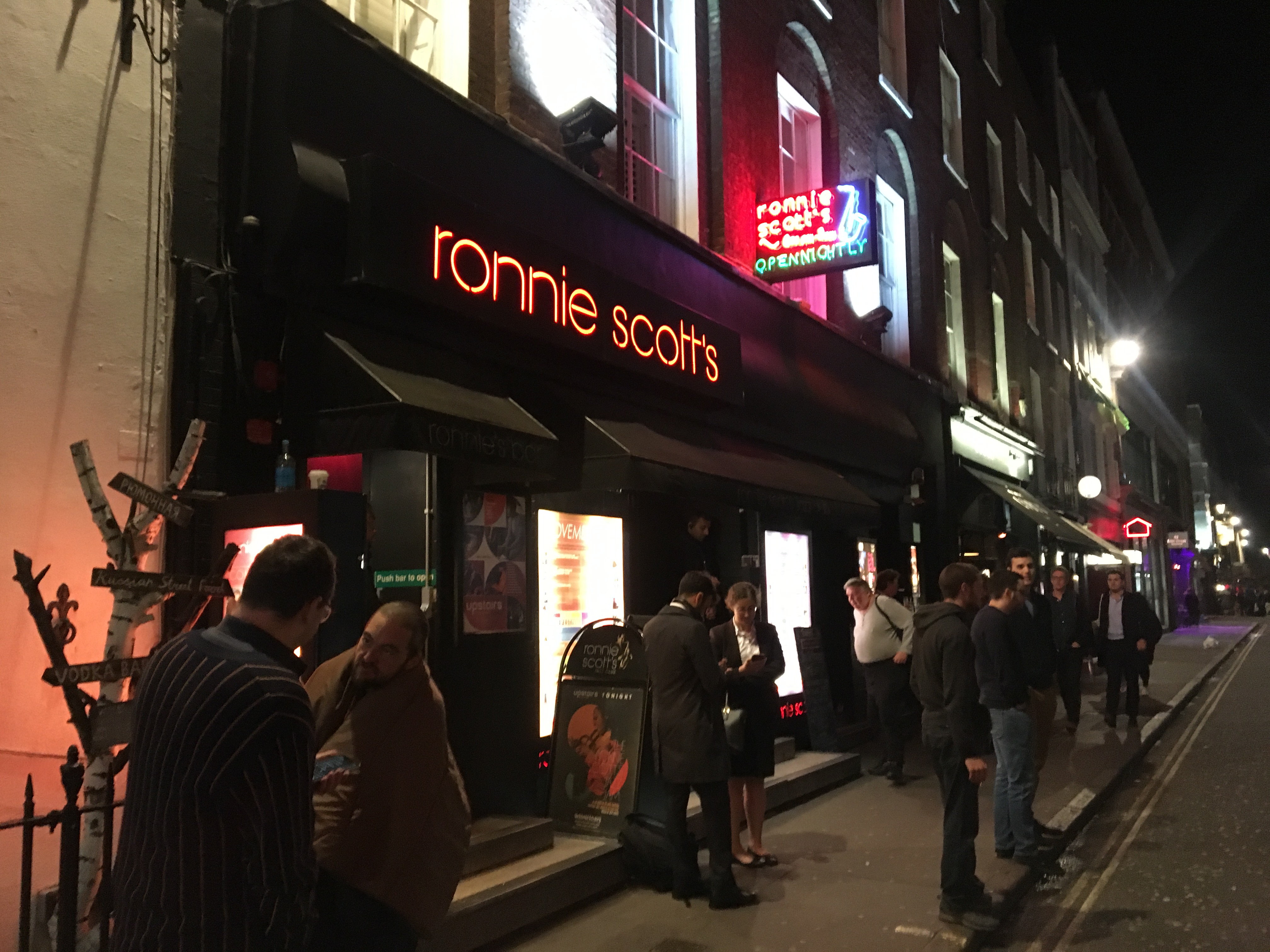
Ronnie Scott’s at 60

Ronnie's

It was in search of some old and occasionally neglected jazz feelings that I went to Ronnie Scott’s this week to hear Joey DeFrancesco’s trio. Temporarily, I’d had enough of watching brilliant young conservatory-trained jazz musicians squinting at sheet music. And enough of entire evenings of jazz without a single bar in a swinging 4/4. A temporary condition, as I say. But it demanded a fix of something different.

I was also thinking about the club’s 60th anniversary, which falls on October 30. I never went inside the original Gerrard Street basement premises, although as a teenager on a trip to London I was able to stand on the street one night, by the top of the stairs, and listen to the sound of Sonny Rollins whenever the door opened. From 1969 on, however, I was a regular visitor to 47 Frith Street, usually on Monday nights, when a new band would begin its season of two, three or sometimes four weeks and I’d be along to review it for the Melody Maker or The Times.

The first of countless memorable nights there was to hear the star-studded Thad Jones-Mel Lewis Big Band. Another early one, in July 1971, was the opening of a fortnight by Herbie Hancock’s Mwandishi sextet: a night no one present is likely to have forgotten. First for the exalted music produced by a group rounded out by Eddie Henderson (trumpet and flugel), Julian Priester (trombone), Benny Maupin (tenor), Buster Williams (bass) and Billy Hart (drums), second for the Swahili names Hancock had persuaded them to adopt, and third for the fact that they were the first jazz group to travel with their own sound system and mixing engineer. The sound at Ronnie’s was always decent, but this, in terms of subtle gradations of individual and collective timbre, was on another level.

So there was a nice historical echo in seeing the great Billy Hart at the drums with DeFrancesco this week, doing exactly what I hoped and knew he’d do, which was to swing like mad. It made me think of all the great drummers I’d seen on that stage, from Kenny Clarke through Art Blakey and Elvin Jones to Billy Higgins, while standing beside the bar that used to run alongside the left-hand wall of the club.

That bar isn’t there any more. Neither are Ronnie or Pete King or the other members of staff, front of house and backroom, who were fixtures in those days. The club went through a bad time when Pete sold it to Sally Greene and her partners after Ronnie died, but the new owners saw it through some difficult years and kept the faith. The booking policy gradually recovered its integrity and the audiences came back. Now it’s full just about every night with listeners who — unlike many of the expense-account businessmen of the ’70s — respect the music, respond with enthusiasm and don’t chatter during the quiet bits.

Inevitably, it’s more expensive than it used to be. But have you tried running a jazz club in Soho, where cherished institutions disappear every week, thanks to the greed and ignorance of landlords and developers? The fact that it’s not just surviving but flourishing is remarkable, as is the willingness of the management to supplement the main programme with jam sessions and showcases for younger musicians — something that Ronnie and Pete always tried to do. I’m not sure I’ll ever quite get used to having to sit down in a place where I spent several decades leaning against the bar, but it’s no great hardship.

The pianist Robert Glasper was making a serious point a couple of years ago when he said that by filling the walls of a jazz club with framed photos of dead musicians, you kill the music’s spirit. You can see why a young musician would come to that conclusion. But when I walk in from Frith Street nowadays, I can still feel the spirits of Ronnie and Pete and the disturbingly glamorous Roxy Beaujolais on the front desk and dapper Jimmy Parsons the greeter and Martin the maitre d’ and Fat Henry Cohen in the cloakroom and Gypsy Larry, whose role was a mystery, as well as those of the musicians in the pictures, all of whom went to make it what it was — and, quite miraculously, still is.

Bill Frisell at Cadogan Hall

BillSolo_Adjusted

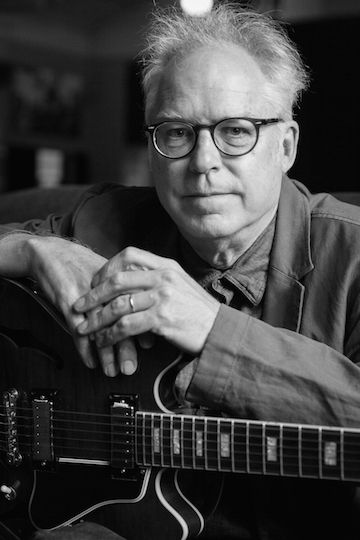
“If somebody makes a so-called mistake,” Bill Frisell says near the end of the promotional film for his new album, “that can be the most beautiful thing that happens all night, if everybody’s open to what that sound is and embraces it and makes it sound good. If everyone’s watching out for each other and everyone feels like they can take a risk, it gives the music a chance to keep going and evolving.”

Last night at Cadogan Hall it was his turn to flub an ending, the mistake quickly finessed by his three colleagues — the singer Petra Haden, the cellist Hank Roberts and the bass guitarist Luke Bergman — with grace and smiles. And right there was the humanity of any music in which Frisell has a hand.

His mission to demonstrate and explore the consanguinity of all forms of American vernacular music — from Charles Ives to Thelonious Monk, from Hank Williams to Henry Mancini, from Muddy Waters to the Beach Boys — was accomplished many years ago, but with Harmony, the title of his first album on the Blue Note label, it seems to have reached another peak. The empathy, flexibility and modesty of this quartet make it an ideal vehicle for another exercise in creative juxtaposition.

The concert began quietly, with Haden’s beautifully plain voice enunciating the wandering, wordless, childlike line of Frisell’s “Everywhere”. The first high point came with Stephen Foster’s “Hard Times”, on which Roberts and Bergman joined Haden in the sort of three-part Appalachian harmonies guaranteed to strike instantly at a special place in the emotions. There was a wholehearted ovation for that. “Lush Life”, fiendishly difficult to sing, was another highlight; also included in last year’s solo concert at the same venue and on Epistrophy, his recent live duo album with the bassist Thomas Morgan, Billy Strayhorn’s great ballad is clearly a preoccupation, and its intense chromaticism brought out the Jim Hall influence in Frisell’s work on his double-cutaway semi-acoustic instrument.

There was an interesting recasting of “On the Street Where You Live” (from My Fair Lady) and a lovely harmonised version of the traditional “Red River Valley”, interspersed with little instrumental pieces making sparing use of the guitarist’s loops and effects. The set ended with a segue from Pete Seeger’s “Where Have All the Flowers Gone” into David Bowie’s “Space Oddity”, rendered in full and apparently without ironic intent. For an encore, demanded with fervent enthusiasm, they returned to stand at the microphones and deliver “We Shall Overcome”, inviting us to join in; well, at least now they know what English hymn-singing sounds like.

It was a mystery that, for the latest project from this great musician, a hall which was packed for his solo appearance a year ago should be so thinly populated last night. Perhaps the concert was badly advertised. The album is not yet out, which probably didn’t help. But anyone who wasn’t there missed a quietly remarkable night.

* Harmony is out on November 1. Epistrophy was released by ECM earlier this year. The photograph of Bill Frisell is by Monica Frisell.

Another me, another way

Another me 3

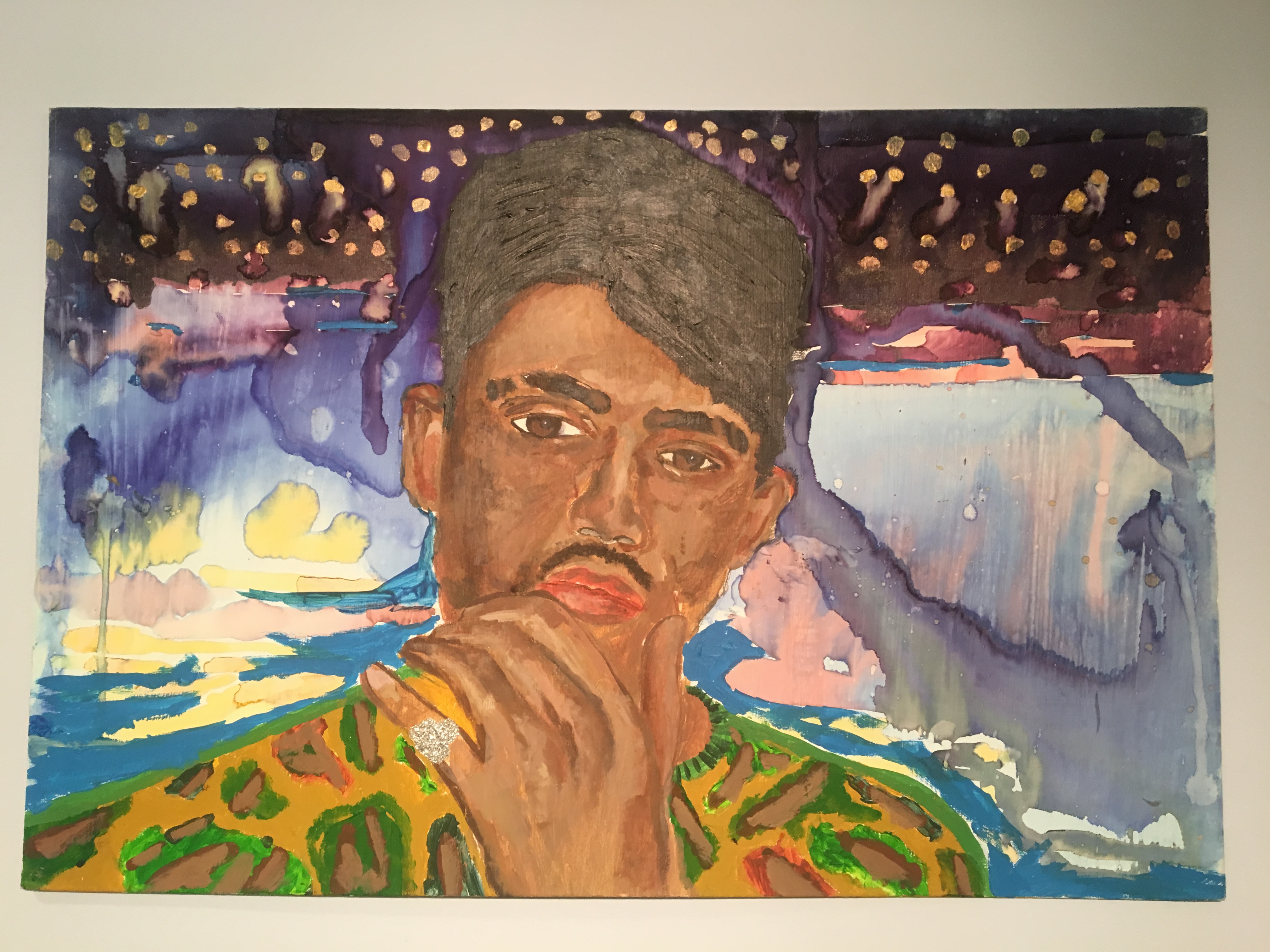
The self-portrait above was painted by an inmate of Vinney Green Secure Unit, a young offenders’ facility in Bristol. It’s part of “Another Me”, an exhibition of artworks by people incarcerated within the criminal justice system, currently on show in the Spirit Level rooms at the South Bank centre, below the Festival Hall. It caught my attention when I noticed that it had been curated for the Koestler Arts foundation by Soweto Kinch, the brilliant composer, saxophonist and bandleader. Anything Kinch is involved in tends to be worth your time, and “Another Me” is no exception.

At Koestler Arts’ building in Wormwood Scrubs, he went through 7,610 entries submitted in 52 categories from UK prisons and British prisoners abroad. His selection spans a range of media, from conventional painting and photography to wall-poetry, music of various genres (which you can hear through headphones), all ranging from the sombre to the defiantly whimsical. There’s a particularly extraordinary piece made from used nitrous oxide canisters found in various London locations — outside a school, an off-licence, a night club, a hospital — and labelled and framed in the style of Victorian museum objects under the title “Nitrouonites: Future Fossils”. As you walk around, you’ll hear the sound of drifting saxophones and electronics: a non-invasive but gently atmospheric sound installation specially devised by the curator.

Many of the works display great technical skill, but I was struck by the one at the top of this piece, a particularly eloquent and moving articulation of the exhibition’s theme. As another of the artists writes in a commentary on his own self-portrait, the title of show “suggest(s) so many possibilities, reflecting on past actions or future selves. It speaks of the masks we all use in our day-to-day lives. Our best selves, our worst. Perhaps most powerfully it suggests change is possible — there can always be another me, another way.”

* Another Me is at the Spirit Level exhibition space of the Royal Festival Hall until November 3. Soweto Kinch performs his new work The Black Peril at Hackney EartH on November 22 with an ensemble including the drummer Makaya McCraven, the bassist Junius Paul and members of the LSO, as part of the EFG London Jazz Festival.

Punkt.Vrt.Plastik (What?)

Punkt.Vrt.Plastik Vortex

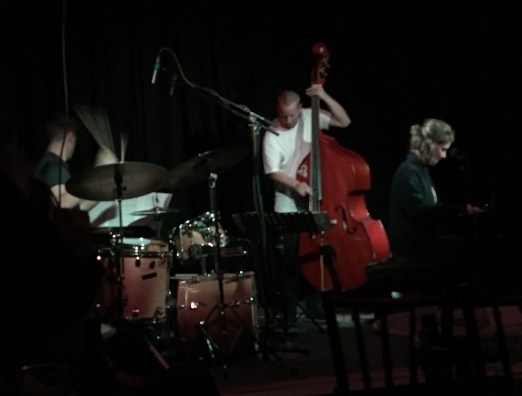
When I first encountered Punkt.Vrt.Plastik two years ago in Berlin, I thought they were making the most intellectually challenging piano-trio music I’d ever heard. Their late-night concert, in a darkened auditorium, was an intense experience, highly rewarding but perhaps more impressive than enjoyable. At the Vortex last night, without changing any of the components of their music, they managed to reverse that response.

They are the Slovenian pianist Kaja Draksler, the Swedish bassist Petter Eldh and the German drummer Christian Lillinger, three of the most compelling young musicians in Europe. It was Eldh who explained their name to me: “Punkt means ‘dot’ in Swedish. Vrt means ‘garden’ in Slovenian. Christian represents the Plastik.” All clear?

There are no standard tunes, no Radiohead covers. Their original compositions, contributed by all three members, can sometimes proceed from the deliberate simplicity of a repeated single note, but they tend to emphasise the dense and knotty, which made the pronounced variations of density heard in last night’s performance all the more effective. It’s often hard to tell what is is written and what is being improvised; the occasional loose end left by these three virtuosi is a sign that spontaneous creativity is being exercised within the essential framework.

Draksler plays without affectation or stylistic gesture. The purity of what she does is one point of the triangle: the others are Eldh’s power and flexibility and Lillinger’s sense of space and timbre. At the end of their second set they returned for an encore: a version of Eldh’s “Life Is Transient” which glowed like a vision of rapture. It’s the closing track of their fine album, but last night’s reading showed how far they’ve since come in infusing a sometimes daunting complexity with human warmth. The prolonged ovation suggested that no one present will forget it quickly.

* The album Punkt.Vrt.Plastik is on the Intakt label.

Steve Howe’s ‘New Frontier’

A-2136670-1486326162-2636.jpeg

I hadn’t heard any of the Steve Howe Trio’s previous albums, so New Frontier, their third release, came as a pleasant surprise. I knew of Steve as the guitarist who took over from Peter Banks in Yes — a band in which my interest diminished as their songs got longer — in 1970, and I knew the trio’s drummer, Dylan Howe, who is Steve’s son and whose album of instrumental versions of David Bowie’s Berlin compositions, Subterranean, I liked a lot on its release five years ago.

The trio is completed by Ross Stanley, a fine keyboards player who is heard here on organ. Guitar-organ-drums trios were a thing in the ’60s: Jimmy Smith, Baby Face Willette, John Patton, Richard “Groove” Holmes and Larry Young were among the organists who made that line-up a favourite format. The guitarist on such albums was often Grant Green, and it’s interesting to discover that a prog-rock guitarist can absorb Green’s spare, bluesy style into his own approach, as he does here on several tracks. There are hints of Wes Montgomery, too, in the occasional burst of octave picking (and Montgomery led a fine organ trio of his own on a couple of Riverside albums).

The result isn’t as heavy and bluesy as some of that music. Stanley doesn’t go for the full Leslie-speaker throb and stays away from the bass pedals, so there’s an airness about the sound, while Dylan Howe has a light, deft touch. Steve Howe varies his tone and effects pleasantly without overdoing it, and uses an acoustic guitar on a couple of tracks. All three contribute compositions, as does Bill Bruford, another former Yes man and Dylan Howe’s one-time drum tutor. Sometimes it’s a little bit like early-’70s Santana without the percussion, or Danny Gatton without the absolute authority. But it’s an extremely nice album, and occasionally — as on the lyrical “Western Sun”, co-written by both Howes — rather more than that.

* The Steve Howe Trio’s New Frontier is out now on the Esoteric Antenna label.

Cassie Kinoshi at the Roundhouse

Cassie Kinoshi 1

Since the SEED Ensemble’s Mercury Prize-nominated Driftglass is likely to be one of my albums of the year, I was keen to see Cassie Kinoshi, the group’s leader and composer, at the Roundhouse last night. This was a different kind of gig, arranged by Skin Deep, the race and culture magazine, in their Sonic Transmissions series. On these evenings, an individual musician is put under the spotlight in the venue’s small theatre: they perform live, they play selected recordings, and they are interviewed by Anu Henriques, the magazine’s founder. Shabaka Hutchings, Nubya Garcia and Moses Boyd have been previous subjects of a series clearly angled towards the new London-based jazz movement in which contemporary forms of racial and cultural diversity are brought to bear on the traditions.

Thoughtful, engaging and not afraid to express an opinion, Kinoshi was keen to acknowledge the vital role played by Gary Crosby’s Tomorrow’s Warriors in her career and those of her predecessors on the Sonic Transmissions stage. The TW workshops had not just been an education in jazz, she said, but an introduction to the idea of the music as the product of a community. The bands in which she currently plays — SEED Ensemble, the co-operative Nérija and Sheila Maurice-Grey’s Kokoroko — all provide evidence of that philosophy, which she summed up as “a sharing of minds”.

Born in 1993 to parents of Nigerian, Sierra Leonean and Caribbean origin, brought up in the less than funky surroundings of Welwyn Garden City and subsequently a graduate of the Trinity Laban Conservatoire, she is already strongly aware of the value of “representation”: the need to present herself as an example to young black females of achievement in a field that might once have seemed beyond their reach. She herself, she said, had had no such benefit early on.

She also spoke of how, when confronted by a predominantly white audience, she found herself compelled to emphasise the blackness of her music: an example of how she doesn’t want to make her listeners feel too comfortable. Her compositions might be inspired by literature and places, but also by the Grenfell Tower tragedy (Driftglass‘s “Wake”), the uncovering of the Windrush scandal, the divisions revealed by Brexit, and the need for young black women to resist the imposition of white standards of beauty.

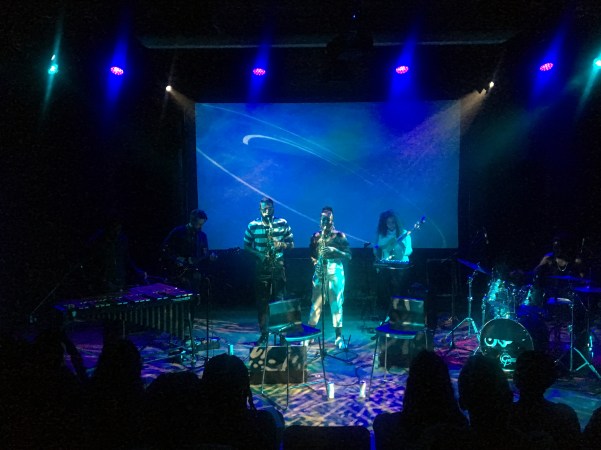
For the live pieces she brought along a new sextet featuring two alto saxophones (herself and Tyrone Isaac-Stuart), vibes (David Mrakpor), guitar (Richie Aikman), bass guitar and synth bass (Isobella Burnham) and drums (Ayo Salawu). The music was loud and aggressive, inspired in part by Kinoshi’s fondness during her schooldays for metal and indie rock (she mentioned Pantera and Nirvana), but it also provided a platform for thoughtful solos by the expressive Aikman and Mrakpor, whose poise reminded me of Bobby Hutcherson. The two-alto front line is rare — I thought of Eric Dolphy with Ken McIntyre or Oliver Nelson — and the sweet-and-sour blend reflected Kinoshi’s admiration of Jackie McLean, Steve Lehman and Rudresh Mahanthapa.

She also played us a recording of a startling orchestral piece titled “If She Could Dance Naked under Palm Trees”, indicating the breadth of her resources and ambition. In the live set, however, the music — like so much of the new jazz emerging from south and east London — was rhythm-heavy, meant to make you move. Whatever others might think, this reunion of jazz and the body is a very good thing.

* Cassie Kinoshi’s SEED Ensemble will be at the Jazz Café on November 24 as part of the EFG London Jazz Festival. Driftglass is on the jazzre:freshed label. Nérija’s new album, Blume, is just out on the Domino label.

Punkt 2019

Punkt poster

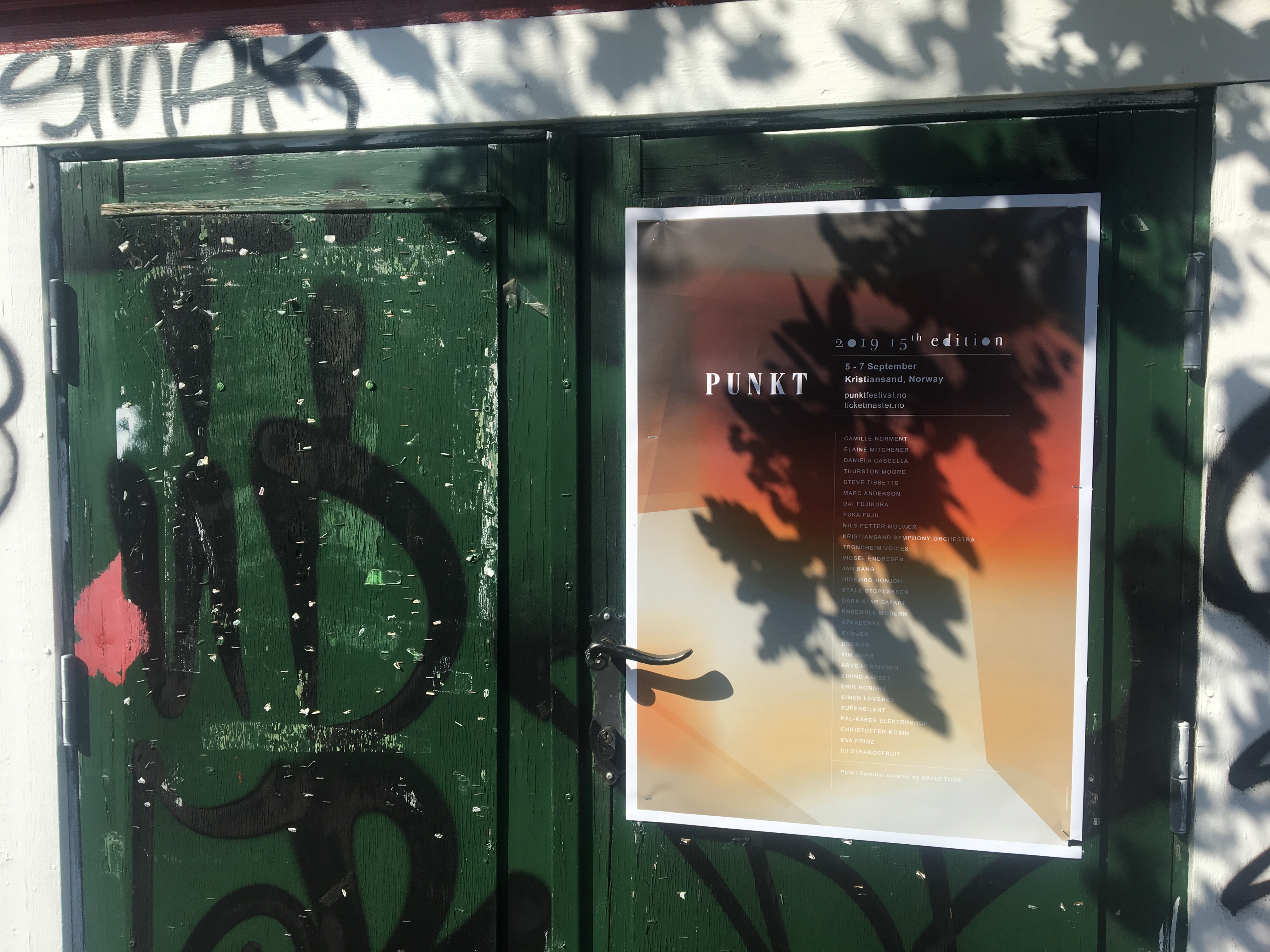
Kristiansand’s Punkt festival was the brainchild of Jan Bang and Erik Honoré, who had the idea of setting up an annual event featuring instant remixes of every performance. The first edition was held in 2005, and last weekend they celebrated their 15th anniversary with three days of music in the festival’s home, a port on the southern coast of Norway, where the faculty of the university includes Bang as professor of electronic music, with Honoré in a less formal role.

This year Punkt’s group of designated remixers also included the trumpeters Arve Henriksen and Nils Petter Molvær, the guitarist Eivind Aarset, the keyboardist Ståle Storløkken, the producer Helge Sten and the duo of the drummer Pål Hausken and the keyboardist Kåre Christoffer Vestrheim, who called themselves Elektroshop. At each concert one or two of them could be seen onstage seated at their laptops behind or alongside the performers, who included Trondheim Voices in the Domkirken, the city’s cathedral; Thurston Moore’s four-piece band in a club called Kick Scene; and Kim Myhr’s septet and Rymden, the new trio featuring Bugge Wesseltoft, Dan Berglund and Magnus Öström, in the Kilden concert hall on the waterfront.

Immediately after each set the designated remixers would play a set of their own, based on the material they had just recorded. Sometimes they added live instruments: Henriksen’s trumpet and voice, Molvær’s trumpet, Aarset’s guitar, Hausken’s tom-toms and, on one occasion, the voice of Sidsel Endresen. If it wasn’t often easy to detect the salient characteristics of the original material in the remixes, that didn’t seem to matter much.

My favourite example came when Henriksen, Sten and Storløkken — who comprise the long established trio Supersilent — took the thunderous, heavily strummed, highly structured, ecstatic instrumental music created by Moore’s group — with the leader and James Sedwards on electric 12-strings, Deb Googe on six-string bass guitar and Jeb Doulton on drums — and reshaped it into blocks of even more thunderous but harshly fractured noise. During both sets, it was fun to stand behind the conventional mixing desk and watch the decibel meters climbing: peaking above 120dB and inching past an average of 100+. Those who chose to wear earplugs, I felt, lost out on something worthwhile.
Punkt Kim 1

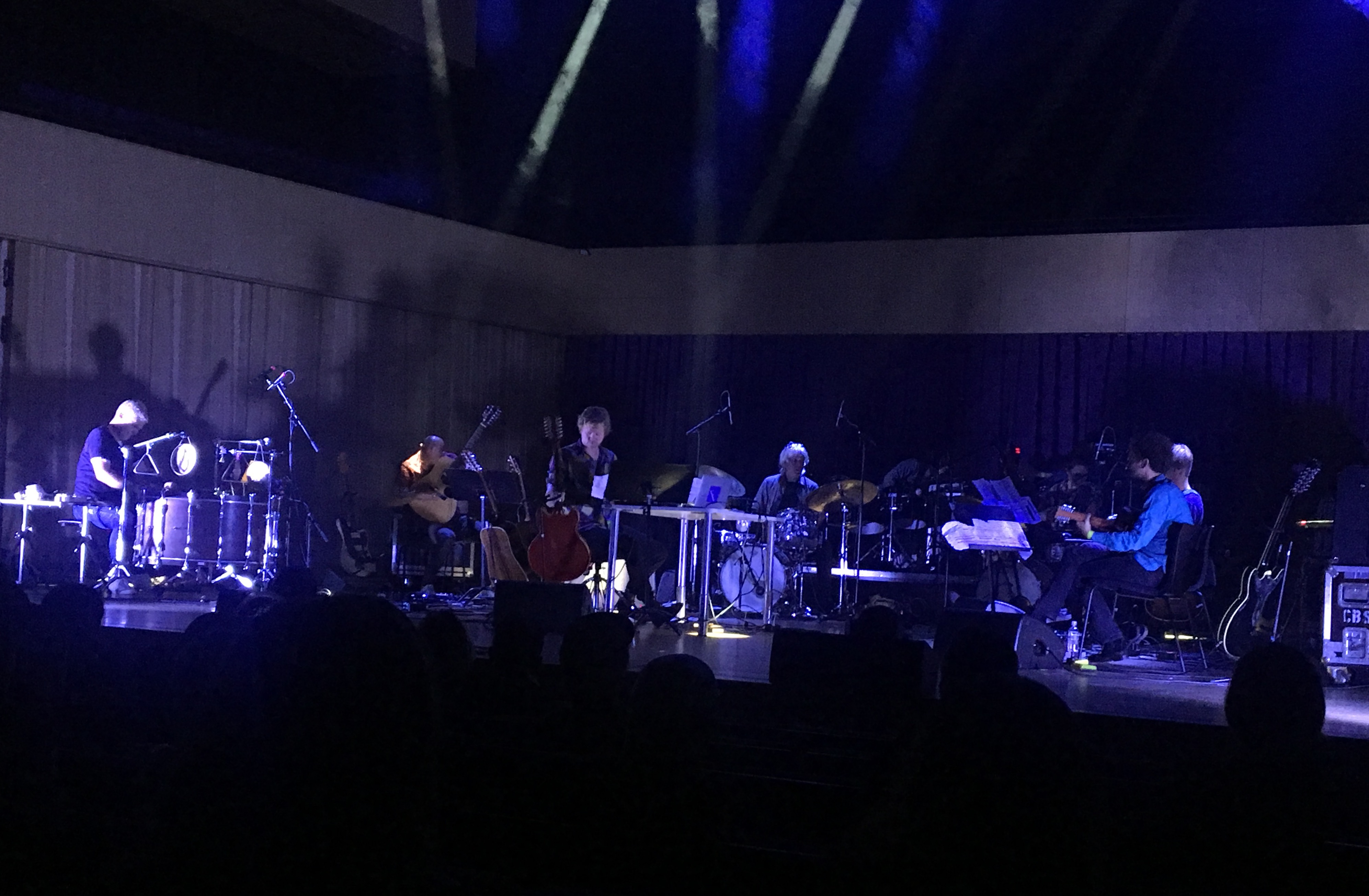
Twenty four hours later, Kim Myhr’s band (above) offered a very different kind of strummed ecstasy while reinterpreting the two long compositions from his 2018 album YOU | ME. Whereas Moore built his chordal symphony on a highly disciplined rock-based, backbeat-driven vision, its transitions strictly defined, Myhr summoned the looser weave of folk music. Just as propulsive but lighter in tone and more subtly textured, the music had a life generated less by the structure of the composition than by the sensation of the individual instruments — the electric and acoustic six- and 12-string guitars of Myhr, David Stackenäs, Daniel Meyer Grønvold and Adrian Myhr, and the drums and percussion of Tony Buck, Ingar Zach and Michaela Antalová — rubbing up against each other. As far as I was concerned the stretchy 9/4 chordal riff of the second half could have gone on all night, its jangling strings and tinkling bells creating a narcotic momentum and going far beyond the recorded version.

For me, the other big highlights of the weekend were provided by Dark Star Safari, a Nordic-noir prog-rock quartet,  in the Sorlandet art museum and by Trondheim Voices in the cathedral. The concert debut of the former, consisting of Bang (transformed into a lead singer), Aarset, Honoré and the brilliant Swiss drummer Samuel Rohrer, was striking enough to send me back to re-investigate their album, released earlier this year.

New ideas on the capacity of the human voice were provided by the nine women of Trondheim Voices, singing “Folklore”, an hour-long composition by Sten and Storløkken (who had prefaced the performance with an extended solo on the pipe organ). Microtonal clusters slid and swerved to thrilling effect and Natali Abrahamson Garner, the latest recruit to this extraordinary group, emerged from the ensemble with a solo passage making staggering use of glottal manipulation. For 40 minutes or so they achieved a transcendent beauty until one of the nine, feeling ill, had to remove herself, requiring the others to react quickly. There were no audible glitches, and they were back at full strength for the closing sequence, but the on-the-fly adustments inevitably disrupted the narrative tension. The release of “Folklore” on the Hubro label later this year will offer a better chance to assess what is obviously a remarkable piece.

Not everything in the weekend worked perfectly. Dai Fujikura’s Symphony for Shamisen and Orchestra, performed by Hidejiro Honjoh and the Kristiansand SO, suffered from an inherent dynamic imbalance between solo instrument and orchestra, I wasn’t moved by the duo of the guitarist Steve Tibbetts and the percussionist Mark Anderson, Rymden had little new to offer, and a set by the Ensemble Modern demonstrated that while classical musicians are better at improvising than they used to be, the demands of free improvisation are better left to specialists. But Punkt is an opportunity to examine various directions in which music is heading and to enjoy the results in sympathetic surroundings. Its ambitions — summed up in Bang’s motto: “If you have some information that is useful, spread it” — have led to projects in more than two dozen other cities around the world, including Shanghai and Montreal, and there will be a three-day Birmingham Punkt Festival, featuring Norwegian and British musicians, next March.

Bang and Honoré, who are both in their early fifties, have worked together since they were teenagers, nurtured by a music-education system that prioritises open-mindedness and in turn passing on the results of their own experiences to an emerging new generation. They can also be very funny. As Bang spoke of their collaboration, he mentioned that in all the years of programming Punkt they have never had an argument. “I’ve been arguing all the time,” Honoré responded. “You just didn’t notice.”

Ornithology, Murakami-style

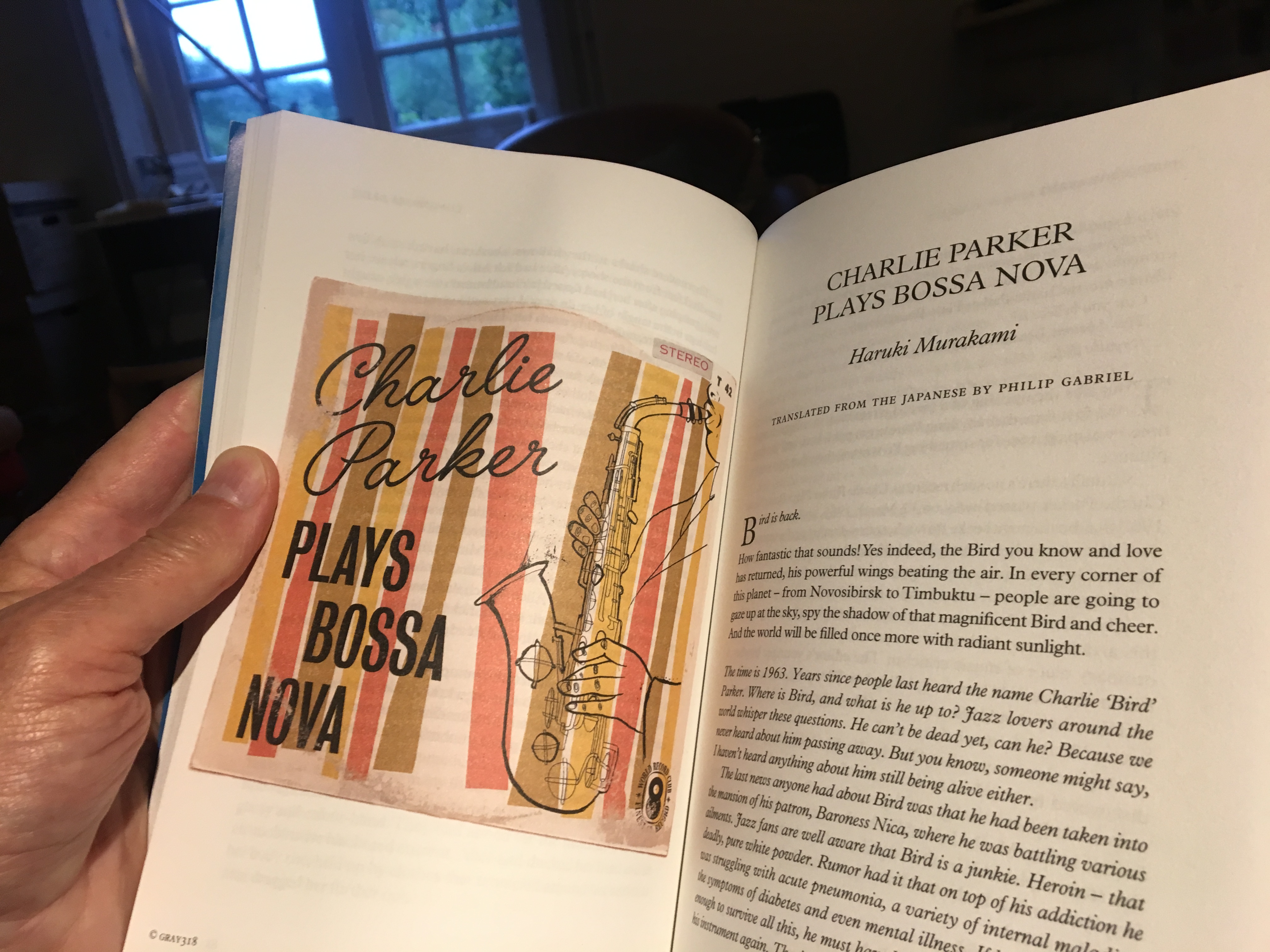
Bird Bossa

Supernatural visitations are a regular feature of the novels and short stories of Haruki Murakami, many of which also benefit from a well chosen musical soundtrack. He combines the two in an unusually intimate way in a new short story titled “Charlie Parker Plays Bossa Nova”, published in the latest edition of Granta, the literary quarterly.

It begins with a student exercise in which the tale’s protagonist writes a review of an imaginary album, recorded in 1963, in which Charlie Parker — who has not, after all, died in 1955 — is accompanied by the piano of Antonio Carlos Jobim, the bass of Jimmy Garrison and the drums of Roy Haynes. The repertoire consists of well known Jobim tunes, including “Insensatez” and “Chega de Saudade”, and bossafied versions of a couple of Bird’s own classics, for which Hank Jones replaces the Brazilian at the keyboard.

The essay has been long forgotten when, after many years, its writer wanders into a small New York record store and, while browsing the racks, comes across what appears to be a bootleg version of the very album created by his own imagination. Later, while pondering on this mystery, he receives a visit from Parker himself.

Not wanting to spoil the reader’s pleasure, I’ll add only that it’s a delightful invention which reaffirms Murakami’s deep love of music — as lightly worn as ever, even when it provides the essence of the story. And the accompanying illustration, by Jon Gray, is perfect.

* Granta 148, a summer fiction special, is out now.

More music for a new society

Punkt.Vrt.Plastik - Jazzfest Berlin 2017 - 4 Nov -® Camille Blake - Berliner Festspiele-2

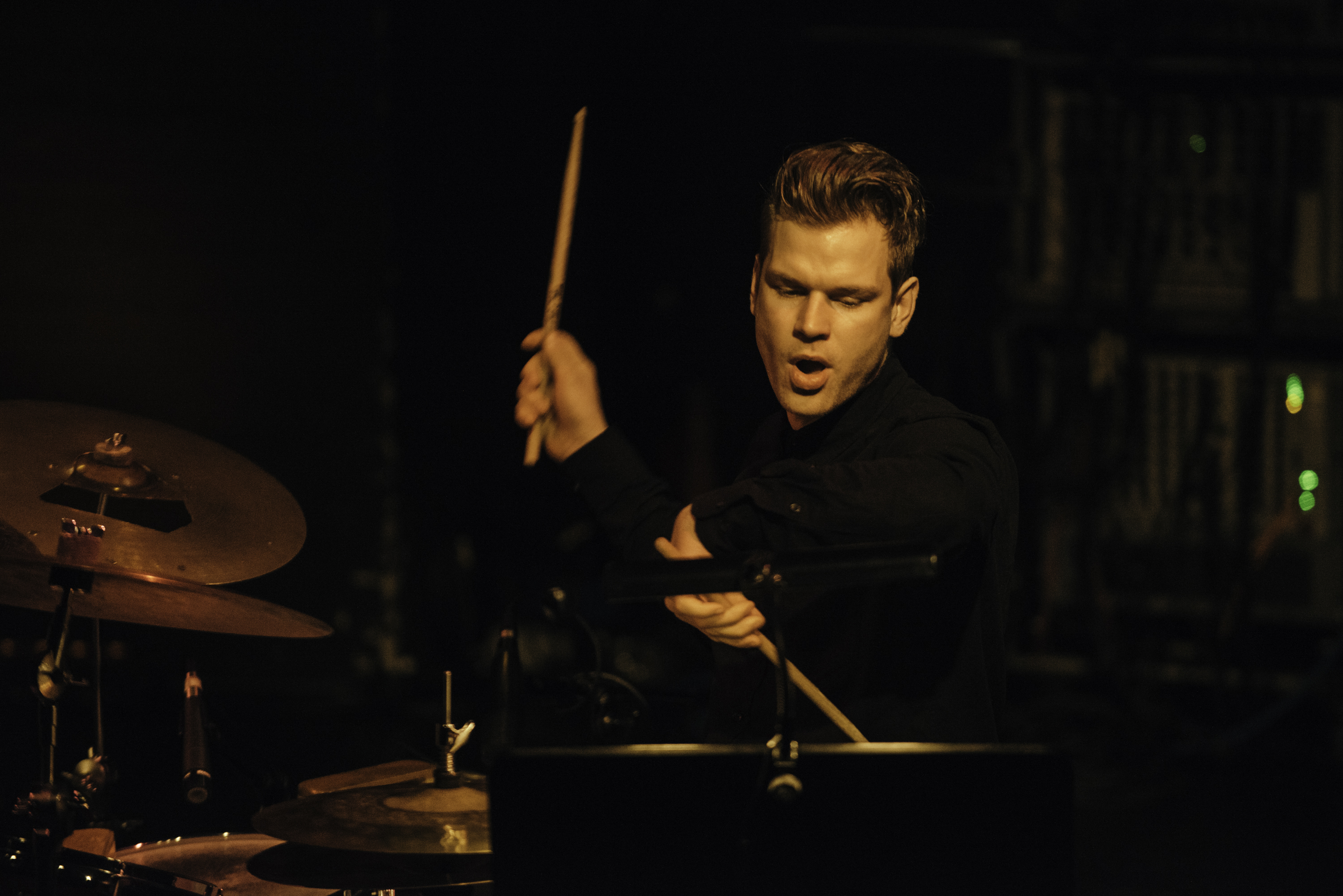
The first time I saw Christian Lillinger, with a trio called Hyperactive Kid at Berlin’s X Jazz festival a few years ago, I found it impossible to take him seriously. It was as if some New Romantic poseur had decided to become a free-jazz drummer for the night. The hair, the gestures: they got in the way of listening. Then I saw him a few more times, and it became impossible not to take him very seriously indeed. Not to think of him, in fact, as one of the most interesting musicians working in Europe today.

He has a septet called Grund: two saxophones (Toby Delius and Wanja Slavin or Pierre Borel), vibes (Christopher Dell), piano (Achim Kaufmann) and two basses (Jonas Westergaard and Robert Landfermann). If you don’t know the names of his sidemen, you should; they’re all exceptional improvisers. What makes the music so distinctive, however, is Lillinger’s composing. Imagine something Andrew Hill might be doing today and you might get an idea: knotty but satisfying themes, surprising structures, brilliant interplay.  When I saw them at the Jazz Kollektiv festival in Berlin a year after the Hyperactive Kid gig, it was one of those sets I never wanted to stop. (Another comparison might be with those intense but brilliantly organised quintet and septet sides Cecil Taylor recorded for Impulse in 1961: “Pots”, “Bulbs” and “Mixed”.)

Then, another year later, I saw Lillinger in two more groups: the quartet Amok Amor (with Slavin, the trumpeter Peter Evans and the bassist Petter Eldh) at the Vortex in London and a trio called Punkt.Vrt.Plastik, with Eldh and the pianist Kaja Draksler, at Jazzfest Berlin. In both cases the music was of phenomenally high quality and gave me the chance to appreciate the breathtaking detail of Lillinger’s playing. He is indeed hyperactive, flying around a kit that includes many auxiliary percussive devices with extraordinary deftness and precision, seldom settling on a pattern for more than a few seconds. But once your ears are attuned, they can discern the incredible responsiveness and egoless interaction he brings to the music.

His new album, Open Forms for Society, is something different: a series of 13 densely woven compositions and five improvisations for a group featuring Dell, Draksler, Landfermann and Eldh, plus Lucy Railton on cello, Antonis Anissegos on piano, Elias Stemeseder on piano and synthesiser, and Roland Neffe on tuned percussion. Again, these are all remarkable musicians, perfect for Lillinger’s seamless blend of composition and improvisation, so beautifully integrated — in a form of musical quilting — that you can’t tell where one bleeds into the other.

There are beautiful textures and unexpected juxtapositions of timbre, fragments of melody left hanging in space, sudden bursts of shuffling momentum, abrupt silences, a sense of alertness and inquiry in every ting, squiggle, sigh and shuffle. It’s not easy music, but neither it is at all forbidding: pieces like “Titan” and “Lakat” are disciplined essays in dramatic tension, creating grooves for a world that hasn’t yet quite come into existence.

* Grund’s albums are on the Pirouet, Clean Feed and Plaist labels. Albums by Amok Amor and Punkt.Vrt.Plastik are on the Intakt label. Open Form for Society is on Plaist. The photograph of Christian Lillinger was taken in Berlin in 2017 by Camille Blake; more of her work can be found at http://www.camille-blake.com.