Finding Lulu
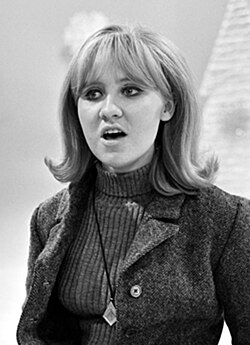
Lulu was on a breakfast TV show the other day, talking about overcoming a drink problem that had its roots in her family background. She was engaging enough to make me want to read her newly published autobiography, If Only You Knew. Compiled with the help of a ghostwriter, Megan Lloyd Davies, it’s quite a surprise. Its 76 short chapters, plus prologue and epilogue, are not just extremely readable but full of interesting observations from a long career.
I was never a fan of her singing, but I’m a considerable fan of two of her songwriting efforts. They come from the opposite ends of the emotional spectrum. The first is “I Don’t Wanna Fight”, a hit for Tina Turner in 1993, a great pre-breakup song full of complex grown-up feelings — resignation, defiance — to which Tina could bring a sense of her own history. The second is “My Angel Is Here”, a track from Wynonna Judd’s 1996 album Revelations, a luminous love song of perfect simplicity.
Lulu didn’t write those songs alone. Her brother Billy Lawrie worked with her on both, with contributions from Steve DuBerry in the first case and Mark Stephen Cawley in the second. My guess is that, since she doesn’t play an instrument, her main contribution was to the lyrics. Anyway, they’re two of the best tracks of the ’90s, if you ask me.
What’s good about her book? Its candid descriptions of her Glasgow childhood, for a start, as Marie Lawrie, the oldest of four children of an alcoholic father; of her audition at Decca in 1963, when the power of her voice blew a microphone; of the resulting decision to move down to London, aged 14, with her band; of her experiences in the ’60s scene, when there the absence of a real division between “rock” and “pop” meant that Jimi Hendrix was a very memorable guest on her Saturday-night BBC TV show; of her short-lived involvement, musical and personal, with David Bowie in 1973. And of her inability to say no to the schemes dreamed up by her devoted manager, Marian Massey, who steered her resolutely towards light entertainment and mostly away from the stuff she wanted to sing, resulting in pantomime seasons and the Eurovision-winning “Boom Bang-a-Bang”, which she clearly detested.
For me, the most interesting section deals with her experiences with Atlantic Records, to whom she was signed by Jerry Wexler in 1970 and with whom she recorded two albums, New Routes and Melody Fair, at Muscle Shoals and Miami’s Criteria Studios respectively. She leaves no doubt about how much this meant to her, in terms of moving closer to the music she loved. Wexler choosing the songs, Arif Mardin doing the arrangements, Tom Dowd at the mixing desk, the Swampers and the Dixie Flyers laying down the tracks: it seemed like the answer to her prayers, a guaranteed escape from the middle of the road.
But it didn’t work out, and I was curious enough to listen to tracks from both albums to try and understand why. The song choices aren’t great, which is weird when you consider that Wexler would have had access to material from the finest country-soul writers of the time, people like Dan Penn and Spooner Oldham. But it’s a mish-mash. The real problem, however, is that although Lulu had her first hit with a raucous cover of the Isley Brothers’ “Shout”, she isn’t a soul singer. She’s a pop singer. For all her ability to add a rasp to her voice, she skates across the surface of the songs. It’s not hard to imagine Wexler concluded quite early on that he’d made a mistake. She wasn’t an Evie Sands or a Merrilee Rush, and this wasn’t going to be a repeat of Dusty in Memphis.
The book’s later episodes include a success with Richard Eyre’s Guys and Dolls, touring with Take That, guest-starring in Absolutely Fabulous, and a grim experience on Strictly Come Dancing. And gradually, coming in like layers of cloud, the drinking that took a grip as she went through middle age, finally taking her into six weeks of rehab in an American clinic at the age of 65.
Yes, it’s a bit showbizzy in places, because that’s partly who she is, but she’s honest about things like her two marriages, for instance, which both ended in divorce, and her looks (“some Botox and filler around my jaw, plus some kind of eye lift”). She also at pains not to bore us: she never dwells too long on anything, which keeps the narrative rolling along.
It’s not normally the sort of book I’d choose to spend time with, but I’m quite glad I did. I suppose I was most genuinely moved by the description of how, while still in her teens, she horrified her family and their neighbours by her appearance in a TV soap ad, speaking in a voice from which, after four years in London, all traces of Glasgow had been smoothed away. “I sounded as if I’d grown up somewhere between Cheltenham and Chelsea,” she writes. “The erasure of Marie Lawrie, on the outside at least, was complete.” But, as we discover, that was very much not the whole story.
* Lulu’s If Only You Knew is published by Hodder & Stoughton.

 thebluemoment.com
I might have passed it by but your review has convinced me that I need to read Lulu’s autobiography.
The Atco albums may be a mixed bag but “Oh Me Oh My (I’m a fool for you baby)”, written by her fellow Glaswegian Jim Doris, is a great soul record and has always floored me.
Les Perrin’s daughter told me a hair raising story about it all kicking off between her drunken parents at her actual London launch in front of the press and how Les kept it out of the papers, the kind of thing that could have killed her career stone dead right at the start. You make a very good point about how badly she could be served with material, yet some of her stuff, her version of Goffin and King’s Can’t Hear You No More, Try To Understand and of course To Sir With Love are right up there with the best of UK girl pop. She would have been great with a band like The Merseybeats behind her.
Some of her later material was good. I particularly liked her 2000 single ‘Where The Poor Boys Dance’. It’s as reflective as the book you describe with an electro pop feel that has quite a bit of The Killers’ trademark sound in it.
A warm and sympathetic account of Lulu’s autobiography; lovely piece, Richard. But as I often find with your posts, there is much of value to be found in their references to overlooked figures from the past. In this case, your mention of Evie Sands sent me to my record collection to be reminded of a couple of excellent 1960s tracks, ‘I Can’t Let Go’ (subsequently a hit for the Hollies) and ‘Take Me For A Little While’, both included on a superb Charly Records compilation, ‘The Red Bird Story’. And I now find that the wonderful compilation label, Ace Records, has just released a collection of all of Evie Sands’ 1960s singles which looks, to me, like a ‘must have’ item. So many thanks for the reminder of Evie Sands. Best. Graham.
Sent from my iPad
I wonder if her recording of Quincy Jones’s “Maybe Tomorrow” from the soundtrack of the 1969 movie “John and Mary” is available nowadays?
Thank you!
I wonder if her recording of Quincy Jones’s “Maybe Tomorrow” from the soundtrack of the 1969 movie “John and Mary” is available nowadays?
Yes, ‘Maybe Tomorrow’ is included on the CD version of the recently-released Ace Records Evie Sands compilation I mentioned. The compilation is titled ‘I Can’t Let Go’ and looks really good. I’ve just ordered it from Ace.
Thank you!
She truly excels on “Is That You Love” from the “New Routes” album. Looking forward to reading the autobiography.
In the very early 60s a work colleague saw Lulu at a club in Brighton and raved about her. This was before her first single came out, and he told me that her whole set was made up of r&b classics and even some blues. Her subsequent records were not really my scene, but I happened to see the last few minutes of Rod Stewart’s Glastonbury gig on TV when she came on as a guest and I was impressed by her sheer energy. I’m much the same age group as her and wish I had her chutzpah.
The late Arif Mardin, who was a family friend, always spoke highly of Lulu, and had fond memories of the Atco sessions.