A Ducal setting
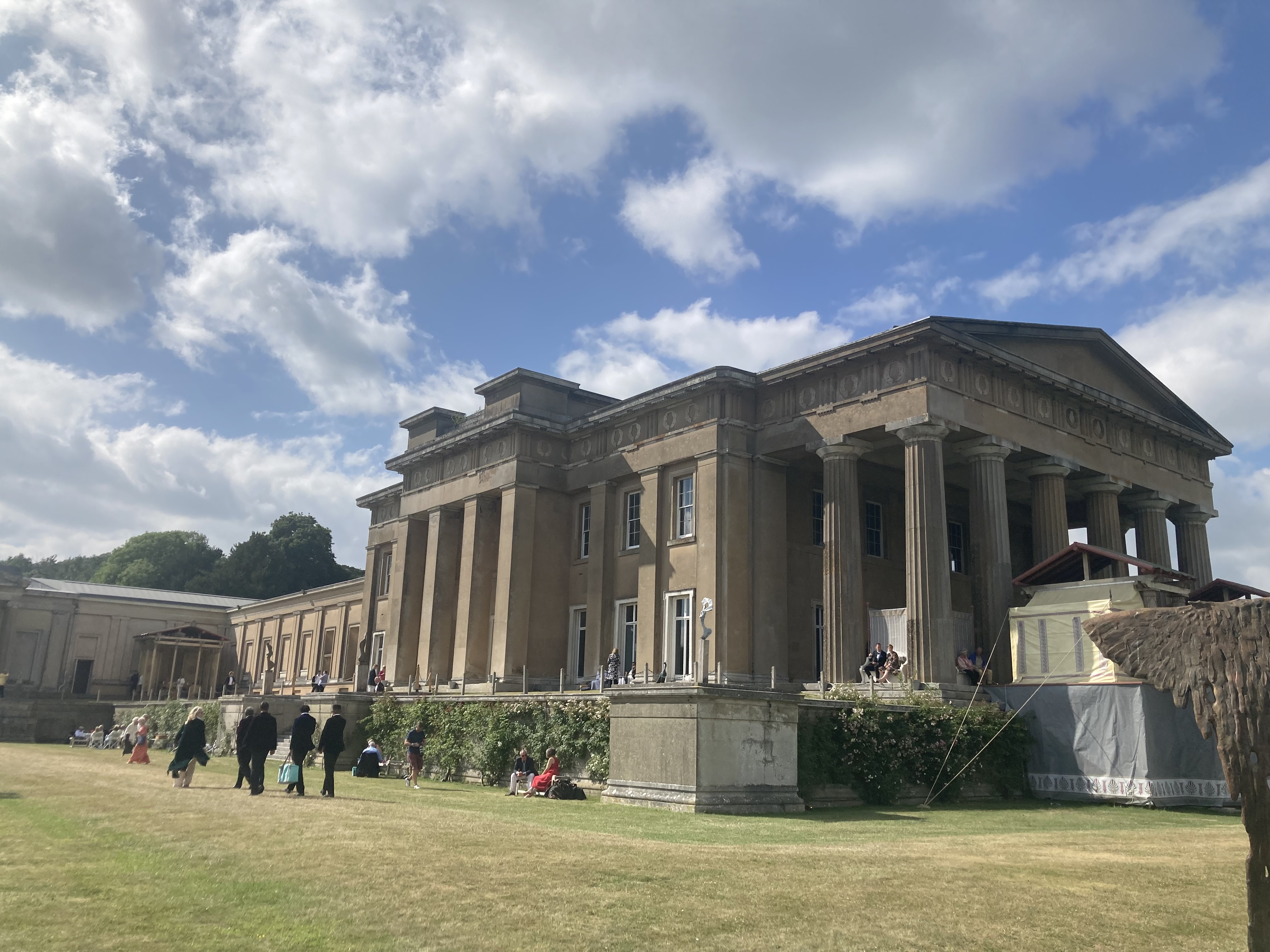
Groups of figures — men in dinner jackets, women in floaty dresses — moving across terraced lawns on a warm midsummer afternoon, carrying picnic baskets and champagne in coolers. An auditorium built into an 18th century Greek Revival mansion sitting above a river in the lovely Hampshire countryside. It’s not hard to imagine that Duke Ellington — who, after all, once dedicated a (rather insipid) suite to Queen Elizabeth II — would have appreciated the idea of his music being played in such a setting, performed by a full orchestra as part of a summer-long festival that also features evenings dedicated to operas by Mozart, Purcell, Glück and Tchaikovsky.
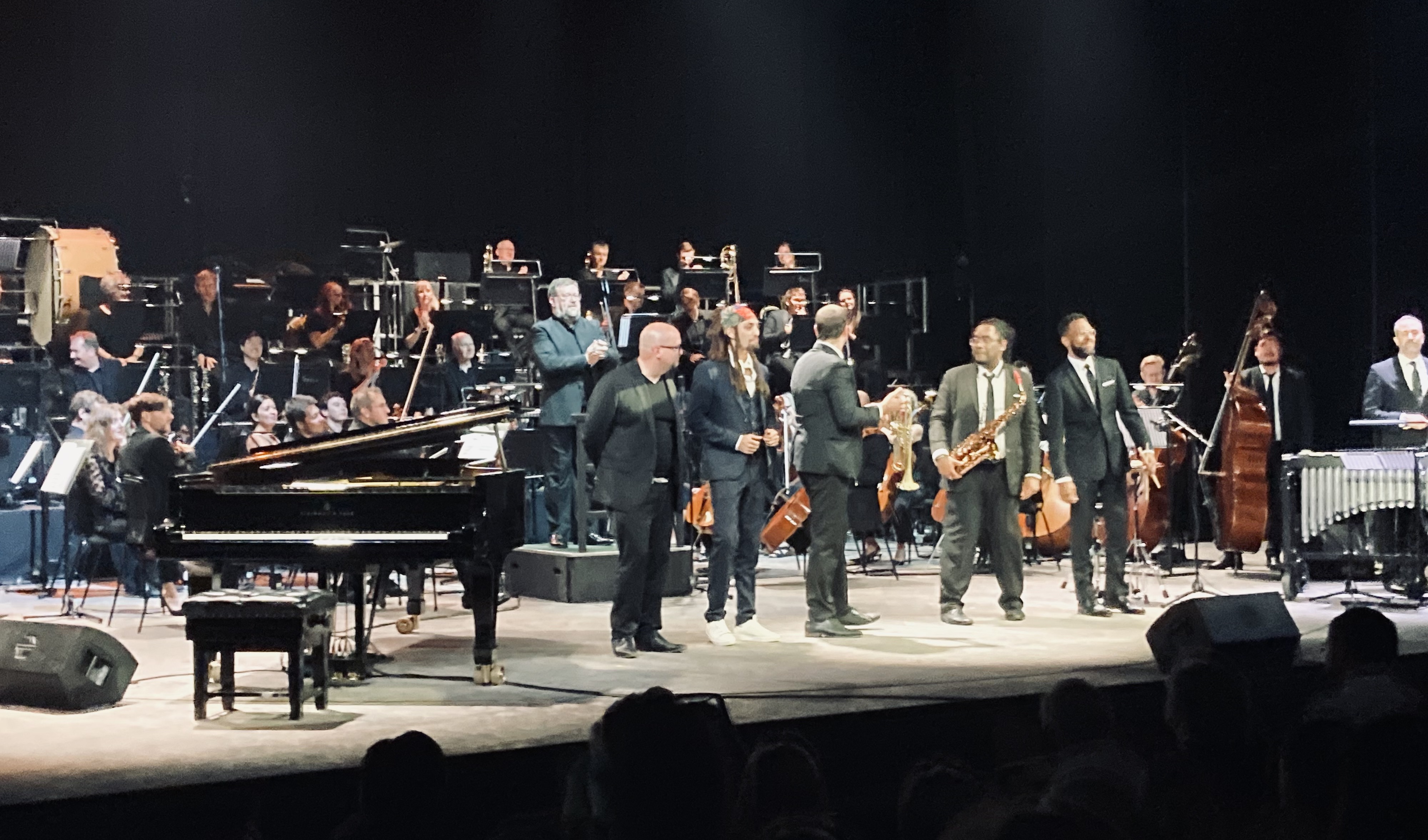
Ellington: From Stride to Strings was the idea of Piers Playfair, an Englishman who is the creative director of 23Arts, based in New York. It was taken up by Michael Chance, the artistic director of the Grange Festival, which was established in 2017 along the lines of Glyndebourne but with, it seems, a more eclectic outlook. Playfair invited the pianist, composer and writer Ethan Iverson to create symphonic versions of pieces written by Ellington in his final decade, and secured the Bournemouth Symphony Orchestra to perform them, under the baton of Gavin Sutherland.
To open the evening, Playfair assembled a sextet of experienced New York musicians, half of them Juilliard graduates, to perform a dozen Ellington favourites in arrangements by their leader, the trumpeter Dominick Farinacci. They kicked off with a solo medley of stride piano pieces by Mathis Picard, French-born with family roots in Madagascar, whose vivacity immediately won the audience’s hearts — and held them at the start of the second half, too, when he performed “New World a-Comin'”, Duke’s playful, rhapsodic piano concerto, with the orchestra.
The sextet began with “Drop Me Off in Harlem”, featuring the clarinet of Patrick Bartley Jr, followed by a cunning combination of “The Mooche” and “East St Louis Toodle-oo”, on which Bartley’s alto saxophone was more Toby Hardwicke than Johnny Hodges, and by Billy Strayhorn’s “Take the ‘A’ Train”, with Farinacci using a cup mute to proper effect. The opening chorus of “In a Sentimental Mood”, played unaccompanied by the vibraphonist Christian Tamburr using only his fingertips on the metal keys, was alone worth the round trip from London. Iverson appeared at the piano for “Creole Love Call” and “Come Sunday”, beautifully sung by the Armenian soprano Anush Hovhannisyan. Bartley’s ebullient vocal on the closing “It Don’t Mean a Thing (If It Ain’t Got That Swing)” sent the audience off for the long dinner interval in marquees around the grounds in very high spirits, having heard the group’s drummer, Jerome Jennings, as light-fingered as Oliver Jackson or Billy Higgins, demonstrate exactly what swing is.
Ellington’s reputation will never be required to stand or fall by his late large-scale compositions, but Iverson’s eight-part suite, titled Valediction, did them honour. Although there were no improvised solos, there was enormous pleasure to be had from hearing the chirping woodwind against walking pizzicato low strings (four cellos, two basses) on “Daily Double”, from The Degas Suite, the brassy groove of “Acht O’Clock Rock”, from The Afro-Eurasian Eclipse, the wistfulness of “King Solomon” (from Three Black Kings) and the moody, blues-inflected “Bourbon Street Jingling Jollies”, from New Orleans Suite. The decision to reset “The Lord’s Prayer”, a piano solo from one of his sacred concerts at Westminster Abbey, for two trombones against bells and strings was wonderfully imaginative. One of Ellington’s train pieces, “Loco Madi”, from The Uwis Suite, began with puffs and whistles and then chuffed along merrily with interlocking phrases for cellos, bassoons, French horns and flutes, before coming to a halt just short of the buffers.
The sextet joined the orchestra for a relatively rowdy “C Jam Blues”, closing an evening that clearly intrigued and delighted a mostly non-jazz audience. It deserves to be repeated in other settings.

 thebluemoment.com