Skip to content

Posts tagged ‘Wayne Shorter’

The lost genius of Albert Stinson

This is a piece about the bassist Albert Stinson (1944-1969). It’s something I’ve been meaning to write for a long time. The great drummer Jim Keltner was kind enough to talk to me about his boyhood friend, as was another drummer from Los Angeles, Doug Sides, who toured and recorded with him in John Handy’s band. I first heard Stinson in 1963 on Passin’ Thru, Chico Hamilton’s very striking Impulse album, recorded when the bassist was all of 18 years old. To my 16-year-old ears, he was exceptional even then; goodness knows what he might have become.

It’s the evening of Friday, April 7, 1967 in the Harmon Gymnasium at the University of California, Berkeley. Your name is Albert Stinson, you play the double bass, and you’re about to deputise for Ron Carter in what might be the greatest small jazz group of all time: the Miles Davis Quintet as constituted between the autumn of 1964, when Wayne Shorter arrived to join Davis, Carter, Herbie Hancock and Tony Williams, and the middle of 1968, when Carter became the first to leave. The greatest? Certainly the one applying new levels of freedom and near-telepathic interplay to the business of improvising on tunes.

So this group has been together and constantly evolving for the best part of three years and you’re being dropped into the middle of it. You’re only 22 years old but you’re ready, in the sense that you have the chops and the experience. You were a prodigy, and you’ve played alongside Charles Lloyd and Gábor Szabó in a brilliant Chico Hamilton Quintet, and with other heavyweights.

But to play in this band, at this stage, you had to be ready for anything. Accelerando or ritardando, not always synchronised. Stopping on a dime without warning, restarting at the merest twitch of a nerve-end, intuiting the leader’s moves but following without following, waiting out a silence, hitting the short, sharp ramp from triple-p to triple-f without a moment’s doubt. Playing against or through what someone else was doing.

You’re not the first bassist to deputise for Carter, a busy guy on call for many sessions. Gary Peacock was the first. Then Reggie Workman, then Richard Davis. After you, there’ll be Miroslav Vitous before Carter goes for good and Dave Holland becomes a permanent member. All great, great bassists. And now it’s your turn.

There’s a buzz in the Harmon Gymnasium. For starters, Miles calls “Gingerbread Boy”, the brusque, flaring Jimmy Heath tune featured on Miles Smiles, the quintet’s second studio album, the one that made everyone realise something different was happening here. At a rocket-propelled 80 bars a minute, the theme hurtles past, with Williams’s drums at their most volcanic. You play time, straight. You survive, although you miss the cue at the end and the piece finishes with your phrase trailing off, as if surprised by the sudden silence around you.

Miles leads into “Stella by Starlight”, his tone at its purest, the trumpet holding a long note into what feels like infinity as you join Hancock in a free background that seems to be inventing itself outside the tune. Eventually you move into a walking medium 4/4, deploying your big, strong tone but keeping the elasticity that enables you to move with the others when the tempo doubles and Williams starts to force the issue. You’re okay, and a little more than that when you respond to the wind-down of Shorter’s solo with something that shows you’re getting the hang of this particular freedom of narrative. Hancock’s solo begins out of tempo and you invent figures to support him before you slide back into the 4/4, seamlessly.

And then, on Shorter’s “Dolores”, a post-bop epigram also from Miles Smiles, the tempo goes back up, and now you’re no longer feeling your way but fully contributing, the equal of these four giants as they charge through a warp-speed exercise in musical plasticity, in aural geometry, in listening, hearing and responding at some Zen level of intuitiveness. In fact you’re almost too ready when Miles creates the silence from which he goes into “Round Midnight”, and you let your lower-register notes bloom in a way that Carter would probably consider excessive. But you’re part of the excitement as Williams’s snare-drum fusillades overwhelm the two-horn fanfares and soon you’re shifting the time around behind the flickering, nudging phrases of Shorter’s solo.

And now you’re home, riding the waves as the set continues with something based on the bones of “So What” and concludes with “Walkin'”. After just under an hour, it ends with an ovation.

—ooOoo—

“Albert brought something different to that band,” the drummer Jim Keltner told me when I asked him to talk about his longtime friend. “Ron Carter is one of the greatest musicians ever, but Albert brought a different kind of fire. They were so highly evolved, and Albert was one of them. I don’t really want to talk about genius-this and genius-that, but I do believe that he was a genius. He came back and told us that Miles had asked him to join the band, but he said he couldn’t because he had too many gigs lined up with Chico. That’s mind-boggling. But it’s the kind of player and person he was.”

Keltner, who would go on to play with Bob Dylan, John Lennon, George Harrison, Ry Cooder, Neil Young and countless others, was in his last year at the mostly white Pasadena High School when he met Stinson, who was two years younger and attending the mostly black John Muir HS. They were neighbours in the Altadena. “I was always aware that I was older than Albert,” Keltner said, “but I knew that I would never be as smart as him. A very, very smart cat. A very high IQ.” Another neighbour, the vibraphonist Bobby Hutcherson, had just graduated from John Muir, and the three played together constantly.

“Albert lived in a kind of cul-de-sac about five minutes from my house. It was a very diverse community, very well integrated. White people had black or Asian neighbours, and there were a lot of Mexicans around. And I’m half-Mexican.”

He remembered that Stinson lived with his mother, a former dancer, and her steady flow of boyfriends. His father had left the family early. When Keltner got married young, to a girl he’d known in high school, Stinson envied him. “He always loved the fact that Cynthia, my wife, and me, we made the long haul, which is very unusual for musicians. I think he wanted that and thought he could have it, but it wasn’t to be. I can’t really bring myself to talk about his personal life, but he was hurt badly by his relationship. His very first girlfriend was really young, a young beautiful black girl, and he was young, too… he was in love with her. I can’t speak for her but he was really in love with her. They were a little team. At some point he married and had a baby. He’s called Ian Stinson. He looks just like Albert, but with dreads… a beautiful kid. He’s a drummer and lives up north.”

Keltner remembered an early visit to the Stinson house on Shelly Street. “One afternoon I went over and he was sitting on the floor with his cigarette and ashtray and his weed and a little half-smoked doobie and a glass of cheap Ripple white wine, with a newspaper and glue and a huge massive book. He was making his own bass from a library book. I’m not sure how he did it, but the bass that he built himself was the one that I used to put in my car, because I would drive him everywhere. An upright bass and my drums in a Volkswagen.”

But before long they’d all hooked up with another young star of the future, the saxophonist and flautist Charles Lloyd. “I told Charles Lloyd about Albert when we were driving down from a little gig in a country club up in the mountains,” Keltner said. He was subbing for Mike Romero, Lloyd’s regular drummer. Hutcherson was already in the band, along with the pianist Terry Trotter and the bassist George Morrow. Soon Stinson would be replacing Morrow and also persuading Keltner, who thought he would never be as good as Romero, out of giving up music altogether.

“Mike Romero would come into the music store where I worked and I just thought he was the coolest guy in the world. One day he said to me, ‘You want to sub for me for half a set?’ I acted very confident and yet I was scared shitless. So I played, then I stayed and watched Mike, and I was so demoralised. Albert lit into me and told me how dumb I was. He said, ‘I would rather play with you any day than with Mike Romero.’ I said, you’re just saying that because you’re my friend. But I never forgot it. It carried me through.”

Of Stinson’s six albums with Chico Hamilton, recorded between 1962 and 1965, Passin’ Thru is the one that made a deep impression on me at the time. On pieces like “Lady Gabor” and the title track, he seemed to have metabolised the deep-groove drone effects created by the multiple bassists on such John Coltrane recordings as Olé and Africa/Brass. Barely 18, his strength and maturity were extraordinary.

He’d also recorded for Pacific Jazz with the pianist Clare Fischer (Surging Ahead, 1962), the guitarist Joe Pass (Catch Me!, 1963) and Charles Lloyd (Nirvana, 1965). He’d played (although not recorded) with Gerald Wilson’s mighty big band in Los Angeles. In 1964 he’d visited London with Hamilton, Szabó and the altoist/flautist Jimmy Woods to record the soundtrack for Roman Polanski’s Repulsion. He’d been in Rudy Van Gelder’s famous studio in Englewood Cliffs, New Jersey, one day in 1967 to record a quartet session for Blue Note under Hutcherson’s leadership, with Hancock on piano and Joe Chambers on drums, featuring a fantastic Stinson solo on a piece called “My Joy”, although the album wouldn’t be released until 1980, under the title Oblique.

“Albert loved playing music and he loved jazz,” Keltner said. “He was a thorough jazz musician. All of our friends, jazz players, were completely inspired by him. He was a leader, a ringleader. I was always round at his house, listening to music. We listened to Bartók, we listened to Coltrane. Everything I heard, I heard it first with Albert. Bobby Hutcherson lived even closer to him than I did. Those 3 a.m. calls to rescue Albert, it was always Bobby and me who went to save him.”

Those 3 a.m. calls came when he’d overdosed on heroin, something that had existed in his life alongside music well before, in 1967, he, Hutcherson and Keltner joined the band of the altoist John Handy, whose reputation had been made by an incendiary performance at the 1965 Monterey Jazz Festival. “Albert got me that gig,” Keltner said. “It was a fantastic time for me. It was at a club in San Francisco called the Both/And. I don’t remember playing very good, just hanging on and trying to get it right. I didn’t have the confidence. Jazz playing is a huge amount about confidence. Not like rock and roll, where you do your thing. Not that I’m belittling it. But jazz is a different thing. And even though I wasn’t cutting it, and I knew it, Albert would make it right.”

By the time the new line-up made a well received album, New View, recorded live at the Village Gate in New York for Columbia, featuring a wonderful version of Coltrane’s “Naima”, Keltner had been replaced by Doug Sides, another young musician from Los Angeles.

“Albert was one of these kids who just had a glorious talent, and he was a person that almost anybody would love,” Handy told David Brett Johnson, a deejay on Indiana University’s radio station, in 2008. “A very easy, sweet young guy, and his playing was just incredible. He seemed to have a bunch of natural ability, which I understood because I came that way myself, without that much experience, but just kind of knew how to do it. However, I was afraid — even with those guys in my band, there were drugs. They kept it away from me. They were younger, they kind of… you know, when you‘re the bandleader the little cliques kind of take place, and they weren‘t vicious, they just… I could see the half-generation difference in age and all.”

Doug Sides, who moved to the UK in 2010 and died at his home in Kent this month (October 2024), aged 81, remembered meeting Stinson at jam sessions in an LA place known as the Snake House — actually the home of a musician who kept pet snakes.

“Albert a very special human being,” he told me. “He was one of the nicest guys I ever met. He didn’t have animosity toward anybody. He just liked to have fun. But he had one problem. He liked to get high and he liked to shoot up with the junkies. And he tried to keep up with them, which caused him to overdose a few times before he died in New York doing the same thing.

“He was a really great player. He had a big sound, too, and he could play any tempo. For a small cat – he was short – but he was very strong, strong like somebody who was 6’5 or something, he had that kind of strength. In those days they had beer cans that you couldn’t crush very easily, not like the modern ones where you just squeeze and they fold up. He used to crush them like they were the modern ones.”

His seven months with Handy included a stint in San Francisco performing an opera, The Visitation, written by Gunther Schuller for 19 voices, woodwind and string sections and a jazz quartet, applying ideas from Kafka’s The Trial to the world of civil rights in America, and blending 12-tone composition with jazz.

“Albert had never played with a conductor,” Handy told David Brent Johnson. “Well, man, he learned those parts by just — with one or two rehearsals, and they were very difficult, as you can imagine if you know anything about Gunther Schuller‘s music. And at one point Gunther Schuller stopped the rehearsal and said to the bass players, ‘Do you hear this bass player? He sounds as big as almost all of those guys put together back there!’ And poor Albert was so sick, I didn‘t realise it, from doing crazy things, you know, and vomiting during the breaks because he was taking drugs… I didn‘t know that. He kept it away from me. All I know is he played his butt off.”

Jim Keltner said he thought one of the reasons Stinson turned down Miles Davis’s offer was that he didn’t want to leave Altadena, where his mother had left him their house on Shelly Street. “My own life had really changed by that time,” the drummer recalled. “I’d done rock and roll with Gary Lewis and the Playboys in 1965. Albert thought that was cool. He wasn’t judgmental. Some of the others were jazz snobs. By 1968-69 I was playing in a couple of bands and Albert was travelling more so I was seeing him less, but I’d hear things.”

Stinson joined the band of the guitarist Larry Coryell, whose popularity had taken off during his time with Gary Burton’s quartet. “When I heard he’d joined Coryell,” Keltner continued, “someone said he was playing electric bass, or thinking about it. I thought, oh wow, that’s incredible. He’ll burn that thing up. He’ll make it his own and he’ll be one of the baddest cats and maybe at some point we’ll play together again. But then, bam.”

On the road in June 1969, a few weeks short of his 25th birthday, Stinson overdosed again in a New York hotel room. This time he would not be saved. “It wasn’t a shock,” Keltner said, “but it was incredibly sad. Then I started hearing stories about the guys he was getting high with. Instead of trying to save him, they got scared and ran away. That’s one of the things I learned in the earlier days, one of the sad, dumb things, about how you don’t do that. You’ve got to save them. Which then, in turn, I got saved two times later. Bobby and I weren’t there to save him.

“Because of that rumour, I remember just hating Larry Coryell and everything about him. It was a misplaced anger. I didn’t know the details or anything. Eventually I had to let go of blaming him for Albert’s death.”

Whatever his habits, and the problems they may have caused for himself and others, Albert Stinson was someone who inspired powerful feelings of love and loss in fellow musicians. In Keltner and Sides, obviously, and also in Charles Lloyd, who cherishes his memory. Four months after Stinson’s death, Bobby Hutcherson wrote and recorded a lament called “Now”, dedicated to his late friend, with a lyric by Gene McDaniels delivered by the soprano Christine Spencer: “At the end, no more need…”

“Later in life,” Keltner told me, “I came to appreciate that although people will compliment you on your talent, generally speaking your talent is based on who you’re playing with. Every time I played with Albert, under any situation, whether it was some little silly gig like a bar mitzvah or whatever, it was incredible. It was always great. I always felt like I was somebody.

“It shows how amazing Albert was. He was so soulful. And he was too sensitive a cat for the world. A sensitive, beautiful old soul.”

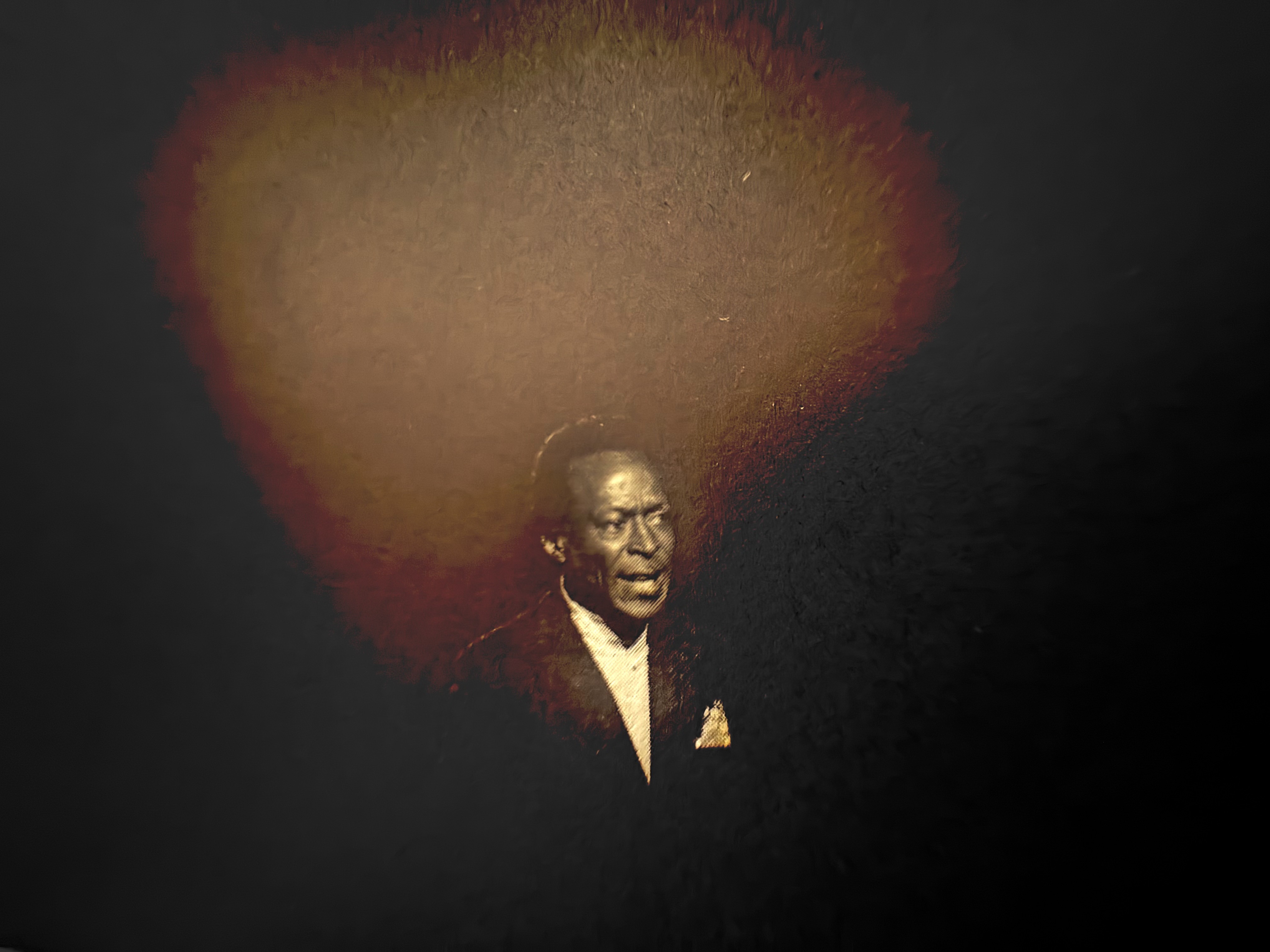
* The fine photograph of Albert Stinson is by Ave Pildas, whose work in jazz and many other fields can be seen at http://www.avepildas.com. A bootleg of the radio broadcast of the Miles Davis Quintet’s Harmon Gymnasium concert was released on a CD some years ago by the recordJet label.
Defying gravity

It’s easy to imagine the director Dorsay Alavi going all the way through an alphabetical list of Wayne Shorter’s compositions while looking for a suitable title for her three-part documentary on the life and work of the great saxophonist and composer, and knowing when she reached “Zero Gravity” that she’d got it. As such bio-docs on jazz musicians go, Wayne Shorter: Zero Gravity is something of a masterpiece. The title expresses the subject’s unique characteristic, present in his music and in his conversation, as I found while interviewing him in his London hotel room for the Melody Maker in 1972, during Weather Report’s three-week season at Ronnie Scott’s. Here’s how the piece started:

“I hate to talk about music,” Wayne Shorter said. So we didn’t — at least, not really. For instance, we talked about the navigation of ships. Wayne showed me several large books on the subject, told me he was hoping to study it seriously, and then unrolled a sheet of score-paper on which he’d written a new composition called “Celestial Navigator”, based on the feelings gathered from his discoveries.

We talked about the sacred figures of Brazil — like the Lady of the Sea. If you see her, Wayne said, she she sees you, then you don’t live to tell the tale. But she serves people from the sea, too, and every Brazilian home contains her picture. And he showed me another piece, named after her.

And so it went on, through an hour or so of conversation which I can only compare to the experience of talking to Ornette Coleman, Don Van Vliet (Captain Beefheart) or Van Dyke Parks. The interviewee is operating on a different plane of thought and expression, and your best plan is to keep out of the way and let their logic take its own trajectory. Of course that doesn’t always work. Sometimes you can’t help trying to drag them back to earth. Yet at such moments Shorter remained gracious. Here’s more:

Although he didn’t really want to discuss it, I asked him why he left Miles Davis. “After six years with Miles it was becoming… that living cycle, that seven-year itch thing, came around. I knew had to take a year off, at least. My wife and I moved around, spending the summer in a town house in New York, where I could think about how to get rid of that sound I had with Miles, to get the sound of the musicians, and the compositions I wrote during that time, out of my head.

“I wanted to rid myself of any one association — so that people can look at anything new that I do with a bit of objectivity, without connecting me with Miles or Art Blakey, as everyone always has.” It wasn’t always easy for him to take his sabbatical. “Miles would call me up and ask if I wanted to make a record date, or write something for his band, and I had to refuse because it was necessary for me to break that connection completely.”

He talked about his most recent Blue Note album, Super Nova, and its projected successor, Odyssey of Iska, dedicated to his younger daughter, and about his enthusiasm for the Brazilian singer Milton Nascimento (who would be featured on Native Dancer, his first album for Columbia, in 1975). And he spoke warmly, of course, about Weather Report:

“I’d always had the feeling that it would be nice to have a band in which everybody would hold their own and have a leader’s responsibility. We’re all responsible to many different obligations, which is much better than when one man is responsible for everyone’s obligations. We can do more, musically. It was hard to find a bunch of musicians who were prepared to stop playing like they used to.”

That last remark is the kind of thing that pops up throughout Zero Gravity: little maxims, like Zen koans, that open the mind to new ways of thinking about old subjects, some of them adapted from Davis, his former boss. “Play like you don’t know how to play” is one. Search for “music that doesn’t sound like music” and “Jazz means, ‘I dare you'” are others. Danilo Perez, the pianist with his quartet, remembers being given a large pile of new compositions, and on asking Shorter when they were going to find the time to rehearse them, getting the reply: “You can’t rehearse the unknown.”

The first of Zero Gravity‘s three hour-long episodes deals with his early years, from a New Jersey childhood to the great Davis Quintet, the director taking the chance of using two young actors in wordless imaginative reconstructions of his boyhood with his brother Al. The second part examines with the period of Weather Report’s great success, the reasons behind the group’s dissolution, his work with Joni Mitchell, and the personal tragedies he encountered during those years, including the deaths of Iska and her mother, Ana Maria Patricio, his second wife, and of Al, his brother.

The final part deals with the music of his last 20 years: the wonderful quartet with Perez, the bassist John Patitucci and the drummer Brian Blade, the orchestral pieces, and the opera, Iphigenia, written and performed with Esperanza Spalding. Her presence in the film, along with that of Mitchell and the drummer Terri Lyne Carrington, reminds us that few jazz musicians of his generation were as comfortable as Shorter with the idea that female musicians could have equal standing within the music.

Shorter’s love of fairy tales and science fiction, in part ignited by early exposure to Charles Kingsley’s The Water Babies, is also featured as part of an exploration of the character of a man who retained a child’s sense of wonder throughout the life that ended last March, in his 90th year on the planet. The animations and flights of visual imagination that appear throughout the film, alongside many fine clips of the Jazz Messengers, the Davis band and the Shorter quartet, make complete sense. Filmed and edited while he was still alive, and thus preserving him in the present tense. Zero Gravity is pretty much the perfect tribute to an extraordinary human being.

* The film Wayne Shorter: Zero Gravity is available on Amazon Prime.

Remembering Laura Nyro

Laura Nyro 1Laura Nyro had missed her intended flight from New York to London, forcing her to take a plane that arrived at six o’clock in the morning. Now here she was, barely 12 hours later, warming up before recording a performance in front of an invited audience in a small auditorium at the BBC’s Television Centre, for a series called In Concert.

This was in May 1971, three months after she had made her British debut at the Royal Festival Hall, giving a solo concert in which the first set was performed by her then boyfriend, Jackson Browne, who was also appearing in the UK for the first time. It had been a wonderful recital: she started with “Stoney End”, included “Timer”, “Been on a Train”, “Emmie”, “Map to the Treasure” and “Christmas in My Soul”, read a poem called “Coal Truck”, and finished with a lovely medley of “He’s Sure the Boy I Love” and “Spanish Harlem”. Such range, such composure, such deep connection with her audience seemed exceptional in one who was still only 23 years old.

She readied herself for the BBC’s cameras in a voluptuously flowing mauve and lilac dress with lace half-sleeves: a typically dramatic costume. As she sat at the piano, I was struck by the way that she could turn her head to look like at one moment like a exquisitely soulful contessa from a Velasquez painting and at the next like a lusty young maid from one of Chaucer’s tales.

As well as her manager of the time, Richard Chiaro, there was a new boyfriend along for the ride. “You’ve got to sit somewhere I can see you,” she told him. But a few minutes later she was scolding him for singing along while she ran through some of her numbers.

In such an intimate setting, the evening was unforgettable: opening with a medley in which “Ain’t Nothing Like the Real Thing” sandwiched “Natural Woman”, she sang “Buy and Sell”, “Stoned Soul Picnic”, the then-unrecorded “I Am the Blues”, “Christmas in My Soul”, a medley of “Timer”, “Ooo Child” and “Up on the Roof”, and “Mother Earth”; she delivered “Stoney End” as an encore. It was transmitted on BBC2, but in the intervening years it seems to have vanished. Long ago I asked Alan Yentob, a senior arts person at the corporation, to see if he could unearth it, but there was no trace.

It was 23 years later, in November 1994, that Laura made her final British appearance, accompanied by her three backing singers in the ideal 19th century Gothic environment of the Union Chapel in Islington. The set finished with her lovely version of “Walk on By”. And then she was gone, to be carried away by ovarian cancer in 1997 at the age of 49.

She remains a powerful and enduring presence among those who fell under the spell of her extraordinary talent. One of those fans is Billy Childs, an American jazz pianist — known for his work with Freddie Hubbard and Dianne Reeves, among others — who has just released an album called Map to the Treasure, on Sony’s Masterworks label, in which his arrangements of 10 Nyro songs are delivered by different singers.

It’s a risky undertaking. Nyro’s first success came with other people’s versions of her songs (the Fifth Dimension’s “Stoned Soul Picnic” and “Wedding Bell Blues”, Blood Sweat & Tears’ “And When I Die”, Barbra Streisand’s “Stoney End”, Three Dog Night’s “Eli’s Coming”), but it didn’t take long for her listeners to realise that the composer’s own versions far outstripped those of her interpreters. Nyro’s full-strength personality suffused her writing, as became apparent in her two masterpiece albums, Eli and the Thirteenth Confession (1968) and New York Tendaberry (1969), and their successors. Only she could properly explore the duality of the Madonna/streetchild persona (which she encouraged through her choice of jacket photos for those two albums). So to attempt cover versions at this stage of the game might seem otiose. Who, after all, can add anything new to such cherished pieces as “The Confession” and “Upstairs by a Chinese Lamp”?

Amazingly, Childs manages it — not by attempting to match or emulate the raw, romantic power of the originals, but by looking for facets of the songs to which he can apply his considerable resources, and by recruiting a group of singers who do not set out to sound like Nyro but bring their own voices, along with an unmistakeable admiration for the source of the material.

A string quartet appears on every track, with guests soloists featured alongside the singers: Wayne Shorter’s soprano saxophone with Esperanza Spalding on “Upstairs by a Chinese Lamp”, Chris Botti’s trumpet with Shawn Colvin on “Save the Country”, Steve Wilson’s alto saxophone with Susan Tedeschi on “Gibsom Street”, and Jerry Douglas’s dobro with Alison Krauss on “And When I Die”. Childs is the pianist throughout, supported by the impeccable rhythm team of Scott Colley (double bass) and Brian Blade (drums).

Childs jumps in straight at the deep end by opening the album with “New York Tendaberry”, one of Nyro’s most personal songs, delivered by the operatic soprano Renée Fleming and the cellist Yo Yo Ma. So right away you know we’re not in for a set of mere recreations. The beauty of Fleming’s tone and the sensitive formality of her phrasing takes the piece away from Nyro’s uptown-soul sensibility and into a different dimension.

That’s one of the highlights. Another comes straight afterwards, with Becca Stevens’s equally poised but comparatively uncorseted tilt at “The Confession”. At the centre of the whole thing, in structural and emotional terms, is Rickie Lee Jones: out of all the singers in the project, she is the one who most resembles Nyro in style and delivery (and, as she has often said, is most influenced by her), making her perfectly suited to bring out the tragedy of “Been on a Train”, helped by a most imaginative arrangement for the string quartet. Her presence makes me wish Childs had also called upon Mary Margaret O’Hara, the other singer I think of as an heir to Nyro’s legacy.

But once you get the measure of what Childs is up to, there isn’t a bad track here. What he gives us is a beautifully conceived and meticulously executed song cycle, a fitting tribute to one of the most original and gifted artists of our time. Yes, it’s a carefully polished thing, far more polished than Nyro’s own records ever were, but that polish is no superficial gloss: it’s the patina of a profound respect. And beneath it beats the heart of an extraordinary woman.

Laura Nyro BBC ticket

* The photograph of Laura Nyro comes from the cover of her 1984 album Mother’s Spiritual and was taken by Irene Young. The ticket for the 1971 BBC TV concert is mine. Anyone who loves Nyro’s music and hasn’t already read Michele Kort’s excellent biography — Soul Picnic: The Music and Passion of Laura Nyro, published by Thomas Dunne Books in the US in 2002 — should do so. And here, for free, is a link to an interesting piece by an academic, Patricia S. Rudden, from a 2006 edition of the newsletter of the Emily Dickinson Society (you’ll need to scroll down to the third page). Clips of Nyro on YouTube tend to get taken down quickly, but here’s a beauty: her performance of “Poverty Train” at the Monterey Pop Festival in 1967, giving the lie (despite a lame band of session men) to the myth that it was a total disaster. And here’s a real oddity from 1969.

One night in Berlin

Miles in BerlinAt the start of the film of the Berlin concert which forms a bonus DVD to three audio CDs of the recently released Miles Davis Quintet Live in Europe 1969 set, you can’t help being struck by the impassive demeanour of the musicians as they are announced, one by one, to the audience. Jack DeJohnette doesn’t even look up as he fiddles with the placement of a microphone boom over one of his cymbals. Dave Holland, the young Englishman, is expressionless as he adjusts his double bass. Chick Corea reaches out his left hand to twist a knob above the keyboard of his Fender-Rhodes piano. Wayne Shorter licks his mouthpiece and stares into the middle distance. Meanwhile Miles has already prowled on to the stage, clearly not caring that the spontaneous wave of applause for his arrival has disrupted the MC’s scene-setting introductions. From none of the musicians comes even the tiniest acknowledgement of the audience’s welcome. This is how far the influence of Miles’s own super-cool on-stage deportment had spread, to men a generation younger than him (and, in the case of Corea and Holland, with naturally outgoing temperaments); he, in turn, is taking his wardrobe cues from them.

None of that stops it being a great concert, of course — or half a concert, in fact, since Miles’s group were sharing the bill at that night’s concert with Stan Kenton. You might think it an unlikely combination, even by the eclectic standards of the Berliner Jazztage, and that was how the 2,400-strong audience saw it, too. I remember half of them vociferously expressing their dissatisfaction with Kenton’s set, while those who acclaimed Kenton were clearly disconcerted by what Miles was up to (although their presence can be detected in the film only in the shot of some listeners frowning and shaking their heads as the camera scans the audience while the band leaves the stage). This intolerance was typical of Berlin audiences of the time and seemed particularly impolite since the whole festival, including that evening’s performances, had been dedicated in advance to Duke Ellington, who was due to appear at the same venue the following night in a concert scheduled in celebration of his 70th birthday.

It was my first exposure to Miles in person, and I certainly wasn’t disappointed. Urged on by sidemen who were leading him to the frontier of free jazz, he was spellbinding. Less than a year later, as he veered away from freedom towards an engagement with funk, he would be wanting his musicians to anchor the beat in a much more explicit way. But this was enthralling, a  freewheeling post-In a Silent Way, pre-Bitches Brew journey into abstraction, with a gorgeously oblique version of “I Fall in Love Too Easily” to seduce even those scandalised by the black shirt, trousers and leather waistcoat and the orange and gold scarf in which he took the stage, an outfit to match his black and orange trumpet.

Poor Kenton suffered far worse from the hecklers. He was booed even before he started, and later confessed that the experience had given him a sleepless night. Conducting the specially assembled Berlin Dream Band, a 19-strong multinational emsemble which included the trumpeter Carmell Jones, the trombonists Ake Persson and Jiggs Whigham and the alto saxophonist Leo Wright, he ran through a series of his best known pieces: “Artistry in Rhythm”, “Intermission Riff”, “The Peanut Vendor” and so on. Towards the end, however, he gestured the band to stand down as he performed his personal homage to Ellington, a five-minute variation on “Take the ‘A’ Train” delivered with such sincerity of emotion that the dissenters were temporarily silenced.

From the point of view of the audience’s divided reaction, it was one of the most bizarre concerts I’ve ever attended. The festival’s director, the late Jo Berendt, a man of broad vision and catholic taste, was intensely embarrassed. The following night, however, Ellington took the stage at the head of a band including Cootie Williams, Lawrence Brown, Johnny Hodges, Paul Gonsalves and Harry Carney, and harmony was restored.