Sounds for summer

Tall enough to be unmissable in any environment, and with a truly remarkable fashion sense, Shabaka Hutchings had presence from day one of his career. To me, as an observer, that was the concert at the Royal Festival Hall in June 2009 at which he was one of several UK guests with Charlie Haden’s Liberation Music Orchestra (others included Robert Wyatt, Jason Yarde, John Parricelli and Andy Grappy). He had just one solo but when he stepped forward, the sounds coming from his tenor saxophone commanded everyone’s attention.
Since then, we’ve heard him with Sons of Kemet, The Comet Is Coming, the Ancestors and Louis Moholo-Moholo’s Five Blokes, and in a reinterpretation of Coltrane’s A Love Supreme at the Church of Sound a few weeks ago which I was very sorry to miss. And now he has enough presence to allow him to drop his surname and become just Shabaka.
He’s also dropped the saxophone, which is more of a surprise, in order to study the flute — specifically the Japanese shakuhachi and other iterations, including the Andean quena and the Slavic svirel. His new album — titled Perceive Its Beauty, Acknowledge Its Grace — is evidence of this turn of interest.
It’s a radical departure from anything he’s given us before. A series of sketches deploys varying personnel, including the pianists Nduduzo Makhathini and Jason Moran, the guitarist Dave Okumu, the singer Lianne La Havas, Moses Sumney, Laraaji and ESKA, the harpists Brandee Younger and Charles Overton, the drummers Marcus Gilmore and Nasheet Waits, the speakers Saul Williams, Miguel Atwood-Ferguson and Anum Iyupo, the rapper Elucid, the percussionist Carlos Niño and the bassists Esperanza Spalding and Tom Herbert.
That’s an impressive line-up, but as you listen to the album you’re never really thinking of individuals or their virtuosity. In that sense it’s a quite different experience from that of listening to a “jazz album”. But neither is it a kind of New Age tapestry of sound, slipping by without disturbance, merely a bit of aural decoration.
It has an overall charm and moments of great and singular beauty, too, such as the shakuhachi improvisation against Overton’s harp and the celestial layered voices of Sumney on “Insecurities”, La Havas’s vocal reverie on “Kiss Me Before I Forget”, or Spalding’s springy bass behind Elucid’s rap on “Body to Inhabit”, but it also has depth, and not just in the occasional verbal passages, which are carefully integrated into the quilt of sound. The overall impression is what counts, and somehow that goes beyond words.
The album contains one snatch of tenor saxophone, on a track called “Breathing”, in which Rajni Swaminathan’s mridangam — a Carnatic double-ended hand drum — backs first Shabaka’s treated and looped flutes, then his clarinet, and finally his saxophone, which briefly erupts in a gentle squall with an intonation recalling the great Ethiopian tenorist Getatchew Mekuria.
That little hint of Ethiopian music sent me to a new release in the name of Emahoy Tsege Mariam Gebru, who died this time last year at the age of 99. Born in Addis Ababa, she studied violin in Switzerland as a child, worked as a civil servant and sang for Haile Selassie, was imprisoned by the Italian occupiers during the Second World War, and spent a post-war decade as a nun in a hilltop monastery. The arrival of a new regime forced her to flee to Jerusalem, where she spent the rest of her life in an Ethiopian Orthodox convent and composed music for piano, organ, and various ensembles while running a foundation to encourage music education among children in her native land and elsewhere.
Like Mekuria, she had a volume of the producer Francis Falceto’s Ethiopiques series devoted to her music in 2006, and in the last couple of years there have been more albums on the Mississippi label. The latest is called Souvenirs, a collection of her songs apparently recorded between 1977 and 1985. It’s a primitive recording: the piano sounds like a poorly maintained upright and her voice was probably recorded on the same microphone, in a room that was almost certainly not a recording studio. But that does nothing to diminish the appeal of these songs, with titles such as “Where Is the Highway of Thought?” and “Like the Sun Shines on Meadows”, whose vocal melodies are doubled by the pianist’s right hand against left-hand figurations assembled from scraps of blues and rhumba and gospel tunes.
What’s so appealing, almost mesmerising, about this music? I think it’s the combination of transparent simplicity (and sincerity) with the unexpected guile of the rhythmic undertow, which is always playing appealing tricks on the western ear. There’s something about the distinctive melodic shapes and phrase lengths that is special to this kind of Ethiopian music, springing from some deeper root.
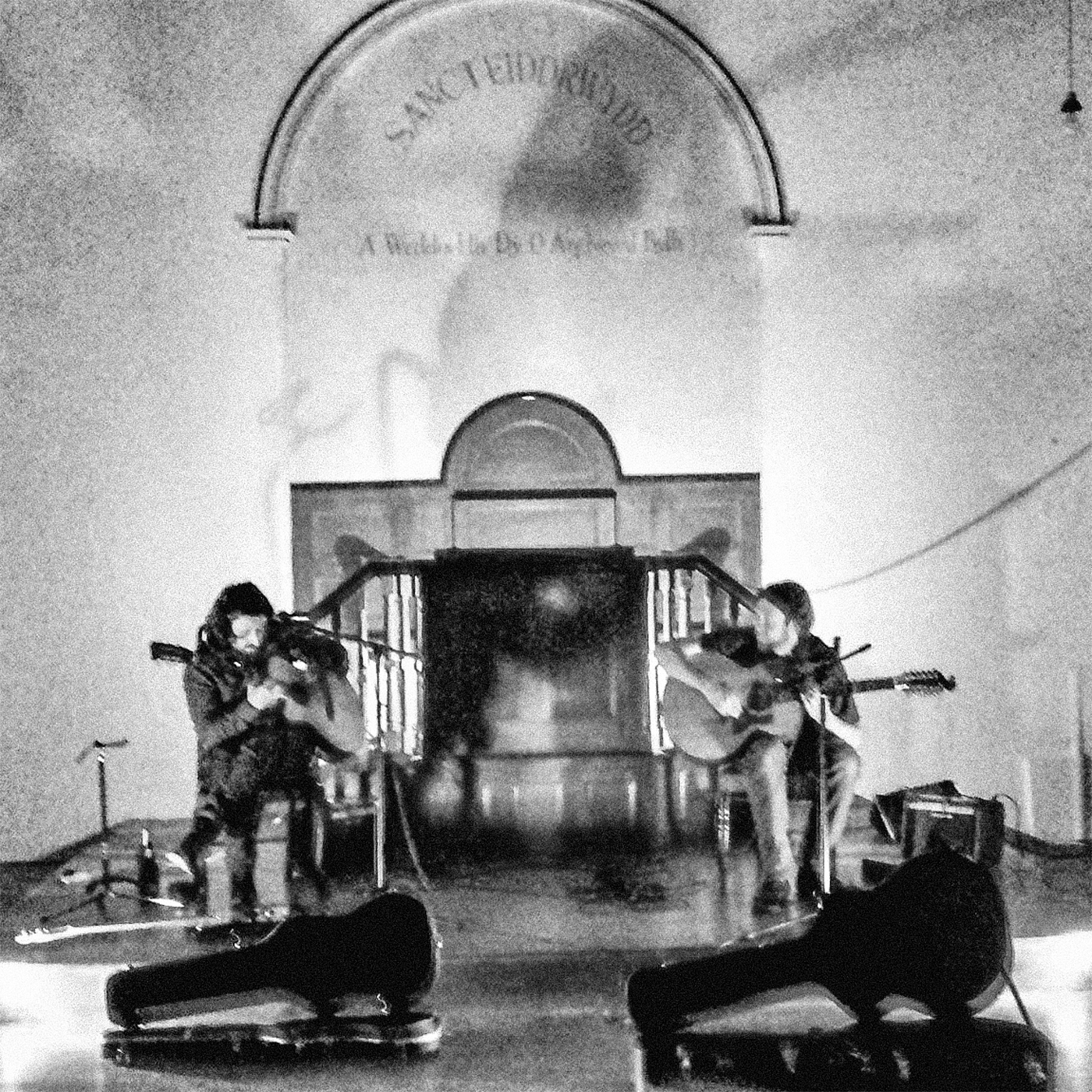
Something else to add pleasure to this summer is After a Pause, the new album of acoustic duo music by two brilliant Welsh musicians, the guitarist Toby Hay and the bassist and cellist Aidan Thorne. I got interested in Hay when he was filming himself outdoors playing ragas during the first Covid-19 lockdown in 2020 and putting the results on YouTube, and wrote a bit more about him when he released some duets recorded in an old chapel with his fellow guitarist David Ian Roberts later that same spring.
I try to avoid talking about what musicians are doing in terms of the work of other musicians, but I suppose a simple — and, I hope, enticing — way of describing the scope of these duets is to imagine what Davy Graham and Danny Thompson might have got up to if they were both in their prime in the 2020s and were able to spend three days together in a studio with no distractions, enhancing their compositions and improvisations with a sparing but highly effective use of overdubbing and electronics.
After living with this album for a few weeks, I’ve come to appreciate not just its surface beauty but the way it reveals more of itself and its spiritual essence the closer you listen. The 12-string arpeggios and bowed bass of the opener are a call to the attention that is never wasted as the music blooms and glows through 10 shortish but unhurried pieces, trajectories shifting and densities varying considerably from bare-bones to near-orchestral (on “Burden” or “Eclipse”) but mood sustained. The brief solo piano coda is a lovely way to finish.
A light shines through these three albums. I’ve a feeling they’re going to be among the summer’s best companions.
* Shabaka’s Perceive Its Beauty, Acknowledge Its Grace is on the Impulse! label. Emahoy Tsege Mariam Gebru’s Souvenirs is on Mississippi Records. Toby Hay and Aidan Thorne’s After a Pause is on Cambrian Records. Links here:
https://spibaig.bandcamp.com/album/perceive-its-beauty-acknowledge-its-grace

 thebluemoment.com