Skip to content

Posts tagged ‘Thom Bell’

The voices of Thom Bell

On November 5 in Brooklyn, the Spinners will be be inducted into the Rock and Roll Hall of Fame. Known to British fans first as the Motown Spinners and then as the Detroit Spinners, in order to distinguish them from a Liverpool folk group active between 1958 and 1989 under the same name, their string of hits began with “I’ll Be Around”, “Could It Be I’m Falling in Love”, “Ghetto Child” and “One of a Kind (Love Affair)”. All four were plucked from their self-titled first album for the Atlantic label, after they had moved from Motown and came under the supervision of the producer, arranger, pianist, songwriter and genius Thom Bell. Subsequent successes included “Mighty Love”, “I’m Coming Home”, “The Rubberband Man”, “Then Came You” (with Dionne Warwick) and “They Just Can’t Stop It (The Games People Play)”.

Only one member survives from the original quintet, formed in 1954, and its Bell-produced incarnation of the 1970s. Henry Fambrough, their baritone singer, will have to stand in for the rest of them: Pervis Jackson, Billy Henderson, C. P. Spencer, Bobbie Smith, Philippé “Soul” Wynne and John Edwards are all gone, along with several others who passed through the ranks at other times (and, of course, Bell himself, who died in December 2022: obit here). There is still a group of younger men legitimately touring as the Spinners, but Fambrough, who is 85, retired earlier this year.

Several other R&B vocal groups of their era, such as the Dells and the Temptations, used more than one lead singer, occasionally within the same song. None, however, pulled it off with as much ease and elegance as the Spinners. On “Could It I’m Falling in Love” and “Mighty Love”, the smooth-toned Smith started off before Wynne took over to add a rougher, more gospel-hued and improvisatory delivery. Such combinations were still working in 1976 when Jackson’s bass introduction gave way first to Smith and Henderson and finally to Wynne on “I Must Be Living for a Broken Heart” on their sixth album, Yesterday and Today.

This sophisticated update of a 1950s doo-wop vocal strategy was typical of Bell, who made great records with the Delfonics and the Stylistics before reaching his peak with the Spinners. The early hits were characterised by an adaptation of the thudding tom-tom backbeat heard on Al Green’s Willie Mitchell-produced hits, again given an extra coat of luxury varnish. Recorded at Sigma Sound in Philadelphia, with the great studio engineer Joe Tarsia, they benefitted from the musicians who became known known as MFSB: Roland Chambers, Bobby Eli and Norman Harris on guitars, Ronnie Baker on bass guitar, Earl Young on drums, Larry Washington on percussion and Vince Montana on vibes, with Bell himself on piano.

One of his trademarks was a subtle use of syncopation and uneven meters: the clipping of a beat from a single bar here, the addition of a couple of extra beats at the end of a line, or the shuffling of stresses that could make it sound, on the choruses of “Then Came You” and “Are You Ready For Love” (written for Elton John), as though he’d turned the beat around when in fact he hadn’t. These little things both seized and satisfied the ear. And no one, not even Burt Bacharach, could integrate a concert harp or an oboe into an R&B record as smoothly as Bell.

Smoothness without blandness was his trademark, as can be heard throughout the eight albums he made with the group, now included intact on a seven-CD box compiled by Joe Marchese and the veteran British journalist David Nathan. You can hit the button on just about any track and find something nourishing (perhaps with the exception of an ill-advised big band jazz version of “Don’t Let the Green Grass Fool You” on that first album, an experiment not repeated). And occasionally you’ll find a masterpiece.

Two of them are on the second album, Mighty Love. The first, written by Charles Simmons, Joseph Jefferson and Bruce Hawes, three of Bell’s regular songwriters is “Love Don’t Love Nobody”, Wynne’s finest seven minutes on a deep-soul track I’ve written about at some length before (here). The second, penned by Bunny Sigler, James Sigler and Morris Bailey, is “He’ll Never Love You Like I Do”, one of those songs about a poor boy pressing his claim on the object of his affection: “His standard of living, his social rating / There’s nothing he can’t afford / He made you think I ain’t it / But when it’s love, I can give you more…”

It opens with an octave guitar, Wes Montgomery-style, accompanied by piano, soon doubled by a muted trumpet and cushioned by a purring bass and Don Renaldo’s gentle strings. Bobbie Smith begins the song, delivering the opening lines in a confiding croon before Wynne takes over halfway through the first verse, the two reversing the sequence in the second verse, with the joins at first barely audible (although Wynne’s ad libs give him away). And just as Motown’s Holland-Dozier-Holland had used the female chorus of the Andantes to lend an extra emotional dimension to the Four Tops’ records in the ’60s, so Bell adds the voices of Barbara Ingram, Yvette Benson, Carla Benton and Linda Creed, his frequent co-composer, to create a refined blend with those of the Spinners themselves.

Like so much of Bell’s output, this track demonstrates the power of restraint, a quality evident throughout these fine albums. Even after the advent of disco, bringing adjustments to rhythmic emphases and the occasional flicker of wah-wah guitar, and with the arrival of John Edwards to replace Wynne halfway through the making of Yesterday and Today in 1977, the combination remained, and remains, exemplary.

* The Spinners’ Ain’t No Price on Happiness: The Thom Bell Studio Recordings (1972-79) is out on 29 September on SoulMusic Records. If anyone knows who took the fine photograph of Bell at the top of this piece, I’d be very pleased to add a credit.

Joe Tarsia 1934-2022

From left: Kenny Gamble, Joe Tarsia and Leon Huff at Sigma Sound in 1978

The Sound of Philadelphia was made by many hands. The singers, songwriters, producers and arrangers: Kenny Gamble, Leon Huff, Thom Bell. On guitars, Norman Harris, Roland Chambers and Bobby Eli. On keyboards, Huff, Bell, Harold Ivory Williams and Lennie Pakula. On bass guitar, Ronnie Baker. On drums, Earl Young. On vibes, Vince Montana. On percussion, Larry Washington. String and horn sections supervised by Don Renaldo. But it was also made by Joe Tarsia, the founder of Sigma Sound Studios, who died this week, aged 88.

Tarsia engineered such imperishable records as the the O’Jays’ “Love Train”, Harold Melvin and the Blue Notes’ “Bad Luck”, the Stylistics’ “You Make Me Feel Brand New”, the Spinners’ “One of a Kind (Love Affair)”, Billy Paul’s “Your Song”, Wilson Pickett’s “Engine Number 9”. He collaborated with Gamble, Huff and Bell to make a sound that updated soul music for the 1970s: richer in timbre than Motown, suaver in tone than Stax, more citified than Hi. Tarsia called it “black music in a tuxedo”.

He began his career as a radio engineer and serviced recording studios in Philadelphia before taking a job in 1961 at Cameo-Parkway Records, where he became chief engineer and worked on hits by the likes of Chubby Checker, Dee Dee Sharp, Fabian and the Orlons. In 1968 he took over and renamed an existing studio at 212 North 12th Street, updating the technology from two-track to eight-track. In 1971 his establishment entered the wider consciousness when Gamble and Huff started their own label, Philadelphia International, and began the decade-long run of hits captured on tape at Sigma Sound.

I met Tarsia, very briefly, in 1975, when I spent a day at Sigma Sound working with one of his assistant engineers on remixing the B-side of the Fantastic Johnny C’s “Don’t Depend on Me”, a song called “Waitin’ for the Rain”, down to its backing track for release on Island USA as an instrumental aimed at the Northern Soul market. David Bowie had just been in, working on Young Americans. I talked to the engineers a bit about the records they’d been making that I admired so much, and I asked them in particular about the great Thom Bell. One of them — and it might have been Tarsia — told me that Bell was in tears as he played piano while Philippé Wynne sang on the Spinners’ recording of “Love Don’t Love Nobody”. Not surprising, when you listen to it. That’s the power of the records they were making, with Joseph Tarsia at the board. Mighty, mighty music.

Love Don’t Love Nobody

As long as Boz Scaggs goes on making records, I imagine I’ll keep buying them. Although his new one, A Fool to Care, has its pleasant moments, it isn’t up there with the very best of his work. And, unusually for Boz, it also contains a serious misstep, one that’s worth noting because of its nature.

It’s a cover version, and when Scaggs chooses to cover a song, you can tell it’s because he loved the original. He never moves far from the way it first fell on his ears. And a man who can deliver a decent cover of something as extraordinary as Mable John’s “Your Real Good Thing (Is About to End)”, as he did on Come on Home in 1997, is not to be disrespected. With one song on the new album, however, he overreached himself before he even got started.

The Spinners’ “Love Don’t Love Nobody” was one of the finest soul records of the 1970s, and still sounds to me like one of the greatest deep-soul ballads of all time. It was written by Charles Simmons and Joseph Jefferson, whose credits appeared on many Philadephia records of the era; the arrangement and production came from the extremely great Thom Bell, who moulded the hits of the Delfonics and the Stylistics as well those of the Spinners. It also has a lead vocal that shows what was lost to the art of soul singing when Philippé Wynne died in 1984 at the age of 43, after suffering a heart attack on stage in Oakland, Calfornia.

Wynne could decorate a song with wonderfully inventive ornamentation which, by contrast with the work of the narcissists of today’s so-called R&B, never called undue attention to itself but was always in the service of the song, the arrangement, and the production. In that respect he was the peer of Ronald Isley and Teddy Pendergrass. And he was at his exalted best on “Love Don’t Love Nobody”: seven minutes and 13 seconds of soul heaven.

The record begins with Bell’s piano, discreetly shadowed by a bass guitar and vibes, quietly commanding attention. There’s gospel in the cadences, but also a grave delicacy in Bell’s keyboard voicings and a pensive elegance in his touch. It’s the sound of introspection, even the sound of sadness itself, setting Wynne up for his entrance with that heart-rending opening verse: “Sometimes a girl will come and go / You reach for love, but life won’t let you know / That in the end you’ll still be loving her / But then she’s gone, you’re all alone…”

As the track builds, Wynne adds his characteristic inventions to the song but firmly resists the temptation to overdo it. He’s listening to Bell’s arrangement, so spare, so subtly sophisticated as it adds strings and backing voices, and he’s making himself a part of it, even when he jams over the long fade.

One other thing. I was doing some remixing at Sigma Sound in 1974 when I fell into conversation with an engineer, and asked him about Thom Bell. When I told him how much I admired “Love Don’t Love Nobody”, he said that he’d worked on that session a year or so earlier. He told me that the rhythm track had been done in a single take, and that Bell had finished it in tears. That knowledge doesn’t make me listen to it in a different way, but perhaps it does help to explain the very deep connection that it can make.

Boz Scaggs does a decent job on a song of which he is obviously very fond. But I can’t help wondering if, had he known about Thom Bell’s tears, he’d still have decided to take it on.

Dionne Warwick: the lost years…

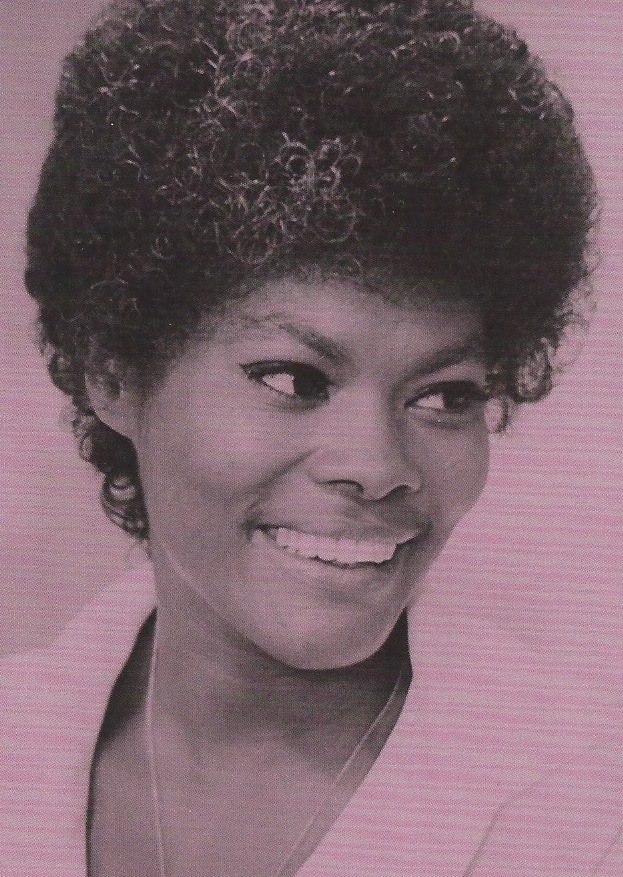
Dionne WarwickThere are days, even now, when only the sound of Dionne Warwick will do. How strange, then, that between 1972 and 1978, when she was in her prime and had the strength of a major record company behind her for the first time, she couldn’t buy a hit.

Try to put yourself in her shoes on the day in 1977 when she sat in the control room of A&R Studios in New York City with her new producers, Steve Barri and Michael Omartian, listening to this final mix. There would have been just a single thought in your head: whatever it is that makes a hit, this one’s got it.

Dionne had already been with Warner Bros for five years, after leaving the independent Scepter Records, where she had spent a decade and enjoyed that astonishing string of hits with Burt Bacharach and Hal David, to sign a $3m contract with a major label in the clear and reasonable expectation of further and even greater success. But her move coincided with the acrimonious sundering of the Bacharach/David partnership, which gave her new label a very nasty shock. The trio made one more album together — Just By Myself, released in 1973 — before a row between the two songwriters resulted in a prolonged series of lawsuits all round.

The hasty search to find new collaborators saw her shuffled, over the next six years, between Holland-Dozier-Holland, Nickolas Ashford and Valerie Simpson, Jerry Ragovoy, Thom Bell, Randy Edelman and Joe Porter. Amazingly, none of them could come up with the hit for which she was so anxiously waiting in order to prove that her early success had not been completely dependent on her original Svengalis. The sessions with the Barri-Omartian team represented the last throw of the dice.

“Do You Believe in Love at First Sight” — which you’ll have heard if you clicked on the first link — is included in a compilation called The Complete Warner Bros Singles, which came out earlier this year on the Real Gone Music label, a Warner/Rhino offshoot. It astonishes me now, as it did then, that it failed to give her another  hit. Curiously, the song — written by Frank McDonald, Chris Rae, Ron Roker and Gerry Shury — had been Britain’s entry in the previous year’s Eurovision Song Contest, when Polly Brown, late of Pickettywitch, brought it home in 10th place.

Polly Brown was a pretty good pop singer, but she wasn’t Dionne Warwick. This version of “Do You Believe in Love at First Sight” is irresistible: three minutes of pop perfection. If it lacks the emotional depth and musical inventiveness of a great Bacharach/David song, it is nevertheless beautifully constructed and performed, full of good things like a great hook, a bubbling bass line, an exultant lead vocal.

The earlier sessions with Jerry Ragovoy produced a track that is among my all-time Dionne favourites: in my view, her exquisitely sultry version of “I Can’t Wait to See My Baby’s Face” shades earlier treatments of this fine song by Baby Washington, Pat Thomas, Aretha Franklin, Dusty Springfield and even Dee Dee Warwick, Dionne’s sister — all of them terrific in their own right, with Dee Dee’s being the closest contender.

Dionne’s album with Thom Bell, Track of the Cat, contained some piercingly lovely songs, such as “His House and Me”, “Ronnie Lee”, “Love Me One More Time” and “Once You Hit the Road”, exposing the incomparable Philadelphia producer/arranger/composer’s debt to Bacharach, in particular the use of syncopation to create hooks. But Bell couldn’t repeat the formula that delivered “Then Came You”, with which he had given Warwick a No 1 in collaboration with the Spinners.

Fortunately, that wasn’t the end of the the story. After Dionne and Warner Bros parted company in 1978, a move to Arista and collaborations with Barry Manilow and Barry Gibb propelled her back into the charts. The preceding period was quietly forgotten as the Manilow-produced “I’ll Never Love This Way Again” and the Gibb-composed “Heartbreaker” lengthened the list of her greatest hits.

Now, in addition to the complete Warners singles collection, Dionne’s unhappy time with the Burbank label is commemorated by We’ve Got to Go Back, a new Real Gone Music compilation containing 19 songs that never found their way on to the release schedule. It’s aimed at completists and obsessives like me, I suppose, but the Holland-Dozier tracks “Too Far Out of Reach” and “It Hurts Me So” are fine examples of early-70s soul, and “Am I Too Late” and “I’ll Never Make It Easy (To Say Goodbye)”, supervised by Joe Porter, are gorgeous grown-up ballads. I wouldn’t want to be without them.

It was sad to read about the financial problems that drove her to declare bankruptcy earlier this year. She deserves better than that.

* The photograph of Dionne Warwick is from the sleeve of We Need to Go Back: The Unissued Warner Bros Masters and is uncredited.