Climate change

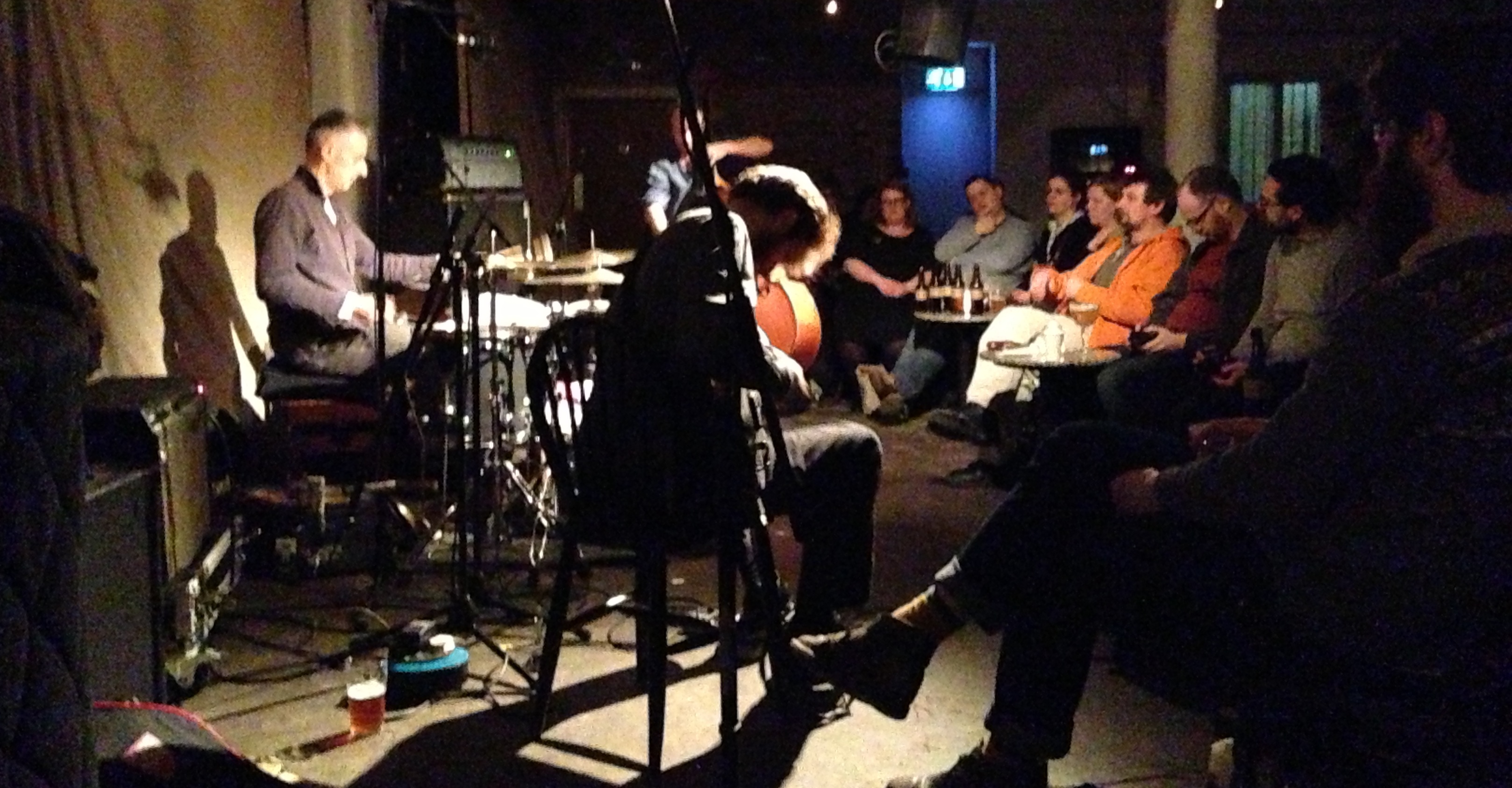
On an unseasonably cold, rainy late-July evening in East London, the trio known as Decoy — Alexander Hawkins on Hammond organ, John Edwards on double bass and Steve Noble on drums — and their regular guest, the indefatigable 83-year-old American saxophonist Joe McPhee, provided all the warmth the audience at Cafe Oto could need, and more.
That’s hardly surprising. Almost a decade and a half since their debut, Decoy + McPhee are the ultimate 21st century iteration of the hallowed organ-and-tenor combo, which at its finest — in such meetings as those of Gene Ammons and Richard “Groove” Holmes, Stanley Turrentine and Jimmy Smith, or Sam Rivers and Larry Young — provided an entire central heating system in itself.
The set I caught last night, the last of their four nights in Dalston, began with Noble marking out a fast 6/8, moving straight ahead, encouraging Hawkins to let rip with a rousing improvisation. McPhee entered with a splintered honk before the tempo slowed to a bluesy lope. A dislocated shuffle followed, powered by Edwards’ thrumming, then a modal section (with a tune I’m sure I know but couldn’t place), a fast Latin passage with chattering percussion, and a quiet gospel-tinged fade to a most elegant closure.
That’s a swift précis of 45 minutes of music full of spontaneous creativity and contrast, in which the freedom of any individual was a given. All four were astonishingly inventive, intuitive in their responses, shaping the parts and the whole with complete assurance. I was struck by the sight of a young woman amid the throng, dancing in the semi-ecstatic way people used to dance to, say, the Third Ear Band at rock festivals 50 years ago. Not something you see at many jazz gigs these days, but a pretty good sign.
The occasional bursts of B3-powered intensity reminded me of the first edition of Tony Williams’s Lifetime, a thought that led me to muse on what the classic John Coltrane Quartet might have sounded like had McCoy Tyner suddenly gone missing and been replaced for one night only by Larry Young, Lifetime’s organist, with instructions to go for it. A bit like Decoy with Joe McPhee, maybe. Anyway, the roar and the prolonged ovation at the end of the set said it all.

 thebluemoment.com