Skip to content

Posts tagged ‘Sebastian Rochford’

Twang. Thump. Crash. More twang.
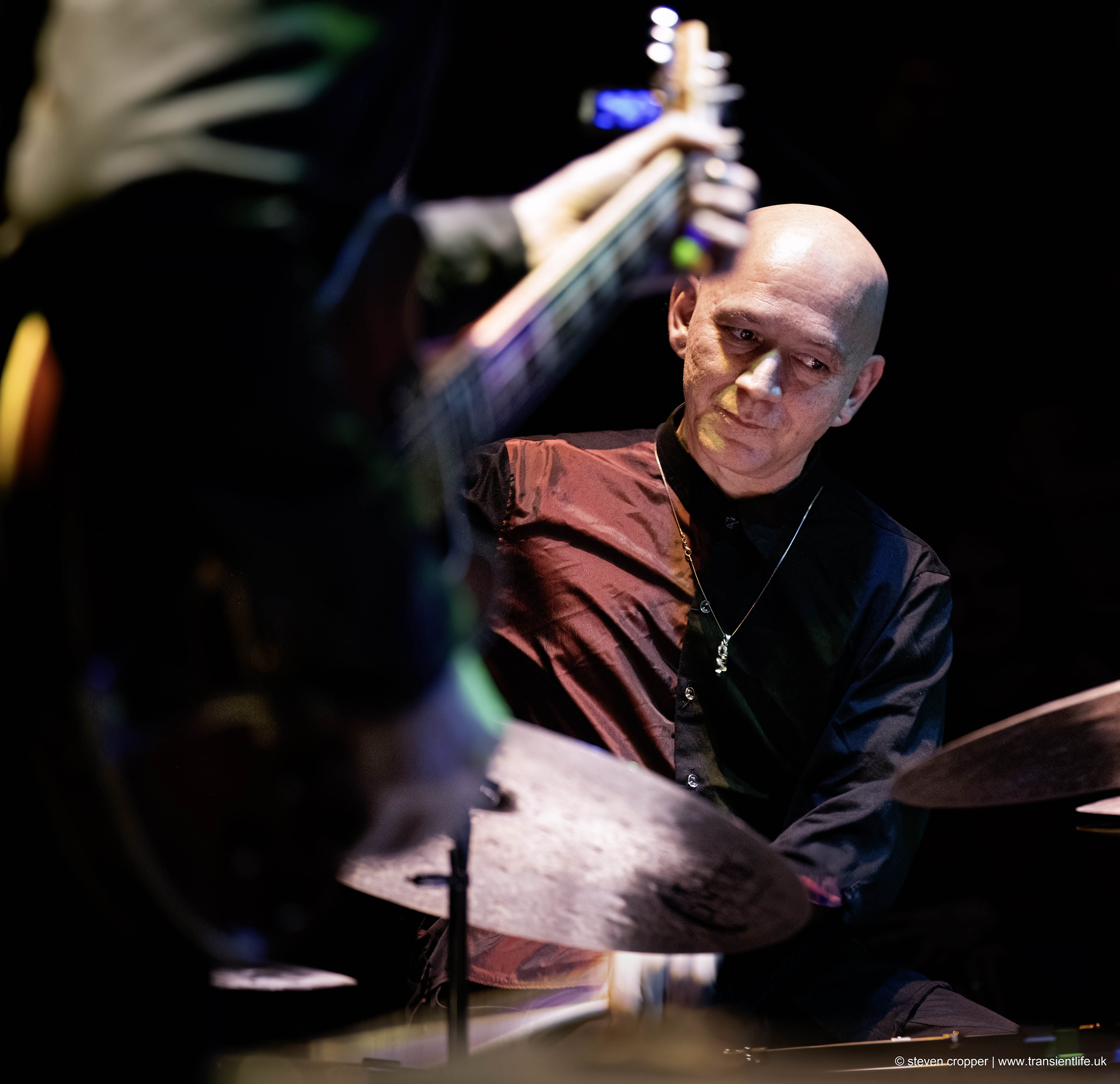
Finding Ways is the name of the drummer/composer Seb Rochford’s new band. It’s also the title of their debut album, which they played at the Cockpit Theatre in north-west London last night, as part of the Jazz in the Round series. It was one of the events featured on the closing night of the 2025 EFG London Jazz Festival, and I couldn’t imagine a happier way of ending the 10-day programme.

Rochford has made some intriguing choices in his career, but probably none more surprising than this. Finding Ways is a guitar-instrumental band: three guitarists, to be precise, plus bass guitar and drums. I don’t think I’ve seen such a line-up live since an early incarnation of Fleetwood Mac with Peter Green, Danny Kirwan and Jeremy Spencer back In 1968. Or at least not one so memorable.

Last night’s guitarists were David Preston, Tara Cunningham and Matt Hurley, joined by Anders Christensen on bass guitar. One thing that stuck out straight away was the absence of pedal boards or other effects. No wah-wahs, no phasing, no tremolo arms. This, apparently, was at Rochford’s insistence. So what we heard was three versions of the sort of sound you made when you got your first electric guitar, hit an E major chord and then looked for a way to make the strings twang. A sound with innocence intact. And an interesting approach to apply to three very sophisticated players.
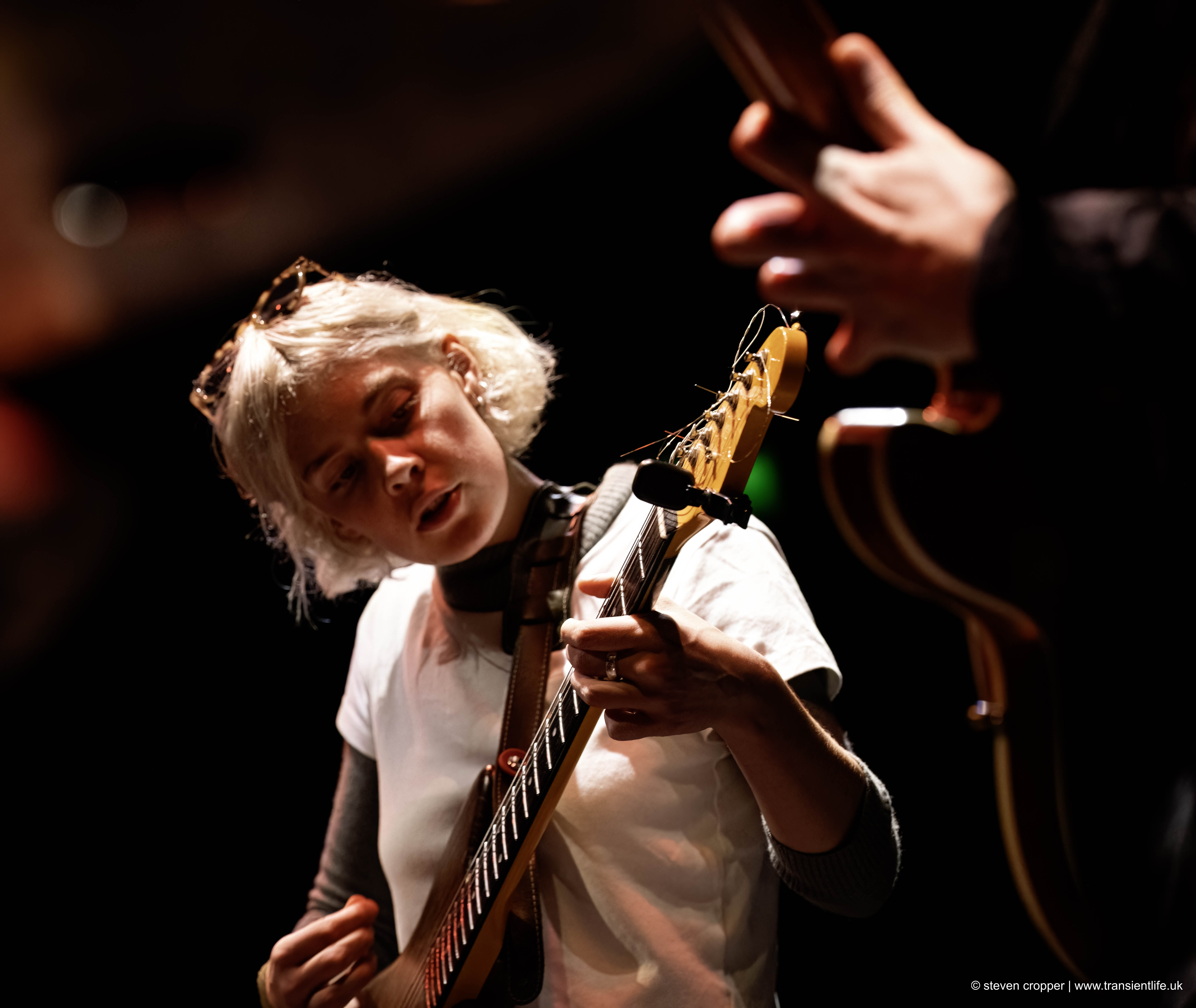
So what was the result? Surf music in space, maybe. The Ventures or Dick Dale and the Del-Tones with Derek Bailey or Sonny Sharrock sitting in. Rochford’s tunes for this line-up are sometimes based on simple two-bar chord modules reminiscent of the twangtastic “Walk, Don’t Run” or “Misirlou” (and occasionally finding beguiling elaborations of the format, as on the soaring “People Say Stuff, Don’t Be Disheartened”). Also springing to mind: the free-form guitar conversations of Jerry Garcia and Bob Weir in the Grateful Dead and of Tom Verlaine and Richard Lloyd in Television: “Dark Star” or “Marquee Moon” but with different perspectives.

It was great to see the band in this environment, arranged in a circle, the musicians locked into each other, watching for cues, tidying up small errors but letting rough edges show as they exploited the spaces left for spontaneity within the structures. Furiously loud in some places (driven by Rochford’s brutal energy), it was surprisingly lyrical in others; I don’t think I’ve ever heard three electric guitars played as softly as in the filigreed three-way conversation between Cunningham, Hurley and Preston that formed the delightfully unexpected coda to “Community”, which had started out as a reggae piece.

In this intimate setting, the musicians’ very visible sharing of their pleasure extended to the audience and was washed back in return. They were having fun, and so were we.

* Finding Ways is out now on Edition Records. The photos of Sebastian Rochford and Tara Cunningham at the Cockpit were taken by Steven Cropper and are used by kind permission.
Songs for his father

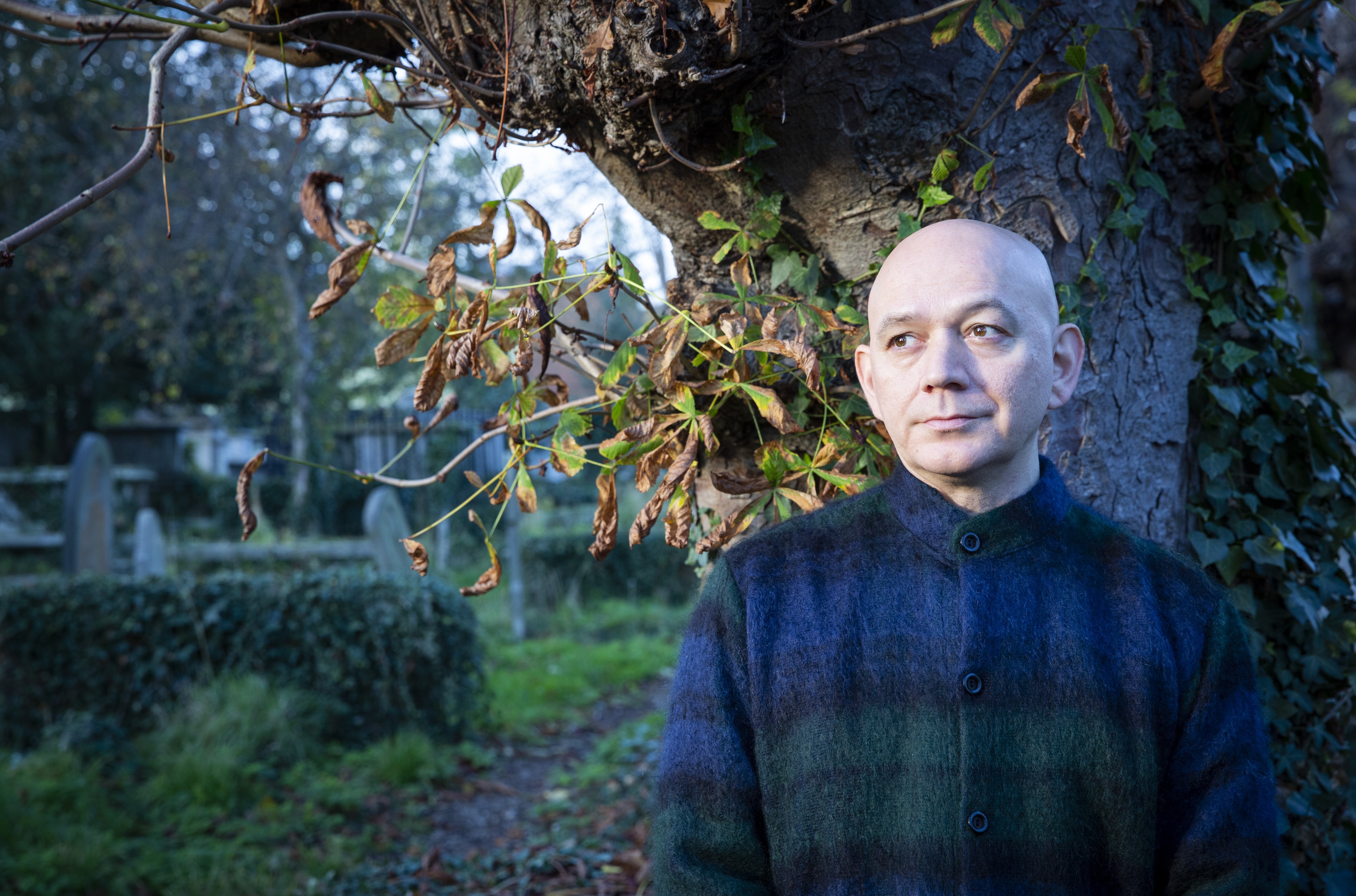
The drummer Sebastian Rochford is one of the ten children of the poet Gerard Rochford, who died in 2019, aged 87. In memory of his father, Seb sat down at his grandfather’s piano in his childhood home in Aberdeen and composed seven short piano pieces, adding an eighth written by his father, and then recorded them with his friend Kit Downes playing the piano and Seb himself occasionally adding a discreet commentary from the drum kit. The resulting album, titled A Short Diary, is the son’s remembrance of his father, a gathering of thoughts and feelings.

Unsurprisingly, the result can feel like a distillation of songs and perhaps hymns heard in childhood, filtered through retrospection and lamentation while quietly radiating a sense of joy and gratitude. The music is spare but not austere, simple yet profound, elegiac but never passive, drifting but not diffuse, melodic but not banal. Sometimes the sounds seem muffled, like the drums in a funeral parade, while clear in tone and articulation; at other times the overtones hang in the air, curling like smoke. ECM’s Manfred Eicher mixed the results, bringing the music — as Seb puts it — into focus, using his studio tools to make the piano sound like itself, allowing its natural resonance to sing out.

The eighth piece, “Even Now I Think of Her”, was initially recorded by Gerard Rochford on his phone and sent to his son, who gave it to Downes. It’s a thing of exquisite beauty, the lovely melody and its gentle harmonic underpinning held aloft by a gentle rustling of brushes and cymbals.

Seb is best known for his work with Polar Bear, Acoustic Ladyland, Sons of Kemet, Adele, Leafcutter John, Brian Eno, Ingrid Laubrock, Damon Albarn and many others. He is a virtuoso. The virtuosity on show here, however, is not of technique but of something deeper and more valuable: the ability to take the deepest, most personal feelings and turn them into wordless music in which everyone can share. This is music without rhetoric or ostentation, in which delicacy and strength find an ideal balance. A quiet masterpiece, I think.

* The photograph of Sebastian Rochford is by Rosie Reed Gold. A Short Diary is released on ECM on January 20.

For Jason Yarde

Xhosa Cole and Caroline Kraabel arrive at Café Oto

In the middle of the afternoon, an outsized multicoloured scarf walked through the door into the Vortex, playing an alto saxophone. It turned out, after he had unwrapped himself, to be Xhosa Cole, who carried on playing as he made his way to the stage. There he fitted seamlessly into a free improvisation being devised by the trumpeter Chris Batchelor, the tenorist Julian Siegel, the cellist Shirley Smart and the pianist Liam Noble as part of a three-venue benefit for the saxophonist Jason Yarde.

Yarde, who is one of Britain’s very greatest jazz musicians, collapsed on stage in south-west France in mid-October after suffering a massive stroke. The presence of a couple of medics in the audience may have saved his life, and the process of treatment for a bleed on his brain continued at a hospital in Toulouse. He is recovering at home now, but an appeal for funds to meet his costs has met a predictably warm response, leading to the three jazz clubs in Dalston — the Vortex, Café Oto and Servant Jazz Quarters — getting together to organise a highly unusual benefit.

Starting at two o’clock in the afternoon, several dozen musicians of diverse age, gender and ethnicity spent two and a half hours migrating between the three adjacent venues, joining up for collective improvisation in spontaneously self-selected ensembles. I began my listening at the Vortex, where a group featuring the altoist Caroline Kraabel, the tenorists Dave Bitelli and Harrison Smith, the guitarist Dave Okumu, the bassist Dominic Lash and the drummer Sebastian Rochford surged through free passages into a charging section of unruly swing that reminded me of Charles Mingus’s “Hog Callin’ Blues”. Later Cole joined a group with Loz Speyer (trumpet), Neil Charles (bass) and Rochford again on drums, whose interplay was agile and intuitive.

Arriving at Café Oto, I discovered I’d just missed a line-up featuring Evan Parker and Eddie Prévost. Instead I heard a set by a group including the singer Cleveland Watkiss, the baritone saxophonist Cath Roberts, the trumpeter Charlotte Keeffe and the violinist Benedict Taylor, in which the pianist Veryan Weston played a duet with the improvising tapdancer Petra Hasler. As I was leaving, a re-scarfwound Cole was marching towards the Oto’s entrance, accompanied by Kraabel, together creating al fresco counterpoint for two altos.

Next, over in the basement at Servant Jazz Quarters, I had said hello to the pianist Steve Beresford and heard a couple of minutes of a set featuring the tabla player Ansuman Biswas and several string players. But then, with a loud BANG, the lights went out and the music stopped dead. A water leak from adjacent building works had found its way into the club’s electrics. No injuries but plenty of confusion. End of music.

Back at the Vortex, the altoist Dee Byrne, the pianist Laura Cole, the guitarist Daniel Thompson and the drummer Mark Sanders, with Taylor on violin and Lash on bass, had just got started when Charlotte Keeffe and Cath Roberts arrived to join them, already playing as they made their way up the stairs. Soon they were joined by another violinist, Sylvia Hallett, and together they conjured something that soared at first noisily and then gently before floating to earth in the sort of inspired ending that is one of the joys of free improvisation.

It was the kind of a day when the music really does turn itself into a common property, its barriers dismantled and prejudices abandoned, available to all. A day that fully reflected the qualities of the inspired and inspiring musician to whose recovery it was dedicated.

* For those who didn’t know about Jason Yarde’s stroke, or who couldn’t make it to the benefit, and would like to make a donation, here’s the crowdfunding link: https://www.gofundme.com/f/jason-yardes-stroke-rehabilitation-journey?utm_campaign