Exhuming Nico

It was out of sheer curiosity that I went along to Café Oto last night to hear a performance of Nico’s The Marble Index by the string quartet Apartment House (Mira Benjamin and Chihiro Ono on violins, Bridget Carey on viola and Anton Lukoszevieze on cello) augmented by Kerry Yong on piano and other keyboards. The part of Nico was taken by the singer Francesca Fargion.
The room was sold out and the audience expectant. The original album, in which John Cale added his viola, other instruments and post-production touches to Nico’s seven songs, has a special status within the history of rock: barely half an hour long, it arrived as a message from a different world, seemingly shaped by the sensibility of European art-song and the practices of the American classical avant-garde, completely uncompromising in the challenge it offered the listener in 1968.
I suppose the nearest it ever came to being played in concert in its original form during Nico’s lifetime was when she performed a couple of its songs with accompaniment by Cale and Brian Eno at the Neue Nationalgalerie in Berlin in 1974, where they were received with the mixture of applause and outright derision that had greeted the album’s release six years earlier. I certainly never expected to hear the music performed live again after her death in Ibiza 35 years ago.
It was brave of Yong to attempt a modified transcription of the full work, and of Fargion to deliver Nico’s words and melodies. Of course it wasn’t remotely like hearing Nico herself, whose strong, unabashed, wilfully inflexible and uninflected voice defined the music every bit as much as the sound of her harmonium and her strangely memorable melodies, with their echoes of folk tunes and lullabies.
Very wisely, Fargion did not attempt an imitation. But although she is a fine, classically trained singer with a pleasant tone, her interpretations seemed colourless, fading into the strings rather than dominating them. Only “Frozen Warnings”, where the string writing was at its most economical, and “Nibelungen”, a lovely acappella song unreleased until Elektra put out an expanded edition in 1991, allowed the emergence of an attractive poignancy at a worthwhile creative variance from that of the original.
If you wanted to do something really interesting with The Marble Index, to try and match its own inherent challenge, you’d probably have to take it apart and reconstruct it in a different form. This was a careful and respectful performance, observing some of the details of the original, such as the tiny vocal echo on “No One Is There” and a modest version of the pealing piano on “Evening of Light”, although the sound of the harmonium was not heard until “Julius Caesar (Memento Hodie)”, the fifth song in the sequence.
The audience listened intently, and the warmth of their response spoke of the veneration in which this extraordinary piece is now held. In the end, though, what was completely missing was the sense of outright shock and enigmatic purpose that the original artifact itself still conveys, 55 years later, and which is such a part of its eternally untranslatable meaning.
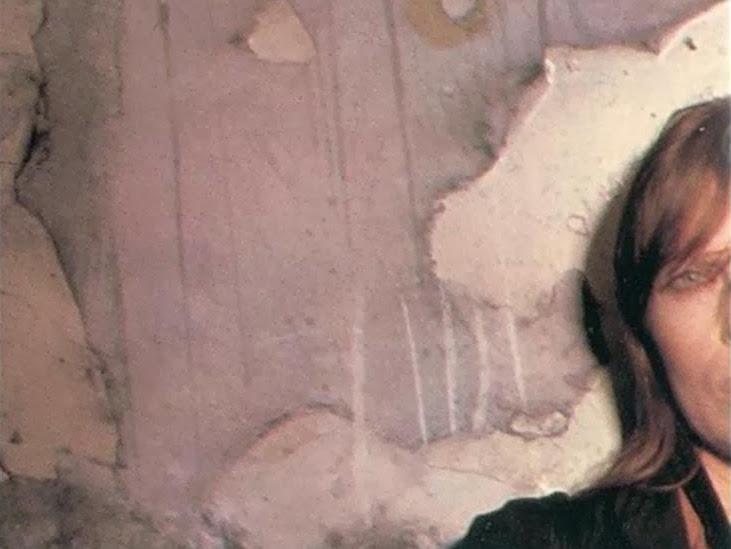 Nico died in Ibiza, a place she had loved for many years, one hot July day in 1988. Leaving the rented farmhouse where she was staying with her son, Ari, she headed into town, apparently intending to buy some hashish. At some point in the journey she fell from her bicycle and suffered a head injury. It was not until the following day that Ari called the police, gave them a description, and received the news that she had died in hospital.


 thebluemoment.com