Skip to content

Posts tagged ‘Neil Hubbard’

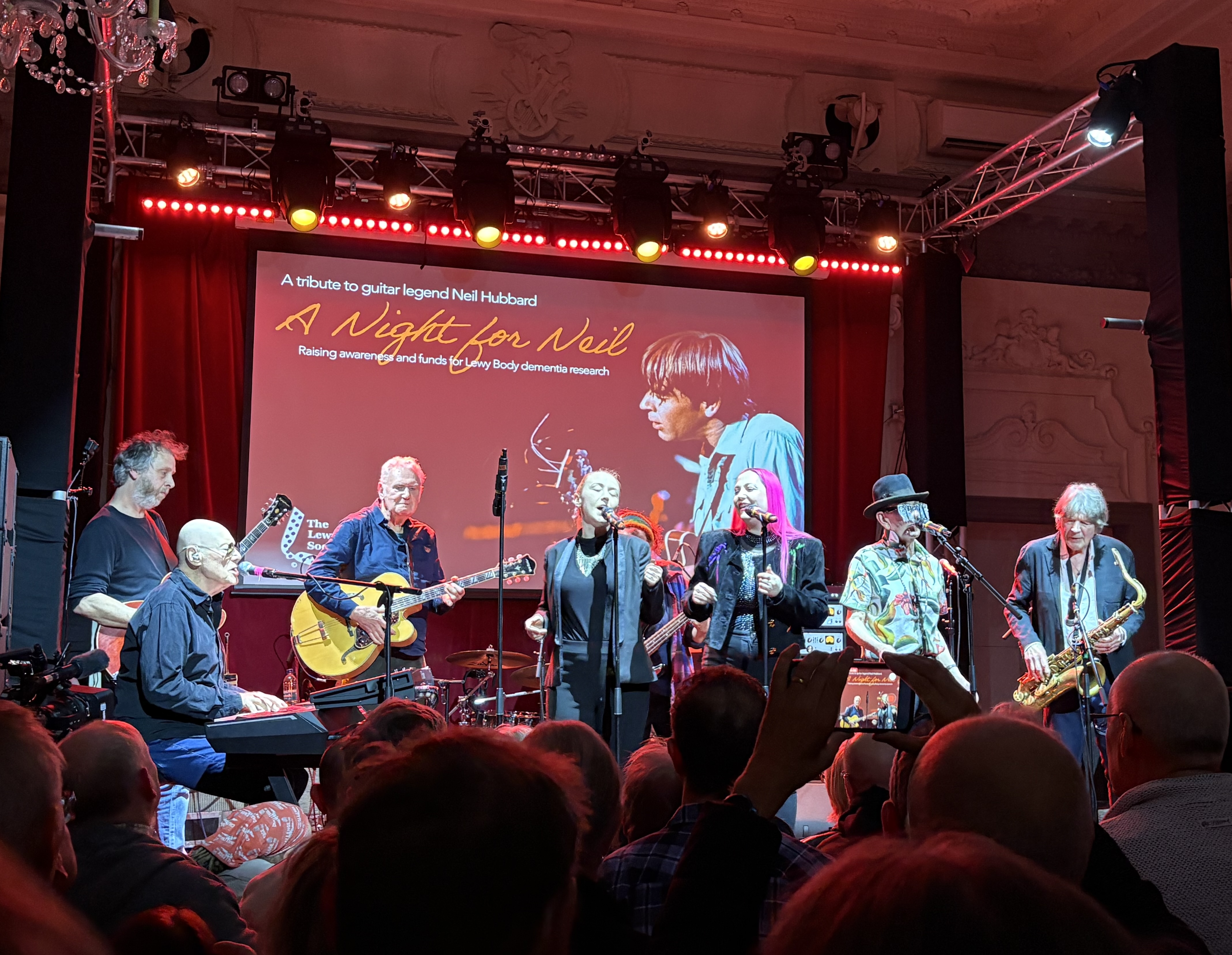
‘A Night for Neil’

Kokomo at Bush Hall

Neil Hubbard’s guitar was a thread that ran through British rock in the late ’60s and throughout the subsequent decades as a member of Bluesology, Wynder K. Frog, Joe Cocker’s Grease Band, Juicy Lucy, Kokomo and others, and as a hired gun all the way from Jesus Christ Superstar and Evita via Alvin Lee and Robert Palmer to Roxy Music’s Avalon and Bryan Ferry’s “Slave to Love”. He could play a storming solo, as Paul Carrack reminded the audience at Bush Hall last night, but he really excelled as a rhythm player: a master of the groove. Carrack recalled the remark of B. B. King, who met Hubbard on the sessions for his Deuces Wild album in 1997, that “you could set your watch by him.”

Last night’s sold-out event was a fundraiser for the charity researching the disease — Lewy body dementia — from which Hubbard is suffering, and which kept him away from this celebration of his career. The all-star bill opened with Hamish Stuart, once of the Average White Band, putting out some admirably funky stuff with a fine version of Al Green’s “Love and Happiness” and an arrangement of “Pick Up the Pieces” concocted for AWB’s appearance at the Montreux Jazz Festival by their great propducer/arranger, Arif Mardin, and featuring the non-nonsense tenor saxophone of Jim Hunt.

Next came Kokomo, their five original members — singer Frankie Collins, singer-pianist Tony O’Malley, saxophonist Mel Collins, guitarist Jim Mullen and percussionist Jody Linscott — supplemented by those who have replaced the fallen along the way, including the singers Charlotte Churchman and Helena May Harrison and bass guitarist Jennifer Maidman. This was a classic Kokomo mini-set, including Quincy Jones’s “Stuff Like That”, Stevie Wonder’s “So What the Fuss”, the band original “Third Time Around” and Bobby Womack’s “I Can Understand It”.

Attention turned to the screen behind the musicians, where we were shown a little film of Hubbard in the home where he is currently living, playing his Gibson ES-355 with a young friend on an acoustic guitar. As Neil’s golden retriever lay at his feet, he strummed the intro to Bill Withers’ “Lovely Day” — which the live band picked up and flew with.

Carrack was next, with “How Sweet It Is (To Be Loved By You”, “Stand By Me” and, of course, Ace’s immortal “How Long”, pub rock’s finest hour, its chorus sung back at him by the audience. By this point, the love in the room was overflowing.

Finally the stage was cleared for Roxy Music — two original members, Andy Mackay and Phil Manzanera, joined by Chris Spedding and Chester Kamen on guitars, Guy Fletcher on keys, Guy Pratt on bass guitar, Andy Newmark on drums and Jody Linscott, the night’s Most Valuable Player, plus the Kokomo singers, with Dionne Collins replacing Churchman. Kamen sang “Love Is the Drug”, Louise Marshall arrived to deliver “Avalon” and Mackay’s soprano saxophone was featured on a sultry instrumental that I think might have been “Tara”.

Then came a real coup de théâtre as we watched back-projected film of a Roxy concert from Fréjus in 1982, with Hubbard featured alongside Ferry, doing “My Only Love”, synched up (via a click track in Newmark’s headphones, I’d guess) to the live band. Two people who were unable to be with us on the night were nevertheless making their contribution. The technical manipulation worked beautifully.

To close, almost the entire company crowded on to the stage to go back almost to where Neil’s story began, with Joe Cocker’s gospellised version of “With a Little Help from My Friends”, the lead vocal bravely taken by O’Malley. The perfect end to a night that felt like a meeting of old friends, an evocation of old glories and an affirmation of… well, something or other. Something good, anyway.
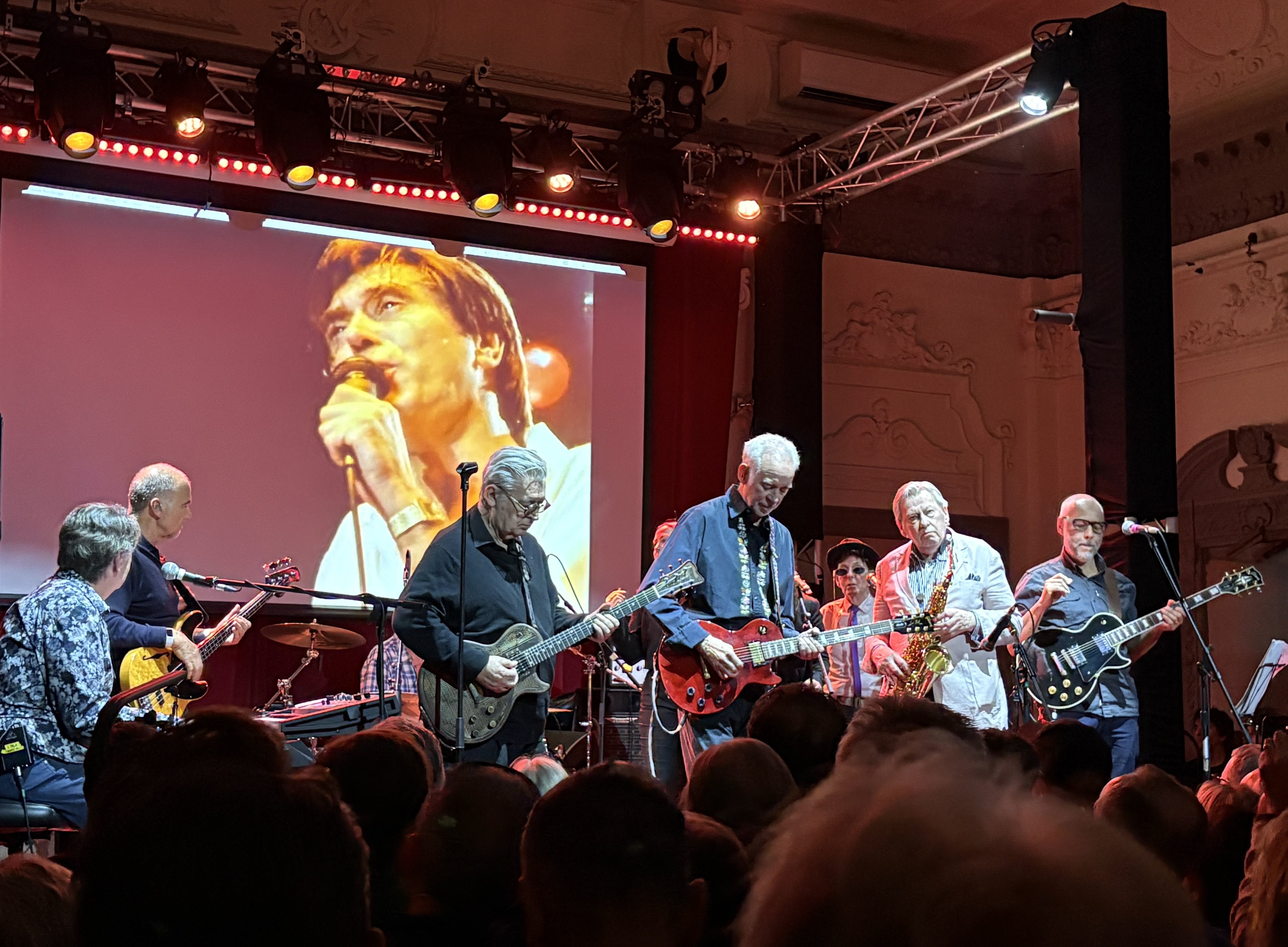
Roxy Music 1982/2026 at Bush Hall

Still Kokomo

No band is more likely to make me smile from the first note than Kokomo. Almost 50 years after they emerged in the pubs of London, they’re still at it. Much changed, as we all are since we first gathered in Islington’s Hope & Anchor to marvel at the authenticity of their feeling for funk, but still keeping the faith.

Of the original members, the singer Frank Collins, the singer/keyboardist Tony O’Malley, the percussionist Jody Linscott and the guitarists Jim Mullen and Neil Hubbard were present last night at the Half Moon in Putney, one of their favourite venues. They were joined by the bassist Jennifer Maidman and the drummer Andy Treacey, long-term replacements for Alan Spenner and Terry Stannard, the saxophonist Jim Hunt, filling Mel Collins’s shoes, and the singers Helena May Harrison and Charlotte Churchman, who since 2014 and 2017 respectively have replaced the late Dyan Birch and Paddie McHugh.

The repertoire doesn’t change much as these reunions come around. No Kokomo fan would go away entirely happy without having heard Bill Withers’ “Lonely Town Lonely Street”, O’Malley’s instrumental “Tee Time”, Allen Toussaint’s “Yes We Can”, Hubbard’s sweetly soaring “Anytime” or their traditional showstopper, Bobby Womack’s “I Can Understand It”.

The sound was rough last night, and one or two instrumental stretches went on a bit too long, but the general vibrancy made up for it. The highlights for me were Churchman’s storming delivery of Stevie Wonder’s great “So What the Fuss”, Harrison bossing “Stuff Like That”, the divine Linscott’s beautifully subtle conga-playing on the closing “Third Time Around”, and Jim Hunt’s gruff Texas tenor touches throughout. It all made me very glad that there are still nights like these.

The groove abides

Tony O'MalleyOf all the British bands I went out to hear during my time as an A&R man in the mid-1970s, the one I really ached to sign was Kokomo, a 10-piece soul outfit who played the clubs at the time when pub rock was about to give way to punk rock. Unhappily for me, they had already fallen into the clutches of Steve O’Rourke, Pink Floyd’s manager, who secured them the sort of deal with CBS, a major label, that must have looked like a guarantee of fame and fortune. My souvenir of the nights I heard them play is a cassette tape that includes a live recording of their sublime version of Bobby Womack’s “I Can Understand It”, a great song to which they always did justice.

The tape captures them in their full glory: Tony O’Malley playing keyboards and singing lead, Dyan Birch, Frank Collins and Paddy McHugh singing back-up, Mel Collins on saxophones, Jim Mullen and Neil Hubbard on guitars, Alan Spenner on bass, Terry Stannard on drums and Jody Linscott on congas. So it was with a sense of anticipation that I went to see three of them — O’Malley, Collins and Hubbard — at the 606 Club in a Chelsea basement the other night. I don’t believe in making requests because I think that musicians should be allowed to play exactly what they most feel like playing, but I had my fingers crossed that, almost 40 years later, Womack’s song would still be in the repertoire.

The first reassurance was that, reunited on this occasion under O’Malley’s leadership, the three of them retain all the qualities that made them outstanding almost 40 years ago. The brilliant Collins does the Texas tenor thing, when the circumstances are appropriate, so convincingly that you wouldn’t be surprised if his passport gave his place of birth as Fort Worth rather than the Isle of Man. Hubbard brings the understated soulfulness of Cornell Dupree to any band he’s in. And O’Malley’s lovely warm-hearted Ray Charles growl makes him one of the great blue-eyed soul singers. With Jennifer Maidman on bass guitar and Brad Webb on drums, they blew up a storm.

And, to my joy, they did “I Can’t Understand It”, giving it full value. If you want a taste of it, here and here are clips of a Kokomo reunion at the Sheen Club in Barnes five years ago, Parts 1 & 2 of that very song. And here is a version with a slightly different band at the 606 a year later. You don’t quite get the impact of the way they sounded amid the steaming ambience of the Hope & Anchor on a hot night in 1974, but you get the idea. And, as I was shown on Friday night, the groove abides.

* The photograph of Tony O’Malley, Brad Webb, Jennifer Maidment and Neil Hubbard was taken by Graham Webb, to whom many thanks.