Skip to content

Posts tagged ‘Mike Westbrook’

Keyboard studies

Perhaps it was last month’s 50th anniversary of Keith Jarrett’s Köln Concert that got me thinking about solo jazz piano. As it happens, I’d been listening recently to the incomparable Art Tatum, particularly to the unaccompanied pieces from Jewels in the Treasure Box, recorded in 1953 at the Blue Note in Chicago and released last year, and to Paul Bley’s 1972 very different solo classic Open, to Love, now being given a vinyl reissue.

Then Mike Westbrook got in touch to tell me that his four volumes of solo recordings, made in various locations between 2022 and 2024 for private circulation under the title The Piano and Me, were now — thanks to entreaties from several quarters, including this one — available to everyone via download. And, kicking off a three-night season at Cafe Oto, I heard Alexander Hawkins play a half-hour solo set that achieved marvels of modernistic sonic architecture on material that will form part of a forthcoming solo release.

All this solo piano made me wish there was a place in London today similar to Bradley’s, the piano bar that existed in Greenwich Village between 1969 and 1996. A few months after it opened, I saw two significant pianists playing solo there. The first was the bebop veteran Al Haig, whose touch and lucidity made an understated but indelible impression. The second was Dave McKenna, in whose large frame were gathered all the virtues of mainstream jazz pianism. Like Jimmy Rowles and Alan Clare, McKenna seemed to know every standard ever written, and then some. He died in 2008, aged 78. A priceless film of him was made at a private party in 1991.

I love it when a pianist, whether on a concert platform or a railway station concourse, has the time to follow a train of thought wherever it may lead. That’s what I cherish about the Westbrook recitals, which follow on from his previous solo albums: Paris (2017) and Starcross Bridge (2018). He takes the opportunity to wander, but never without purpose. In the fourth volume of the new set, recorded at Ashburton Arts Centre in Devon, he moves seamlessly from his own “View from the Drawbridge” to Monk’s “Jackie-ing” and then John Ireland’s hymn tune “Love Unknown”. In the second volume, recorded at the Pizza Express, “My Way” runs into “Falling in Love Again”, then into “Lover Man”, and then into Billy Strayhorn’s “Blood Count”.

It’s a look inside the mind of a musician who, now in his eighties, finds nourishment in Mingus, Bacharach, Rossini and the Beatles. The pace is steady, the mood reflective. There’s time to explore the melodic byways, the harmonic implications. No Tatum-style technical fireworks, yet the result is mesmerising. And, as with all the music and musicians I’ve mentioned in this piece, it’s a reminder that the piano really is one of humanity’s noblest inventions.

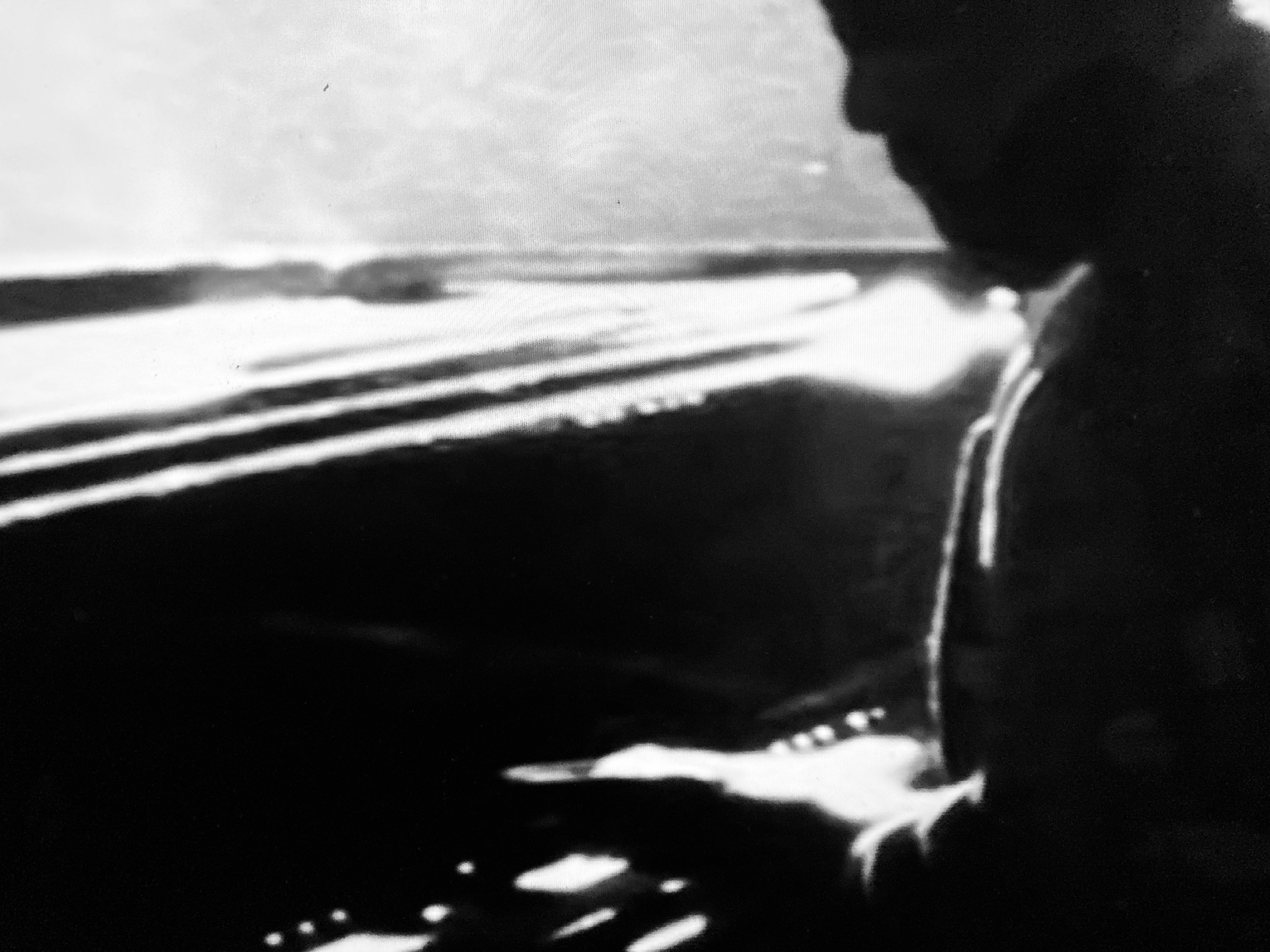
* You’ll find Mike Westbrook’s The Piano and Me here: https://mikewestbrook.bandcamp.com/. Art Tatum’s Jewels in the Treasure Box is on the Resonance label. Paul Bley’s Open, to Love is reissued in ECM’s Luminessence vinyl series. Alexander Hawkins’s new solo album, Song Unconditional, will be out in the spring on Intakt. The photo is a screen-grab from a fine TV documentary on Art Tatum: https://www.youtube.com/watch?v=VXJb14qufe4

Mike Westbrook’s Band of Bands

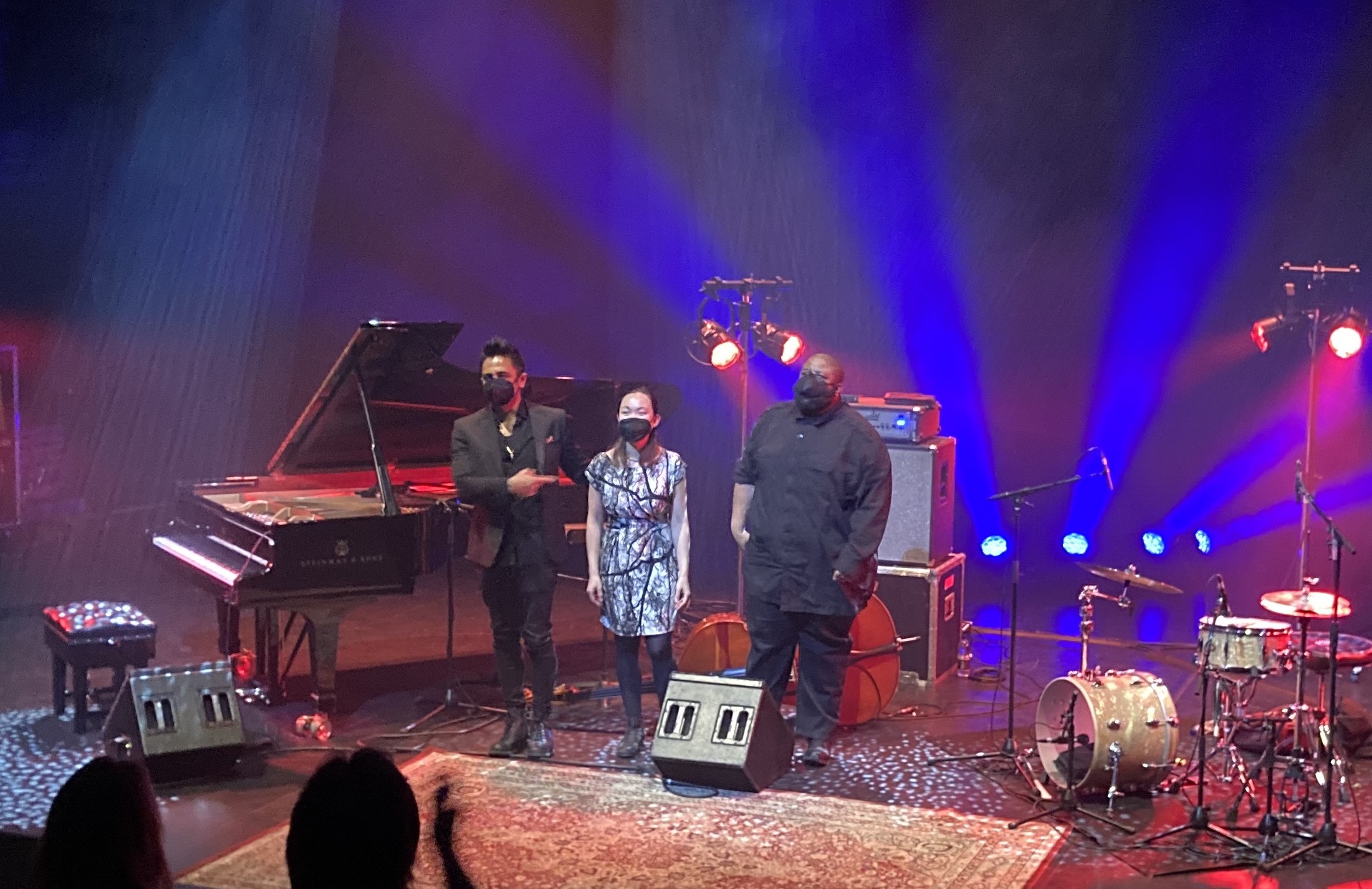
From left: Mike Westbrook, Kate Westbrook, Karen Street, Pete Whyman, Chris Biscoe, Marcus Vergette (out of shot: Coach York)

You might have noticed, Mike Westbrook said as the second of today’s two lunchtime sets at the Pizza Express drew to a close, that a lot of this music we’ve been playing has something to do with the blues. And then he quoted Duke Ellington: “When times get tough, I write another blues.” That, Westbrook said, is what he found himself doing rather a lot these days. And then he and the new septet he calls his Band of Bands played “Gas, Dust, Stone”, which he described as “a blues for the planet”.

Its slowly wandering theme, first sung by Kate Westbrook and then voiced for the alto saxophones of Chris Biscoe and Pete Whyman and the accordion of Karen Street, reminded me at times of Ellington’s world-weary “4:30 Blues” before the mood switched, charging into the 12/8 of Charles Mingus’s “Wednesday Night Prayer Meeting”, powered by Marcus Vergette’s bass and Coach York’s drums, with a beautiful Street solo.

Westbrook, who is 87, formed his first band in Plymouth in 1958, and the Band of Bands celebrates longevity. Mike and Kate have been working, writing and performing together for 50 years. Biscoe first joined them 40 years ago, to create the Westbrook Trio. Street and Whyman have been with them on various projects for 30 years. Vergette and York, the newcomers, were called to the colours a mere 20 years ago, and are now the heartbeat of the Uncommon Orchestra.

The septet is both an expansion of the trio and a reduction of the big band, capable of handling everything from the fast bebop of the opening “Glad Day”, one of Westbrook’s pieces inspired by William Blake, through a brilliantly recast version of Billy Strayhorn’s “Johnny Come Lately” to the slow-rolling gospel cadences of “Blues for Terenzi” and the open spaces of “Unsigned Panorama”, with marvellous unaccompanied solos by Whyman (on clarinet) and Street.

Several songs from Fine ‘n’ Yellow, their 2010 song cycle, made an impression. Throughout “Yellow Dog”, York maintained a pulse (on his beautifully clear Murat Diril ride cymbal) three times that of the rest of the band, allowing Biscoe to float in his typically expressive solo between the drummer’s tempo, the much slower one being paced by Vergette, and the unstated one in between. “My Lover’s Coat”, finely sung, seemed to have “Blue Monk” in its bones.

If there were frequent reminders of how thoroughly Westbrook has metabolised his love of Ellington, Mingus and Monk, there was also evidence of a new enthusiasm for the songs of Frederick Hollander, a German composer of film music. Born Friedrich Hollaender in London in 1896 and brought up in Berlin, he wrote for Max Reinhardt’s theatre productions, accompanied artists in the Weimar-era cabarets, and wrote the music for Josef von Sternberg’s The Blue Angel, including “Falling in Love Again”, delivered by the film’s star, Marlene Dietrich. Leaving Germany when the Nazis took power, he arrived in Hollywood in 1934, anglicised his name, and had written for more than 100 films before his return to Germany in 1956, where he died in 1976.

One of those Hollywood films was A Foreign Affair, a 1948 comedy-drama set in post-war Berlin, directed by Billy Wilder and again starring Dietrich. Kate Westbrook delivered two of Hollander’s songs from that film, both concerned with the perils of emotional and sexual transactions: the sardonic “Black Market”, a Weill-esque piece on which she departed from the text to display her command of vocal effects, and “Illusions”, a gorgeous ballad on which she was exquisitely supported by Street and Biscoe.

Pointing out to the audience that this was the first public appearance of the Band of Bands, Westbrook expressed the hope that there would many more. An album devoted to the music of Frederick Hollander might not be such a bad next step*.

* See a comment below.

William Blake in Piccadilly

Although any performance of the Westbrook Blake — as Mike Westbrook’s settings of William Blake’s words have been known for more than 40 years — is a powerful event, the emotional impact of last night’s concert by Mike and Kate Westbrook and their musicians at St James’s Church, Piccadilly was intensified by the knowledge that this Christopher Wren church, consecrated in 1684, was the place where the English poet, painter and visionary was baptised in 1757, soon after his birth in Soho.

Titled Visions and Voices: Echoes of William Blake, the evening began with Kate Westbrook delivering “London”, one of the most harrowing poems in the English language, before Phil Minton took over for “Let the Slave”, the next in the sequence of poems linked and illuminated by instrumental solos. Billy Thompson’s fiddle summoned angels and demons, Chris Biscoe’s alto saxophone spoke to the human capacity for joy, Mike Westbrook and a guest, Matthew Bourne, delivered absorbing piano solos, Steve Berry’s bass was lifted out of a solemn reverie by artful background figures, and most of all the accordion of the remarkable Karen Street transfixed the audience with a long unaccompanied improvisation that soared and dived and spun as if a flock of birds of many shapes and sizes but linked by an avian telepathy had found their way into the church. It was, I think, the most astonishing single piece of playing I’ve heard this year.

You might have seen the Westbrook Blake a few times over the years, and be familiar with the recordings, but its grip never slackens. In fact as the country collapses, hollowed out by a greed that Blake identified two centuries ago, it grows more strikingly relevant. As usual, Mike Westbrook recited passages as urgent and resonant in today’s seemingly very different circumstances as they were when first written:

Compel the poor to live upon a crust of bread, by soft mild arts.
Smile when they frown, frown when they smile; and when a man looks pale
With labour and abstinence, say he looks healthy and happy;
And when his children sicken, let them die; there are enough
Born, even too many, and our earth will be overrun
Without these arts.
..

A few years years after creating his Blake settings, Mike Westbrook composed an extended work for band and orchestra titled London Bridge Is Broken Down, commissioned by and first performed at a festival in Amiens in 1987. Inspired by travels around Europe and meditations on its history at a time when an old order was falling apart, it is divided into sections titled London Bridge, Wenceslas Square, Berlin Wall, Vienna and Picardie. A much admired studio version came out on Virgin the following year. Now there’s the release of the recording of a performance in Zürich in 1990, with Westbrook’s 11-piece unit and the 35-piece Docklands Sinfonietta. Even if you already have the original release, I recommend hearing this one, too, for the exceptional spirit with which the work is played and sung (by Kate Westbrook, using texts from Goethe, Siegfried Sassoon and others).

All Westbrook’s virtues and trademarks are allowed to flower in this 80-minute performance, which stands tall among his catalogue of extended works. The 23-minute sub-section of Vienna titled “Für Sie”, with solos by Alan Wakeman on soprano saxophone, Paul Nieman on trombone, Chris Biscoe on baritone and Pete Whyman on alto, is a slowly unfolding kaleidoscope of exquisite shapes, sounds, trajectories and textures.

* Mike Westbrook’s London Bridge: Live in Zürich 1990 is released on Westbrook Records (www.westbrookjazz.com)

London Jazz Festival 1: The peak of their art

After an hour of Mike Westbrook’s autumnal musings at the Pizza Express’s piano on Sunday afternoon, in which the great composer, arranger and bandleader stitched together the memories of a life in music into a seamless reverie with a quiet intensity that held the room in thrall, the scene at the 2021 London Jazz Festival moved to the South Bank, where Vijay Iyer, Linda May Han Oh and Tyshawn Sorey stormed the Queen Elizabeth Hall with something belonging entirely to the here and now.

Sometimes you get lucky and witness something that makes you realise how high the standards can be. Doesn’t matter what it is. Tennis, poetry, carpentry. On Sunday night it was jazz. A pianist, a bassist and a drummer dropped in to examine the art of the possible, demonstrating over the course of two hours of high-density interplay what can happen when three like-minded virtuosi get it into their heads to create something in which 1+1+1 = infinity.

Basically, they played their way through their recent album, Uneasy. It’s one of the year’s finest releases, but here they stretched it, expanded it, tossed its elements around, and gave it a completely new existence. So many bases were covered — 21st century takes on bebop, Latino patterns, reggae, the circular rhythms of Tyner-Garrison-Jones — that the time passed very quickly.

Linda Oh is the least known of the three, but her bass playing was the heart of the group: slight build, total physical commitment, wonderful tone, great agility, an endless flow of ideas. Vijay Iyer is a cerebral pianist who nevertheless relishes any involvement with rhythm (one night at the Lido in Berlin a few years ago, he and his regular acoustic trio — completed by the bassist Stephan Crump and the drummer Marcus Gilmore — locked into an endless groove that any funk band would have envied). Tyshawn Sorey operates with complete comfort at the absolute extremities of the dynamic range, from whisper-quiet to shatteringly loud, plus every setting in between. On this occasion he made you wonder why anyone would ever need more than a small bass drum, a medium-sized snare, a single cymbal and a hi-hat, from each of which he drew an astonishing variety of tones and timbres.

Their music rattled, jolted, cruised, purred, broke apart, blended back, cantered, swung, faked a stumble, slowed to a sigh. The audacity made you gasp. Solos were taken, but were always part of the whole. Oh’s leaping grooves made you want to dance. Iyer’s upper-register filigree made your mind soar. Sorey’s sudden whipcracks straightened your back.

Another side of the multi-dimensional Sorey is on view in For George Lewis / Autoschediasms, a two-CD set in which his compositions are performed by Alarm Will Sound, a New York-based 16-piece chamber orchestra here made up of brass, woodwind, strings and percussion, tuned and untuned. “For George Lewis”, a 50-minute piece dedication to his mentor and fellow composer, conducted by Alan Pierson, bears the imprint of Sorey’s interest in the music of Morton Feldman: fully composed, based on a process of accretion and subtraction of single held notes, it moves with mesmerising deliberation through austere and refined layers of sound, creating the musical equivalent of colour-field painting.

“Autoschediasms” is Sorey’s name for his version of the approach to creating real-time music with large ensembles pioneered by Butch Morris (who called it “conduction”) and Anthony Braxton. In these two performances, recorded in St Louis in May 2019 and in various US cities via internet video chat in October 2020, Sorey takes the rostrum, giving the musicians prompts via gestures and prepared cue-cards. “The method can involve the use of up to four batons simultaneously by the conductor,” he writes in his informative notes, and anyone who has seen him at a drum kit will know that this is a challenge well within his scope. The result is a much more obviously active ensemble music, its details and densities sometimes clashing or overlapping, but with an emerging coherence and, like a master of action painting, an excellent sense of drama.

* Uneasy by Vijay Iyer, Linda May Han Oh and Tyshawn Sorey is on ECM. For George Lewis / Autoschediasms by Tyshawn Sorey and Alarm Will Sound is on Cantaloupe Music (www.cantaloupemusic.com).

Mike Westbrook’s ‘Citadel / Room 315’

755007550004_1

One day in 1974 Mike Westbrook came into the Island offices in St Peter’s Square, Hammersmith, to play me a tape of a concert he’d given in Södertälje with the 16-piece Swedish Radio Jazz Group. He’d been commissioned to write an extended work for the ensemble, with John Surman as a featured soloist. He called the piece Citadel / Room 315.

I was keen, and we started to make plans. Then something got in the way, and it didn’t happen. So instead of releasing the live version, several months later Mike went into the studios with a band of UK-based musicians including Kenny Wheeler and Henry Lowther on trumpets and Malcolm Griffiths on trombone, as well as Surman, to record a version that was released the following year by RCA, who’d put up the money.

That recording is now rare, which makes it even better news that the Swedish concert is now being released for the first time, with Westbrook’s blessing, under the title Love and Understanding, borrowing the name of one of the suite’s 11 sections. Hearing it for the first time in 46 years, I was delighted to find it every bit as exceptional as I’d thought back then.

In a manner typical of Westbrook, it ranges through a variety of approaches and moods, from the meditative to the wildly exultant, engaging the emotions all the way. The long “Love and Understanding” might be described as an essay on boogaloo moods, evolving from a slinky funk to a streetwise strut, taking in the “Oh Happy Day” riff and brassy TV detective-series brass fanfares en route. “Pastorale” begins in the way its title suggests before mutating into solos over the “Grazing in the Grass” motif, played by Westbrook on electric piano — another kind of pastorality, I guess. From the gentler passages, Surman’s soprano on “Tender Love” is particularly exquisite.

What also distinguishes the recording is the quality of the Swedish musicians. The solos from Jan Allan and Bertil Lövgren (trumpets), Arne Domnérus (alto and clarinet), Lennart Åberg (soprano and tenor), Lars Olofsson (trombone), Rune Gustafsson (guitar), Bengt Hallberg (piano) and Georg Riedel (bass) is exceptional, as is the drumming of Egil Johansen. They don’t go in for the sort of free-for-all shout-ups to which Westbrook’s British bands were prone, but I can’t imagine anything more invigorating than Åberg’s soprano wailing over the last section of “Love and Understanding”, immediately followed by Allan’s beautifully control of diminuendo as the section ends, or Lövgren’s gloriously lyrical delivery throughout “Pastorale”. The acapella trio for Domnérus’s clarinet and the bass clarinets of Surman and Erik Nilsson that opens the long “Sleepwalker Awaking in Sunlight” is a complete joy, as is Gustaffson’s liquid bebop guitar solo which follows it.

This makes it even more extraordinary that the reason for the cancellation of the proposed Island release was that a couple of the Swedish musicians were unhappy with their solos, didn’t want them preserved for posterity, and wouldn’t sign clearance forms. Listen, and try to guess who they might have been. It’s impossible.

In all, then, this is definitely one to add to the list of the great recordings of Westbrook’s important extended works of the past half-century, from Celebration through Marching Song and Metropolis to On Duke’s Birthday and The Cortège and many more. And in this case, to say the least, better late than never.

* Love and Understanding is released as a vinyl double album and a single CD the My Only Desire label (myonlydesirerecords.com). The photograph of Mike Westbrook is from the sleeve of the RCA version of Citadel and was taken by Eric Blum.

Lou Gare: a souvenir

Lou Gare album

There was a special magic about Lou Gare’s saxophone playing, as many people rediscovered when going back to his slender discography on hearing of his death towards the end of last year, at the age of 78. Now Mike Westbrook, in whose bands Gare played in the 1960s and again in recent years, has done us an enormous favour by assembling and releasing a CD containing nine examples of his mature playing in latter-day concert and club performances with the Uncommon Orchestra.

I don’t know what effect his years as a free-improvisation pioneer with AMM had on Gare’s approach to music, but these performances show that he could infuse what you might call a fundamentally mainstream-modern approach with freshness and substance. In his conception, an almost old-fashioned warmth was no barrier to modernity.

In Memory of Lou Gare, as the compilation is titled, begins with the 12-minute version of Westbrook’s “D.T.T.M.”, an adaptation of a section of the suite On Duke’s Birthday, that I mentioned in a post written for this blog soon after his death. It’s a compellin extended meditation on the blues, including a marvellous unaccompanied section, and the inclusion of an earlier version gives us the chance to appreciate Gare’s reluctance to repeat himself.

There are shout-ups, like the stomping arrangement of Chris McGregor’s “Manje” which Westbrook created for the Dedication Orchestra, and moments of exquisite invention, like Gare’s spellbindingly allusive treatment of Billy Strayhorn’s “Lush Life”, almost entirely unaccompanied and bearing, as Westbrook remarks, traces of the influence of Paul Gonsalves. The extract from Westbrook’s extended rearrangement of “Johnny Come Lately”, another slice of Strayhorn, features a Mingus-like bass introduction from Marcus Vergette leading to a beautifully “down” groove over which Gare wails before the rest of the saxophone section join him for an exuberant collective improvisation.

“These are not studio performances,” Westbrook writes in his sleeve note. “There are rough edges and the sound balance is not always ideal. Yet, captured in the real world, in the heat of the moment, ad hoc recordings like this… perhaps offer an insight into Lou’s instant creativity… that a more controlled studio session might never achieve.” Exactly so.

* Mike Westbrook: In Memory of Lou Gare is on the Westbrook Records label: http://www.westbrookjazz.co.uk.

The uncommon tenor

Lou GareLou Gare held his tenor saxophone aslant, like Lester Young, whose light-fingered articulation and disdain for the obvious he shared. Gare was born in Rugby but it was in Plymouth in the early 1960s that he first played with the band of the young Mike Westbrook, alongside the even younger John Surman. In London in 1965 he became a founder member, with Eddie Prévost, Cornelius Cardew and Keith Rowe, of AMM, one of the seminal groups of the first generation of British free improvisers. Lou was on their debut album, AMMMusic, recorded at Sound Techniques in Chelsea and released by Elektra Records in 1966. Six years later, with the group reduced to a Gare-Prévost duo, they performed at Harvey Matusow’s International Carnival of Experimental Sound event in London, their set released initially in part on an Incus EP as AMM at the Roundhouse and then in full on a Matchless CD under the same title.

In the 1970s Gare moved to Devon, where he worked as a teacher of Aikido, a modern Japanese martial art. There he played with the pianist Sam Richards in the band Synchronicity; he was also reunited with Westbrook, joining the latter’s locally based Uncommon Orchestra. This piece of film is from their performance at the Barnfield Theatre in Exeter in December 2014. Gare is featured throughout a 12-minute piece called “D.T.T.M.”, adapted from a section of Westbrook’s suite On Duke’s Birthday and dedicated to the trombonist Danilo Terenzi and the drummer Tony Marsh. It’s a quietly phenomenal performance, devoid of rhetoric but bursting with invention, the soloist’s thoughts unfurling at his own pace and expressed with a lovely laconic warmth. I don’t think I’ve heard a more subtly dramatic example of a tenorist working with a big band since Wayne Shorter emerged from the swirling mists of Gil Evans’ “The Barbara Song” in 1964.

Perhaps inspired by the example of Sonny Rollins, Gare was also a wonderful unaccompanied improviser, as he demonstrated on a Matchless album titled No Strings Attached in 2005 and in this clip from 2013. When he died on October 6, aged 78, British jazz lost a voice of quiet but resolute originality.

Jazz in Britain, Part 2

Jazz in Britain 2The first instalment of this two-part series dealt with new releases. This one looks at recent reissues and archive discoveries from the second half of the last century.

Harry South: The Songbook (Rhythm and Blues Records). Some readers of this blog will most readily associate the name of Harry South with the big-band arrangements for Sound Venture, the 1965 album with which Georgie Fame demonstrated his jazz chops. Others will know that South, a Londoner who died in 1990, aged 60, had a distinguished career as a pianist, bandleader and composer. This four-CD set, lovingly compiled by Nick Duckett and Simon Spillett, brings together a wealth of music from the mid-’50s onwards, much of it by South’s big band but also featuring him with the small groups of Tubby Hayes, Ronnie Ross, Joe Harriott and others. “Hall Hears the Blues”, a 14-minute down-tempo blues recorded for Tempo by Hayes’s quintet in 1956, is almost worth the price of admission by itself, as is the gorgeously swinging “Minor Incident” by the Dick Morrissey Quartet, from 1963. Of the wide range of big-band material, much of its previously unissued, I’d pick out an unnamed and undated piece (disc 3, track 15) which sounds like a lost Gil Evans chart, and “The Rainy Season”, from 1970, which shows South integrating exotic elements into his music very interestingly. Solos throughout, although individually unidentified, are by the likes of Kenny Wheeler and Tony Coe. There’s also the theme tune to The Sweeney, which presumably made South some money. Taken together, these 64 tracks represent an exemplary tribute to an unjustly neglected figure.

Mike Westbrook Concert Band: Marching Song (Turtle). Of all the many fine British modern jazz records made in the last 50 years, the ones that probably most deserve to survive another half-century are Mike Westbrook’s large-scale pieces, including Metropolis, Citadel/Room 315 and The Cortège. In a sense, Marching Song is where it all began: released in its entirety as two LPs on the Deram label in 1969, representing a statement of scale and intent. And of moral purpose, too: this is every bit as much a portrait of the pity and horror of war as Picasso’s Guernica, making a similarly startling use of modernist techniques. This reissue also contains a third disc of previously unheard material including a nine-minute sketch of the piece recorded in 1966 by a sextet including Mike Osborne, John Surman, Malcolm Griffiths, Harry Miller and Alan Jackson — its approach very heavily influenced by Mingus — and two wonderful extended quartet tracks by Osborne with the rhythm section, making this just about an essential purchase.

Neil Ardley / New Jazz Orchestra: On the Radio: BBC Sessions 1971 (BBC Records). Much of this album is taken up by six tracks from a Jazz Club session by the 19-piece NJO, conducted by the gifted Neil Ardley and including pieces by Mike Taylor, Barbara Thompson and Jack Bruce, with solos from Ian Carr, Harry Beckett, Dick Heckstall-Smith, Don Rendell and others. It’s good stuff. But the special interest comes in “The Time Flowers”, an extended piece written by Ardley and the electronic composer Keith Winter and recorded for Jazz in Britain with the quintet of Carr, Rendell, Frank Ricotti (vibes), Barry Guy (amplified bass) and Winter, plus the London Studio Strings. Inspired by a J. G. Ballard story, it evolves from a Vaughan Williamsesque pastorale into a futuristic soundscape, settings that provoke fine solos from Carr on flugelhorn and Rendell, unusually, on alto rather than soprano or tenor. The two broadcasts are introduced by Humphrey Lyttelton and Brian Priestley — another contrast of styles, to say the least…

Daryl Runswick: The Jazz Years (ASC Records). There were some pretty handy bass players on the London jazz scene in the late ’60s and early ’70s, and Daryl Runswick was up there with Jeff Clyne, Ron Mathewson, Harry Miller and others. He left the jazz world towards the end of the ’70s, preferring studio employment and regular work with Electric Phoenix, the King’s Singers and other ensembles. This two-CD set of mostly live recordings is a reminder of how good he was, whether in the London Jazz Quartet (with Jim Philip, Mike McNaught and Mike Travis, a really wonderful drummer) on extended versions of Jim Webb and Harry Nilsson songs or playing his own compositions in his quartet with the likes of Stan Sulzmann, Tony Hymas, Don Rendell, Alan Branscombe and Harold Fisher. There’s also a very funny solo bass-and-vocal recording, from a gig in 1967, of “The Song of the Double Bass Player”, with a lyric written for him by Clive James, a fellow member of the Cambridge Footlights: “It isn’t cute, it isn’t sweet, it isn’t small, it isn’t skinny / It needs flags on it when you tie it to the roof rack of the Mini…”

Billy Jenkins / Voice of God Collective: Scratches of Spain (VOTP Records, download only). On its first appearance in 1987 this album caused my sense of humour to fail: the point of Jenkins pastiching the cover of a Miles Davis classic for his collection of British-eccentric jazz, with a heavy brass-band and circus influence, escaped me. It seemed disrespectful, and it made me angry. Maybe I was being a bit po-faced. But I’ve listened to again, 30 years later, and I still feel the same way — except for one thing. Near the end there’s a track called “Cooking Oil” that breaks the prevailing mood. It’s an adagio for cello (Jo Westcott) and vibes (Jimmy Haycraft) over a bowed-bass pedal point (Steve Watts, possibly with a little electronic treatment), and it’s spellbinding in its restrained melodic beauty. If I were a film director, I’d use it for something or other, and people would notice. And then, after five absolutely celestial minutes, it’s back to the circus.

Red Price etc: Groovin’ High (Acrobat Music). This is a recording from a night at the Hopbine pub in North Wembley in 1965, featuring Red Price on tenor, Ray Warleigh on alto, Chris Pyne on trombone, John Burch on piano, Ron Mathewson on bass and Alan “Buzz” Green on drums. Four long blowing vehicles, including “Billie’s Bounce” and “Groovin’ High”, and a chance in particular to get some extra helpings of Warleigh and Burch, both under-recorded throughout their careers. Price, a veteran of the Squadronaires and the bands of Jack Parnell and Ted Heath, takes “Alexander’s Ragtime Band” for himself, displaying a Hawkins/Byas tendency that makes a good contrast with Warleigh’s approach, still heavily under the Parker influence. Simon Spillett’s exhaustive sleeve note provides all the context you could need.

Alan Skidmore: After the Rain (Miles Music). First I’ll declare an interest, albeit a mild and non-financial one. When this album first appeared, almost 20 years ago, I was invited to write the sleeve note. I agreed because I thought, and still do, that Alan Skidmore’s decision to devote an album to a set of standard ballads associated with John Coltrane, with orchestral accompaniment from the Hannover Radio Philharmonic on 10 tracks and Colin Towns’ Mask Symphonic on three others, was a good one. The arrangements of things like “Nature Boy”, “My One and Only Love”, “In a Sentimental Mood” and Coltrane’s “Naima” and “Central Park West” are not ground-breaking — much closer to Nelson Riddle than Eric Dolphy, you might say — but they suit the songs, and Skidmore responds to the harps and violins with some beautifully mature and gently heartfelt playing. It’s good to see it back in circulation.
Mike Westbrook at the piano

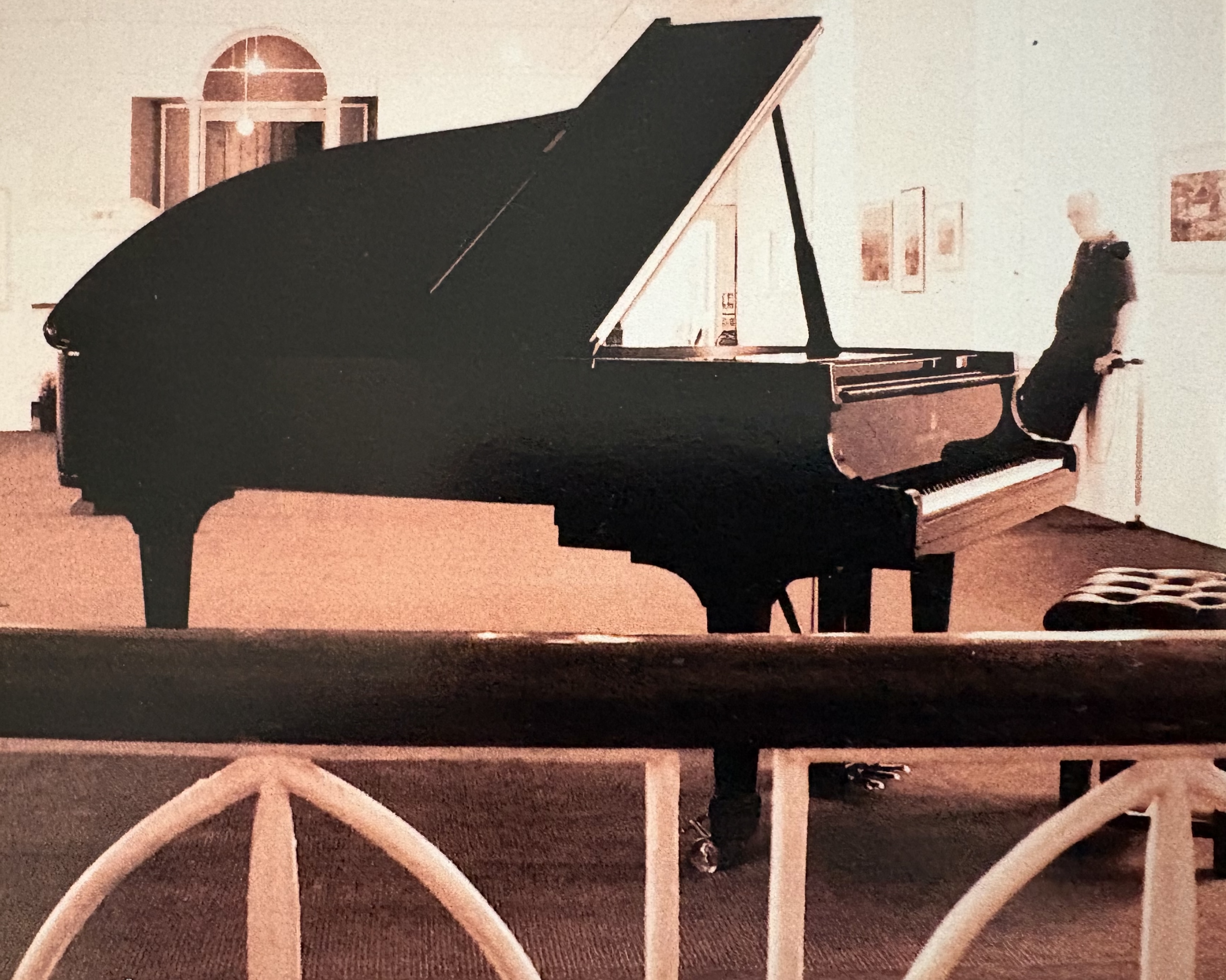
mike-westbrook-kp2In the days leading up to Mike Westbrook’s solo recital at Kings Place on Saturday afternoon, part of the EFG London Jazz Festival, I’d attended a run of performances by several younger pianists — Kit Downes, Michael Wollny, Giovanni Guidi and Jason Moran — of great reputation and achievement. Spending just over an hour listening to Westbrook as he stitched together songs that have meant much to him over the years provided a useful reminder of what age can bring.

Westbrook turned 80 this year. Afterwards, in conversation with Philip Clark, he spoke of the way a prolonged examination can change the material: “a deep process”, he called it, and one which he applied with equal success to songs by Duke Ellington (“Sophisticated Lady”) and Thom Bell (“You Make Me Feel Brand New”) and to pieces from his own pen, including some from his works inspired by Blake, Goethe and Lawrence.

“You don’t have too much respect for the material,” he observed. “You use it. You find harmonies that interest you more than the original. You layer one chord on top of another to make it more magical, or more beautiful, or even to throw a spanner in the works. But it’s not random. It’s logical.” The reharmonisation of some of these pieces was striking. “It’s no secret,” Westbrook said, “that when you’re writing arrangements at the piano, you become a master at holding down chords while you reach for a pen to write them down. I’ve developed a piano style almost out of that.”

It’s his version of what used to be called “arranger’s piano”, the spare approach associated with Tadd Dameron and Gil Evans, among others. And you could hear very specifically what he meant when he struck thick, dark chords and allowed them to resonate and bounce off the lid of the 7ft Steinway Model B in the silence between “You Make Me Feel Brand New” and “A Nightingale Sang in Berkeley Square”.

The mood was reflective, sometimes elegiac, particularly when he included a First World War poem in the first of the long, loosely themed sequences into which the recital was divided. Throughout the hour I loved the sense of a man playing these pieces for the thousandth time but still searching for new angles, new shapes, and new combinations of notes with which to deepen his investigation of their wordless essence. There was not a wasted note, not a superfluous gesture, not the tiniest hint of display for its own sake.

Much of the programme reflected the structure of his new solo album, which is titled Paris and was recorded earlier this year in an art gallery and performance space near the Porte d’Orléans. In his online notes to the album (to be found at http://www.westbrookjazz.co.uk), he says this while introducing the sequence of pieces grouped under the heading of Bar Room Music: “I often enjoy playing the piano in a crowded room where people are talking. Though almost no one is paying any attention to the music, it nevertheless affects the general atmosphere.”

Those words reinforce his strong sense of the social function of music, made explicit in the past in the work he and his wife Kate have done with street theatre groups and with their brass band. But the Kings Hall recital was at the opposite end of the spectrum: a carefully focused performance in an optimum listening environment, in front of a rapt full house. As always with Westbrook, a massive authority was lightly worn– but its presence was never in doubt, and the result was unforgettable.

* Paris is out now on the ASC label.

Mike Westbrook’s Bigger Show

The Uncommon Orchestra image 1The great English jazz composer and bandleader Mike Westbrook turns 80 next month — on March 21, to be exact. His long career is studded with extended works of great ambition and achievement: Marching Song, Metropolis, Citadel/Room 315, The Westbrook BlakeThe Cortège (his masterpiece, for my money), On Duke’s Birthday, London Bridge Is Broken Down, Mama Chicago, and others. What began in the late 1960s as a distinctively Westbrookian conception of jazz — with undertones of the approach Ellington and Mingus took to blending composition and improvisation — was broadened by an engagement with street theatre and brass bands, and by a collaboration with his wife, the singer and librettist Kate Westbrook, on pieces that reflected the influence of Berlin theatre song and British music hall.

And now there’s another magnum opus to celebrate. A Bigger Show is a piece in eight sections, lasting almost two hours, performed by Westbrook’s latest large ensemble, the Uncommon Orchestra, a 21-piece unit based around his home in Devon. Due to its size, it doesn’t often show its face. But last summer a recording of the piece was made at Exeter’s Barnfield Theatre, and the results — produced by Jon Hiseman — are out now on a 2CD set.

The suite was inspired by the old St Bartholomew’s Day fair, which took place in Smithfield, in the City of London, continuously between the 12th and 19th centuries until it was closed down in 1855 on the grounds of excessive rowdiness and debauchery. Back in 1975 Westbrook’s Brass Band took part in a production of Ben Jonson’s play Bartholomew Fair, and the idea grew into its present incarnation.

Once again the Westbrooks’ vision of modern life finds powerful expression in a work featuring rousing and often turbulent ensemble work with instrumental solos of real substance from such familiar figures as Alan Wakeman on soprano and tenor saxophones and Dave Holdsworth on pocket trumpet and Sousaphone, and newer names like the altoist Roz Harding, the trumpeter Sam Massey and the tenorist Gary Bayley. As has been the case with Mike Westbrook since the beginning of his career, the improvisations emerge from the arrangements in an organic and dramatically satisfying way — the work of composer who has paid close (but never imitative) attention to the lessons handed out by Ellington, Mingus and Gil Evans.

The tone is variously raucous and tender, celebratory and scathing. Kate Westbrook’s lyrics, sung by herself, Martine Waltier and Billy Bottle, are etched in acid (particularly in a song satirising the social media). Human nature and human behaviour, they suggest, are little altered since the days of Blake and Hogarth: in an era when the gap between affluence and poverty is widening rapidly, only the superficial symptoms of excess and deprivation differ.

All this is achieved with a courage, a vigour and a generosity of spirit always characteristic of Mike Westbrook’s work. A Bigger Show is ambitious, thought-provoking, and exhilarating; when it ends, you feel as though you’ve been on a journey. Perhaps one day his extended pieces will be acclaimed as belonging among the most acutely relevant cultural artefacts of our time. Until then, here’s a new one to treasure.

* A Bigger Show is released on ASC Records. Westbrook and the Uncommon Orchestra will perform the piece at the Brewhouse Theatre in Taunton on April 1, Kings Place in London on May 20, and the Plough Arts Centre in Torrington on June 10.