Lucinda Williams in London
 It had been an enjoyable enough concert for the first 40 minutes or so, but when Lucinda Williams dismissed her band and introduced “The Ghosts of Highway 20”, the mood of the evening deepened. “I’ve been filled with the need when I’ve sung this song lately to say that not everybody from the South is a bad person,” the woman brought up in Louisiana, Mississippi and Arkansas told the crowd at the Shepherd’s Bush Empire. They knew what she was getting at.
Delivering the title track of her most recent album alone with an acoustic guitar, she managed to surpass the fine recorded version, which featured the entwined lead guitars of Bill Frisell and Greg Leisz. Somehow she found a lilt within the song that added an emotional dimension. It introduced the evening’s satisfying central section, which included the exquisite “Over Time”, from the 2003 album World Without Tears; it had, she said with pride, been covered by Willie Nelson (here’s their duet version), and in London the band found a lovely gliding gait.
Earlier she had talked a bit about how, when her long career began to take off, she was criticised for writing too many dark and gloomy songs. So it was amusing that, when she did lift the tempo to a rockabilly shuffle late in the concert, it accompanied a song (also from the last album) called “Bitter Memory”. And it’s true that the bleakness in her raw voice might not be what you want all the time. But sometimes she can confront a distressing subject such as her late father’s Alzheimer’s disease (in “If My Love Could Kill”) and make it not just painful but uplifting.
Another of last night’s highlights was “Sweet Old World”, the title track of a 1992 album which she has re-recorded in its entirety for release next month on her own label. It features the band with which she is touring: Stuart Mathis on guitar, David Sutton on bass guitar and Butch Norton on drums. They’re a capable unit, and Norton in particular is a fine colourist and energiser, but to me it was interesting how the evening lit up each time the music reached for something beyond the generic shuffle and boogie of the old roadhouse beside the two-lane blacktop.
 With three hours to go until the inauguration of Donald J. Trump as the 45th president of the United States, the coffee shop I frequent was playing the Staple Singers’ “Respect Yourself”. That’s a record with a lot of American history in it, one way and another: a message delivered by a mixed group of black and white singers and musicians, showing how music can provide encouragement, comfort and even guidance.
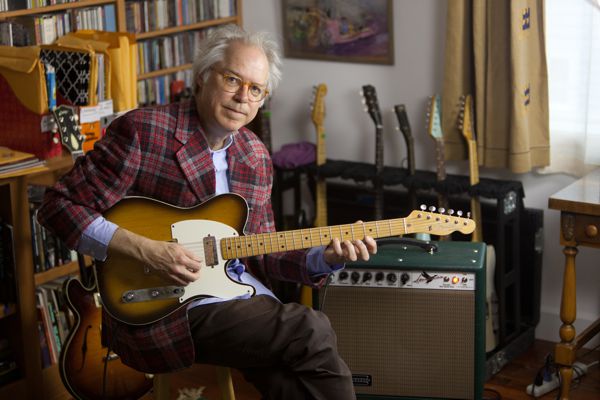 There was a time, seven or eight years ago, when I came to the conclusion that Bill Frisell was simply making too many records. I fell out of the habit of automatically buying his new releases because he seemed to be spreading himself too thin. Good Dog Happy Man (1999) and Blues Dream (2001) are still two of my all-time favourite albums, but I tend to prefer him nowadays as a contributor to other people’s records — something to which his particular expertise is well suited. Used sparingly, the characteristics of his playing add texture and flavour, just like King Curtis or Steve Cropper once did.
 thebluemoment.com