“When I was young, nobody told me that Duke Ellington made any money. I turned on the radio and heard something that I loved, and I followed it until I found out where it was.” Charles Mingus said that to me in the summer of 1972, at a pavement table outside in restaurant in Shepherd Market, London, during the course of a sometimes bemusing but always fascinating interview.
Two years earlier I’d gone to hear him in person for the first time at the Top of the Gate in Greenwich Village. He was torpid, listless, uninterested, all reflected in the music of his quintet. It was one of the most depressing musical experiences of my life. Ten years or so after falling in love with the turbulent sound of Blues & Roots, I was foolish enough to write a review suggesting that this giant of the music was washed up.
It was a judgement I soon came to regret. Within two years he had rediscovered much of his physical and spiritual vigour, and was once again leading bands that boiled with an energy that had its source in the leader’s soul. I was lucky enough to be present at Philharmonic Hall to hear him play an epic blues with the great tenorist Gene Ammons and then to hear several nights of a fine season at Ronnie Scott’s.
Did anyone incarnate the spirit of jazz more effectively than Mingus? The life-enhancing combination of high skill and wild spontaneity, of the most finely tuned sensibility and the deepest roots, of romantic beauty and unapologetic political commitment? All that is present throughout a four-CD set titled @Bremen 1964-75, divided between tours 11 years apart with two marvellous groups, recorded and preserved by Radio Bremen and now — although the earlier concert has been much bootlegged — officially released for the first time.
The 1964 band featured Johnny Coles on trumpet, Eric Dolphy on alto, bass clarinet and flute, Clifford Jordan on tenor, Jaki Byard on piano and Dannie Richmond on drums. Nine weeks later Dolphy would be dead, his diabetic coma misdiagnosed in a Berlin hospital; here we can listen to him in full flight. On “Parkeriana”, notes shoot out of his alto at unexpected angles like beams of light refracting in a hall of mirrors while Mingus uses his bass to push the beat in the way he did at certain medium-fast tempos. On “Fables of Faubus”, an eventful 33-minute performance that prefigures a lot of what the Art Ensemble of Chicago would later get up to, Dolphy’s bass clarinet makes useful interventions behind Coles’s long, characteristically plaintive solo before leading the piece to its climax with an extended solo of such hair-raising audacity that you can’t believe it happened almost 60 years ago. Other highlights include Byard’s introductory piano soliloquy, a typical history lesson including chunks of ragtime and stride, and Mingus’s restless exploration of “Sophisticated Lady”.
The 1975 band — with Mingus and Richmond joined by Jack Walrath (trumpet), George Adams (tenor) and Don Pullen (piano) — is the one that, six months earlier, had recorded the two-volume Changes for Atlantic, and the set list contains several pieces from those albums: “Remember Rockefeller at Attica”, “Sue’s Changes”, “Duke Ellington’s Sound of Love”, “Free Cell Block F, Tis Nazi USA”, Walrath’s “Black Beans and Poles” and Sy Johnson’s “For Harry Carney”. If this quintet isn’t as lairy as some of Mingus’s small combos, it produces high-level creativity at every turn, true to the leader’s vision of a music once collective in nature and a vehicle for individual character — perhaps the most important lesson that he took from his adoration of Ellington.
Walrath fires out bright-toned multi-noted lines that sound relaxed and assured even at the most demanding tempos, artfully varying his trajectory. Adams shows himself to be among the most emotionally generous of the tenorists who emerged in the wake of John Coltrane, the unaccompanied section of his solo on “Sue’s Changes” quoting exquisitely from Ornette Coleman’s “Beauty Is a Rare Thing” and demonstrating (as had Dolphy) that although Mingus often said disobliging things about the avant-garde, he was happy to incorporate the movement’s innovations when they came from musicians who’d satisfied him that they had real chops and a proper grounding.
Pullen, like Byard before him and successors such as Roland Hanna and John Foster, had the technique and the imagination to pursue a pan-stylistic vision of jazz piano. His relaxed improvisation on “Duke Ellington’s Sound of Love” is the epitome of chilled-out “inside” improvising at a long-legged medium-slow tempo; when he extends the approach deep into the realms of abstraction, as in the dense conclusion to his “Sue’s Changes” solo, it’s clearly with the leader’s approval.
Whether in 1964 or 1975, Mingus and Richmond keep the fire burning, raising and lowering the flame at will, switching metre and tempo with wonderful understanding, developing the unique brand of swing they created together when they first joined forces in 1957. Here they can stretch out with like-minded companions in front of two sets of enthusiastic listeners, their work preserved in a set that belongs in even the most comprehensive Mingus collection.
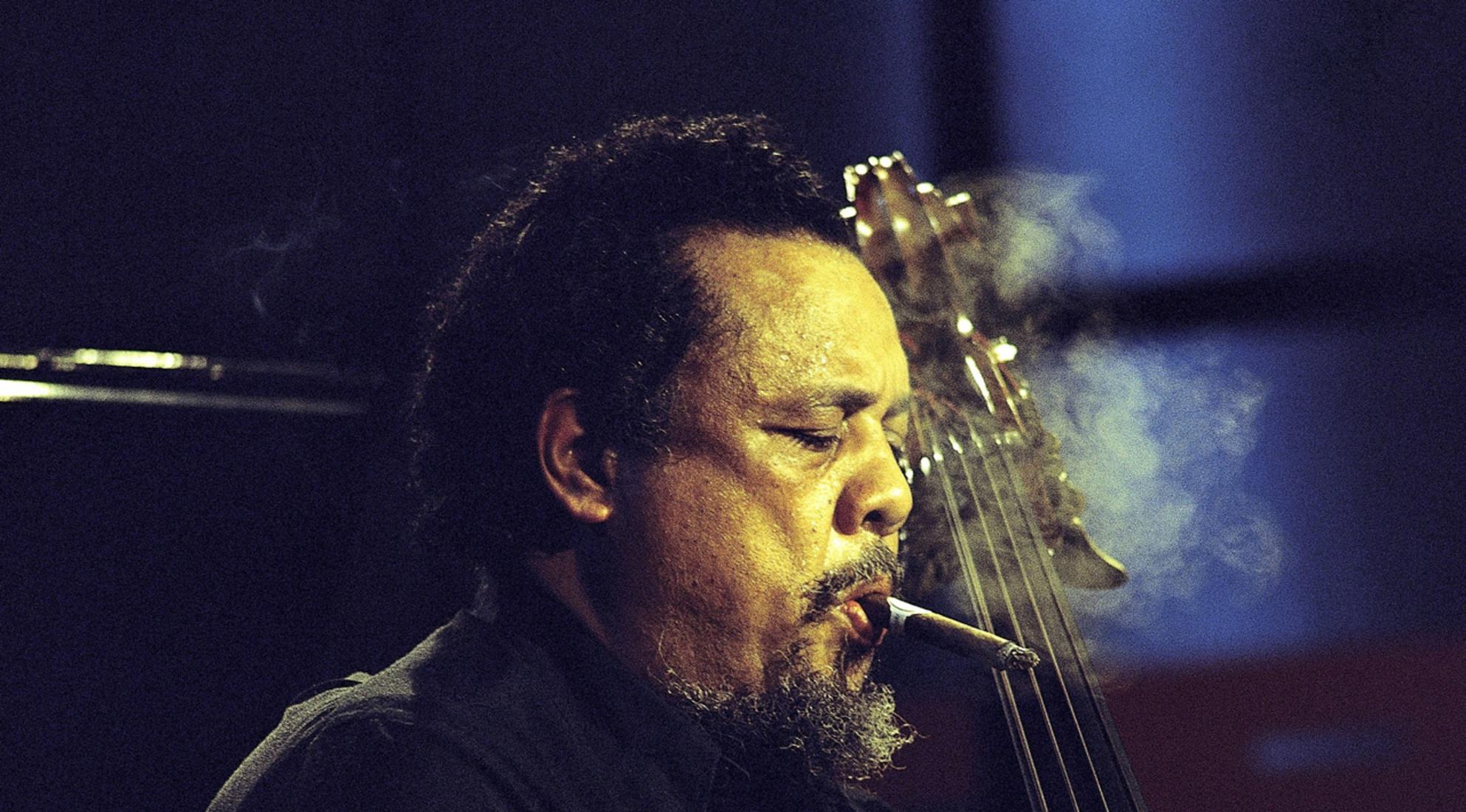
* Charles Mingus’s @Bremen 1964 & 1975 is released on the Sunnyside label, in partnership with Radio Bremen. The terrific photograph of Mingus was taken at Montreux by the late, great David Redfern.


 thebluemoment.com