Skip to content

Posts tagged ‘Island Records’

Island Records: The Greatcoat Years

No record label has ever had its history subjected to the sort of minutely detailed scrutiny on show in the first two volumes of Neil Storey’s The Island Book of Records, the second of which was published just before Christmas. The initial volume examined the label’s earliest years, 1959-68, from the family background of its founder, Chris Blackwell, to the breakthrough into the new rock mainstream with the debuts of Traffic, Jethro Tull and Fairport Convention. The new one deals with just two years, 1969 and 1970. Their successors will, I gather, each focus on a single year**.

The format is that of an LP-size hardback of considerable heft (432 pages of high-grade paper in case of the new one), an oral history with testimony from participants and interested bystanders lavishly illustrated with photos, sleeve artwork, press cuttings, documents, ads and other ephemera. What 1969-70 means is loads of background (and foreground) material beginning with Steve Winwood’s involvement in Blind Faith and ending with King Crimson’s third album, Lizard. Among those featuring heavily are Spooky Tooth, Free and Mott the Hoople, three classic early Island rock bands whose largely student and mostly male following tended to sport ex-army greatcoats, along with plimsolls, loon pants and cheesecloth shirts.

You get their stories in jigsaw form, pieced together with great diligence in mostly bite-sized chunks of testimony. A good example is the treatment of Nick Drake’s Five Leaves Left: the producer Joe Boyd, the engineer John Wood, the bass player Danny Thompson, the guitarist Richard Thompson and the arranger Robert Kirby help describe its making, while Blackwell and his Island colleagues David Betteridge, Tim Clark, Bob Bell and Barry Partlow and the record shop owners John Clare and Eugene Manzi try to explain why it didn’t sell. (When Boyd sold his Witchseason production company to Blackwell in the ’70, it was with the stipulation in the contract that Drake’s three albums should never be deleted.) Others providing testimony include Gabrielle Drake, Nick’s sister, and Victoria Ormsby-Gore, a well connected friend.

There’s too much stuff here for me to begin to do it justice, but the riches include the triumph of King Crimson’s first album, helped by the fact that their two managers, David Enthoven and John Gaydon, were, like Blackwell, Old Harrovians; the debut album by Quintessence, a quintessentially Island band (i.e. Notting Hill hippies) that it turns out nobody in the company really seemed to like; the Fotheringay debacle, which derailed Sandy Denny’s career; the emergence of two ex-Alan Bown Set singers, Jess Roden and Robert Palmer, respectively with Bronco and Vinegar Joe; and the huge success of Cat Stevens, reinvented as a singer-songwriter with Tea for the Tillerman, and of Emerson, Lake & Palmer.

Alongside epochal releases like Traffic’s John Barleycorn Must Die and Fairport’s Unhalfbricking and Liege & Lief, the book features such bit-part players as Dr Strangely Strange (“a poor man’s Incredible String Band”), Blodwyn Pig and McDonald & Giles (respectively offshoots of Jethro Tull and King Crimson), and White Noise’s somewhat prophetic An Electric Storm, which seemed to typify Island’s propensity, in the early days, for backing weird stuff. Nothing is neglected, including the hugely popular and influential compilations, particularly what might be called the greatcoat anthologies: You Can All Join In, Nice Enough to Eat and Bumpers.

The two years covered by this volume pivot around the move from offices on Oxford Street to a former Congregational church on Basing Street in Notting Hill, converted around the time of the First World War into a factory making dressmakers’ showroom busts and wax figures for Madame Tussaud’s. Blackwell bought it and, with the aid of the acoustic engineer Michael Glickman and the studio technician Dick Swettenham, set about converting into a headquarters that incorporated not just offices for the label’s staff but two studios, No 1 on the ground floor, capable of accommodating 80 musicians, and the more intimate No 2 in the basement. This was where a bunch of talented young engineers set to work with Helios 16-track desks and Studer two-inch tape machines, and we hear from some of those hitherto best known as names the bottom of the list of album credits: Brian Humphries, Phill Brown, Richard Digby-Smith (“Diga”) and Phil Ault.

This was a turning point. Basing Street became a creative hub, a 24-hour hang-out, the office business conducted at round tables seating executives and secretaries in a non-hierarchical environment. Guy Stevens, the former DJ at the Scene Club in Ham Yard, for whom Blackwell had created the Sue label, was a maverick A&R presence, introducing Ian Hunter to a bunch of guys from Hereford and giving them the name Mott the Hoople. Lucky Gordon was the resident chef.

I visited Basing Street quite a lot during those early years, sometimes interviewing various people and other times just hanging out, occasionally in the studios. The buzz was terrific. It was, I suppose, a perfect example of hip capitalism in action. Nothing so perfect lasts for ever, but in this volume of his epic and invaluable series — expensive but, to those with an interest, worth every penny — Neil Storey catches it in glorious ascent.

* The Island Book of Records Vol 2: 1969-70, edited by Neil Storey, is published by Manchester University Press / Hidden Masters (£85)

** Not quite right. Apparently Vol 3 (out in the spring of ’26, all being well) will deal with 1971-72. Vol 4 is 1973-76, Vol 5 is probably 1977-79, and Vol 6 could be 1980-83. Neil Storey says he has always thought of the series as consisting of 10 to 12 volumes, so we’ll see.

Our Island Story

To those who found Chris Blackwell’s 2022 autobiography, The Islander, long on charm but, shall we say, short on detail, The Island Book of Records Vol 1 1959-68 will be the answer to their prayers. Here is the story of the UK’s most charismatic independent label during its formative years, in which the foundations were laid for the company that would later become the home of King Crimson and ELP, the Wailers and Bob Marley, Roxy Music, Bryan Ferry and Brian Eno, Sandy Denny, Sparks, John Martyn, U2 and Grace Jones before Blackwell sold it to Polygram in 1989.

Comprehensively compiled and meticulously edited by Neil Storey, who worked in the label’s press office (and was more recently responsible for the Hidden Masters archive box sets devoted to Chris Wood and Jess Roden), the book’s large square format — handsomely designed by Jayne Gould — enables LP covers to be reproduced at their original size. The scale also allows the enormous amount of information to breathe amid the mass of photographs, press cuttings, record labels and other paraphernalia and ephemera, plus masses of oral history from figures both famous and unknown to the general public but significant to the way the label was run, all deployed to inform and entertain.

After Storey’s discursive and amusing introduction, it begins by describing Blackwell’s origins in Jamaica and the UK, including a Daily Mirror clipping from 1933 showing a picture of his mother on her way to Buckingham Palace be presented as a debutante to King George V and Queen Mary, and his own Harrow School house photo from 1954. Island’s first release, the cocktail pianist Lance Haywood’s At the Half Moon Hotel, Montego Bay, from 1959, is accompanied by quotes from Blackwell, the guitarist Ernest Ranglin, the drummer Clarence “Tootsie” Bear, and the daughter of the hotel’s director, who invited Blackwell — then a water-ski instructor — to listen to the trio performing in the lounge, an encounter on which history hinged.

That’s the degree of depth the reader can expect, whether the subject is Jackie Edwards, Millie Small, Traffic, Jimmy Cliff, Spooky Tooth and the nascent Fairport Convention or the American artists — Ike & Tina Turner, James Brown, Inez & Charlie Foxx, J. B. Lenoir, Billy Preston, Jimmy McGriff, the pre-Spector Righteous Brothers and Huey “Piano” Smith — released on the Sue label by Guy Stevens, the DJ at the Scene club in Ham Yard whose vision was recognised and given free rein by Blackwell, to the lasting benefit of me and many other ’60s teenagers.

The more obscure bands — Wynder K. Frog, Art, Nirvana, the Spontaneous Music Ensemble — are covered in full, as are the projects undertaken to pay the bills while providing a laugh along the way: That Affair (about the Christine Keeler scandal), Music to Strip By (with a lace G-string stuck on to the cover), For Adults Only (comedy) and Big Theo (Johnson)’s Bawdy British Ballads. The company’s first gold disc was apparently secured by Why Was He Born So Beautiful by the Jock Strapp Ensemble, the first of several volumes of rugby songs, at least one of which was recorded at Sound Techniques by the engineer John Wood, who would later record Nick Drake and the other Witchseason artists at the same Chelsea studio.

The making of all these is illuminated by the people who were there, not just the artists but those who were playing important roles in the background, whether by working in the Basing Street office — where everyone sat at round tables, erasing a sense of explicit hierarchy — or by going around the country selling the records, or simply by being Blackwell’s friends. How they all made it up as they went along, and how the founder encouraged and allowed it to happen, is an object lesson in human and cultural dynamics.

“I’m not a collector,” Blackwell says. “I was always looking forward.” Island maintained no real-time archive during his era (which, of course, made Storey’s task of research more demanding and almost certainly more entertaining). When I worked in A&R there, in the mid-’70s, someone told me one morning that the Richmond branch of the Blackwell-owned One Stop Records was closing that evening and that the basement contained a cache of the company’s old 45s. They were going to be chucked out and did I want to do something about them? Collectors had better close their eyes at the next bit: I drove straight down there, found boxes and boxes of mint Sue and white-label Island singles from the ’60s, sorted out two of each — one for the company, one for my office — and sent the rest to be melted down. I have no idea what happened to the ones I saved after I left in 1976. Everyone was looking forward, which is the right way to run a record company.

* The Island Book of Records Vol 1 1959-68, edited by Neil Storey, is published by Manchester University Press (£85).

Some guys (don’t) have all the luck

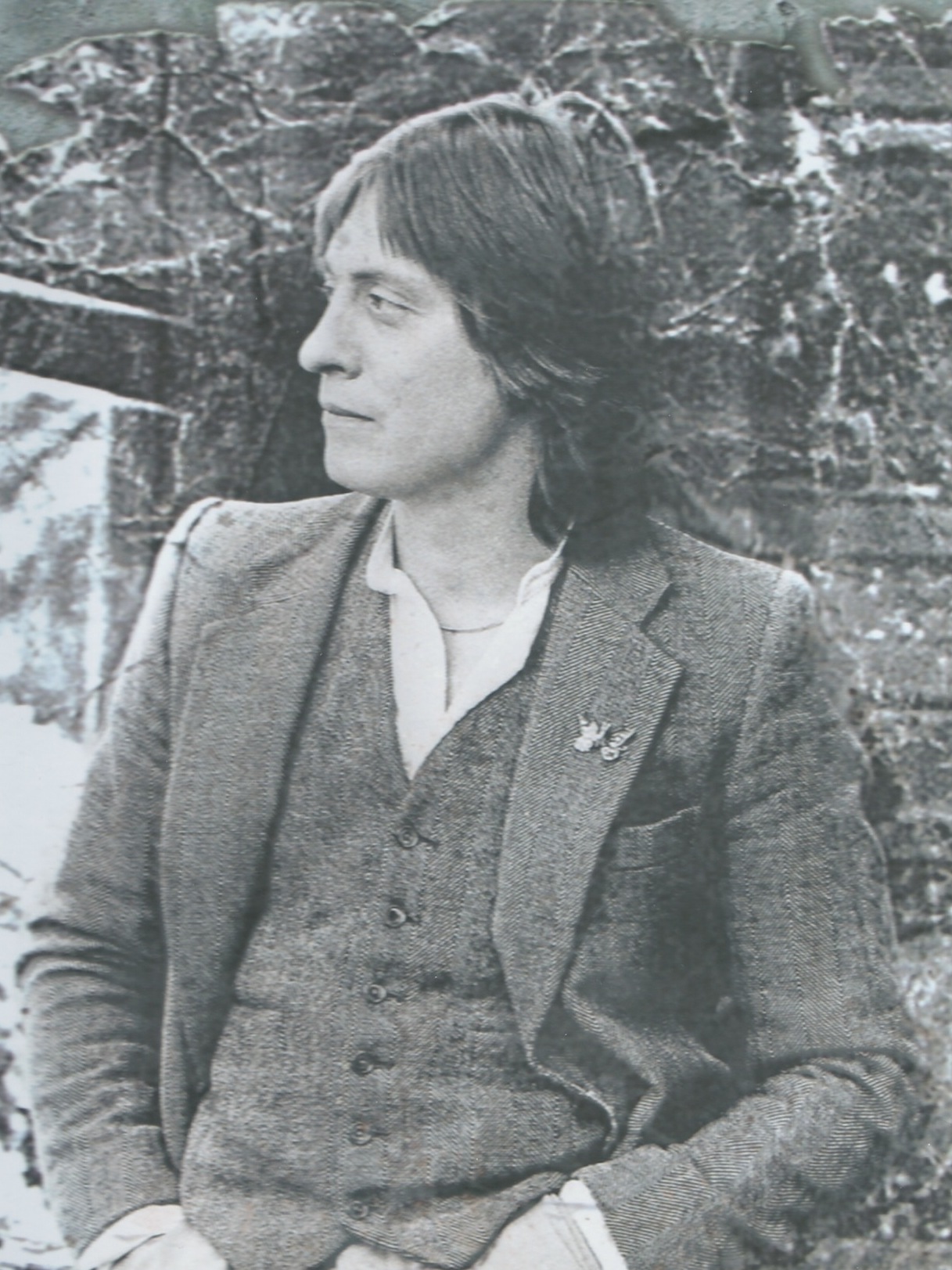
Jess Roden 2No one could understand why Jess Roden didn’t make it, why a man with so fine and distinctive a voice never managed to ascend to the level of fame enjoyed by other British blue-eyed soul singers of the 1960s and 70s. He had the sound and the looks, he wrote some fine songs, for a while he led a terrific little band, and he had fans in the music press and the backing of one of the most perceptive men in the record industry. What he didn’t have, perhaps, was the musical equivalent of what Graham Greene described as “the splinter of ice in the heart of a writer”: a knowledge of when to allow enthusiasm to take second place to the ambition that propelled many of his contemporaries and friends to the top.

I was reminded of that last week when we had tea together in a London hotel just across the road from the BBC’s Broadcasting House. We had met only once in almost 40 years — at Jim Capaldi’s funeral in 2005 — but it was like encountering a friend you’d seen the day before. Jess is one of the nicest men you could hope to meet. Which may, of course, have been part of the problem.

He had just been interviewed by Robert Elms for Radio London, and as we said goodbye he was off to have a chat with Bob Harris on Radio 2. This is the first time he has been visible in the music world since leaving it in the early 1980s, after concluding that it was time to stop bashing his head against a glass ceiling and look for something else to do (a little more on that subject later). The interviews had been arranged to promote a limited-edition six-CD set titled Hidden Masters: The Jess Roden Anthology, pieced together with remarkable care and attention over a period of several years by Neil Storey, a former colleague at Island Records, the label with which Jess spent the majority of his career. Consisting of 94 tracks, about half of them previously unreleased, compiled from the original multitracks or master copies and restored where necessary, the set takes us from his early days with Alan Bown through Bronco and the Butts Band to his solo career in the mid-70s and up to the later work with such short-lived projects as the Rivits and Seven Windows.

I first saw Jess at the Beachcomber Club in Nottingham. The year was, I think, 1966. He was the singer with the Alan Bown Set, having joined them after serving an apprenticeship with the Raiders and the Shakedown Sound, two bands in his native Kidderminster in the West Midlands. The Alan Bown Set were a soul band with horns and a Hammond organ, and I remember being particularly struck that night by the young singer’s convincing delivery of the Impressions’s “I Need You”, which happened to be one of my favourite Curtis Mayfield songs.

Soul music was falling out of fashion, however, and by the start of the next decade Jess had been signed to Island by Chris Blackwell and was singing with Bronco, a four-piece band consisting of hometown mates who were listening to the new country-influenced sounds coming from across the Atlantic. Bronco never had the right producer to focus their sound, or the right song to get them on the radio, but the eight tracks included in this box demonstrate their worth.

Then came the solo albums, starting in 1973, at just about exactly the same time that Robert Palmer, who had replaced him in Alan Bown’s line-up, left Vinegar Joe — another Island band — and embarked on his own solo career with the label. High hopes surrounded both of them (they were adored inside the company, where everyone from the van driver to the managing director loved their music), and they were given similar facilities: unlimited studio time in London, New Orleans, New York, Nassau or (in Robert’s case) Los Angeles with the best musicians and arrangers available. Both men, for example, recorded in New Orleans with the Meters and Allen Toussaint.

If there was a difference, apart from just over a year in age, it was that Robert really wanted to be a star. Jess wanted people to hear his music, of course, but he wasn’t the sort to really push himself or to finesse his own career. It didn’t stop him making a quantity of music that, as well as being fondly remembered, sounds terrific today. Lend an ear to an epic song recorded for his first solo album, originally called “I’m On Your Side” and now released, in a slightly different version, under the title “For Granted”: I’ve been a regular listener to the groove created by Mick Weaver’s clavinet and Richard Bailey’s crackling drums for 40 years, and it hasn’t worn out its welcome. Or the driving “Reason to Change”, cut with Toussaint and his boys and included in that debut LP. Or the elegant version of Tim Hardin’s “Misty Roses” cut in New York in 1977 for the album titled The Player Not The Game, arranged by Leon Pendarvis and produced by Joel Dorn.

There are surprises all over these CDs, some of them unearthed from unlabelled tape boxes that had lain undisturbed in obscure vaults for decades. But the heart of the anthology comes in the many tracks recorded, in clubs and concert halls as well as in the studio, by the Jess Roden Band, a seven-piece outfit (eight-piece when Billy Livesey guested on keyboards) which was in operation from 1974 to 1976 and could play that funky music as well as any white boys in the UK at the time, even the marvellous Kokomo. Steve Webb, one of the JRB’s two guitarists, and John Cartwright, the bass player, were both useful songwriters, and original compositions were mixed with occasional covers of things like Robert Parker’s “Get Ta Steppin'”, Randy Newman’s “You Can Leave Your Hat On”, Eddie Floyd’s “Raise Your Hand” and the Temptations’ “I Can’t Get Next to You”, all of which are included on Hidden Masters. They were a much loved live attraction, as can be heard here in recordings from Birmingham Town Hall, Leicester University, the Lyceum and the Marquee.

Robert Palmer had hits — “Johnny and Mary”, “Some Guys Have All the Luck”, and so on — but Jess didn’t; he was living in New York and struggling to complete another album when Blackwell finally pulled the plug. There was no rancour on either side. The decision to begin the process of changing his profession led Jess to evening classes in graphic design and a new career which he pursued successfully in West London until his recent retirement and move to the country. Today there are no signs of regret that, despite all those favourable signs, the highest hopes remained unfulfilled. He can look back at the music he made with affection and pride, and so, now, can we.

* The photograph is from the cover of Hidden Masters: The Jess Roden Anthology (www.hiddenmasters.net). The photographer is unknown. An extensive survey of Jess’s career can be found at http://www.jessroden.com.

Stranger in blue suede shoes

This wonderful half-hour French TV film features my favourite incarnation of the Soft Machine at their very best: Mike Ratledge (organ), Kevin Ayers (bass) and Robert Wyatt (drums). After yesterday’s announcement of Kevin’s death, Robert paid him a lovely tribute on BBC Radio 4’s Today programme: Kevin, he said, had no sense of career, in which respect he was the exact opposite of an X Factor contestant. As his A&R man at Island Records for a short time in the mid-’70s, that was also my experience of a man who came closer than anyone else I ever met to incarnating the archetype of the golden hippie.

I’d first encountered Kevin in the days of the Whole World, a wonderful band with David Bedford on keyboards, the teenage Mike Oldfield on guitar, Lol Coxhill on soprano and tenor saxophones, and Robert on drums. They were not, perhaps, the most consistent of performing units, but I remember one night at the old Country Club on Haverstock Hill when they completely lived up to their individual and collective potential.

Muff Winwood had just signed Kevin to Island when I joined the company in 1973, and Muff produced his first Island album, The Confessions of Dr Dream and Other Stories. The next move was mostly my idea, turned into reality at a lunch with Kevin, Brian Eno and John Cale at the old Trattoo restaurant in Abingdon Road (close to the location of the original Biba, trivia fans). I’d signed Cale and Nico, and the June 1, 1974 concert and live album project was conceived as a way of expanding the audience for all of them. Each had a cult following, and deserved more.

During the concert I was in the Island mobile recording truck parked in the street behind the Rainbow, watching John Wood, the great engineer, work the faders, while keeping an eye on the black-and-white TV monitor, which gave us a feed from a single poorly focused camera. So I didn’t actually see the gig. But in the foyer beforehand there was no question that this was a real occasion, a hot ticket for the era’s scenemakers. We got the album into the shops within a month, which was a considerable feat for the time. I wanted it to be like a kind of newsletter. And whatever may be claimed in the otherwise excellent obituary of Kevin in this morning’s Times, they were never supposed to be a “supergroup”. (A couple of years ago Universal got in touch to discuss the idea of a deluxe edition with all the unreleased material, before somebody apparently thought better of it.)

One of the last times I saw Kevin was soon after the Rainbow show and its Manchester sequel, when he invited me to help him make a single and we spent a weekend in the Island studios in the converted laundry at the back of the St Peter’s Square offices. It wasn’t a happy experience. He didn’t know what he was doing, neither did I, and I’ve managed to erase the name of the unfortunate song in question. We both recognised the futility of the attempt, and tacitly decided not to fall out over it. If the experience had a lasting benefit, it was to put an end to any ambitions I might have had to become the next Phil Spector or Jerry Wexler. But anyway, Kevin, thanks for asking me, and sorry I didn’t do a better job.