Skip to content

Posts tagged ‘Harish Raghavan’

Tour de force

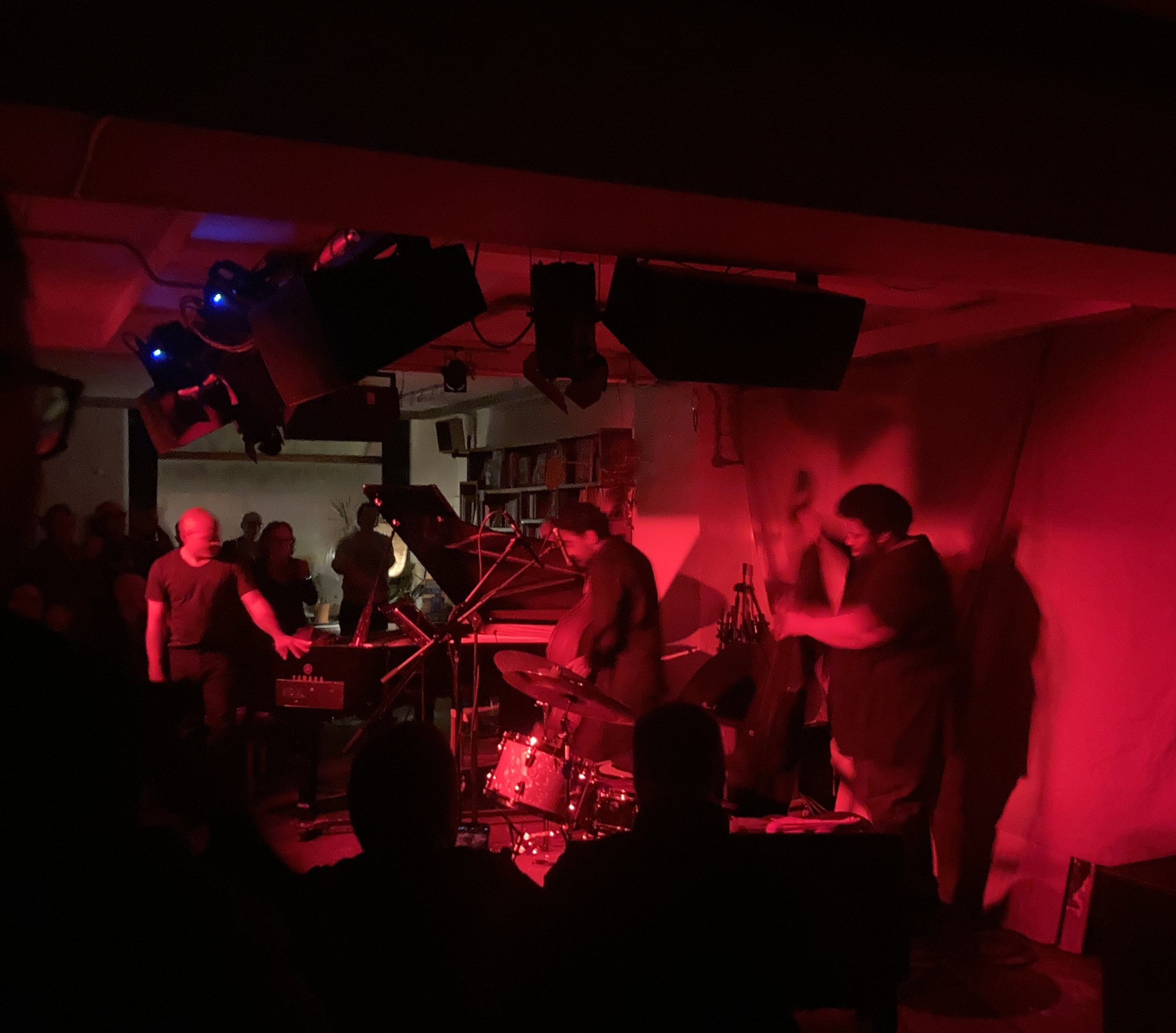
As we queued in the Dalston drizzle outside Cafe Oto for last night’s sold-out show by the Tyshawn Sorey Trio, I don’t suppose many of us realised quite the extent to which we were about to enter a better world.

Outside: the return of territorial conquest as a mode of historical change, the revived persecution of minorities, the increasing contrast between private affluence and public squalor, the plight of bankrupt councils trying not to close libraries and other basic services, the destruction of humanities courses in universities, the malign manipulation of such digital-era innovations as AI and cryptocurrency, the exaltation of spite, revenge and mistrust in public life, and the general deprecation of the public good. Inside: playing non-stop, without a break, for two and a quarter hours, Sorey and his colleagues, the bassist Harish Raghavan and the pianist Aaron Diehl, reminding us of what human beings can do, at their very best.

There was too much to describe. This is a group that thinks in long durations, in slow development, in whispers as well as roars. Its three albums (the first two of which had Matt Brewer on bass) fully demonstrated those priorities. In person, however, the effect is more than redoubled, thanks to the brilliance with which they manage the flow and its sometimes radical transitions through nothing more than eye-contact cues, twice managing gradual and beautifully calibrated accelerations that transported the crowd as well as the musicians.

Each player is a virtuoso, a product of intense learning and dedication as well as innate talent. But the machine they build, as with any great group, is superior to the sum of its constituent parts. There were elements of blues and gospel in some of the vast, surging climaxes that drew shouts from the audience, and of ballads and different shades of blues in the passages that flirted with silence. Sorey’s rattling Latin rhythms bounced off the walls; his gossamer shuffle barely disturbed the air. Diehl’s dizzyingly fast upper-register filigree phrases spun with a centripetal force. Raghavan’s assertive agility was balanced by deep thoughtfulness.

Their repertoire avoids original material in favour of extended explorations and dissections of generally lesser known pieces by significant jazz composers: Ahmad Jamal, Duke Ellington, Muhal Richard Abrams, Wayne Shorter, Horace Silver, Brad Mehldau, McCoy Tyner, Harold Mabern. Since the chosen themes are not the obvious ones, and are not identified in performance, the audience listens with fresh ears, unaffected by the comfort of familiarity, open to everything they do.

“See you on the other side,” Sorey had said before the start of the journey. After an hour or so, during a quiet passage, he asked: “Y’all still with us?” Not only were we still with them, both then and at the reluctant end of the performance, but many of us were probably still with them on the journey home and on the morning after, and will be with them for some time to come. An unforgettable night.

* The Tyshawn Sorey Trio’s three albums — Mesmerism, Continuing and The Susceptible Now — are on Pi Recordings, available at tyshawn-sorey@bandcamp.com

** In the original version of this I had a moment of brain fade and wrote “public affluence and private squalor”. Now corrected.
Measuring the heart

ambrose-akinmusire

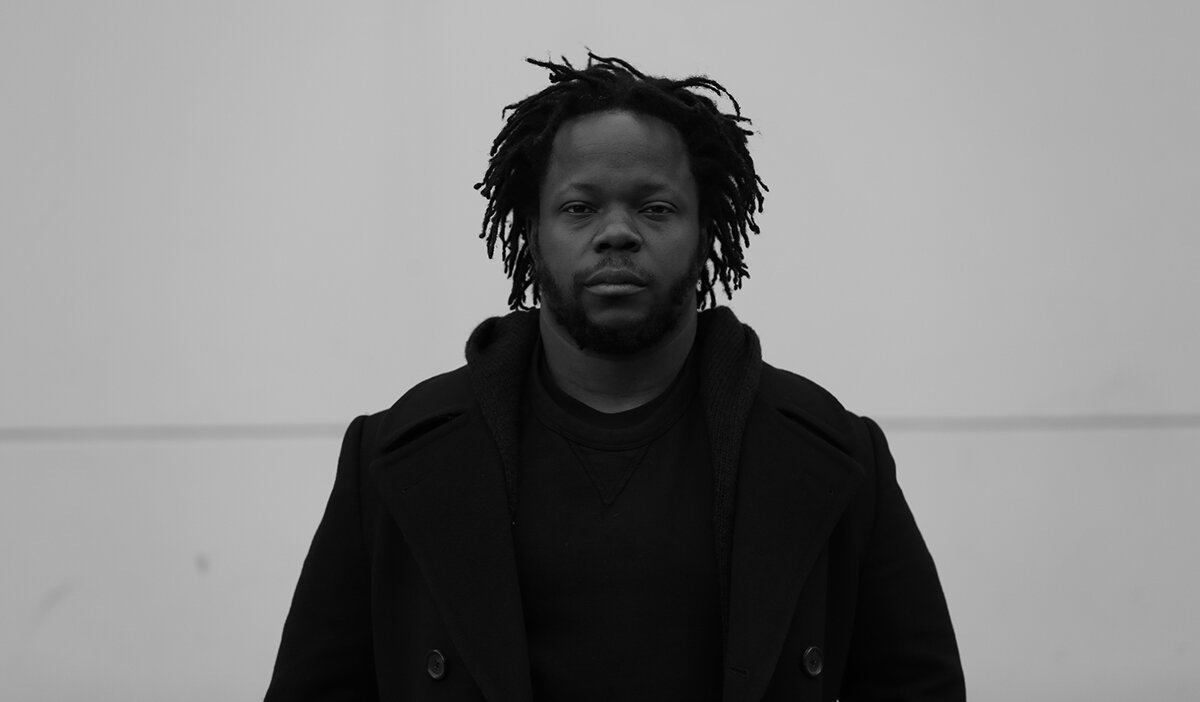
The great figures of jazz are the people who, as the decades pass, you can set your compass by. For me, in my generation, that meant Miles, Coltrane, Ornette. It’s always tempting to think that they don’t make people like that any more, but it’s not true. And I’m thinking that the trumpeter, composer and bandleader Ambrose Akinmusire might be one of them.

Akinmusire’s music has a moral heft that makes it a good place to turn to in times like these. Not many artists can so successfully maintain a commitment to beauty while bringing  intellect and rigour to bear on the issues of the day, never letting us forget what got him (and us) here: the history of African Americans.

In 2014, on The Imagined Savior Is Far Easier to Paint, the second of his five Blue Note albums, Akinmusire included a piece called “Rollcall for Those Absent”, in which a small child recites the names of black victims of police homicide, including Amadou Diallo and Trayvon Martin. It still rings in my head every time a new atrocity occurs. Throughout that and his other albums, even when there is no explicit text, a sense of mourning is mixed with the celebration.

On his new one, called On the Tender Spot of Every Calloused Moment, that underlying emotion is redoubled. Even when this music is at its most complex, rippling and sparkling with detail, it moves on an undertow of the blues. The album begins with Akinmusire’s beautifully pure natural trumpet sound, all alone, introducing a track called “Tide of Hyacinth” which moves through dazzling interplay with the members of his regular quartet — Sam Harris (piano), Harish Raghavan (bass) and Justin Brown (drums) — and incorporates a recitation in Yoruba by the Cuban-born singer and percussionist Jesús Díaz. That’s a taste of the various approaches explored here, which range from a lovely little song pairing the voice of Genevieve Artadi (the singer with the LA electro-funk duo Knower) with Akinmusire’s Fender Rhodes piano, through the Monkish angularity of “Mr Roscoe” and the tender balladry of “Reset (Quiet Victories & Celebrated Defeats)” to a sombre, hymn-like dedication to the late Roy Hargrove, whose work with D’Angelo and others paved the way for Akinmusire’s appearance on Kendrick Lamar’s To Pimp a Butterfly.

One track, only half a minute long, is for unaccompanied trumpet, the squeezed half-valve sounds reminiscent of Rex Stewart. Akinmusire goes that far back, and all the way forward. I don’t know of a trumpeter from the generations after Don Cherry who uses vocalised effects so brilliantly. He does it again on the penultimate track, “Blues (We Measure the Heart With a Fist)”, where the notes are compressed so tightly that they can barely escape over Harris’s damped notes before the mood switches into a passage of fantastic trumpet/bass/drums improvisation that seems to explore a new way of swinging.

The album ends with the ringing, carefully-spaced chords of the Fender Rhodes, bringing the album to a close with a short piece titled “Hooded Procession (Read the Names Aloud)”, the latest in Akinmusire’s series of threnodies for the victims of police violence. The timeliness of this does not require emphasis. Once again, he has created a soundtrack for our time that will live long beyond its moment.

* On the Tender Spot of Every Calloused Moment is released on the Blue Note label.