Skip to content

Posts tagged ‘Don Cherry’

The world and Don Cherry

Wherever, whenever and by whomsoever the idea of “world music” was invented, it had no finer exponent, explorer and exemplar than Don Cherry. In a few months’ time it will be 30 years since Cherry died in Malaga of liver cancer, aged 58, leaving a world in which he was, to quote Steve Lake’s happy phrase, “a trumpet-playing lyric poet of the open road, whose very life was a free-flowing improvisation.” I suppose it was fitting that he should have died in Andalucia, a region where many cultural influences met in the Middle Ages to create a foundation of song.

Cherry’s life and work demand a full-scale biography, along the lines of Robin D. G. Kelley’s standard-setting study of Thelonious Monk. In the meantime, it’s worth welcoming Eternal Rhythm: The Don Cherry Tapes and Travelations, a new book consisting mostly of interviews conducted in various locations around the world by the author Graeme Ewens, who met the trumpeter in the 1970s and became his “confidant, travel companion, witness and friend” over the subsequent two decades. They are augmented by Ewens’ memories of their times spent together from Bristol to Bombay, by biographical notes, and by an interesting selection of photos and other visual material.

A useful addition to Blank Forms’ The Organic Music Societies, a Cherry compendium published in 2021, it’s full of worthwhile stuff. Here’s Cherry on playing with Ornette Coleman in the great quartet that changed the direction of jazz: “Ornette would never count a song off: ‘One, two, three, four, go.’ We would feel each other in the silence before playing and then we would play. And the first accent, or the first attack, would determine the tempo and temper of the composition.” And this, which goes to the heart of Cherry’s conception: “One day when Ornette was working on notation, we talked about how you couldn’t notate human feelings. For me, there was always this problem of notated music sounding like notated music. In the older days you never saw black musicians playing with music stands. They learnt it by heart, which is important. For me, when I learn a song with notes it will take time for me to really memorise it, but it’s important to learn it by heart because then you will know it.”

Cherry tells a story about Miles Davis coming to sit in with him and Billy Higgins at the Renaissance in Hollywood and borrowing his pocket trumpet. And then, later in the ’60s, Miles invites Cherry to sit in with his quintet at the Village Vanguard: “So I played something, the changes from ‘I Got Rhythm’ — AABA — and I stopped my solo right before the bridge, which is the B part, and Miles said, ‘You’re the only man I know who stops his solo at the bridge.’ Then later on I heard him doing the same thing. And the next time I saw him he said to me, ‘Hey, Cherry, I play a little like you now,’ which was a big compliment.” Particularly, one might point out, coming from a man who had initially scorned Cherry’s playing.

In an offical note telexed after a concert in Yaoundé in 1981, during a tour of Cameroon sponsored by the US State Department, a consular official writes: “Cherry and companions were real good-will ambassadors: courteous, patient, curious about country, irrepressibly friendly… (the) only problems arose in trying to move them from place to place as they kept striking up conversations in the street.” On page 132 we learn that the pocket trumpet Cherry was playing at the time of his conversation had once belonged to Boris Vian, the writer and critic, and possibly before that to Josephine Baker. On the very next page Cherry mentions an occasion in the 1950s when he and Ornette went to hear a Stockhausen performance at UCLA.

The book doesn’t duck the question of the social conditions under which the music came into being, or the heroin addiction that began for Cherry in the 1950s and continued on and off for the rest of his life. Here, as part of a lengthy disquisition on changes in the heroin trade, is an insight, from the perspective of 1981: “…you always try and keep some morals. There were certain influential white people who were messing with drugs and so I’d be copping for them, and that’s the way I’d survive. But now on the Lower East Side anybody can go and cop. Anybody. Sometimes they’ll ask you to show them your marks before they let you in the building. That world is another kind of world. You cannot compare that world with the people who just smoke grass, because you’re fighting for your life to survive.”

World music hadn’t been invented — or codified as a marketing category — when Cherry moved on from his jazz background. He’d become famous through his association with Coleman, followed by three wonderful albums of his own for Blue Note (Complete Communion, Symphony for the Improvisers and Where Is Brooklyn?), and his work with Albert Ayler, the New York Contemporary Five, the Jazz Composers Orchestra and Charlie Haden’s Liberation Music Orchestra. His new direction denied nothing of his past but incorporated elements drawn from other cultures, exemplified by his use of bamboo flutes, gamelan and the doussn’ gouni, the six-stringed hunter’s harp from West Africa.

His concert at the Berlin Jazz Festival in 1968, released by MPS under the title Eternal Rhythm, gave a clear indication of where his music was heading. Further evidence came with collaborations with the Turkish drummer Okay Temiz (Orient on BYG and Organic Music Society on Caprice), his duo albums with Ed Blackwell (Mu Pts 1 & 2 on BYG, El Corazón on ECM), his guest appearance on the Swedish drummer-composer composer Bengt Berger’s essay in African ritual modes and rhythms, Bitter Funeral Beer (also ECM), and the three ECM albums by Codona, a trio with the multi-instrumentalists Collin Walcott and Nana Vasconcelos, recorded in 1978-82 (and reissued in 2008 as The Codona Trilogy).

Elsewhere, refusing to be limited by notions of idiom and genre, he turned up on Lou Reed’s The Bells, Rip Rig & Panic’s I Am Cold and a lovely half-hour improvised duet with Terry Riley, bootlegged from a 1975 Riley concert in Cologne. In the early ’80s he toured with Sun Ra’s Arkestra and Ian Dury’s Blockheads.

I want to pass on a pithy little description of Cherry’s playing that I’ve just read in a Substack post celebrating Ornette’s 1972 album Science Fiction by the pianist Ethan Iverson: “Folk music, surrealism, the blues, the avant-garde, deep intelligence, primitive emotion.” That’s good. And, as much as I love his work with Coleman, Albert Ayler and Gato Barbieri, my favourite Cherry albums are probably those that best encapsulate the full range of those qualities, and of his imagination.

They would be Eternal Rhythm, Relativity Suite from 1973 (with the JCOA, never reissued in any form since its its first appearance on vinyl), and the wonderful Modern Art: Stockholm 1977, a concert at the city’s Museum of Modern Art, which appeared on the Mellotronen label in 2014, featuring Cherry and a nine-piece band played marvellously rich acoustic versions of the material from his then-recent album Hear & Now, produced by Narada Michael Walden. It includes a spellbound duet with the Swedish guitarist Georg Wadenius on a graceful Coleman ballad called “Ornettunes” and an ecstatic transition from the gentle groove of “California” (a take on Donald Byrd’s “Cristo Redentor”, with Cherry on piano) to the miniature prayer for transcendence of “Desireless” (first composed as “Isla (The Sapphic Sleep)” for Alexander Jodorowsky’s 1973 film The Holy Mountain and then re-recorded under its new title for Relativity Suite).

It’s easy to imagine that there probably isn’t any music ever played by anyone, anywhere, at any time, from prehistoric hunters on the Eastern Steppe to whatever Kendrick Lamar, Billie Eilish or Nils Frahm are doing next, to which Don Cherry could not have made a worthwhile contribution. And the secret to that must have been his openness.

“I’m self-taught in a way,” he says in the book, “but I’ve always been open to learn, because one lifetime I don’t feel is long enough to really learn music.”

* Graeme Ewens’ Eternal Rhythm: The Don Cherry Tapes and Travelations is published by Buku Press: bukupress@gmail.com. The photograph of Cherry on the Lower East Side of Manhattan in 1988 was taken by Val Wilmer and is used by her kind permission.

Old and New Dreams

I may have said this before, but jazz tributes and reunions don’t do much for me. I’d rather hear the music moving on, using its past as the basis for further development. There are exceptions, including the welcome rediscoveries and reinterpretations of Herbie Nichols’ compositions by various musicians, Ryan Truesdell’s meticulous reconstruction of Gil Evans’s lesser known pieces, Alan Skidmore’s lifelong homage to John Coltrane and — of course — Old and New Dreams, four players who convened in 1976 to continue the work they’d done as members of Ornette Coleman’s acoustic quartets.

The trumpeter Don Cherry, the tenor saxophonist Dewey Redman, the bassist Charlie Haden and the drummer Ed Blackwell made three albums together, all for European companies. The first was for Italy’s Black Saint label. The second and third were for ECM, and the first of those will shortly reappear as part of the German company’s vinyl series under the general rubric ‘Luminessence’, along with Gary Burton’s New Quartet. (The first two albums in the series were Kenny Wheeler’s Gnu High and Nana Vasconcelos’s Saudades.)

In the case of Old and New Dreams, it’s good to have the album’s cover, designed by Barbara Wojirsch around the photograph by Herbert Wenn, back in 12-inch form: the calm austerity of the image and the controlled informality of the hand lettering are echt ECM. So is the sound, engineered by Jan Erik Kongshaug at Oslo’s Talent Studio under the supervision of Manfred Eicher, a combination that produced some of the label’s finest recordings throughout the 1970s.

The album begins with a 12-minute version of “Lonely Woman”, the classic ballad Coleman first recorded in Los Angeles in 1959 for The Shape of Jazz to Come, to which it also provided the lead-off track. Cherry and Haden were present for that momentous session (Billy Higgins was the drummer), and their historic connection to the song contributes to the extraordinary richness of this interpretation. If the original was a five-minute miniature in which every note could be committed to memory, here the framework is stretched to incorporate new perspectives. If I could only keep half a dozen tracks from the five decades of ECM, this would be one of them.

The remainder of the album maintains the standard: another Coleman tune (the previously unknown bounce-tempo “Open or Close”) plus Blackwell’s African-flavoured “Togo”, Cherry’s lyrical desert-blues “Guinea”, Redman’s musette feature “Orbit of La-Ba”, and Haden’s eco-anthem “Song of the Whales”, the bassist using his bow to create the sound of the endangered marine leviathans as an introduction to his gorgeous descending theme, which manages to be simultaneously mournful and uplifting.

All four of these musicians are gone now, as are Ornette and Higgins. But the unique music they made lives on, not least in this priceless reincarnation and the epic “Lonely Woman” it contains.

* Old and New Dreams is out in a vinyl edition on the ECM label on June 23. I don’t know who took the photo of the quartet — Charlie Haden, Don Cherry, Ed Blackwell and Dewey Redman — playing together; if anyone has that information, please tell me and I’ll provide a credit.

Bookshelf 1: Don Cherry

The world needs a really great Don Cherry biography, one that would do full justice to the story of the man whose collaboration with Ornette Coleman brought a completely new set of attitudes to the business of playing jazz at the end of the 1950s and who then, rather than polishing his laurels, set out on a long and eventful mission to explore the music of the world. Until someone approaches the task with the sort the depth and sensitivity that characterised Robin D. G. Kelley’s study of Thelonious Monk or John Szwed’s Miles Davis biog, a new anthology titled Organic Music Societies will do to be going on with.

A 496-page compendium of pieces, poems, photographs and artwork, it was compiled and edited by Lawrence Kumpf — the curator of the Cecil Taylor exhibition at the Whitney Museum in New York five years ago — with Naima Karlsson (Cherry’s granddaughter) and the writer Magnus Nygren, and published by Kumpf’s Brooklyn-based Blank Forms imprint. Writings by early champions Keith Knox and Rita Knox, the Swedish artist and musician Christer Bothén, the curator Ruba Katrib, the music historian Ben Young and the academic Fumi Okiji sit alongside contributions from Moki Cherry, Don’s wife, and Neneh Cherry, his stepdaughter.

It’s full of fascinating stuff, much of it coming from several interviews with Cherry conducted by Knox. In one lengthy reminiscence, he talks about Miles Davis borrowing his pocket trumpet to play on a gig in California, and about Monk coming to see the Coleman quartet at the Five Spot in 1959. Discussing the Argentinian tenorist Gato Barbieri, a member of his band in the ’60s, he says: “Gato is a fantastic man. He’s got so much love in him, automatically in his sound, and he’s paid a lot of dues, he’s come a long way from where he’s from, down in Buenos Aires. You can hear that in his sound — it’s one of those sounds that puts the wind in your face.”

One of those sounds that puts the wind in your face. What a great thing to say, and somehow it seems very typical of the way Cherry heard and felt music, as a part of the elements of the natural world — the response of a man who took as much pleasure from playing the doussn’gouni, the African hunter’s harp, as from his trumpet. Thanks to what he discovered during his travels to Turkey, Morocco, Sweden and elsewhere, he collapsed the distance between the supposedly primitive and the supposedly sophisticated more effectively than any musician I can think of.

There are diaries, a piece on Pandit Pran Nath and an interview with Terry Riley, a conversation with Cherry about his term as artist in residence at Dartmouth College in New Hampshire, and a description by Moki of her background in Sweden and how she and Don met in Stockholm in 1963 and what happened next. I suppose you could say it’s a bit of a random selection, but the parts are tied together by the visual element, which includes a large number of interesting photos and a lot of the paintings, fabrics and tapestries with which Moki gave such a strong flavour to her husband’s work when they were used as stage backdrops, costumes, posters and flyers and on the covers of albums like Mu First and Second Parts, Relativity Suite and Organic Music Society.

If the book has a strong flavour of the children-at-play utopianism of the ’60s, when many of the pieces were first published, so be it. You might feel, after leafing through it, that even now, against all the odds, utopianism deserves its chance.

* Organic Music Societies can be ordered from the publisher at http://www.blankforms.org ($20 paperback, $60 hardback). The photograph of Don Cherry is from the book and was taken by Moki Cherry.

ECM at 50

manfred-eicher

By the end of the 1960s, jazz had gone right out of fashion. If it was by no means dead in creative terms, it was no longer good business for the music industry. So the arrival of a new jazz record label was quite an event, which is why I can remember quite clearly the first package from ECM arriving on my desk at the Melody Maker‘s offices in Fleet Street, and opening it to extract Mal Waldron’s Free at Last. I knew about Waldron from his work with Charles Mingus, Eric Dolphy and others. But an album from the pianist, recorded in Europe and packaged with unusual care on an unfamiliar label based in Munich, came as a surprise.

Pretty soon it was followed by Paul Bley with Gary Peacock, and then by Marion Brown’s Afternoon of a Georgia Faun. Before 1970 was out further packages had included an album by the Music Improvisation Company (with Evan Parker and Hugh Davies) and Jan Garbarek (Afric Pepperbird). It became obvious that something special was happening under the aegis of ECM’s founder, Manfred Eicher.

I guess it was in 1971, with solo piano albums from Chick Corea and Keith Jarrett, Terje Rypdal’s first album and two albums of duos teaming Dave Holland with Barre Phillips and Derek Bailey, that the label’s character really became clear. Eicher stood for jazz with a high intellectual content, saw no reason to privilege American musicians over their European counterparts, and set his own high standards in studio production and album artwork. All these things — particularly his fondness for adding a halo of reverb to the sound of acoustic instruments, inspired by how music sounded in churches and cathedrals — were eventually turned against him by the label’s critics. The sheer volume of great music produced over the past 50 years is the only counter-argument he ever needed. His greatest achievement has been to make us listen harder, deeper and wider.

ECM’s golden jubilee is being marked by events around the world. On January 30 and February 1 there will be a celebration over two nights at the Royal Academy of Music in London, featuring the pianists Craig Taborn and Kit Downes, the bassist and composer Anders Jormin and the Academy’s big band playing the music of Kenny Wheeler with guests Norma Winstone, Evan Parker and Stan Sulzmann. I thought I’d add to the festivities by choosing 20 ECM albums that have made a particularly strong impression on me since that first package dropped on my desk half a century ago; they’re listed in chronological order. Although there are many other contenders, I stopped at 19; the 20th is for you to nominate.

1 Terje Rypdal: Terje Rypdal (1971) The guitarist’s debut was an early sign of Eicher’s determination to capture and promote the new sounds coming from northern Europe, and from Norway in particular. Rypdal was one of the first to present himself as a wholly original voice.

2 Paul Bley: Open, to Love (1972) For my money, the finest of ECM’s early solo piano recitals, with Bley examining compositions by Carla Bley (“Ida Lupino”), Annette Peacock (“Nothing Ever Was, Anyway”) and himself.

3 Old and New Dreams: Old and New Dreams (1979) Don Cherry, one of Eicher’s favourites, is joined by Dewey Redman, Charlie Haden and Ed Blackwell in this homage to the music of their former colleague, Ornette Coleman. The 12-minute “Lonely Woman” is astonishingly lovely.

4 Leo Smith: Divine Love (1979) The trumpeter and composer Wadada Leo Smith was among the squadron of American innovators who arrived in Europe at the end of the ’60s and whose influence gradually became apparent in the ECM catalogue. Divine Love is a classic.

5 Bengt Berger: Bitter Funeral Beer (1981) A Swedish ethnomusicologist, composer and percussionist, Berger put together a 13-piece band — Don Cherry being the only famous name — to record this strange and compelling multicultural mixture of jazz and ritual music.

6 Charlie Haden / Carla Bley: Ballad of the Fallen (1983) Fourteen years after the historic Liberation Music Orchestra, Haden and Bley reunited for a second studio album featuring music of resistance.

7 John Surman: Withholding Pattern (1985) A solo album in which Surman developed his skill at overdubbing soprano and baritone saxophones, piano and synths, this opens with “Doxology”, in which Oslo’s Rainbow studio is turned into an English church.

8 Bill Frisell: Lookout for Hope (1988) One of several guitarists whose careers were nurtured at ECM, Frisell recorded this with a lovely quartet — Hank Roberts (cello), Kermit Driscoll (bass) and Joey Baron (drums) — before moving on.

9 Keith Jarrett Trio: The Cure (1991) Includes an eight-minute version of “Blame It on My Youth” in which Jarrett, Gary Peacock and Jack DeJohnette achieve perfection, no matter how many times I listen to it in search of flaws.

10 Kenny Wheeler: Angel Song (1996) In a dream line-up, the Canadian trumpeter is joined by the alto of Lee Konitz, the guitar of Bill Frisell and the bass of Dave Holland.

11 Tomasz Stanko: Litania (1997) The Polish trumpeter interprets the compositions of his compatriot and sometime colleague Krzysztof Komeda. A wonderful group features the saxophonists Joakim Milder and Bernt Rosengren, with a core ECM trio — Bobo Stenson (piano), Palle Danielsen (bass) and Jon Christensen (drums) — as the rhythm section plus Terje Rypdal’s guitar on two of the tunes.

12 Trygve Seim: Different Rivers (2000) Most ECM music is for small groups, but here the Norwegian saxophonist and composer permutates 13 musicians in an exploration of subtle textures and gestures. The great trumpeter Arve Henriksen is among the soloists.

13 Manu Katché: Neighbourhood (2005) Ever listened to Herbie Hancock’s “Maiden Voyage” and wished there had been more post-bop jazz with that kind of relaxed intensity and melodic richness? Here it is. Tomasz Stanko and Jan Garbarek are the horns, Marcin Wasilewski and Slawomir Kurkiewicz the pianist and bassist.

14 Masabumi Kikuchi: Sunrise (2012) Kikuchi, who was born in Tokyo in 1939 and died in upstate New York in 2015, was a pianist of exquisite touch, great sensitivity and real  originality: a natural fit with Eicher, who recorded him with the veteran drummer Paul Motian and the quietly astounding bassist Thomas Morgan.

15 Nik Bärtsch’s Ronin: Live (2012) The label that released Steve Reich’s Music for 18 Musicians in 1978 is the perfect home for the group led by the Swiss pianist and composer, who explores the spaces between minimalist repetition and ecstatic groove, between gridlike structures and joyful improvisation.

16 Giovanni Guidi: This Is the Day (2015) With equal creative contributions from Thomas Morgan and the drummer João Lobo, the young Italian master leads a piano trio for the 21st century: always demanding close attention but never short of refined lyricism.

17 Michel Benita + Ethics: River Silver (2016) Led by an Algerian bassist, a quintet including a Japanese koto player (Mieko Miyazaki), a Swiss flugelhornist (Matthieu Michel), a Norwegian guitarist (Eivind Aarset) and a French drummer (Philippe Garcia) create music that incarnates the ECM ideal of reflective, frontierless beauty.

18 Roscoe Mitchell: Bells for the South Side (2017) A double album recorded live in Chicago in 2015, featuring Mitchell with four trios — including the trumpeter Hugh Ragin and the percussionist Tyshawn Sorey — who finally come together in a memorable celebration of the legacy of the Art Ensemble of Chicago.

19 Vijay Iyer Sextet: Far From Over (2017) Knotty but exhilarating compositions, solos packed with substance from Graham Haynes (cornet), Steve Lehman (alto) and Mark Shim (tenor): a statement of the art as it moves forward today.

20

* The photograph is a still from the 2011 film Sounds and Silence: Travels with Manfred Eicher, by Peter Guyer and Norbert Wiedmer. There’s a chapter containing further thoughts on ECM’s place in the evolution of modern music in my book The Blue Moment: Miles Davis and the Remaking of Modern Music, published in 2009 by Faber & Faber.

Gato Barbieri 1932-2016

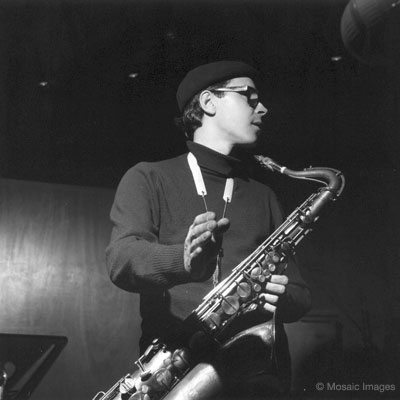
Gato Barbieri 2At some point in his career, Leandro “Gato” Barbieri became a sound. A great sound, for sure, its hoarse urgency bursting with Latin passion, but he learnt that he needed to do little more than apply it to the theme he wrote in 1972 for Bernardo Bertolucci’s Last Tango in Paris to satisfy his large core audience.

Maybe that film was the watershed. He had arrived in New York from Buenos Aires in the mid-’60s as an unknown tenor saxophonist and plunged straight into the maelstrom of the avant-garde, bringing a voice as distinctive as that of another saxophone incomer, John Tchicai. Barbieri was heavily featured on Don Cherry’s first two brilliant albums for Blue Note, Complete Communion and Symphony for the Improvisers, quickly followed by his debut as a leader, In Search of the Mystery, recorded for ESP Disk’ with a quartet including the cellist Calo Scott. He was a featured soloist on Michael Mantler’s “Communications #8″from the seminal Jazz Composers Orchestra double-album in 1968, which meant equal billing with Cherry, Cecil Taylor, Pharaoh Sanders, Roswell Rudd and Larry Coryell. The following year he was a prominent contributor to Charlie Haden’s first Liberation Music Orchestra album, and was featured on Escalator Over the Hill, the epic “chronotransduction” by Carla Bley and Paul Haines, released in 1971.

He made an impression on all of them, with a powerfully vocalised tone and the sort of confident delivery necessary to hold his own in such strong company. Decades later we could hear how he sounded stretching out in a club environment back in 1966 on recordings made at the Café Montmartre in Copenhagen, featuring Cherry’s quintet with Karl Berger on vibes, Bo Stief on bass and Aldo Romano on drums, released in three volumes by the renascent ESP between 2007-09.

The special pungency of his playing also derived, consciously or not in the listener’s mind, from the knowledge of his South American background: this seemed to be the sound of liberation movements across the continent. Barbieri strengthened the connection with tune titles such as “Tupac Amaru”, named after the Inca leader murdered by the Spanish invaders and to be found on a 1971 Flying Dutchman album called Fenix, reissued a couple of years ago on BGP, and “Viva Emiliano Zapata”, from an excellent biggish-band album of the same name, released on Impulse in 1974.

I saw him live just once, at the Montreux Jazz Festival in 1971, in a performance later released on Flying Dutchman as El Pampero, with Lonnie Liston Smith on keyboards, Chuck Rainey on bass guitar, Bernard Purdie on drums, and Nana Vasconcelos and Sonny Morgan on percussion. (Rainey and Purdie were present at the festival as members of King Curtis’s band, but played with several other artists.) It was a powerful set, but for me it lacked the profundity of the work he’d done with the free-formers.

A year later Last Tango was making him famous, and he took the fork in the road that leads to a more radio-friendly aesthetic. But then in 1982 I saw a film destined to be much less successful, Matthew Chapman’s Strangers Kiss, which starred Peter Coyote and Victoria Tennant and a Barbieri soundtrack that I liked much better. The music had the familiar backstreet-tango-bar vibe, but it felt as though it was playing a more organic part in the movie. It seems to have disappeared so completely that I might have imagined it.

He died on Saturday, aged 83. If you go to http://www.gatobarbierimusic.com, you’ll find a link to clips from his most recent album, New York Meeting, a quartet session recorded five years ago in a straight-ahead style. There had been health problems, but that sound was still there.

* The photograph of Gato Barbieri was taken by Francis Wolff at Don Cherry’s Complete Communion session on Christmas Eve, 1965. There’s another one from the same occasion in The Blue Note Years: The Jazz Photography of Francis Wolff, published by Rizzoli in 1995.