Skip to content

Posts tagged ‘Dennis Hopper’

The Ballad of Dennis Hopper

If anyone contained multitudes, it was surely Dennis Hopper. Wild and crazy guy, but also a proper artist. Incarnated the simmering potential of the ’50s, the multicoloured dream of the ’60s, the long scream of the ’70s, and the all-over-the-place uncertainty of the ’80s.

All those movies: not just Rebel Without a Cause, Easy Rider, Apocalypse Now and Blue Velvet but The Trip, The American Friend and Rumble Fish. And the folie de grandeur of The Last Movie. Married to Michelle Phillips for eight days and to Daria Halprin, co-star of Antonioni’s Zabriskie Point, for a little longer. Great photographer, too (he spent so much time with a camera around his neck that his friend nicknamed him “the tourist”). No wonder Mike Scott decided to make a Waterboys album about him.

I took Life, Death and Dennis Hopper on a road trip last weekend and it kept me entertained and fascinated all the way there and back. Its 25 tracks form a mosaic of a life that began in Dodge City, Kansas in 1936 and ended in Venice, California in 2010. “Kansas”, the opening track, is bookended by the sound of a street parade and a departing steam train: the song itself, sung and co-written by Steve Earle, with just the singer’s guitar and Mickey Raphael’s harmonica, is like something from Nebraska‘s country cousin.

Then Scott enters to sing “Hollywood ’55” — the story of Hopper’s arrival in Movieland — against a finger-snapping beatnik swing and we’re into a sequence of snapshots set to era-adjacent music. “Live in the Moment”, about making it, rolls on Mitch Ryder’s Detroit Wheels. “Andy”, referencing his friendship with Warhol, is a smooth uptown pop mix settling somewhere between Broadway and Hollywood & Vine. “The Tourist”, about Hopper and his camera documenting the short life of hippie dream, could be the Strawberry Alarm Clock or H. P. Lovecraft imitating the Jefferson Airplane. “Riding Down to Mardi Gras”, in which Hopper and Peter Fonda make Easy Rider, is a fine piece of outlaw country-rock. And so on, all the way to “Golf, They Say”, a funny song about the late-life experience of Willie Nelson teaching Hopper to swing a club.

But it’s not just a kind of jukebox musical. There are brief interludes — notably five short impressionistic instrumental pieces of contrasting styles and hues, each dedicated to one of Hopper’s five wives — and a couple of recitatives, one a description of the 1967 Monterey Festival in an English posh-hippie voice, the other a parody of an American TV news report of his death.

The two finest individual tracks are the hard-slugging, thick-textured “Ten Years Gone”, referring to Hopper’s lost decade and closing with a passage spoken by Bruce Springsteen, and “Letter From an Unknown Girlfriend”, a painfully stark voice-and-piano ballad in slow waltz time sung and played by Fiona Apple. They’re followed by a snatch of aural hallucination called “Rock Bottom”, evoking the years Hopper spent in the abyss, and then the gorgeous, achingly redemptive “I Don’t Know How I Made It”, somewhat like the Blue Nile covering Blonde on Blonde.

As Scott suggests, you can listen to the tracks indvidually or in any order, but it’s really made to be heard from start to finish, although not in any burdensome or dutiful way. Congratulations to him and his guests and his co-writers and fellow Waterboys, including Paul Brown, James Hallawell, Aongus Ralston, Ralph Salmins and Greg Morrow. It’s a brave thing, executed with flair and imagination.

* The Waterboys’ Life, Death and Dennis Hopper is out now on Sun Records.
Spector / Hopper


Phil Spector noir

These days, nobody talks about him. I hardly ever listen to the string of epic records he made in the 1960s, and I once wrote a book about him. He’s nine years into a 19-year sentence for second-degree murder, and currently being held at a prison hospital in Stockton, California. He’ll be 88 when he comes out.

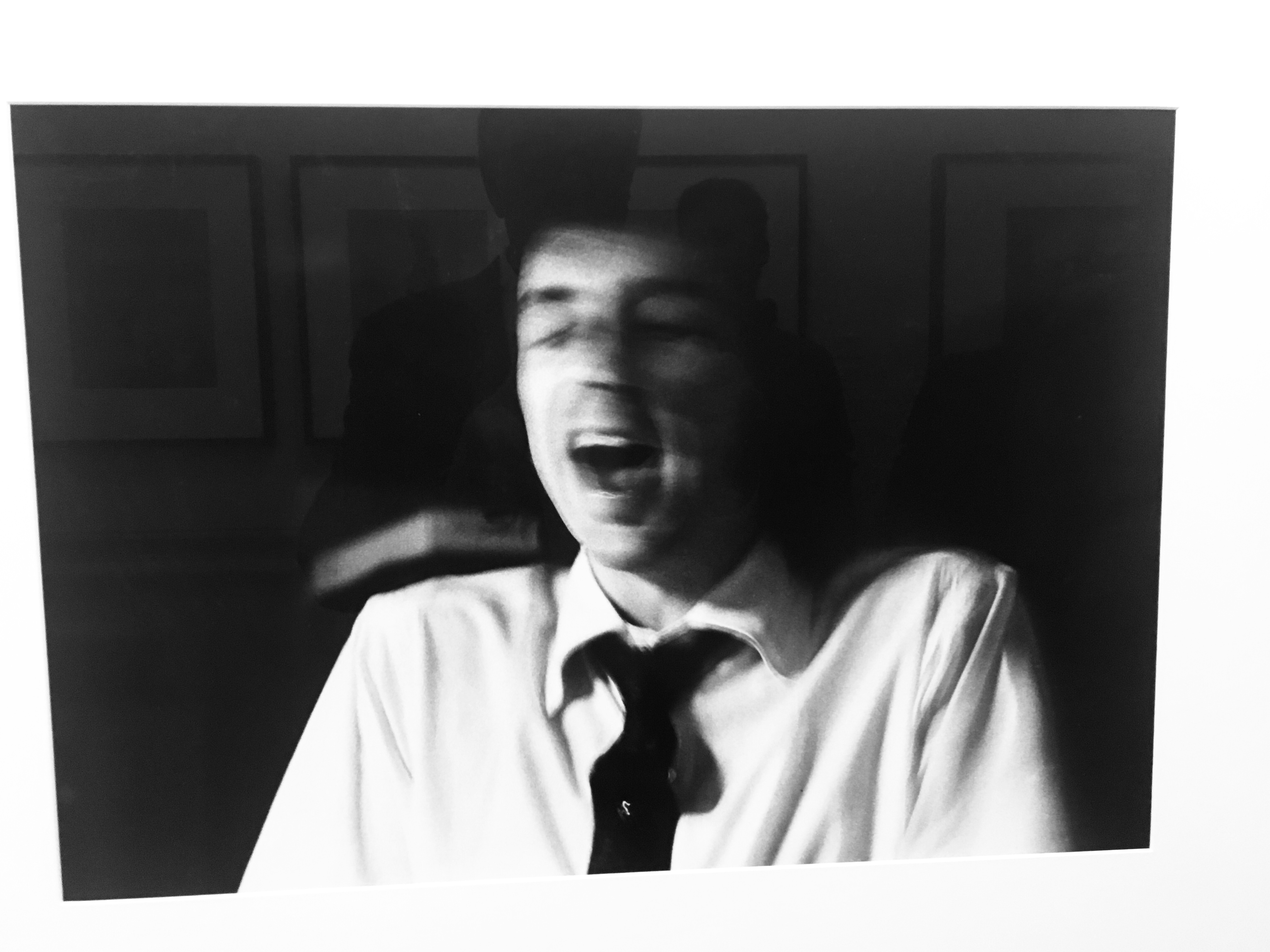
So there he was this afternoon, hanging on a wall in Somerset House at this year’s Photo London exhibition, immortalised by his friend Dennis Hopper in 1965.

Back in the days when Phil Spector was making his classic records at the Gold Star studio in Los Angeles, Hopper, who had acted with James Dean in Rebel Without a Cause and Giant, was one of those who sometimes dropped by. Spector always liked an audience.

“We hit it off right from the beginning, hanging out at Canter’s, chasing girls,” Hopper told Mick Brown, the author of Tearing Down the Wall of Sound, the definitive Spector biography. Hopper was also pursuing a side-career as a photographer, and after attending the sessions for “River Deep — Mountain High” he shot the cover photo for Ike and Tina Turner’s only Philles album.

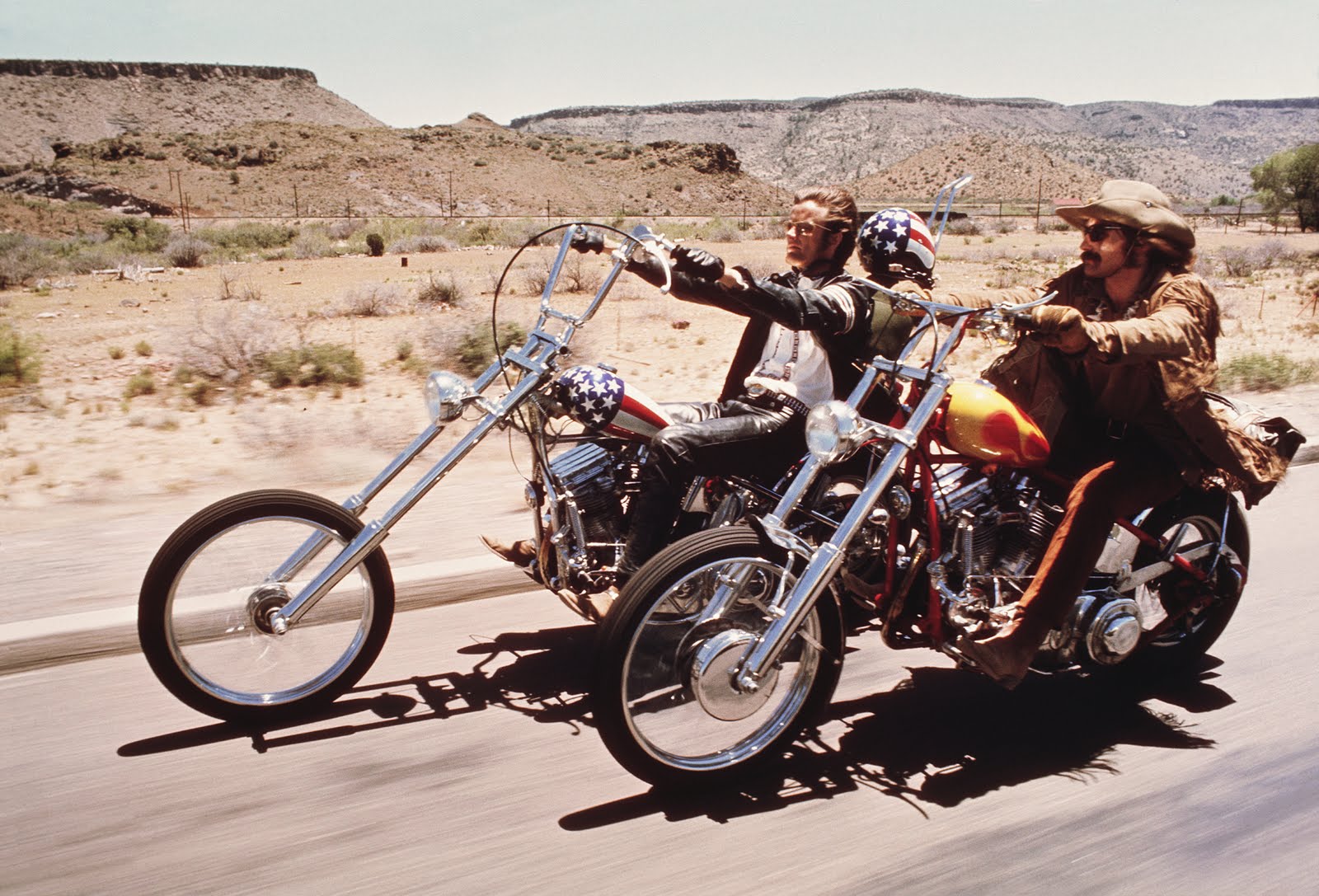
In 1967 Spector became involved in a Hopper film project, The Last Movie, which collapsed the following year (and was revived and completed in 1970). In 1968 he played a coke dealer in the era-defining Easy Rider, written by Hopper, Peter Fonda and Terry Southern, produced by Fonda and directed by Hopper. The Christmas following the movie’s release, Spector sent his friends a card featuring a still from his scene and the motto “A little snow at Christmas never hurt anyone…”

Hopper’s photograph of Spector laughing maniacally — blurred so that it looks oddly like one of Francis Bacon’s screaming Popes — catches him at his peak. Or just after it, actually. 1965 was the year of the Ronettes’ “Born to be Together”, the Righteous Brothers’ “Unchained Melody” and Tom Wolfe’s essay for the Sunday magazine of the New York Herald Tribune, “The First Tycoon of Teen”. It was the year after the matchless triumph of “You’ve Lost That Lovin’ Feelin'”, the year before the crippling debacle of “River Deep”.

The framed gelatin silver print is being offered by the Johannes Faber gallery of Vienna. It’s yours for £16,000.

* Photo London ends on Sunday, May 20.

The eye (and ear) of Dennis Hopper

EASYRIDER-SPTI-14.tifWhat I remember about hearing “The Weight” for the first time in 1968 was how timeless it sounded, how completely beyond all normal ideas of pop-music chronology. Although it was only just over four and a half minutes long, it somehow appeared to occupy a much more extended time-frame: longer, in a strange but true way, than the extended jams that were all the rage in the parallel universe of blues-rock and psychedelia. And in terms of style, it sounded as though the Band might have begun playing it in the previous century, and could very well continue into the next one.

Taking its place in The Lost Album, an exhibition of Dennis Hopper’s photographs currently on show at the Royal Academy in London, it becomes literally timeless. Hopper’s 400 black and white images — original prints on board, uniform in their modest size, with the tonal warmth and small marks of age that make looking at them like listening to vinyl — are divided between several large rooms, and in the middle comes a change of pace: the spectator stands on what amounts to a balcony, looking across a space on a lower floor at a projection of scenes from Hopper’s Easy Rider on the opposite wall. The accompanying music, configured in an endless loop, is Jaime Robbie Robertson’s masterpiece, seamlessly repeating without end, at least until the exhibition closes.

The song can stand it. You hear it first in the distance, and you want to get closer. When you’ve watched the film montage a couple of times, you move on — and although the music recedes, it won’t go away. To begin with, you wonder why the curator didn’t add a few more songs featured on the Easy Rider soundtrack. Steppenwolf’s “The Pusher”, perhaps, or the Byrds’ “Wasn’t Born to Follow”. But it’s a clever way of encouraging you to stay long enough to absorb what the exhibition wants you to see, while discouraging you from taking root. (On a second visit, I noticed that the volume had been turned down.)

Hopper was at his best as a photographer when making portraits of artists and art-world people in the early ’60s: there is something assured and definitive about the beautifully composed studies of Ed Ruscha, Andy Warhol, Roy Lichtenstein and others. His pictures from civil rights demonstrations lack the dynamism other photohgraphers brought to the same subject, or that of his own images from the celebrated Sunset Strip riots of 1967. His abstract images, too, are unexceptional, but there are some nice photographs of hippies in Los Angeles and San Francisco, of Hell’s Angels, of bull fights in Mexico, and of bands: the Byrds, Buffalo Springfield, Jefferson Airplane. And it’s always nice to hear “The Weight” again, and again, and again.

* Dennis Hopper: The Lost Album is at the Royal Academy, Burlington Gardens, London W1 until October 19. Easy Rider and The Last Movie are regularly screened in full as part of the exhibition.