Skip to content

Posts tagged ‘Charlie Haden’

The vision of Scott LaFaro
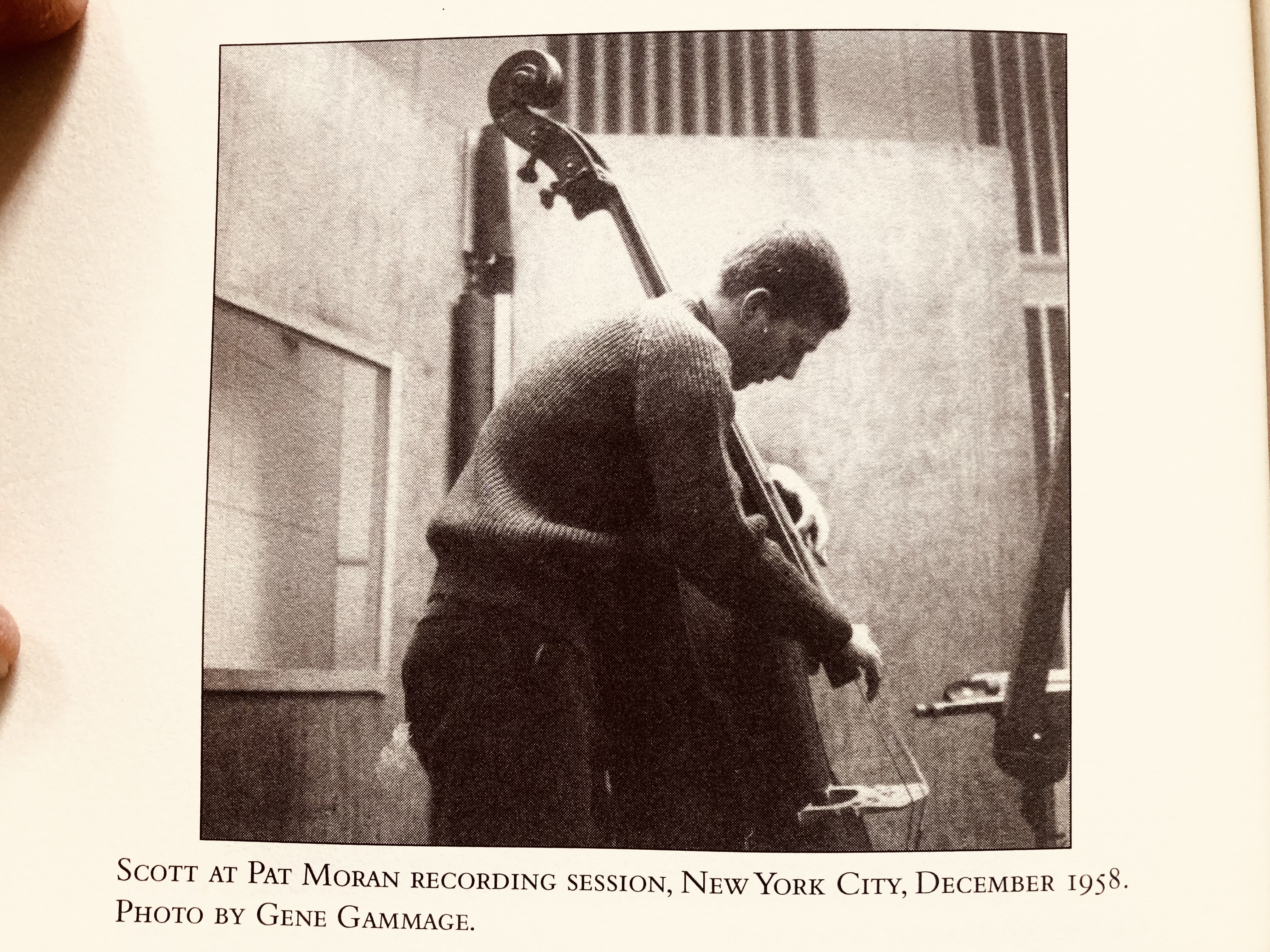
Invited to talk about the bassist Scott LaFaro, Ornette Coleman came up with a typically gnomic insight. “Scotty could change the sound of a note just by playing another note,” Coleman told LaFaro’s biographer in 2007. “He’s the only one I’ve ever heard who could do that with a bass.”

There’s a chance to consider what Ornette might have meant while listening to a new three-CD set that compiles work from throughout LaFaro’s sadly abbreviated career, which ended when he was killed in a car crash in 1961, aged 25. Starting with tracks from a 1958 trio album by the pianist Pat Moran, it continues through sessions with the pianists Victor Feldman and Hampton Hawes, the clarinetists Buddy DeFranco and Tony Scott, the trumpeter Booker Little, the arranger Marty Paich, the altoist Herb Geller, the composer John Lewis and the tenorist Stan Getz, as well as Coleman — and, of course, the pianist Bill Evans, with whose celebrated trio he came to fame.

In New York in 1960 Coleman called LaFaro to play alongside his usual bassist, Charlie Haden, in the famous double-quartet session called Free Jazz. Although the two young bassists were friends (LaFaro was then aged 24, Haden 23), it would be hard to imagine a single generation producing two exponents of the instrument with more contrasting styles: Haden darkly thrumming, happy to dig in and walk a basic 4/4, never using two notes where one would do, LaFaro all lightness and velocity and complex phrases executed with quicksilver grace.

When Haden was soon thereafter taken off the scene by drug problems, LaFaro assumed his place in Coleman’s working band and recorded again with him on the album titled Ornette!. But by the summer of that year he was back in his regular place with the Evans trio, playing a summer engagement in a 7th Avenue South basement club that produced two live albums which had an extraordinary impact on jazz: Waltz for Debby and Sunday at the Village Vanguard.

Together with two studio sessions, Portrait in Jazz and Explorations, these albums effectively turned the piano trio from “piano with rhythm accompaniment”, as it used to say on the labels of 78s, to three-way exchanges between creative equals, with the drummer Paul Motian as the third voice. Booker Little, with whom LaFaro recorded in 1960, described him admiringly as “much more of a conversationalist behind you than any bass player I know.”

Little died of uraemia in October 1961, aged 23. Three months earlier, three days after appearing with Stan Getz at the Newport Jazz Festival, LaFaro had died in an accident while visiting family in upstate New York, seemingly after falling asleep at the wheel. Both were prodigies, serious-minded young musicians equally determined to avoid the traps set by the jazz life, with golden creative futures ahead of them. (LaFaro had just begun to compose, and the legacy of the Evans trio to jazz impressionism is unthinkable without his only two recorded pieces, “Jade Visions” and “Gloria’s Step”.)

There were great bass players in jazz before LaFaro. Some of them — Jimmy Blanton, Oscar Pettiford, Ray Brown, Charles Mingus, Ray Brown, Red Mitchell — helped to change how the instrument was played, just as Coleman Hawkins or Charlie Parker changed the saxophone and Louis Armstrong or Miles Davis changed the trumpet, in ways that no classical player could ever have imagined. So when LaFaro arrived on the scene at the end of the 1950s, in his early twenties, he was firmly in a tradition of extending and influencing an instrumental vocabulary.

In the biography, many musicians describe the shock they felt at his death and try to describe what it was that made him so remarkable: the way that he took such a big step in helping to free the bass from the subservient role of walking a steady 4/4 at whatever the tempo might be. Gary Peacock, another friend and contemporary, who later took on his mantle with the trios of Evans and Keith Jarrett, describes him as “anchoring the time without playing it”.

That’s a beautiful way of explaining his effect, and it ties in with a simple but very telling observation made by the bassist and educator Phil Palombi in an essay on LaFaro’s playing included in the biography: “LaFaro rarely began a phrase on the downbeat of a bar.” He avoided the obvious, playing games with symmetry, leaving space for others (and for silence), created a feeling of suspense and suspension, mobilising the music and making it float in new ways. Evans and Motian were his willing and brilliant accomplices, but he was the one who set the tone and made it happen.

He played a three-quarter size bass built around 1825 by Abraham Prescott of Concord, New Hampshire, found for him in Los Angeles by Red Mitchell. Another great bass player, George Duvivier, helped him to get it rebuilt in New York. (Badly damaged by impact and fire in the fatal car accident, it was completely restored 20 years later.) The height of the bridge was adjusted to lower the action and LaFaro was a pioneer in the technique of plucking the strings with the index and second fingers of his right hand, like a finger-picking guitarist, giving him the ability to articulate phrases of great complexity.

The new set of CDs includes some beauties, such as a couple of cool-as-a-breeze tracks by a sextet co-led by Getz and the vibraphonist Cal Tjader with Billy Higgins on drums, Paich’s characteristically intriguing and beautifully swinging arrangement of “It’s All Right With Me” as a bass feature, a lovely version of “Wrap Your Troubles in Dreams” by a Hawes-led quartet with Harold Land on tenor, and the whole 37 minutes of “Free Jazz”. “Gloria’s Step” and “Jade Visions” are there, as are other Evans classics, including “My Man’s Gone Now” and “My Foolish Heart”.

There’s the occasional oddity, like John Lewis’s arrangement of his classic “Django” for a group including Evans, the guitarist Jim Hall and a string quartet. There’s a version of Dizzy Gillespie’s “BeBop” from The Arrival of Victor Feldman in which Feldman, LaFaro and the drummer Stan Levey flail away at a tempo of 96 bars per minute (that’s bars, not beats), making it to the end without having achieved anything beyond a demonstration of youthful ambition and athleticism (and one that the session’s A&R man, Lester Koenig of Contemporary Records, should have quietly binned).

Out of everything I’ve ever heard of LaFaro’s work, my favourite piece is the Evans trio’s Village Vanguard recording of “Milestones”. Miles Davis’s modal tune received a flawless and historic interpretation when the composer recorded it in 1958 with a sextet (the Kind of Blue band with Red Garland on piano and Philly Joe Jones on drums), but Evans, LaFaro and Motian re-examined, dissected, anatomised and reassembled it in a completely different way.

Curiously, it’s not included in the new set. So here it is. One masterpiece fashioned from another. LaFaro in full flow. Animating and driving the conversation. Rhythmically, melodically, harmonically and conceptually astonishing. Each note changing the one before it. And, in some weird and inexplicable way, only enhanced by the random guffaw from an audience member with which it concludes.

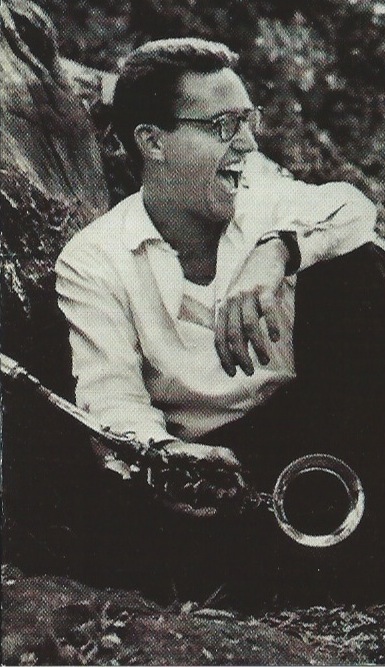
* The Alchemy of Scott LaFaro: Young Meteor of Bass is released on September 20 by Cherry Red. The biography, Jade Visions: The Life and Music of Scott LaFaro by Helene LaFaro-Fernández, was published by University of North Texas Press in 2009 and is the source of the photograph above, taken by the Pat Moran trio’s drummer, Gene Gammage.

Old and New Dreams

I may have said this before, but jazz tributes and reunions don’t do much for me. I’d rather hear the music moving on, using its past as the basis for further development. There are exceptions, including the welcome rediscoveries and reinterpretations of Herbie Nichols’ compositions by various musicians, Ryan Truesdell’s meticulous reconstruction of Gil Evans’s lesser known pieces, Alan Skidmore’s lifelong homage to John Coltrane and — of course — Old and New Dreams, four players who convened in 1976 to continue the work they’d done as members of Ornette Coleman’s acoustic quartets.

The trumpeter Don Cherry, the tenor saxophonist Dewey Redman, the bassist Charlie Haden and the drummer Ed Blackwell made three albums together, all for European companies. The first was for Italy’s Black Saint label. The second and third were for ECM, and the first of those will shortly reappear as part of the German company’s vinyl series under the general rubric ‘Luminessence’, along with Gary Burton’s New Quartet. (The first two albums in the series were Kenny Wheeler’s Gnu High and Nana Vasconcelos’s Saudades.)

In the case of Old and New Dreams, it’s good to have the album’s cover, designed by Barbara Wojirsch around the photograph by Herbert Wenn, back in 12-inch form: the calm austerity of the image and the controlled informality of the hand lettering are echt ECM. So is the sound, engineered by Jan Erik Kongshaug at Oslo’s Talent Studio under the supervision of Manfred Eicher, a combination that produced some of the label’s finest recordings throughout the 1970s.

The album begins with a 12-minute version of “Lonely Woman”, the classic ballad Coleman first recorded in Los Angeles in 1959 for The Shape of Jazz to Come, to which it also provided the lead-off track. Cherry and Haden were present for that momentous session (Billy Higgins was the drummer), and their historic connection to the song contributes to the extraordinary richness of this interpretation. If the original was a five-minute miniature in which every note could be committed to memory, here the framework is stretched to incorporate new perspectives. If I could only keep half a dozen tracks from the five decades of ECM, this would be one of them.

The remainder of the album maintains the standard: another Coleman tune (the previously unknown bounce-tempo “Open or Close”) plus Blackwell’s African-flavoured “Togo”, Cherry’s lyrical desert-blues “Guinea”, Redman’s musette feature “Orbit of La-Ba”, and Haden’s eco-anthem “Song of the Whales”, the bassist using his bow to create the sound of the endangered marine leviathans as an introduction to his gorgeous descending theme, which manages to be simultaneously mournful and uplifting.

All four of these musicians are gone now, as are Ornette and Higgins. But the unique music they made lives on, not least in this priceless reincarnation and the epic “Lonely Woman” it contains.

* Old and New Dreams is out in a vinyl edition on the ECM label on June 23. I don’t know who took the photo of the quartet — Charlie Haden, Don Cherry, Ed Blackwell and Dewey Redman — playing together; if anyone has that information, please tell me and I’ll provide a credit.

ECM at 50

manfred-eicher

By the end of the 1960s, jazz had gone right out of fashion. If it was by no means dead in creative terms, it was no longer good business for the music industry. So the arrival of a new jazz record label was quite an event, which is why I can remember quite clearly the first package from ECM arriving on my desk at the Melody Maker‘s offices in Fleet Street, and opening it to extract Mal Waldron’s Free at Last. I knew about Waldron from his work with Charles Mingus, Eric Dolphy and others. But an album from the pianist, recorded in Europe and packaged with unusual care on an unfamiliar label based in Munich, came as a surprise.

Pretty soon it was followed by Paul Bley with Gary Peacock, and then by Marion Brown’s Afternoon of a Georgia Faun. Before 1970 was out further packages had included an album by the Music Improvisation Company (with Evan Parker and Hugh Davies) and Jan Garbarek (Afric Pepperbird). It became obvious that something special was happening under the aegis of ECM’s founder, Manfred Eicher.

I guess it was in 1971, with solo piano albums from Chick Corea and Keith Jarrett, Terje Rypdal’s first album and two albums of duos teaming Dave Holland with Barre Phillips and Derek Bailey, that the label’s character really became clear. Eicher stood for jazz with a high intellectual content, saw no reason to privilege American musicians over their European counterparts, and set his own high standards in studio production and album artwork. All these things — particularly his fondness for adding a halo of reverb to the sound of acoustic instruments, inspired by how music sounded in churches and cathedrals — were eventually turned against him by the label’s critics. The sheer volume of great music produced over the past 50 years is the only counter-argument he ever needed. His greatest achievement has been to make us listen harder, deeper and wider.

ECM’s golden jubilee is being marked by events around the world. On January 30 and February 1 there will be a celebration over two nights at the Royal Academy of Music in London, featuring the pianists Craig Taborn and Kit Downes, the bassist and composer Anders Jormin and the Academy’s big band playing the music of Kenny Wheeler with guests Norma Winstone, Evan Parker and Stan Sulzmann. I thought I’d add to the festivities by choosing 20 ECM albums that have made a particularly strong impression on me since that first package dropped on my desk half a century ago; they’re listed in chronological order. Although there are many other contenders, I stopped at 19; the 20th is for you to nominate.

1 Terje Rypdal: Terje Rypdal (1971) The guitarist’s debut was an early sign of Eicher’s determination to capture and promote the new sounds coming from northern Europe, and from Norway in particular. Rypdal was one of the first to present himself as a wholly original voice.

2 Paul Bley: Open, to Love (1972) For my money, the finest of ECM’s early solo piano recitals, with Bley examining compositions by Carla Bley (“Ida Lupino”), Annette Peacock (“Nothing Ever Was, Anyway”) and himself.

3 Old and New Dreams: Old and New Dreams (1979) Don Cherry, one of Eicher’s favourites, is joined by Dewey Redman, Charlie Haden and Ed Blackwell in this homage to the music of their former colleague, Ornette Coleman. The 12-minute “Lonely Woman” is astonishingly lovely.

4 Leo Smith: Divine Love (1979) The trumpeter and composer Wadada Leo Smith was among the squadron of American innovators who arrived in Europe at the end of the ’60s and whose influence gradually became apparent in the ECM catalogue. Divine Love is a classic.

5 Bengt Berger: Bitter Funeral Beer (1981) A Swedish ethnomusicologist, composer and percussionist, Berger put together a 13-piece band — Don Cherry being the only famous name — to record this strange and compelling multicultural mixture of jazz and ritual music.

6 Charlie Haden / Carla Bley: Ballad of the Fallen (1983) Fourteen years after the historic Liberation Music Orchestra, Haden and Bley reunited for a second studio album featuring music of resistance.

7 John Surman: Withholding Pattern (1985) A solo album in which Surman developed his skill at overdubbing soprano and baritone saxophones, piano and synths, this opens with “Doxology”, in which Oslo’s Rainbow studio is turned into an English church.

8 Bill Frisell: Lookout for Hope (1988) One of several guitarists whose careers were nurtured at ECM, Frisell recorded this with a lovely quartet — Hank Roberts (cello), Kermit Driscoll (bass) and Joey Baron (drums) — before moving on.

9 Keith Jarrett Trio: The Cure (1991) Includes an eight-minute version of “Blame It on My Youth” in which Jarrett, Gary Peacock and Jack DeJohnette achieve perfection, no matter how many times I listen to it in search of flaws.

10 Kenny Wheeler: Angel Song (1996) In a dream line-up, the Canadian trumpeter is joined by the alto of Lee Konitz, the guitar of Bill Frisell and the bass of Dave Holland.

11 Tomasz Stanko: Litania (1997) The Polish trumpeter interprets the compositions of his compatriot and sometime colleague Krzysztof Komeda. A wonderful group features the saxophonists Joakim Milder and Bernt Rosengren, with a core ECM trio — Bobo Stenson (piano), Palle Danielsen (bass) and Jon Christensen (drums) — as the rhythm section plus Terje Rypdal’s guitar on two of the tunes.

12 Trygve Seim: Different Rivers (2000) Most ECM music is for small groups, but here the Norwegian saxophonist and composer permutates 13 musicians in an exploration of subtle textures and gestures. The great trumpeter Arve Henriksen is among the soloists.

13 Manu Katché: Neighbourhood (2005) Ever listened to Herbie Hancock’s “Maiden Voyage” and wished there had been more post-bop jazz with that kind of relaxed intensity and melodic richness? Here it is. Tomasz Stanko and Jan Garbarek are the horns, Marcin Wasilewski and Slawomir Kurkiewicz the pianist and bassist.

14 Masabumi Kikuchi: Sunrise (2012) Kikuchi, who was born in Tokyo in 1939 and died in upstate New York in 2015, was a pianist of exquisite touch, great sensitivity and real  originality: a natural fit with Eicher, who recorded him with the veteran drummer Paul Motian and the quietly astounding bassist Thomas Morgan.

15 Nik Bärtsch’s Ronin: Live (2012) The label that released Steve Reich’s Music for 18 Musicians in 1978 is the perfect home for the group led by the Swiss pianist and composer, who explores the spaces between minimalist repetition and ecstatic groove, between gridlike structures and joyful improvisation.

16 Giovanni Guidi: This Is the Day (2015) With equal creative contributions from Thomas Morgan and the drummer João Lobo, the young Italian master leads a piano trio for the 21st century: always demanding close attention but never short of refined lyricism.

17 Michel Benita + Ethics: River Silver (2016) Led by an Algerian bassist, a quintet including a Japanese koto player (Mieko Miyazaki), a Swiss flugelhornist (Matthieu Michel), a Norwegian guitarist (Eivind Aarset) and a French drummer (Philippe Garcia) create music that incarnates the ECM ideal of reflective, frontierless beauty.

18 Roscoe Mitchell: Bells for the South Side (2017) A double album recorded live in Chicago in 2015, featuring Mitchell with four trios — including the trumpeter Hugh Ragin and the percussionist Tyshawn Sorey — who finally come together in a memorable celebration of the legacy of the Art Ensemble of Chicago.

19 Vijay Iyer Sextet: Far From Over (2017) Knotty but exhilarating compositions, solos packed with substance from Graham Haynes (cornet), Steve Lehman (alto) and Mark Shim (tenor): a statement of the art as it moves forward today.

20

* The photograph is a still from the 2011 film Sounds and Silence: Travels with Manfred Eicher, by Peter Guyer and Norbert Wiedmer. There’s a chapter containing further thoughts on ECM’s place in the evolution of modern music in my book The Blue Moment: Miles Davis and the Remaking of Modern Music, published in 2009 by Faber & Faber.

Liberation Music Orchestra

liberation-music-orchEight years ago I was fortunate enough to be at the Blue Note in Greenwich Village to hear Charlie Haden’s Liberation Music Orchestra on the night of the US presidential election, and then again the following night after it had been confirmed that Barack Obama would be serving as America’s first black president. The anxious optimism of the first night and the joy and relief of the second could hardly have formed a greater contrast with the current mood of the world, in which the orchestra — minus Charlie, who died two years ago, and now directed by his long-time collaborator Carla Bley — arrived in London to play at Cadogan Hall as part of the EFG London Jazz Festival.
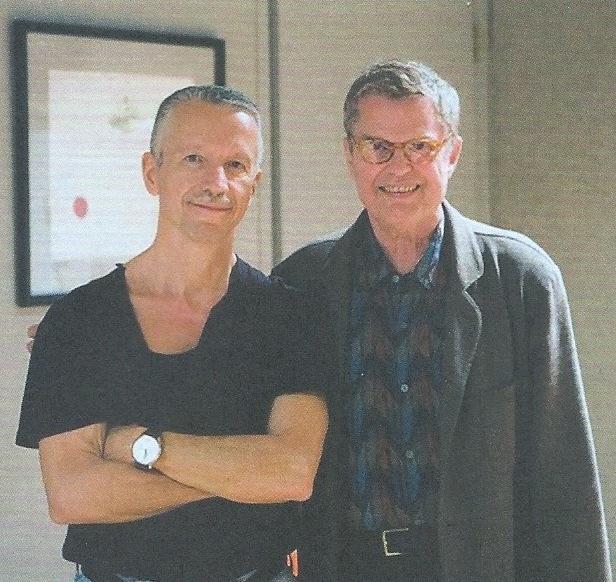
I don’t think I was the only one to find their music even more emotionally charged than usual, which is saying something for a band that began life in 1969 delivering an uncompromising musical protest against the evils of the age, with a line-up including Don Cherry, Gato Barbieri and Roswell Rudd. Tonight’s 90-minute set maintained the tradition by concentrating on the concerns of the hour and consisted of material from their last two studio recordings: Not in My Name (2004) and the new Time/Life (Song for the Whales and Other Beings), the environmental album on which they were working before Haden’s death, and which was completed under Bley’s supervision. All of it resonated powerfully.

The new pieces included Bley’s beautifully plain arrangement of “Blue in Green”, her own “Silent Spring” and Haden’s “Song for the Whales”, which featured a lovely passage for Seneca Black’s trumpet, Tony Malaby’s tenor saxophone, Darak Oles’s double bass and Matt Wilson’s drums. Bill Frisell’s gorgeous, slow-burning “Throughout” made a lovely encore. The evening was sprinkled with fine solos from Malaby and his fellow tenorist Chris Cheek, Loren Stillman on alto, Michael Rodriguez on trumpet, Marshall Gilkes on trombone, Vincent Chauncey on French horn, Earl McIntyre on tuba and Steve Cardenas on guitar. Oles, who perhaps had the hardest gig of the night, did the right thing by playing Haden’s parts and evoking his spirit without trying to be him.

But the heart of the concert came in the long, carefully wrought medley of “America the Beautiful”, “Lift Every Heart and Sing” and Ornette Coleman’s “Skies of America”, and particularly in the arrangement of “Amazing Grace” to which Bley brings every bit of her great and precious expertise at making highly schooled musicians sound like the world’s greatest town brass band. As they played it, investing every note with humanity, I couldn’t help thinking of Obama’s sudden decision, during his address to the funeral of the Reverend Clementa Pinckney, a US senator, at the Emanuel African Methodist Episcopal Church in Charleston, South Carolina in June last year, to sing the song as part of his eulogy to the priest and the eight other victims murdered by a white supremacist during a Bible study class. It’s a different world now.

* Time/Life is out now on the Impulse label.

Jarrett & Haden revisited

Keith Jarrett:Charlie HadenI like Keith Jarrett best when he’s forced to deal with vulnerability. Sometimes it’s his own, as in the exquisite solo album called The Melody at Night, With You, which he recorded at his home in 1998 when his store of energy was still depleted after two years of musical inactivity caused by a persistent condition called chronic fatigue syndrome (he talked about it to me the following year, and you can find the interview here). In the case of his new album, Last Dance, it’s that of Charlie Haden, his long-time friend and musical partner.

Jarrett’s virtuosity is undeniable. No doubt it was hard-won, and it has led him to some interesting places, but I prefer it when he has to think about music from another perspective. To me, that’s when his real musicality becomes apparent: when the essence, rather than the surface, is all there is.

Last Dance is the second release from sessions he and Haden conducted in 2007, when they played standard tunes together in the relaxed environment of Jarrett’s home studio in New Jersey. The first, titled Jasmine, was released four years ago and, like The Melody at Night, With You, found a large and appreciative audience (beguiled not least by a brief but glowing reading of Joe Sample’s “One Day I’ll Fly Away”). I think Last Dance is the better of the two.

Haden, who suffered from polio as a child, has encountered further health problems in recent years, including a couple of conditions, tinnitus and hyperacousis, related to his hearing. His playing is no longer as strong as it was when he strummed that famous solo on Ornette Coleman’s “Ramblin'” in 1959 or plucked the beautiful melody of his “Song for Che” on the classic Liberation Music Orchestra album 10 years later. When I listened to Jasmine on its release, I thought the signs of debilitation were evident: if his lines beneath Jarrett’s improvisations, were clear, they seemed to lack vitality.

I have no such problem with Last Dance. Whether it’s me, or whether Jarrett and Haden (or the executive producer, Manfred Eicher) selected tracks for the first release that expressed a certain mood, I can’t say. But the programming of the new album — including lengthy explorations of Kurt Weill’s “My Ship”, Monk’s “Round Midnight”, Richard Rodgers’ “It Might As Well Be Spring” and Cole Porter’s “Every Time We Say Goodbye”, with a change of pace on Bud Powell’s “Dance of the Infidels” — creates an ambiance that, while no less reflective, seems to possess a greater degree of intellectual vigour.

For evidence, compare the two versions of Gordon Jenkins’s “Goodbye”, one on each album. It’s probably my favourite song, as I wrote here last year, so I always listen to it with special interest. Whereas the reading on Jasmine didn’t move me greatly, and still doesn’t, this alternative take seems absolutely perfect, drawing out the finest eloquence from both men (and Haden in particular). Maybe it’s a matter of context: the choice and sequencing of tracks. Maybe it’s just a mystery. Whatever it is, Last Dance is a wonderful album. A small masterpiece, in fact.

* The photograph of Keith Jarrett and Charlie Haden is from the sleeve of Jasmine and was taken by Rose Anne Jarrett. Jasmine and Last Dance are on ECM Records.

Charlie’s angels

Haden Triplets 2Richard Thompson once told me his theory, rooted in an early devotion to the Everly Brothers, that there is nothing quite like the sound of blood relatives singing together. Tanya, Rachel and Petra Haden might be a case in point.

They were born in New York on October 11, 1971 to Ellen Haden and her husband Charlie, who had come to prominence as the double bassist with Ornette Coleman’s great quartet of 1959-61 and later as the leader of his own Liberation Music Orchestra. I’ll never forget the first time I heard Haden’s classic solo on Ornette’s “Ramblin'”, from Change of the Century, and over the last 40-odd years the Liberation Music Orchestra has been one of the great positive forces in the music.

Charlie was born in Iowa; at the age of two he started singing with his family’s band, who performed country songs on radio and at country fairs. When polio ruined his voice at 15, he switched to the double bass and developed an interest in jazz. Later he moved to Los Angeles, and the rest is part of jazz history. A few years ago he explored his roots in a fine album called Rambling Boy.

His triplet daughters, born (like his son Josh, who leads the band Spain) to his first wife, grew up surrounded by music. On visits to their father’s parents in Missouri, they learnt the country songs of his childhood. At home there was usually something good playing — “whether it be our mom playing Billie Holiday and Nina Simone records, or our dad playing Keith Jarrett and Ornette Coleman in the living room,” as they write in the notes to their first album together, The Haden Triplets. They’ve all worked in music for many years, with credits including the Foo Fighters, the Queens of the Stone Age, Beck, Green Day and Todd Rundgren. Almost 10 years ago Petra recorded a acappella album called Petra Haden Sings The Who Sell Out, which was exactly what it said and earned Pete Townshend’s admiration.

Here’s a short promo film for the sisters’ album, which is released on Third Man Records, Jack White’s label. Perhaps a little confusingly, Tanya Haden’s husband is the actor Jack Black, and the album was recorded — at the insistence of Ry Cooder, who produced it — in their house, with one microphone for the singers and their accompanists: Cooder on guitar and mandolin, his son Joachim on drums and Rene Camacho on bass, with occasional touches of fiddle from Petra and cello from Tanya.

The bulk of the repertoire is drawn from hallowed country and bluegrass sources: the Louvin Brothers (“Tiny Broken Heart”, “My Baby’s Gone” and “When I Stop Dreaming”), Bill Monroe (“Voice from on High” and “Memories of Mother and Dad”), the Carter Family (“Will You Miss Me When I’m Gone?”, “Single Girl, Married Girl” and “Oh Take Me Back”), the Stanley Brothers (“Lonesome Night”) and Kitty Wells (“Making Believe”). It suits their voices very nicely: while none of the three seems to be a particularly distinctive singer, together they make close harmonies that are appropriately plaintive. When they step outside the idiom, with the poppier “Slowly” or Nick Lowe’s “Raining Raining”, the results aren’t quite as convincing, although never less that pleasant.

On the best songs the sense of intimacy is very appealing. The Haden Triplets has the atmosphere of music made in the family parlour, for their own enjoyment and for that of their circle of friends, of whom we are made to feel a part. And sometimes, as with the glorious “Voice from on High”,  you just want to lift your own voice and join in.

* The photograph of Rachel, Petra and Tanya Haden is from the inside cover of The Haden Triplets and was taken by Jo McCaughey.

Lee Konitz: the improviser at 85

Lee Konitz 1No musician interrogates a song more thoroughly than the alto saxophonist Lee Konitz: separating its components, wiping off the accumulated dirt and scraping away the rust, holding the bits up to the light, examining them from all angles, and then reassembling them in a more interesting form. He was doing it in 1947, when he made his first recordings with the Claude Thornhill Orchestra, aged 20. He is still doing today, halfway through his ninth decade.

He’s featured on a new CD, Costumes Are Mandatory, released on the HighNote label and recorded in August 2012 with a quartet under the leadership of the pianist Ethan Iverson, noted for his work with the trio The Bad Plus. The bassist Larry Grenadier and the drummer Jorge Rossy complete the group. Together with two other albums released in the past couple of years, Live at Birdland (ECM), recorded in December 2009 with Brad Mehldau, Charlie Haden and Paul Motian, and Enfants Terribles (Half Note), made in June 2011 with Bill Frisell, Gary Peacock and Joey Baron, it provides a view of a great artist in his final years, his work subject to the changes imposed by time and the ageing process.

The late work of a long-lived great artist is always interesting and can provide a fascinating distillation of his or her career-long preoccupations. Sometimes the reduced powers are physical, sometimes they are mental. The painter Willem De Kooning was suffering from a form of Alzheimer’s disease when, in his eighties, he produced a series of strange, pale, almost luminous canvases that seemed like the ghosts of his former work. Fortunately, any reduction in Konitz’s powers is purely physical; the articulation might not be as swift, but the intellect is as sharp as ever.

No longer the fleet-footed musical athlete of his youth, when he and his fellow saxophonist Warne Marsh leapt with such alacrity over the high hurdles set for them by their mentor, the pianist Lennie Tristano, now Konitz deploys his reduced powers to different ends. The last of his strength is being spent on searching his material — almost always drawn from the standard American songbook — for new connections, new angles, new avenues of approach.

My best memory of Konitz is also one of my best memories of music, full stop. It comes from about 30 years ago, and a night at a short-lived jazz club called the Canteen on Great Queen Street in Covent Garden, occupying premises that had formerly been Blitz, the headquarters of the New Romantic movement, would later become a discotheque and now house a lap-dancing club. The Canteen, although ultimately unsuccessful in its attempt to rival Ronnie Scott’s, was for a while a very good place to hear such people as Esther Phillips, Chet Baker and Lee Konitz.

On the night in question Konitz was accompanied by an excellent British rhythm section: the pianist (and composer) Bob Cornford, the young bassist Paul Morgan and the experienced drummer Trevor Tompkins. What I remember most vividly is that one complete set was taken up by a treatment of “On Green Dolphin Street”, the Hollywood film theme composed by Bronislau Kaper in 1947 and rescued just under a decade later by Ahmad Jamal, who was responsible for its subsequent popularity among jazz musicians. Konitz started out by improvising unfamiliar and seemingly arbitrary phrases, inviting the other three musicians to go along with him as he gradually allowed these shreds of melody to take new forms, uncovered the connective tissue between them. This mesmerising process reached its apogee when, after much feinting and seeming disgression, Kaper’s theme gradually began to emerge and was stated for the first time as the piece ended. It was like watching a film of an explosion being run backwards in super slow motion.

Lee Konitz 3He does something similar, at a more compressed and less exalted level, on the version of “What’s New” included in Costumes Are Mandatory, allowing Iverson to lead the way, before entering with a phrase from the theme which is quickly deformed into a series of glancing allusions to the original tune, inventing their own sense as they go along. This is something that used to be called “thematic improvisation”, and it is almost a lost art. His distinctive tone — which once proposed an alternative to the all-pervasive influence of Charlie Parker — may be more fibrous and less robust than in his youth or his prime, and the comparison with Live at Birdland and Enfants Terribles indicates that time is having an inevitable effect, but it remains the perfect vehicle for his thoughts.

Konitz, of course, was a member of Miles Davis’s famous 1948 nonet, the Birth of the Cool band, and another personal memory of his playing comes from 1991, when he appeared at London’s South Bank with a band billed as Re-Birth of the Cool, an attempt by another original member, Gerry Mulligan, to recreate those celebrated sessions. Lew Soloff played Davis’s parts, and the other original present was Bill Barber, the tuba-player. For me, the outstanding impression was left by the way Konitz approached the project: he was the only one not interested in honouring the past by recreating it note-for-note but was intent on playing as though more than 40 years had passed and the world had moved on.

Working as a soloist for hire suits him because it presents him with a constant variety of challenges. That is how he has operated throughout his career, which has never been short of recorded documentation, from those early sides with Thornhill, Davis, Tristano and Stan Kenton through his own albums on Atlantic and Verve, his fascinating and fearless encounters with Martial Solal, Elvin Jones, Albert Mangelsdorff, Kenny Wheeler and countless others, to this most recent crop of albums. As a body of work, it offers not just a vast quantity of great music but a salutary lesson in the value of living in the present.

* The photograph of Konitz at the top is a detail from the cover of the 1955 Atlantic album Lee Konitz with Warne Marsh, taken by William Claxton. The lower photograph is a detail from the cover of Costumes Are Mandatory, taken by John Rogers. For those who want to know more, I thoroughly recommend Lee Konitz: Conversations on the Improviser’s Art by Andy Hamilton, published by the University of Michigan Press in 2007.