Alto voices: Art Pepper & Karsten Vogel
1.
Alto is just such a hard instrument; there are so few people that play it really well. I feel it’s the best one, too, now. At first I didn’t feel that way — I wanted to be a tenor player. It took a long time for me to feel that alto was the mnst expressive of the saxophones.
That’s Art Pepper, talking to Les Tomkins in an interview for Crescendo magazine in 1979. And it’s certainly true that when he got his first alto at the age of 12, Pepper found his voice, one that continues to beguile listeners today, four decades after his death in 1982, aged 56. Something about the horn’s register and the weight of its sound helped him to expose his emotions.
Pepper was 34 years old and had already lived several lifetimes when he travelled from Los Angeles to Vancouver in September 1959 to fulfil a 10-night engagement at a club called the Cellar, where American jazz musicians were regularly featured. The format was a familiar one in those days: a visiting soloist with a local rhythm section, using a repertoire built from Broadway tunes, jazz standards and perhaps one or two originals from the guest. Pepper had first appeared there in 1957, when he was in a bad way; he was in better condition for this return engagement, as we can hear in a new four-CD box set called Everything Happens to Me, comprising previously unheard recordings made on a mono tape machine
He was a player of special qualities. In the liner notes to a Pepper album (Gettin’ Together, 1960), the critic Martin Williams wrote that he would use the example of Pepper’s improvisations to persuade a square friend that jazz musicians can create melodies better than the ones they started with. Listen to “What’s New” here, or the two versions of “Over the Rainbow”, or particularly the title track of the set, see what Williams meant, as Pepper switches between broad spontaneous melodies and triple-time flurries that deserve to be slowed down, transcribed and studied.
The people who went to hear him at the Cellar in the summer of 1959 were very fortunate. They caught him at his best, with sympathetic accompanists. The pianist Chris Gage, the bassist Tony Clitheroe and the drummer George Ursan may never have established wider reputations, but they knew enough to provide thoughtful and sensitive support, whether on the ballads or the jazz pieces like “Allen’s Alley”, “Yardbird Suite” and Pepper’s own “Brown Gold”.
The sound is not studio-quality, but it’s exactly as you would have expectecd it to be in a club in 1959. The vibe is preserved through introductions and false starts, as when Pepper calls a halt after a few bars of “I Surrender Dear” and apologises to the audience: “As you know we’ve never rehearsed or anything, so if we should goof at any time, please bear with us. It’s just one of those things. We’ll get it, we’ll get it.” One or two tunes are incomplete and have to be faded. But none of that matters. This is how it was.
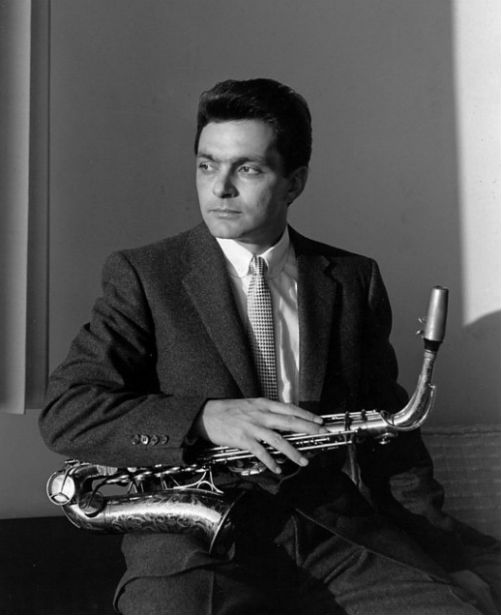
* Art Pepper’s Everything Happen to Me: 1959 — Live at the Cellar is released on the Omnivore label: http://www.omnivorerecordings.com The photo of Pepper is by Ray Avery.
2.
My life in music is based on the saxophone. In the busy years with Burnin Red Ivanhoe and Secret Oyster most of my time was taken by composing, arranging, holding the bands together, logistics and trying to get the economical side to function for the bands (which in fact never did). My alto saxophone – the reason for the whole thing – came third. And I regret that a lot. With a few exceptions I don’t like to hear the recordings with my soloing from these days. In the past like 35 years I have tried to compensate for that and somehow I have succeeded. I’m still working on that project.
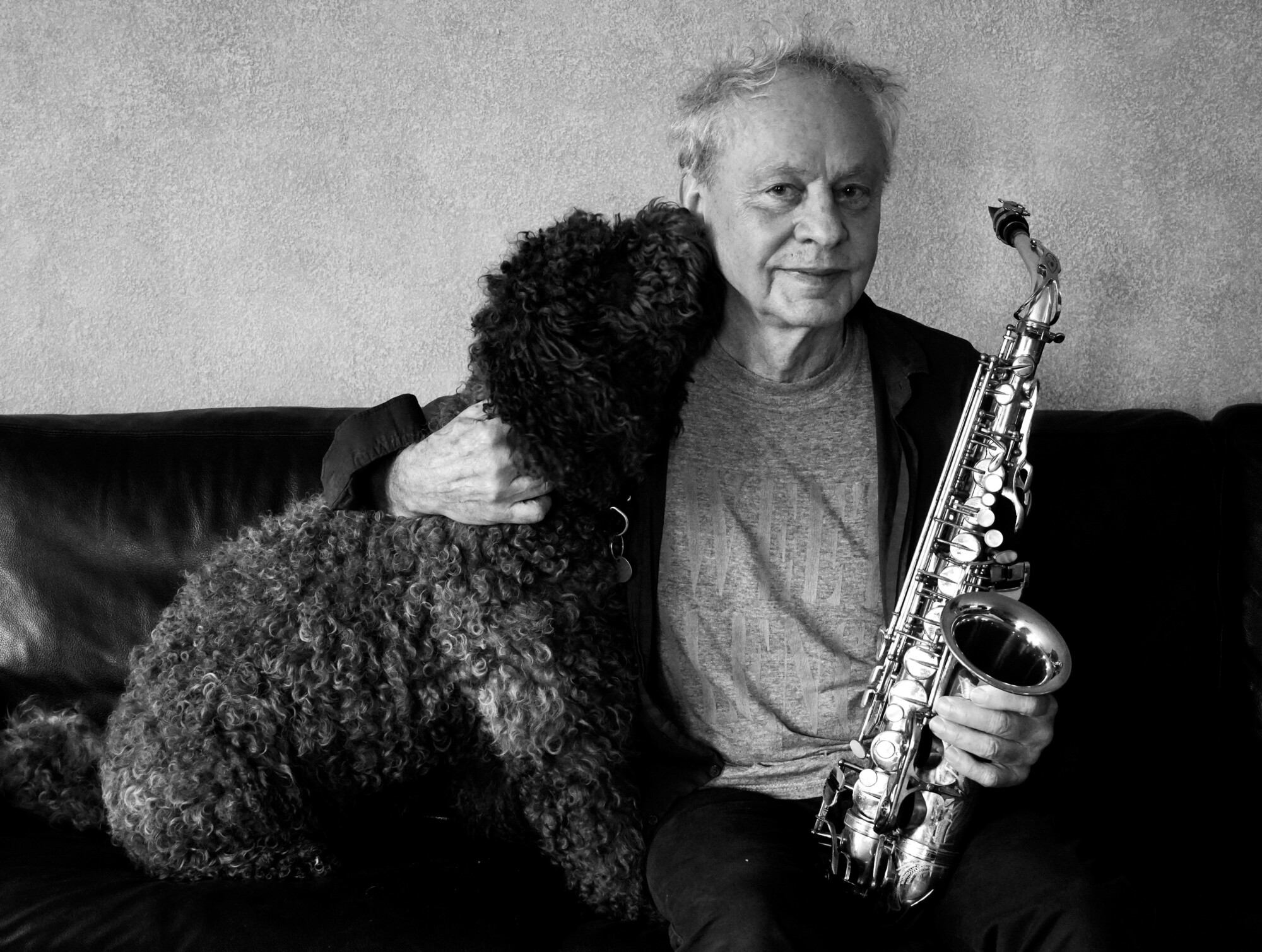
And that’s Karsten Vogel, the Danish alto saxophonist and composer, talking in 2024 to the Slovenian writer Klemens Breznikar in an interview for the online magazine It’s Psychedelic Baby!. Vogel was in the process of recording a quartet album that has just been released under the title Late Night Ballads. It seems very fair to suggest, on this evidence, that he’s made up all of that lost time, and then some.
I’ve always had a special fondness for Karsten’s playing, whether with his regular bands or alongside John Tchicai in Cadentia Nova Danica, solo in an art gallery in London, in a duo in cave by the sea on the Faroe Islands, or with the Indian violinist L. Subramaniam. But I think I like him best in the basic “alto with rhythm accompaniment” format, heard on the album called My Old Flame in 2009 and now on Late Night Ballads.
The two altoists to whom he’s perhaps closest in terms of the emotional climate of his playing are Tchicai, with whom he played in Copenhagen in the late ’60s, and Lee Konitz in his latter years. He has a light sound, favouring the instrument’s upper register, with phrasing that — like Art Pepper’s — is agile without drawing attention to itself. Like both of those, he can summon a kind of pathos without descending into sentimentality.
Karsten is 83 now, so there’s a temptation for a critic to interpret this new album as “late work” (like the live albums of Konitz with Brad Mehldau and Charlie Haden released by Blue Note). But the seeming fragility of his sound is not a consequence of the ageing process: it’s something he’s always had, and it’s certainly nothing to do with weakness. He is also a master of phrasing, manipulating notes into weightless clusters, with the gift of making the unpredictable sound inevitable.
As the album’s title suggests, the mood is relaxed and contemplative, the tempos ranging from slow-medium to medium-slow but never feeling passive. It’s a little bit noirish, although that impression may be just caused by the fact that the opening track is David Raksin’s title song from Otto Preminger’s Laura. The other chosen standards include “I Remember You”, “You Go to My Head” and “Don’t Explain”, and Dave Brubeck’s “In Your Own Sweet Way”, with one original, “Open 24 Hrs”, cut from the same cloth. Throughout, the leader receives fine support from Mads Søndergaard on piano, Peter Hansen on double bass and Klaus Menzer on drums.
I sometimes think of the alto saxophone as the poet’s instrument. Here, as Vogel loops and soars above the contours of “Laura” or “You Go to My Head”, transcending but not quite detaching himself from the source material, is persuasive evidence.
* Karsten Vogel’s Late Night Ballads is on the Storyville label: http://www.storyvillerecords.com

 thebluemoment.com