Alice’s adventures on the astral plane
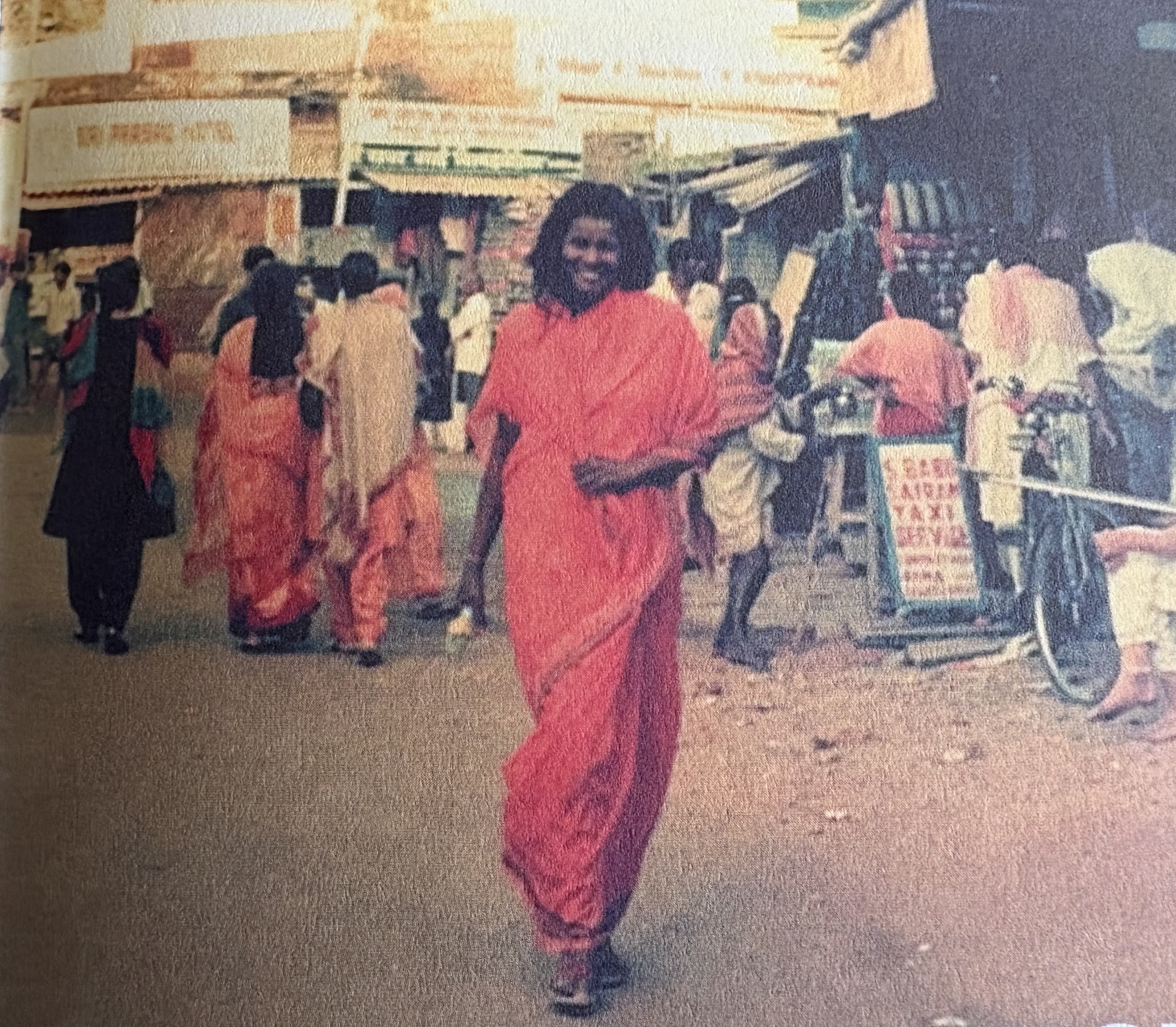
As one of those who didn’t pay enough attention to Alice Coltrane during the days when she was making what is now acclaimed as a series of classic albums, I welcome Andy Beta’s Cosmic Music. The first full-length biography of the pianist, harpist and composer, subtitled “The Life, Art and Transcendence of Alice Coltrane”, will no doubt help to ensure that she is remembered and properly valued in all her dimensions.
Born Alice McLeod in Detroit in 1937, she studied classical piano and orchestral percussion before becoming a member of the vibraphonist Terry Gibbs’s combo. In Paris in 1960, where she arrived with her first husband, the singer Kenny Hagood, she heard John Coltrane playing with Miles Davis, befriended Bud Powell, and was filmed for French TV at the Blue Note club in a group with the tenorist Lucky Thompson and the drummer Kenny Clarke. Watching the clips from that show, in which she plays a gorgeous “Lover Man” and a hectic “Strike Up the Band”, you can hear her using gospel figures alongside bebop runs but also injecting the blend with an unusual kind of fluidity, a quality that she took into her second husband’s band in 1965 and thence into her own recordings, particularly in her work on organ and concert harp.
Andy Beta relies heavily on Shankari Adams’s Portrait of Devotion and Franya Berkman’s Monument Eternal,.both written after Alice Coltrane’s death in 2007, in which the authors which analyse the spiritual life of the woman who became known as Swamini Turiyasangitananda. But he also has material of his own gleaned from conversations with such musical associates and friends as Terry Gibbs, the saxophonist Bennie Maupin, the pianist Kirk Lightsey, the trombonist George Bohanon, the bassist Vishnu Wood and Alice’s nephew, the record producer, DJ and rapper Steven Ellison. better known as Flying Lotus, as well as with acolytes from her later years as a spiritual leader.
To get the most from the book, readers may need to come to terms with their feelings about its subject’s religious beliefs. The author clearly buys into the world of swamis and ashrams. He has no problem with reporting the vision of Jesus Christ that appeared to her in the Nile Valley, the occasional bit of astral travelling, a visit from the long-dead Igor Stravinsky, or instructions regularly received from above: “At some point in her meditations for that year, Turiya Coltrane as told directly by the Supreme Lord that she would move to California and establish a Vedantic Center.” Without raising an eyebrow, Beta tells us how, towards the end of her life, her touch could heal those suffering from “an array of maladies: back pain, leg injuries, torn knee cartilage, infertility, multiple sclerosis, coccidoidal meningitis, abnormal growths, injured wrists, scoliosis, and class III ovarian cancer.”
You can pour scorn on this, or you can accept it on its own terms. I choose to accept it as part of the story of an exceptional woman who used the years of her widowhood to give shelter and comfort to others (including Nina Simone), and whose music resonates more widely and profoundly as the years pass. Whatever their spiritual source, the volcanic duet with Rashied Ali’s drums on “The Battle of Armageddon” (from Universal Consciousness, Impulse, 1971) or the rapturous sweep of her setting for strings of “Galaxy in Satchidananda” (World Galaxy, Impulse, 1972) are unlikely ever to lose their power. And the posthumously released vocal music heard on The Ecstatic Music of Alice Coltrane (Luaka Bop, 2017) and Kirtan: Turiya Sings (Impulse, 2021) possesses a beauty of its own.
Cosmic Music is a life story, not a musicological analysis. As such, and despite Beta’s fondness for such verbs as “ideate” and “concertize”, it does its job well. Talking about Infinity, the John Coltrane album released five years after the saxophonist’s death, he also tackles the thorny issue of Alice’s decision to overdub a string section, harp and other instruments on to her late husband’s original tracks. “It is the lone album,” he writes, “to offer a tantalising glimpse of what a truly equal John and Alice Coltrane album might have sounded like.”
Again, there will be those who dismiss such a claim. But, all these years later, listening again to the music Alice recorded under her own name, and particularly the pieces featuring strings, can help us to understand why her husband welcomed her into his band: her music contains elements of non-western ritual, just as his came to do in his last couple of years. This displeased many of those who admired the technical rigour of the music made in the period between Giant Steps and A Love Supreme but who could not stomach the apparent leap into the unknown that began with Ascension and was truncated by his death. Inviting other musicians to share the stage on a permanent, temporary or ad hoc basis, as he did in those last years, was a symbol of his desire to expand his universe. For him, the music had become something greater than itself. For Alice, too. Her story is certainly worth reading.
* Andy Beta’s Cosmic Music is published by White Rabbit Books on March 19. The photograph of Alice Coltrane in India is from The Ecstatic Music of Alice Coltrane and was taken by Radha Botofasina.
 What’s so funny about peace, love and understanding? The fiftieth anniversary of the Summer of Love might be a good time to reconsider Nick Lowe’s rhetorical demand. In these harshly polarised times, we might look back with wonder on a brief era when a young generation commanded the world’s headlines with a philosophy that was essentially generous, outward-looking and benevolent.

 thebluemoment.com