Skip to content

Posts tagged ‘Alexander Hawkins’

In the Unreal City

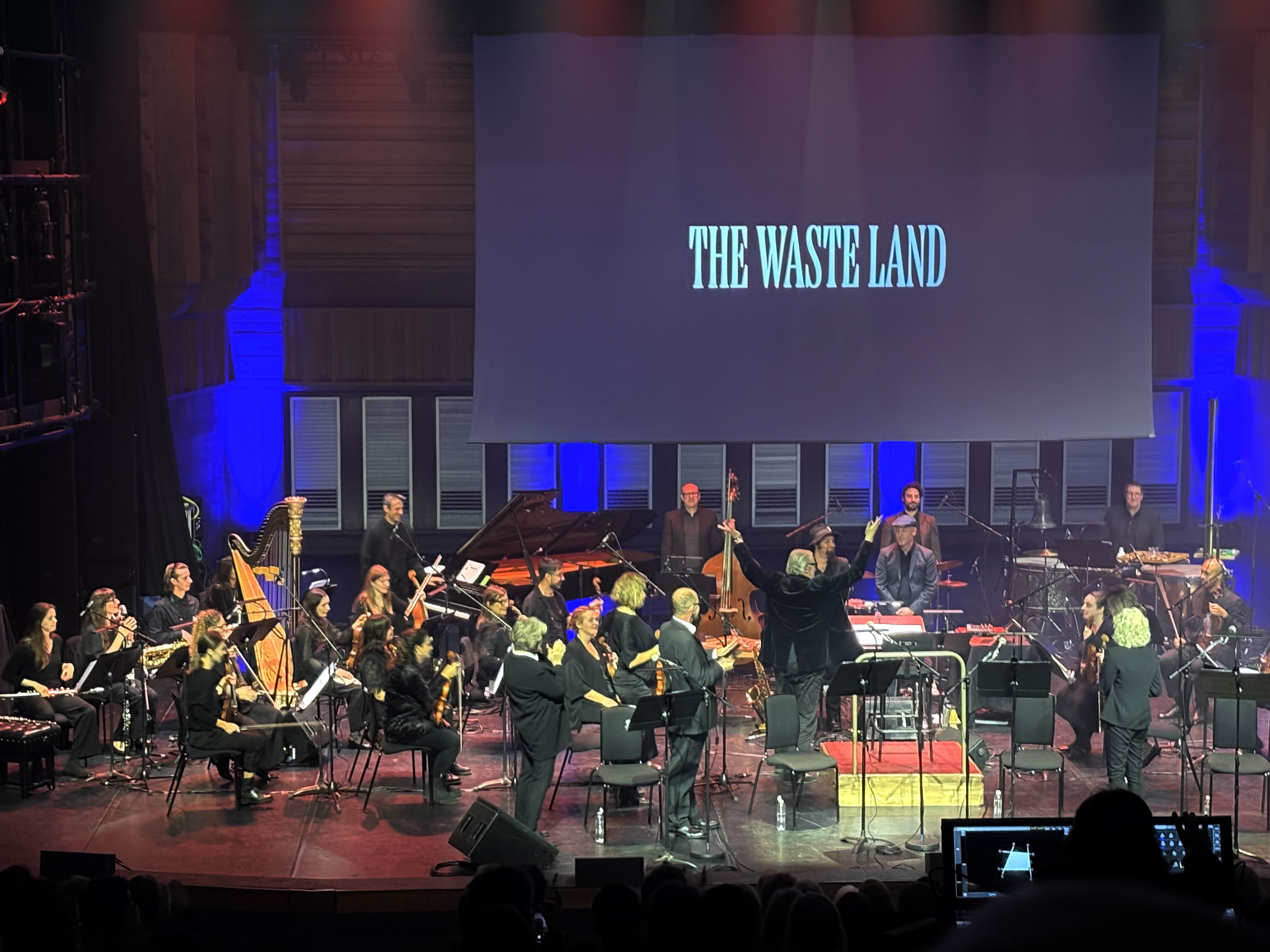
Snow fell in London yesterday morning. It seemed the right sort of day for a performance of T. S. Eliot’s The Waste Land at the Queen Elizabeth Hall. Although the poem contains all kinds of weather in all kinds of places, from the cracked earth of endless plains to thunder in the mountains and a summer shower on a Bavarian lake, taking the short walk from Waterloo station in a cold and dark London (the poet’s “Unreal City”) was like strolling straight into its heart.

Mounted as part of the EFG London Jazz Festival, the performance offered an expanded version of the treatment commissioned 10 years ago by the Beckett festival in Enniskillen from the Irish actor Adrian Dunbar. With the permission of the famously strict Eliot estate, Dunbar was able to devise an arrangement of the poem for four actors (two women and two men) plus a jazz quintet playing music by the saxophonist and composer Nick Roth.

I was 15 when an English teacher named Keith Yorke took us through The Waste Land, decoding its mysteries. I could never thank him enough. Dunbar, introducing last night’s performance, in which the quintet was augmented by a 25-piece orchestra, said he had encountered it while studying at the Guildhall School of Music and Drama 40 years ago; clearly, its impact on him was similarly profound. My previous experience of a live performance of the poem was the actress Fiona Shaw reciting it from memory beneath a single bare lightbulb on stage at the historic Wilton’s Music Hall in the East End on New Year’s Eve, 1998. In my eyes, that gave Dunbar and his crew a lot to live up to.

The readers were Anna Nygh, Orla Charlton, Frank McCusker and Stanley Townsend. Dunbar divided the lines between them, as appropriate to Eliot’s shifting cast of characters. Passages were rendered with German, Irish, American and Cockney accents. I was worried to begin that it might all seem a bit contrived, a bit stagey. That unease evaporated within a few minutes. The polyphony of the reading brought a different kind of life to an already highly polyphonic poem.

Ross’s music was used as an overture and as interludes between the five episodes. The overture, scored for the Guildhall Sessions Orchestra, evoked the European modernist classical music of the inter-war years: bold gestures, hints of dissonance. The first interlude had a ragtime flavour (“that Shakespeherian Rag… so elegant… so intelligent”). For the second, the quintet — Alex Bonney (trumpet), Roth (saxophones), Alex Hawkins (piano), Oli Hayhurst (bass) and Simon Roth (drums) — brilliantly created something that sounded like one of Charles Mingus’s bands paying homage to the pre-war Ellington small groups, or possibly vice versa. The third found the group moving towards free jazz, with Hawkins flailing the keyboard à la Cecil Taylor. The fourth exploited Bonney’s expert manipulation of electronic sound. Did that chronological progression echo something buried within the text? If certainly added a new perspective and a contemporaneity.

Nothing will ever dim the memory of Shaw’s spellbindingly majestic recitation, but Dunbar’s gamble paid off. The drama intensified until, by the time the closing lines of the fifth and final section were reached — “These fragments have I shored against my ruins / Why then Ile fit you / Hieronymo’s mad againe / Datta. Dayadhvam. Damyata. / Shantih shantih shantih” — the words and sounds had transformed the climate of a well-warmed hall and I felt a shiver run through me.
Mulatu Astatke says goodbye

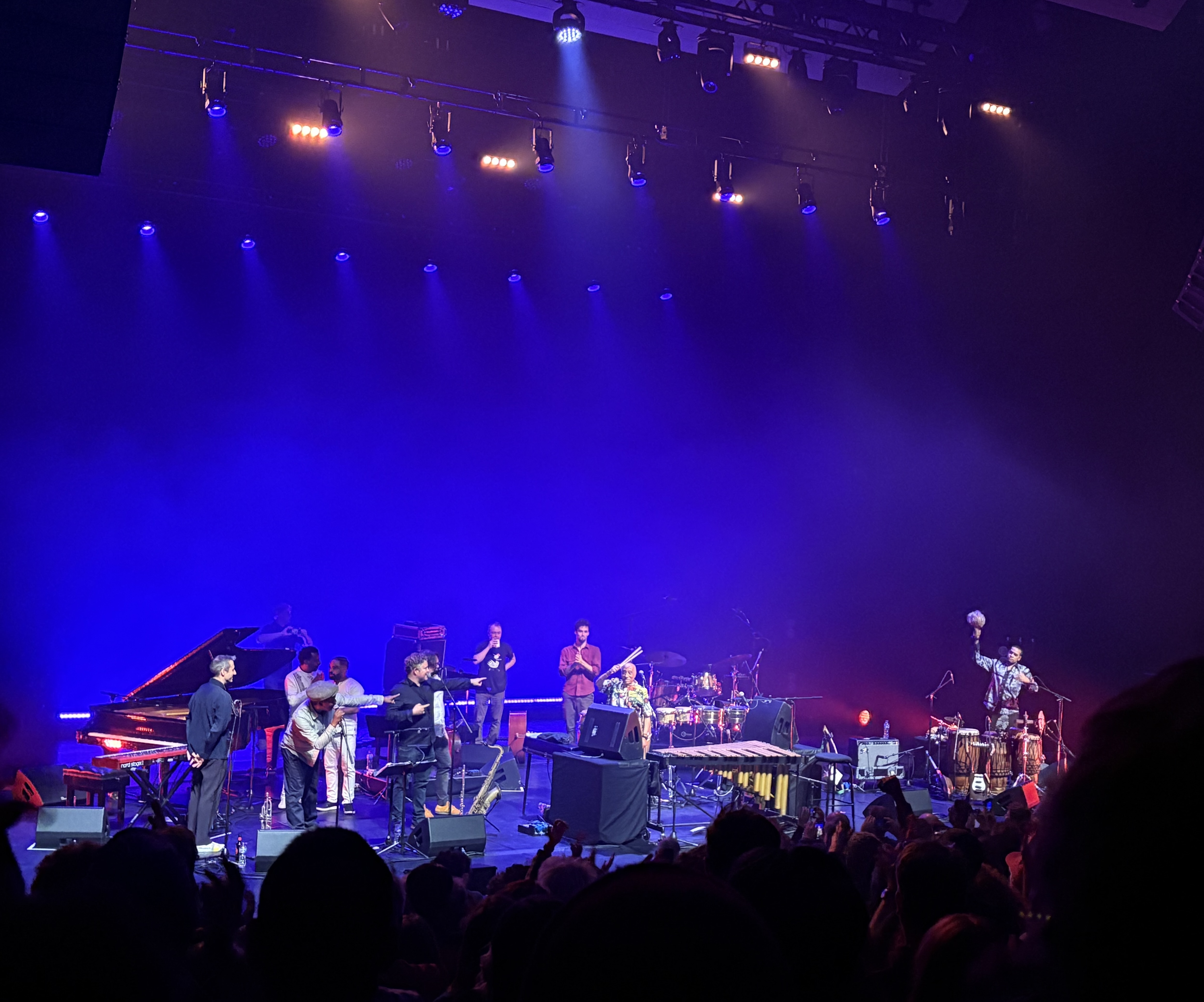
A month shy of his 82nd birthday, Mulatu Astatke brought his farewell tour to a close with two sold-out dates at the start of the EFG London Jazz Festival this week. I went to the first of them, at the Royal Festival Hall, to celebrate the work of the man generally credited with the creation of “Ethio-jazz”.

It takes more than one person to create a genre, but Astatke, who left Ethiopia as a teenager in the late 1950s to study vibraphone, his main instrument, and composition at Trinity College in London and Berklee College in Boston, was certainly a catalyst. He began making records in the US in the 1960s before returning to Ethiopia, where conditions changed after the takeover by a military junta in 1975, restricted Addis Ababa’s lively creative scene. He already had a large hipster following when the use of his music in Jim Jarmusch’s Broken Flowers in 2005 expanded his audience considerably.

On Sunday night he began the concert with Steps Ahead, his seven-piece European band, including such familiar figures as the trumpeter Byron Wallen, the pianist Alexander Hawkins and the double bassist John Edwards. The first half of the 90-minute set featured some of the compositions revived for a recently released album, Mulatu Plays Mulatu, including “Yekermo Sew”, with strong echoes of Horace Silver, and “The Way to Nice”, which plays a game with the James Bond riff. This music sounds like early-’60s hard bop filtered through Ethiopian modes and intonation, infusing it with as distinctive a flavour as the Skatellites and the Blue Notes imparted to similar material in Jamaica and South Africa respectively.

I was struck by the use of Danny Keane’s cello, sometimes strummed like a rhythm instrument, at other times interjecting short percussive phrases with a dry tone, and often combining to powerful effect with Edwards’ bass. It was intriguing to hear Edwards, Hawkins and the saxophonist James Arben delivering solos using the language of free jazz in the context of this mostly riff-based music, and receiving ovations for their efforts. While Astatke was spinning out his mellifluous extended vibes solos over the deep groove provided by the kit drummer, Jon Scott, and the percussionist, Richard Olatunde Baker, on something like “Netsanet”, I felt perfectly contented.

For the second half of the set, the band was joined by two dancers, a man and a woman, and two more musicians, playing the masengo, a single-stringed bowed lute, and the krar, a six-stringed lute. This was more of a folkloric experience, inviting the sort of mass participation that can seem awkward in a modern western concert hall. But it would be wrong to suggest that it was not greatly enjoyed, or that Astatke was not given the warmest and most rousing of valedictory salutes.

* Mulatu Plays Mulatu is out now on the Strut label.

Farewell to Bra Tebs

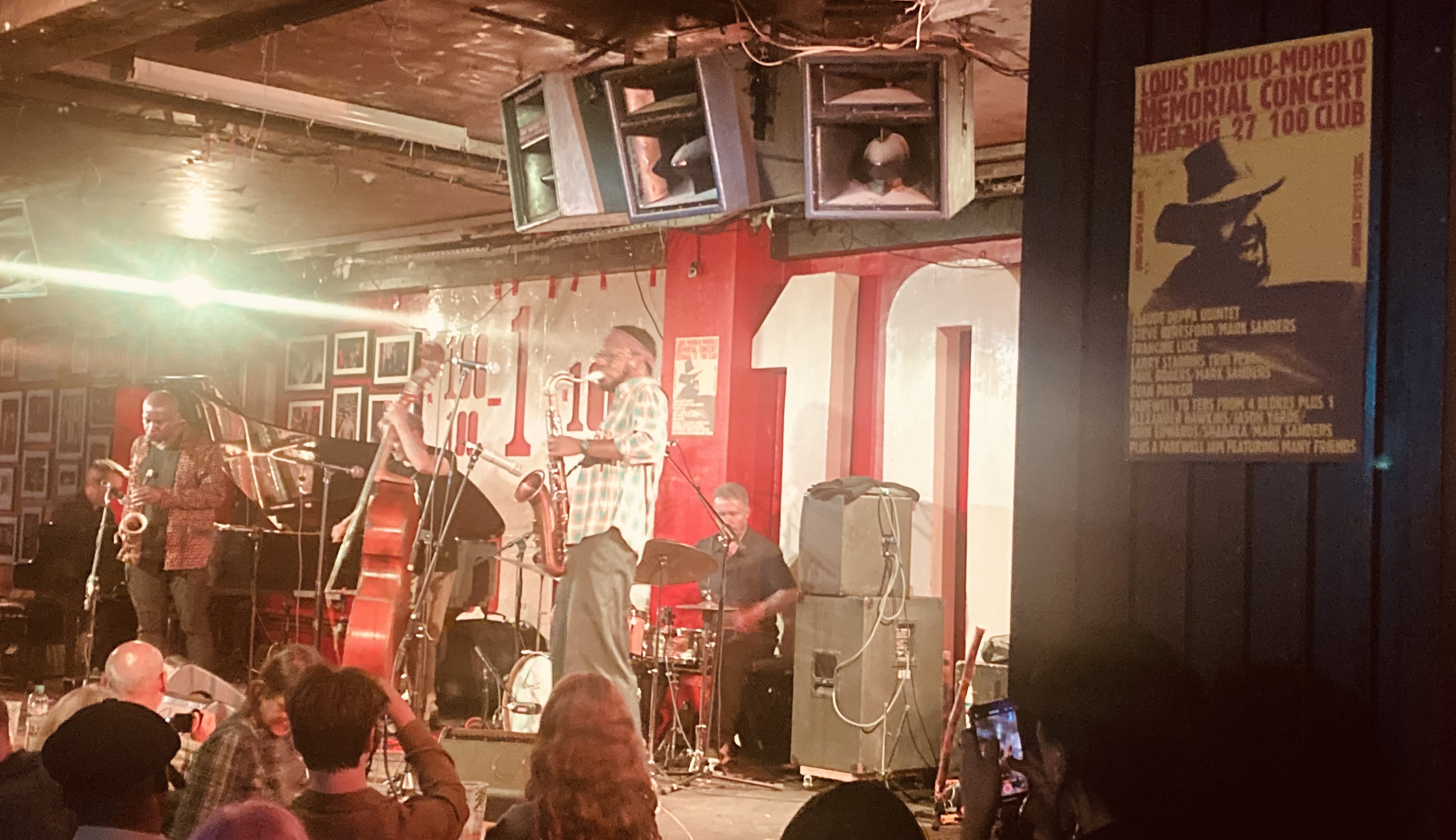
There used to be a civilised convention that normal reviewing practice should be suspended for certain kinds of musical events: those put on for charity, or memorials. Of the celebration of the life of Louis Tebogo Moholo-Moholo at a packed 100 Club last night, it need really only be said that the whole evening was suffused with the indomitable spirit of the great South African drummer, who died in June, aged 85.

The trumpeter Claude Deppa, his friend and frequent bandmate in Viva La Black, started the proceedings at the head of his warm-hearted quartet. Then the pianist Steve Beresford and the drummer Mark Sanders took over for an intricate and absorbing free conversation. Evan Parker brought out his soprano saxophone, removed its mouthpiece, and tapped the keys to produce a quite extraordinary 10-minute percussion solo which managed to be both a shadow commentary on what he might have played with the mouthpiece in place and a unique tribute to his former colleague in the band Foxes Fox. The trio of Larry Stabbins on alto saxophone, Paul Rogers on bass and Sanders again on drums played a set notable for Rogers manoeuvring his bespoke seven-string instrument into the expressive space between a Celtic harp and a cello.

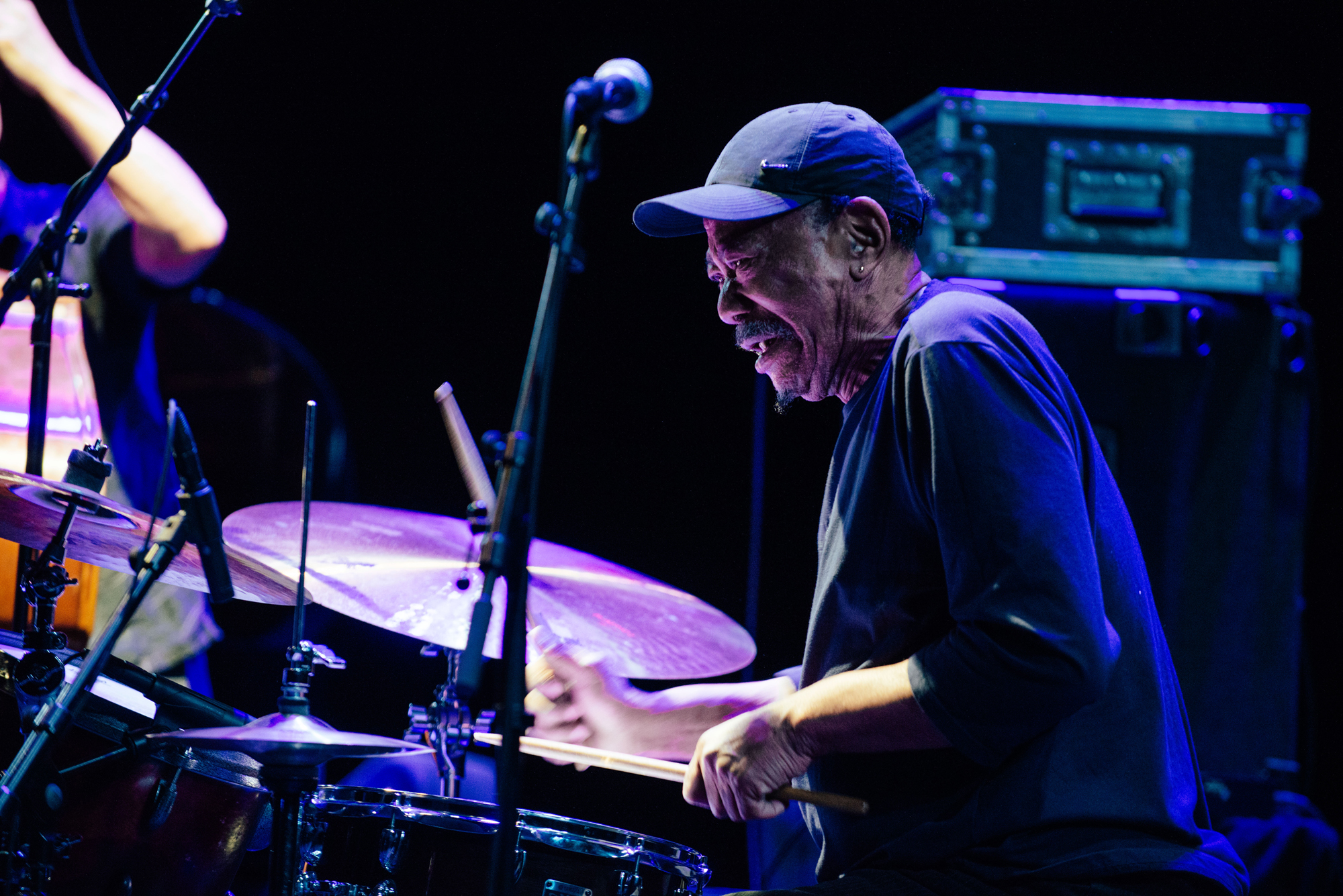
The heart of the celebration of Bra Tebs (as his friends knew him), which was organised by Hazel Miller and Mike Gavin of Ogun Records, came in the set by Four Blokes + 1, his last London-based band. Pictured above, this featured Jason Yarde and Shabaka on saxophones, Alex Hawkins on piano and John Edwards on bass, with the superb Sanders once more on the drum stool, embodying rather than imitating the characteristics of Louis’s playing. They came out roaring, and that’s how they were still sounding as I had to make my departure, with the darkly ecstatic closing cadences of “Dikeledi Tsa Phelo” accompanying me up the stairs and into the night.

The return of Larry Stabbins

Not often does a jazz club dedicate an evening to the memory of a regular customer. Last night’s show at the Vortex was dedicated to Shirley Thompson, who died earlier this year, aged 87. For many years Shirley and her partner, John Jack, the founder of Cadillac Records, were fixtures at a table for two alongside the left-hand wall; the seating arrangements have recently changed, but a photograph of the couple and a bottle of wine were placed on a table in their old location.

As it happens, a lot of emotions were floating around the Vortex last night. The event also commemorated the late Louis Moholo-Moholo by functioning as the launch of a new CD, recorded live in Foggia during a short Italian tour 40 years ago, by a special trio: Louis on drums, Keith Tippett on piano, and Larry Stabbins on tenor and soprano saxophones and flute.

Stabbins was the featured attraction last night, leading a trio completed by the most suitable replacements possible: Alexander Hawkins on piano and Mark Sanders on drums. Having made his reputation alongside Tippett, his fellow Bristolian and mentor, in Centipede and Ark, and confirmed it with the the SME, the LJCO and others, as well the band Working Week, the saxophonist left music for 20 years. His return to activity is greatly to be applauded.

Last night he led off with “Ismite Is Might”, a beautiful Chris McGregor composition that he remembered from his experience of depping for Alan Skidmore in the Brotherhood of Breath. A sober, hymn-like piece, it displayed the strength of his tenor tone and the sharp focus of his phrasing: stronger and sharper than I remembered, indeed. There were other evocations of the South African influence throughout the set I heard, most obviously in a marvellously powerful Hawkins solo. Sanders kept the pots boiling throughout in a way that Louis would have admired. This was life-enhancing music.

* Live in Foggia is out now on the Ogun label (Ogunrecording.co.uk). There will be a full-scale tribute to Louis Moholo-Moholo at the 100 Club on August 27, featuring many musicians with whom he worked, including Claude Deppa, Evan Parker and Shabaka Hutchings, and members of his band Four Blokes (tickets: https://wegottickets.com/event/669285).

Olie Brice at the Vortex

Almost a year ago I wrote warmly about the debut of the bassist and composer Olie Brice’s new quartet at Cafe Oto, noting that they’d be going into a studio the following day to record an album. That album — titled All It Was — is now out, its release celebrated at the Vortex last night with an evening of powerfully emotional music.

The tenor saxophonist Rachel Musson, the pianist Alexander Hawkins and the drummer Will Glaser are Brice’s accomplices in a project that takes all the lessons the four of them have ever learnt about how to play this music and puts the result at the service of a set of distinctive and memorable compositions.

Brice tends to lead off in the way Charles Mingus used to, with solo bass statements of attention-grabbing clarity and strength before the others dive into the structures of pieces such as “Listening Interntly to Raptors” (which began the set with a Monkish prowl), the soaring, hard-swinging “Happy Song for Joni”, the hypnotic “And We Dance on Firm Earth”, and the pointilliste “After a Break”.

A couple of of the pieces referred to recent losses. “Morning Mourning” was an elegy for Brice’s father, while Don Cherry’s “Awake Nu” was included as a tribute to Louis Moholo-Moholo, who died in South Africa last month. Fittingly, Glaser’s playing throughout the evening was lit by Louis’s fire: dense but never oppressive, building to ecstatic climaxes, particularly in several duet passages with Hawkins, who occasionally infiltrated almost subliminal elements of barrelhouse and boogie-woogie into his strongly percussive inventions.

Once again Musson impressed as one of the most creative saxophonists on the UK scene, employing a striking variety of tone and trajectory, from jagged outbursts at full throttle to the delicate altissimo phrases with which she brought one piece to its final rest.

That combination of grace and strength typified the assimilation of individual assets into the work of a truly extraordinary quartet. All It Was will be one of the records of the year, and this was a gig to match its excellence.

* The Olie Brice Quartet’s All It Was is on West Hill Records and available via Bandcamp: https://westhill.bandcamp.com/

The last of the Blue Notes

Louis Moholo-Moholo died on Thursday at his home in Cape Town, aged 85. He was the last survivor of the Blue Notes, the group — also including the trumpeter Mongezi Feza, the alto saxophonist Dudu Pukwana, the pianist Chris McGregor and the bassist Johnny Dyani — who arrived in Europe in 1964, fleeing South Africa’s apartheid regime. Once settled in London, they infused the British jazz scene with the warmth and directness of their playing, leaving an impression that continues to be heard in the music of later generations. Now they’re all gone.

Nobody cracked the whip from the drum stool like Louis, with the most benign of intentions. Until you saw him live, you could have only the haziest impression of his invigorating and sometimes electrifying effect on those around him — whether the other member of a duo (perhaps the pianists Keith Tippett, Livio Minafra or Alexander Hawkins) or the massed ranks of McGregor’s Brotherhood of Breath or Pino Minafra’s Canto Generàl. I treasure memories of Mike Osborne’s incendiary trio with Louis and the bassist Harry Miller, another of the South African emigré cadre. Miller’s sextet, Elton Dean’s Ninesense and later on, the extraordinary quartet Foxes Fox were other bands whose fires he stoked.

And, of course, there was Four Blokes, his own final band, with Hawkins, Jason Yarde on saxophones and the bassist John Edwards. I had the thrill, when presenting the quartet at JazzFest Berlin in 2015, of hearing them start a fire the instant Louis was settled behind his kit. The effect, as always, was indescribably exhilarating. Because that’s what Louis did: he showed you what this music could do, where it could go, how it could touch your soul. Now may he rest in peace.

* The photograph of Louis Moholo-Moholo was taken at the Haus der Berliner Festspiele in 2015 by Camille Blake.

Keyboard studies

Perhaps it was last month’s 50th anniversary of Keith Jarrett’s Köln Concert that got me thinking about solo jazz piano. As it happens, I’d been listening recently to the incomparable Art Tatum, particularly to the unaccompanied pieces from Jewels in the Treasure Box, recorded in 1953 at the Blue Note in Chicago and released last year, and to Paul Bley’s 1972 very different solo classic Open, to Love, now being given a vinyl reissue.

Then Mike Westbrook got in touch to tell me that his four volumes of solo recordings, made in various locations between 2022 and 2024 for private circulation under the title The Piano and Me, were now — thanks to entreaties from several quarters, including this one — available to everyone via download. And, kicking off a three-night season at Cafe Oto, I heard Alexander Hawkins play a half-hour solo set that achieved marvels of modernistic sonic architecture on material that will form part of a forthcoming solo release.

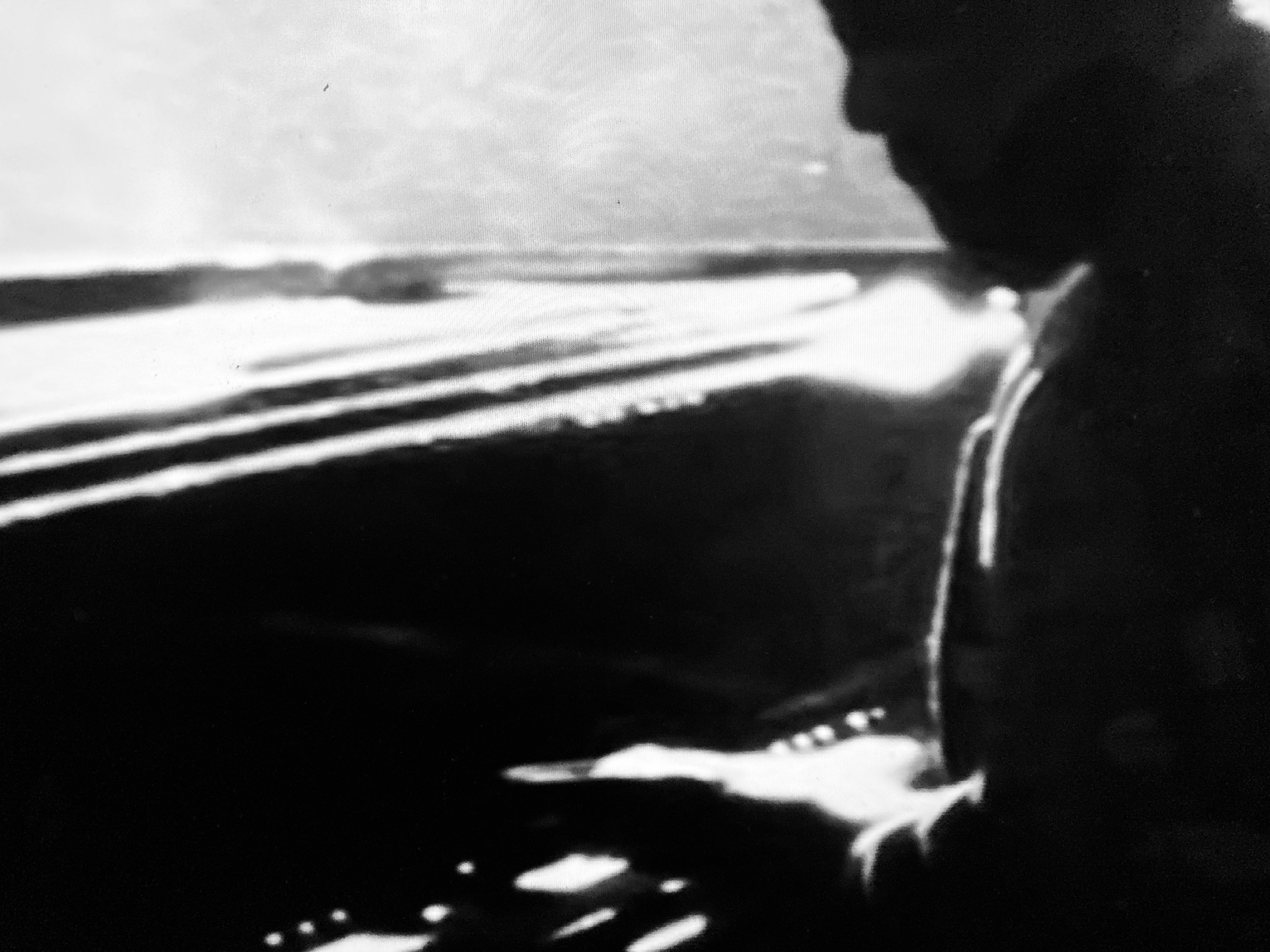
All this solo piano made me wish there was a place in London today similar to Bradley’s, the piano bar that existed in Greenwich Village between 1969 and 1996. A few months after it opened, I saw two significant pianists playing solo there. The first was the bebop veteran Al Haig, whose touch and lucidity made an understated but indelible impression. The second was Dave McKenna, in whose large frame were gathered all the virtues of mainstream jazz pianism. Like Jimmy Rowles and Alan Clare, McKenna seemed to know every standard ever written, and then some. He died in 2008, aged 78. A priceless film of him was made at a private party in 1991.

I love it when a pianist, whether on a concert platform or a railway station concourse, has the time to follow a train of thought wherever it may lead. That’s what I cherish about the Westbrook recitals, which follow on from his previous solo albums: Paris (2017) and Starcross Bridge (2018). He takes the opportunity to wander, but never without purpose. In the fourth volume of the new set, recorded at Ashburton Arts Centre in Devon, he moves seamlessly from his own “View from the Drawbridge” to Monk’s “Jackie-ing” and then John Ireland’s hymn tune “Love Unknown”. In the second volume, recorded at the Pizza Express, “My Way” runs into “Falling in Love Again”, then into “Lover Man”, and then into Billy Strayhorn’s “Blood Count”.

It’s a look inside the mind of a musician who, now in his eighties, finds nourishment in Mingus, Bacharach, Rossini and the Beatles. The pace is steady, the mood reflective. There’s time to explore the melodic byways, the harmonic implications. No Tatum-style technical fireworks, yet the result is mesmerising. And, as with all the music and musicians I’ve mentioned in this piece, it’s a reminder that the piano really is one of humanity’s noblest inventions.

* You’ll find Mike Westbrook’s The Piano and Me here: https://mikewestbrook.bandcamp.com/. Art Tatum’s Jewels in the Treasure Box is on the Resonance label. Paul Bley’s Open, to Love is reissued in ECM’s Luminessence vinyl series. Alexander Hawkins’s new solo album, Song Unconditional, will be out in the spring on Intakt. The photo is a screen-grab from a fine TV documentary on Art Tatum: https://www.youtube.com/watch?v=VXJb14qufe4

Back to Berlin

“A lot of people have died recently,” Otomo Yoshihide remarked to his Berlin audience on Sunday night, halfway through a set by his 16-piece Special Big Band. “This is for them.” The band’s marimba player, Aikawa Hitomi, began to trace out some quiet, limpid phrases, with a sound like pebbles dropping in a pond. One by one, her colleagues joined in. I don’t really know how to explain what was happening, whether or not it was a written composition or completely improvised, but each player added a layer of sadness to the piece until it gradually, and completely without ostentation, reached a critical mass of emotion.

It was amazing. The non-specific nature of Yoshihide’s introduction allowed the listeners — and the musicians, I guess — to direct their mourning wherever they wished. And having created something so sombre and profound, Yoshihide didn’t take the bandleader’s easy option by then lifting the mood with one of the absurdly entertaining rave-ups in which his band specialises, and with which they would eventually send the audience home smiling fit to burst. Instead his accordionist, Okuchi Shunsuke, squeezed out the gentle melody of “Années de Solitude”, a graceful composition by the great Astor Piazzolla. Soon the lonely accordion was joined the baritone saxophone of Yoshida Nonoko, before the other horns entered in a rich arrangement ending with hymn-like cadences.

After that, it was time to change the mood in a set that contained an unusually large proportion of the gamut of human emotions, from cheesy film and TV themes and a perky “I Say a Little Prayer” through a pretty version of Eric Dolphy’s “Something Sweet, Something Tender” and a suitably stirring reading of Charlie Haden’s “Song for Che”. The encore was a completely bonkers piece of Japanese pop music featuring the all-action singing and dancing of three of the group’s women — Hitomi, the electronics player Sachiko M and the saxophonist Inoue Nashie — with a kind of rap from Yoshihide.

For the closing performance of the 2024 JazzFest Berlin, Yoshihide’s ensemble was the perfect choice. Twenty four hours after the Sun Ra Arkestra had occupied the same stage in their tinsel and cooking-foil Afrofuturist costumes, recessing from the stage one by one with a chanted recommendation for Outer Spaceways Incorporated, the men and women of the Japanese band came dressed like refugees from a Comme des Garçons sample sale. Were they from the West, Felliniesque would be one obvious way of describing their presentation. With two drummers, a tuba and a very emphatic bass guitarist, and with the leader’s guitar sometimes throwing in some of the noise elements for which he is well known, they made me think of what might happen if you merged the Willem Breuker Kollektiev with the Glitter Band, with Carla Bley providing the arrangements.

One amusing thing they did in the up-tempo pieces was to have each member leap up to give cues and perhaps conduct a few bars before resuming their places: a kind of daisy-chain of instructions and cheer-leading. It made me think of something I’d seen that morning on stage at the Jazz Institut, where the festival’s Community Sunday, centred on the multicultural Moabit district of Berlin, began with a concert featuring children. While a young piano trio played, a group of kids, perhaps six to 10 years old, stood in front of them, giving the sort of signals — faster! slower! stop! start! — familiar from the techniques of conduction.

It was a good game, everyone enjoyed it, and it made me wonder whether, a few decades ago, someone had tried something similar in Japan, laying the foundations for Otomo Yoshihide’s Special Big Band. Almost certainly not, but there was the same sense of play at work, as it were. And if you give that opportunity to a bunch of kids, there must be a chance that it will open up a world for some of them.

The Moabit adventure continued with a mass walk through the streets, audience and musicians stopping off at various points for pop-up musical events. It ended in a church, where Alexander Hawkins played the organ and members of the Yoshihide band and the Swedish bassist Vilhelm Bromander’s Unfolding Orchestra took part, along with a young people’s choir and local musicians with various cultural backgrounds. The special project of Nadin Deventer, now seven years into her tenure as the festival’s artistic director, it proved to be a brilliant way to involve a community and its children, and deserves to become a permanent feature of an institution celebrating its 60th birthday.

For me, other highlights of the four days included Joe McPhee reading his poetry with Decoy; the French pianist Sylvie Courvoisier’s new quartet, Poppy Seeds, featuring the vibraphonist Patricia Brennan, the bassist Thomas Morgan and the drummer Dan Weiss, playing compositions of great intricacy with superb deftness; and the trio of two British musicians, the pianist Kit Downes and the drummer Andrew Lisle, and the Berlin-based Argentinian tenor saxophonist Camila Nebbia, entrancing a packed A-Trane with warm gusts of collective improvisation. In the main hall on Saturday night there was also a moving ovation for the pianist Joachim Kühn, who made a speech announcing that, at 80, this appearance with his current trio would be his last at the festival, having made his first in 1966, aged 22.

A festival with an ending, then, in more than one sense, but also full of beginnings and new possibilities, just as the visionary jazz critic and impresario Joachim-Ernst Berendt envisaged 60 years ago when he persuaded the West German government that its slice of Berlin, marooned in the GDR, needed something with which to demonstrate a sense of vibrant modernity to the world, and that thing was jazz. In very different circumstances, it still is.

Other sounds 1: Rachel Musson

Olie Brice’s new quartet made a very promising debut at Café Oto last night, and one the reasons was Rachel Musson, whose tenor saxophone traced and explored the contours of the bassist’s characteristically intriguing themes (and Don Cherry’s perky “Awake Nu”) with alert and graceful lyricism. The piano of Alexander Hawkins and the drums of Will Glaser rounded out a group that was heading into a studio the next day to record what will surely be a most interesting album.

A fellow listener observed that Musson’s playing in this context made quite a contrast with her work in her more familiar setting of free improvisation, where multiphonics and other techniques come into play. Last night her fibrous tone and mobile phrasing suggested that she’d located a very fruitful spot within an area defined by Sam Rivers and Pharoah Sanders (at his most songlike). I was reminded, too, that one of her early inspirations was Lee Konitz.

At the merch table during the interval I bought her new CD, titled Ashes and Dust, Earth and Sky in English and Lludw a Llwch, Daear a Nef in Welsh. To be honest, I bought it not just because I’d been enjoying her playing in the first half, or because of the Welsh element, but because I liked the look and feel of the packaging. Sometimes a sleeve design really can tell you about what’s inside.

Inspired during lockdown by researches into her family’s history in Pembrokeshire/Sir Benfro during lockdown, the album was recorded and mixed in 2021. It combines field recordings in West Wales with her saxophones, flute, piccolo, wind chimes, singing bowl and tro (a Cambodian spike fiddle).

Birdsong, wind, church bells — these form the material into which Musson weaves her own contributions, shaping a 40-minute tapestry beyond definition. Birds are the first thing you hear, chirping and cawing, and soon a song is being mimicked by her flute, which reminded me of something Eric Dolphy, another flautist, said long ago: “At home I used to play, and the birds always used to whistle with me. I’d stop what I was working on and play with the birds.” A piccolo joins in, while a singing bowl and the patter of saxophone pads add to the mix before a brief passage of restrained free-style tenor ends the piece.

The music creates and sustains its own space, with frequent individual highlights. The second and fifth of the six tracks, “Bethink and Lay to Heart” and “Windblown”, contain lovely saxophone chorales emerging out of the ambiance and speaking to it, while the finale, the 10-minute title track, opens with a pair of piccolos conversing like blackbirds, introducing the altered sound of bells and other distorted samples which loom and linger until they recede into the silence, having made their quiet but lasting impression.

* Rachel Musson’s album is on Soundskein Records: https://rachelmusson.bandcamp.com/album/ashes-and-dust-earth-and-sky-lludw-a-llwch-daear-a-nef

Climate change

On an unseasonably cold, rainy late-July evening in East London, the trio known as Decoy — Alexander Hawkins on Hammond organ, John Edwards on double bass and Steve Noble on drums — and their regular guest, the indefatigable 83-year-old American saxophonist Joe McPhee, provided all the warmth the audience at Cafe Oto could need, and more.

That’s hardly surprising. Almost a decade and a half since their debut, Decoy + McPhee are the ultimate 21st century iteration of the hallowed organ-and-tenor combo, which at its finest — in such meetings as those of Gene Ammons and Richard “Groove” Holmes, Stanley Turrentine and Jimmy Smith, or Sam Rivers and Larry Young — provided an entire central heating system in itself.

The set I caught last night, the last of their four nights in Dalston, began with Noble marking out a fast 6/8, moving straight ahead, encouraging Hawkins to let rip with a rousing improvisation. McPhee entered with a splintered honk before the tempo slowed to a bluesy lope. A dislocated shuffle followed, powered by Edwards’ thrumming, then a modal section (with a tune I’m sure I know but couldn’t place), a fast Latin passage with chattering percussion, and a quiet gospel-tinged fade to a most elegant closure.

That’s a swift précis of 45 minutes of music full of spontaneous creativity and contrast, in which the freedom of any individual was a given. All four were astonishingly inventive, intuitive in their responses, shaping the parts and the whole with complete assurance. I was struck by the sight of a young woman amid the throng, dancing in the semi-ecstatic way people used to dance to, say, the Third Ear Band at rock festivals 50 years ago. Not something you see at many jazz gigs these days, but a pretty good sign.

The occasional bursts of B3-powered intensity reminded me of the first edition of Tony Williams’s Lifetime, a thought that led me to muse on what the classic John Coltrane Quartet might have sounded like had McCoy Tyner suddenly gone missing and been replaced for one night only by Larry Young, Lifetime’s organist, with instructions to go for it. A bit like Decoy with Joe McPhee, maybe. Anyway, the roar and the prolonged ovation at the end of the set said it all.