Soft Machine in Croydon, 1970
 Croydon’s Fairfield Halls art complex closed this week for a complete renovation that is expected to take two years. The news reminded me of the night back in January 1970 when I got so badly lost in my Fiat 500 in the one-way system around the town’s high-rise office blocks that I missed most of the first half of an important Soft Machine concert.
It’s always interesting when a gig you attended turns up on a CD decades later, even though part of one track, “Facelift”, was taken and used, after editing and overdubbing, on the Soft’s first album for CBS, the classic Third, later that year. Some years ago the Cuneiform label released the complete 75-minute show under the title Noisette; it’s still available, and well worth investigating.
Back in 1970, this is how I started the review in the following week’s Melody Maker: “It seems to me that this might just be Soft Machine’s year. Having done things the unconventional way by finding first fame on the Continent, the group should find the musical climate of Britain coming round to embrace them in the near future.”
The hall was “all but sold out”, the audience “young and attentive”. I got there in time to hear “Hibou, Anemone and Bear”, the final number of the first half. Thanks to the Cuneiform disc, I now know that Robert Wyatt — for whom, having been brought up in Dulwich, this was practically a home fixture — introduced the concert with these words: “The programme for this evening is that we do a bit and then we stop for a bit and then we do a bit more.”
It turns out that I missed 25 minutes of excellent music. Had I heard it live, I might not – after praising the playing of Wyatt, Mike Ratledge, Hugh Hopper and Elton Dean — have written the following about the fifth member, the saxophonist and flautist Lyn Dobson: “I have grave reservations about Dobson, who seemed to be trying to do too much. Only on tenor did he say the piece of which he is capable”.
Dobson had joined the Softs the previous year, as part of a four-strong horn section. The other three members — Dean, Marc Charig and Nick Evans — had been nicked from the Keith Tippett band. Charig and Evans had left at the end of 1969, after a French tour. (Here and here are rare glimpses of that shortlived seven-piece line-up on a French TV show, L’invité du dimanche, with the added attraction of the great Delphine Seyrig.) The five-piece didn’t last long, either. Here they are in Paris that spring, shortly before Dobson left, thereby missing the band’s historic appearance at the Albert Hall in August, when they became the first ensemble from the field of popular music to appear at the BBC Proms.
At the time of his stint with the Softs, Lyn was a well-known face on the London scene. He had played the flute solo on Manfred Mann’s “Pretty Flamingo” and recorded with the Small Faces. He was a member, along with John McLaughlin, of Georgie Fame’s first post-Blue Flames bands in 1967, and could be heard with the People Band, which also included Terry Day and Mike Figgis. He played with the Keef Hartley Band, he would appear on the title track of Nick Drake’s Bryter Layter and on John and Beverley Martyn’s The Road to Ruin, and in the 1990s he made a couple of albums with the Third Ear Band before going to live, I believe, on Crete.
Anyway, I can now admit that in the section of the evening I missed was one of the concert’s highlights: Lyn’s flute solo on Ratledge’s ballad, “Backwards”. Introduced by the composer’s wah-wah’d electric piano, he produces a beautifully constructed improvisation that achieves an excellent blend of Eric Dolphy’s pure-toned inventiveness and Roland Kirk’s funky distortion, the latter feature coming to the fore as the piece goes into a wild Mingus-like 9/8 vamp. (Mingus, along with the Coltrane quartet of “My Favourite Things” and Uncle Meat-era Zappa, seemed to be the Softs’ most powerful influences at the time.) His tenor solos, like the one on Hopper’s “12/8 Theme”, manage to retain their clarity and logic in the heat of a furnace stoked by the non-stop focused clatter of Wyatt’s impassioned drumming.
As it happens, Wyatt was already beginning to become detached from the band. “Hugh, myself and Elton were pursuing a vaguely jazz-related direction,” Ratledge told Rob Chapman in a Mojo interview in 1997. “Robert was violently opposed to this, which is strange looking back on it because he was passionate about jazz. But he had defined ideas of what pop music was and what jazz was.” Wyatt’s verdict, quoted by his biographer Marcus O’Dair in Different Every Time: “To me, fusion jazz was the worst of both worlds. It was rock rhythms, played in a rather effete way, with noodling, very complicated solos on top.”
Robert may have been right in general terms, but that’s not true of the music preserved from the Croydon gig, which has power and inventiveness and its own kind of authenticity. To me, the five-piece was the last great Soft Machine line-up, before the noodling began to take over.
By the time Dobson joined the Softs, he had already developed a serious interest in eastern music and mysticism. Not long after he departure he generously lent me Hazrat Inayat Khan’s book about Sufism and music. It stayed with me through many house moves but eventually went missing. Maybe, like the recording of the enthralling Croydon concert, it will one day magically reappear, ready to provide a reminder of a time of open-minded, open-hearted creativity.
* The photograph of Lyn Dobson, Hugh Hopper and Elton Dean was taken by Mark Ellidge, and is from the booklet accompanying Noisette.
 The most interesting rock music is often made when people from different backgrounds or disciplines are thrown together, united in a desire to create something previously unheard. That was what made the Beatles, the Who, the Velvet Underground and Roxy Music so special, and it lay behind the brilliance of Suicide, too.
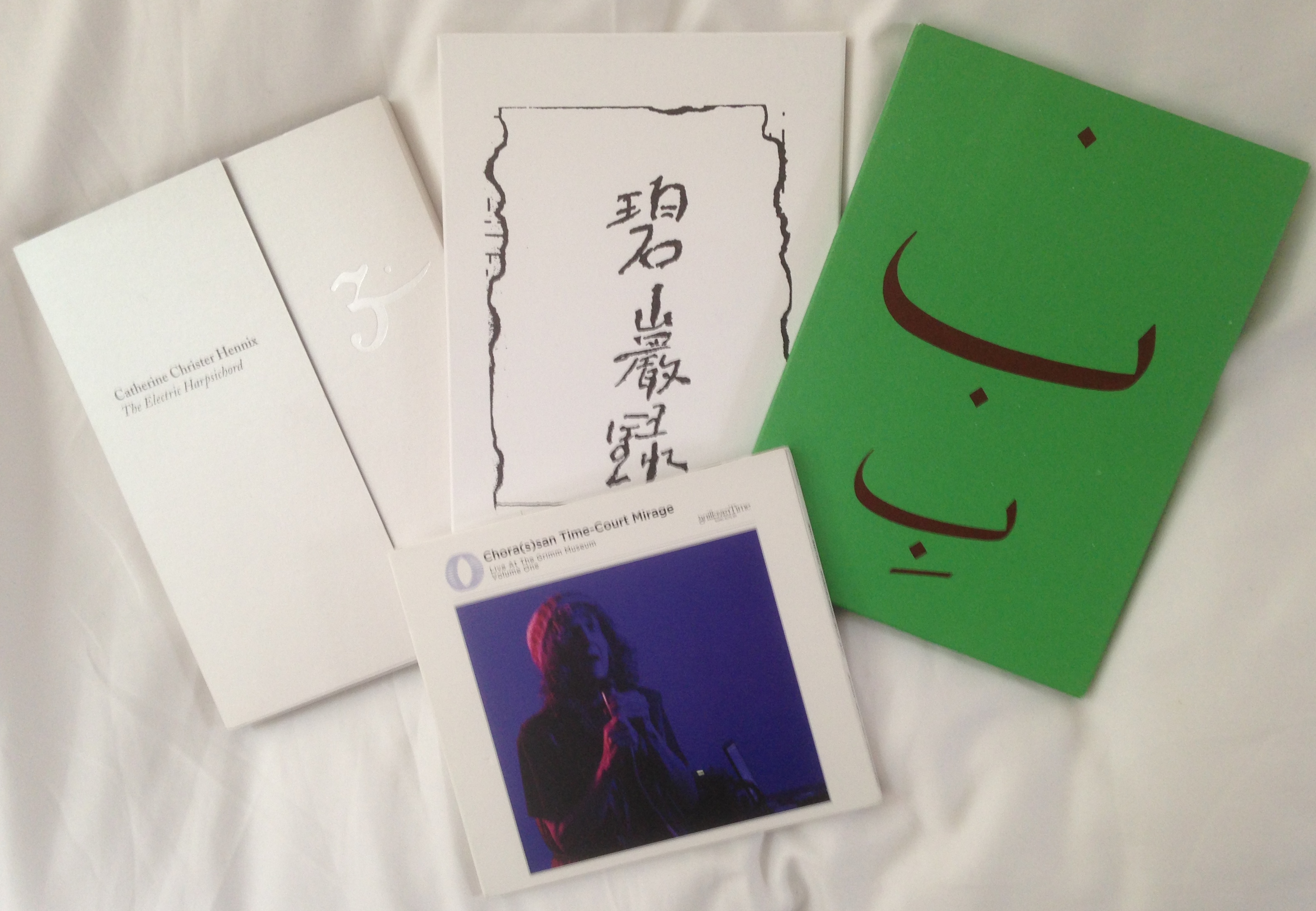 Catherine Christer Hennix studied with La Monte Young and Pandit Pran Nath, which explains her interest in drones. Her music rejects the 12-step octave in favour of what we westerners would call microtonality. Her new album, Live at ISSUE Project Room, released under the name of the ensemble she calls Chora(s)san Time-Court Mirage, is the most emotionally exhilarating and cathartic long-form piece of music I’ve heard in ages.
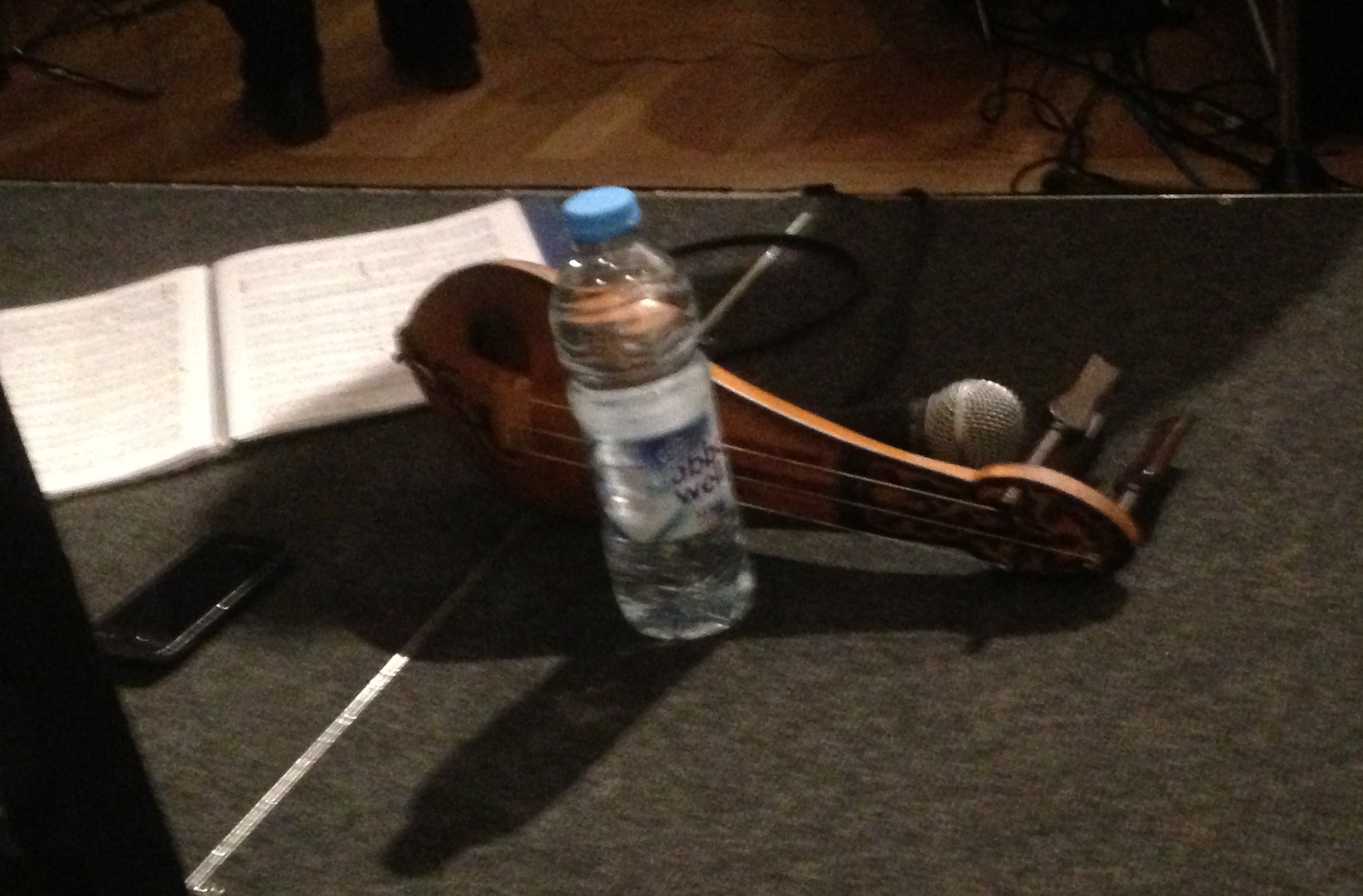 Generally speaking, the chances of one of the gigs of the year taking place as part of an academic seminar titled “Sounds of the Hellenic World, Ancient & Modern” would probably be pretty slim. But that’s what happened yesterday evening at King’s College London, when the Greek lyra virtuoso Sokratis Sinopoulos brought his quartet — completed by Yann Keerim (piano), Dimitris Tsekouras (double bass) and Dimitris Emanouil (drums) — to make their UK debut in the Great Hall in front of an audience whose members had spent the day discussing Homer, Xenakis, Keats and Satie’s Socrate.
 Harry Beckett was ordering a drink at the bar of the Beachcomber Club in Nottingham one night in 1965, relaxing between sets with Herbie Goins and the Nightimers, when I plucked up the courage to address him. The Nightimers were an excellent jazz-inflected soul band — their personnel also included former Blue Flames Mick Eve on tenor saxophone and Bill Eyden on drums, with Mike Carr on Hammond organ — and I wanted to tell their trumpeter how much I’d enjoyed his solo on their set-opening version of Lee Morgan’s “The Sidewinder”. Showing the good humour and courtesy which would become familiar over the years, Harry was happy to chat to a new fan.
 Alexander Hawkins and Evan Parker were two of the winners at the recent Parliamentary jazz awards: the former for being the instrumentalist of the year, the latter for, well, being Evan Parker. Last week they appeared together at the Vortex. Alex is 35; Evan is 72. What they gave us was a demonstration of the special ability of jazz-based free improvisation to span the generations without forcing the younger man to play the older man’s music, or vice versa. Musica franca = lingua franca, you might say.
 Wilko Johnson’s new autobiography, Don’t You Leave Me Here, received an eloquent recommendation from Mark Ellen in the Sunday Times at the weekend. To coincide with its publication, Universal’s Spectrum imprint is issuing a 40-track double CD set compiled by the former Dr Feelgood guitarist called The First Time I Met the Blues: Essential Chess Masters. Its appearance prompted me to dig out the records you see above: three 45s from my all-time Top 100 box, plus two magnificent albums, all licensed for release in the UK on the Pye International label in the early ’60s.
 thebluemoment.com