Alan Vega 1938-2016
 The most interesting rock music is often made when people from different backgrounds or disciplines are thrown together, united in a desire to create something previously unheard. That was what made the Beatles, the Who, the Velvet Underground and Roxy Music so special, and it lay behind the brilliance of Suicide, too.
The singer Alan Vega, who died on Saturday at the age of 78, and the keyboardist Martin Rev formed their duo in New York in the mid-1970s: they were part of the downtown scene that revolved around the Mercer Arts Centre and CBGB. Suicide’s eponymous 1977 debut album, released on the Red Star label, belongs with the Ramones’ first album, Television’s Marquee Moon, Talking Heads’ 77 and — from outside the New York scene — Père Ubu’s The Modern Dance and Devo’s Q: Are We Not Men? A: We Are Devo.
Vega was a visual artist who listened to La Monte Young and the Stooges. Rev had studied with the pianist Lennie Tristano (a unique figure who had a whole school of jazz named after him in the late 1940s) and admired Cecil Taylor. If they had a jukebox, it was probably packed with ? and the Mysterians and obscure early rockabilly 45s. Together they made outsider art that, although too scary for most tastes, influenced a generation of adventurous young musicians.
In January 1977 I reviewed their debut album for the Melody Maker; it seems to have been the first piece written about them in the British press. I loved their stripped-down aesthetic and Rev’s camouflaged musicianship. Naturally I focused on “Frankie Teardrop”, the album’s longest (at 10 minutes) and most extreme track: the story of a 20-year-old factory worker who, in a state of existential despair, kills himself and his young family. Against Rev’s minimalist backing of industrial electronic noise and racing-heartbeat drum machine, Vega’s breathless recitative is punctuated by screams, howls and whimpers.
A few months later they supported the Clash on a UK tour. Shortly afterwards I saw them at the Marquee, where they added an entire dimension to their recorded work, largely thanks to Vega’s compelling presence. My friend Howard Thompson, who had alerted me to their existence, got the album released in the UK in his capacity as head of A&R at Bronze Records.
That first album was recorded at Brooks Arthur’s 914 Studios in Blauvelt, Rockland County, where Bruce Springsteen’s Greetings From Asbury Park, NJ had been created four years earlier. Its influence is all over Springsteen’s Nebraska, recorded in 1982, and in 2005 Bruce used Vega and Rev’s lovely “Dream Baby Dream” as a concert-closing anthem during his Devils & Dust tour. (In this interview with the Guardian‘s Martin Longley, Vega described Springsteen’s version as “America’s national anthem”.)
Every track on Suicide had something interesting to offer, whether it was a hymn to a revolutionary icon (“Che”), a hymn to a girl (“Cheree”), or hymns to a lost future (“Rocket USA”) and a lost American innocence (“Ghost Rider”). What Kraftwerk were to Europe in the mid-’70s, Suicide were to the US: a snapshot of the Zeitgeist, an artful simplicity and some great grooves concealing profound and often troubling complexities.
* The photograph of Alan Vega (left) and Martin Rev is by Michael Robinson. It is taken from the back jacket of Suicide’s first album.
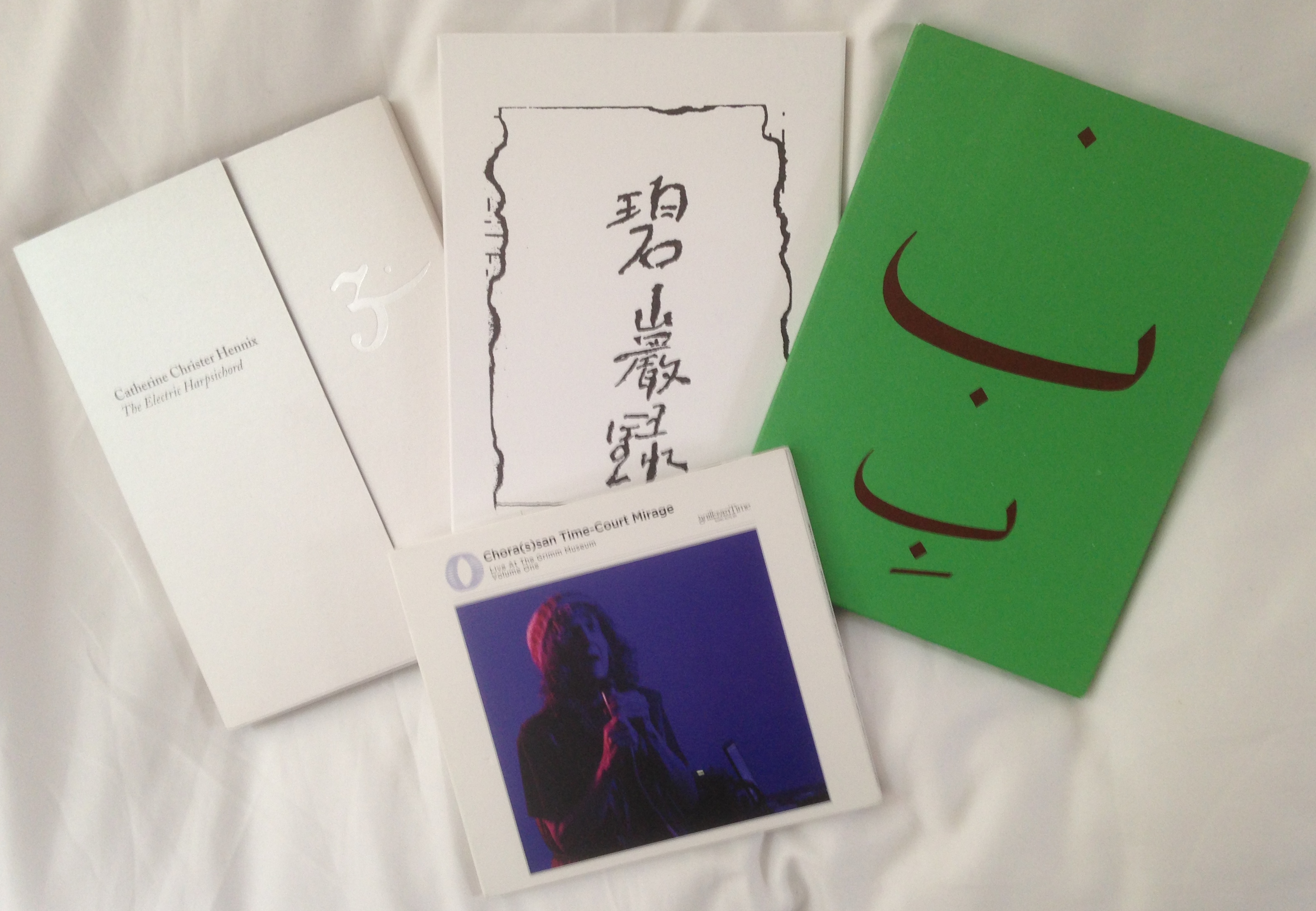 Catherine Christer Hennix studied with La Monte Young and Pandit Pran Nath, which explains her interest in drones. Her music rejects the 12-step octave in favour of what we westerners would call microtonality. Her new album, Live at ISSUE Project Room, released under the name of the ensemble she calls Chora(s)san Time-Court Mirage, is the most emotionally exhilarating and cathartic long-form piece of music I’ve heard in ages.
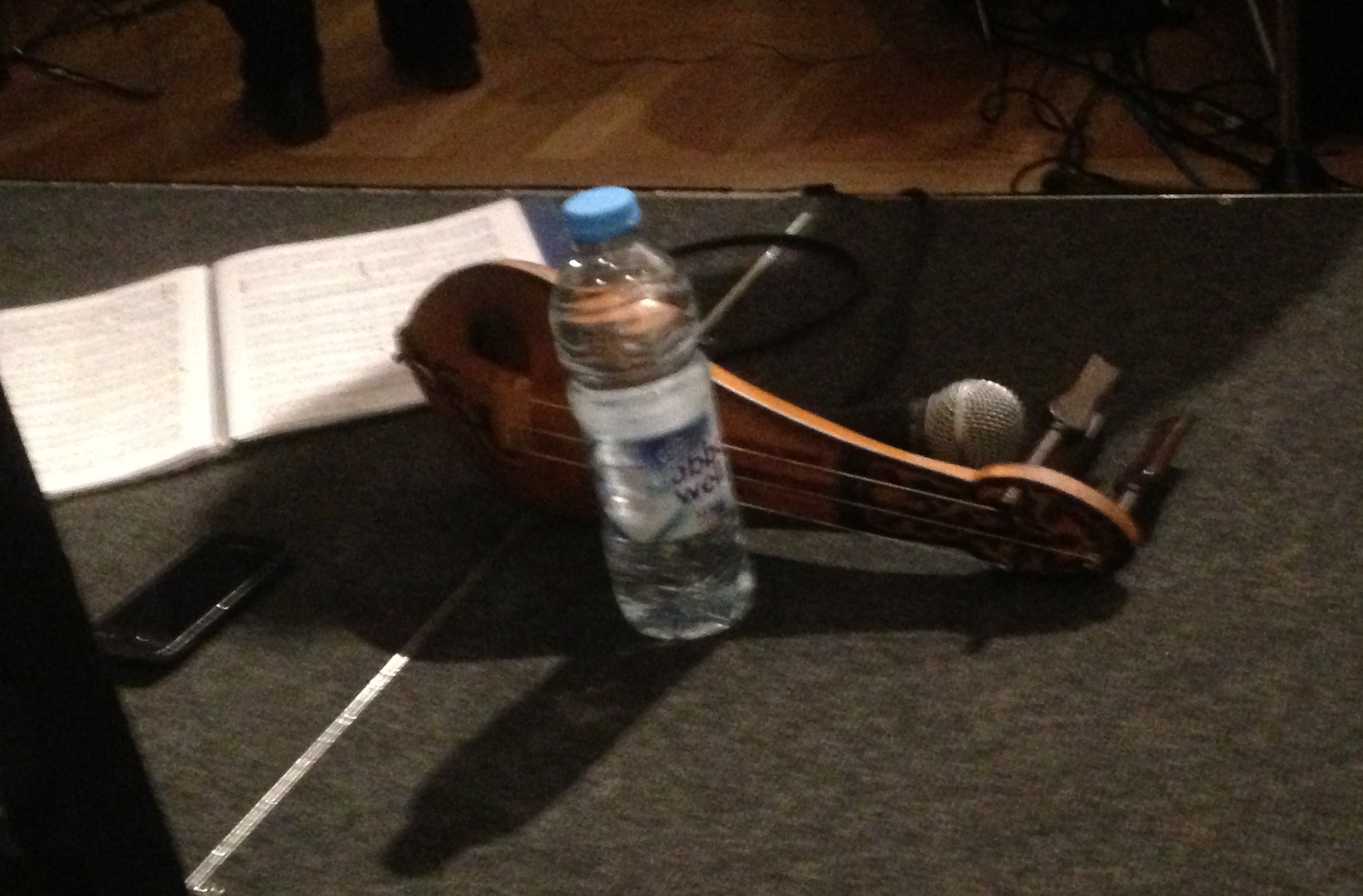 Generally speaking, the chances of one of the gigs of the year taking place as part of an academic seminar titled “Sounds of the Hellenic World, Ancient & Modern” would probably be pretty slim. But that’s what happened yesterday evening at King’s College London, when the Greek lyra virtuoso Sokratis Sinopoulos brought his quartet — completed by Yann Keerim (piano), Dimitris Tsekouras (double bass) and Dimitris Emanouil (drums) — to make their UK debut in the Great Hall in front of an audience whose members had spent the day discussing Homer, Xenakis, Keats and Satie’s Socrate.
 Harry Beckett was ordering a drink at the bar of the Beachcomber Club in Nottingham one night in 1965, relaxing between sets with Herbie Goins and the Nightimers, when I plucked up the courage to address him. The Nightimers were an excellent jazz-inflected soul band — their personnel also included former Blue Flames Mick Eve on tenor saxophone and Bill Eyden on drums, with Mike Carr on Hammond organ — and I wanted to tell their trumpeter how much I’d enjoyed his solo on their set-opening version of Lee Morgan’s “The Sidewinder”. Showing the good humour and courtesy which would become familiar over the years, Harry was happy to chat to a new fan.
 Alexander Hawkins and Evan Parker were two of the winners at the recent Parliamentary jazz awards: the former for being the instrumentalist of the year, the latter for, well, being Evan Parker. Last week they appeared together at the Vortex. Alex is 35; Evan is 72. What they gave us was a demonstration of the special ability of jazz-based free improvisation to span the generations without forcing the younger man to play the older man’s music, or vice versa. Musica franca = lingua franca, you might say.
 Wilko Johnson’s new autobiography, Don’t You Leave Me Here, received an eloquent recommendation from Mark Ellen in the Sunday Times at the weekend. To coincide with its publication, Universal’s Spectrum imprint is issuing a 40-track double CD set compiled by the former Dr Feelgood guitarist called The First Time I Met the Blues: Essential Chess Masters. Its appearance prompted me to dig out the records you see above: three 45s from my all-time Top 100 box, plus two magnificent albums, all licensed for release in the UK on the Pye International label in the early ’60s.
 When the Great Director pulls back to frame the ultimate long shot of Bob Dylan’s career from start to finish, it will be interesting to see what the perspective tells us about his two albums of standards associated with Frank Sinatra. My suspicion is that last year’s Shadows in the Night and the new Fallen Angels will be seen as parallel works to the pair of albums, Good As I Been To You and World Gone Wrong, with which, in the early 1990s, he revisited the blues.
 thebluemoment.com