Skip to content

The art of the bolero
When someone mentions the bolero, most of us probably think of the hypnotic Ravel piece in slow three-quarter time used in the 1979 Hollywood comedy 10 as a signifier for sex and at the 1984 Winter Olympics by the ice-dancing champions Jayne Torvill and Christopher Dean. That kind of bolero was hybridised from Spanish dances and turned into art music. The other type of bolero was the sort that turned up in Cuba in the late 19th century, in the form of romantic ballads whose popularity spread throughout Latin America.

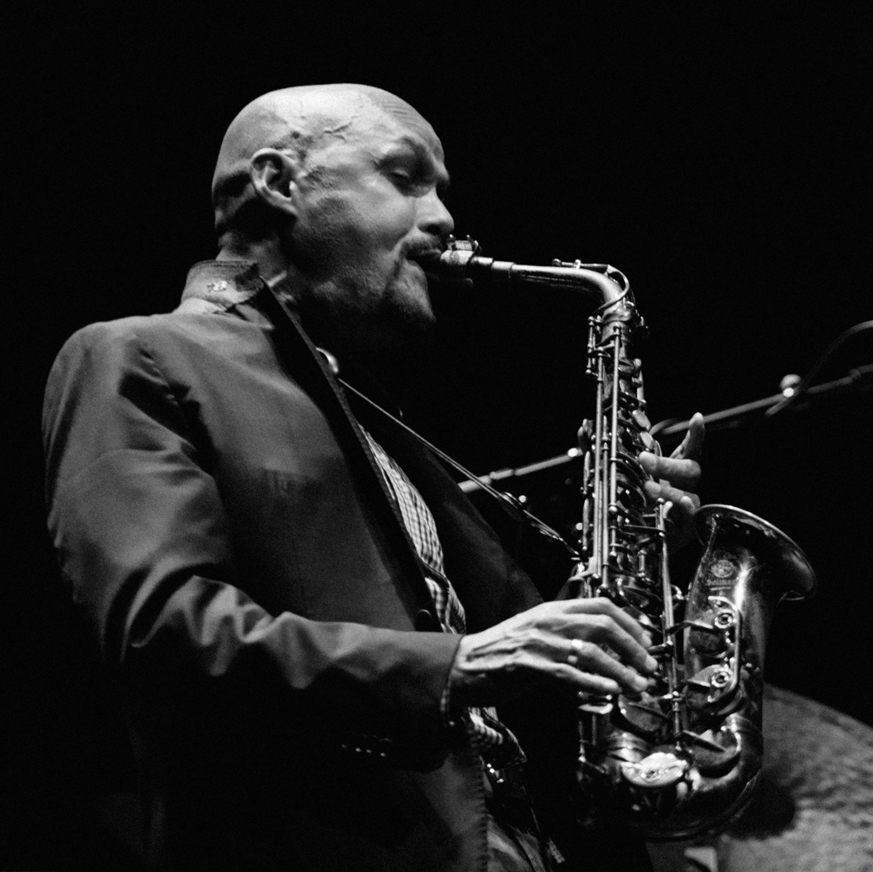
As a boy growing up in a housing project in San Juan, Puerto Rico, the alto saxophonist Miguel Zenón heard boleros sung by the likes of Arsenio Rodriguez, La Lupe, Benny Moré and Sylvia Rexach: like French chanson, it was a music that transcended generations. His latest album, titled El Arte del Bolero, is a series of duets with the pianist Luis Perdomo — a member of his regular quartet — on the songs he heard back then, delivered with respect, understanding and affection.

Zenón, who was born in 1976, learnt the saxophone from the age of 10 and eventually won a place at a local music school. At 20 he left home with a scholarship to study at Berklee College in Boston, where he fell in with some interesting contemporaries from around the world. Since then he has become widely renowned not just as a wonderful improviser but as a composer, a bandleader, and a distinguished educator. For almost 10 years he has run a project called Caravana Cultural, taking free jazz concerts to young audiences and musicians in Puerto Rico’s rural areas. Grammy nominations and fellowships from the Guggenheim and MacArthur foundations have come his way.

I was first made aware of his playing on Not in Our Name by Charlie Haden’s Liberation Music Orchestra and several albums by the SFJAZZ Collective, an all-star band whose shifting personnel has featured the likes of Joshua Redman, Bobby Hutcherson, Mark Turner and Nicholas Payton. He is also a member of Guillermo Klein’s Los Guachos. In 2015 I invited him to play at Jazzfest Berlin with his quartet, a long-established line-up completed by Perdomo, the Austrian bassist Hans Glawischnig and the drummer Henry Cole, sharing the bill with Keith Tippett’s Octet. Their repertoire included some of the pieces from a recent album, Identities Are Changeable, in which the four-piece was augmented to become a big band and blended with the voices of immigrants; the music retained its potency in the reduced format.

Zenón is a wonderful jazz improviser, clearly influenced by Charlie Parker but with a voice of his own — a warm, fibrous tone throughout the registers with phrasing as elegant at fast tempos as on ballads. El Arte del Bolero is the latest of several albums in which he examines the music of his heritage, but it isn’t a Latin album as such: it’s a record of thoughtful, beautifully balanced explorations with the occasional fleeting venture into ‘outside’ flurries (on Rexach’s “Alma Adentro”, which he first recorded several years ago with an ensemble arranged by Klein) and bebop (Bobby Capó’s “Juguete”, from the repertoire of Cheo Feliciano).

Recorded (without an audience) at the Jazz Gallery in New York last September, this is music of great intimacy, the saxophone so close-miked that you can sometimes hear the soft slap of the pads, the two musicians working as one to create music that combines passion and sophistication in perfect proportions. I can imagine it becoming one of those albums that you keep close at hand, ready for those times when all you want is to hear something beautiful.

* Released via the Miel Music label, Miguel Zenón’s El Arte del Bolero is available on Bandcamp: https://miguelzenon.bandcamp.com/album/el-arte-del-bolero. The photograph of Zenón was taken by Camille Blake on stage at the Haus der Berliner Festspiele in 2015.

Group Sounds Four & Five

From left: Jack Bruce, Lyn Dobson, Henry Lowther, Tom McGuinness, Mike Hugg and Manfred Mann

Tom McGuinness remembers a Sunday night in 1965 when he, Manfred Mann and Mike Hugg visited the Green Man pub on Blackheath Hill to see a modern jazz outfit called Group Sounds Five. He thinks they must have had a motive, because the band’s two horn players — the trumpeter Henry Lowther and the saxophonist Lyn Dobson — soon became members of Manfred Mann, staying until the summer of 1966. After the departure of Mike Vickers, and Tom’s switch from bass back to guitar, they were also joined by Jack Bruce. Tom recalls that Manfred lured Bruce away from John Mayall, who was miffed enough to write a song about the defection: “Double Crossing Time” appeared on the Blues Breakers album.

Group Sounds Five had acquired the habit of rehearsing three times a week, even though they landed on average no more than one gig a month, according to their drummer, Jon Hiseman, and Lowther and Dobson continued with them even after joining the Manfreds. The departure of their pianist, Ken McCarthy, turned them into Group Sounds Four, with Bruce taking over from Ron Rubin on double bass. Both incarnations appear for the first time on record in a new release called Black and White Raga, documenting recordings made by for the BBC Light Programme’s Jazz Club in November 1965 and April 1966, preserved in the extensive personal tape collection of Hiseman, who died in 2018.

This was a remarkably creative time in the London scene, with musicians like Dick Heckstall-Smith, Ginger Baker, Harry Beckett, Danny Thompson, Brian Auger and John McLaughlin switching back and forth between the modern jazz and R&B scenes. Alexis Korner’s Blues Incorporated, George Fame’s Blue Flames, Herbie Goins’s Nightimers and the Graham Bond Organisation welcomed players comfortable with both idioms. Lowther, Dobson and Bruce were able to make a living with Manfred Mann — whose repertoire included tunes like Cannonball Adderley’s “Sack o’ Woe” and Herbie Hancock’s “Watermelon Man” alongside “Do Wah Diddy Diddy” and “Oh No, Not My Baby” — while continuing to pursue their commitment to the sort of avant-garde jazz exemplified by John Coltrane and Ornette Coleman.

The four pieces on the album by Group Sounds Five, with McCarthy on piano and Rubin on bass, most strongly reflect the Coltrane influence. An emphasis on modal structures is evident through “Red Planet” (a Coltrane original also known as “Miles’ Mode”), a hard-bop recasting of Cole Porter’s “Night and Day”, McCarthy’s driving “Celebrity Stomp” and an extended treatment of Mike Taylor’s complex “Black and White Raga”, based on shifting between the black and white keys of the piano. The brilliant but ill-fated Taylor was an admirer of the group (Hiseman, Rubin and Bruce recorded with him), and gave them this piece, which he never recorded himself; he would have been pleased with this intense and compelling treatment, which maintains its tension and narrative thread through 11 absorbing minutes.

Seven months later, now down to a quartet, the band recorded three tracks: Sigmund Romberg’s “Softly, as in a Morning Sunrise”, Bruce’s “Snow” and Dobson’s “Straight Away”. These are even more impressive: the confidence has grown, individually and collectively, and there is the feeling that something genuinely original is beginning to emerge. It’s most fully evident in “Snow”, a five-minute tone poem in which the composer’s bowed bass converses with the two horns, eventually joined by Hiseman’s mallets. There’s a distinctly Northern European cast to this piece, reminiscent of the writing of Krzysztof Komeda and Palle Mikkelborg.

It would be hard to overpraise the quality of improvising, particularly on the later tracks. Lowther’s endless flow of ideas and Dobson’s rhythmical fluency and tempered aggression are matched by the response of the bass and drums, Hiseman making a particularly powerful impression with a solo on “Straight Away” as architecturally coherent as it is technically advanced. Had this band been given the chance to make an album, the product would no doubt have stood alongside Joe Harriott’s “Abstract” and Mike Taylor’s “Trio” as an fine example of the forward-looking music being made in London at the time. Thanks to Hiseman’s archival instinct, this rediscovery fills an important gap.

Between these two sessions, on March 18, 1966, the Manfreds found themselves at Abbey Road recording a song called “Pretty Flamingo”. Jack Bruce sang the high harmony and Lyn Dobson played the distinctive flute part on what became the band’s second UK No 1 hit. Those were different times.

* Black and White Raga is out now on the Jazz in Britain label (jazzinbritain.org). The photograph is taken from the cover of Manfred Mann’s 1966 EP Instrumental Asylum, and is the only one I can find featuring all three of Jack Bruce, Lyn Dobson and Henry Lowther.

Collarless Beatles

Pierre Cardin was “perhaps best known for giving four mop-topped Liverpudlians their collarless matching suits,” according to the obituary of the French clothes designer in The Times this morning. Wanting something closer to the truth, I asked the peerless Beatles historian Mark Lewisohn how it really happened.

Inevitably it was their friend Astrid Kirchherr, a photographer with an instinct for the avant-garde, who started it off. Astrid put her boyfriend, Stuart Sutcliffe, into a round-collared jacket in Hamburg in March 1961, shortly before he left the Beatles to study painting at art college while the others went back to England.

That October, on a trip to Paris, Paul McCartney and John Lennon saw Cardin’s collarless suits and liked them. But it was not until March 1963 — between “Please Please Me” and “From Me to You”, their second and third singles — that they approached the tailor Dougie Millings to ask him to make matching suits for them to a similar design in a silk and mohair blend. Millings was based in a first-floor cutting room at 63 Old Compton Street in Soho, a couple of doors away from the 2 is coffee bar, where other clients, including Cliff Richard, had made early appearances.

The Beatles’ radical new suits were worn that year, in either pale grey or dark fabrics, for stage shows, TV appearances and photo shoots, teamed with white shirts and black ties. Many of us started saving money for cheap copies of those jackets.

It would be tempting to imagine that their habitually well dressed manager played a part here. Not so. “Brian Epstein had no part in any of this,” Mark told me, “but criticism that he made the Beatles wear such stage suits was levelled against him ever after.” By 1965, when they made their famous appearance at Shea Stadium, they were still wearing matching uniforms, but now the ties had gone, the pale beige lapel-less Millings jackets had stand-up Nehru collars and military epaulettes, and the trousers were a contrasting black.

In 2004 one of McCartney’s original by-Millings-after-Cardin pale grey suits was put up for auction at Christie’s in New York. With no reserve, and an estimate of $8-10,000, it was knocked down for $53,775.

* The first volume of Mark Lewisohn’s three-part history of the Beatles, Tune In, was published in 2013 by Little, Brown.

Meeting Ma Rainey

As films depicting imaginary incidents from a real life go, Ma Rainey’s Black Bottom doesn’t cut it. A version of August Wilson’s 1982 stage play, it falls into just about every trap laid for those who attempt to translate theatre to cinema. Viola Davis, as Rainey, is sensationally good, and Chadwick Boseman, playing the last role of his life as an angry young cornet-player, scarcely less marvellous, but that’s really all there is to recommend it. Even the music, directed by Branford Marsalis, seems tame.

It did remind me, though, of encountering Ma Rainey as a major figure in the first book I ever read about jazz. Rudi Blesh’s Shining Trumpets was first published in the US in 1946 and in the UK three years later. Towards the end of the next decade there was a copy in my school’s library, which I could read during lunch breaks and the free periods we were given for study. At that stage my knowledge of the music had moved beyond The Glenn Miller Story, but not all that far, particularly in terms of the music’s origins. So Shining Trumpets, subtitled “A History of Jazz”, was a revelation, despite being written by a man who considered the music of Duke Ellington to be “decadent” and saw Billie Holiday as “merely a smart entertainer”. By then I knew enough to question those views, while recognising the value of Blesh’s belief that jazz was a form of high art which owed pretty much everything to its African origins. In that sense he set a boy of 13 or 14 on the right track, although his path was straighter and narrower than mine would become.

Rather bracingly, his book began with a tabulated comparison between “African survivals” in jazz and what he called “Deformations”, illustrated by the contrast, for example, between Tendency to use any melody or harmonic pattern as a basis for free improvisation of melody (admirable) and Straight playing of melody (or) mere embellishment or rhapsody (deplorable). His ideal of “hot jazz” featured the use of intonation free of the fixed European scale, vocalised instrumental tones, displaced accents and polyrhythms, collective improvised antiphony and polyphony. He particularly disliked the infusion of influences from European classical music. He died in 1985, aged 86, and I have no idea what he made of Charles Mingus, Ornette Coleman and Albert Ayler, who restored those characteristics to jazz at a time when bebop, “progressive jazz” and the West Coast sound had taken the music into areas that would have earned his wholehearted disapproval. Or if he even heard them.

Nevertheless he was responsible for implanting in the mind of this listener the useful idea that the music came from West Africa via slave ships, cotton fields and chain gangs, and that there was a direct line from gospel singing and field hollers to whatever was on the cover of the latest issue of Down Beat. His arguments were backed up by musicology that was impressively diligent and open-minded. The book’s appendices include musical examples quoted in the text, carefully transcribed for Blesh by the modern classical composer Lou Harrison (a student of Schoenberg); another contemporary composer, Virgil Thompson, provided encouragement. And the author never for a moment attempts to divorce the music from its social and cultural contexts.

Shining Trumpets was where I first met the protagonist of Ma Rainey’s Black Bottom. She was one of his heroes, representing to him a perfect example — like Jelly Roll Morton, Baby Dodds and King Oliver — of the application of great artistry to the raw materials of which he approved. “Ma Rainey’s singing, monumental and simple, is by no means primitive,” he wrote while discussing recordings such as “Shave ‘Em Dry Blues” and “See See Rider”. “It is extremely conscious in its use of her full expressive means, definitely classic in its purity of line and its rigid avoidance of the decorative. Such art as this must, of necessity, transcend the level of the spontaneous and purely instinctive. Thus her effects are carefully calculated and full of meaning; they are neither naïve nor spurious, sentimental nor falsely sophisticated. Rainey’s voice is sombre but never harsh, and its sad and mellow richness strikes to the heart.”

I hadn’t read the book for almost 60 years until I came across a second-hand copy last year and bought it for purely nostalgic reasons. I’d forgotten, if I ever realised it, how well Blesh wrote, and how hard he, an Ivy League graduate, tried to get to what he saw as the music’s essence. He could dismiss Holiday’s “Strange Fruit” as “an atmospheric bit of musical stuff too gauzy to hold a tragic content”, but he could also write this about what he heard while listening to the 78 of Blind Willie Johnson’s “Jesus Make Up My Dying Bed”: “In the record grooves are frustrated loneliness, hungry poverty, fanatical devotion to heaven, and the ascetic waiting for it. He enunciates cruel and peremptory phrases in a voice harsh and burred; in one that is thick, rough and crooning, he answers with pathetic melodic downward turns that are like appeasements, conciliations, solaces, and pardons. Throughout, the guitar, sweet and ringing, weaves a polyphony with the singer. These are, by implication, the voices of many people.”

You don’t get the sense that, unlike some of his contemporaries, Blesh wanted to freeze the music at the point he loved it best. He was keen for it to continue its development, as long as it adhered to the standards he upheld. Inevitably he sometimes patronised the musicians of whom he wrote, committing the error of wanting them to do things his way rather than theirs. He believed he had seen the truth of their condition, and was prepared to advise them on how best to express it in their art. Although he adored Louis Armstrong’s early work, he claimed that the trumpeter failed to understand the responsibility of accepting the baton handed on in turn by Buddy Bolden, Freddie Keppard and King Oliver: “Had Armstrong understood his responsibility as clearly as he perceived his own growing artistic power — had his individual genius been as deeply integrated into that of the music, and thus ultimately with his destiny, of his race — designated leadership would have been just.” Sadly, he felt, Armstrong had been diverted by the tides of commerce, as exemplified by his recordings with the big bands which did away with the principle of collective improvisation birthed in New Orleans. Blesh’s conclusion: “Jazz itself is revolutionary: Armstrong’s act was that of counter-revolution.”

At this distance, the offence is more picturesque than distasteful, but it does make me think of the best line in Ma Rainey’s Black Bottom. “White folks don’t understand about the blues,” Rainey says. “They hear how it comes out, but they don’t know how it got there.” No matter how deeply one loves the music, how closely one studies its history and how genuinely one admires its creators, that’s always something to reckon with.

* Ma Rainey’s Black Bottom is on Netflix. Rudi Blesh’s Shining Trumpets was published by Alfred A. Knopf in the US and by Cassell & Co in the UK.

** Due to authorial carelessness, the original version of this post gave the name of the actress playing Ma Rainey as “Viola Wills”. The film was also mischaracterised as a “biopic”. Both these errors, pointed out by readers, have been corrected.

Mingus in Germany

“When I was young, nobody told me that Duke Ellington made any money. I turned on the radio and heard something that I loved, and I followed it until I found out where it was.” Charles Mingus said that to me in the summer of 1972, at a pavement table outside in restaurant in Shepherd Market, London, during the course of a sometimes bemusing but always fascinating interview.

Two years earlier I’d gone to hear him in person for the first time at the Top of the Gate in Greenwich Village. He was torpid, listless, uninterested, all reflected in the music of his quintet. It was one of the most depressing musical experiences of my life. Ten years or so after falling in love with the turbulent sound of Blues & Roots, I was foolish enough to write a review suggesting that this giant of the music was washed up.

It was a judgement I soon came to regret. Within two years he had rediscovered much of his physical and spiritual vigour, and was once again leading bands that boiled with an energy that had its source in the leader’s soul. I was lucky enough to be present at Philharmonic Hall to hear him play an epic blues with the great tenorist Gene Ammons and then to hear several nights of a fine season at Ronnie Scott’s.

Did anyone incarnate the spirit of jazz more effectively than Mingus? The life-enhancing combination of high skill and wild spontaneity, of the most finely tuned sensibility and the deepest roots, of romantic beauty and unapologetic political commitment? All that is present throughout a four-CD set titled @Bremen 1964-75, divided between tours 11 years apart with two marvellous groups, recorded and preserved by Radio Bremen and now — although the earlier concert has been much bootlegged — officially released for the first time.

The 1964 band featured Johnny Coles on trumpet, Eric Dolphy on alto, bass clarinet and flute, Clifford Jordan on tenor, Jaki Byard on piano and Dannie Richmond on drums. Nine weeks later Dolphy would be dead, his diabetic coma misdiagnosed in a Berlin hospital; here we can listen to him in full flight. On “Parkeriana”, notes shoot out of his alto at unexpected angles like beams of light refracting in a hall of mirrors while Mingus uses his bass to push the beat in the way he did at certain medium-fast tempos. On “Fables of Faubus”, an eventful 33-minute performance that prefigures a lot of what the Art Ensemble of Chicago would later get up to, Dolphy’s bass clarinet makes useful interventions behind Coles’s long, characteristically plaintive solo before leading the piece to its climax with an extended solo of such hair-raising audacity that you can’t believe it happened almost 60 years ago. Other highlights include Byard’s introductory piano soliloquy, a typical history lesson including chunks of ragtime and stride, and Mingus’s restless exploration of “Sophisticated Lady”.

The 1975 band — with Mingus and Richmond joined by Jack Walrath (trumpet), George Adams (tenor) and Don Pullen (piano) — is the one that, six months earlier, had recorded the two-volume Changes for Atlantic, and the set list contains several pieces from those albums: “Remember Rockefeller at Attica”, “Sue’s Changes”, “Duke Ellington’s Sound of Love”, “Free Cell Block F, Tis Nazi USA”, Walrath’s “Black Beans and Poles” and Sy Johnson’s “For Harry Carney”. If this quintet isn’t as lairy as some of Mingus’s small combos, it produces high-level creativity at every turn, true to the leader’s vision of a music once collective in nature and a vehicle for individual character — perhaps the most important lesson that he took from his adoration of Ellington.

Walrath fires out bright-toned multi-noted lines that sound relaxed and assured even at the most demanding tempos, artfully varying his trajectory. Adams shows himself to be among the most emotionally generous of the tenorists who emerged in the wake of John Coltrane, the unaccompanied section of his solo on “Sue’s Changes” quoting exquisitely from Ornette Coleman’s “Beauty Is a Rare Thing” and demonstrating (as had Dolphy) that although Mingus often said disobliging things about the avant-garde, he was happy to incorporate the movement’s innovations when they came from musicians who’d satisfied him that they had real chops and a proper grounding.

Pullen, like Byard before him and successors such as Roland Hanna and John Foster, had the technique and the imagination to pursue a pan-stylistic vision of jazz piano. His relaxed improvisation on “Duke Ellington’s Sound of Love” is the epitome of chilled-out “inside” improvising at a long-legged medium-slow tempo; when he extends the approach deep into the realms of abstraction, as in the dense conclusion to his “Sue’s Changes” solo, it’s clearly with the leader’s approval.

Whether in 1964 or 1975, Mingus and Richmond keep the fire burning, raising and lowering the flame at will, switching metre and tempo with wonderful understanding, developing the unique brand of swing they created together when they first joined forces in 1957. Here they can stretch out with like-minded companions in front of two sets of enthusiastic listeners, their work preserved in a set that belongs in even the most comprehensive Mingus collection.

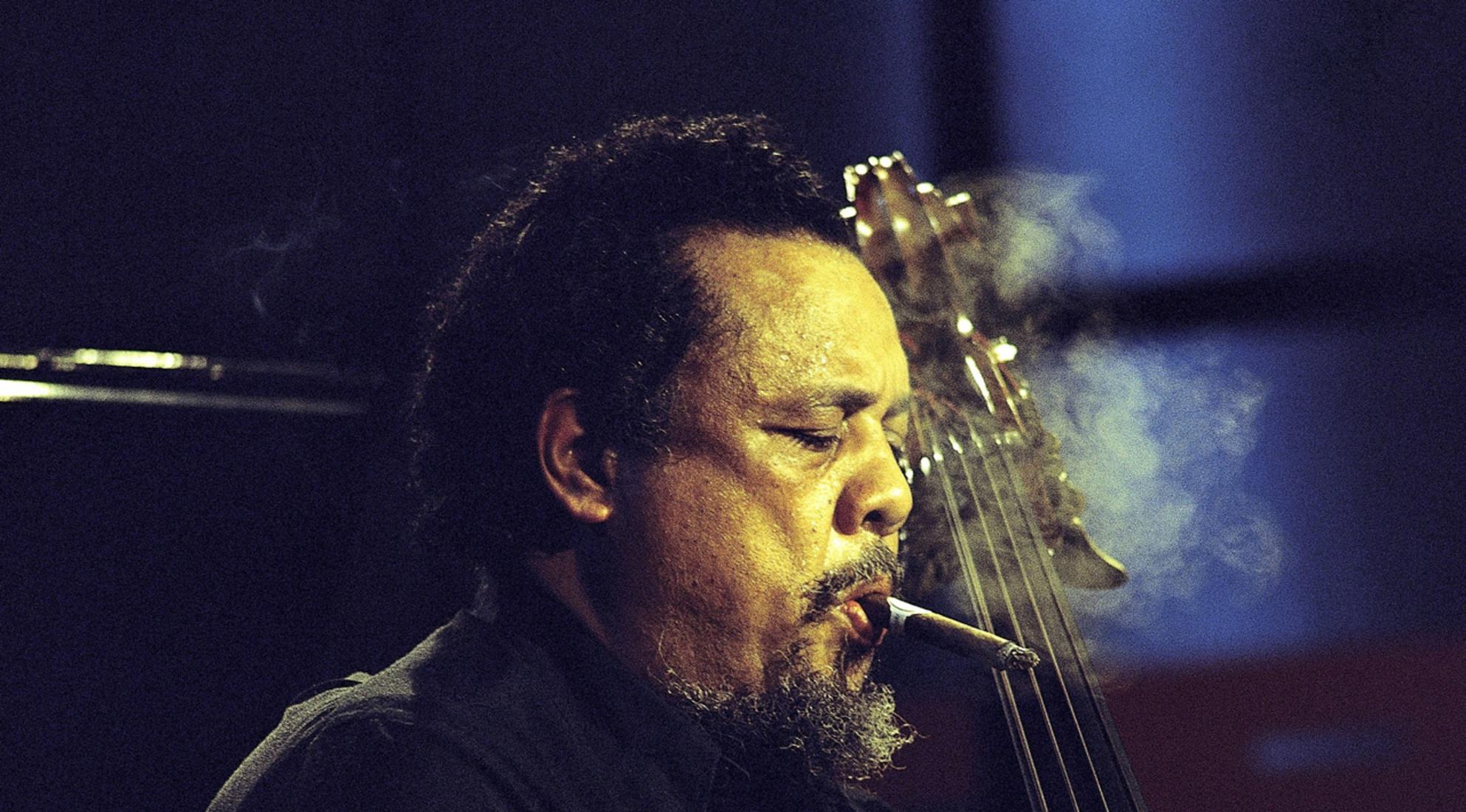
* Charles Mingus’s @Bremen 1964 & 1975 is released on the Sunnyside label, in partnership with Radio Bremen. The terrific photograph of Mingus was taken at Montreux by the late, great David Redfern.

2020: the best bits

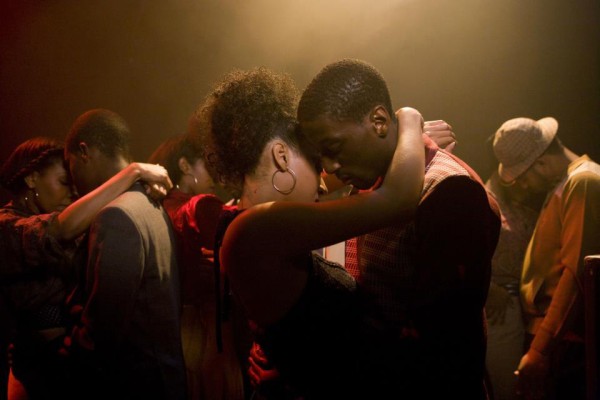
A still from Lovers Rock, part of Steve McQueen’s Small Axe series

The end of a year that left a lot of holes: so many gone, to be mourned only at a distance. People I loved, people I worked for and alongside, people whose artistry — whether expressed in one 45rpm disc or across the entire arc of a long career — affected my life. Musicians including Keith Tippett, whom I knew for 50 years, and Little Richard and Gary Peacock, to whom I’d been listening for even longer. Ennio Morricone. Juliette Gréco. McCoy Tyner. Lee Konitz. Andy Gill. Betty Wright. Henry Grimes. Florian Schneider. Jimmy Cobb. Tommy DeVito. Roy Head. Hux Brown. And on, and on.

Between the start of 2020 and the onset of the pandemic in mid-March I saw a handful of memorable gigs: Craig Taborn at the Royal Academy of Music, an extremely on-form Bryan Ferry at the Albert Hall and a riotous benefit for Louis Moholo Moholo at the Vortex. And that was it for the live experience. Thank goodness for streaming, which gave many musicians a route to their audience and made unanticipated introductions — in my case to the Welsh guitarist Toby Hay, whose series of improvised outdoor morning and evening ragas lifted the spirits during the spring lockdown.

There was special gratitude, too, to the people who make high-quality television programmes, a near-universal balm this year. So let’s start with them.

TV SERIES

1 Normal People (BBC) I watched it week by week, rationing myself, wanting to extend the experience of this perfectly written, designed, filmed and acted adaptation for as long as possible. Afterwards I read Sally Rooney’s novel for the first time and discovered that Daisy Edgar-Jones and Paul Mescal were inhabiting the characters on the page: a reciprocal benefit.

2 Call My Agent (Netflix) High comedy of great wit and style, with a parade of mostly female French stars — Juliette Binoche, Béatrice Dalle, Nathalie Baye, Françoise Fabian, the Isabelles Huppert and Adjani — lining up to take the piss out of themselves. The regular cast — Camille Cottin, Thibaut de Montalembert, Liliane Rovère, Grégory Montel and the rest — were equally magnificent.

3 Small Axe (BBC) For me, the highlight of Steve McQueen’s sequence of five feature-length films was Lovers Rock, in which lighting, camera movement, editing, diagetic music and Mica Levi’s score largely took the place of dialogue as a superb cast — including Michael Ward, Amarah-Jae St Aubyn, Kedar Williams-Stirling and Shaniqua Okwok — established a mood that seemed to hang around for days.

4 The Bureau (Amazon Prime) A story in The Times recently quoted a French military chief’s complaint that the external branch of his country’s secret service — the DGSE — habitually screws everything up. That would come as no surprise to fans of The Bureau and its magnificent cast, not just Mathieu Kassovitz but particularly Florence Loiret-Caille and Jean-Pierre Darroussin. I haven’t finished it yet, so don’t tell me how it ends.

5 Once Upon a Time in Iraq (BBC) An exemplary reconstruction of the Bush/Blair intervention, at its most harrowingly effective when allowing the Iraqis to tell their own stories. The interviews with American military personnel are all the evidence anyone might need that no lessons at all were absorbed from the experience of Vietnam.

NEW ALBUMS

1 Bob Dylan: Rough and Rowdy Ways (Columbia)

2 Ambrose Akinmusire: On the Tender Spot of Every Calloused Moment (Blue Note)

3 The Necks: Three (RnR)

4 Irreversible Entanglements: Who Sent You? (International Anthem)

5 Keith Tippett: The Monk Watches the Eagle (Discus)

6 Maria Schneider: Data Lords (ArtistShare)

7 Sault: Untitled (Rise) (bandcamp)

8 Hedwig Mollestad: Ekhidna (Rune Grammofon)

9 Bruce Springsteen: Letter to You (Columbia)

10 Matana Roberts / Pat Thomas: The Truth (Otoroku)

11 Mary Halvorson’s Code Girl: Artlessly Falling (Firehouse 12)

12 Eyvind Aarset / Jan Bang: Snow Catches on Her Eyelashes (Jazzland)

13 The Henrys: Paydirt (Bandcamp)

14 Pete Judge: Piano 2 (PJM)

15 Robert Cray Band: That’s What I Heard (Thirty Tigers)

16 Lucia Cadotsch: Speak Low II (We Jazz)

17 Martin Pyne: Spirits of Absent Dancers (Discus)

18 Carla Bley / Andy Sheppard / Steve Swallow: Life Goes On (ECM)

19 Jasper Høiby: Planet B (Edition)

20 Matt Rollings: Mosaic (Dualtone)

21 Dave Alvin: From an Old Guitar (Yep Roc)

22 Soft Machine: Live at the Baked Potato (Moonjune)

23 Misha Mullov-Abbado: Dream Circus (Edition)

24 Diana Krall: This Dream of You (Verve)

25 Hailu Mergia: Yene Mircha (Awesome Tapes from Africa)

ARCHIVE / REISSUE

1 Richard & Linda Thompson: Hard Luck Stories (Universal)

2 Mike Westbrook: Love and Understanding (My Only Desire)

3 Charles Mingus: Bremen 1964 & 1975 (Sunnyside)

4 Roberta Flack: First Take (50th anniversary edition) (SoulMusic)

5 Solomon Burke: The King of Rock ’n’ Soul (SoulMusic)

6 King Crimson: The Complete 1969 Sessions (DGM)

7 Bryan Ferry: Live at the Royal Albert Hall 1974 (BMG)

8 Kenny Carter: Showdown (Kent)

9 Carla Thomas: Let Me Be Good to You (SoulMusic)

10 Jon Hassell / Farafina: Flash of the Spirit (tak:til)

MUSIC BOOKS

1 Aaron Cohen: Move On Up: Chicago Soul Music and Black Cultural Power (Chicago University Press)

2 Andy Neill: Ready Steady Go! The Weekend Starts Here (Universal)

3 Magdalena Grzebałkowska: Komeda: A Private Life in Jazz (Equinox)

4 Craig Brown: One Two Three Four: The Beatles in Time (4th Estate)

5 Luc Sante: Maybe the People Would Be the Times (Verse Chorus Press)

6 Philip Nanton: Riff: The Shake Keane Story (Papillote Press)

7 Edwin Prévost: An Uncommon Music for the Common Man (Copula)

8 Duncan Heining: Stratusphunk: George Russell, His Life in Music (Jazz International)

9 Ian Preece: Listening to the Wind: Encounters with 21st Century Independent Record Labels (Omnibus)

10 Maureen Mahon: Black Diamond Queens (Duke University Press)

OTHER NON-FICTION

Ed Caesar: The Moth and the Mountain (Penguin Viking)

FICTION

David Diop: At Night All Blood Is Black (Pushkin Press)

POETRY

Caroline Bird: The Air Year (Carcanet)

FILM

Portrait of a Lady on Fire (dir. Céline Sciamma)

EXHIBITION

Charlotte Salomon (Jewish Museum, London)

‘The Monk Watches the Eagle’

My last memory of Keith Tippett comes from a night in Berlin in 2015, when he brought his octet to play a new suite, The Nine Dances of Patrick O’Gonogon. He was always edgy before a performance, and this concert was no exception. There was a fine new 9ft Steinway for him to play, tuned twice during the day — once before the afternoon soundcheck, once after. An hour before the start of the concert, however, he went back to the piano, played a few notes, and came to me with an urgent request that it be retuned.

At that point the only thing a festival director can do is keep the artist happy. The piano tuner had gone home hours before. But his home number was found, and he was summoned in time to give the instrument another going-over. (After completing the task, he muttered to me that it had remained perfectly in tune.) Keith and his musicians proceeded to play a glorious set that delighted the audience, who were transfixed when Julie Tippetts, Keith’s wife, materialised next to the piano towards the end to sing “The Dance of Her Returning”. It was a triumph, one of many in his long career.

Keith was a wonderful man and one of the finest British composers of his generation. Following his death n June 2020, the first posthumously released Tippett recording is a piece of which he was specially proud: The Monk Watches the Eagle, a cantata for two saxophone quartets, the BBC Singers, and his wife, Julie, who provided a libretto evoking the last earthly thoughts of a holy man on his deathbed.

The recording is of its first and only performance, performed in 2004 as part of the Norfolk and Norwich Festival, which had commissioned it, and recorded for broadcast by BBC Radio 3 in Norwich Cathedral. Dedicated to his late father, the nature of the work and the setting of the performance remind us that Keith’s early musical experience included spells as a chorister and church organist in his native Bristol.

His whole career showed us that he was comfortable in many idioms, from his astonishing solo piano improvisations to his appearance with King Crimson on Top of the Pops and his marshalling of the extraordinary 50-piece Centipede. The Monk Watches the Eagle finds him flying free of genre, blending the gestures of contemporary classical choral music with perfectly integrated saxophone improvisations — by Paul Dunmall (soprano), Kevin Figes (alto), Ben Waghorn (tenor) and Chris Biscoe (baritone) — and Julie’s powerfully affecting singing.

Keith’s use of his resources here is flexible and imaginative. His deployment of the singers is in a very English tradition of choral music, the voices sometimes soaring up to the 12th century cathedral’s vaulted stone ceiling. There are times when he makes the saxophones sound like a pipe organ powered by human breath; even more astonishing is a passage where you imagine you’re hearing distant gongs and bowed cymbals.

The 40-minute piece is continuous, but for our convenience the CD is programmed with seven divisions. The fourth of them, a 14-minute passage, contains some of the most moving music I’ve heard this year: a series of slow movements featuring lean a cappella vocal writing, a dissonant slow upward swirl of voices and reeds giving way to a glowing melody emotionally related to John Tavener’s “The Lamb”, Julie’s mbira (thumb piano) and her wonderfully poised vocal solo over saxophone harmonies, and the return of the choir, with Biscoe’s soft baritone tiptoeing gently between their legato phrases.

“Now it is silent, and words hang warm,” they sing in this section. “All is calm. All that remains… All that remains in my heart is still. All is still. Now in the quiet — and quite alone — not alone!” But the luminous serenity is disturbed by a writhing Dunmall soprano solo, emerging from a babble of voices, demonstrating that the inherent possibilities of such collaborations did not end with Jan Garbarek and the Hilliard Singers. The parallel harmonies of the closing movement have an unadorned elegance reminiscent of plainsong.

It’s a work of great spiritual depth and power, radiating its beams of light as though shining through stained glass — the motif of the cover design. I remember Keith telling me about it with special pride. Now everyone can hear it, and join the long applause that filled the cathedral at the conclusion of a marvellous performance that reveals a different and very precious facet of the soul of a great musician.

* Keith Tippett’s The Monk Watches the Eagle is released on the Discus label. The photograph of Tippett, by Paolo Soriani, is from the CD sleeve.

Happy birthday, Dionne Warwick

Dionne Warwick was spotted by Burt Bacharach while she was singing background on the Drifters’ “Mexican Divorce” with her sister Dee Dee, her aunt Cissy Houston and their friend Doris Troy in the summer of 1961. She was 20 years old. A year later she recorded “Don’t Make Me Over”, the first of her string of hits written by Bacharach and his lyricist, Hal David.

She had grown up singing gospel music alongside members of her family in the Drinkard Singers and the Gospelairs before studying music at a college in West Hartford, Connecticut. Her musicianship enabled her to cope with the unusual interval leaps and mixed time signatures that Bacharach introduced to the pop music of the early 1960s, blending R&B with Broadway; her poise, her control, her distinctive timbre and her avoidance of gospel gestures such as extravagant melisma and roughened texture made her voice the perfect instrument for this unique purpose.

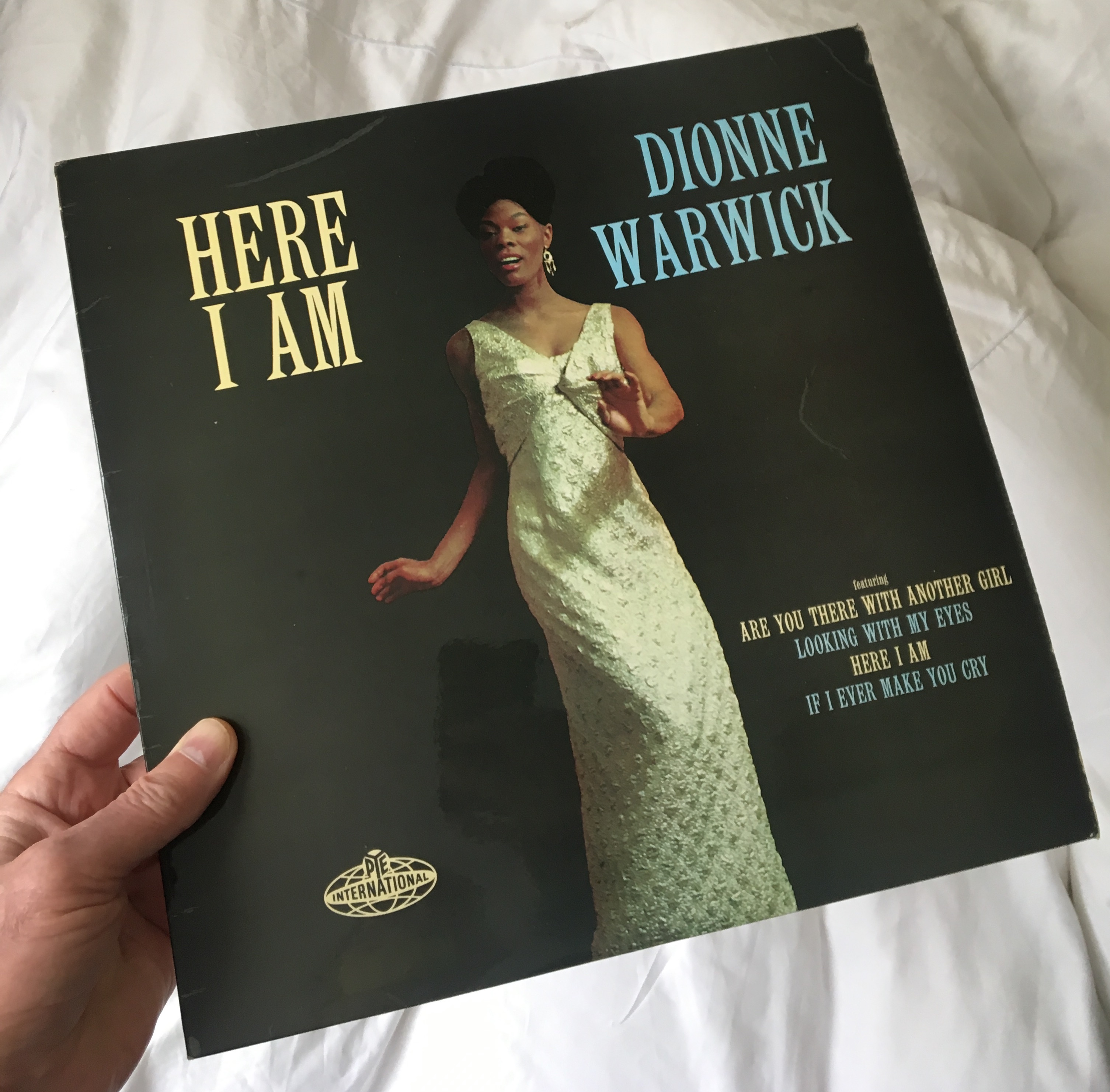
I love almost everything Dionne ever did, from the early Bacharach masterpieces of “Anyone Who Had a Heart” and “Walk On By” right up to “I Can’t Wait Until I See My Baby’s Face” with Jerry Ragovoy and “His House and Me” with Thom Bell. But there’s a special place in my affections for an album called Here I Am, released in 1965, in which the Bacharach/David/Warwick combination reaches a series of peaks.

A couple of those peaks are ballads, written, arranged and performed with exquisite delicacy: “In Between the Heartaches” and “If I Ever Make You Cry”. But even more remarkable to my ear is “(Here I Go Again) Looking With My Eyes (Seeing With My Heart)”, an epic of orchestra pop remarkable not just for the double set of brackets in its title but for an astonishing swirling momentum driven not so much by a conventional rhythm section as by the strings, the choir and periodic fusillades of percussion: tympani, tubular bells, boo-bams. And on top of it all, Dionne is doing as she always has done, negotiating Bacharach’s melodic twists, inhabiting Hal David’s words, singing like a real person who happens to be in possession of a divine gift.

Today, it’s exactly 80 years since Marie Dionne Warrick was born in Orange, New Jersey. A very happy birthday to her, with deepest gratitude.

Back on Highway 61

Generally speaking, I prefer Bob Dylan to make his own cover versions, just the way he’s been doing for the best part of 60 years. There are maybe not even a dozen exceptions, mostly the obvious ones: Presley’s “Tomorrow is a Long Time”, Jimi’s “Watchtower”, Stevie’s “Blowing in the Wind”, the Fairports’ “Si tu dois partir”, Ferry’s “Hard Rain”, Betty LaVette’s “Things Have Changed”. But now there’s a definite addition to the list: Dave Alvin’s version of “Highway 61 Revisited”, a highlight of From an Old Guitar, his new album of rare and unreleased stuff.

To be honest, I haven’t followed the career of the singer/guitarist from Downey, California who started out at the very end of the ’70s with the Blasters and more recently led bands known variously as the Guilty Ones and the Guilty Women. My bad, as the young people say. From an Old Guitar is full of great stuff, drawing on country, blues, R&B and, in Lil Hardin Armstrong’s “Perdido Street Blues”, old-time jazz, with other songs from Mickey Newbury, Earl Hooker, Doug Sahm and Marty Robbins.

Dylan’s parable is set to a low-riding shuffle beat, the layered guitars of Alvin and Greg Leisz howling, nudging and screeching from multiple perspectives as the magnificent verses are recited in appropriately biblical tones. Alvin’s voice is one that wears its bruises, scars and calluses lightly, weighting and timing every line perfectly, drawing out the dark humour, simultaneously absurdist and apocalyptic. The video is well assembled and cut, particularly the chase towards the end between a hot rod and a Highway Patrol car on a two-lane blacktop.

My other favourite is a song called “Peace”, credited to Willie Dixon. It bears no resemblance to a song of the same name that gave the title to a 1971 Dixon album, but it carries the hallmarks of the composer of “Hoochie Coochie Man” and “The Seventh Son”. The buried hook — the thing that makes we want to listen to it again, straight away — is a funky little chorded figure from Joe Terry’s electric piano: peeping through two or three times, it seems to want to take the song in a different direction before thinking better of it and withdrawing.

I can happily listen to this album from start to finish, and then over again. Even better, I imagine, would be to wander into some bar or other — Dingwalls, perhaps, or the old Tramps on 15th Street in NYC — and drink a beer or two while listening to Alvin and his band working their way through the whole thing. One day, maybe. But whatever, that “Highway 61” is going to stick around.

* Dave Alvin’s From an Old Guitar is out now on the Yep Roc label.

It’s a disco night (don’t stop)

So disco’s back. “The golden years, the silver tears / You wore a tie like Richard Gere’s…” Sophie Ellis-Bextor’s “Crying at the Discothèque” is a remake of a 1980 record by Alcazar, which borrowed the Chic-produced rhythm track of “Spacer”. The new disco-revival albums from Ellis-Bextor and Kylie Minogue take me back to the late ’70s, when my friend Howard Thompson, then recently relocated to New York, taped shows from all-disco WKTU (92.3 FM) and mailed the cassettes to me in London. The 12s I bought in those days mostly came from Groove Records on the corner of Greek Street and Bateman Street in Soho. Here are a dozen lasting favourites, not exactly unpredictable, from that time. 

1. Odyssey: “Native New Yorker” Sandy Linzer and Denny Randell, formerly collaborators on “A Lovers’ Concerto” and “Let’s Hang On”, with the help of the great arranger/producer Charlie Calello, created a whole movie in a song: “It’s the thought you had / In a taxicab that got left on the kerb / When he dropped you off at East 83rd…” I love the uptown 25-35 lead vocal of Lillian Lopez — born, as it happens, in Connecticut — and the slight Latin emphasis in this extended mix, particularly the piano playing of Richard Tee.

2. Evelyn Champagne King: “Shame”  I’d be happy to die now if I knew I’d be reincarnated as one of the guitarists behind Ms King, extending this sublime track into eternity.

3. Harold Melvin & the Blue Notes: “Bad Luck” Teddy Pendergrass in his pre-solo pomp, with Ronnie Baker on bass, Earl Young on drums and Vince Montana Jr on vibes, and a rap on Nixon closing perhaps the best breakdown in history. 

4. Norma Jean: “Saturday” An early Chic production, from a time when Nile Rodgers and Bernard Edwards found a different keyboard or tuned percussion lick for every hit. Here it’s Dave Friedman’s vibes.

5. Gladys Knight: “Baby Don’t Change Your Mind” The impossibly prolific Van McCoy wrote this one for Gladys, and it’s a perfect fit: “Your ex is back in town / What you gonna do when she comes around / And she starts going through her act…” 

6. Sheila (and) B. Devotion: “Spacer” Chic’s Rodgers, Edwards and Tony Thompson again, this time confecting perfect Euro-disco with a French singer. The strings were conducted by Gene Orloff, 30 years after he played violin with the Neil Hefti Orchestra behind Charlie Parker on “Repetition”.

7. Cheryl Lynn: “Got to Be Real” (12-inch version) Toto’s David Paich produced this with his dad, Marty, a fine jazz pianist and arranger who worked with Chet Baker, Mel Tormé and countless others. Ray Parker Jr plays guitar and James Gadson is on drums. Cheryl was barely 21 when she wrote this with David P. and David Foster. Tracking herself on backing vocals, she sounds like a trumpet section in full flare.

8. Oliver Cheatham: “Get Down Saturday Night” A snare flam sets up the top-of-the-beat groove that provides minimalist support for a living-for-the-weekend song (gotta have one of those). No idea who mixed this, but they did a wonderful job.

9. Melba Moore: “This Is It” (Tom Moulton mix) More Van McCoy magic. Melba is the daughter of the bandleader Teddy Hill, with whom Dizzy Gillespie paid his first visit to London in 1937, and who went on to manage Minton’s Playhouse in Harlem in ’40s, providing an after-hours home for Gillespie and his fellow bebop pioneers Thelonious Monk, Kenny Clarke and Charlie Christian.

10. Philippé Wynne: “We Dance So Good Together” The death of the former (Detroit) Spinners lead singer from a heart attack on stage in Oakland, California in 1984 removed one of the most creative soul singers of his generation. This track, from his 1980 solo album, was produced by George Clinton and ex-Motown/Invictus songwriter Ronnie Dunbar, with Bernie Worrell on synths, and written by James Dean (co-composer of “What Becomes of the Brokenhearted”) and John Glover. 

11. Candi Staton: “Victim” “I told you young hearts run free…” In Dave Crawford’s bespoke lyric, Candi sings about being “a victim of the very songs I sing.” This is almost too much of a song to be danced to: “Oh well, I guess I’ll end up in the lost-and-found / It looks like love and me, we’ve lost another round.” But the groove and the vibes touches are irresistible, as is the backing singers’ “doo doo-wap” interlude.

12. Vera: “Take Me to the Bridge” Fabulously tacky Euro-disco from Montreal. Music and production by Louis Toteda, words by Don Saunders. The identity of the lead singer is disputed. Goodness knows which or what “bridge” is the subject of her erotically charged plea (I don’t think it’s the middle eight), but the record’s hook is the double-pop of the bass in the chorus.