Skip to content

2021: the best bits

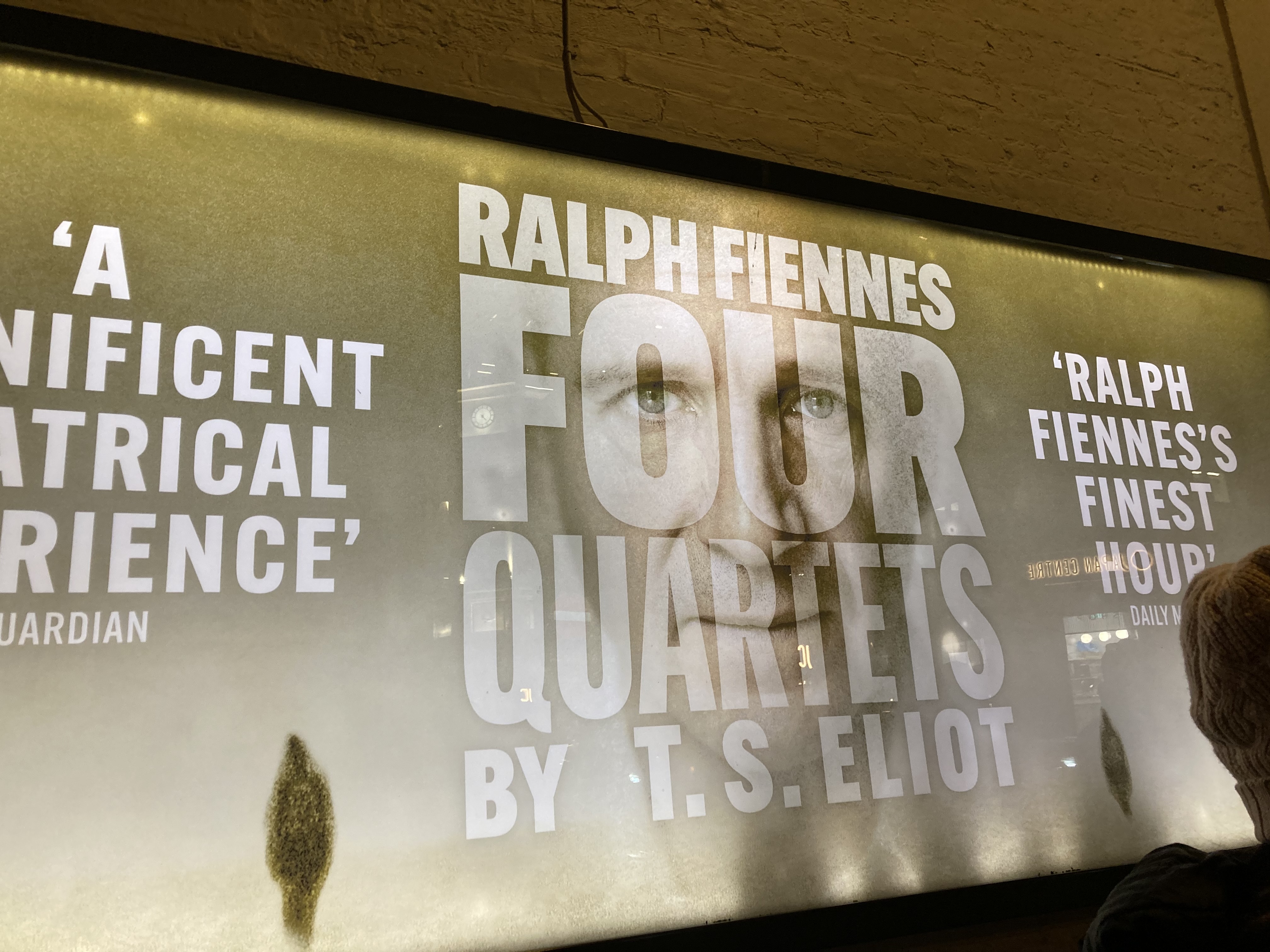
“Time present and time past / Are both perhaps present in time future, / And time future contained in time past.” The older I get, the more profoundly those words resonate. They begin “Burnt Norton”, the opening poem of T. S Eliot’s Four Quartets sequence, first published together in 1943. When the initial lockdown began last year, the actor Ralph Fiennes had the idea of committing the poems to memory. Then he decided to present them on stage in a production that he would direct. A risky proposition, staging poetry. But the miraculous property of Fiennes’s monologue, which I saw at the Harold Pinter Theatre in London at the end of November, was that by acting the lines, and by using his body as well as his voice, he brought out meanings that might have escaped even the most assiduous silent reader. Hildegard Bechtler’s set, Christopher Shutt’s sound design and Tim Lutkin’s lighting helped Fiennes to guide us, over the course of 75 unforgettable minutes, through a great work in all its dimensions.

NEW ALBUMS

1 The Weather Station: Ignorance (Fat Possum)

2 Masabumi Kikuchi: Hanamichi (Red Hook)

3 Vijay Iyer / Linda May Han Oh / Tyshawn Sorey: Uneasy (ECM)

4 Anthony Joseph: The Rich Are Defeated Only When Running for Their Lives (Heavenly Sweetness)

5 Amir El Saffar / Rivers of Sound: The Other Shore (Out Note)

6 Peter Hammill: In Translation (Fie!)

7 Alexander Hawkins: Togetherness Music (Intakt)

8 James McMurtry: The Horses and the Hounds (New West)

9 Jason Moran: The Sound Will Tell You (Bandcamp)

10 Miguel Zenón & Luis Perdomo: El Arte del Bolero (Miel Music)

11 Sault: Nine (Forever Living Originals)

12 William Parker: Mayan Space Station (AUM Fidelity)

13 Johnathan Blake: Homeward Bound (Blue Note)

14 Jen Shyu & Jade Tongue: Zero Grasses: Ritual for the Losses (Pi)

15 Xhosa Cole: K(n)ow Them, K(n)ow Us (Stoney Lane)

16 Tom Rainey Obbligato: Untucked in Hannover (Intakt)

17 John Zorn: Parables (Tzadik)

18 Tomos Williams: Cwmwl Tystion (Ty Cerdd)

19 Floating Points / Pharoah Sanders: Promises (Luaka Bop)

20 Tom Challenger: Imasche (Bandcamp)

21 Hiss Golden Messenger: Quietly Blowing It (Merge)

22 Julian Siegel Jazz Orchestra: Tales from the Jacquard (Whirlwind)

23 Tyshawn Sorey / Alarm Will Sound: For George Lewis / Autoschediasms (Cantaloupe)

24 Lana Del Rey: Chemtrails Over the Country Club (Universal)

25 The Memory Band: Colours (Hungry Hill)

ARCHIVE / REISSUE

1 Julius Hemphill: The Boyé Multi-National Crusade for Harmony (New World)

2 John Coltrane: A Love Supreme Live in Seattle (Impulse)

3 The Band: Stage Fright / Live at the Albert Hall (Capitol)

4 Various: This Love Was Real: L. A. Vocal Groups 1959-1964 (Ace)

5 Splinters: Inclusivity (Jazz in Britain)

6 Alice Coltrane: Kirtan: Turiya Sings (Impulse)

7 Group Sounds Four & Five: Black and White Raga (Jazz in Britain)

8 Mose Allison: The Complete Atlantic & Elektra Albums 1962-1983 (Strawberry)

9 Bob Dylan: Bootleg Series Vol 16: Springtime in New York (Columbia)

10 Barney Wilen: La Note Bleue (Elemental)

11 Van Der Graaf Generator: The Charisma Years Box (Virgin)

12 Mike Taylor: Trio, Quartet & Composer Revisited (ezz-thetics)

13 Various: Separate Paths Together: An Anthology of British Male Singer-Songwriters 1965-75 (Grapefruit)

14 Hasaan Ibn Ali: Metaphysics (Omnivore)

15 Various: People Get Ready: The Curtis Mayfield Songbook (Kent)

16 Elton Dean Quartet: They All Be on This Old Road (Ogun)

17 Third Ear Band: Alchemy: The Albums 1969-72 (Esoteric)

18 Various: Lowrider Soul Vol 2 (Kent)

19 Graham Collier: British Connection (My Only Desire)

20 Stan Getz Quartet / Astrud Gilberto: Live at the Berlin Jazz Festival 1966 (The Lost Recordings)

LIVE

1 Patti Smith Group (Royal Albert Hall, October)

2 Vijay Iyer / Linda May Han Oh / Tyshawn Sorey (Queen Elizabeth Hall, November)

3 Nu Civilisation Orchestra’s What’s Going On (Queen Elizabeth Hall, November)

4 Xhosa Cole Trio (Cockpit Theatre, October)

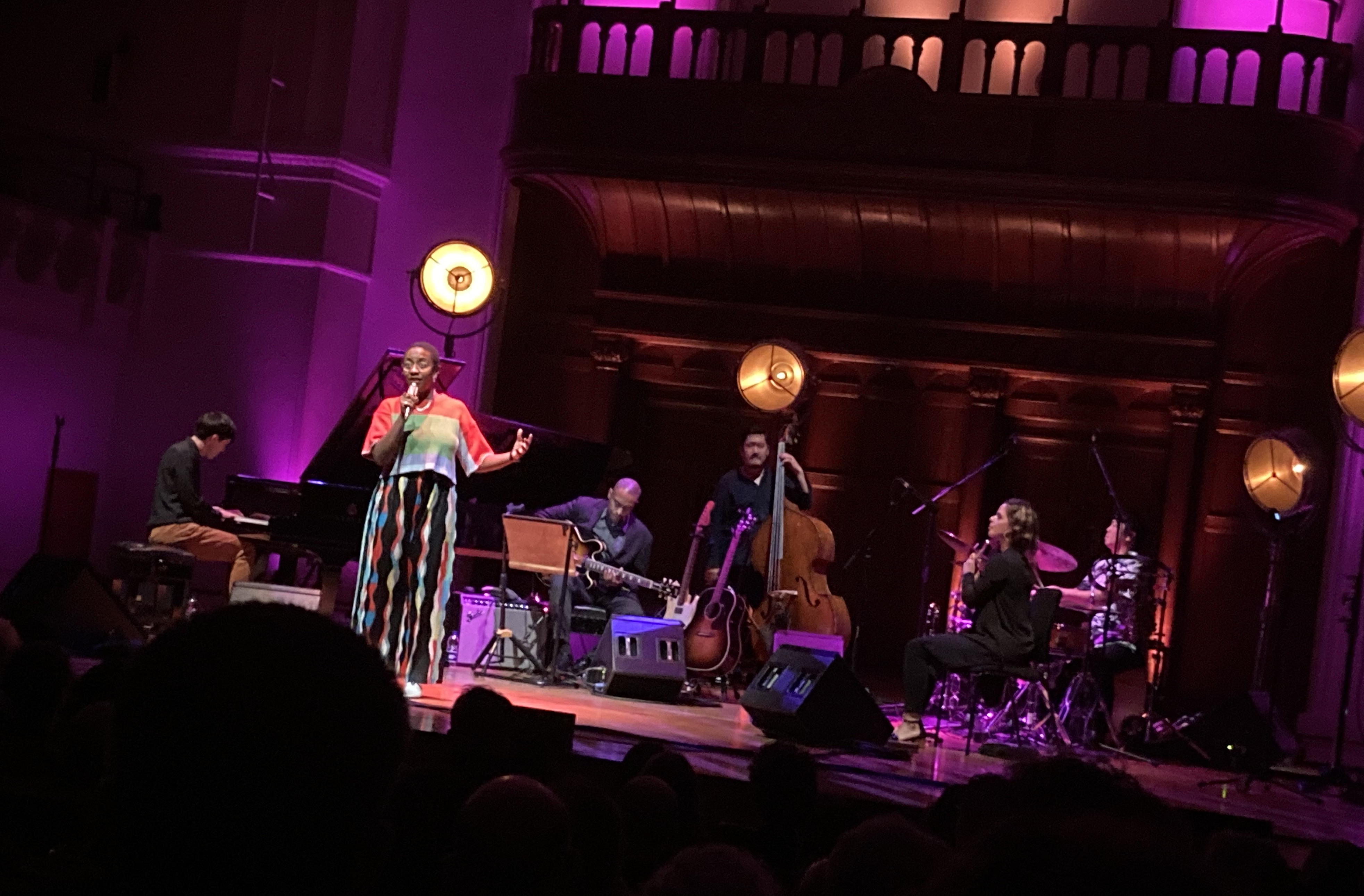
5 Cécile McLorin Salvant (Cadogan Hall, November)

STREAM

Bob Dylan’s Shadow Kingdom (Veeps.com)

FILMS

1 The Summer of Soul (dir. Ahmir Thompson)

2 David Byrne’s American Utopia (dir. Spike Lee)

3 The Velvet Underground (dir. Todd Haynes)

BOOKS

1 Patrick Modiano: Invisible Ink (Yale University Press)

2 Rickie Lee Jones: Last Chance Texaco (Grove Press)

3 Lenny Kaye: Lightning Striking (White Rabbit)

4 Horst Krüger: The Broken House (Bodley Head)

5 Richard Thompson: Beeswing (Faber & Faber)

6 Michael Holding: Why We Kneel, How We Rise (Simon & Schuster)

7 Andrew Humphreys: Raving upon Thames (Paradise Road)

8 Harvey & Kenneth Kubernik: Voodoo Child (Sterling)

9 Ulrich Alexander Boschwitz: The Passenger (Pushkin Press)

10 Lili Anolik: Hollywood’s Eve (Scribner)

Lenny the K strikes again

The last time Lenny Kaye put together a compilation album, it changed the world. Well, a significant part of it, anyway. The meticulously assembled double album released in 1972 under the title Nuggets: Original Artyfacts from the First Psychedelic Era 1965-68 became a touchstone for the generation that created the punk movement, first in the US and then in the UK. Listening to the Standells, the Seeds, Count Five and the 13th Floor Elevators, kids who’d been drowning in Tales from Topographic Oceans discovered that pop songs worked best when they were two minutes long and built on a minimum of chords, with lyrics that stuck to the teenage basics.

It’s funny to think that although it made its appearance only four years after the release of its most recent track, Nuggets was — intentionally or otherwise — a historical document. But it has never sounded dated, then or now.

Lightning Striking is something different. A two-CD set, it’s the support act to Lenny’s new book of the same name, subtitled Ten Transformative Moments in Rock and Roll, in which he reminds us of the talent that was lost to music writing when he swapped his Remington for a Stratocaster and threw in his lot with a young poet named Patti Smith in 1971.

I met him the year before that, when he was working at Village Oldies on Bleecker Street — “ten dollars a shift and all the records I could filch,” he writes in the book — and contributing to publications including Rolling Stone and Cavalier, a Playboy rival. His album reviews for Jann Wenner’s rock-culture magazine were outstanding, written with an evident love for the music. We bonded over doo-wop and the Velvet Underground, and In New York in 1971 he showed me where the individual Velvets had taken their places on stage during their nine-week season the previous summer upstairs at Max’s Kansas City, where he’d been to see them many times.

Back in 2004 Lenny wrote a fine book titled You Call It Madness, on an unexpected subject: a study of the crooners of the 1930s, including Rudy Vallee, Russ Columbo and Bing Crosby. Now, a few weeks after his unforgettable appearance with Patti at the Albert Hall, comes his history of rock and roll in a series of very enjoyable vignettes, from Memphis in 1954 to Seattle in 1991 via New Orleans, Philadelphia, Liverpool, San Francisco, Detroit, New York City, London, and Los Angeles and Norway, who share the penultimate chapter (on Metal, of course).

It occurs to me that Lenny and I — born three months apart — belong to the last generation with first-hand engagement in the whole story, from hearing Bill Haley, Elvis Presley and Frankie Lymon before we were into double figures and the Beatles, the Stones and Motown when we were in our early teens. I’m not sure of the deeper significance of this, but in Lenny’s case it certainly informs his writing with a precious first-hand enthusiasm. And I’m glad he’s chosen to frame the story of the music through that lens.

In the chapter called “Liverpool 1962”, for instance, he illustrates the effect the Beatles had on him when the British Invasion was in full spate: “It made me want to find out, or at least feel what it felt like. In the summer of 1964, after patiently absorbing barre chords from a friend who could play some of the diminished progessions that Paul brought to ‘Till There Was You’, I bought a cherry red Gibson Les Paul Special and a Magnatone 280 amp (true vibrato, the same kind Buddy Holly played) from a kid down the street who had given up the calling. On November 7 the Vandals (Bringing Down the House With Your Kind of Music!) debuted at the Chi Psi fraternity on the Rutgers University campus.”

I love how he freewheels through the early history. “How to sing like a girl. In the voice of a girl. That is Philadelphia’s tradition.” That’s true from Frankie Avalon to the Stylistics. By 1966 he’s getting closer to the music. A lyricist uncle bankrolls and co-writes Lenny’s first recording, a 45 called “Crazy Like a Fox”, a folk-rock-protest disc released under the name Link Cromwell. A year later he’s speeding across America with his friend Larry in a ’56 Ford, heading for San Francisco and the Summer of Love, seeing Big Brother and the Holding Company at the Avalon and Quicksilver Messenger Service at the Fillmore. In a chapter called “Detroit 1969” he’s great on the story of the MC5, who foreshadowed so much, and the Stooges, with roles for the likes of John Sinclair, Danny Fields, Jac Holzman and Jon Landau.

Back in New York in 1971, he’s invited to accompany the unknown Patti Smith at St Mark’s Church on 10th Street. It was Sam Shepard’s idea. One rehearsal, in her apartment: “She chanted poems and I followed along, watching how she breathed. Simple chords, all I knew.” The story of how the Patti Smith Group emerged from the scuzzy Downtown scene of the early ’70s, intertwined with those of the New York Dolls, CBGBs, Television and the Ramones, is the centrepiece of the book and worth the price of admission alone. And it was Lenny who, before a show in Detroit in 1976, introduced Patti to the MC5’s Fred “Sonic” Smith, her forever soulmate.

Later on he takes us through Grunge and Death Metal, although the tracks representing those chapters on the album will probably be the least played in my house. But there are some gems: I didn’t know the hair-raisingly direct “I’m Gonna Murder My Baby” by the ’50s Chicago blues guitarist Pat Hare or “Marcella” by the Castelles, a gorgeous slice of Philly doo-wop. And there’s the trick that compilations sometimes pull off, of making you listen to something extremely familiar with fresh ears. In this case, for me, it’s Elvis’s “That’s All Right” and Cliff’s “Move It”, both of which suddenly sounded once again like messages from another planet.

If the album is fun, the book that inspired it is a wonderful extended blast of insider knowledge with outsider perspective, expressed in the language of rock and roll. Lenny’s mission with Nuggets almost 50 years ago was, he says, “to make sure my favourite records kept on living.” Apart from anything else, Lightning Striking shows how well he did his job.

* Lenny Kaye’s Lightning Striking is published in the US by Ecco and in the UK by White Rabbit. The album, compiled by Lenny Kaye and Alec Palao, is on Ace Records.

Old and new gospel

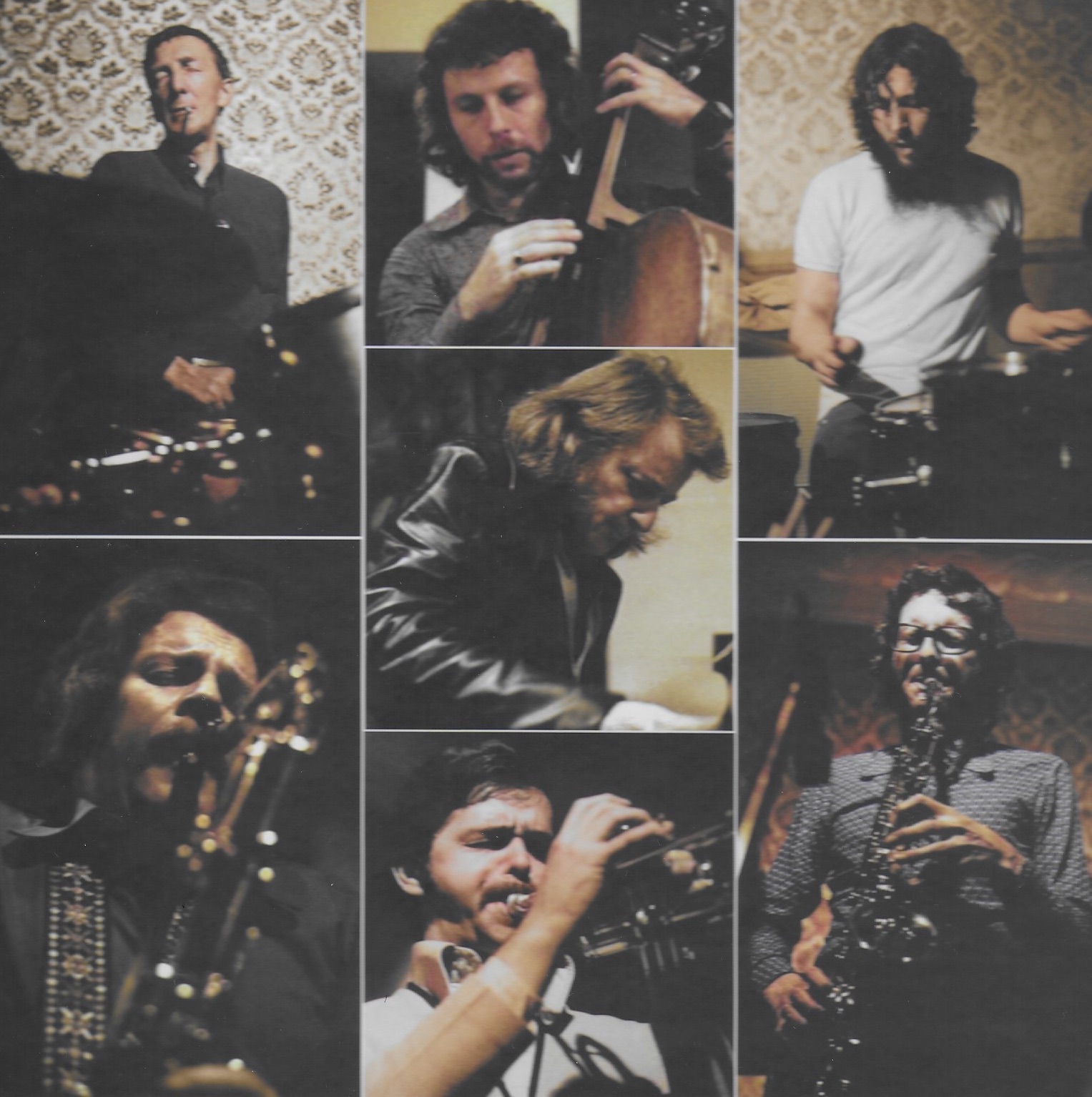
Among the many projects initiated by the inspirational drummer and educator John Stevens between the creation of the Spontaneous Music Ensemble in 1966 and his early death in 1994, the most unexpected was a septet called Splinters, convened in 1972 to bring together musicians spanning the bebop and avant-garde sectors. From the older generation came the tenorist Tubby Hayes, the drummer Phil Seaman and the pianist Stan Tracey. Representing the newer thing were Stevens himself and the altoist Trevor Watts, his SME co-founder. Straddling the eras were the trumpeter Kenny Wheeler and the bassist Jeff Clyne, both of whom had played with the SME but were equally comfortable with the music of Hayes, Seaman and Tracey.

I remember the excitement of their debut at the 100 Club in May that year, and the realisation that it was working much better than might have been imagined, thanks to the commitment of all the musicians involved. About 80 minutes of music from that night was released a dozen years ago by Reel Records on a CD titled Split the Difference, long unavailable. Now the whole 100 minutes is to be found on a handsome three-CD package issued by the Jazz in Britain label, along with just over an hour from a gig by the same line-up at the Grass Roots club in Stockwell, South London four months later, both performances taped by Watts on a cassette machine with a couple of decent microphones.

Hayes, the giant of British modern jazz, stood at the pinnacle of a virtuosic tradition, and had only recently recovered from serious illness, but he was able to throw himself into the collaboration with great generosity, finding a place for himself in a music that operated according to very different parameters. For Tracey, who came from the language of Monk rather than that of Bud Powell, assimilation was also possible. And Stevens’ boundless admiration for the greatness of Seaman helped to ensure that the two of them found a common vernacular founded in a kind of swing falling somewhere between Max Roach and Ed Blackwell.

For Watts and Wheeler, this kind of time-based free improvisation, rooted in the discoveries of Ornette Coleman, was home territory, and both play with great distinction, but the success of the project was really ensured by the presence of Clyne, a bassist with all the necessary instincts and virtues honed to the highest degree. He had made his reputation alongside Hayes and Ronnie Scott in the Jazz Couriers, but listening to him with this band, you can easily believe that he could have depped for Charlie Haden with Coleman at the Five Spot in 1959 or for Reggie Workman or Jimmy Garrison with John Coltrane at the Village Vanguard a couple of years later without any appreciable loss of quality. He was a remarkable musician and his death in 2009, aged 72, left a big hole.

Although full of vigour and substance, the music Splinters played at the 100 Club gig sounds almost tentative by comparison with the Grass Roots set. By the time of the later gig they seem to have relaxed into the format, producing the kind of uninhibited, exuberant shout-up which characterised that era, and which had its roots in the influence of Chris McGregor’s Blue Notes as well as of Coleman’s Free Jazz and Coltrane’s Ascension. Hayes plays a superlative solo, Clyne is phenomenal, and the wildly exciting stuff Seaman and Stevens get up to towards the end could give drum battles a good name.

Historically speaking, this is an important release. Seaman died four weeks after the Grass Roots gig, aged 46. Hayes died the following June, aged 38. It’s interesting that these two should have chosen to plunge into an environment offering such a different sort of test. In a lengthy essay contained within the beautifully produced 12″x12″ hardbacked sleeve, Simon Spillett describes the background to the project, sketching in the histories of the Jazz Centre Society, which organised the Monday-night series at the 100 Club, and the Musicians’ Action Group, which ran Grass Roots, and the crosscurrents of the London jazz scene at the time, using material from archive interviews and fresh testimony from Watts, now the only survivor of a fascinating experiment.

* Splinters’ Inclusivity is on the Jazz in Britain label, available as a digital download as well as the three-CD set (www.jazzinbritain.co.uk). The photographs are from the album’s cover, and were taken by Jak Kilby. Clockwise from top left: Phil Seaman, Jeff Clyne, John Stevens, Trevor Watts, Kenny Wheeler and Tubby Hayes. Centre: Stan Tracey.

Loud and quiet moments

The car, I find, is a good place to listen to music. Mine is old enough to have a CD player, and I hear lots of new stuff in what is a very satisfactory sound box. But a funny thing happened when I put on the new King Crimson album, a two-CD “official bootleg” of their return to touring in the US between July and September this year. As I drove along, listening to the music, there were noises that made me think something had happened to the car: maybe a piston had blown, or the rear suspension had collapsed.

Wrong. It was the clattering set up by the three drummers who currently make up almost half of the current King Crimson, and whose synchronous but sometimes fairly abstruse playing occasionally gives the impression of a complex machine making its own decisions.

Robert Fripp has form with this sort of thing. Mike Giles, his band’s original drummer, could make 4/4 sound like a study of the calculus of infinitesimals. Later on, the short-lived combination of Jamie Muir and Bill Bruford created a provocative blend of the obsessively precise and the utterly random. Nowadays, when King Crimson take the stage, it is with the three drummers — Pat Mastelotto, Jeremy Stacey and Gavin Harrison — arrayed in front of the other four musicians.

The saxophonist/flautist Mel Collins, the guitarist Jakko Jakszyk, the bassist Tony Levin, and Fripp himself (seated, as always) take up their positions behind the battery of batterie. I don’t know why Fripp chose this configuration, but the music — recorded at two venues, the Anthem in Washington, DC and the Egg in Albany, NY — begins, after a short spoken introduction by the leader, with a thunderous percussion-only barrage that made me think of a 21st century Sandy Nelson, rendered in Warhol-style triplicate.

The rest of the two hours is devoted to King Crimson old and new, from “21st Century Schizoid Man”, “Epitaph” and “Islands” through “Larks’ Tongues in Aspic”, “Starless” “Red” and “Discipline” to a few examples of their more recent work, with which I am considerably less familiar. The respect shown to the greatest hits is absolute; the material is performed with technical excellence and fidelity to the originals but also a spirit that makes the clambering, juddering lines of something like “Level Five” — from 2003’s The Power to Believe — into more than mere exercises, while the rendering of “Starless” has a beguilingly eccentric grandeur that doesn’t seem to take itself too seriously. Jakszyk’s vocals recall those of Greg Lake and John Wetton, the washes of mellotron strings and flutes add an authentic period flavour, and Collins pops up occasionally to remind us what an exceptional and unjustly underappreciated player he has always been.

Arriving in the same package was something very different: a box of eight CDs called Music for Quiet Moments, a compilation of the solo pieces Fripp recorded between 2004 and 2009 in many different venues around Europe and America and released individually as downloads between May 2020 and April 2021. This music proceeds from the experiments that began in the autumn on 1972, when Brian Eno invited me to his flat in Maida Vale to hear something he’d been up to, using two Revox tape machines to record and loop Fripp’s guitar, creating a slow-moving, unusually textured, quietly mesmerising sound that could function as foreground or background. Released the following year under the title (No Pussyfooting) on Island’s low-price HELP label, it was the beginning not just of Frippertronics and Fripp’s more recent Soundscapes but of Eno’s work with ambient and generative music.

These new Soundscapes range in length from a handful of minutes to three-quarters of an hour. Some of the pieces share titles that include “Elegy”, “Pastorale”, “Seascape” and “Evensong”, indicating the moods Fripp is painting with his guitar and its associated effects, often producing sounds resembling slow-moving clusters of violas and cellos. Miraculously, at least to my ears, the risk of passivity is avoided. Some tracks, like “Strong Quiet I and II” from Brussels in 2009, feature an improvised solo guitar line over the drifting clouds of sound: recognisably Fripp, completely lacking in ego-play, always worth following where they lead.

Is this background and/or foreground and/or something in between? Music for listening, or to accompany other activities, or to create a sense of nothingness? From Atlanta in 2006 come pieces titled “Affirmation” and “Aspiration”, a reminder of the names John Coltrane gave to the individual movements of A Love Supreme. And in interviews (such as the one in the December issue of Uncut magazine) Fripp is unafraid to use terms such as “devotional”, “sacred” and “meditative” to describe what’s going on. He isn’t more specific. But the music there to be used, in whatever way you feel appropriate.

* King Crimson’s Music Is Our Friend / Live in Washington and Albany 2021 and Robert Fripp’s Music for Quiet Moments are released on the Panegyric label (www.dgmlive.com). The photograph of Fripp was taken by Tony Levin in Chicago this year.

The blues came down from Richmond

Around the corner from where I live is an apartment that was once a crash-pad for Paul Simon, Jackson C. Frank and John Martyn. If I carry on to the train station, I pass the building where the Rolling Stones played the early gigs that attracted the attention of Andrew Loog Oldham and the four Beatles. On the way I see another building, now a Nando’s, where Eric Clapton and his fellow art students would while away an afternoon over a single cup of coffee. A couple of doors above it is the site of a clothes shop that was once vital to the Mod culture. I walk on past an independent book shop which, 50-odd years ago, was owned by Pete Townshend (who still lives a few hundred yards away, up the hill, past the house where Syd Barrett once had a flat). Beyond the station lies a rugby ground, the site of the festivals that, starting in 1961, created the enduring pattern for such open-air, multi-stage events.

If, instead of heading for the station, I were to walk in the opposite direction, I’d come to the footbridge to an island where, as the ’60s picked up speed, trad jazz gave way to R&B bands in a semi-derelict hotel whose ballroom featured the Cyril Davies All Stars, Long John Baldry’s Hoochie Coochie Men with Rod Stewart, the Yardbirds, John Mayall’s Bluesbreakers, the Downliners Sect, the Art Woods, the Graham Bond Organisation, and so on.

The place that featured the Stones was the Station Hotel in Richmond, where the back room hosted the first incarnation of the Crawdaddy Club. The coffee bar was called L’Auberge. The men’s boutique was John Simon’s Ivy Shop. Townshend’s book shop was called Magic Bus. The rugby ground is the home of Richmond RFC and London Scottish; their clubhouse became the second Crawdaddy, where the Yardbirds — mostly local boys — took flight. The Eel Pie Island Hotel is the legendary venue in the middle of the Thames at Twickenham, which opened with local trad jazz bands in 1956, closed in 1970 with Quintessence and burned down while being demolished the following year. Those are some of the locations, and there are many more, including the Hanging Lamp folk club, held in a church crypt, where the local teenager who would become Elvis Costello went to listen to guitarists like Davey Johnstone and John James.

The story of how Richmond and Twickenham — and particularly Eel Pie Island — became a seed-bed for the British R&B bands that, in conjunction with the Mersey Beat, reset the course of rock music is such a great one that I’ve often thought it was worth a proper book, particularly after I came to live here 20 years ago and realised that the buildings and the pavements had tales to tell. I never got around to it. But now someone else has, and he’s done it so well that I’m glad I didn’t.

Andrew Humphreys spent many years working on travel guides, first for Lonely Planet and then for Time Out. He lives in Richmond and runs a publishing company of his own. When he had the idea for the book, he offered it to three well-qualified music journalists, none of whom was interested. Eventually he decided to do it himself, and I’m glad he did because it could hardly have been done with a finer combination of basic enthusiasm, thorough research and authorial skills. Apart from getting the facts right and in the correct order, he’s talked to many of the people who made up the audiences and customers at these places, creating a vivid portrait of an extremely exciting and important time.

Alongside the musicians and their listeners, several key figures are identified. The first is a local businessman called Michael Snapper, who bought Eel Pie Island Hotel — built in 1830, mentioned by Dickens in Nicholas Nickleby, in and out of fashion over the decades — in 1951, when it was all but abandoned. The second is a young trumpeter named Brian Rutland, who persuaded Snapper to let his Grove Jazz Band use the dilapidated ballroom. The third is a rum cove called Arthur Chisnall, who managed one of Snapper’s shops in Kingston, saw his vocation as scooping up lost youth and putting them on the straight and narrow, took over the running of the venue and, responding to police demands that it be properly organised, created something called the Eelpiland Club, which soon became a focal point for beatniks, students from the area’s several art colleges, and other adventurous types.

The fourth is Harold Pendleton, a former accountant who loved jazz, managed the Chris Barber Band, ran the National Jazz Federation, founded the Marquee Club in an Oxford Street basement in 1958, organised the NJF’s first National Jazz Festival at the Richmond Athletic Association’s grounds in 1961 and saw it grow into an event of national significance, with the trad and modern jazzers gradually pushed out by the young R&B bands, first represented in 1963 by Georgie Fame, Graham Bond, Cyril Davies and, at the bottom of the bill, the young Stones.

The fifth is Giorgio Gomelsky, a refugee from Soviet Georgia who arrived in London in 1955, aged 21, and soon became known on the scene as a hustler and fixer, a colourful character never short of an idea. Through knowing Alexis Korner and Cyril Davies he met Brian Jones, whose new band he heard at a pub in Sutton in February 1963. It was Gomelsky who created the Crawdaddy for them at the Station Hotel later that month, first with an audience that could be numbered on one hand but soon with queues down the street. Gomelsky printed flyers, ran ads in the Melody Maker, buttonholed journalists on the music papers, and in general hyped the Rolling Stones as best he knew how. He did a great job, but within weeks he’d lost them to a younger hustler, the 19-year-old Andrew Loog Oldham, who came to see them in Richmond and persuaded them he could take them to the next stage. As, of course, he did, leaving Gomelsky to manage the Yardbirds and cook up countless further schemes — some good, some bad, none of them quite as good as the Stones — before his death in New York five years ago.

All this and much more is in Humphreys’ book, which is well illustrated with period photos, flyers, posters and adverts, and useful maps on the end-papers. It’s also hugely enjoyable, written with a delightful touch and an ear for the colourful anecdote. Here, for instance, is a trad-band musician describing the task of getting their instruments across to Eel Pie Island on the original chain ferry, before the footbridge was installed in 1957: “A decidedly dodgy affair, like the D-Day landings but without the gunfire.”

I hope I haven’t made Raving upon Thames sound like a book of local history. In fact it’s about us — all of us, even if we weren’t there.

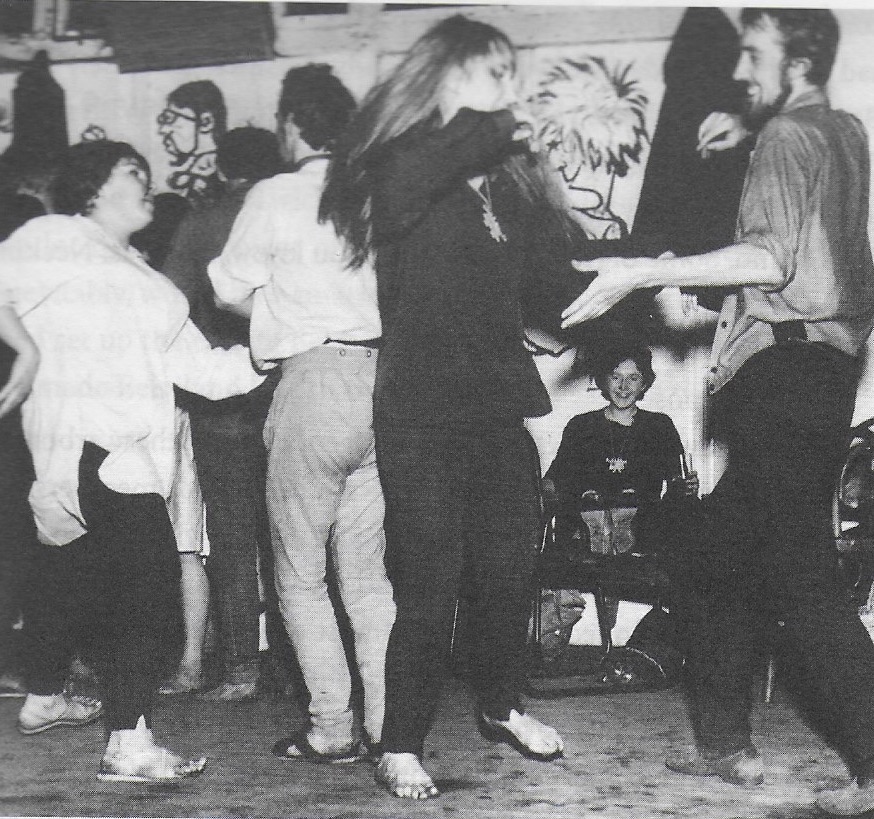
* Andrew Humphreys’ Raving upon Thames: An Untold Story of Sixties London is published by Paradise Road (www.paradiseroad.co.uk). The photograph was taken at Eel Pie Island in 1960 for a feature in Weekend magazine headlined “Down Among the Dead Beats”.

The man who remade the Beach Boys

One day in 1971 a man called Jack Rieley called me up at the Melody Maker. He’d read a piece in which I’d attempted to persuade readers to listen again to the Beach Boys, who had fallen into disfavour as the evolution of rock gathered momentum in the late ’60s. Rieley told me that he’d recently taken over as the group’s manager. He was, he said, a former journalist and disc jockey. He liked what I’d written and started to tell me about his plans, which majored on the idea of restoring Brian Wilson to his role as the centre of the group’s creativity. Amen to that, I said. And when he added that his initial step was to get “Surf’s Up” — the legendary lost track from the lost album, Smile — into shape for release, I was completely on his side.

We met in London and talked several times, and before long he proved to be as good as his word. The song “Surf’s Up” became the title track of the first Rieley-era Beach Boys album, released that August, and was, in its completed form, the masterpiece one had always dreamed it would be. The album also contained new songs that signalled a change of emphasis, in which the band pivoted away from their old cars-and-surfboards image towards an engagement with a new generation.

Mike Love’s “Student Demonstration Time”, a riff on Leiber and Stoller’s “Riot on Cell Block No 9”, was the most blatant and clumsiest of those signs, but other songs demonstrated a more profound change of consciousness — particularly Carl Wilson’s introspective “Feel Flows” and “Long Promised Road”, to which Rieley contributed lyrics, Al Jardine’s “Lookin’ at Tomorrow (A Welfare Song)” and “A Day in the Life of a Tree”, a collaboration between Brian and Rieley on which the latter actually sang the lead in an artless, heartfelt tone which proved perfectly appropriate to the material. Brian’s “‘Til I Die” was the album’s second masterpiece, a meditation on mortality of a sort that might not have thrilled fans looking for a new “Fun Fun Fun”.

Although most of these thoughts were in the heads of the Beach Boys themselves, there’s no doubt that Rieley nerved them up to accept the risk of abandoning the established following that would have been happy to see them turn into an oldies act. Released in August 1971, the album Surf’s Up brought them a different kind of attention, for which he had paved the way four months earlier when they successfully appeared as guests on a bill with the Grateful Dead at Fillmore East in front of an audience that had probably bracketed them with Richard Nixon’s presidency.

Rieley’s next trick was to release the follow-up album, titled Carl and the Passions: So Tough, in a double-album set with Pet Sounds. This invited the world to listen to their new music — including two intense Dennis Wilson ballads, “Cuddle Up” and “Make It Good”, and a couple of songs (“You Need a Mess of Help to Stand Alone” and “Marcella”) to which Rieley again contributed lyrics — while appreciating anew the richness of their history. They also added two new members, bassist-singer Blondie Chaplin and drummer Ricky Fataar, from the Flame, a South African band who had been taken under Carl Wilson’s wing.

Although neither of these albums succeeded in giving the Beach Boys a new hit single, their credibility had been largely restored. They were no longer the group in matching shirts and smiles. And, best of all, Brian seemed to be functioning again.

Their manager’s next gambit was his most audacious, and the one that would contribute to his downfall. Wanting to take them out of their comfort zone and put them in an unfamiliar environment where they could make music without distractions, he conceived a plan to move the whole band and their families to Holland, along with state of the art recording equipment — a complete quadraphonic studio, in effect — and a crew to assemble and operate it. In a village called Baambrugge, on the Angstel river between Amsterdam and Utrecht, they made the album titled Holland, full of superb music: Brian’s “Sail on, Sailor”, Dennis’s “Steamboat” and Carl’s “The Trader”, all with Rieley’s contributions to the lyrics, Dennis’s classic “Only with You”, beautifully sung by Carl, and Jardine’s “California Saga”, which contained verses from the Robinson Jeffers poem “The Beaks of Eagles”.

It also came with a bonus EP containing a “fairy tale” by Brian called “Mount Vernon and Fairway”, a piece for children which contains a few moments of Wilson magic and passages of Rieley’s narration. Before its release Jack got Brian to call me up at home and play it to me over the phone, which was a fairly surreal experience.

But for all its quality, Holland also failed to provide the group with hits, and the project had been so expensive that the man responsible was relieved of his duties. Eventually he was exposed as a bit of a charlatan — he was not, for example, a winner of the Pulitzer Prize, as he had apparently claimed — and some members of the group had always been suspicious of his methods and motives.

I found him to be pleasant, highly intelligent and quite intense, with an interest in the world beyond rock music. He stayed on in Holland, and in 1975 he gave me an album called Western Justice, a song cycle that he’d just written and recorded in Amsterdam in partnership with a Dutch singer-writer named Machiel Botman. It was an elaborate production, with many Beach Boyish touches, musically not outstanding but interesting for its subject matter: the consequences for humanity of the First World’s heedless appetite for its natural resources, framed in a story set at some undetermined date in the future. An accompanying text, in the form of the fictional diary of an unnamed narrator, contained these introductory words:

Hundreds gathered in the park this morning, and the atmosphere was sort of carnival. Fiddle players serenaded, people danced, craftsmen displayed their work and others just sat on the scorched dry remains of the grass, talking and singing and playing chess and doing nothing. The crowds grow daily as more factories and offices are forced to close. The afternoon’s Emergency Line was long and tiresome. Three hours of waiting yielded a box of dried milk, a large sack full of cereal and dozen transistor radio batteries (marked ‘Gift of the People of Surinam’). The last newspaper has stopped publishing, leaving radio as the sole remaining source of official information. Today’s reports were that new ‘Citizens’ Courts’ were springing up from Geneva to Chicago, putting businessmen and government functionaries on trial for hoarding and black market activities. The Emergency Pact foreign ministers met again in Brussels, but representatives of Canada, the Soviet Union and Spain didn’t even bother to turn up. I adjusted easily when the electricity was turned off, but the current lack of safe drinking water is beginning to annoy me…

And so the narrative continues, depicting the West in a state of chaos and panic, culminating in a conference of the African, Latin American and Asian nations at which the United States begs for help. This was written in 1975, remember.

After that I lost touch with Rieley. I know he stayed in Europe, working in music for a while, then starting some kind of telecommunications business, before dying in Berlin in 2015, aged 72. The ending of his three years with the Beach Boys had pretty well trashed his reputation. But he left his mark on some important recordings, some of which can be heard again on a set titled Feel Flows, a reissue of Sunflower and Surf’s Up, plus associated outtakes, different mixes, vocal-only tracks and so on, released earlier this year.

Whatever his ambitions cost the group in financial terms, by bringing them into the modern world he significantly improved their standing during his time as their manager. Maybe he did make stuff up, but if what he told me in 1971 was accurate, you could also say that we have him to thank for inspiring the reconstruction and release of “Surf’s Up” — still, in my view, as elevated as just about any piece of popular music made in my lifetime.

* Feel Flows is available in various formats, from a 2-CD set to a multi-album vinyl box. The photograph of Jack Rieley was taken in Holland in 1974 by Harm Botman.

London Jazz Festival 5: Yazz Ahmed

Given the times we’re in, it was pretty wonderful to witness the scale of this year’s EFG London Jazz Festival, which shows no sign of losing its ambition under its new artistic director, Pelin Opcin. Typical of its scope was last night’s meeting of the trumpeter and composer Yazz Ahmed with the BBC Concert Orchestra at the Queen Elizabeth Hall, under the title Fusing Forces.

In recent years Ahmed has been pursuing a strand of thought which blends her jazz training at the Guildhall with an exploration of the music of Bahrain, where she lived until she was nine. Two striking albums, La Saboteuse and Polyhymnia, gave evidence of her success, and last night’s project took the process a stage further. With the help of arrangers including Noel Langley and Tim Garland, her compositions were enhanced by the use of the orchestra’s resources, under the empathetic baton of Bramwell Tovey.

Ahmed’s exceptionally gifted quintet — completed by Ralph Wyld on vibes, Dave Manington on bass guitar, Martin France on drums and the percussionist Corrina Silvester — was positioned across the front of the stage, separated from the orchestra by a perspex barrier, presumably for reasons of acoustic separation (the concert was being recorded for radio). But, thanks to Tovey and the sound engineers, there was no separation of thought or action. The calibre of the writing ensured that both elements were often perfectly integrated into a single organism, with no sense of excess baggage or impediment on the occasions when the orchestra simply added its weight to the smaller group.

The most striking of the compositions were those that brought Middle Eastern patterns and modes into the music, such as “A Paradise in the Hold” (inspired by the songs of Bahraini pearl divers) and “Al Emadi”, with their distant echoes of the Miles Davis/Gil Evans collaboration on “Solea” from Sketches of Spain. The blend sounded completely organic, the rhythmic drive providing a fine setting for inventive solos by Wyld, who was heavily featured, and Ahmed herself, who made use of reverb and other electronic effects to emphasise the legato quality of her playing but sounded even more impressive when she allowed the natural qualities of the flugelhorn to be the vehicle for her tone and ideas.

Other interesting Ahmed compositions included “A Shoal of Souls”, dedicated to refugees who lost their lives trying to cross the Mediterranean in small craft, in which Garland’s chart made dramatic use of tubular bells and timpani against the strings, and “2857”, inspired by Rosa Parks, its title using the number of the bus on which she refused to give up her seat to a white customer in Montgomery, Alabama in 1955, the two-part piece moving from sombre reflection to urgent hustle.

The programme also included short pieces by Jessie Montgomery (a fantasy on “The Star-Spangled Banner”) and Judith Weir (gentle nightmusic). At Ahmed’s behest, the orchestra’s strings played Arvo Pärt’s “Silouans Song”, a compositions of great loveliness that might have resulted from Vaughan Williams visiting a Baltic monastery in winter. All in all, an absorbing evening which fully justified the audience’s prolonged ovation.

* Fusing Forces is broadcast on BBC Radio 3 tomorrow night (Tuesday 23 November) from 7.30-10pm.

London Jazz Festival 4: What’s Going On

When the photograph of Marvin Gaye appeared on a large screen above the stage late in the evening, just as the rhythm section of the Nu Civilisation Orchestra was cranking up one of the familiar vamps from What’s Going On, the eyes started to prickle and a round of applause arose from the audience in the Queen Elizabeth Hall. Fifty years after his masterpiece entered our lives, what would Gaye have made of this occasion, had he lived to see it?

He would certainly have noticed that the concerns he voiced throughout the cycle of nine songs are even more relevant today. The point was driven home when that same screen carried the words of Rosa Parks, Margaret Mead, Mahatma Gandhi, Martin Luther King, Frederick Douglass and others over contemporary images of protest.

Fifty years ago! Gaye was 32. I was 24. So young! It’s sad for someone of my age to see today’s 24-year-olds still having to confront worldwide poverty, systemic racism, pointless war and the threat posed by climate change, which were the themes of What’s Going On. Extinction Rebellion and Black Lives Matter are responses to some of those concerns, and more effective ones that we managed in our younger days, but the issues remain unresolved.

Maybe some of them will be sorted out by the generation represented on stage last night: a 27-piece orchestra of strings, brass, woodwind and rhythm under the baton of Peter Edwards, drawn from the ranks of the invaluable Tomorrow’s Warriors project run for the past three decades by Janine Irons and Gary Crosby. None of the young musicians was born when Gaye recorded the pieces they were playing last night in Edwards’ rearrangements, but all of them clearly understood and were committed to its meaning and significance.

The 28th member of the ensemble, the South London-born soul singer Noel McKoy, brought a depth of experience as well as great vocal expertise to the role of Gaye. Without attempting an imitation, he inhabited the songs and negotiated their contours beautifully. But he was one among equals with the other musicians. A special commendation must go to the tenor saxophonist Chelsea Carmichael, who added immense presence and character to the solo parts originally played by Wild Bill Moore. The funk was brought by the unflagging team of Sarah Tandy (keyboards), Sonia Konate (guitar), Jihad Darwish (bass guitar). Romarna Campbell (drums) and Noda Oreste (congas), who hit a quietly simmering groove on one transitional passage which — with Tandy on electric piano — reminded me that Bitches Brew was released just a couple of months before Gaye embarked on the first sessions for what would become What’s Going On.

Edwards shuffled the running order of the individual songs, starting out with “What’s Happening, Brother” and “Right On”, leaving the title song until the middle of the set, and ending with the spiritual lift of “Save the Children” and “God Is Love”. There were photographs of modern urban wastelands to accompany “Inner City Blues” and wildfires and melting ice sheets for “Mercy Mercy Me (The Ecology)”. The actor Colin Salmon, the 29th member, delivered a poem/rap that summarised the album’s themes with emotional precison and dignity.

That was the second half of the evening. The hors d’oeuvres, before the interval, had been a selection of pieces from Trouble Man, the soundtrack to a blaxploitation movie, released in 1972 as the successor to What’s Going On. The hipsters’ favourite Gaye album, Trouble Man is an instrumental suite with vocal interludes, cutting and pasting the work of LA session men — Earl Palmer, Victor Feldman and so on — with Gaye’s own multi-instrumental rhythm tracks. Brass and string arrangements commissioned from a variety of seasoned pros — Dale Oehler, Jerry Long, Bob Ragland, J. J. Johnson, Jack Hayes and Leo Shuken — created and sustained a powerful mood of noir soul. Once more Edwards shook the pieces up, using Salmon as a narrator/commentator and again featuring Carmichael in the role, this time, of Trevor Lawrence, Gaye’s preferred saxophone soloist of the time.

A rearrangement of one of the original work’s gentler passages for the string section (led by Olivia Moore), with improvised solos passed in a round-robin between individual violin and viola players, was for me the musical highlight of the entire triumphant evening. In the way it developed and transformed an idea from the original recording, it reminded me of something Gaye said in 1976 while discussing Trouble Man in a radio interview with Paul Gambaccini: “If somebody took that album and did a symphony on it, I think it would be quite interesting.” I’d say Edwards and the Nu Civilisation Orchestra have done the groundwork on that project. They’re halfway there, and should be encouraged to see it through.

* The Nu Civilisation Orchestra perform What’s Going On at Birmingham Town Hall tonight (Friday 19 November), at Liverpool’s Philharmonic Hall on Wednesday 24, and at Canterbury’s Gulbenkian Theatre on Friday 26. Donations to the Tomorrow’s Warriors project can be made here: https://tomorrowswarriors.org/support/jointhemovement/

London Jazz Festival 3: SooJin Suh

K-Music is an annual festival of contemporary South Korean music which ended last night with an event at the Purcell Room on the South Bank, held in conjunction with the EFG London Jazz Festival. The closing concert featured the drummer SooJin Suh and her Seoul-based Coloris Trio, completed by the pianist Jaehun Kang and the bassist Hoo Kim.

It would be easy to place the group somewhere in the middle of the spectrum of 21st century piano trios that has the Bad Plus and EST at one end and GoGo Penguin at the other. But it soon became apparent that they have something of their own to offer: a thoughtful, spacious music based on compositions, mostly by Suh, that include dedications to Andrew Hill and Herbie Nichols, which gives some idea of what they’re about.

Piano ostinatos and ground bass figures triggered many of the pieces, often providing a platform for Suh to show her command of flow and texture. She began with a solo cymbal passage whose grace reminded me of Billy Higgins, and seldom failed to be doing something interesting, whether with sticks, mallets or brushes. Much of the music was rubato, with time fluid and implied rather than explicit, which suits her perfectly, although long passage of 4/4 swing on Hoo Kim’s “Rain Drops” had an impressively lithe propulsiveness. Her companions played their part in a three-way conversation, loosening up as the long set went on.

They were joined for a handful of pieces by the British alto saxophonist Camilla George, who had earlier played an enjoyable short opening set in a duo with the brilliant guitarist Artie Zaitz. Adjusting to a more straightforward hard-bop groove, the quartet produced a particularly buoyant reading of Horace Silver’s “Nica’s Dream”. After George had left the stage, they finished with a tender version of Suh’s “Tear Down a Wall”, a ballad with the simplicity of a child’s song that ends their excellent recent album and gave the evening a perfect closure.

* Colorist by SooJin Suh’s Coloris Trio is on the Mirrorball Music label. The photograph of Suh at Purcell Room was taken by Ikin Yum.

London Jazz Festival 2: Cécile McLorin Salvant

With Grammy awards on her mantelpiece for each of her last three albums, Cécile McLorin Salvant could be cruising. Instead she’s challenging herself and her audience. Listening to her at Cadogan Hall on Tuesday, I was reminded of Rhiannon Giddens: these are women with powerful voices, vast musicality, great curiosity, and a disinclination to opt for the comfortable life that could be the reward for the acclaim both have received in recent years.

For the tour preceding the arrival of her next album, Ghost Song, early next year, McLorin Salvant has jettisoned the familiar support of a jazz piano trio in favour of a kind of chamber quintet featuring flute (Alexa Tarantino), guitar (Marvin Sewell), piano (Glenn Zaleski), bass (Yasushi Nakamura) and percussion (Keito Ogawa). Carefully deployed, the ensemble is flexible enough to cover all the territory she now explores as she expands her range from the basic repertoire of ballads and blues.

Her own songs at this concert included “Fog”, from the 2015 album For One to Love, the new “Thunderclouds”, inspired by Les Enfants du Paradis and finished with a couple of lines from Colette, “Obsession”, from 2018’s The Window, and the haunting “Ghost Song” itself, her voice on its final chorus plaintively joined by that of Tarantino. In these compositions, Broadway theatre music meets art song and the virtuosic inventiveness of Betty Carter meets the emotional focus of Nina Simone.

Her choice of cover versions was intriguing. “I Want to Know” was an ’50s-style R&B song, a 12-bar blues with a bridge, showcasing Sewell’s fine bottleneck playing. Brecht and Weill’s “Pirate Jenny” came from Simone’s repertoire, sung with a teasing lightness. Sting’s “Until…”, from the soundtrack to the 2001 film Kate & Leopold, was interestingly rearranged to culminate in a Latin section featuring fine flute and piano solos. But the biggest surprise came with “Wuthering Heights”, a song I cordially detest in its original version, here slowed and spun into something mesmerisingly beautiful, its gimmicks completely removed in order to facilitate this remarkable transfiguration.

She’s on a journey, just as Cassandra Wilson, a member of a previous generation, was when she moved from the supper-club safety of Blue Skies in 1988 to the uncharted waters of Blue Light ‘Til Dawn five years later, using different instrumentations to tackle Robert Johnson, Joni Mitchell and the Monkees. Even McLorin Salvant herself may not know where her well-stocked mind and innately inquisitive spirit will take her in the coming years, but from the sound of Tuesday’s ovation she will not be alone on the trip.