Skip to content

In memoriam

The Royal Academy’s current show of paintings by Kerry James Marshall, born in Birmingham, Alabama in 1955, is so full of colour and decoration (hard reds, electric blues, sizzling pinks, gold and silver braid), all contrasting with the fathomless black of his skin tones, that it might seem perverse to choose the most subdued piece on view. But when you examine “Souvenirs IV”, it’s not not surprising that it should have made an impact on me.

Each of the four large (13ft wide by 10ft high) works in this 1998 series occupies a wall of the octagonal room at the centre of the gallery. Executed in acrylic, glitter and screenprint on paper on tarpaulin, attached to the walls by visible grommets, they are memorials to dead heroes, their domestic settings subtly adorned with African symbols. Three of them feature Martin Luther King, Jack and Bobby Kennedy, and a variety of political and literary figures from black history. But “Souvenirs IV”, painted in grisaille, is dedicated to music, and includes some interesting figures.

Across the top we see the names of Wes Montgomery, Dinah Washington, Elmore James, Skip James, Little Walter, John Coltrane, Billie Holiday and Nat King Cole. Beneath the frieze of those names are their pictures, each with a kind of speech trumpet giving the name of another musician: Jesse Belvin, Lizzie Miles, J. B. Lenoir, Coleman Hawkins, Roy Hamilton, J. D. Short, Vera Hall. And streaming down the centre of the painting is a banner containing more names: Magic Sam, Otis Redding, Booker Little, Ida Cox, Wynonie Harris, Rosalie Hill, Smokie (sic) Hogg, Mercy Dee (Walton), Sam Cooke.

What a very intriguing selection, running from country blues and Chicago blues through gospel, R&B and soul to jazz from New Orleans to the avant-garde. As well as the obvious greats, some of my long-time lesser-known favourites are there: Lenoir, Belvin, Little. There are others I’ll have to look into. One is Lizzie Miles (1895-1963), born Elizabeth Landreaux in New Orleans, who sang with Freddie Keppard and visited Europe in the 1920s, performed throughout the US with Paul Barbarin, Fats Waller and George Lewis, and retired from secular music in 1959 to live among an order of black nuns in her home city. Another is Rosalie (Rosa Lee) Harris (1910-68), a Mississippi hill country blues singer and guitarist recorded by Alan Lomax in 1959. A third is J. D. Short (1902-62), a cousin of his fellow Mississippi blues singer-guitarists Big Joe Williams and Honeyboy Edwards.

There are other fine things in the exhibition, which is titled The Histories. I spent quite a lot of time looking at a spectacular painting called “Untitled (Club Scene)” and at the enigmatic “Black Painting”, which reveals its story only when the eyes have become accustomed to its tonal grading. But “Souvenir IV” is the one that spoke to the importance of black culture in my own life, and the great debt thus incurred.

* Kerry James Marshall’s The Histories is at the Royal Academy, London W1, until January 18, 2026.

‘Play slower…’

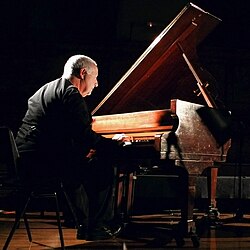
In his sleeve note to Masabumi Kikuchi’s album Black Orpheus, a recording of the Japanese pianist’s last solo concert, Ethan Iverson noted a piece of paper placed on the piano with the instruction: “Play slower. I sound better when I play slower.” Kikuchi took his own advice to heart. In the solo performances recorded in the 20 years before his death in 2015, aged 75, his playing decelerated to the point where the music’s metabolism seemed to enter another level of existence.

The final evidence was gathered in a session on a vintage Steinway D at New York’s Klavierhaus in 2013, its first fruit released four years ago by the Red Hook label under the title Hanamichi. Now there’s a second helping from the same source: Hanamichi, The Final Studio Recording Vol II. Like its predecessor, it mixes untitled improvised pieces with the standard tunes he loved to explore, in this case “Manha de Carnaval”, “Alone Together”, “I Loves You, Porgy” and “My Ship”.

I’ve previously written about Black Opheus here and the first volume of Hanamichi here, so I’m not going to repeat myself. I’ll only say that this version of “Manha de Carnaval” is the most fully realised of the three I have by him on record (the first two from 1994 and 2012), and his interpretation of “Alone Together” so beautifully illuminates the emotional contours of the 1932 Broadway ballad by Arthur Schwartz and Howard Dietz that it becomes a definitive instrumental exploration, to match Jo Stafford’s 1945 vocal reading.

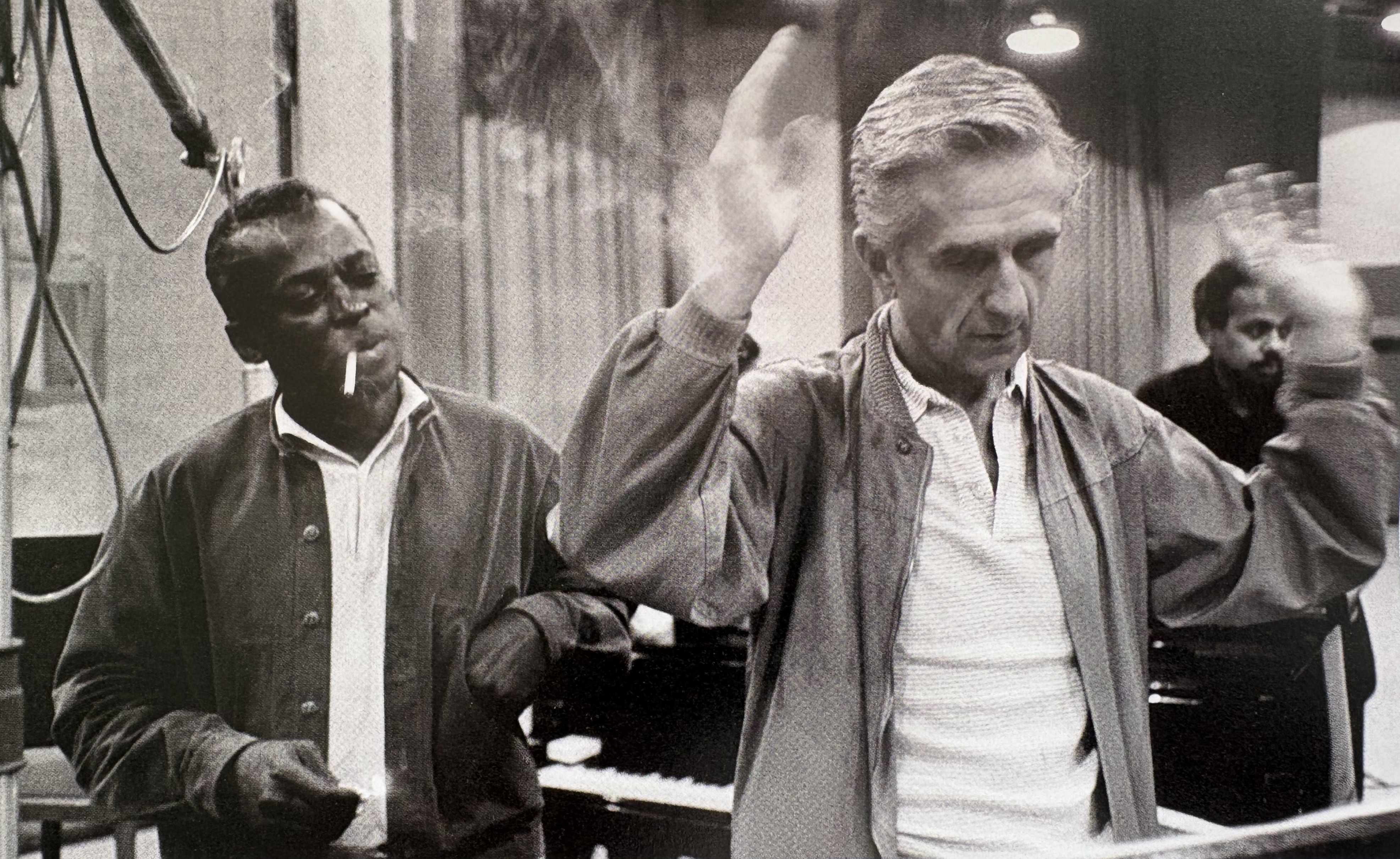
It’s no accident that two of the standards here, “I Loves You, Porgy” and “My Ship”, were recorded by Miles Davis and Gil Evans in the late ’50s. The two pieces are irradiated by the memory of Kikuchi’s friendship with Evans, who helped him move to the United States in the early ’70s, and in whose bands he played during that decade. But if they inhabit the spirit of those earlier orchestral pieces, they also distil Kikuchi’s own remarkable essence.

There’s a short trailer here, with a snatch of “Manha de Carnaval”. You’ll get the idea.

* Masabumi Kikuchi’s Hanamichi: The Final Studio Recording, Vol II is out now on Red Hook Records: https://www.redhookrecords.com/ The photograph of Kikuchi is by Abby Kikuchi and is borrowed from the booklet accompanying Black Orpheus (ECM).

Around John Prine

One night in January 1985 Bonnie Raitt was joined on the stage at the Arie Crown Theatre in Chicago by John Prine. They sang Prine’s “Angel from Montgomery”, which had first been heard on his debut album in 1971 and which Raitt had covered on her 1975 album Streetlights.

Raitt takes the first verse — “I am an old woman, named after my mother / My old man is another child that’s grown old / If dreams were thunder and lightnin’ was desire / This old house would’ve burnt down a long time ago.” Prine joins in as they sing the chorus in unison, an octave apart: “Send me an angel that flies from Montgomery / Make me a poster of an old rodeo / Just give me one thing that I can hold on to / To believe in this livin’ is just a hard way to go.”

So far, so lovely, so resonant. But then the magic happens. Raitt steps back and merges into her band as Prine starts the second verse alone, his parched, papery, barely-there voice only just holding on to the melody: “When I was a young girl, I had me a cowboy / He weren’t much to look at, just a free-ramblin’ man / But that was a long time, and no matter how I tried / Those years just flow by like a broken-down dam.”

It’s a song full of mystery and allusion cloaked in the mundane, and the gender-switch somehow gives it an extra layer of — what? — rubbed-raw pathos? humdrum tragedy? Don’t ask me to explain. It’s there. The audience in the Arie Crown Theatre recognises it as soon as Prine starts singing, and so will you. For me, his singing of those first words creates one of the most electrifying musical moments I know.

Raitt finishes it off with the third verse: “Well there’s flies in the kitchen, I can hear ’em, they’re buzzin’ / And I ain’t done nothin’ since I woke up today / How the hell can a person go to work in the morning / Come home in the evening and have nothing to say.” What a masterpiece of the songwriter’s craft.

Anyway, I’ve just been listening to Prine’s last album. Called The Tree of Forgiveness, it was released in 2018, two years before his death in the first month of the Covid-19 pandemic. Although it joins Leonard Cohen’s You Want It Darker and David Bowie’s blackstar as a work conceived in the shadow of an impending exit, its mood is cheerful and thoughtful and intimate and infinitely congenial and sometimes mordantly humorous. Every one of the 10 tracks, produced by Dave Cobb at RCA in Nashville, has something to commend it.

I’ve also been reading Tom Piazza’s just-published Living in the Present with John Prine. A musician and author of many well received books on such subjects as Alan Lomax, New Orleans and the bluegrass musician Jimmy Martin, Piazza met Prine only two years before his death, while writing a piece on the singer-songwriter for the Oxford American magazine.

They got on so well that Prine invited Piazza to help him write his autobiography. They spent time in each other’s company at Prine’s homes in Nashville, Tennessee and Gulfport, Florida, going to restaurants, driving around in Prine’s prized 1977 Cadillac Coupe de Ville, playing songs to each other and together. They had time for only two sessions with a recording machine before Prine died; not enough for the kind of book they had planned but enough for Piazza to write this warm, affectionate sketch of the singer-songwriter in his last years, reminiscing and enjoying the love and respect of those close to him.

Late in the book there are some vivid memories of encounters with Cowboy Jack Clement, Johnny Cash, Chet Atkins and, most surprisingly, Phil Spector, with whom Prine wrote a song called “God Only Knows”, which appears on the final album. There’s quite a lot of talk about guitars, too. Piazza writes with a sensitivity to mood, an observant eye and an easy grace that make this not just a singularly enjoyable book but the best possible way of remembering its subject.

* Tom Piazza’s Living in the Present with John Prine is published by Omnibus Press. Prine’s The Tree of Forgiveness is on Oh Boy Records. The version of “Angel from Montgomery” described here was included in The Bonnie Raitt Collection, released in 1990 on Warner Brothers.

At the London Palladium

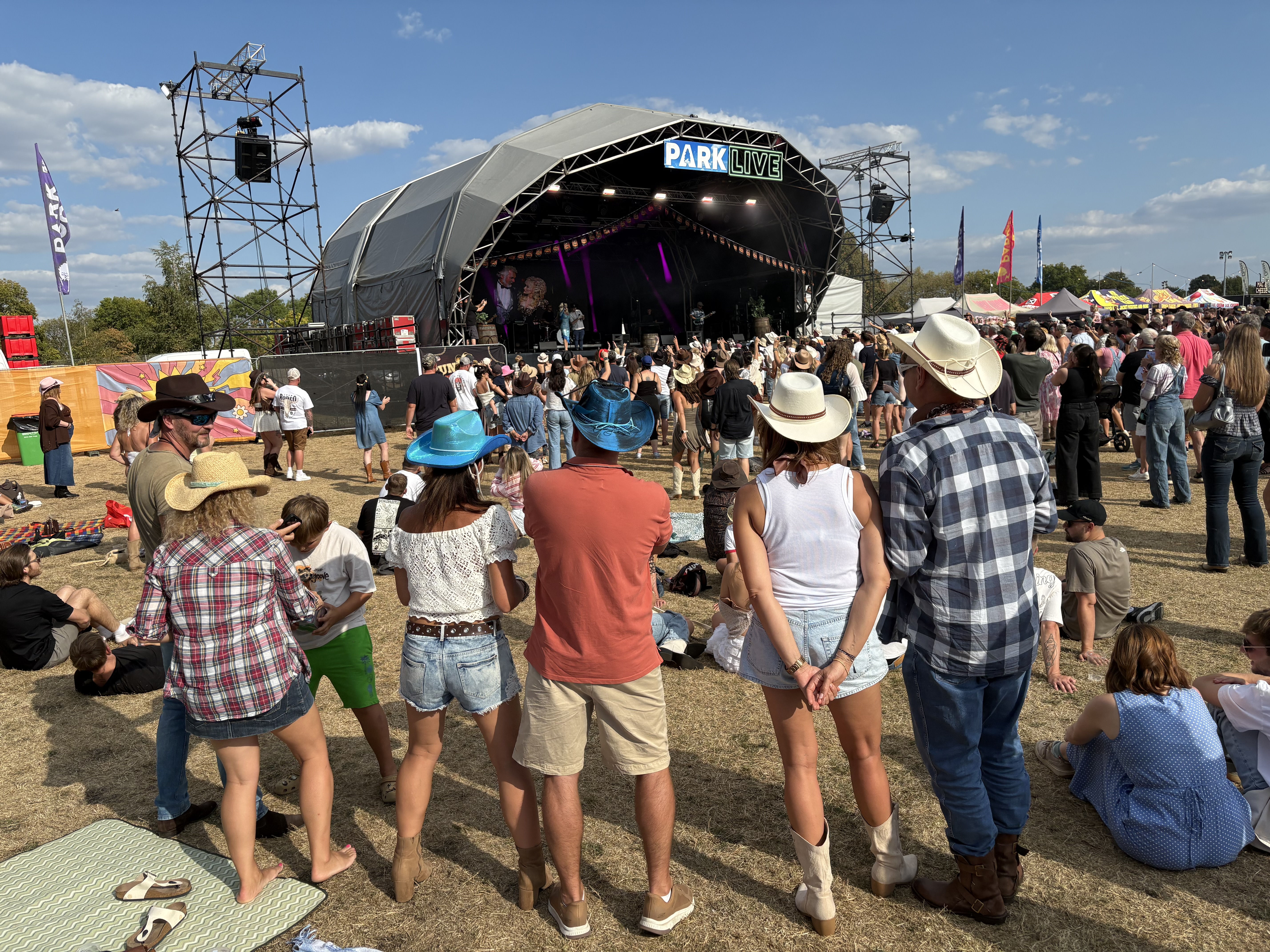
Two poets took the stage at the London Palladium this week. The first, Patti Smith, was celebrating the 50th anniversary of the release of the epochal album Horses by playing it all the way through with a band including two of her original confrères. The second, Al Stewart, had made it part of his farewell tour, and thus his final appearance in the city where he once shared a flat with the young Paul Simon and had a residency at Bunjie’s, a folk club a shortish walk across Soho from where he was saying his goodbyes.

Smith is 78. Stewart is 80. Horses came out in 1975, the year before Stewart enjoyed his biggest hit with the title track from Year of the Cat. Both drew full houses — Smith on two nights running — and performed with a vigour that reanimated the work of their youth.

We know Smith as a poet who rammed literary and musical forms together to great and lasting effect. Stewart’s success in turning big subjects — the Basque separatist movement, the French Revolution, Operation Barbarossa — into long narrative folk-rock songs reflected a creative use of the early impact of Bob Dylan on his songwriting. But where the enduring glamour of the New York era of CBGB and Max’s Kansas City ensures Smith’s continuing credibility, Stewart’s soft-rock associations have probably restricted his following to his original audience. There was no measurable difference in the enthusiasm that greeted both artists on a celebrated stage.

If the guitarist Lenny Kaye and the drummer Jay Dee Daugherty provided valued historical support for Horses, assisted by Jackson Smith and Tony Shanahan on keyboard and bass guitar, Stewart (and his four-piece band from Chicago, the Empty Pockets, plus the saxophonist/flautist Chase Huna) benefited from the guest presence of his old collaborator Peter White, who added beautiful guitar decoration to “Time Passages”, which he co-wrote, and “On the Border”, and remodelled the rhapsodic piano introduction — including “As Time Goes By” — to “Year of the Cat”.

To be honest, I hadn’t listened to Stewart for decades before last night. I bought the tickets as a treat for my wife, who knew him a little in Bristol folk scene of the late ’60s and remembers once giving him a lift to London. But as thrilled as I was to hear Smith declaiming “Redondo Beach” and “Birdland”, I was just as beguiled by Stewart’s “The Road to Moscow” and “The Dark and the Rolling Sea”.

Today Smith, of course, looks even more like a poet than she did in 1975. Stewart, who lives in Arizona, now resembles someone who might be the secretary of the local bridge club. Good on both of them.

Silence and slow time

“Silence and slow time…” John Keats’s beautiful phrase finds an echo in some of the music I love, the kind that emerges from a stillness to which it eventually returns, taking its time and not raising its voice to attract attention. Here are five brand-new examples of music with healing qualities, all highly recommended.

1 The Necks: Disquiet (Northern Spy)

Three hours of glorious studio-recorded collective interplay on three CDs. “Rapid Eye Movement” is a 57-minute exploration of densities, starting with Chris Abrahams’ Rhodes piano, punctuated by Lloyd Swanton’s abrupt double bass figures. It changes slowly, like the weather, eventually reaching a passage of single-note cascades from the acoustic piano over Tony Buck’s rumbling tom-toms, leading to an exquisitely tapered ending. “Ghost Net” is 74 minutes of lurching, clattering, gradually darkening polyrhythmic layering, with each musician apparently playing in 12/8, but in three different 12/8s. Using what sounds like a Farfisa organ, it’s as though they’ve suddenly found the sweet spot between Thelonious Monk and ? and the Mysterians. The other two tracks divide an hour between them. “Causeway” opens with echoing guitar and celestial organ and contains a completely intoxicating E minor/B minor/A minor vamp — the Necks’ own three-chord trick — with piano above guitar and organ before a sudden gearchange, involving the addition of thrashing drums, turns a reverie into something soaringly urgent. “Warm Running Sunlight” is an essay in textures and the contemplative space between them: string bass going from plucked to bowed and back, splashing cymbals, Rhodes heavy on the reverb. A lot to take in, but among their very best, I’d say.

2 Tom Skinner: Kaleidoscopic Visions (Brownswood)

The drummer and composer whose Voices of Bishara project I liked so much, in both its studio and live incarnations, takes a slightly different tack here. The music is built around his regular bandmates — the saxophonists Chelsea Carmichael and Robert Stillman, the bassist Tom Herbert and the cellist Kareen Dayes — but with a handful of guests: Meshell Ndegeocello layering her voices on one track, Portishead’s Adrian Utley adding his guitar to a couple more, the singer Contour (Khari Lucas) from South Carolina gently intoning the poetic lyric of “Logue”, and Yaffra (London-born, Berlin-residing Jonathan Geyevu) reciting the poem “See How They Run” over his own piano and Skinner’s overdubbed keyboards, vibes, bass, guitar and percussion. Music without boundaries, full of human feelings, ancient to the future.

3 Jan Bang / Arve Henriksen: After the Wildfire (Punkt Editions)

The two Norwegians devise eight pieces featuring Henriksen’s distinctive trumpet with Bang’s samples, Eivind Aarset’s guitar, Ingar Zach’s percussion, three singers, the Fames Institute Orchestra, a cellist, two Balkan instruments — the tapan (a double-headed drum) and the kaval (an end-blown flute) — and the zurla, a Turkish double-reed instrument. Ravishing from beginning to end, starting with “Seeing (Eyes Closed)”, which made me think that Miles Davis and Gil Evans had been reincarnated as graduates of the contemporary Norwegian jazz scene, to “Abandoned Cathedral II”, a continuation of Henriksen’s classic 2013 album, Places of Worship.

4 Rolf Lislevand: Libro Primo (ECM New Series)

Another Norwegian, this time an exponent of the archlute and the chitarrone, examining the works written for the lute and its variants by the 16th and 17th century composers Johann Hieronymus Kapsberger, Giovanni Paolo Foscarini, Bernardo Gianoncelli and Diego Ortiz. Lislevand’s sleeve essay explains the revolution in which these composers were involved, and he brings them into the present day with free, fluid interpretations that make this music ageless. His own riveting “Passacaglia al Modo Mio” is both a salute and a declaration of possibilities. Anyone with a fondness for Davy Graham or Sandy Bull will enjoy this enormously.

5 Charles Lloyd: Figures in Blue (Blue Note)

For the latest in his series of drummerless chamber trios, the great saxophonist is joined by an old colleague, the pianist Jason Moran, and a newer one, the guitarist Marvin Sewell. This two-CD set begins with what is surely the first version of “Abide with Me” to appear on a jazz album Monk’s Music in 1957 and ends with a exquisite rumination on the standard “My One and Only Love”. In between Lloyd invokes the spirits of Duke Ellington, Billie Holiday, Langston Hughes and Zakir Hussain. On two tracks he also makes fine use of Sewell’s command of bottleneck techniques, leading one to wish that more modern jazz musicians would explore the blues in the way Gil Evans did with “Spoonful” and Julius Hemphill with “The Hard Blues”.

Finding Lulu

Lulu was on a breakfast TV show the other day, talking about overcoming a drink problem that had its roots in her family background. She was engaging enough to make me want to read her newly published autobiography, If Only You Knew. Compiled with the help of a ghostwriter, Megan Lloyd Davies, it’s quite a surprise. Its 76 short chapters, plus prologue and epilogue, are not just extremely readable but full of interesting observations from a long career.

I was never a fan of her singing, but I’m a considerable fan of two of her songwriting efforts. They come from the opposite ends of the emotional spectrum. The first is “I Don’t Wanna Fight”, a hit for Tina Turner in 1993, a great pre-breakup song full of complex grown-up feelings — resignation, defiance — to which Tina could bring a sense of her own history. The second is “My Angel Is Here”, a track from Wynonna Judd’s 1996 album Revelations, a luminous love song of perfect simplicity.

Lulu didn’t write those songs alone. Her brother Billy Lawrie worked with her on both, with contributions from Steve DuBerry in the first case and Mark Stephen Cawley in the second. My guess is that, since she doesn’t play an instrument, her main contribution was to the lyrics. Anyway, they’re two of the best tracks of the ’90s, if you ask me.

What’s good about her book? Its candid descriptions of her Glasgow childhood, for a start, as Marie Lawrie, the oldest of four children of an alcoholic father; of her audition at Decca in 1963, when the power of her voice blew a microphone; of the resulting decision to move down to London, aged 14, with her band; of her experiences in the ’60s scene, when there the absence of a real division between “rock” and “pop” meant that Jimi Hendrix was a very memorable guest on her Saturday-night BBC TV show; of her short-lived involvement, musical and personal, with David Bowie in 1973. And of her inability to say no to the schemes dreamed up by her devoted manager, Marian Massey, who steered her resolutely towards light entertainment and mostly away from the stuff she wanted to sing, resulting in pantomime seasons and the Eurovision-winning “Boom Bang-a-Bang”, which she clearly detested.

For me, the most interesting section deals with her experiences with Atlantic Records, to whom she was signed by Jerry Wexler in 1970 and with whom she recorded two albums, New Routes and Melody Fair, at Muscle Shoals and Miami’s Criteria Studios respectively. She leaves no doubt about how much this meant to her, in terms of moving closer to the music she loved. Wexler choosing the songs, Arif Mardin doing the arrangements, Tom Dowd at the mixing desk, the Swampers and the Dixie Flyers laying down the tracks: it seemed like the answer to her prayers, a guaranteed escape from the middle of the road.

But it didn’t work out, and I was curious enough to listen to tracks from both albums to try and understand why. The song choices aren’t great, which is weird when you consider that Wexler would have had access to material from the finest country-soul writers of the time, people like Dan Penn and Spooner Oldham. But it’s a mish-mash. The real problem, however, is that although Lulu had her first hit with a raucous cover of the Isley Brothers’ “Shout”, she isn’t a soul singer. She’s a pop singer. For all her ability to add a rasp to her voice, she skates across the surface of the songs. It’s not hard to imagine Wexler concluded quite early on that he’d made a mistake. She wasn’t an Evie Sands or a Merrilee Rush, and this wasn’t going to be a repeat of Dusty in Memphis.

The book’s later episodes include a success with Richard Eyre’s Guys and Dolls, touring with Take That, guest-starring in Absolutely Fabulous, and a grim experience on Strictly Come Dancing. And gradually, coming in like layers of cloud, the drinking that took a grip as she went through middle age, finally taking her into six weeks of rehab in an American clinic at the age of 65.

Yes, it’s a bit showbizzy in places, because that’s partly who she is, but she’s honest about things like her two marriages, for instance, which both ended in divorce, and her looks (“some Botox and filler around my jaw, plus some kind of eye lift”). She also at pains not to bore us: she never dwells too long on anything, which keeps the narrative rolling along.

It’s not normally the sort of book I’d choose to spend time with, but I’m quite glad I did. I suppose I was most genuinely moved by the description of how, while still in her teens, she horrified her family and their neighbours by her appearance in a TV soap ad, speaking in a voice from which, after four years in London, all traces of Glasgow had been smoothed away. “I sounded as if I’d grown up somewhere between Cheltenham and Chelsea,” she writes. “The erasure of Marie Lawrie, on the outside at least, was complete.” But, as we discover, that was very much not the whole story.

* Lulu’s If Only You Knew is published by Hodder & Stoughton.

Danny Thompson 1939-2025

The first time I saw Danny Thompson, he was playing with Alexis Korner’s Blues Incorporated at the Dungeon Club in Nottingham. This would have been the spring of 1965. I must have liked his playing a lot because I got him to autograph a paperback copy of Nat Hentoff’s The Jazz Life that I happened to be carrying that night.

A couple of years later I saw him with the Pentangle, a band that to my ears never equalled the sum of its parts. It was his long-standing partnership with John Martyn that brought out his best, whether racing alongside the effects-driven guitar on “I’d Rather Be the Devil” or adding a darkly poetic arco line to “Spencer the Rover”.

Danny, whose death at the age of 86 was announced this week, was a member of a generation of great double bassists who emerged in and around the British jazz scene in the ’60s. If you wanted to line them up in some kind of taxonomy of interests and instincts across a spectrum of the music with which they were associated, starting with folk and proceeding to contemporary classical, it would probably go something like this: Danny, Ron Matthewson, Dave Green, Jeff Clyne, Harry Miller, Dave Holland, Chris Laurence, Barry Guy. Obviously that’s not everyone.

Danny was the Charlie Haden of British bassists, his playing warm and deep-toned, as rooted in folk modes as Haden was in bluegrass music, but just as capable of dealing with the most advanced and abstract forms.

Maybe the best way to celebrate his life is to listen to Whatever, the album he recorded for Joe Boyd’s Hannibal label in 1987. It finds him with a trio completed by two relatively unsung heroes of the scene, the wonderful Tony Roberts on assorted reeds, flutes and whistles and the terrific guitarist Bernie Holland.

I remember giving it an enthusiastic review in The Times, commending its highly evolved fusion of folk materials and jazz techniques. It’s a little bit like a British version of Jimmy Giuffre’s Train and the River trio, unafraid of the bucolic and the open-hearted.

Most of the pieces are credited as joint compositions but some are arrangements of traditional pieces, such as “Swedish Dance”, which opens with a bass solo rich in disciplined emotion before moving into an ensemble workout on a light-footed tune whose complex rhythms are made to sound as charming as a children’s song. The stately melody of “Lovely Joan” is delivered by Roberts on a set of Northumbrian pipes — mellower than their Scottish or Irish equivalents — before he switches to soprano saxophone for an intricate conversation with Holland’s nimble acoustic picking and Thompson’s firmly grounded bass. Of the originals, “Minor Escapade” adds elements of the classic John Coltrane Quartet to this trio’s distinctive approach.

Not having played it for some years, I’d forgotten what a truly exhilarating album it is. Now it’ll be at the top of the pile for some time to come, adding the sparkle and freshness of its understated virtuosity to the room. RIP, Danny.

* The photo of Danny Thompson is from the cover of Whatever and was taken by Nick White.

Every beat of my heart

This is the bass-drum head from the kit I used as a member of an R&B band in 1964-65. Last week, two days after I’d taken it to the recycling centre as part of a general clearout of superfluous possessions, a mid-evening collapse on a platform at St Pancras station saw me in an ambulance, where a pair of paramedics gave me an ECG that showed I was suffering from cardiac arrhythmia.

What kind of a drummer, even an ex-drummer, suffers from arrhythmia? To injury was added insult.

I was admitted, via A&E, to St Thomas’s Hospital, directly across the river from the Houses of Parliament. For the first four days I was in a ward on the seventh floor, in a bed by a window giving me a view across the Thames that would cost you £5,000 a night were it a hotel room. At some time during those first four days under the care of the National Health Service the monitor showed that my heart stopped for four seconds — I thought only Aretha Franklin could do that to me — and then restarted itself.

Long story short, there was another episode that led to a rush into the Intensive Care Unit, and from there a day later to an operating theatre where a cardiac pacemaker was installed. My problem had been caused by bradychardia: the unnatural slowing of the heartbeat. The pacemaker will ensure that it won’t fall below 70 beats per minute. In a couple of months, a second procedure will lower the safe limit to 60bpm.

That sounds like a nice, steady, medium-pace lope, which probably suits me now. And thinking about it set me to imagining the possibility that one day, when you have a pacemaker fitted, it might come with a variety of settings, based on the characteristic approaches to tempo of great drummers. Naturally, I thought of jazz drummers.

Which button would I want to press? Elvin Jones would be too turbulent, Art Blakey too disruptive, Tony Williams too hyperactive, Tyshawn Sorey too unpredictable. Sunny Murray? Not sure I’d want my heart to run on free rhythm. If I were younger, I’d opt for Billy Higgins, not least because, along with that amazing sense of lift, I’d probably get, as an extra, the lovely smile he always wore. But I’m not young. So the graceful swing of either Kenny Clarke or Jimmy Cobb would do for me.

Anyway, the point of this profoundly self-indulgent story is that between one Sunday and the next I spent part of the time wondering what our elected representatives were up to in the big building on the other side of the river and the rest of it marvelling at the astonishing amount of kindness and consideration shown towards me by the skilled, wise and compassionate NHS staff whose job was to save the life of someone hitherto completely unknown to any of them.

I didn’t get the name of the young female maternity nurse who was getting off the same train and immediately came to my aid, or those of two more fellow passengers, a pair of young women doctors, who stayed with me until the ambulance arrived, or those of the two paramedics who took over, made the initial diagnosis, and decided that St Thomas’s would be the best place for me, or that of the doctor who triaged me in A&E and sent me up to the seventh floor.

But thereafter I did start writing down the first names of as many of those who helped me as I could catch: nurses, doctors, cleaners, cardiologists, electrocardiologists, radiographers and others. Those names, unsorted by function or rank but in more or less chronological order, give a sort of a portrait of the health service that is a riposte to those both working hard to destroy it and to divide us by undermining the stability of our post-colonial, multicultural society. Here they are:

Abdul, Melody, Beth, Eva, Cielo, Jonathan, Alma, Lily, Simran, Isaac, Angelo, Favour, Aba, Aboudin, Lina, Mehari, Precious, Nabila, Chris, Parth, Tracey, Izabela, Konstantinos, Serena, Gloria, Anoup, Shawza, Rawlston, Diego, two Clares, Richard, Sabeen, Emma, Terry, Elorine, Nikki.

I know the NHS is under strain and imperfect, and I’m aware that it was my good luck to find myself at St Thomas’s. But while I was waiting to be sent home on Sunday, the doctor in charge of intensive care at the hospital walked past on his rounds. I told him that while it had been in most respects the worst week of my life, it had also been among the richest. I’d been given an unexpected opportunity to experience and be grateful for human relationships in public service — comradeship among workers, empathy for strangers — at their best. Something I’ll never forget.

Isle of Wight 1970: The getaway

The problem with the 1970 Isle of Wight festival was how to get out of it. On the morning of Monday, August 31, exactly 55 years ago, something like 600,000 fans were going to be trying to leave the island. In all probability, the queue for the ferry from Ryde to Portsmouth was likely to resemble a less frostbitten version of Napoleon’s army retreating from Moscow.

I’d attended the festival with my friend Geoffrey Cannon, then the Guardian‘s rock critic. I was one of three Melody Maker writers on the case; the others were Chris Welch and Michael Watts. Poor Watts, a recent recruit, had been sent to a camping supplies shop on Holborn, around the corner from the office, and given enough money to equip himself with a small tent and a bedroll. His job would be to tell the story from the perspective of the kids up on the hill.

Welch and I would be taking notes in the relatively salubrious area reserved for VIPs and the press in front of the stage, revelling in the experience of seeing Miles Davis play to a crowd of more than half a million with an average age of probably 20. And there was Joni Mitchell, and the Who, and Richie Havens, and John Sebastian, and the rest of an extraordinary bill.

Geoffrey and I both had to be at our respective offices by the Monday lunchtime, and it was he who came up with a brilliant solution. He called the flying school at Portsmouth airport and asked if they had a plane that could pick us up and take us across the Solent.

The flying school could indeed meet his request, and we were invited to report at something like six o’clock in the morning, maybe a bit earlier. After leaving the festival and making it to the nearby Bembridge airfield, we sat in a hut by the grass runway, waiting for our plane to arrive.

We’d been there for a few minutes when a limousine drew up. Out of it stepped Jimi Hendrix, still wearing the flowing multicoloured silks he’d worn on stage only three or four hours earlier, giving a performance that had begun badly but eventually coalesced into something those who heard it would never forget (luckily, the whole set was filmed).

For Jimi, a helicopter was waiting. He climbed in and disappeared into the misty dawn sky. Eighteen days later, after returning to London from gigs in Denmark and West Germany, he was dead.

Shortly after his departure from Bembridge, our single-engined Cessna turned up and off we went. I expect we shared a taxi from Portsmouth to London and put it on expenses, as we did with the cost of the plane ride, which came to nine pounds and six shillings, including landing fees. The bill was made out to Geoffrey. Somehow, I’ve managed to hang on to it for the past five and a half decades.

Farewell to Bra Tebs

There used to be a civilised convention that normal reviewing practice should be suspended for certain kinds of musical events: those put on for charity, or memorials. Of the celebration of the life of Louis Tebogo Moholo-Moholo at a packed 100 Club last night, it need really only be said that the whole evening was suffused with the indomitable spirit of the great South African drummer, who died in June, aged 85.

The trumpeter Claude Deppa, his friend and frequent bandmate in Viva La Black, started the proceedings at the head of his warm-hearted quartet. Then the pianist Steve Beresford and the drummer Mark Sanders took over for an intricate and absorbing free conversation. Evan Parker brought out his soprano saxophone, removed its mouthpiece, and tapped the keys to produce a quite extraordinary 10-minute percussion solo which managed to be both a shadow commentary on what he might have played with the mouthpiece in place and a unique tribute to his former colleague in the band Foxes Fox. The trio of Larry Stabbins on alto saxophone, Paul Rogers on bass and Sanders again on drums played a set notable for Rogers manoeuvring his bespoke seven-string instrument into the expressive space between a Celtic harp and a cello.

The heart of the celebration of Bra Tebs (as his friends knew him), which was organised by Hazel Miller and Mike Gavin of Ogun Records, came in the set by Four Blokes + 1, his last London-based band. Pictured above, this featured Jason Yarde and Shabaka on saxophones, Alex Hawkins on piano and John Edwards on bass, with the superb Sanders once more on the drum stool, embodying rather than imitating the characteristics of Louis’s playing. They came out roaring, and that’s how they were still sounding as I had to make my departure, with the darkly ecstatic closing cadences of “Dikeledi Tsa Phelo” accompanying me up the stairs and into the night.