Skip to content

Posts from the ‘R&B’ Category

Disco: the weight of the groove

So disco’s back, apparently by courtesy of Daft Punk, although that may have been last week and it could be all over by now. But I have to say I’ve never felt I needed the permission of the fashion police to listen to the extended mix of Evelyn “Champagne” King’s “Shame” any time I wanted over the past 30-odd years. (You don’t know it? Go there now! And join me in a prayer to be reincarnated as one of those guitarists!)

While looking for something or other to do with disco on the internet yesterday I came across an old thread containing contributions from Bobby Eli, the great session guitarist who was a member of MFSB — the Philadelphia International house band — and played on records by the O’Jays, Billy Paul, the Spinners, the Stylistics and countless others.

Here’s what Eli (posting as phillysoulman) had to say a couple of years ago in defence of disco: “People had some understandable issues with disco. But it wasn’t all the same. A lot of it was R&B with a four-on-the-floor. Songs like that put a LOT of musicians to work, and also paid for a LOT of studio time.”

Someone else on the thread chose to inform him that the soul and disco records coming out of Philly at the time tended to be characterised, in harmonic terms, by the use of the “phrygian dominant scale”. Eli’s response deserves to be preserved for posterity (and this is how he laid it out, like blank verse):

We never discussed scales.

We just played what we felt.

It’s all about the groove.

We were not technical cats.

We just vibed together and instinctively knew each other’s next move.

Scales are for weighing shit, but our grooves had their own weight.

Some guys (don’t) have all the luck

Jess Roden 2No one could understand why Jess Roden didn’t make it, why a man with so fine and distinctive a voice never managed to ascend to the level of fame enjoyed by other British blue-eyed soul singers of the 1960s and 70s. He had the sound and the looks, he wrote some fine songs, for a while he led a terrific little band, and he had fans in the music press and the backing of one of the most perceptive men in the record industry. What he didn’t have, perhaps, was the musical equivalent of what Graham Greene described as “the splinter of ice in the heart of a writer”: a knowledge of when to allow enthusiasm to take second place to the ambition that propelled many of his contemporaries and friends to the top.

I was reminded of that last week when we had tea together in a London hotel just across the road from the BBC’s Broadcasting House. We had met only once in almost 40 years — at Jim Capaldi’s funeral in 2005 — but it was like encountering a friend you’d seen the day before. Jess is one of the nicest men you could hope to meet. Which may, of course, have been part of the problem.

He had just been interviewed by Robert Elms for Radio London, and as we said goodbye he was off to have a chat with Bob Harris on Radio 2. This is the first time he has been visible in the music world since leaving it in the early 1980s, after concluding that it was time to stop bashing his head against a glass ceiling and look for something else to do (a little more on that subject later). The interviews had been arranged to promote a limited-edition six-CD set titled Hidden Masters: The Jess Roden Anthology, pieced together with remarkable care and attention over a period of several years by Neil Storey, a former colleague at Island Records, the label with which Jess spent the majority of his career. Consisting of 94 tracks, about half of them previously unreleased, compiled from the original multitracks or master copies and restored where necessary, the set takes us from his early days with Alan Bown through Bronco and the Butts Band to his solo career in the mid-70s and up to the later work with such short-lived projects as the Rivits and Seven Windows.

I first saw Jess at the Beachcomber Club in Nottingham. The year was, I think, 1966. He was the singer with the Alan Bown Set, having joined them after serving an apprenticeship with the Raiders and the Shakedown Sound, two bands in his native Kidderminster in the West Midlands. The Alan Bown Set were a soul band with horns and a Hammond organ, and I remember being particularly struck that night by the young singer’s convincing delivery of the Impressions’s “I Need You”, which happened to be one of my favourite Curtis Mayfield songs.

Soul music was falling out of fashion, however, and by the start of the next decade Jess had been signed to Island by Chris Blackwell and was singing with Bronco, a four-piece band consisting of hometown mates who were listening to the new country-influenced sounds coming from across the Atlantic. Bronco never had the right producer to focus their sound, or the right song to get them on the radio, but the eight tracks included in this box demonstrate their worth.

Then came the solo albums, starting in 1973, at just about exactly the same time that Robert Palmer, who had replaced him in Alan Bown’s line-up, left Vinegar Joe — another Island band — and embarked on his own solo career with the label. High hopes surrounded both of them (they were adored inside the company, where everyone from the van driver to the managing director loved their music), and they were given similar facilities: unlimited studio time in London, New Orleans, New York, Nassau or (in Robert’s case) Los Angeles with the best musicians and arrangers available. Both men, for example, recorded in New Orleans with the Meters and Allen Toussaint.

If there was a difference, apart from just over a year in age, it was that Robert really wanted to be a star. Jess wanted people to hear his music, of course, but he wasn’t the sort to really push himself or to finesse his own career. It didn’t stop him making a quantity of music that, as well as being fondly remembered, sounds terrific today. Lend an ear to an epic song recorded for his first solo album, originally called “I’m On Your Side” and now released, in a slightly different version, under the title “For Granted”: I’ve been a regular listener to the groove created by Mick Weaver’s clavinet and Richard Bailey’s crackling drums for 40 years, and it hasn’t worn out its welcome. Or the driving “Reason to Change”, cut with Toussaint and his boys and included in that debut LP. Or the elegant version of Tim Hardin’s “Misty Roses” cut in New York in 1977 for the album titled The Player Not The Game, arranged by Leon Pendarvis and produced by Joel Dorn.

There are surprises all over these CDs, some of them unearthed from unlabelled tape boxes that had lain undisturbed in obscure vaults for decades. But the heart of the anthology comes in the many tracks recorded, in clubs and concert halls as well as in the studio, by the Jess Roden Band, a seven-piece outfit (eight-piece when Billy Livesey guested on keyboards) which was in operation from 1974 to 1976 and could play that funky music as well as any white boys in the UK at the time, even the marvellous Kokomo. Steve Webb, one of the JRB’s two guitarists, and John Cartwright, the bass player, were both useful songwriters, and original compositions were mixed with occasional covers of things like Robert Parker’s “Get Ta Steppin'”, Randy Newman’s “You Can Leave Your Hat On”, Eddie Floyd’s “Raise Your Hand” and the Temptations’ “I Can’t Get Next to You”, all of which are included on Hidden Masters. They were a much loved live attraction, as can be heard here in recordings from Birmingham Town Hall, Leicester University, the Lyceum and the Marquee.

Robert Palmer had hits — “Johnny and Mary”, “Some Guys Have All the Luck”, and so on — but Jess didn’t; he was living in New York and struggling to complete another album when Blackwell finally pulled the plug. There was no rancour on either side. The decision to begin the process of changing his profession led Jess to evening classes in graphic design and a new career which he pursued successfully in West London until his recent retirement and move to the country. Today there are no signs of regret that, despite all those favourable signs, the highest hopes remained unfulfilled. He can look back at the music he made with affection and pride, and so, now, can we.

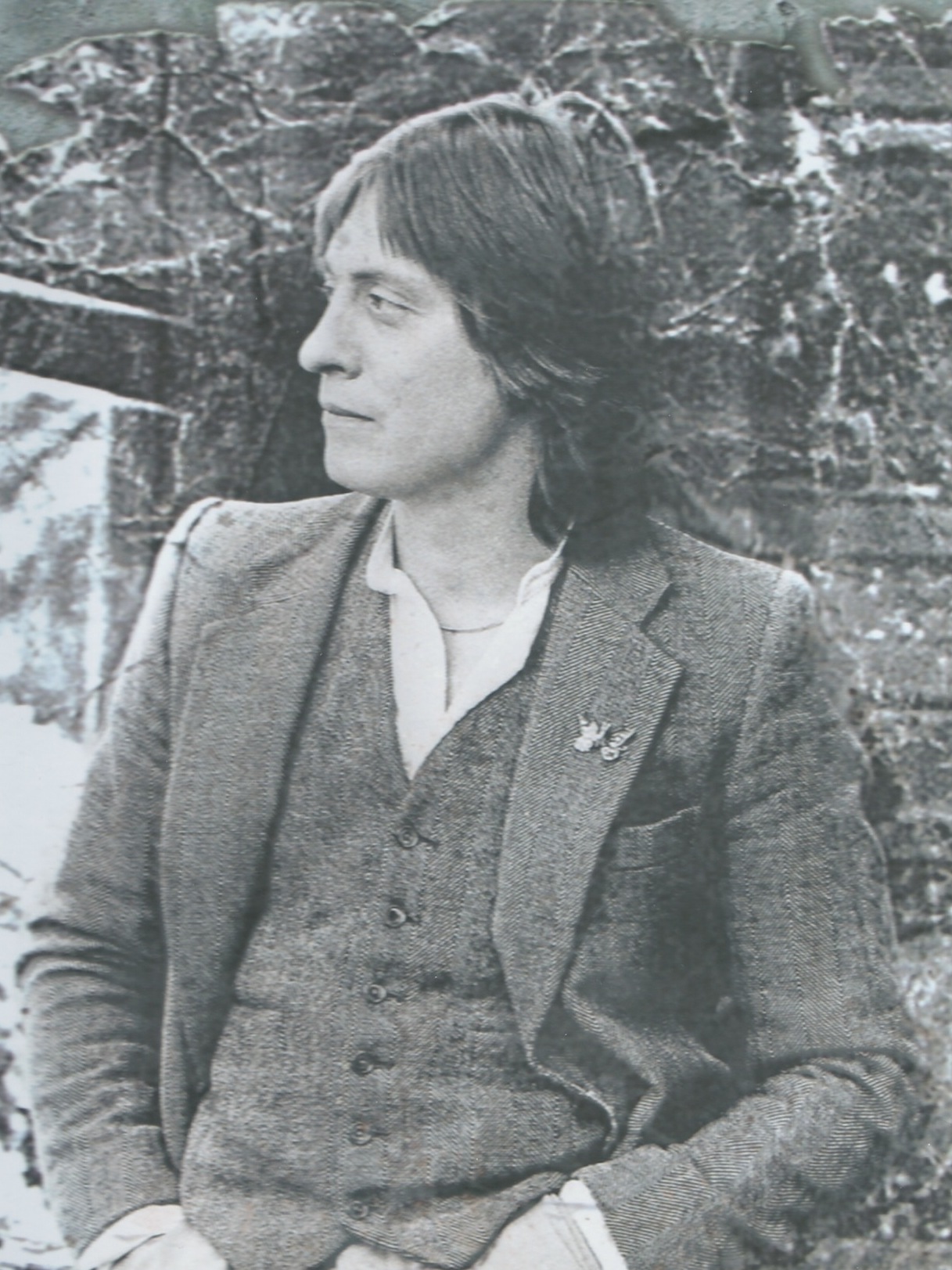
* The photograph is from the cover of Hidden Masters: The Jess Roden Anthology (www.hiddenmasters.net). The photographer is unknown. An extensive survey of Jess’s career can be found at http://www.jessroden.com.
James Jamerson: a hidden masterpiece

James JamersonYou don’t need me to tell you about James Jamerson, the first of the Motown session musicians to be recognised for his outstanding individual contribution to the Sound of Young America. It was Jamerson who revolutionised the use of the bass guitar in popular music, yanking it away from a restricted role by creating the mobile, often melody-rich lines that got us dancing to Marvin Gaye’s “Ain’t That Peculiar”, Kim Weston’s “Take Me in Your Arms (Rock Me a Little While)”, the Supremes’ “Love is Here (And Now You’re Gone)”, the Four Tops’ “Reach Out, I’ll Be There”, Jr Walker’s “(I’m a) Road Runner”, the Isley Brothers’ “Tell Me It’s a Rumour, Baby”, the Temptations’ “(I Know) I’m Losing You”, Barbara Randolph’s “I Got a Feeling” and so many others (those eight tracks comprise just a rather obvious selection of my own particular favourites from the golden age of Hitsville USA).

Every now and then a previously hidden gem of Jamerson’s art emerges, and one such is to be heard on Finders Keepers: Motown Girls 1961-67, a compilation of hitherto unconsidered trifles put together by Keith Hughes and Mick Patrick for Ace Records. Containing non-hit tracks by such luckless thrushes as LaBrenda Ben, Hattie Littles, Carolyn Crawford, Anita Knorl, Linda Griner, Thelma Brown and Liz Lands as well as rejected tracks by the hit-making Supremes, Gladys Knight and the Pips, Brenda Holloway, the Marvelettes, the Velvelettes and the Miracles (with Claudette Rogers singing lead), it is not, one has to say, an absolutely essential purchase. Although there are a handful of genuine highlights, notably the Velvelettes’ Northern beauty “Let Love Live (A Little Bit Longer)” and the one well-known track, Mary Wells’ “What’s Easy For Two”, in general the selection confirms the shrewdness of Gordy’s quality control department, whose stern judges assessed songs for single or album release.

But there is one moment which more than justifies the album’s existence, and that moment is “No More Tear Stained Make Up”, a Smokey Robinson song recorded by Martha and the Vandellas in 1966 and previously released only on their LP of the same year, Watchout!, where it languished until this resurrection. I confess that I never noticed the special quality of this song, which resides chiefly in the fact that it functions as a vehicle for some of Jamerson’s most inventive playing

Some may also enjoy Smokey’s lyric: “I’ve had no use to wear a / Pair of lashes or mascara / And my eyes have natural shadows from the crying / That I’ve done so much of lately / Cos it really hurt me greatly / When I found the love you vowed was only lying…” I’m certainly among them, particularly for the “to wear a”/”mascara” rhyme. But the true beauty of the track is the way Jamerson exploits the cool medium-paced swing of the rhythm — not unlike the airy, hip-swivelling groove of the Miracles’ “I Like It Like That” from two years earlier — with what amounts to a running commentary on the top line and the chord changes, exposing his wonderful instinct for the best way to embellish a simple song without cluttering or overwhelming it.

Born in 1936, Jamerson learnt to play the double bass while a pupil at Detroit’s Northwestern High School and spent the early years of his career playing with jazz groups. He switched to the electric instrument in 1961, at just about the time he was starting to work in the Motown studio, but on many of his recordings you can hear the influence of his grounding in jazz in the fluency of his double-time fills and run-ups, the passing notes, the register leaps, a willingness to add syncopation through the use of rests, and — on a track like this — the ability to “walk” a 4/4 rhythm. There are even times on some of the early Motown tracks, such as “A Love Like Yours (Don’t Come Knocking Everyday)”, the B-side of Martha and the Vandellas’ “Heat Wave”, recorded in 1963, when it sounds as though he was still using the upright instrument. And listen to him on the Supremes’ magnificent “Love Is Here (And Now You’re Gone)” from 1966, how he reshapes what must have begun life as a basic four-on-the-floor stomper with leaping triplet-based figures and a lovely, almost acoustic tone that would not have shamed Charles Mingus.

I wish I had the skill and patience to transcribe his playing on “No More Tear Stained Make Up”. Ranging up and down the stave and across the bar-lines, it would probably look as beautiful as it sounds.

* The photograph is taken from Standing in the Shadows of Motown: The Life and Music of the Legendary Bassist James Jamerson, the self-published book by Dr Licks (Allan Slutsky) which first appeared in 1989 and sparked the interest that led to a Grammy-winning documentary film in 2002 and the highly successful reunion tours of the Funk Brothers, as the Motown session men called themselves — too late, alas, for Jamerson, who died in 1983, aged 47.

Welcome back, Shuggie Otis

shuggie otisThe 14 previously unreleased tracks tacked on to Sony Legacy’s new reissue of Shuggie Otis’s cult-classic 1974 album Inspiration Information, most of the extra material collected as a second disc under the title Wings of Love, remind us of what a singular talent has lain half-hidden for most of the past 40 years.

The son of Johnny Otis, the remarkable bandleader, songwriter, vibraphone player, talent scout, record producer, disc-jockey, civil rights activist, local politician and author who died just over a year ago at the age of 90, Shuggie made his first trip from California to London in August 1972, arriving as an 18-year-old guitarist with his father’s rhythm and blues troupe. Before they played a memorable gig at the 100 Club, I interviewed Johnny for the Melody Maker and asked him to tell me how Shuggie’s talent had emerged.

In 1967, he said, a fallow period in his own career came to an end when a promoter offered him a gig. He needed to put a band together, and there wasn’t much money involved, so he asked his son to make up the numbers. “Shuggie knew T-Bone Walker and all them guys as a little boy — he was always under my chair, and I didn’t realise how much of an impression they’d made on him,” he said. “So we got a show together, and lo and behold the young white audience turned up, asking me for tunes that they shouldn’t know about!” And they responded to Shuggie’s prodigious talent — as, soon, did Al Kooper, who recorded with him and got him his first deal with Columbia Records. Before long he was turning down an invitation to join the Rolling Stones.

Shuggie is 59 years old now, and turned up in London again before Christmas to play at the Jazz Cafe, receiving this rather lukewarm review from Dorian Lynskey in the Guardian. But, great blues-rock guitarist as he undoubtedly is, his most fruitful environment has always been the recording studio, where he can overdub himself on the many instruments at his command and weave gorgeous tapestries around his unassuming but memorable songs.

Inspiration Information was his third album, following Here Comes Shuggie Otis! (1969) and Freedom Flight (1971), the latter introducing the world to the sublime “Strawberry Letter 23”, which became a hit for the Brothers Johnson. Shuggie claims that the subsequent silence was not of his own volition. “There were little lapses here and there, little breaks from time to time,” he says in the sleeve notes to the new package, “but I never stopped playing, writing, recording. I was still going round to record companies, still pitching my tapes.”

The conventional wisdom is that he had a lot in common with Sly Stone and Stevie Wonder, and echoes of his music would permeate that of Prince. The third album’s best known tracks are the title song, where his slow funk resembles that of Sly without the dark undertow, and “Aht Uh Mi Hed”, whose cool organ stabs remind me of Timmy Thomas’s immortal “Why Can’t We Live Together”. It’s followed by “Happy House”, which lasts no more than 1min 21sec, probably for the very good reason that it doesn’t need to be any longer to make its point. The album finishes in an unorthodox way with three modest but charming home-made instrumentals, mostly  keyboards and the drum machine Shuggie so loves. “XL-30” and “Pling!” are mood pieces, almost tone poems: like an R&B musician’s equivalent of “Fall Breaks and Back to Winter” from the Beach Boys’ Smiley Smile. The concluding “Not Available” is a lovely exercise in bright-eyed funk.

The tracks on the second disc, gathered under the title Wings of Love, were recorded — with one outstanding exception — between 1975 and 1990, and although most of the work was again done by Shuggie, they are rather more elaborate in approach and texture, also making use of strings and horns, which he arranged. The song “Wings of Love” is an 11 and a half minute epic ballad from a 1990 session, bookended by ocean sound effects, and “Give Me a Chance”, recorded three years earlier, sounds like a great lost disco classic, as if bathed in the light of a giant glitter ball, with a raging old-school rock-out finale on which Shuggie’s guitar battles with his Hammond B3.

The one that really pins my ears back, though, is “Black Belt Sheriff”, a spellbinding solo performance for voice and acoustic guitar recorded during a concert 13 years ago in Long Beach, the city from where his father broadcast his influential R&B radio show on KFOX in the 1950s. It’s a six and a half minute reverie of self-examination in the form of a conversation with a friend (possibly one of his brothers, to whom it is dedicated), the singer’s thoughts drifting through the dreamscape of a Los Angeles night, with glimpses of cars, bars, girls and celebrities as he vows to “give up my dreams and transgressions”. There’s a fine bottleneck interlude, followed by a tantalisingly enigmatic closure: “I’d like to stay and tell you what it’s all about / Hear you play, brother, laugh, sing and shout / But I got to go turn around again / So I’ll see you soon…” This has nothing to do with his mastery of studio overdubbing technology or his ability to play many different instruments. It’s his equivalent of Lennon’s “Working Class Hero” or Marley’s “Redemption Song”: the artist stands alone and unadorned, his true power revealed.

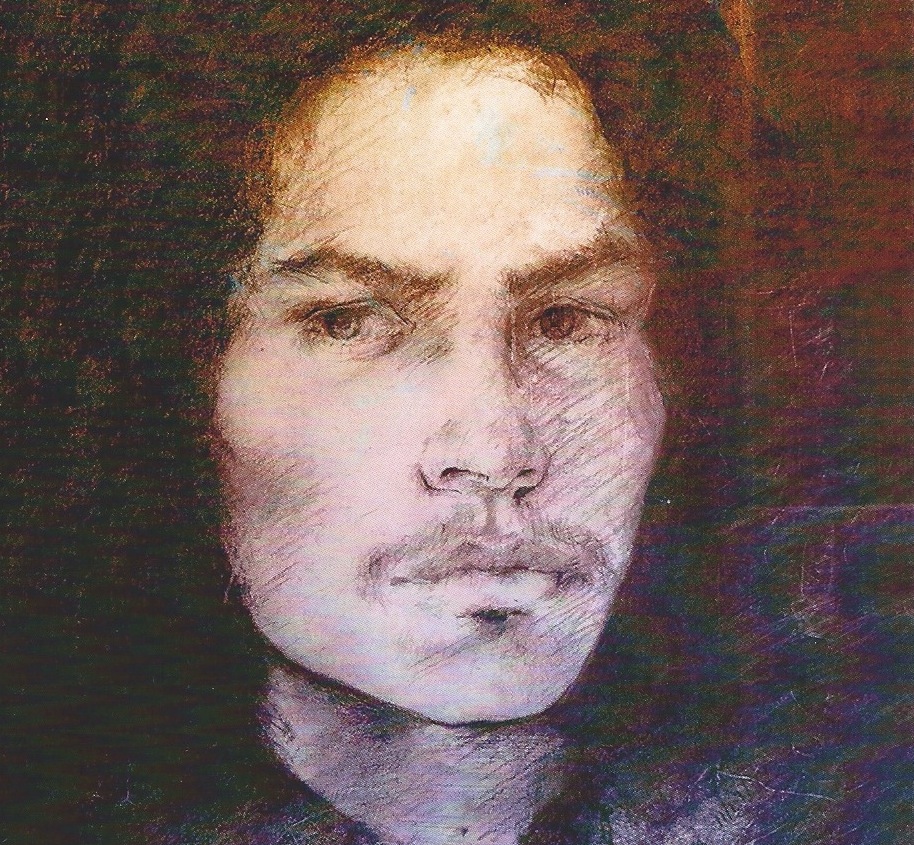
* The portrait of Shuggie Otis was made 1971 by his wife, Teri, who happens to be the daughter of the great composer and bandleader Gerald Wilson. It’s taken from the insert in the Inspiration Information/Wings of Love 2-CD set.

Special occasions and bad situations

Millie Jackson

Millie Jackson became notorious for her dirty mouth, featured in albums with titles like Live and Uncensored and EST (Extra Sexual Persuasion), which was a shame because throughout the 1970s she also produced a series of compelling ballad performances that deserve a high place in the rankings of the sub-genre which the disc jockey and writer Dave Godin named Deep Soul. Jackson was born in Georgia, the daughter of a sharecropping family, and most of her recording for the Spring label was done in Muscle Shoals, Alabama; her music was steeped in the sound of the South.

Now Ace Records have compiled a selection of her finest Spring ballads into a single album, The Moods of Millie Jackson, which amply demonstrates what a powerful singer she could be. The best known tracks probably come from the two outstanding albums in which she explored the theme of infidelity: Caught Up (1974) and Still Caught Up (1975). Among the highlights of that pair is her version of Tom Jans’ “Loving Arms”, with its devastating line about “looking back and longing for the freedom of my chains”. Her early singles “A Child of God” and “It Hurts So Good” will also be familiar to many. But some of the lesser known tracks are equally cherishable: the beautiful “A Love of Your Own”, co-written by Hamish Stuart of the Average White Band with Ned Doheny, the aching “Solitary Love Affair” from the pens of Billy Kennedy and Gus McKinney, Sam Dees’ gorgeous “Special Occasion” and, maybe most of all, the slow-burning but ultimately volcanic “Making the Best of a Bad Situation”, by Richard Kerr and Gary Osborne, one of those songs that make you realise for the millionth time the huge role played by the emotional triggers of gospel music in the evolution of pop.

For all these things, it’s easy to forgive Millie her manifold trespasses across boundaries of taste and discretion, even the album cover for which she posed while seated on the lavatory. As far as I’m concerned, The Moods of Millie Jackson is an indispensable album.

The Memphis blues, again

boz scaggs

A new Boz Scaggs album is always a welcome arrival in this quarter. Whether it’s a collection of R&B warhorses, a set of jazz standards or — best of all — a clutch of new original songs, there’s a better than even chance that it will throw up an enduring personal favourite like “Loan Me a Dime” (from the first solo album he  made after leaving the Steve Miller Band in 1969), “Runnin’ Blue” (from 1971’s Boz Scaggs and Band), “We Were Always Sweethearts” and “Near You” (Moments, also 1971), “Breakdown Dead Ahead” (Middle Man, 1980), the sublime “Sierra” (Some Change, 1994), “Ask Me ‘Bout Nothin’ (But the Blues)” (Come On Home, 1997), and “King of El Paso” and “Thanks to You” (Dig, 2001).

I’ve interviewed him a couple of times, first in 1971, when he was spending time in London (and played a memorable gig at the old Country Club on Haverstock Hill with the fine band from his second album), and then in 1994, on a plane from San Francisco to Los Angeles, when Some Change had just come out, ending a long silence caused by his decision to stay at his Bay Area home in order to be close to his growing sons, following the end of his first marriage. I liked him a lot. He seemed to be a man who had the whole thing in perspective. By pacing his career carefully and not getting too carried away when “Lowdown” and “Lido Shuffle” turned him into a white-suited pop star in the late 1970s, and by holding on to his enthusiasm for music, he’s managed to maintain a consistency so impressive that there’s virtually no one of his generation whose releases I look forward to more, even though I know they’re not going to be pushing back any boundaries.

The new one is called Memphis, because that’s where it was recorded. In Willie Mitchell’s Royal Recording Studios, in fact, with a basic band of Scaggs himself and Ray Parker Jr on guitars, Willie Weeks on bass and Steve Jordan on drums, plus guests including Charles Hodges on organ, Spooner Oldham on various keyboards, Keb’ Mo’ and Eddie Willis on guitars, Charlie Musselwhite on harmonica, the crack horn section of Ben Cauley (trumpet), Jack Hale (trombone), Lannie McMillan (tenor) and Jim Horn (baritone), and a small string section arranged by Mitchell and Lester Snell.

Many of the songs will be familiar to fans of rock ‘n’ soul, among them Brook Benton’s “Rainy Night in Georgia”, the Moments’ “Love on a Two Way Street”, Tyrone Davis’s “Can I Change My Mind”, Jimmy Reed’s ‘You Got Me Cryin'”, Al Green’s “So Good to Be Here” and — the biggest surprise — Steely Dan’s “Pearl of the Quarter”. They’re done in the way you’d expect from Boz, which is to say with taste and finesse and respect. Too much of all those qualities for some people, probably, but it doesn’t bother me, although I’m not as bowled over by his gentle version of “Corrina, Corrina” as others seem to be: I’m happy to stick with the reading of this lovely song included 50 years ago in The Freewheelin’ Bob Dylan. “Rainy Night in Georgia”, “Can I Change My Mind” and Moon Martin’s “Cadillac Walk” are also a little on the underwhelming side. An immaculately sharp treatment of Willy DeVille’s “Mixed Up, Shook Up Girl” (nothing to do with Patty and the Emblems’ girl-group classic of the same name) is the track I’m going to take away from this album, along with the opener, a slinky Scaggs original called “Gone Baby Gone” in which he taps into the real Memphis vibe. And that’ll do for me.

Maxwell Davis: LA confidential

Maxwell DavisWandering amid the ruins of HMV’s Oxford Street store this week, browsing the half-empty CD racks in a jazz and blues section now relegated to the rear of the basement, I came across genuine treasure: a three-disc set on the Fantastic Voyage label titled Wailin’ Daddy: The Best of Maxwell Davis 1945-59. It had one of those big blue Xs on the cover to alert customers that here was an item marked down in what amounts to the chain’s fire sale: so for a tenner, I got myself 89 tracks of music from that era when jazz and R&B were almost indistinguishable from each other, and when Los Angeles’ Central Avenue must have seemed like heaven.

Maxwell Davis isn’t one of the better known musicians of his era, but he was a key figure. Born in Kansas in 1916, he arrived in LA as a 20-year-old saxophonist with eyes to make a name for himself on the local scene. Having switched from alto to tenor, he secured a job playing with and arranging for the Fletcher Henderson orchestra — until Henderson relocated to New York, where he became Benny Goodman’s arranger, and the band was no more.

It was after World War Two that Davis established his key credentials as a talent scout and organiser of recording sessions. His ability as an A&R man became highly valued by the heads of such local R&B-slanted labels as Aladdin, Modern, RPM and Specialty, not least because he was capable of hiring session musicians, providing them with head arrangements, and taking the tenor solos that were then almost obligatory, whether in raucous, bar-walking mode on an up-tempo number or in more subdued fashion on a ballad or a slow blues.

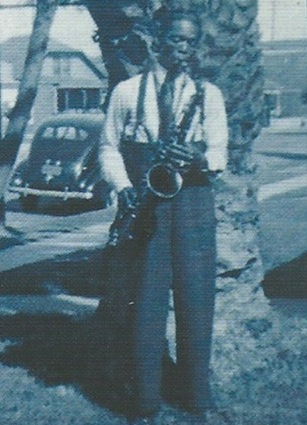
Dave Penny, the compiler and annotator of this exemplary collection (which was released a couple of years ago, and from which the photograph above is taken), points out that no less an authority than the lyricist and R&B fan Jerry Leiber once estimated that, between Davis’s arrival in LA and his death from a heart attack in 1970, he must have been responsible for a hundred hit records. Those we know about include such classics as Percy Mayfield’s “Please Send Me Someone to Love”, Joe Liggins’ “Pink Champagne” and Amos Milburn’s “Chicken Shack Boogie”, none of which appears on this anthology, presumably being too familiar to qualify for inclusion. Instead, much of the pleasure of Wailin’ Daddy resides in the chance to discover such comparative obscurities as La Melle Prince’s “Get High”, Crown Prince Waterford’s “Love Awhile” and Cordella De Milo’s “I Ain’t Gonna Hush”, although there are also tracks by Big Joe Turner, Louis Jordan, Jimmy Witherspoon, Helen Humes, B.B. King and T-Bone Walker.

Davis made his career as a high-class back-room boy, but he certainly possessed the instrumental chops to have survived in straight-ahead jazz, had he so wished: tracks here with the young Charles Mingus, the boogie pianist Pete Johnson and others leave no doubt about that. On the first disc, which is devoted to singles released under his own name, there are two tracks on which he trades choruses with Marshall Royal, later to become famous as Count Basie’s stalwart lead altoist, and he suffers not at all by comparison.

But my favourites are four instrumental tracks recorded for Modern in 1949 with a hot little eight-piece band featuring Jake Porter (trumpet), Jack McVea (alto), Davis (tenor), Maurice Simon (baritone), one “A McCoy” (piano), Chuck Norris (guitar), Red Callender (bass) and Lee Young (drums): the highlights are the rolling “Boogie Cocktails”, a forerunner of James Brown’s “Night Train”, and “Belmont Special” and “Bristol Drive”, the greasiest of shuffles. There aren’t many places I’d rather be transported back to than a Central Avenue club on a hot night in the summer of ’49, listening to that lot holding forth for the assembled hipsters, flipsters and finger-poppin’ daddies.

Uncloudy day

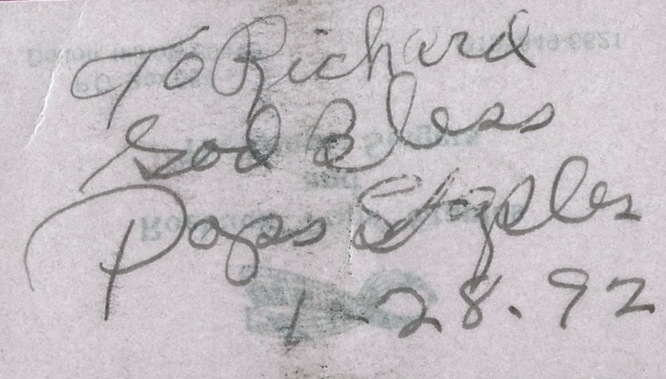
Pop Staples 3Now I think about it, interviewing Roebuck “Pops” Staples 21 years ago was one of the great moments of my life. How could anyone not feel that way about shaking the hand of a man who, while growing up on a Mississippi plantation, had learnt to play guitar from listening to Charley Patton and Son House?

When Pops Staples and his wife Oceola joined the great northwards migration to Chicago in 1936, they took with them a two-year-old girl who was then their only child: Cleotha Staples, who died last week, aged 78 (here is Dave Laing’s very nice Guardian obituary). Later Cleotha, her brother Pervis and a younger sister, Mavis, would join their father in the Staple Singers, one of the all-time great gospel groups — and one which crossed over to the pop charts with remarkable success.

My favourite of their recordings is their first big hit, the majestic “Uncloudy Day”. Released on Vee-Jay in 1956, with a 15-year-old Mavis taking a spine-tingling solo chorus and only Roebuck’s shivering guitar in support of the singers, it supports Richard Thompson’s theory about the special quality of the vocal blend achieved by blood relatives:

And here, shortly after Pervis left to become a record producer and was replaced by a third sister, Yvonne, is an imperfect but nevertheless wonderful clip of them talking to Don Cornelius and performing their great Stax hit “Respect Yourself” on Soul Train in 1971:

Something about Mary Wells

Mary Wells book cover

In the hearts of the first generation of Motown fans, there’s a special place for Mary Wells. During the period between 1960 and 1964 she became Berry Gordy Jr’s first female star, lending her voice to a series of songs, the majority of them written and produced by William “Smokey” Robinson, that helped define the company’s sound – and that of soul music itself.

From those days I have precious memories of owning “Two Lovers”, one of Smokey’s masterpieces, on the old black, white and yellow Oriole label, and the later Stateside coupling of “You Lost the Sweetest Boy” and “What’s Easy For Two”, which stands in my estimation alongside Elvis’s “His Latest Flame”/“Little Sister” and the Beatles’ “Strawberry Fields Forever”/“Penny Lane” among the greatest double A-side 45s in pop history.

“You Lost the Sweetest Boy” was an early product of the Holland-Dozier-Holland team, as were like Martha and the Vandellas’ “Heat Wave”, Marvin Gaye’s “Can I Get a Witness” and the Miracles’ “I Gotta Dance to Keep from Crying”, all of which which burst on to the airwaves at around the same time in the glorious year of 1963 to demonstrate how Gordy’s writers and producers were blending their gospel and R&B ingredients with a new pop sensibility.

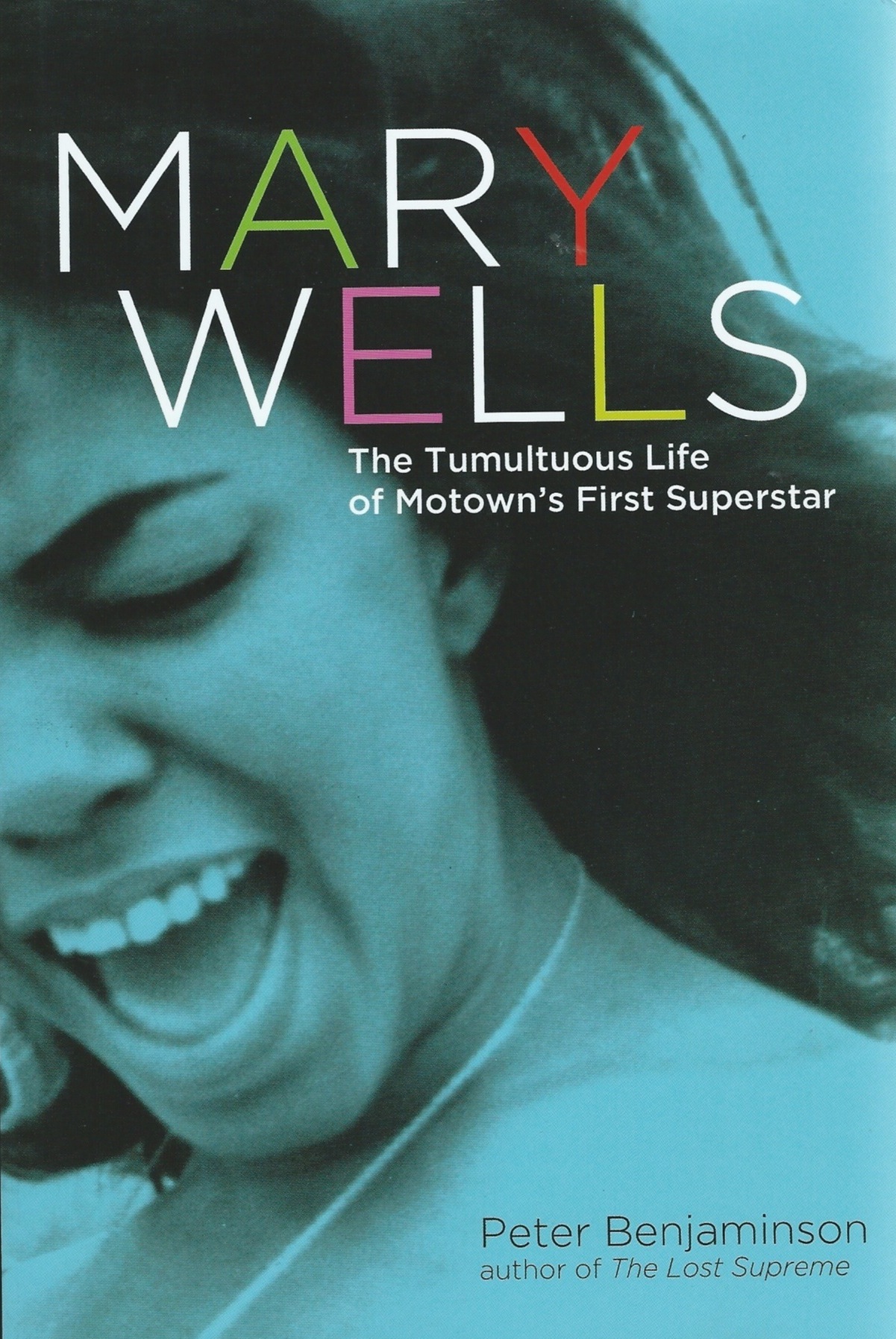
Yet I finished Mary Wells: The Tumultuous Life of Motown’s First Superstar, a new biography by Peter Benjaminson (Chicago Review Press), with very mixed feelings. I knew that Wells’s career had not gone well following the fateful decision to leave Motown after “My Guy” had given her a worldwide smash in 1964. I was aware, too, of a couple of marriages, including one to the man who encouraged her to switch labels from Motown to 20th Century, and another to Cecil Womack, who died earlier this month. And I knew that she had been treated for throat cancer in the 1980s, and had died in 1992, aged 49. But I had no idea of the extent to which a part of her life had been controlled by her various addictions to heroin, cocaine, methadone and alcohol.

Although I’m grateful to Benjaminson for compiling the details of her life, however distressing they may be, I wish he’d also been able to say something interesting about the music that made her famous. So it was with a sense of something like relief that I found a different way of remembering Mary Wells by putting on Something New, a two-CD collection of her obscure and unreleased Motown recordings compiled by Harry Weinger for Universal’s Hip-O Select imprint.

Some of these tracks, shelved when she left Motown and Gordy turned his attention to Diana Ross, turned up in 1966 on an album called Vintage Stock, but most people still won’t be familiar with such treats as “I’ve Got a Story”, a slice of pop-soul heaven written by Marvin Gaye, William Stevenson and Hank Cosby; Holland-Dozier-Holland’s plaintive “Guarantee (For a Lifetime)”; and Smokey’s “To Lose You” and his Miracles colleague Ronald White’s “Forgive and Forget”, both underpinned by light Latin rhythms (as had been “Two Lovers”).

It’s not all great. A couple of unreleased duets with Gaye are hardly spectacular, while the lacklustre versions of 13 standard songs originally intended for an album to be titled The Second Time Around demonstrate that Gordy’s judgement was by no means infallible. But there’s enough here to show that the Beatles were right in 1964 when they invited Wells to join them on tour, making her the first Motown artist to appear on a UK stage.

Aaron Neville: My True Story (Blue Note)

Back in 1985 the producer Joel Dorn took Aaron Neville into a New Orleans studio to record the five tracks that became a mini-album titled Orchid in the Storm. The chosen songs – and there were six of them, since two were conjoined in a medley – were all drawn from the classic repertoire of 1950s and early ’60s doo-wop and early R&B, giving the third of the four Neville brothers, who was born in 1941, a chance to revisit the sounds of his youth.
First issued on vinyl by A&M and repackaged as a CD by Rhino five years later, Orchid in the Storm remains an absolute beauty: the tremulous purity of Aaron’s voice is exposed to its very best advantage on tender treatments of Johnny Ace’s “Pledging My Love”, the Impressions’ “For Your Precious Love”, the medley of Gene and Eunice’s “This Is My Story” and Robert and Johnny’s “We Belong Together”, and the Penguins’ “Earth Angel”. Dorn’s sparing use of modern instrumental textures – a Fender-Rhodes piano, a lightly flanged electric guitar – is beautifully judged, providing a platform over which that unearthly falsetto voice floats with wonderful grace.
The best part of two decades later, can Don Was and Keith Richards pull off the same trick? At the beginning of his eighth decade, does Aaron still have the vocal chops to do anything more than remind us of former glories? Like its predecessor, My True Story assembles a bunch of classic songs from the same time period, this time arranged and performed more or less in the style of the originals, with Richards playing rhythm guitar in a band that also includes Benmont Tench, a vital ingredient in these projects, on Hammond organ.
For me, it doesn’t have the magic of the earlier recording, perhaps partly because the material is more varied. the album begins with the brusque swing of “Money Honey” – the first of four songs associated with the Drifters — before switching to the tearstained doo-wop of the Jive Five’s “My True Story” (possibly my all-time favourite doo-wop song) and then to a version of “Ruby Baby” closer to Dion’s than to the Drifters’ original. That’s how it continues, and it’s all very nicely done, from the Impressions’ “Gypsy Woman” through Little Anthony’s “Tears on My Pillow” and the Ronettes’ “Be My Baby” to a lovely all-Drifters medley of “This Magic Moment” and “True Love”.
No, Aaron’s voice doesn’t quite soar as it once did. But he and the band and the material are more than good enough to make you feel that if you walked into a bar one night and this was what the house band sounded like, you might never want to leave.