Skip to content

Posts from the ‘Pop music’ Category

A Soho creative

Tot Taylor has an interesting history. Back in the mid-’80s, from an office near Oxford Circus, his Compact Organisation threatened to become to the London pop scene what Brooklyn’s Daptone outfit would be to R&B in the next century: a clever, occasionally brilliant re-imagining of past euphoria, creating music that could sometimes rival the sounds from which it took its inspiration. Compact’s founders, Tot Taylor and Paul Kinder, released records by Mari Wilson, Virna Lindt and Cynthia Scott that recalled the great days of the ’60s girl groups, while “The Beautiful Americans”, the sole 45 released by a non-existent group called the Beautiful Americans, evoked the early Walker Brothers in their semi-operatic prime.

Then Taylor and Kinder went their separate ways, the former diversifying his career. He composed music for film, TV and theatre (including the eight-hour Picasso’s Women for the National Theatre). From 2004-19 he co-ran a cutting-edge Soho art gallery called Riflemaker (after the business that had once occupied the premises on Beak Street). And in 2017 he published a 900-page novel titled The Story of John Nightly, a kind of Carnaby Street War and Peace, set amid the Swinging London music scene, its protagonist a pop star called “the most beautiful man in England” by the Sunday Times. And then he started making records again.

A confession: although I was sent an early proof copy of The Story of John Nightly, I haven’t read it properly. But I extracted it from the unread pile the other day. The reason is that I’ve been listening to his last two albums, Frisbee (2021) and Studio Sounds (2023), and falling for them to the extent that I’ve started thinking that if a bloke capable of this music has written a novel, it’s probably going to be worth reading.

Taylor makes records with a (sometimes deceptive) air of light-hearted whimsy and a deft, flexible craftsmanship that seem to have disappeared from contemporary pop music, overwhelmed by the prevailing modes of communal ecstasy and personal trauma. Crudely, you could place what he does somewhere between the Beatles of 1965-66 and the Beach Boys of Sunflower, maybe the last evolutionary step in songwriting terms before the art-rock of Kevin Ayers and Syd Barrett, but nothing he does sounds dated.

Every song has to have its own subject, shape and mood, just like a Beatles album. The humour is wry, never far away in things like “This Boy’s Hair” and “Vanity Flares”, both from the new album, on which he sings in his light, pleasant voice while playing pretty much everything except for drums (Shawn Lee), some of the guitars (Paul Cuddeford and Lewis Durham) and harp (Alina Brhezhinska).

Studio Sounds is a very good album, but the earlier Frisbee is, I think, the classic. The opener came about when the Guardian asked him to write a song for National Music Day, which is what the song is called. “Fortune’s Child” is a great slice of power pop. “Do It the Hard Way” opens with the sort of quatrain you don’t find much in a pop lyric any more (except maybe from Taylor Swift): “I drive my car up a one-way street / Dirty looks from everyone I meet / I ask the Lord my soul to keep / No reply — must be asleep.” Then there’s something called “Yoko, Oh”: a homage to John Lennon in the form of a gentle, loving pastiche of the ex-Beatles at his most blissed-out. Titles like “The Action-Painting Blues”, “Baby, I Miss the Internet” and “Sunset Sound” suggest the breadth of the topics that get him writing. A song called “This New Abba Record” lives up to its title.

The eight-minute “American Baby (Two-Part Invention in C)” is the one to which I keep returning, hooked by a minor-key electric piano riff that finds the ground between the Zombies’ “She’s Not There” and the Doors’ “Riders on the Storm”, achieving a momentum almost as subtly relentless as Steely Dan’s “Do It Again”. As a song, there’s not much to it. But you could say that about many of the greatest pop records. And the potency of the groove somehow turns the blankness of its lyric into something mysterious and compelling.

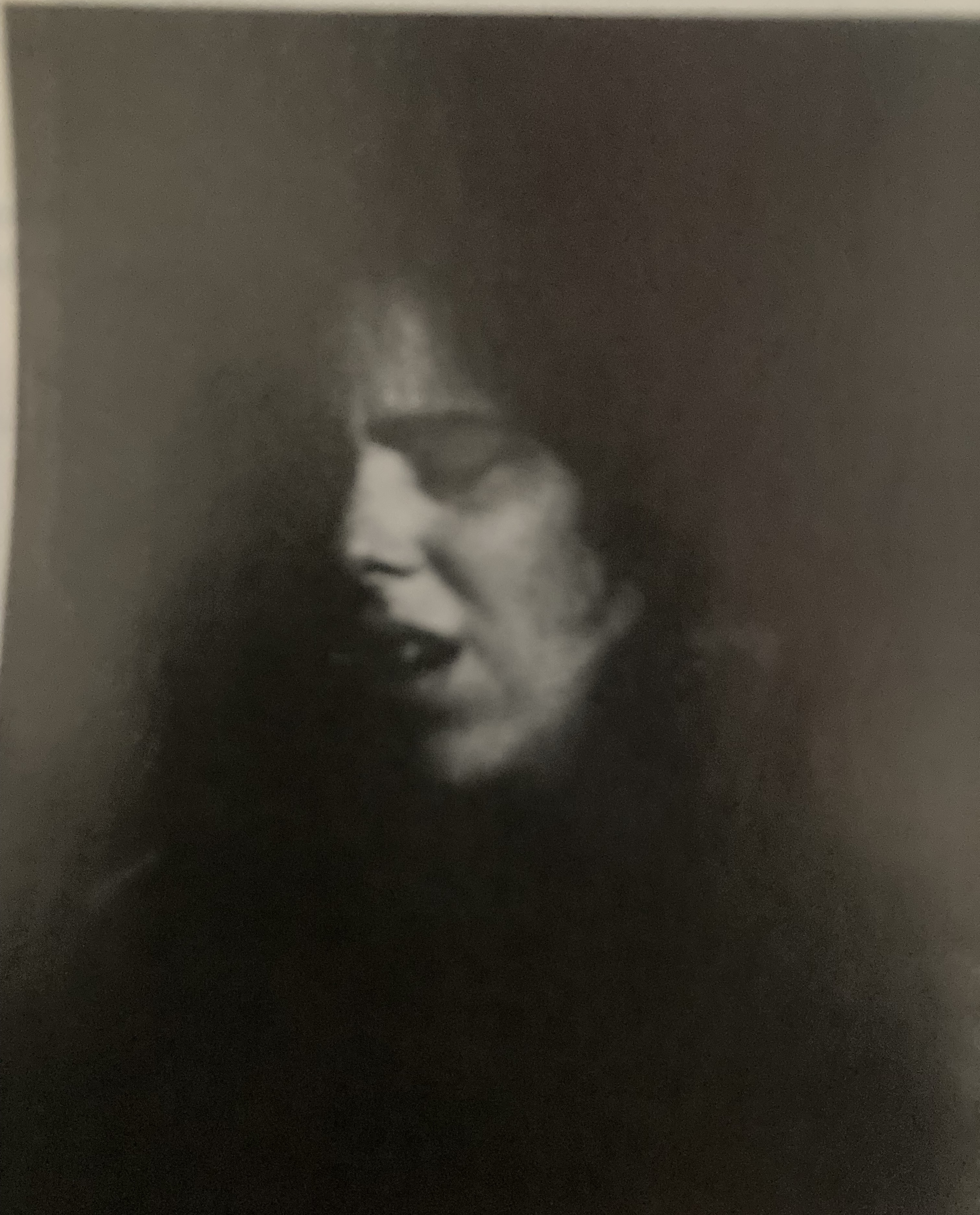
* Tot Taylor’s Frisbee and Studio Sounds are on the Campus label. The photograph of Taylor is from the sleeve of Studio Sounds. The Story of John Nightly is published by Unbound.

Mod dreams

Q: Were there ways of walking?

A: Yeh. You walked speed-wise which is you put your hands in your mod jacket, in your Tonik jacket, which had three-inch lapels and a seven-inch centre vent, and breast pleats to give it enough tuck. It was a very solid cloth, a very heavy cloth, so you’d tuck your hands in there and you’d have flaps on the pockets. You’d have your jeans turned up and you’d have Hush Puppies with a pair of white socks. You’d be walking with three other friends up Great Windmill Street or Wardour Street at five or six in the morning just as light is coming up. Your head is bent against the wind, you’ve got your head down…

That’s Peter Meaden talking, interviewed by the writer Steve Turner in 1975, three years before he died at the age of 36, felled by barbiturates and vodka in his parents’ house in North London, where he had dreamed his mod dreams many years earlier, finding the Who and turning them from the Detours into the High Numbers — turned them into mods, getting them the French crop haircuts and the correct clothes, and writing the words for their first single — before accepting £500 to hand over their management to Kit Lambert and Chris Stamp.

Meaden was one of those people, like Guy Stevens, Andrew Oldham and Tony Hall, who shaped the London music scene in those vital years between 1963 and 1965. He deserves a book of his own, and now he has it. Steve Turner’s King Mod is his story, in all its slender, obsessive, doomed glory.

Once asked to define modism, Meaden came up with a much repeated phrase: “Clean living in difficult circumstances.” He provides another version here: “Mod is another aphorism for precision in life.” Romantic nonsense, of course. But part of the legend.

“Modism was my dream,” Meaden says in the unedited transcript of the interview that constitutes the second half of the book, after Turner has taken us through a relatively conventional narrative. Meaden’s words are rambling, repetitive, sometimes inaccurately recalled, the strange and touching testimony of a man who had a dream and saw it come more or less true but lacked, as Turner says, the business acumen and ruthlessness to profit from his vision as others did.

Stevens, who played records from his collection of red-hot R&B obscurities at the Scene Club in Ham Yard, just off Great Windmill Street, and had the 45s from which Meaden borrowed the music for his High Numbers songs, went on to involvement with Island Records, Spooky Tooth, Mott the Hoople, Free and the Clash. Oldham, who had partnered Meaden in a short-lived PR company, managed the Stones until they were taken from him, and created the Immediate label. Hall was one of the great promotion men of the British music business, a cool cat who moved smooth from the bebop ’50s to whatever came next, and who once threw Meaden out of a reception for Ben E. King with the words, “You’re a pilled-up mod!”

Which Meaden certainly was, as he goes to some lengths to explain in his descriptions of the virtues of Drinamyl — “good old Purple Hearts” — particularly when mixed, as was his preference, with cider. “It was bliss. Cocaine they say is bliss these days but it’s not bliss like a bit of speed in you, a couple of pints of cider maybe, down there bopping round from Friday night through until Sunday morning. Say no more!” One of the things he liked about Drinamyl was that it suppressed the libido. “You no longer have to worry about pulling a chick and making it because that’s what you feel the world made you for.” With girls out of the picture, there would be more time for the purer pursuits of choosing the right shirt at Austin’s on Shaftesbury Avenue or the right boots from Anello and Davide on Charing Cross Road.

Then acid arrived on the scene, and the picture — once so sharp and precise — started to go fuzzy. Some, like Townshend, who gave Meaden his first trip, could cope. Meaden was one who couldn’t, spending chunks of the years before his death in psychiatric care, as much of a casualty as Nick Drake or Syd Barrett.

It’s a curious book. More meticulous editing would have removed a plethora of irritating misspellings and inconsistencies: Kingley Street, vocal chords, Petula Clarke, Roger Daltry and Rick Gunnell are just a few of them, while a Miracles song that the High Numbers covered appears on the same page as “You Gotta Dance to Keep from Crying” (in the text) and “I Gotta Dance to Keep from Crying” (in a caption). And there is the increasingly common habit, infuriating to me, habit of capitalising the definite article in references to The Who, The Beach Boys, The Goldhawk Social Club, and so on.

But it’s clearly a labour of love by an author whose previous works have dealt with the Beatles, U2, Marvin Gaye, Johnny Cash, Van Morrison and religion in rock, and it’s very well illustrated. For anyone to whom the all too short era of modism — to use Meaden’s term — was something precious, its historical value in unquestionable.

* Steve Turner’s King Mod: The Story of Peter Meaden, the Who, and the Birth of a British Subculture is published by Red Planet Books (£25).

‘Won’t last for ever…’

There’s a moment in Love and Mercy, the 2014 Brian Wilson biopic, when Paul Dano, as the young Brian, sits at the piano to play a song he’s just written. When his hands form the opening chords of “God Only Knows”, we’re overwhelmed by a sense of sheer wonder. You can’t watch it and not think that Derek Taylor, the English publicist who went to Los Angeles in 1966 and took on the Beach Boys as his clients, was absolutely right to propagate the idea that the oldest of the three Wilson brothers was a genius. I mean, where did that stuff — those voicings, that progression — come from?

I thought about that, and a lot else, when I read with great sadness earlier this month that, as a result of Brian’s advancing dementia, and only a few weeks after the death of his second wife, Melinda, he had been put into a formal conservatorship. “Won’t last for ever,” the 22-year-old sang with great prescience on a magnificent single in 1964. Sixty years later, a court in LA has ruled that his personal, medical and financial affairs will now be in the control of his family and associates.

In the car that day, I listened to some favourites, from “Surfer Girl” to “Surf’s Up” and beyond. “Please Let Me Wonder”. “Wendy”. “Girls on the Beach”. “Caroline, No”. “When I Grow Up (To Be a Man)”. “Let Him Run Wild”. “The Little Girl I Once Knew”. “She Knows Me Too Well”. “The Warmth of the Sun”. “Kiss Me Baby”. And, of course, “Don’t Worry Baby”, which probably encapsulates more of the essence in a single track than any of them: the sun-kissed harmonies, the cars, the girls, the youthful rapture and the underlying sadness. And the way Brian was starting to make a standard guitar-keys-bass-drums line-up sound like a new kind of orchestra.

And then I watched The Beach Boys, a new 112-minute authorised documentary directed by Frank Russell and Thom Zimny, which tells the group’s story from its creation in the Wilson family garage in Hawthorne, California in 1961 to the comeback in the early 1980s. That’s a sensible limitation, although it means omitting Brian’s triumphant 21st century renaissance with the Pet Sounds concerts and the SMiLE recreation. But the saga is so vast that many of its salient features are necessarily overlooked.

It’s the survivors’ tale, in a way, which means that Mike Love gets another chance to tell his side of the story, although not to an unbearable extent, at least until “Kokomo” is chosen to play over the final credits — and he does thoughtfully identify Brian’s “melancholy” as being a vital ingredient in their music. Archive interviews with Carl and Dennis Wilson are included, and we’re reminded of how their long-hidden talents emerged during the period covered by the film. Al Jardine and David Marks provide interesting insights (Jardine describes “Don’t Worry Baby” as “definitely a turning point for us, and for Brian”), as does Marilyn Rovell, Brian’s first wife.

Interviews with some of the LA studio musicians who played on the great records, including the pianist Don Randi, the bass guitarist Carol Kaye and the drummer Hal Blaine, paint an interesting picture of Brian’s relationship with these highly professional, mostly jazz-trained players. From very early on, he was pursuing an approach very different from most of those who enlisted their help in search of hit records, earning their respect through his seriousness of purpose and originality of thought. There’s a tiny but very telling clip in which he’s explaining to Blaine the rhythmic emphasis he wants on the out-of-tempo introduction to “California Girls”, itself a small miracle of creative imagination. Blaine has heard it all before, but not this.

There have been many Beach Boys-themed films, but this one is still worth watching for its wealth of archive footage, on and off stage. Their difficulties in coming to terms with change could hardly be better illustrated than by a truly teeth-grinding sequence from a 1969 TV show called Kraft Music Hall, in which they attempt to hold the counter-culture at bay by miming to “California Girls” surrounded by bikini-wearing girls, with Love wearing a yacht skipper’s cap and blazer. Some of the scabs are picked at — mostly to do with the behaviour of Murry Wilson, who gave his sons his genes but also a lot of unhappiness, and whose legacy of poor management eventually caused a permanent rupture.

But there’s enough remembered joy here — capped by a silent reunion of the four survivors at Paradise Cove, where the famous early photo of the group with a surfboard was shot — to make it a good way to start the summer, with immeasurable gratitude to Brian for all he gave us.

* The Beach Boys is streaming on Disney+.

Goodbye, Denny Laine

Denny Laine, who has died at his home in Florida, aged 79, was the best thing about the Moody Blues, even though he was only in the band for a couple of years, from its foundation in Birmingham to his departure two years later. It was his voice that made “Go Now”, their No 1 hit, more than just another British beat group’s cover of an American soul record.

The original of “Go Now”, by Bessie Banks, released in January 1964, was itself a classic. Produced by Jerry Leiber and Mike Stoller, arranged by Garry Sherman, written by Larry Banks (Bessie’s husband) and Milton Bennett, it was first released in the US on the Tiger label. “It shines,” wrote the great enthusiast Dave Godin, who released it in the UK on his Soul City label before including in the second volume of his Deep Soul Treasures series, “like an epic beacon in the history of soul music.”

Alex Murray, a young Decca A&R man, produced the Moody Blues’ version at the label’s West Hampstead studios. Denny Laine said the song had come to them via the journalist James Hamilton, a soul music fan who wrote for Record Mirror and received regular shipments of new records from the New York radio disc jockey B. Mitchel Reed. They speeded it up very slightly and took some of the gospel feel out of the 3/4 rhythm but, crucially, they kept Bessie’s unaccompanied opening vocal line, giving Laine the chance to seize listeners by the lapels: “We’ve already said goodbye…”

“Go Now” was still slipping down the charts when the band I was in supported the Moody Blues at the Dungeon Club in Nottingham in March 1965. No doubt the booking had been made before they hit No 1. In front of an audience of a couple of hundred kids in the basement premises, the Moodies were wearing their early uniform of dark blue Regency-collared double-breasted suits. As they went through their repertoire of covers, including James Brown’s “I’ll Go Crazy”, they were impressively powerful and professional. By the end of the year they were supporting the Beatles on their final UK tour. Two degrees of separation, eh?

22 november 1963

My friend Mark Lewisohn, currently at work on the second volume of his majestic history of the Beatles, broke off from his labours to remind me that today is the 60th anniversary of the UK release of the group’s second LP, an event whose significance might be hard to convey to those who weren’t around at the time.

Within days of its appearance on 22 November 1963, with the beatles was a presence in just about every home in the land containing one or more teenagers, irrespective of social class. For a pop record, that universality was a first. It also arrived just in time for Christmas parties, at which it became a fixture, whether in stately homes or council houses. In my memory, it represents the moment that sealed their acceptance as something much more than just the latest chart sensation.

Unlike Please Please Me, its predecessor, with the beatles was not conceived as a couple of hit singles plus a dozen other assorted tracks. It was a proper album: a package of 14 tracks that sold itself on its own merits. Ignored were “From Me to You” and “She Loves You”, their No. 1s of the spring and summer, and “I Want to Hold Your Hand”, which would come out a week later. That took some commercial nerve, and it paid off, with advance orders of a half a million.

The front cover, which made the album into a new kind of desirable object, is a story of its own. Robert Freeman, a 26-year-old Cambridge graduate who had been working for the new Sunday Times colour magazine, asked Brian Epstein to look at his photos of John Coltrane, Dizzy Gillespie and other jazz musicians. Once he’d been hired to shoot the cover image for the forthcoming album, the Beatles themselves showed him the moody black and white photos Astrid Kirchherr had taken of them in Hamburg. Freeman’s side-lit monochrome multiportrait of four young men holding coolly neutral expressions lifted the group out of the ingratiating banality of glossy publicity images, bringing echoes of French new wave cinema into the lives of young pop fans.

There’s another touch of the avant-garde in the use of all-lowercase sans-serif type for the title. Although by Christmas, like every other 16-year-old, I knew the whole album off by heart, it was years before I really noticed that the black letters had been subtly nudged out of strict alignment, as though they’re dancing.

The bending of headlights

“We have a new very quiet album out,” Rickie Lee Jones said as she greeted a packed Jazz Café in London last night. I bought Pieces of Treasure, the album in question, a few weeks ago, played it three times, and filed it next to the rest of the evidence of her long and remarkable life in music. It was certainly nice to see her reunited with Russ Titelman, the co-producer of her unforgettable debut album back in 1979 and a careful curator of this new collection of standard songs, but it didn’t make a huge initial impression. Last night she brought it to life.

She’s travelling with a three-piece band: Ben Rosenblum on electric piano doubling accordion, Paul Nowinski on string bass and Vilray Bolles on electric guitar. For the first half of the 75-minute set she just sang a selection of standards, starting with a pin-drop “The Second Time Around”, which she recorded on Pop Pop in 1991, and continuing with “Just in Time”, “One for My Baby” and “September Song”, which are on the new one, then “Up a Lazy River” from 2000’s It’s Like This, “Hi-lili, Hi-lo” from Pop Pop (with the accordionist not just exquisitely replicating but actually improving on Dino Saluzzi’s bandoneon part on the original recording), and “Nature Boy” from the new one.

It didn’t take long to appreciate not just how well she was singing but how beautifully her musicians were creating a matrix for the way she was so thoroughly inhabiting the songs. You might have heard “September Song” a million times, interpreted by some of the greatest singers in the history of popular music, but by bringing herself so close to the song, by eliminating the distance between song and singer, she made you think, as if for the first time, about what it meant.

Later on she did the same with another song worn threadbare by repetition. “There will be other lips that I may kiss / How could they thrill me like yours used to do? / Oh, I may dream a million dreams / But how will they come true? / For there will never be another you.” It was as though she’d just written it.

The groove changed with Steely Dan’s “Show Biz Kids”, which she recorded on It’s Like This. The slinky funk-lite keyboard riff summoned a whole universe of laid-back rock and roll hipness, and the audience enjoyed singing along: “Show business kids makin’ movies of themselves / You know they don’t give a fuck about anybody else.” (And how prophetic was that, written by Walter Becker and Donald Fagen 50 years ago?) She did her father’s song, the lullaby-ballad “The Moon is Made of Gold”, and her own much loved “Weasel and the White Boys Cool”, and finished by returning to the new album for “On the Sunny Side of the Street”, a song her dad taught her in the summer of 1963 (“a big year for me” — she would have been eight years old, and he also taught her “My Funny Valentine” and “Bye Bye Blackbird”). She left to an ovation, on a wave of profound affection.

But earlier, after about an hour, when she had strapped on a guitar, there had been “The Last Chance Texaco”. Those two gentle chords, instantly recognisable, then: “A long stretch of headlights / Bends into I-9…” It’s a movie. It’s a poem. It’s a confessional. It’s a communion. It’s the song that defines her. The one that most fully draws us into her world. “(It) wasn’t like anything I’d ever written,” she remembered in her wonderful 2021 autobiography. “It wasn’t like anything I’d ever heard.” As she sang it, once again the space between then and now collapsed. And when the sound of the car on the highway faded to silence, I might not have been alone in discovering that my cheeks were suddenly damp.

* The photo of Rickie Lee Jones at the Jazz Café is by me. Pieces of Treasure is on BMG/Modern. Her autobiography, Last Chance Texaco, is published in paperback by Grove Press. Thanks to Allan Chase (see Comments) for identifying the musicians.

Maestro (1928-2023)

By bringing his own elegant sensibility to bear on a personal blend of uptown R&B and Broadway, Burt Bacharach took music to places it had never been. He could use a cheap plastic electric organ and an orchestra of strings, a twangy guitar or a French horn, a rack of boo-bams or pair of flugelhorns, and make them all sound as if they were worth a million dollars. He also had the taste to work with lyricists of the quality of Bob Hilliard and Hal David, whose eloquence and imagination illuminated “Any Day Now” and “Walk On By”.

I saw him in concert twice, both times at the Royal Festival Hall in London. The second time he sang at the end, sitting at the piano, the way he must have done when he first demonstrated his brand-new songs to Chuck and Dionne, and I can still hear that papery non-singer’s voice, so affecting. Now he’s gone, at 94 years old, leaving such treasure behind. “Anyone Who Had a Heart”. “If I Ever Make You Cry”. “In Between the Heartaches”. “Alfie”. “Don’t Make Me Over”. “This Guy’s in Love With You”. “Make It Easy on Yourself”. “What the World Needs Now Is Love”. “A House Is Not a Home”. “Here I Am”. “The Windows of the World”. Songs whose lustre will never fade.

And if I could only keep one of his records, it might be the one below: the epically titled “(Here I Go Again) Looking With My Eyes (Seeing With My Heart)”, in which he musters all his originality in an orchestration full of sweeping strings and busy percussion, on a melody that demands all Dionne’s virtuosity, the last word in something beyond words.

Just before the world changed

Sixty years ago this month, “Love Me Do” made the charts and the world changed. But what was it changing from? Not just the drab, complacent cardigans-and-Billy Cotton caricature of post-war British culture. Before the Beatles and Stones came along to provide a focus, there were plenty of signs, if you were looking, that something was about to happen. And two dozen of them are collected in A Snapshot in Time, a new compilation of sounds from 1960-63 that can be seen today as a series of premonitions.

I was 15 at the time, primed for change and and looking for those signs, in particular anything that resembled the incursion of the blues or modern jazz into mainstream pop music. “Sugar Baby Pts 1 and 2” by Jimmy Powell, a raw-voiced R&B singer from Birmingham was one. The more decorous Lyn Cornell — formerly of Liverpool’s Vernons Girls — singing Jon Hendricks’s lyric to Bobby Timmons’ “Moanin'” was another. Anthony Newley’s skewed Cockney-hipster version of “Strawberry Fair”, too. They’re included in this collection, which is subtitled “Society, scandal and the first stirrings of modernism 1960-63”.

One of the defining events of this fast-changing culture was the broadcast of the first episode of the satire show That Was the Week That Was by the BBC in November 1962. One track is a reminder of the national mood caught and amplified by TW3: “Christine” by Miss X exploits the Profumo affair in a cocktail-piano rhumba punctuated by lubricious faux-ingénue vocal interjections from Joyce Blair (sister of Lionel). Produced by John Barry, with the piano played by the Spanish aristocrat and film actor Jaime Mora y Aragón, and released on Jeff Kruger’s Ember label, it was propelled into the lower end of the charts by scandalised newspaper stories.

More seriously indicative of the future was the music evolving among those who had come out of the skiffle, folk and trad scenes, like Long John Baldry singing Willie Dixon’s “Built for Comfort” with Blues Incorporated, the guitarist Davy Graham’s solo set-piece “Anji” and two tracks, “Country Line Special” and “Chicago Calling”, released as the first single by the singer and harmonica player Cyril Davies, the Ken Colyer of British R&B. Others also came by way of the jazz scene, like the tenorist Red Prince with the Danger Man theme and the trombonist Don Lang with “Wicked Woman” (composed by the person who was to become P. J. Proby). Oh, and Sounds Incorporated’s Markeys-like “Sounds Like Locomotion” and “Why Should We Not”, Manfred Mann’s first single, a jazz-waltz instrumental heavy on alto saxophone, organ, harmonica and tom-toms.

A number of the tracks — including those by Powell, Lang and Cordell — came into being because Jack Good, the great producer of the TV show Oh Boy, had an A&R deal with Decca Records. Good was a visionary who wrote columns in the music press extolling the virtues of US records such as Gene Chandler’s “Duke of Earl” and Bruce Channel’s “Hey Baby” (which, of course, provided the inspiration for John Lennon’s harmonica on “Love Me Do”). Among the three Powell tracks is a version of “Tom Hark”, a South African kwela song that had been a hit for Elias and his Zig-Zag Jive Flutes, a pennywhistle band from Johannesburg, in 1958.

The track that sums it up best for me is “Orange Street”, a finger-snapping instrumental by the Blue Flames, with Georgie Fame on Hammond organ. I bought it on a school trip to London and yearned to be a part of the groovy scene to which it provided a soundtrack. Pretty soon, we all were.

* A Snapshot in Time, compiled by Rob Finnis and Roger Armstrong, is released on the Ace label.

The Beatles in 1962

“The deeper you dig,” Mark Lewisohn said, “the higher you fly.” He was introducing a preview of his new stage show about the Beatles in 1962, and talking about the methodology behind the research into the group’s history that has been his life’s work. And then he spent two hours proving his point.

Among the many amusing moments of the show is his speculation on what might have happened if Decca had made a deal with Brian Epstein and his band instead of signing Brian Poole and the Tremeloes. Since Decca immediately put the Tremeloes to work as the studio backing group for some of their other artists, it might have meant the Beatles accompanying Jimmy Savile on his 45rpm single of “Ahab the Arab”. Which, 60 years later, would not have looked great on their collective CV.

Where memories fade, he points out, documents are the key. And he has documentary evidence for lots of things, including a letter demolishing the story that Decca turned down the Beatles, showing that an offer was made and rejected by Epstein.

His shows, of which this is the second, tend to have rather odd titles. This one is called Evolver:62. It follows the success in 2019 of Hornsey Road, in which he celebrated the 50th anniversary of Abbey Road, and which I wrote about in the Guardian. The new one takes us through the calendar year of 1962, including the death in Hamburg of Stuart Sutcliffe, the approaches to Decca and EMI, the signing with the latter and the first encounters with George Martin, the replacement of Pete Best by Ringo Starr, and a week in August when something extraordinary happened every day, including Ringo’s debut with the band, Liverpool FC’s first match on their return to the old First Division under Bill Shankly, and John Lennon’s marriage to Cynthia Powell.

Lewisohn narrates the show on stage, an engaging presenter who finds clever ways to illustrate the story. Talking about how the US rights to “Love Me Do” were turned down successively by Capitol, Liberty, Laurie and Atlantic, he shows us mock-ups of what the 45s on those labels would have looked like, while pointing out that Jerry Wexler, who did the deed on Atlantic’s behalf, never had to suffer the sort of scorn that, probably unjustly, followed Decca’s Dick Rowe to the grave.

I’m not going to give much more away, because the surprises are part of the fun. Suffice it say that Lewisohn knows more than McCartney remembers about the inspiration behind “I Saw Her Standing There”. And he delighted me by discovering the first newspaper or magazine in which the Beatles, Bob Dylan and the Rolling Stones were mentioned in the same issue: a Melody Maker of late December 1962, when “Love Me Do” was in the charts, the American folk singer was in London to appear in Madhouse on Castle Street for the BBC, and a new R&B band were advertised as playing a gig at Sandover Hall in Richmond.

The preview I attended was full of that kind of stuff (including the postcard in the photograph above, the first known example of all four Beatles autographing a single object). Lewisohn is doing the show to finance his continuing work on the second volume of his epic trilogy, All These Years, which can legitimately be thought of as the definitive Beatles history. One of the things I like about him is that although he’s gone to enormous lengths to acquire all this information, he never seems proprietorial about it. He likes sharing his treasure, using it to enrich everyone else’s enjoyment of a story that will never be repeated. So while it’s for a worthy cause, it’s also a really entertaining couple of hours.

* Mark Lewisohn’s Evolver:62 is at the Bloomsbury Theatre in London for three shows on October 7 and 8, 2022. Tickets: http://www.ucl.ac.uk/bloomsbury-theatre-studio. Tune In, the first volume of his trilogy, is published by Little, Brown.

The man who remade the Beach Boys

One day in 1971 a man called Jack Rieley called me up at the Melody Maker. He’d read a piece in which I’d attempted to persuade readers to listen again to the Beach Boys, who had fallen into disfavour as the evolution of rock gathered momentum in the late ’60s. Rieley told me that he’d recently taken over as the group’s manager. He was, he said, a former journalist and disc jockey. He liked what I’d written and started to tell me about his plans, which majored on the idea of restoring Brian Wilson to his role as the centre of the group’s creativity. Amen to that, I said. And when he added that his initial step was to get “Surf’s Up” — the legendary lost track from the lost album, Smile — into shape for release, I was completely on his side.

We met in London and talked several times, and before long he proved to be as good as his word. The song “Surf’s Up” became the title track of the first Rieley-era Beach Boys album, released that August, and was, in its completed form, the masterpiece one had always dreamed it would be. The album also contained new songs that signalled a change of emphasis, in which the band pivoted away from their old cars-and-surfboards image towards an engagement with a new generation.

Mike Love’s “Student Demonstration Time”, a riff on Leiber and Stoller’s “Riot on Cell Block No 9”, was the most blatant and clumsiest of those signs, but other songs demonstrated a more profound change of consciousness — particularly Carl Wilson’s introspective “Feel Flows” and “Long Promised Road”, to which Rieley contributed lyrics, Al Jardine’s “Lookin’ at Tomorrow (A Welfare Song)” and “A Day in the Life of a Tree”, a collaboration between Brian and Rieley on which the latter actually sang the lead in an artless, heartfelt tone which proved perfectly appropriate to the material. Brian’s “‘Til I Die” was the album’s second masterpiece, a meditation on mortality of a sort that might not have thrilled fans looking for a new “Fun Fun Fun”.

Although most of these thoughts were in the heads of the Beach Boys themselves, there’s no doubt that Rieley nerved them up to accept the risk of abandoning the established following that would have been happy to see them turn into an oldies act. Released in August 1971, the album Surf’s Up brought them a different kind of attention, for which he had paved the way four months earlier when they successfully appeared as guests on a bill with the Grateful Dead at Fillmore East in front of an audience that had probably bracketed them with Richard Nixon’s presidency.

Rieley’s next trick was to release the follow-up album, titled Carl and the Passions: So Tough, in a double-album set with Pet Sounds. This invited the world to listen to their new music — including two intense Dennis Wilson ballads, “Cuddle Up” and “Make It Good”, and a couple of songs (“You Need a Mess of Help to Stand Alone” and “Marcella”) to which Rieley again contributed lyrics — while appreciating anew the richness of their history. They also added two new members, bassist-singer Blondie Chaplin and drummer Ricky Fataar, from the Flame, a South African band who had been taken under Carl Wilson’s wing.

Although neither of these albums succeeded in giving the Beach Boys a new hit single, their credibility had been largely restored. They were no longer the group in matching shirts and smiles. And, best of all, Brian seemed to be functioning again.

Their manager’s next gambit was his most audacious, and the one that would contribute to his downfall. Wanting to take them out of their comfort zone and put them in an unfamiliar environment where they could make music without distractions, he conceived a plan to move the whole band and their families to Holland, along with state of the art recording equipment — a complete quadraphonic studio, in effect — and a crew to assemble and operate it. In a village called Baambrugge, on the Angstel river between Amsterdam and Utrecht, they made the album titled Holland, full of superb music: Brian’s “Sail on, Sailor”, Dennis’s “Steamboat” and Carl’s “The Trader”, all with Rieley’s contributions to the lyrics, Dennis’s classic “Only with You”, beautifully sung by Carl, and Jardine’s “California Saga”, which contained verses from the Robinson Jeffers poem “The Beaks of Eagles”.

It also came with a bonus EP containing a “fairy tale” by Brian called “Mount Vernon and Fairway”, a piece for children which contains a few moments of Wilson magic and passages of Rieley’s narration. Before its release Jack got Brian to call me up at home and play it to me over the phone, which was a fairly surreal experience.

But for all its quality, Holland also failed to provide the group with hits, and the project had been so expensive that the man responsible was relieved of his duties. Eventually he was exposed as a bit of a charlatan — he was not, for example, a winner of the Pulitzer Prize, as he had apparently claimed — and some members of the group had always been suspicious of his methods and motives.

I found him to be pleasant, highly intelligent and quite intense, with an interest in the world beyond rock music. He stayed on in Holland, and in 1975 he gave me an album called Western Justice, a song cycle that he’d just written and recorded in Amsterdam in partnership with a Dutch singer-writer named Machiel Botman. It was an elaborate production, with many Beach Boyish touches, musically not outstanding but interesting for its subject matter: the consequences for humanity of the First World’s heedless appetite for its natural resources, framed in a story set at some undetermined date in the future. An accompanying text, in the form of the fictional diary of an unnamed narrator, contained these introductory words:

Hundreds gathered in the park this morning, and the atmosphere was sort of carnival. Fiddle players serenaded, people danced, craftsmen displayed their work and others just sat on the scorched dry remains of the grass, talking and singing and playing chess and doing nothing. The crowds grow daily as more factories and offices are forced to close. The afternoon’s Emergency Line was long and tiresome. Three hours of waiting yielded a box of dried milk, a large sack full of cereal and dozen transistor radio batteries (marked ‘Gift of the People of Surinam’). The last newspaper has stopped publishing, leaving radio as the sole remaining source of official information. Today’s reports were that new ‘Citizens’ Courts’ were springing up from Geneva to Chicago, putting businessmen and government functionaries on trial for hoarding and black market activities. The Emergency Pact foreign ministers met again in Brussels, but representatives of Canada, the Soviet Union and Spain didn’t even bother to turn up. I adjusted easily when the electricity was turned off, but the current lack of safe drinking water is beginning to annoy me…

And so the narrative continues, depicting the West in a state of chaos and panic, culminating in a conference of the African, Latin American and Asian nations at which the United States begs for help. This was written in 1975, remember.

After that I lost touch with Rieley. I know he stayed in Europe, working in music for a while, then starting some kind of telecommunications business, before dying in Berlin in 2015, aged 72. The ending of his three years with the Beach Boys had pretty well trashed his reputation. But he left his mark on some important recordings, some of which can be heard again on a set titled Feel Flows, a reissue of Sunflower and Surf’s Up, plus associated outtakes, different mixes, vocal-only tracks and so on, released earlier this year.

Whatever his ambitions cost the group in financial terms, by bringing them into the modern world he significantly improved their standing during his time as their manager. Maybe he did make stuff up, but if what he told me in 1971 was accurate, you could also say that we have him to thank for inspiring the reconstruction and release of “Surf’s Up” — still, in my view, as elevated as just about any piece of popular music made in my lifetime.

* Feel Flows is available in various formats, from a 2-CD set to a multi-album vinyl box. The photograph of Jack Rieley was taken in Holland in 1974 by Harm Botman.