The other Fab Four
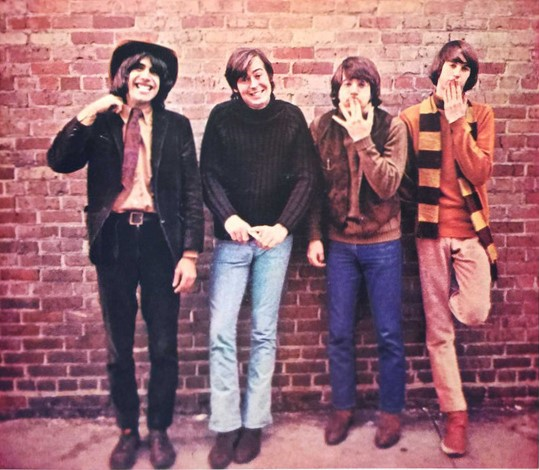
Between 1965 and 1968, the Lovin’ Spoonful were the nearest America came to producing a Beatles of their very own. Their string of hits took in irresistibly winsome folk-rock jingle-jangle (“Do You Believe in Magic”, “Did You Ever Have to Make Up Your Mind”, “Younger Girl”, “You Didn’t Have to Be So Nice”), wistful sunshine pop (“Daydream”, “Rain on the Roof”), a brilliant homage to then-unfashionable country pickers (“Nashville Cats”), and a widescreen urban anthem that lives with the finest and most ambitious 45s of the mid-’60s (“Summer in the City”).
Where the Beatles came from skiffle, the Spoonful took their initial inspiration from jug bands. But they shared an inquisitive spirit and a breadth of range that made their early albums, released on the newly formed Kama Sutra label, full of pleasant surprises. Unlike the Beatles, at that stage they only had one main songwriter: John Sebastian, who was always rather more than the tie-dyed cartoon figure of Woodstock legend. It was Sebastian who laced his songs with lines such as “It’s like trying to tell a stranger about rock and roll”, “You didn’t have to be so nice / I would have liked you anyway” and “The more I see, the more I see there is to see”, and could come up with the entire brilliant lyric of “Nashville Cats”.
They also had an eccentric in the ranks: Zal Yanovsky, the Canadian lead guitarist with the goofy Ringo-type presence who blotted his copybook in 1966 after he and Steve Boone, the bass guitarist, had been busted for marijuana possession. Threatened with deportation, he co-operated with the police. The fact that it happened in San Francisco, headquarters of the counter-culture, only deepened the disfavour into which the group as a whole suddenly fell with the influential alternative press. They were from New York, too, which probably didn’t help.
For a while they pressed ahead with soundtracks to two movies by young directors, Woody Allen’s What’s Up, Tiger Lily? and Francis Ford Coppola’s You’re a Big Boy Now, the latter including two classics in Sebastian’s swooning “Darling Be Home Soon” and the title song, with its interludes of Michel Legrand-style orchestration. And there was a brilliant third album, Hums of the Lovin’ Spoonful, on which Joe Butler, the drummer, stepped forward to take the lead vocal on a power-pop classic called “Full Measure”, which ended up on the B-side of “Nashville Cats”. But Yanovsky soon left, to be replaced by Jerry Yester, formerly of the Modern Folk Quartet, an old associate who had actually played piano on theie first hit, “Do You Believe in Magic”.
With Yester on board, they recorded a fourth album, called Everything Playing, that sank without trace on its release at the end of 1967 despite being crammed with absolute gems, including Sebastian’s “She Is Still a Mystery”, “Six O’Clock”, “Younger Generation” and “Money”, Boone’s lovely “Forever”, Butler’s poignant “Old Folks”, Sebastian and Yester’s “Close Your Eyes” and, most impressive of all, Butler and Yester’s “Only Pretty, What a Pity”. If Hums was their Rubber Soul, this was their Revolver. But it had been a year since their last album, the bad smell from the bust lingered, and soon Sebastian was gone, claiming that his experience of the group had been “two glorious years and a tedious one.”
All that remained was Yanovsky’s wacky solo album, titled Alive and Well in Argentina and full of psychedelic whimsy, and a strange effort called Revelation Revolution ’69 by “the Lovin’ Spoonful featuring Joe Butler”, which included a powerful anti-war sound collage called “War Games” and a gorgeously lush version of “Me About You”, written by Garry Bonner and Alan Gordon (of “Happy Together” fame), which outdoes other treatments of the ballad by the Turtles, Jackie DeShannon, the Mojo Men, the Walker Brothers and others.
All of this and more — including the four tracks they recorded as a kind of audition tape for Elektra in 1965, and which got released the following year alongside tracks by Paul Butterfield, Eric Clapton, Al Kooper and Tom Rush on an album titled What’s Shakin’ — can be found in a new seven-CD box set called What a Day for a Daydream: The Complete Recordings 1965-69. Not the least of the set’s merits is a thorough sleeve note by Mojo‘s Lois Wilson. If you’ve forgotten about the Lovin’ Spoonful, or never really got beyond the hits, I can’t recommend it too highly.
* The Lovin’ Spoonful’s What a Day for a Daydream box set is on Strawberry Records. The photo of the original group — (from left) Yanovsky, Butler, Sebastian and Boone — was taken in 1965 by Henry Diltz.


 thebluemoment.com